Showing posts with label Pamela Brown. Show all posts

Friday, August 3, 2018

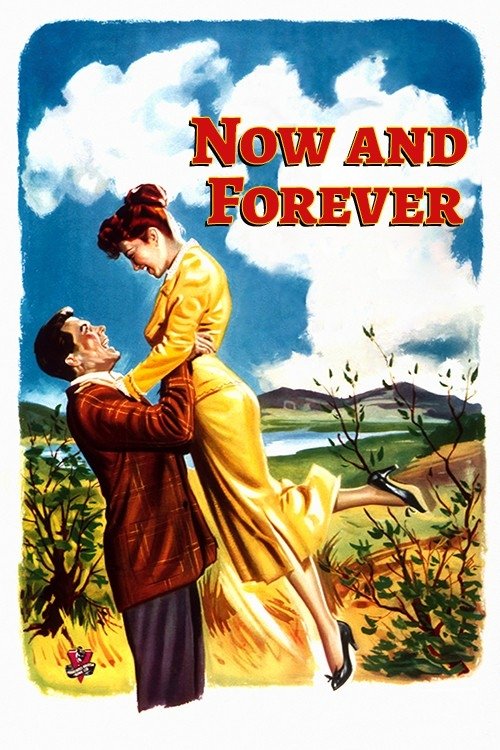
Now and Forever ( 1956 )


"You can't separate us! We love each other!"


Lonely upper-class English schoolgirl Janette Grant (Janette Scott) falls in love with handsome Mike Pritchard (Vernon Gray), a poor mechanic from the local village. Janette's mother believes the courtship to be unsuitable and puts a stop to it by threatening to send her daughter to Canada. "Canada??!" the poor girl declares. And so, the two young lovers decide to defy their parents and attempt to elope to Scotland. 

Playwright R.F Delderfield clearly took inspiration from Shakespeare's "Romeo and Juliet" when he wrote "The Orchard Walls", the play which Now and Forever was based on. In place of the feuding families he focused the conflict on social class differences and an unfeeling mother (excellently played by Pamela Brown). It's an engaging story and you cannot help being sympathetic to the youngsters in their plight, especially that of poor Janette. 

Janette's parents were divorced when she was younger and so she lives at home with her mother, who coldly informs her one day that her father passed away in Ireland. This news, coupled with a lack of friends and her impending separation from Mike, leads her to attempt suicide by jumping from the bell tower at her school. Mike and Janette were willing to wait until they were older to marry but the threat of being separated now forces them to consider eloping as their only alternative. 
Michael Pertwee helped to write the screenplay which, although engaging, is rather incredulous at moments. Back in 1950s England, gossip yielded a powerful hand, especially in small villages, but would two eloping teenagers warrant front page news across England? By the end of the film, it seems as though the entire country's police force and its citizens have the dragnet set for their entrapment. 

Director Michael Zampi, who was best known for making comedies (Too Many Crooks, Tonight's the Night, Laughter in Paradise) shows that he was equally adept at handling drama. The Technicolor filming of Now and Forever is beautiful, as are the lovely scenes of the English countryside as Janette and Mike go scouring about in his hand-built roadster. The cast is top-notch, too. Janette Scott, a popular British child actress, was given the chance to display how well she could handle a more mature role and show her audience how much she was growing up. Vernon Gray, who resembles a young Tyrone Power, makes an admirable lover. Kay Walsh is also featured as Miss Muir, the headmistress at Janette's school. This role could have been expanded on because Kay's talent is wasted otherwise. Jack Warner plays Mike's father, and then there are small parts going to a number of great character actors such as Ronald Squire, Guy Middleton, Bryan Forbes, and Hattie Jacques. 

Now and Forever was clearly aimed towards a teenage audience with its heroes being two young defiant lovers. They set off on a romantic escapade to Scotland to elope and live happily ever after with only true love and nary a coin in their pockets to support them, but will a marriage such as theirs last? There is a disturbing air hovering over Janette's affection for Mike. It is as though the loss of her father made her realize that she had no one in the world to love and there was no one left in the world to love her. Miss Muir didn't have the courage to give her the maternal love she needed and after she meets Mike she pours all of the love that she stored up onto him. But this makes her seem possessive and all the more pitiable. Mike loves her but how much of that love was corrupted by fear after her suicide attempt? Even marriage would not clear the doubts and insecurities Janette has. 

So, while the film is thoroughly entertaining, its ending seems to leave the audience suspended. The title reads Now and Forever but perhaps Will You Still Love Me Tomorrow? would have been more appropriate. 

Now and Forever is currently available on DVD from Network Distributing.

This post is our contribution to the 5th Annual Rule, Britannia Film Blogathon being hosted by A Shroud of Thoughts. Ready to read some more Brit film reviews? Then simply click here for a fine selection of posts. 

Wednesday, November 29, 2017

In This House of Brede ( 1975 )

"There is only one special friend here in this house for any of us. 'Thou shalt love the Lord thy God with all thy heart, with all thy soul, and with all thy mind'. This is the first and greatest commandment."

In 1975, Diana Rigg starred in the two-hour GE Theater production In This House of Brede as widow Philippa, a successful middle-aged London businesswoman who leaves "the world" to enter Brede Abbey, a Benedictine monastery, as a cloistered nun. 

This CBS television movie was loosely based on author Rumer Godden's engrossing masterpiece of the same name which was published in 1969. Both the novel and the film span a ten-year period and focus on Philippa's growth from a cold bitter woman to a compassionate and loving nun. 

When we first meet Philippa she is stern-faced, independent, and not particularly likable. She comes to Brede for the wrong reasons. She comes seeking a refuge from her past, "a place where God would be all and there would be no need of ever saying 'I love you' to another human being again". And then Joanna arrives. This sweet young novice makes Philippa realize just how deeply she longs for the love of the daughter that was taken from her years before. 

Philippa thought she could leave the memory of her daughter's death behind her but Sister Joanna's presence serves as a living symbol of the event. At first, she despises the girl for that reason but as her hatred transforms into love she comes to see Joanna as a gift from God ( the Biblical meaning of the name Joanna )....until Sister Agnes informs the abbess of their affection for each other. Special friendships within the community were frowned upon by the order. Philippa then realizes she must break away from Joanna. 

"It is such a bother loving people.....one always suffers in the end" 
In Godden's novel, Philippa was just one part of a rich complex tapestry that centered around the true heart of the novel - Brede itself. It is a beautiful novel that contains stories within stories, all of which unfold randomly, slowly revealing personalities and messages of wisdom. 

An accurate transcription to film of such a narrative would have resulted in an immense production - but it would have made a fabulous mini-series. Instead, to condense the story to its two-hour time frame, screenwriter James Costigan eliminated many of the characters and shifted the focus on Philippa's struggle to overcome her grief; rewriting the story to accommodate this. The resulting script had its good and bad points. While Costigan managed in part to capture the essence of the book, certain scenes were overly sentimental and the behavior of some of the nuns seemed improbable. 

In the novel, one of the more prominent characters was Sister Cecily, an angelically beautiful postulant that quickly becomes a favorite with Abbess Catherine and Dame Maura, the precentrix. Costigan eliminated the character of Dame Maura and cleverly transformed the bond she shares with Sister Cecily into a mother-daughter relationship between Dame Philippa and Sister Cecily, whom he renamed Joanna....which so happens to have been the name of Philippa's deceased daughter. As New York Times critic John J. O'Connor described this reworking, "It's a trifle too pat, considerably more calculating and less interesting. That much understood, In this House of Brede still emerges as inspired television." 
Indeed, it is an excellent production, and it is one of those rare films that saves its best moments for the final quarter. Cinematographer Christopher Challis ( Chitty Chitty Bang Bang ) beautifully photographed it, and the cast and crew traveled to the small village of Millstreet in County Cork, Ireland to film scenes amidst the authentic background of Drishane Convent, an impressive structure that serves a majestic purpose. This building becomes as much a part of the film as any of the characters. 

Dame Diana Rigg, who, for her part, was nominated for an Emmy for Outstanding Lead Actress ( Juliet Mills won for QB VII that year ), enacted the spiritual growth of Dame Philippa with great conviction. 
In This House of Brede also benefited from top-notch performances from Judi Bowkers as Sister Joanna, Denis Quilley as Philippa's former lover Sir Richard, and Nicholas Clay. Gwen Watford ( Cleopatra, Taste the Blood of Dracula ) perfectly captured the strong yet gentle and understanding nature of Abbess Catherine, while veteran English actress Pamela Brown ( I Know Where I'm Going, Lust for Life ) was an ideal Dame Agnes, intelligent but with a dangerously suspicious mind. 

"Whenever things seem too much for you, go down to the bottom of the garden and turn, and look back up here at Brede riding against the sky like a great proud ship. And think of all of us within - your sisters. Think of those who were here a hundred years ago and those who will be here a hundred years from now: this long unbroken line of care and companionship."
Click here to view In This House of Brede on Youtube.