Showing posts with label costume designers. Show all posts

Thursday, March 9, 2023

From the Archives: Mary, Mary ( 1963 )

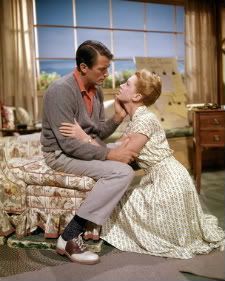
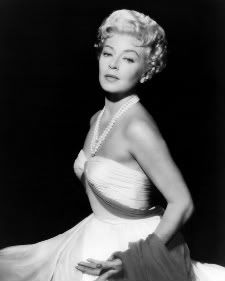
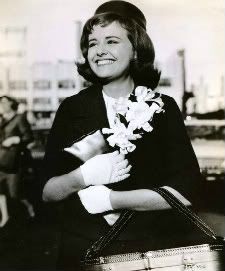
In this 1963 publicity photo, Debbie Reynolds is seen modeling one of the many beautiful dresses designed by William Travilla for the film Mary, Mary. Travilla should have released a special line of clothing for department stores with each dress copying a style seen in his most recent films. They would have been big sellers at Sears! 

From the Archives is our latest series of posts where we share photos from the Silverbanks Pictures collection. Some of these may have been sold in the past, and others may still be available for purchase at our eBay store : http://stores.ebay.com/Silverbanks-Pictures

Friday, March 4, 2016

Irene : A Designer from the Golden Age of Hollywood - Book Review

Edith Head and Adrian have always been the super-stars among costume designers, and their names are recognizable even to non-classic film fans, but there were so many talented designers in Hollywood during the 1930s-1960s that are not nearly as famous. Frank Billecci and Lauranne B. Fisher teamed up to write a fabulous book, Irene - A Designer from the Golden Age of Hollywood, that pays tribute to Irene, one of Metro-Goldwyn-Mayer's busiest, and most creative, designers. This beautiful 144-page book from Schiffer Publishing is fully illustrated with photographs of Irene at work and costume sketches of her most dazzling creations. The book also mixes a biography of Irene with remembrances of her personal artist, Virginia Fisher. 

The Jeer : It's hard to find fault with a Schiffer book and this one is an especially great read. The book briefly covers Irene's early years and then proceeds to focus on her days at MGM. For a more thorough look into Irene's personal life, Billecci also wrote an ebook : Irene - From a Big Sky Girl to a Hollywood Designer. 

The Cheer : Irene is beautifully laid out in an easy-to-navigate format and, since it is profusely illustrated, it also makes a delightful coffee table book to browse through. Included is a handy filmography covering all of Irene's projects as well as the sketch artists she worked with on each film. 

The Skinny : If you enjoy looking at fashions and want to learn more about the life of MGM's golden gal, Irene, then this is the best book you can buy on the market. 

Sunday, February 21, 2016

Helen Rose - Costume Designer

For Behind the Screen : The Hidden Masters of the Golden Age of Filmmaking, our continuing series of profiles on the men and women who worked behind the cameras, we have chosen to aim the spotlight on Helen Rose, an extremely talented costume designer of the 1940s-1960s. Since the Oscars are approaching, our choice is especially apropos considering Helen Rose was nominated for no less than ten awards for Best Costume Design, including The Merry Widow ( 1952 ), Executive Suite ( 1954 ), and I'll Cry Tomorrow ( 1955 ).

Like her fellow female associate, Edith Head, Helen Rose had risen from staff designer to become chief costume designer of a major film studio. Head worked at Paramount and Irene at Metro-Goldwyn-Mayer up until 1949, when she left the studio. Shortly thereafter, Helen Rose became the new chief designer. Her style was elegant and innovative, and some of the dresses she created were the most beautiful seen on film. 

Helen Rose began designing stage and nightclub costumes when she was but 15 years old for the Lester Costume Company who specialized in costumes for vaudeville. In the late 1930s she was hired as head designer for the skating spectaculars, the Ice Follies.

Love Me or Leave Me
It was in 1941 that she was hired to create costumes for musicals over at Twentieth Century Fox. This tenure lasted only two years, when Louis B. Mayer beckoned her into the lion's den at MGM. Their chief designer, Adrian, had resigned and the studio was looking for fresh talent in their wardrobe department. Helen Rose assisted Irene for the next five years, helping work on such productions as Two Sisters from Boston ( 1946 ), Till the Clouds Roll By ( 1947 ), The Courage of Lassie ( 1946 ), Cynthia ( 1947 ) and Julia Misbehaves ( 1947 ). 

MGM was churning out musicals, comedies, and dramas in such quantity during the late 1940s to satisfy the demands of post-war audiences that, even though Irene was still head of the costume department, Helen Rose had a chance to exercise her creative couture skills in a number of fine productions. 

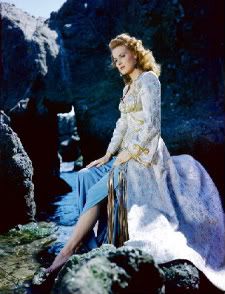
For The Harvey Girls ( 1946 ), Rose designed a plethora of beautiful period gowns. In addition to the traditional waitress wardrobe of the Harvey girls, Judy Garland sported over seven different outfits including a cream-colored puffed-sleeved dress, a wedding gown, a light-blue chiffon nightgown, and a lovely white ballgown with ruffled tulle on the shoulders. However, it was Angela Lansbury, as feisty saloon gal Em, who wore the most eye-popping Technicolor creations. The golden gown Rose created for Em, studded with beads, deserved an Oscar nomination in itself but, unfortunately, the entire film was overlooked for the costume design category. Oddly enough, almost all of the films that showcased Helen Rose's best work were overlooked. 


In The Unfinished Dance ( 1947 ), Rose designed not only the principal actors' wardrobe but many of the ballerinas dresses as well. Mademoiselle Ariane Bouchet ( Cyd Charisse ) was the prima-donna ballerina who wore fashions as chic as her name. One of the most memorable gowns she wore was a velvet dress ( which fetched $2,750 during Debbie Reynolds' major wardrobe auction in 2014 ). 

The velvet gown seen in The Unfinished Dance ; Good News

For Good News ( 1948 ) Helen Rose help transport audiences back into the roaring 1920s with her authentic college garb of the period. 

Annie Get Your Gun ( 1950 ) was another career highlight for Helen Rose. The western costumes that Betty Hutton wore combined the bright colors of the 1950s with the rugged utility that the real Annie Oakley would have needed as a sharpshooter touring across the world with Buffalo Bill's Wild West Show. Rose's designs were undoubtedly inspiration for much of the western wear for men, women, and children that were sold in catalogs throughout the decade. 

Helen Rose had a knack for creating costumes that perfectly suited the style of the wearer. Jane Powell's dainty hourglass figure was emphasized in the dresses she wore in A Date with Judy ( 1948 ), Luxury Liner ( 1948 ), Nancy Goes to Rio ( 1950 ) and Two Weeks with Love ( 1950 ). 

Lana Turner had a figure all women would envy and her petite height made her an ideal model for below-the-knee skirts and dresses. For The Merry Widow ( 1952 ) and Latin Lovers ( 1953 ), Rose designed some beautiful Spanish-inspired evening gowns. Years later, for Bachelor in Paradise ( 1961 ), Turner wore Helen Rose creations again...and surprisingly, her glam figure was unchanged!

Period costumes from Two Weeks with Love

Esther Williams created many of her own swimsuit designs when she launched her own swimsuit company, but during her reign at MGM, she and Helen Rose worked together to create swimwear that looked stunning both wet and dry. Duchess of Idaho, Pagan Love Song, Texas Carnival, Million Dollar Mermaid, Easy to Love and Dangerous When Wet all featured costumes designed by Rose. 


The costumes seen in Father of the Bride ( 1950 ) were also some of Rose's best work. Elizabeth Taylor adored the wedding gown that she wore in the film so much that she asked Helen Rose to design her wedding gown for her marriage to Nicky Hilton that same year. 

Grace Kelly was another great admirer of Rose's sophisticated taste. She wore Rose creations in Mogambo, High Society, and The Swan, and like Taylor, also hired Rose to design her wedding gown. Over 25 yards of vintage Brussels rose point lace and silk faille was used in the gown, and it was a creation that was admired the world over. 

Elizabeth Taylor's wedding dress was less memorable, but the simple and elegant white chiffon Grecian gown that she wore in Cat on a Hot Tin Roof ( 1958 ) became an iconic dress. That same year Rose launched her own label featuring ready-to-wear clothing accessible to the public through high-end department stores such as Bonwit Teller, Marshall Fields, and Joseph Magnin. Some of her more simple designs were also available as patterns distributed through Advance and Spadea. 

Chiffon was Helen Rose's material of choice and she especially liked the way it moved and picked up light. An example of one of her most beautiful chiffon dresses was the simply white ensemble worn by Shirley Jones in The Courtship of Eddie's Father ( 1963 ). Dina Merrill also wore a gorgeous light blue chiffon dress in the same film, as well as this elegant business "suit". 

Dina Merrill and Shirley Jones in The Courtship of Eddie's Father

During the 1960s, Debbie Reynolds fashioned some of the best of Rose's creations in The Gazebo ( 1959 ), and Goodbye, Charlie ( 1964 ). Helen Rose probably never realized that so many of the dresses, gowns, and suits she designed for actors in all of those MGM films would end up in Reynolds' personal collection of costumes. 

Goodbye, Charlie! ( 1964 )

In 1966, Helen Rose left MGM to open up her own design business, catering to wealthy clients. She also kept busy writing a fashion column and penning two books, one being her autobiography "Just Make Them Beautiful"....a fitting title, for that's just what she did. 


This post is our contribution to the 31 Days of Oscar blogathon being hosted by Paula's Cinema Club, Outspoken and Freckled, and Once Upon a Screen. Head on over to any of these sites to read more about the actors, films, and craftsman who were awarded Academy Awards.

To read more profiles in our Behind-the-Screen : The Hidden Masters of the Golden Age of Filmmaking, click here! 

Friday, July 3, 2015

What Price, Hollywood?

Debbie Reynolds was one shrewd cookie. On May 3, 1970, David Weisz Co. auctioned off the contents from seven sound stages at Metro-Goldwyn-Mayer studios which included 350,000 costumes. While this 20-day auction event was being held, Miss Reynolds' fellow thespians were lounging comfortably in their palatial Beverly Hills homes lamenting the final curtain call of MGM studios, while the actress herself was emptying her bank account - some $600,000 - and attending each auction, buying up all the costumes and props she could afford. She wanted to preserve some of the treasured mementos from the greatest film studio in Hollywood. 

"They literally threw away our history and I just got caught up in it", Reynolds explained. She also had the foresight to recognize that the props and costumes which were termed "worthless" would be worth quite a penny in the near future. 

Reynolds wasn't the only person to savor the thrill of owning a piece of film history and its investment potential. Movie memorabilia collecting existed long before MGM's famed auction. Why, as far back as 1938 my grandmother was saving the posters from the films that were showing at the Serbian theatre that she worked at as an usherette. Alright, she didn't realize they were of any monetary value, instead her mother used them as wallpaper in their outhouse ( she often claimed they had the prettiest - and warmest - outhouse in their village ). Nevertheless, collecting memorabilia is good business and, even if it weren't, it is too fun an activity for the average film fan not to participate in. 


Through online auction sites, you can - for as little as $1.00 - own a piece of history. Now how cool is that? We're not talking about collectibles here - that's an entirely different field ( and one not worth spending money on ). Memorabilia are genuine articles used in the promotion or making of a motion picture. Collectibles are all the knick-knacks that various companies manufacture to cash in on popular films or celebrities. That Elvis Presley lamp hiding in your uncle's basement is a collectible. If Elvis owned it himself ( how vain! ), it would be memorabilia.


When it comes to memorabilia there are several different buying routes you can explore. You can purchase original material used for publicity purposes ( movie stills, lobby cards, posters, fan cards, tickets, pressbooks ); items used in the making of the film itself ( props, costumes, set pieces ); behind-the-scenes memorabilia ( scripts, clapboards, film cameras, office memos ); or even personal items owned by a celebrity ( like Richard Burton's diary ). 

Since we're in the movie stills business, we recommend that a novice collector begin their purchasing quest buying movie stills, publicity photos, lobby cards and the like. They are inexpensive, easy to maintain, and great to frame. Movie stills were distributed by studios to newspapers, magazines and movie theatres for the promotion of their upcoming releases. They were also assembled in "key books" and archived within the studios' own libraries. With most films, several hundred photos were taken, so it is very likely that you will find a still from a favorite scene. 


Other publicity photos include posed shots of actors in costume for their roles. These are not from scenes in the films and are therefore a bit rarer. They usually include the leading couple getting cozy for the camera or a staging of one of the key scenes in the film, sans the props. Studio artists used these photos as reference when painting the poster artwork. 

The next best memorabilia to begin with would be scripts. Original scripts were printed in limited quantities ( generally less than 50-75 copies ) and therefore their price can range from $10 ( for a new film's script ) to $5000 ( eg. for a script used in the making of Gone with the Wind ). Scripts are good investments since they are made of paper. As the years go by it gets more difficult to find scripts in really good condition, hence they become rarer. 

Scripts from Battleground, Bad Day at Black Rock and Undercurrent

If you are not interested in owning a script then why not purchase a small prop? These can include items such as handkerchiefs, office memos, stationary, cuff-links, watches, etc. Small props are easy to store as well and - although their value does not increase too much - it's just neat owning a piece that was actually used in a movie. 

Once you start buying small props, it is very easy to get lured into the big game...the ultimate props. These are the iconic items that you see predominately in your favorite motion pictures. If you have a few hundred grand to spare, then these are great items to have around the house. However, since most of us cannot afford to buy Charlie Chaplin's bowler hat or Terry-Thomas' spare teeth, we thought we'd share photos of these iconic items instead ( along with the prices that they sold for ). The workers at those film studios never knew what treasures they were handling on a daily basis! 


Harpo Marx gifted Debbie Reynolds with one of his beloved hat and wig combos but after keeping it for years Debbie realized she had no use for Harpo's wig since she wasn't planning on donning his garb and honking at anyone. The wig went up on auction two years ago and sold for $22,500. Now she has something to honk about!


The great Paul Lukas wore this beautiful tweed coat in his role as Professor Bhaer in the original 1933 film version of Little Women starring Katharine Hepburn. Walter Plunkett designed the coat for the picture and oddly enough, it only sold for $275. It costs more to buy a coat like that new. 


Mae West's dazzling ensemble fetched quite a bit more than Professor Bhaer's coat. It sold for $8,500....$3,500 more than anticipated. Travis Banton was the creative mind behind this design, which was worn by Miss West in Belle of the Nineties ( 1934 ).


If you think that amount is a lot to spend on one costume, someone paid $150,000 to have just the head of Gort the robot. The famed alien helmet from The Day the Earth Stood Still ( 1953 ) was made of wood and fiberglass and held up very well over the years. Aliens always did know how to keep their heads intact.


This prop is more in line with our budget. In the 1985 James Bond film A View to a Kill, Max Zorin ( Christopher Walken ) pulls out his checkbook and write a $1,000,000 check paid out to Stacye Sutton ( Tanya Roberts ). Stacey promptly tears it up so we're assuming that prop no longer exists, but someone saved a clean Zorin check...just in case she made a mistake! This one sold for $300.


If there were any two stars who could take the cake for wearing the most elaborate costumes it would be Jeanette MacDonald and Nelson Eddy. This beautiful Adrian-designed military outfit was worn by Eddy in the 1938 operetta Sweethearts. It sold for $1,100.


The ten commandments .....unbroken! Can you imagine telling your friends that you purchased the original ten commandments? No, these aren't the ones that the Lord engraved, but they are second to it in fame having appeared with Charlton Heston in The Ten Commandments ( 1956 ). Some lucky buyer purchased these fiberglass tablets for the mere sum of $60,000 ( cough-cough ).


The person who bought the ten commandments must have also bought the ark of the covenant ( where else would you store them? ). This wooden construction cost the tidy sum of $13,000 and looks just as good as the day it appeared in David in Bathsheba ( 1951 ).


While we're on the subject of Old Testament memorabilia, here is King David's tunic from the same film. When Gregory Peck wore it, the tunic had a whiter shade to it, but then everything yellows over time. This tunic sold for $3,000.


Not all of us have the room to store a beautiful designer gown, so for those who don't want to invest in clothing...there are costume sketches to be had! This beautiful rendering by Helen Rose was created for High Society ( 1955 ), MGM's remake of their own A Philadelphia Story ( 1940 ). It sold for $4,000.


Of all the memorabilia from past auctions this piece amazed us the most. This is the title lettering artwork for My Fair Lady ( 1964 ). It was painted on a 22 x 31 inch plate of glass with the white letters in "Warner Bros Pictures" being painted on the front and the black shading on the back of the glass ( to give it depth ). This plate of glass sold for $10,000... Yikes!


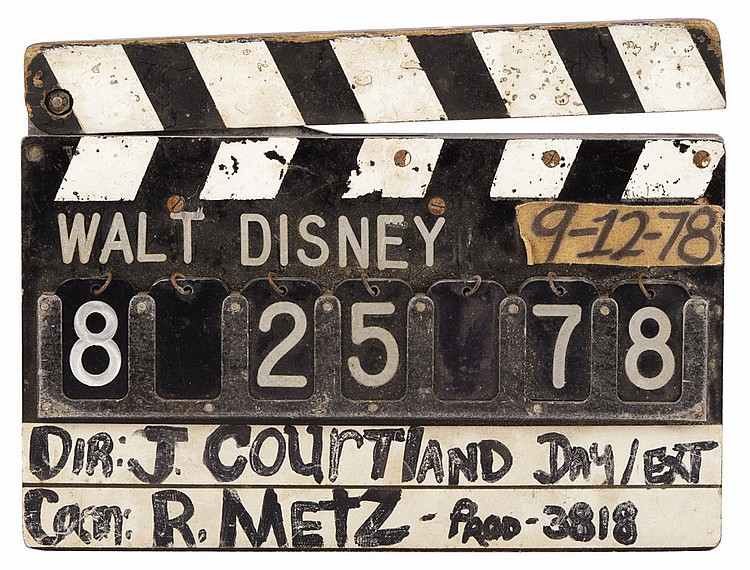
Jerome Courtland used this clapboard while directing an episode of Walt Disney's The Wonderful World of Color in 1978. You would have thought that they wiped the names of the crew cleaned and just reused the clapboards, but perhaps they thought this one was old enough to retire as is. It sold for $2,250 on auction. 


The vamp of the silent era - Theda Bara - wore this bejeweling brassiere in the 1917 silent classic Cleopatra. By itself it doesn't look like much, but on Theda..wow. Someone obviously thought they could pull off wearing it just as well as she did and forked over $8000 to buy it. 


The ultimate Star Wars prop would probably be Darth Vader's helmet, but second best would be this DL-44 blaster owned by Hans Solo ( Harrison Ford ). He zapped a whole ton of space slugs and Vader villians with this baby. Although it doesn't "blast", someone thought it worth dishing out $200,000 for. 


Lastly, a treasure to behold! The entire cast - and many of the crew members - of The Adventures of Robin Hood ( 1938 ) gathered together to sign a 1936 Rand McNally edition of Robin Hood by Howard Pyle. A truly collectible item and it sold for a truly collectible price - $8,000. 

So there you have it...a few gems that were put up on the auction block and currently enshrined in the homes of devout collectors. Every week items like these are being auctioned off across America and - unlike the prices you see above - great deals are still to be had on props that you would never have believed were preserved.

All of the photographs used in this post were obtained from Invaluable.com - the online site where the world's premier auction houses auction their valuables. The majority of these items were auctioned off between 2012-2014 from Profiles in History, which hosted Debbie Reynolds' Hollywood auctions. Click here to view and search more movie props, costumes, and rare memorabilia from past auctions!

Saturday, April 4, 2015

Bill Thomas - Costume Designer

Fortunately, Hollywood costume designers have always received well-deserved recognition of their contribution to the art of making a motion picture, but alas, even in this note-worthy profession there are the few who have fallen into obscurity. Yes, even a giant star can be lost in a vast galaxy, and so is the case with Bill Thomas. He was one of the busiest and hardest working costume designers in Hollywood and yet today his name has become forgotten among such talents as Edith Head, Adrian, and Irene. 

Ah, but even though his name was dwarfed by these giants, his work was not. How could it be? Bill Thomas dressed actors in over 300 films ( including just about every Walt Disney production ). His handiwork was evident in a wide array of films but I do indeed believe it is through his Disney work that he will be especially remembered.

Who does not fondly recall the striped shirtwaist worn by nanny Mary Poppins while doling out spoonfuls of sugar to her wee charges; or Miss Eglantine Price’s oversized motoring habit she wore while zipping through town on her motorbike to fetch her latest Correspondence of Witchcraft package; or Susan and Sharon’s matching blue and white Camp Inch uniforms, the envy of even a full-fledged Girl Scout? His skill in costuming contributed greatly to all of these classics. Although he did a marvelous job on all of the films he worked on, I will be focusing on his work for the Walt Disney Studios....just because they are so colorful. 
First, a brief look at the history of this man: Bill Thomas was born on October 13, 1921 in Chicago, Illinois. After high school he pursued his love of art and design at the Chouinard Institute, where another famous Disney Imagineer, Herbert Ryman, also received his education. In Hollywood, Bill worked at Universal Studios getting his start in motion picture costume design in films and serials such as The Desert Hawk, Mystery Submarine and westerns like Wyoming Mail. It was not long after this that his work was beginning to be recognized and he found that more and more dress designing assignments were coming his way.


Color films were a medium that Bill was especially adept at making costumes for and during the early 1950s he exercised this skill and was busy working on such rousing adventure films as The Flame of Araby, Yankee Buccaneer, The World in His Arms, and The Pirate – where he designed Judy and Gene’s comical garb for the famous 'Be a Clown' number.
                
Director Douglas Sirk found Bill’s work very eye-catching and had him design gowns for Lana Turner, Jane Wyman and Dorothy Malone in many of his lush Technicolor tear-jerkers such as Magnificent Obsession, All That Heaven Allows, Written on the Wind, and Imitation of Life (1959 ). Bill provided the perfect look of simple elegance for these leading ladies.


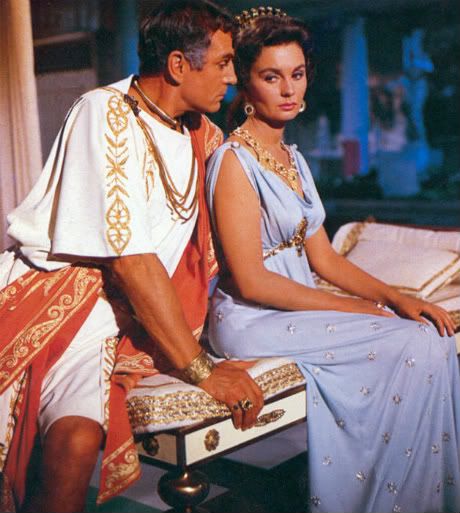
For the 1960 epic Spartacus, Bill Thomas again was called on to design strictly the leading lady’s wardrobe ( Jean Simmons', that is ) and this Romanesque work garnered him an Academy Award, along with chief costume designer Valles. It was one of nine Academy nominations he was to be honored with during his career. 

In 1961 he received his first of many, many assignments for Walt Disney Studios – The Parent Trap. Oh, and what a wonderful job he did creating these costumes!
                
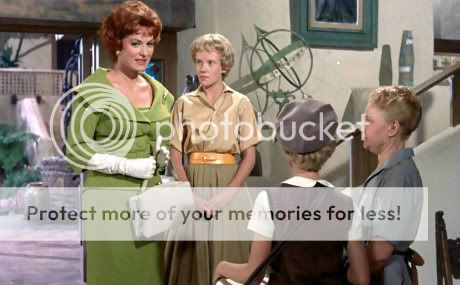
" You know Margaret, I’ve got to hand it to you, it certainly shows strength of character not to go with the new fashion trend in clothes "
               
Yes, Maggie’s transformation from a "mature" middle-aged mother of two to a ravishing modern mom was due in no small part to that stand-out lime green ensemble he designed. And the girls were not neglected in the fashionable dress department either….Bill had previously worked on teen-themed films such as The Restless Years ( with Sandra Dee ) and Tammy and the Bachelor ( Debbie Reynolds ) and knew well-nigh how to dress young women in the fashion of the time.
               
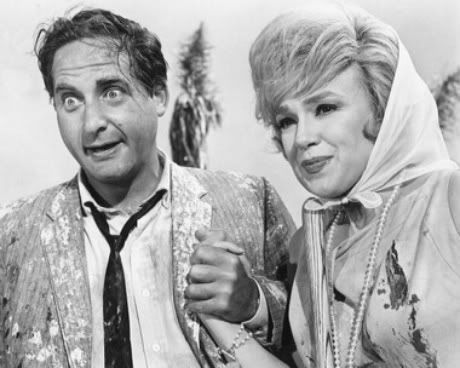
During his tenure at the Walt Disney Studios, Bill Thomas had time to do many freelance projects with other studios as well. One of these films was the mad cap comedy It’s a Mad, Mad, Mad, Mad World ( 1963 ) and he had an enormous cast to design costumes for in that one. Ethel Merman and that flower printed dress and straw sunhat she wore as the “mother-in-law”, will be forever associated together in my mind. Oh, but poor Mr. Thomas…the majority of his costumes were either ripped, splattered with paint, or layered in dust and dirt by the end of the film. ( No wonder you won’t find any It’s a Mad,Mad,Mad,World costumes in Debbie Reynold’s museum ).

He also designed the wardrobe for Dean Martin and Yvette Mimieux in Toys in the Attic; Vivien Leigh and Simone Signoret in Ship of Fools; Bob Hope and Anita Ekberg in A Global Affair; and James Garner and Julie Andrews in The Americanization of Emily during this time.


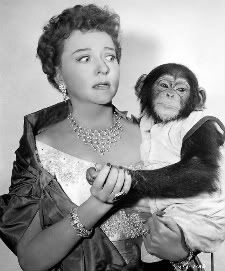
Bill Thomas was a very imaginative designer and he created elaborate costumes not only for period settings, but for classic book characters ( Barnaby in Babes of Toyland with his black caped suit, tights and matching top hat, and Robin Crusoe’s native straw-wear in Lt. Robin Crusoe USN ) and for monkeys. Lots of monkeys. There were monkeys in space ( Moon Pilot ), monkeys at balls ( My Man Godfrey ) and monkey grape pickers in France ( Monkeys Go Home! ).
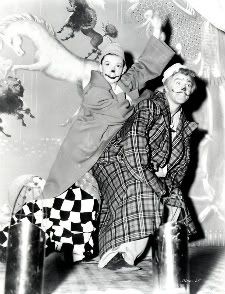
               
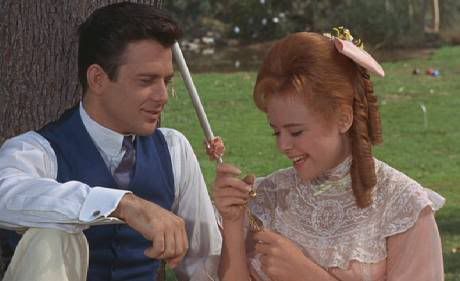
But it was lovely period summer dresses that Bill designed best, and Summer Magic ( 1963 ) had some of the most beautiful ones : Deborah Walley was the pink of perfection in her pink chiffon picnic dress which set off her red hair nicely;  Hayley Mills wore a more playful sailor themed croquet romper while she made faces at Debbie’s flawless style and, during the finale, Hayley got the eyes of admiration turned upon herself when she appeared dressed in a light yellow and white dress, arm in arm with her dashing suitor ( who was handsomely fitted too ) at the Halloween Ball.


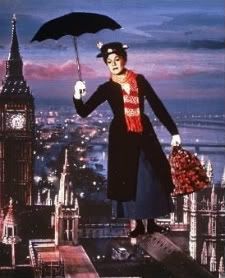
Of all of Bill Thomas’s creations, Mary Poppins' attire is undoubtedly the most memorable. Why, Mary Poppins would not be the Mary Poppins we know without her long black coat, blue tailor-fitted dress, black hat ( with flower of course ) and talking parrot umbrella. Even today his original designs are respectfully duplicated in the Broadway production of Mary Poppins. Each and every costume he created for all the members of Mary Poppins can be indelibly linked to the character and helps to add to their personality. 
The outfits he designed for the Jolly Holiday number were simply….jolly! Candy-like colors abounded and Mary Poppin’s summer-in-the-park dress was the tip of the top, crème of the crop loveliest of dresses to be seen.


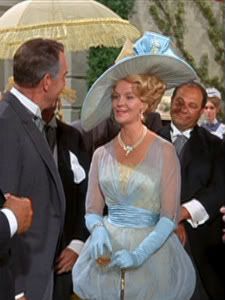
Another beautiful ensemble of costumes were created for the Biddle and Drexel families in The Happiest Millionaire ( 1967 ). Light, airy pastel toned fabrics were used throughout to enhance the cheerful story and help soften the image of the early 20th century.  The two matriarchs of the families not only had a verbal repartee during their children’s engagement party but were engaging in a battle of fashion as well, with each of them bedecked in the most sumptuous of Bostonian wardrobe.
A brief change from the period setting came when Bill was called upon to design numerous costumes for gnomes ( and humans too ) in The Gnome Mobile ( 1967 ). During the finale, head gnome Grandpa Knobby looked on as his grandson was being chased by a myriad of beautiful gnome-gals all wearing fairy-like costumes - in the short mini-skirt fashion of the times – eager to catch their would-be husband.
               

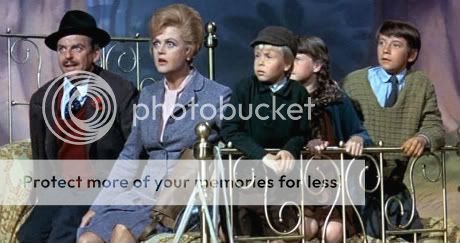
Bill Thomas received his second Academy Award for Best Costume Design for his garmenting of Eglantine Price, the witch who helped end the war, in Bedknobs and Broomsticks. Each costume was designed simply and in the keeping with the war-time restrictions of the more expensive fabrics, such as nylon and silk.


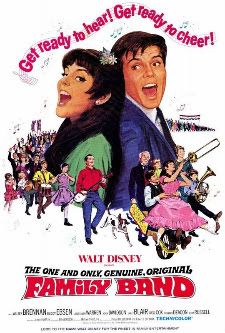
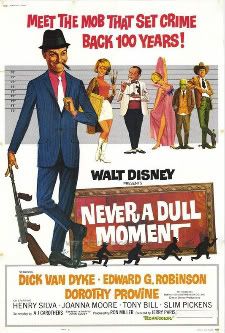
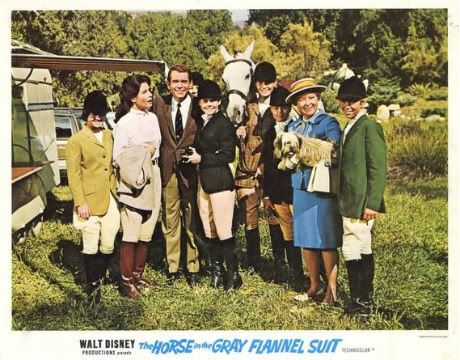
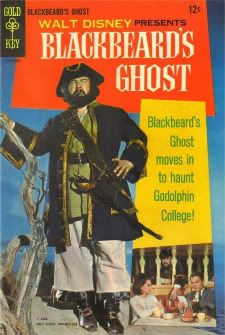
During the late 60s he strictly designed costumes for Walt Disney films and some of these movies included Blackbeard’s Ghost, The Love Bug, One and Only Genuine Original Family Band, Never a Dull Moment, and The Horse in the Grey Flannel Suit, Island at the Top of the World and Pete’s Dragon. His last motion picture for the Studio was The Adventures of Pollyanna….a sequel to one of the few Disney movies he did not design the original costumes to.
             
After doing a few television movies, Bill retired in 1982. During his long career, he had collected many of the costumes he designed, as well as many famous pieces and had become quite an authority on movie memorabilia. He was often called on as a consultant at studio auctions. Bill Thomas passed away on May 30th, 2000 in Los Angeles at the age of 79.