Showing posts with label John Barry. Show all posts

Monday, August 22, 2022

The Tamarind Seed ( 1974 )

Judith Farrow (Julie Andrews) is still grieving over the breakup of a rather lurid liaison with her married paramour Group Captain Richard Patterson (David Baron). She is vacationing in Barbados, attempting to clear her muddled mind and heal her broken heart, when she meets the suave Colonel Feodor Sverdlov (Omar Shariff), a Soviet military attaché who is also vacationing for a respite. Feodor works in the Paris embassy circle and happens to know Captain Patterson. Coincidentally, he is also acquainted with Sam Neilson of the British Home Office, for whom Judith works as a personal assistant. 

Back in London, British intelligence officer Jack Loder (Anthony Quayle) and Home Secretary Fergus Stephenson (Daniel O'Herlihy) are curious as to why Feodor is in Barbados and decide to keep surveillance on him and his supposedly coincidental encounter with Judith. Loder believes Feodor is conspiring to win Judith over "to the other side" so that the Russians could use her as an inside agent. 

Judith thought she met a kind and understanding friend on her holiday but when Loder approaches her with his suspicions of Feodor's motives for meeting her, she begins to wonder if she is indeed being used as a pawn in a political chess game between the East and the West. 

The Tamarind Seed is an engrossing romantic espionage drama from director Blake Edwards. It is a long picture (125-minutes), and the pace is slow, yet the story is riveting and the film never becomes tiresome. This is due to the fine performances of all the principal players and Edwards' compelling script, which was based on Evelyn Anthony's 1971 bestselling novel. 

Julie Andrews, who was married to Edwards at the time, delivers an excellent performance as the bewildered Ms. Farrow. Andrews portrays Judith as a woman of intelligence and strength, lost and confused though she may be. Judith follows her heart, in spite of being warned against doing so. "He's going to recruit you, isn't he?" Loder tells her. "You're wrong. He'll never do anything like that. I know him." "Do you? I doubt that, Mrs. Farrow"...."If you are right and he tries to involve me in anything, I will tell you, but I will not be used to spy against him," she replies. 

Feodor does indeed seem to be the honest undeceptive gentleman she believes him to be. As their holiday in Barbados comes to a close, they agree to meet again - discreetly - in Paris. Here Feodor informs her that he told his superior General Golitsyn (Oskar Homolka) that he is building a relationship with her in the hopes of recruiting her as a KGB agent and that she must be frank and tell Loder of their meeting as well. “Let me teach you the first lesson about these little games,” Feodor explains. “You must try to tell the truth as long as possible. That way, when times change and you have to lie, there is a great chance that you will be believed.” 

Judith has no taste for these Soviet cat-and-mouse games and yet she finds herself embroiled in them through her relationship with Feodor, a relationship she has no intention of pursuing since he is a married man and decidedly Marxist. "It is a good sign that we have many dialectic disagreements and yet get along so well together", Feodor exclaims. Perhaps so, but when Feodor's life becomes endangered, Judith must weigh her feelings for him against her loyalty to her own values.
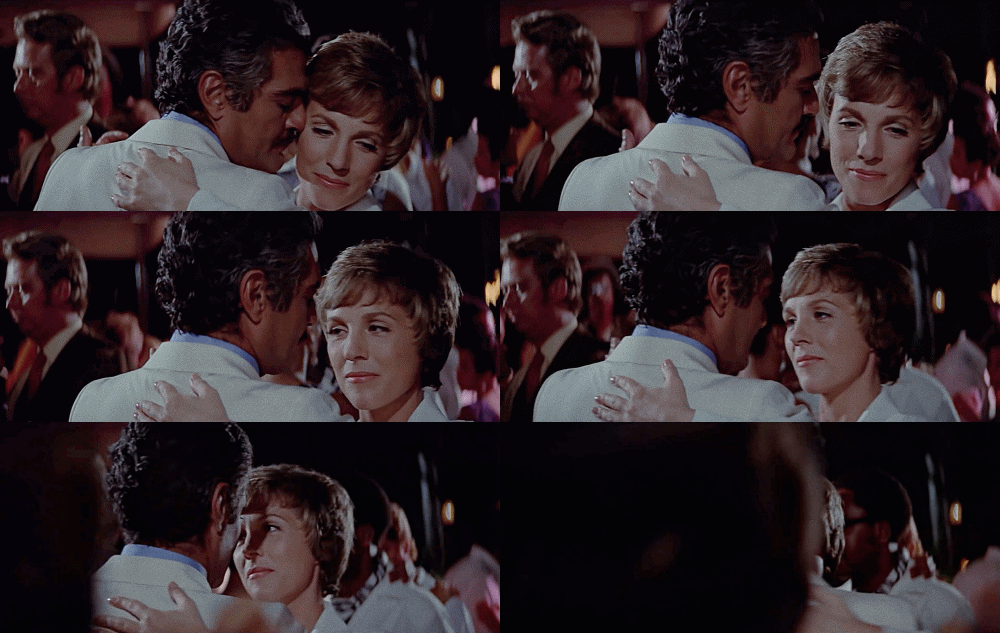
The Tamarind Seed was released in theaters in the summer of 1974 and was received with critical acclaim. The film was chosen to be shown for a Royal Command Performance and returned over three times its $2.4 million budget at the box office.

Freddie Young's beautiful cinematography elevates the film beyond a standard espionage drama and makes you feel like you are watching an epic. Indeed, with location filming in London, Paris, Barbados, and Switzerland and John Barry's lush score (not to mention Wilma Reading's wonderful rendition of "Play it Again"), it could very well be classified as a dramatic spy epic.

Also in the cast are Sylvia Syms, Bryan Marshall, Kate O'Mara, and Celia Bannerman.

The Tamarind Seed is currently available on DVD and via streaming on Tubi.

Thursday, January 23, 2020

John Barry - Composer

John Barry ( November 3, 1933 - January 30, 2011 )

John Barry is undoubtedly one of the most iconic and talented composers in cinema's history. He is most famous for his themes to the James Bond movies and his scores to Out of Africa and Dances with Wolves but his body of work extends well beyond these films. Bearing the true mark of a great composer, his scores are quite capable of standing on their own, apart from the film they were written for. 

"Ever since I was a child I've considered poetry and music to be two twin sisters, completely inseparable. Over the years I've always tried to develop a poetic universe of my own, not only for filmmakers but, through their films, for audiences too." - John Barry

When one thinks of film composers, it seems that John Barry's name was always ranked at the top, but few realize how great was the shift he had chosen to make in the persona he would assume in the music world. 

John Barry Prendergast was born in York, England in 1933 and spent his childhood working in a chain of cinemas that his father owned. He took up the trumpet when he served in the British Army and shortly after his discharge formed his own band - The John Barry Seven. The young Barry was greatly influenced by American jazz and rock n' roll and he wanted his band, modeled after Bill Haley and the Comets, to usher in a new era of music; of vibrant and youthful jazz and swing beats. Between 1957 and 1960, the band had a number of hits that were released through EMI's Columbia label and these were formative years for Barry himself. He loved arranging and composing music and other groups were asking him to arrange their music as well. 
EMI later hired Barry to arrange orchestral accompaniment for many of the studio's other signed artists, including teen sensation Adam Faith. When Faith was asked to make his first film, Wild For Kicks aka Beat Girl ( 1960 ), Barry came along to compose, arrange and conduct the score. This began a forty-year career in composing for films. 

Producers Albert Broccoli and Harry Saltzman caught wind of the young Barry's arranging talents and asked if he could work his magic on a theme for the first James Bond film they were making - Dr. No ( 1962 ). Monty Norman's opening theme needed some extra punch so Barry was paid £250 to rework it and was also given a promise to be contacted if another Bond film was to be made. Barry went on to write the scores for 11 Bond films, including the themes to Goldfinger and Thunderball. 

The success of his work on From Russia with Love ( 1963 ), Zulu ( 1964 ), and King Rat ( 1965 ) skyrocketed him to musical stardom. Barry was no longer the leader of a youthful rock n' roll band. Now, his music represented the "new sound" of film and by 1972 he was dressed in white tie and tails conducting The Royal Philharmonic Orchestra for the Filmharmonic concert at the Royal Albert Hall, sharing the stage with the great Miklos Rozsa. 


Barry composed so many excellent scores throughout the 1960s and 1970s ( Born Free, The Lion in Winter, Deadfall, King Kong ) as well as the themes to the television series Vendetta, The Persuaders!, and Orson Welles' Great Mysteries. In the 1980s he was composing one beautiful theme after another, including the romantic classics Somewhere in Time and Out of Africa. His composing talent remained in high demand until his death at the age of 77 in 2011. 

Throughout his career, John Barry earned six Academy Award nominations, four BAFTA awards, ten Golden Globe awards, and won four Grammy awards. These were well-deserved accolades for such an accomplished composer. 

Signature Style

Barry's trademark stamp of excellence is a unique mixture of lush strings, very precise harmonic mechanisms and jazz elements. His melodies are often sensuous and usually involve complex key shifts. Barry was influenced by his love for jazz, big band music, and Russian romantic composers. Quite an intoxicating combination!


The Noteworthy Five

Goldfinger ( 1964 ) - This was the theme that set the bar for all James Bond films to follow. It was bold, brassy and extremely classy. The golden voice of Shirley Bassey increased its worth tenfold. 

Born Free ( 1966 ) - The theme to Born Free is a lovely musical salute to freedom and the yearning wild animals have for their native habitats. It sounds beautiful whether it is performed strictly as an instrumental or sung by the English singer Matt Monro. Notice how the french horns majestically sound the "Born Free" notes as the Columbia logo appears on the screen just prior to the introduction of the melody. 

The Lion in Winter ( 1968 ) -  Like his score to Zulu, The Lion in Winter is very menacing and yet it captures the atmosphere of its medieval setting beautifully. Without the presence of Barry's score, this film would be dreary indeed. The version linked here is an easy-listening adaptation by Percy Faith but Ferrante and Teicher also made an excellent cover on their album "Listen to the Movies".

Out of Africa ( 1985 ) - This one is truly breathtaking. The main melody does not make its entrance until nearly a minute and a half into the theme yet that seems to matter very little since the orchestration is so lush and sweeping. Like Bernard Herrmann, Barry loved french horns and used them profusely. 

Dances with Wolves ( 1990 ) - The John Dunbar theme to Dances with Wolves is one of those melodies that most everyone instantly recognizes, regardless of whether they have seen the film or not. The movie is set in the American West during the time of the Civil War and so John Barry implements motifs that evoke traditional American folk tunes, yet always remaining distinctly Barry in style. 

Highlights from his Discography

  • Zulu ( 1964 )
  • Goldfinger ( 1964 )
  • King Rat ( 1965 )
  • The Ipcress File ( 1965 )
  • Born Free ( 1966 )
  • Deadfall ( 1968 )
  • The Lion in Winter ( 1968 )
  • On Her Majesty's Secret Service ( 1969 )
  • The Last Valley ( 1971 )
  • Mary, Queen of Scots ( 1971 )
  • Love Among the Ruins ( 1975 )
  • The Day of the Locust ( 1975 )
  • King Kong ( 1976 )
  • The Black Hole ( 1979 )
  • Somewhere in Time ( 1980 )
  • A View to a Kill ( 1985 )
  • Out of Africa ( 1985 )
  • Dances with Wolves ( 1990 )
  • Chaplin ( 1992 )