Showing posts with label Westerns. Show all posts

Saturday, June 8, 2024

From the Archives: The Treasure of Lost Canyon (1952)


Three happy people... Julie Adams is looking lovely, Charles Drake is handsome as usual, and the little smiling boy is Tommy Ivo pictured here in this still from the little-known western The Treasure of Lost Canyon (1952). 

From the Archives is our latest series of posts where we share photos from the Silverbanks Pictures collection. Some of these may have been sold in the past, and others may still be available for purchase at our eBay store: http://stores.ebay.com/Silverbanks-Pictures

Friday, January 5, 2024

From the Archives: Vengeance Valley (1951)

Burt Lancaster and Robert Walker co-star as warring half-brothers in the western drama Vengeance Valley (1951). In this scene, one can clearly see who the "baddie" is by his dark-colored shirt! 

From the Archives is our latest series of posts where we share photos from the Silverbanks Pictures collection. Some of these may have been sold in the past, and others may still be available for purchase at our eBay store: http://stores.ebay.com/Silverbanks-Pictures

Thursday, July 27, 2023

Broken Arrow ( 1950 )

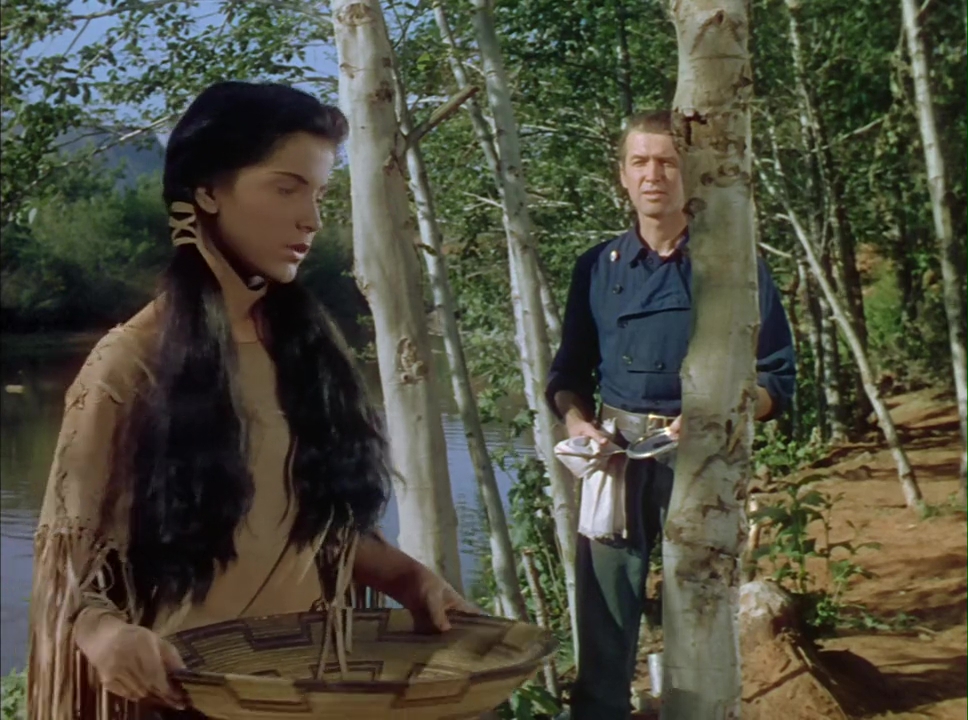
The Legends of Western Cinema Blogathon is taking place this week celebrating great Western films, television series, and stars of Westerns. Our choice for this event is a review of the classic James Stewart western Broken Arrow, released in 1950. 

This was the first dramatic western that James Stewart ever made and he was so well suited to the genre that he went on to star in sixteen more westerns within the next 25 years. The story is one of friendship, love, and cultural understanding set against the backdrop of the tumultuous Apache Wars in the Arizona Territory in 1870.

James Stewart portrays veteran scout Tom Jeffords who is tired of the warfare between the whites and the Apaches. He reasons that intelligence and understanding must be used in putting a halt to the war. He learns the Apache language and their customs and then rides into their camp to prevail upon their leader Cochise to allow the overland mail riders to pass unharmed. This is a small step in what Tom hopes will be the beginning of peace negotiations. 

Jeffords slowly gains the trust of Cochise who agrees to talk peace terms with General Oliver Otis Howard who is acting as an ambassador to the "Great White Chief", President Ulysses S. Grant. Cochise eventually agrees to "break the arrow" with the white people, a symbol of the Apaches to stop fighting, but there are men on both sides who resist extending the olive branch of peace. 

"To talk of peace is not hard. To live it is very hard."

If you enjoy action-packed westerns, then Broken Arrow is not for you. It meanders along like a gentle brook and the only tension to be had is in wondering whether the peace treaty will be broken by either party before they have a chance to cement their relationship. However, the story is so engrossing that action is not needed. It is a touching and thought-provoking film. When Tom first enters Apache territory, he expects to encounter a hostile warrior and isn't even certain he will leave the area alive. Instead, he finds a man as tired of war as he is. Cochise admires Jeffords courage in approaching his camp and is touched that he took the time and effort to learn the Apache language and way of life. In turn, Jeffords comes to respect Cochise and the care he has for his people. A strong bond is forged between him and Cochise, one built on mutual admiration. 

Jeff Chandler gives a wonderful and dignified performance as the wise warrior. He was such a handsome man and had a natural flair for acting. With his expressive face, minimal dialogue was needed for him to convey a message, making him an ideal actor for this role. Cochise was a man who used actions instead of words. Chandler was nominated for an Academy Award for his role and - according to Kim Newman, author of "Wild West Movies" - he established Cochise as the "1950s model of an Indian hero."

James Stewart also gives a sensitive performance as the weary scout. Jeffords is a middle-aged man who has been alone all of his life. Now that he is getting older, all he wants is peace and the settler's life he never had. When he enters Apache Territory the last thing he expects to find is romance, but he falls in love with the beautiful Sonseeahray (16-year-old Debra Paget making her screen debut ) the moment he sees her and asks Cochise for her hand in marriage. 

"It won't be easy for you both....You will go far away, always to new places but your eyes will never see anything because they will always be turned backwards...towards home."


Also in the cast is Basil Ruysdael as the "Christian General", Jay Silverheels as Geronimo, and Frank McGrath. Delmar Daves does a wonderful job directing the film and creating a compelling narrative. This was the first western he directed and it inspired a genre of "pro-Indian" films in the 1950s. The cinematography is also beautiful and captures the breathtaking beauty of the American Southwest with its desert landscapes and majestic mountains. 

Broken Arrow was based on the 1947 novel "Blood Brother" by Elliott Arnold which, in turn, was based on a true occurrence between Cochise and frontier scout Tom Jeffords, who was also the superintendent of the overland mail in Arizona Territory in the 1860s. The film was notable at the time for being one of the first Westerns to show a compassionate view of the Native Americans. 

Shortly after filming wrapped, James Stewart began work on Winchester '73 directed by Anthony Mann. This would be the first of six westerns he would make with Mann in the 1950s. Broken Arrow and Winchester '73 were released within two months of each other in the summer of 1950 and both were box-office hits. Broken Arrow was nominated for three Academy Awards and also earned a Golden Globe for Best Film Promoting International Understanding.

Broken Arrow is available on DVD and for free through streaming via the Tubi and Roku apps. You can also watch it online at tubitv.com.

Be sure to check out more great reviews and other fun Western theme posts from the Legends of Western Cinema Week being hosted by Hamlette's Soliloquy, Along the Brandywine and Meanwhile in Rivendell. 

Sunday, June 5, 2022

The Winnetou Films - Classic European Westerns

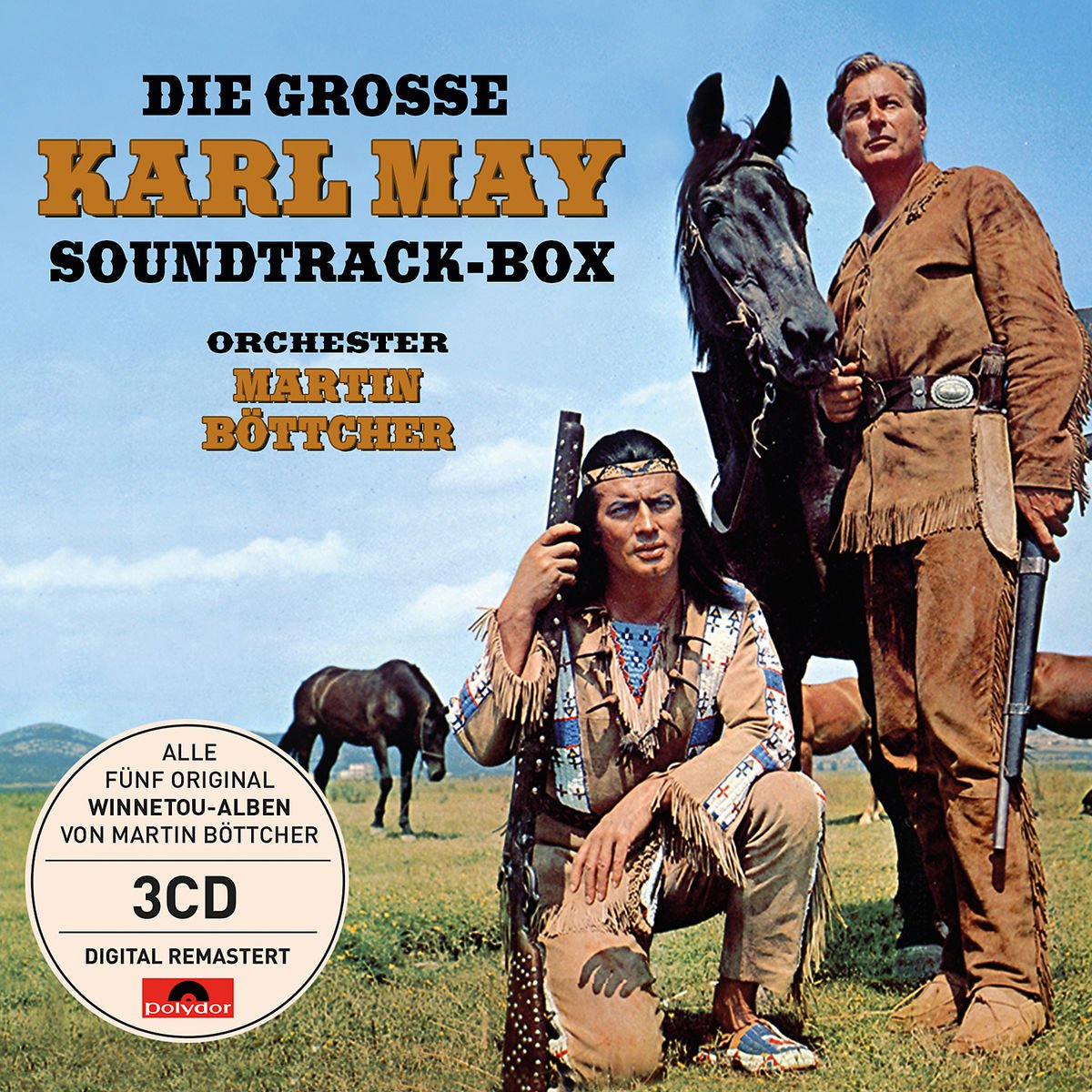
The Foreign Western Blogathon is taking place this weekend over at Moon in Gemini so we are joining in on the celebration of non-Hollywood westerns with this peek at one of Germany's most popular Western film series - the Winnetou Saga. 

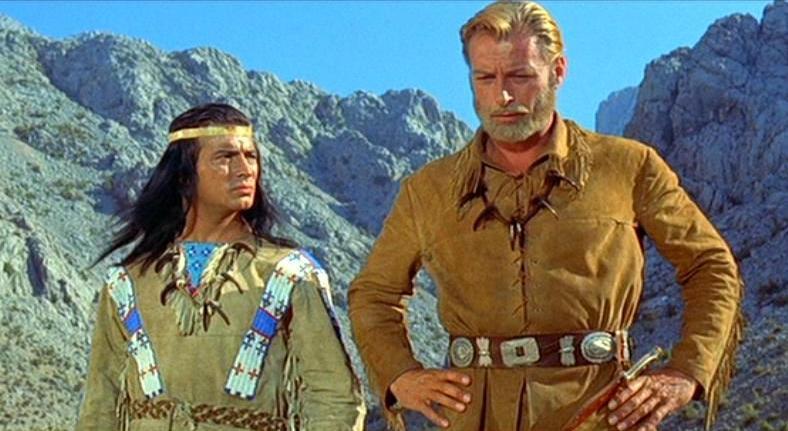
The Winnetou films were based on Karl May's popular western novels dating from the late 1800s. Karl May penned nearly thirty tales of the great Apache warrior Winnetou and his blood-brother Old Shatterhand between 1875 and 1910 and millions of copies were sold throughout Europe. 

Old Firehand ( 1875 ) was the first book in the series and it tells the story of Winnetou, an Apache Indian chief. His father and sister are slain by the white bandit Santer so Winnetou seeks revenge and encounters Old Shatterhand, a scout, during his adventure tracking down this villain. At first, they perceive each other as enemies, but they soon become friends and, eventually, blood brothers. 

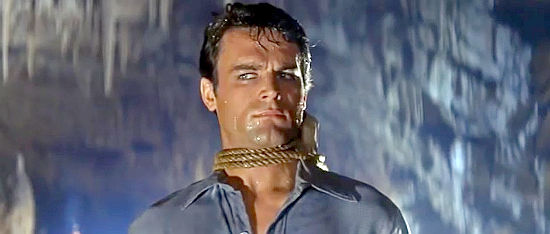
As popular as the books were, it was not until 1962 that Winnetou was first brought to the screen in a German-French-Yugoslavian co-production from Rialto Film studios titled Treasure of Silver Lake ( Der Schatz im Silbersee ). French actor Pierre Brice took on the role of the great Apache and American actor Lex Barker portrayed Old Shatterhand with other parts going to Götz George, Herbert Lom, and Karin Dor. The production was directed by Harald Reinl, a popular Heimatfilm director, and shot in color in the beautiful Plitvice Lakes region of Yugoslavia ( standing in the for the American West ). 

Treasure of Silver Lake had a modest budget but became a phenomenal success on its release, ranking as the highest-grossing film in Germany in 1962 and raking in sales throughout France, Italy, Spain, Russia, and Eastern Europe. Its unexpected success launched the production crew into making a sequel within the next few months and in 1963, Winnetou the Warrior aka Apache Gold, was released. This film was even more popular than Treasure of Silver Lake and the cast and crew once again plunged into a follow-up film. 

A total of eleven Winnetou films were released between 1962 and 1968 with each subsequent film boasting a larger budget and cast ( Stewart Granger took over as Old Shatterhand when Lex Barker left the series ). The films were re-released for years to come and, in 1980, a television mini-series was made featuring Winnetou - Mein Freund WinnetouIt was the success of the Winnetou pictures that even inspired Italian director Sergio Leone to create the first of his own series of "spaghetti westerns" - A Fistful of Dollars - in 1964. 

Instead of reviewing each film in the series, we have put together some photos from each of the films to give you a hint at what the Winnetou Saga has to offer. 


The Winnetou Films

  • Treasure of Silver Lake aka Der Schatz im Silbersee ( 1962 )
  • Apache Gold aka Winnetou 1 Teil ( 1963 )
  • Old Shatterhand ( 1964 )
  • Last of the Renegades aka Winnetou 2 Teil ( 1964 )
  • Frontier Hellcat aka Unter Geiern ( 1964 )
  • Rampage at Apache Wells aka Der Olprinz ( 1965 )
  • The Desperado Trail aka Winnetou 3 Teil ( 1965 )
  • Flaming Frontier aka Old Surehand 1 Teil ( 1965 )
  • Winnetou and the Crossbreed aka Winnetou und das Halbblut Apanatschi  ( 1966 )
  • Winnetou and Old Firehand aka Winnetou und sein Freund Old Firehand ( 1966 )
  • The Valley of Death aka Winnetou und Shatterhand im Tal der Toten ( 1968 )


Click here to watch some of the original German trailers, and you must definitely check out Martin Bottcher's fantastic Winnetou theme ( this particular link is for the Old Shatterhand film ). 

Sunday, December 19, 2021

Wintry Westerns - 8 Classic Westerns Set in Winter

I love westerns. I don't review them nearly as often as I should but I certainly do watch plenty of them! And, at this time of year, the best westerns to watch are the Wintry Westerns....those that are set in snowy locales. Most westerns take place in dusty desert areas such as Arizona and Texas or in lush green cattle-grazing lands like Wyoming and Colorado so this is a small niche. They are great to watch on a cold winter's day with a cup of hot cocoa, especially when the snow is falling outside.

I'll share with you some of my favorites ( from the oldest to the newest ) and hopefully, you'll share some of your favorite wintry western titles as well. 

THE WILD NORTH ( 1952 ) 

Stewart Granger plays a trapper accused of murdering a man in a Canadian village. He takes refuge in the mountains but can't shake a Mountie ( Wendell Corey ) off his trail. Instead, during a fierce snowstorm, they band together to battle the forces of nature and survive in the "wild North". This is one of my favorites, not only because of the great location scenery of Idaho ( not Canada ) but because of the presence of Stewart Granger and Cyd Charisse as an Indian maiden. 

BACK TO GOD'S COUNTRY ( 1953 )

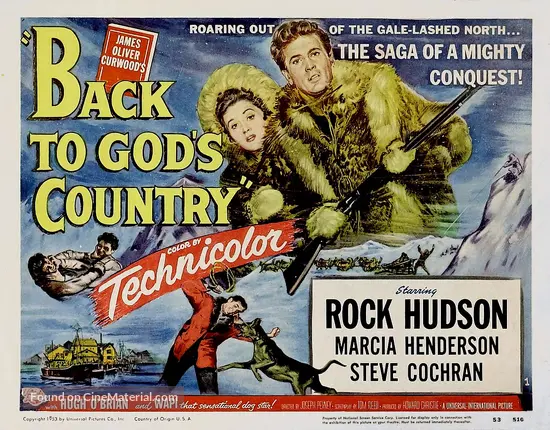
Perhaps this might not qualify as a western, but it takes place in the 1870s in snowy Alaska, so that's close enough for me. Rock Hudson plays an American sea captain who is taking a cargo of furs down to the states from Canada via dogsled. Contending with the weather is harrowing enough, but Rock also has a broken leg and two dangerous villains on his heels. 

TRACK OF THE CAT ( 1954 ) 

Robert Mitchum stars in this visually striking western as the son of a ranching family who heads out into the snow to track down a panther who is killing the family's livestock. Diana Lynn and Teresa Wright co-star and yes, that's William Hopper Jr. with a beard. Director William Wellman's son stated that his father created the picture as a "black and white film shot in color" with specific pops of color adding a beautiful splash to the overall monochromatic look. 

DAY OF THE OUTLAW ( 1959 ) 

"A day you'll never forget!" declares the poster to this Robert Ryan film. Unfortunately, I did forget most of this gritty western, but I do remember the winter landscape and Burl Ives cutting a powerful image on horseback. It's about a cattleman trying to save a small frontier town from Burl Ives and his gang of thugs. 

WILL PENNY ( 1967 ) 

This film starts off as a regular "sunny" western but about half way through we see the winter scenes. Will Penny ( Charlton Heston ) is an aging cowboy who gets a line camp job on a large cattle spread and finds that there is a woman ( Joan Hackett ) and her son already living in the cabin he is supposed to occupy by himself. He lets them stay over the winter and protects his "family" when the wicked Quint ( Donald Pleasance ) invades his home. 

THE GREAT SILENCE ( 1968 ) 

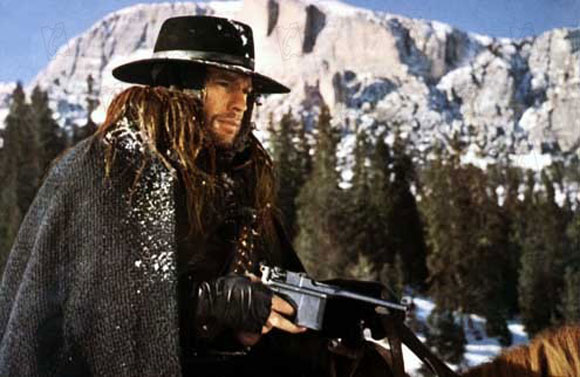
Spaghetti westerns are one of those genres that you either love or hate. I could live without them - especially the brutal ones - but I had to include this film because it is set is a snow-covered Utah and is renowned for being one of the best spaghetti westerns ever made. It's about a mute gunfighter who takes it upon himself to defend a group of outlaws from a band of bloodthirsty bounty hunters. Jean-Louis Trintignant, a French actor who couldn't speak a word of English, starred as the mute gunslinger "Silence". 

McCABE AND MRS. MILLER ( 1971 ) 

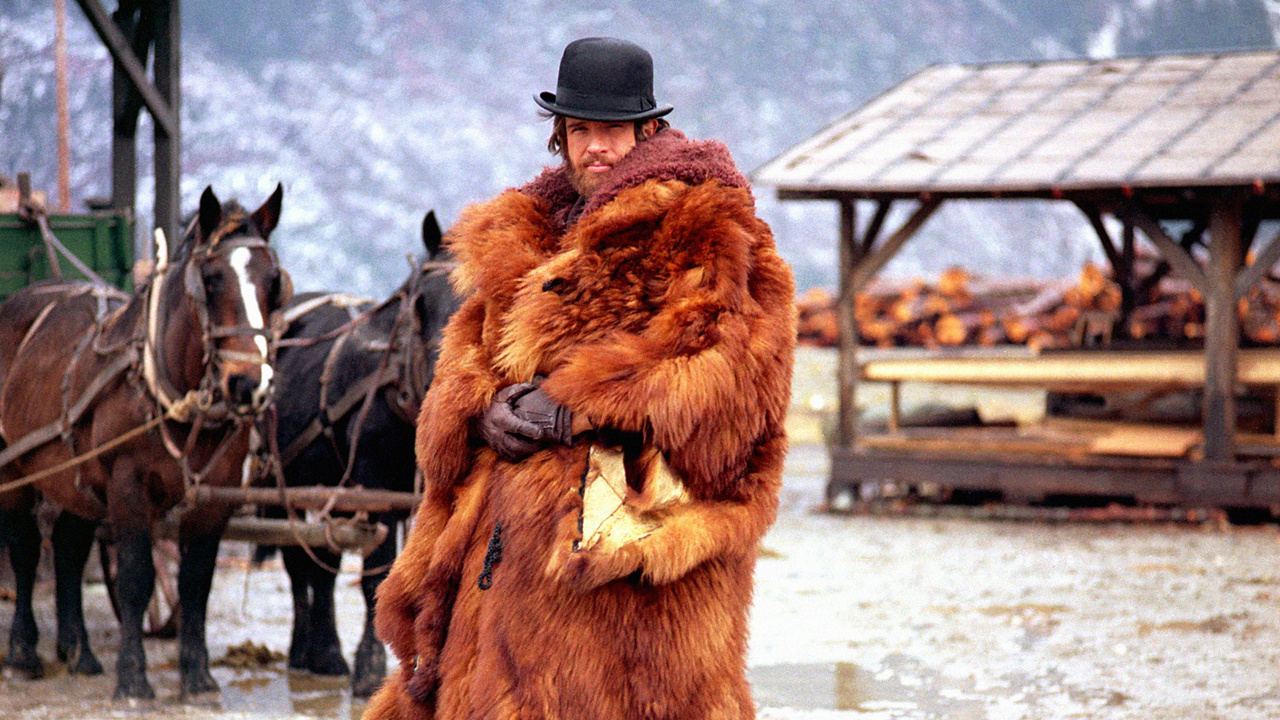
Warren Beatty and Julie Christie star as a gambler and a prostitute who become business partners in a brothel in a remote mining town. Their business trives until a major corporation comes to buy them out. This film is often cited as one of the first "anti-westerns" because it features no gunfights and no heroes but our purpose it can be classified as a western. McCabe and Mrs. Miller really captures the cold environment of winter and features some beautiful filming from director Robert Altman. 

JEREMIAH JOHNSON ( 1972 )

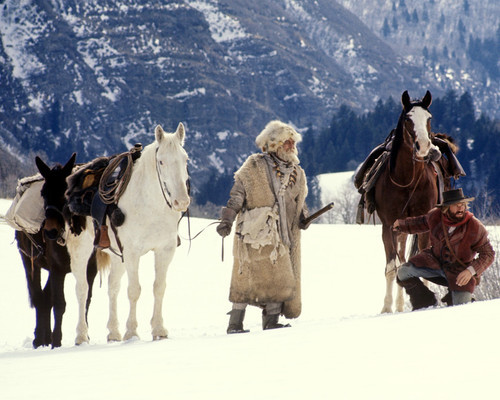
Robert Redford stars as mountain man Jeremiah Johnson in this outdoorsman's adventure set in the beautiful hills of Utah ( and filmed on Redford's recently acquired Sundance ski area ). Johnson is a  Civil War veteran who abandons mankind and heads for the mountains of Utah to become a trapper. With the help of another grizzled mountain man ( Will Geer ), he learns to live of the land but must contend with hostile natives when he incurs the wrath of a Crow chief. 

Friday, June 19, 2020

From the Archives: Gun for a Coward ( 1956 )


Janice Rule is clinging to her newly-found boyfriend Jeffrey Hunter in this publicity photo for "Gun for a Coward" ( 1956 ), an entertaining western from Universal Pictures. Fred MacMurray was the star of the film but this handsome young couple provided all of the romantic interest. 

From the Archives is our latest series of posts where we share photos from the Silverbanks Pictures collection. Some of these may have been sold in the past, and others may still be available for purchase at our eBay store : http://stores.ebay.com/Silverbanks-Pictures

Thursday, April 30, 2020

From the Archives: The Kentuckian ( 1955 )

Lovely Diana Lynn poses as Susie Spann in this publicity photo from the MGM western drama The Kentuckian ( 1955 ) starring Burt Lancaster. 

From the Archives is our latest series of posts where we share photos from the Silverbanks Pictures collection. Some of these may have been sold in the past, and others may still be available for purchase at our eBay store : http://stores.ebay.com/Silverbanks-Pictures

Saturday, July 27, 2019

Gun Glory ( 1957 )

Philip Yordan's western novel "Man of the West" was brought to the screen in beautiful Cinemascope as Gun Glory ( 1957 ) with the great Stewart Granger taking on the lead role of Tom Early. 

It is 1880s Wyoming, and Early has just returned to the town he calls home after spending years away attempting to win a fortune gambling. He has gained an unwarranted reputation of being a gunslinger and is known in town as the man who "enjoys killing". Early is surprised when he goes to his homestead and discovers that his wife has died and his 17-year-old son ( Steve Rowland ) blames him for her death. 

Early wants to put away his guns, patch up his relationship with his son and return to ranching, but a local cattle baron named Grimsell ( James Gregory ) is bent on stirring up trouble instead. He wants to pass his herd of 20,000 cattle roughshod through the town's valley which will destroy many of the settlers' lands. Early warns the townspeople that they have the right to refuse him access to cross the valley but that Grimsell will not settle the dispute without a fight. After Grimsell attacks the preacher ( Chill Wills ) and his posse, Early decides to strap on his guns again and take on Grimsell single-handedly. 

"Men who live by the gun, die by the gun" - Preacher

"That depends on what kind of shot you are" - Early

Stewart Granger, in spite of being an Englishman, was well-suited to the western genre. He looked good on a horse and had that rugged come-and-tackle-me appearance. Granger himself loved the American west and, several years prior to making Gun Glory, had purchased a 5,280 acre ranch near Nogales, Arizona to breed cattle. 

He gives a solid performance as Tom Early, making him out to be quite a noble character even though he deserted his wife and son years ago. 

On its surface, Gun Glory appears to be a run-of-the-mill western, but there is a lot of depth to the characters and the relationships between them which gives the film its added appeal. The romantic angle is provided by the beautiful Rhonda Fleming who plays Jo, a young woman whom Early rescues from the leering eyes of storekeeper Sam Winscott ( James Aubuchon ). She needs a job and gladly accepts the task of being Early's "live-in" housekeeper. Naturally, in the seclusion of his homestead, love blossoms between the two.
Steve Rowland also gives a good performance as Tom's handsome son. He has to wrestle with his resentment toward his father and also his romantic feelings for Jo. Steve Rowland is the son of Roy Rowland, the director of Gun Glory. 

James Gregory is delightful as the brutish baddie and the lovable Chill Wills gets an especially meaty part as the gentle but courageous preacher. 

Also in the cast is Arch Johnson, Rayford Barnes, William Fawcett, Bud Osbourne, and an uncredited May McAvoy, a leading lady of the silent era. 

"There weren't any people here the last time I drove cattle through, too bad they're here now, but they're in my way..." - Grimsell
Philip Yordan had a reputation for being one of the best "script-doctors" in Tinsel Town. He himself worked uncredited on numerous films, patching up story plots and dialogue to make them play out better. He had an special knack for film noirs and westerns. Johnny Guitar ( 1954 ), Broken Lance ( 1954 ), The Man from Laramie ( 1955 ), The Last Frontier ( 1955 ) and The Bravados ( 1958 ) were all Yordan stories/scripts. Surprisingly, he did not write the screenplay to Gun Glory. Instead, William Ludwig got screen credit for the film even though it was written by screenwriter Ben Maddow, a talented writer who was a victim of the Hollywood blacklist.

Gun Glory is not one of the legendary westerns of the 1950s, but it ranks above many others for its fine script, great acting, beautiful color photography, and its entertaining ballad theme "The Ninety and Nine" sung by Burl Ives. 

This post is our contribution to Legends of Western Cinema Week being hosted by Along the Brandywine, Hamlette's Soliloquy and Meanwhile, in Rivendell. Be sure to click on this link to check out more reviews of films and actors of the western genre. 

Thursday, July 25, 2019

Tribute to a Bad Man ( 1956 )

"I was a boy when I entered Mr. Rodock's valley but when I left I wasn't a boy anymore. I had picked up a few pointers about how men died quickly and how they kept from dying quickly; how to be cruel and how not to be cruel; and what love isn't, and what it is."

Steve Miller ( Don Dubbins ), a Pennsylvania grocery boy, is heading west to carve out a new life for himself when he ventures into a Colorado valley in 1875 and rescues a horse rancher who was ambushed. This man is Jeremy Rodock ( James Cagney ), who not only owns the valley but all of the horses in it. 
In gratitude for saving his life, he takes Steve to his ranch and offers him a job as a wrangler. It is here, in Rodock's valley, that Steve grows into manhood, learning new skills, falling in love for the first time, and witnessing torture and the hanging of a man. 

Tribute to a Bad Man is an underrated western that has been passed by many a stagecoach over the years. It was based on the short story "Hanging's for the Lucky" by Jack Schaefer, an excellent western author who is most famous for penning the novel "Shane" in 1949. 

Spencer Tracy was initially cast in the role of Rodock but balked at working on a set built at such a high altitude ( it was filmed on location in Montrose, Colorado ) and generally proved to be such a nuisance to the director and cast that MGM fired him four days after shooting began. James Cagney was called away from his beloved Martha's Vineyard as a replacement and - as Robert Wise recalls - "couldn't have been any more different in terms of attitude than Tracy...taking Don Dubbins under his wing and was very helpful to Irene Papas."
Cagney had made only two westerns prior to this invitation but the genre, and this particular role, was a glove-fit for him. It is a tribute to Cagney's versatility as an actor that he was able to perform such a diverse array of characters throughout his career. He truly becomes Rodock and infuses the character with a tenderness under his crusty exterior that I doubt Tracy could have brought to the part. 

In spite of his bursts of cruelty, Rodock is never an unlikable figure. Jeremy is not really a "bad man" as the title implies. Cagney shows us that his goodness is always just beneath the surface. He is a fearful man; and in his acts of fear he has gained a reputation for being merciless, but as he puts it,

"We're living in the middle of nowhere. Two hundred miles from any kind of law and order, except for what I built myself. Ever since I started - and this you don't know - I've been badgered, skunked, bitten out and bushwhacked by thieves from everywhere. And now, one of my men's been killed. I find my horses, I find the killer. If I find the killer, I hang him."
Rodock is constantly bothered by horse thieves. Most of them are in league with his old partner Peterson ( James Bell ) who lives nearby with his wife ( Jeanette Nolan ) and son Lars ( Vic Morrow ). Peterson failed at ranching and, despising Rodock's determination and success, steals his plentiful horses. 

When injustice is done in his land, Rodock makes the men who threaten his territory pay the price of death - a death by hanging. But this act of vengeance costs the range baron dearly. "Hanging fever" could take hold of a man's soul and corrupt him for life. 

"If you'd only see what it does to you, Jeremy. It changes you."
Rodock is also threatened by his foreman McNulty ( Stephen McNally ) who has eyes for Jocasta "Jo" Constantine ( Irene Papas ) a young Greek immigrant whom Rodock rescued from a Cheyenne bawdy house where she was playing the piano. They have a living arrangement and a relationship agreement..... "I'm here as long as you'll have me."

Jo has no desire to leave Jeremy but in spite of her affirmations, he feels insecure and worried that she will desert him for any young man that wanders into the ranch...including Steve. 

Jeremy wants to have something or someone belong to him, fully. "A man oughta be able to have somethin', and believe he's got it. That it's his, that he ain't gonna lose it ever!" He lives in constant fear of knowing a rustler may take away his horses or that Jo will leave him. Rodock has relied on himself and his own instincts for so long that he is slow to trust. But "how can you invest your heart in someone if you don't trust?", Jo asks.

Tribute to a Bad Man is not your traditional western because the story of the horse thieves and Rodock's thirst for justice are merely side plots to the true focus of the film - Rodock's inner desire for security. He clearly wants to tear down his personal barriers when he is with Jo but that nagging insecurity holds him back. Little does he realize how much Jo loves him. This romantic angle to the story is what makes it so endearing to me. 

Western films have long had a tradition of featuring gentle romances, a slow blossoming of love between a hardened cowboy and a soft-spoken schoolteacher or minister's daughter. There is no sudden fierce outburst of emotion. There are no long courtship sequences. There is just an understanding look, a glance of sympathy, a touch of the hand. Robert Wise quickly establishes to the audience that Jeremy and Jo are in love with each other but he adds anticipation to the story by letting us witness the characters discover this for themselves. 

Irene Papas, a beautiful actress with striking classical Greek features, gives a strong performance in her Hollywood debut. Jocasta is an independent woman, an ex-saloon entertainer who likes to sass back at men, but Papas lends her character old-world understanding and soulfulness that makes her so very appealing. 
All-around the casting was excellent. Don Dubbins gives a wonderful performance as the gentle young Steve. James Cagney took such a liking to the lad that he was featured in Cagney's next picture, These Wilder Years ( 1956 ). McNally and Morrow are good as the bitter villains who would clearly like to shoot Rodock in the back, and a gathering of familiar western character actors were also rounded-up for support: Lee Van Cleef, Royal Dano, Chubby Johnson and James Griffith. 

"Maybe I ain't hard, maybe that's why. But Mr. Rodock, you didn't have to hang him."

Tribute to a Bad Man was filmed in Cinemascope by cinematographer Robert Surtees who beautifully captured the magnificence of the Colorado landscape. The film also features an expressive score by Miklos Rozsa which was woven throughout with Greek-inspired motifs. 
Robert Wise made only three westerns ( Two Flags West, So Big ) which leaves one to wonder how many fantastic westerns could have been added to the genre had he made them a focus of his career. Wise was such a professional director and Tribute to a Bad Man is evidence of the sure-hand that was holding on to the reins of the production. He structures the scenes in short sequences that play out naturally and are never overstuffed with emotion or action. The emphasis is always on visuals, which conveys the underlying message of the story so much more effectively. This is especially evident in the final sequence. In the hands of another director, this ending may have come off as schmaltzy, but instead it unfolds as one of the most satisfying - and beautifully photographed - conclusions to a western that I have ever watched.