Tuesday, December 19, 2023

Behind-the-Scenes at Warner Brothers from the 1920s-1940s

We're hosting the 100 Years of Warner Brothers Blogathon this weekend and to celebrate this special occasion we have gathered together some behind-the-scenes photos from Warner Bros. rich history. The studio had great success shortly after it launched in 1923 and really hit its stride in the 1940s. They continued to produce many fine films in the 1950s, 1960s, and 1970s but we are just highlighting some candids from the "golden age" of the studio. 


First off....the brothers who started it all: Albert, Jack, Harry and Sam Warner. 

The brothers Warner, from left to right: Jack, Harry, Sam, and Al posing with Will Hays who is pictured in the center.


The Warner Bros. Sunset Boulevard Studio and offices in Los Angeles, pictured in the mid-1920s.


The Warner Brothers film studio during the silent-film era


Jack Warner (right) and director Harry Beaumont greet John Barrymore as he arrives in Hollywood to film Beau Brummel (1924)


One of Warner Brothers' biggest stars of the 1920s, Rin-Tin-Tin, is seen here getting his much-deserved chow break.


Constructing a studio: In this photo from 1926, work is underway for the new First National Pictures Studio which Warner Brothers purchased two years later.


Harry Warner, Jack Warner, Al Jolson, Darryl F. Zanuck and Al Warner on the Warners lot in 1927.


Jack and Harry Warner flank two of the studio's biggest box-office stars of the era - George O'Brien and Dolores Costello on the set of Noah's Ark (1928).

Warner Brothers' Studio was a pioneer of new technology and in 1927 they were the first studio to release an all-talking "sound" picture - The Jazz Singer - starring Al Jolson. 


Another technological breakthrough came in 1929 with their release of On With the Show, the first all-talking musical in Technicolor (!)

Looney Tunes featuring Bosco premieres its first short in 1930 - "Sinkin' in the Bathtub".


The new Warner Brothers logo of the 1930s which will remain until the 1950s. 


James Cagney with his wife Frances Willard "Billie" Vernon. Cagney just made it to the top with the release of The Public Enemy in 1931. 


Mervyn LeRoy directs Edward G. Robinson and Marian Marsh on the set of Five Star Final (1931)


Bette Davis, the studio's glamorous new star, seen here in 1933. 


Director Busby Berkeley films a sequence from Footlight Parade in this behind-the-scenes photo from 1933. 


Joan Blondell, Warner Brothers' leading lady of comedy and musicals, shown here in 1933 on the set of Footlight Parade. 


The great WB fire of 1934 which destroyed much of the Los Angeles studio. 


A technician from Bell Laboratories looks at a wax disc, part of a new projection machine that could synchronize sound to moving pictures. 


Warner Brothers' new starlet Olivia deHavilland in a 1935 publicity photo from A Midsummer Night's Dream, her first film at WB.


Lining up in front of the Warner Brothers' School for Stars (acting school) are top to bottom: Nan Grey, Olivia de Havilland, Maxine Doyle, Dorothy Dare, June Martel And June Travis


Aviatrix Amelia Earhart came to the studio in 1936 to instruct actress June Travis how to fly for her role in the film Ceiling Zero. 


Bette Davis being awarded her first Oscar statuette for her role in Dangerous (1936). It is rumored that it was Bette who first called the statue "Oscar".


Leslie Howard and Humphrey Bogart are on the lot during the making of Stand In (1937). Bogart was one of WB's fresh faces of the 1930s and would soon be their biggest drawing star.


Director Michael Curtiz goes over the day's shooting script with Basil Rathbone and Errol Flynn during the making of The Adventures of Robin Hood (1938). 


Errol Flynn and Patric Knowles pose for some photos during the filming of The Adventures of Robin Hood (1938). 


Errol Flynn entertains a little dog on the set of The Adventures of Robin Hood (1938).


Priscilla Lane and Jeffrey Lynn are pictured in this publicity photo for Four Daughters (1938). This film would establish both John Garfield and Priscilla Lane as stars. 


Bugs Bunny makes his first appearance in Porky's Hare Hunt (1938)


A behind-the-scenes photo showing the filming of the dramatic finale to Dark Victory (1939) featuring Bette Davis and Geraldine Fitzgerald. 


A stash of 'satsches! The make-up department kept any kind of mustache or beard that an actor could need. 


Ann Sheridan with George Brent...two actors who made many films at Warner Brothers throughout the 1940s. 


John Huston directing his father Walter Huston in a scene for The Maltese Falcon (1941).


Rita Hayworth and Ann Sheridan, two rising stars at Warner Brothers in the early 1940s.


On the set during the filming of Sargeant York (1941), the biggest hit of the decade for the studio. 


The cast of George Washington Slept Here (1942) poses for a publicity photo. From left to right: William Tracy, Hattie McDaniel, Jack Benny, Ann Sheridan, Joyce Reynolds, Percy Kilbride.


Barbara Stanwyck with Jack Warner and director Frank Capra in the 1940s. 


A behind-the-scenes moment from one of the most iconic films that the studio ever made: Casablanca (1942) with Humphrey Bogart and Ingrid Bergman.


Even film stars had to practice air raid drills. In this snapshot, director Michael Curtiz sits with Dennis Morgan, Bette Davis, a workman, and Irene Manning in a specially constructed shelter at the studio. 


Chick Chandler, Humphrey Bogart, Richard Travis, and Murray Alper play a strenuous game of cards between scenes for Warner Bros. production, The Big Shot.


Humphrey Bogart and Lauren Bacall chat on the set of To Have and Have Not (1944). One year later they would wed. 


Cary Grant, Priscilla Lane, and Frank Capra share a laugh on the set of Arsenic and Old Lace (1944).


Warner Brothers workers launch a strike in 1945. 


Dennis Morgan, Barbara Stanwyck, and Reginald Gardiner on the set of Christmas in Connecticut (1945). 


Errol Flynn takes a break from the war in Burma to talk with two admirers on the set of Objective Burma (1945). 

Dane Clark and John Garfield dining in the Warner Brothers commissary during the making of Destination Toyko.


Costume designer Orry-Kelly discussing the details of a gown with leading lady Ann Sheridan. 


Harry Lewis, Ronald Reagan, Jack L. Warner, Gig Young, Wayne Morris at a Warner Brothers party for its contract actors returning from wartime military service.


A view of the exterior of the studio pictured in 1947. 


Director John Huston with his father Walter Huston and actor Tim Holt during the making of The Treasure of Sierra Madre (1948). 


Author Ann Rynd visits the set of The Fountainhead in 1949 and is photographed here with director King Vidor and Gary Cooper. 

Many of the photos in this post were obtained from the post 100 Years of Warner Bros: Gallery from the site Deadline. Be sure to check out this website to see more behind-the-scenes photo from the studio dating all the way to present times.                                                                                                                       
Also, check out the 100 Years of Warner Brothers Blogathon to read more posts about great WB stars and films. 

Friday, December 15, 2023

The 100 Years of Warner Brothers Blogathon has Begun!

Strike up the band and sound the music, the 100 Years of Warner Brothers Blogathon has begun!


Warner Brothers Pictures, founded in 1923, is one of the oldest film studios in Hollywood and one of the finest. They have been celebrating their 100th anniversary all-year long and Silver Scenes is doing its part in honoring this fabulous film studio by hosting the 100 Years of Warner Brothers Blogathon all weekend long.

We have received a number of exciting entries for this blogathon covering a selection of the films this studio made and the stars who made their home there. Below you will find the entries listed in no particular order. Since the event will take place over three days (December 15th-18th), we will be adding the links to the posts as they are published.

If you missed the blogathon announcement and want to add a post during or after the blogathon has ended, just shoot us an email and as time goes by we will add your post to the list.

So without more ado.....here are the entries! Scroll down below for snippets.


THE MASTER LIST

Favorite Looney Tunes Cartoons - Whimsically Classic


Make Mine Film Noir kicks off our anniversary celebration with a fresh look at one of Warner Brother's most famous films - Casablanca. 


Realweegiemidget Reviews then covers one of the many television films that Warner Brothers made in the 1970s - the star-studded Mayday at 40,000 Feet. 


Box Office Poisons takes a look at the drama behind the scenes during the making of the classic musical My Fair Lady (1964).


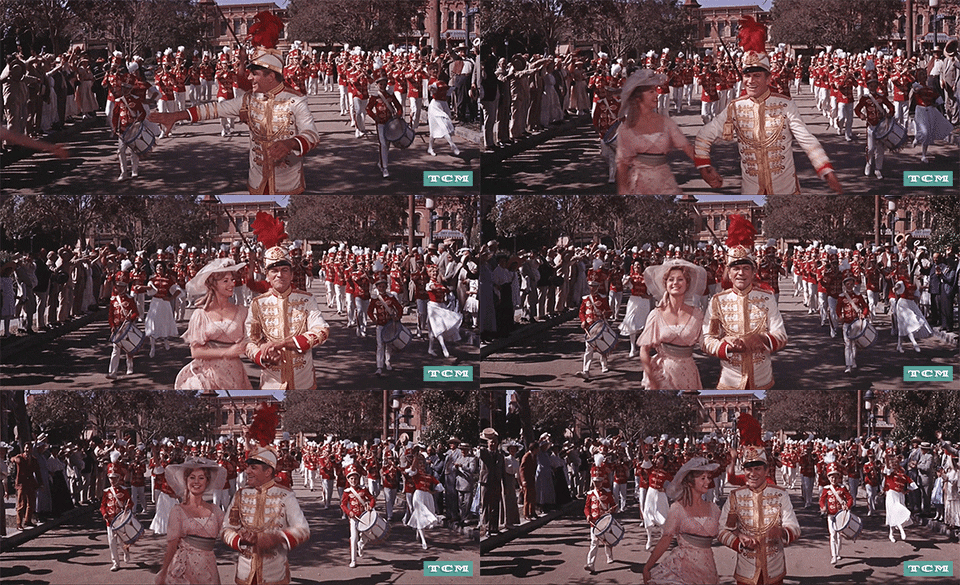
The 1960s were a big year for musicals over at Warner Brothers Studios and one of their biggest hits of the decade was The Music Man, which Critica Retro reviews for the blogathon.

Sunday, December 10, 2023

Roku Picks for December

We are quickly heading into the Christmas holiday season and that means it is time to pull out some classic holiday films to watch. Many of the old-time favorites (Little Women, A Christmas Carol) are not available for free viewing on any streaming service but there are a handful of gems hidden among the free apps that feature Christmas sequences. We have highlighted those in green, along with listing some other picks for December. If you do not have a Roku or other streaming device, all of these programs are free to view on the websites listed below. 

Roku 

A Night to Remember (1958) 

South Pacific (1958) 

Flower Drum Song (1961)

Battle of Britain (1969) 

Aces High (1976) 

A Christmas Carol (1984) 

TV Shows

The Abbott and Costello Christmas Show

Car 54, Where Are You? (1961) 

Gidget (1965) 

Man in a Suitcase (1967)

The Protectors 

Tubi TV

Forever and a Day (1943) 

Millions Like Us (1943) 

The Bishop's Wife (1947) 

Madeleine (1947) 

The Great Rupert (1950)

Jungle Drums of Africa (1953) 

Shower of Stars: A Christmas Carol (1954)

The Admirable Crichton (1957)

Mysterious Island (1961) 

Winter-a-Go-Go (1965) 

The Carpenters - Behind the Music (Documentary)

The Bing Crosby Color Christmas Show

The Glen Campbell Goodtime Hour Christmas Special

Also, check out our post Holiday Specials on Tubi as most of these specials are still available for viewing. 

Pluto TV

Stella Dallas (1937) 

The Bells of St. Mary's (1945)

Sorry, Wrong Number (1948) 

Ace in the Hole (1951) 

African Queen (1951) 

The Greatest Show on Earth (1952)

High Noon (1952)

Roman Holiday (1953)

The Big Country (1958)

The Vikings (1958)

The World of Henry Orient (1964)

Fitzwilly (1967)

Yours, Mine and Ours (1968)

Beach Party (also Muscle Beach Party and Beach Blanket Bingo)

Other Random Recommendations

A Christmas Carol (1949) - Peacock TV

Ski Party ( if you enjoy the Beach Party series ) - FreeVee app

Scrooge (1970) - Fawesome Drama app

To view Roku online: www.therokuchannel.roku.com

To view Tubi online: www.tubitv.com

To view Pluto online: www.pluto.tv

Thursday, December 7, 2023

From the Archives: Bette Davis & Errol Flynn


Bette Davis and Errol Flynn are looking darling together in this publicity photo from The Sisters (1938), one of three films they made together at Warner Brothers studios where each was the reigning star for many years. 

From the Archives is our latest series of posts where we share photos from the Silverbanks Pictures collection. Some of these may have been sold in the past, and others may still be available for purchase at our eBay store: http://stores.ebay.com/Silverbanks-Pictures

Thursday, November 30, 2023

The Private Life of Sherlock Holmes (1970)

"The game is afoot!" 

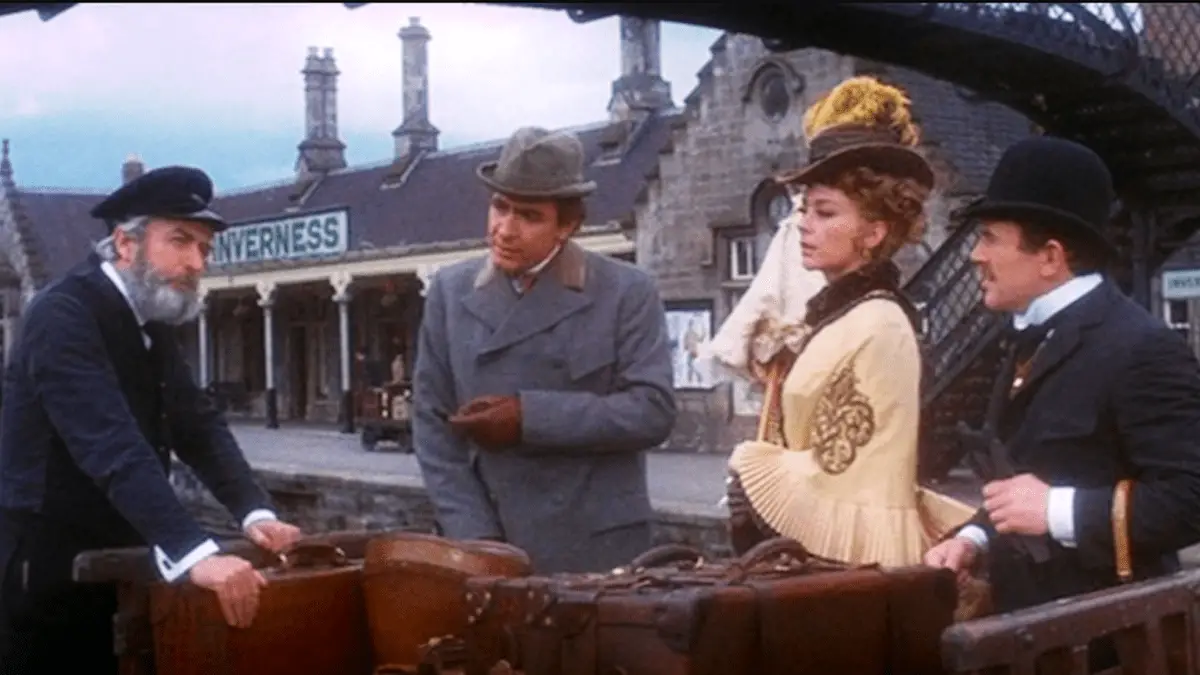
It is the summer of 1887 and Sherlock Holmes is lamenting the lack of any decent crime that might stimulate his brilliant mind. "There are no great crimes anymore, Watson! The criminal class has lost all enterprise and originality." In his morning mail, he receives a telegram asking for his help in locating six missing midgets from a circus, which he promptly dismisses. It is not until a cabby brings a bedraggled-looking woman to the doorstep of 221B Baker Street that Sherlock turns away from his seven-per-cent solution of cocaine to take interest in a case that will become one of his rare failures and ultimately be written down in Dr. Watson's private memoirs of the great detective. 

Gabrielle Valladon is the mysterious woman who arrives on his doorstep one evening. She was rescued from the river after someone attempted to drown her and has a minor lapse of memory. Watson suggests she stay the night and by morning she is recovered and accounts to Holmes her predicament. It seems that her husband, a mining engineer by the name of Emile, has disappeared. For the past year, she has been writing to and receiving letters from an address that she has just discovered is an empty building. 

This intrigues the private detective enough to warrant a visit to the building. Together with Mrs. Valladon and his faithful companion Dr. Watson, Holmes discovers some baffling clues at the site...namely, an old woman in a wheelchair who collects the mail and a cage of canaries. These insignificant but intriguing findings only hint at the adventure ahead for the trio, a case that will lead them into the heart of Scotland and to an encounter with Queen Victoria herself! 

The Private Life of Sherlock Holmes is a marvelous film by director Billy Wilder. It captures all of the excitement of Arthur Conan Doyle's original stories and yet it is an entirely new adventure penned by Wilder himself and screenwriter A.L. Diamond, who also produced the film. The story incorporates all of the elements one would hope to find in a Sherlock Holmes film adaptation, plus some added surprises...such as midgets and the Loch Ness monster.

Our titular hero is played by Robert Stephens (The Prime of Miss Jean Brodie) who does an excellent job of portraying the arrogant yet highly appealing detective. Stephens played an amateur detective in an episode of The Rivals of Sherlock Holmes one year later, but never returned to don the deerstalker again which is a shame since he plays Holmes so well. 

Colin Blakely costars as the loyal Dr. Watson. His characterization of Watson differs from any of the actors who played Watson before (Nigel Bruce, Howard Marion-Crawford, Nigel Stock, etc.). Blakely's Watson is impetuous and slightly comical and he often gets frustrated that Sherlock does not confide in him as much as he would like. The relationship between Holmes and Watson in this film reminds me of Danger Mouse and his faithful friend Penfold in the Danger Mouse series. Poor Penfold was often left in the dark about the cases they were working on, too. 

The lovely but mysterious Mrs. Valladon is played by French actress Genevieve Page. Holmes is quoted by Watson as having said that "women are never to be entirely trusted, not the best of them", an observation based on previous experiences. Yet he trusts Mrs. Valladon - and once again regrets it. 

The Private Life of Sherlock Holmes also includes the characters of Mrs. Hudson (played by the inimitable character actress Irene Handl) and Sherlock's brother Mycroft, played by Christopher Lee. Years later, Lee himself would star as Sherlock in a series of television films.

Billy Wilder had a tendency to stretch out his productions till they were overly long and The Private Life of Sherlock Holmes is no exception. The film features a sequence at the Royal Ballet in London where Holmes meets a Russian prima-donna who wants to marry him so that she can have "brilliant babies". It probably was meant to amuse and address Watson's feelings towards Holmes and their living arrangement, but the entire sequence was unnecessary and bore no relation to the mystery that Holmes eventually embarks on. The scene could have been cut entirely and replaced with a bit of dialogue referring to the incident instead. 

However, aside from this minor flaw, the film is excellent in so many ways. Miklos Rozsa composed a beautiful score for the picture which was based on a 1953 concerto of his that Billy Wilder favored - Violin Concerto Opus. 24. Tony Iglis' art direction is simply stunning, the costumes (by Julie Harris) are wonderful, and the cinematography by Christopher Challis (The Small Back Room, Arabesque) is lovely, as is the color tone of the entire film, which was shot in Cinemascope. Billy Wilder rarely made films in color so this is a treat for him and for the audience and one that he should have indulged in decades earlier.