Showing posts with label 1930s. Show all posts

Saturday, November 29, 2025

The Shining Hour (1938)

MGM films are easily distinguished by their production values, which were top in the industry. If you turn the TV on midway through an MGM movie, you are likely to know it is an MGM movie just by the quality of the set design, the music, the costumes, the cinematography, and of course the "big name" actors. 

The Shining Hour had all of the above - except for a quality script. Unfortunately, this brought the whole film down to a Columbia "B" movie status. As entertaining as the film was, the plot seemed so absurd mid-way through that it turned into a comedy - at least for the two of us watching it. We had a grand laugh! But I doubt this was the intention of Keith Winter's original stage play. 

The story around The Shining Hour is a simple love triangle turned into a rectangle. Henry Linden (Melyn Douglas) comes from a socially prominent Wisconsin farming family. On a trip to New York City, he falls in love with dancer Olivia Riley (Joan Crawford) and asks her to marry him. Henry's brother David (Robert Young) reads about their engagement in the newspaper and flies to New York City hoping to stop the "impossible" marriage. He hadn't met Olivia yet, but he already knew she didn't belong in the Linden family. Hrumph! David questions her integrity so she slaps him in the face and marries Henry. 

When the newlyweds arrive at the grand Linden estate, they are greeted by David and his wife Judy (Margaret Sullavan) but not by Hannah (Fay Bainter), Henry and David's sister, because she, too, was against the "impossible" marriage. These Lindens are making a bad impression as wealthy country snobs. 

Judy takes to Olivia instantly and the two become fast friends and Olivia tries her best to become one of the proud Lindens.... in fact, she fits like a glove. Hannah begins to tolerate her and all seems to be going well until David suddenly has a change of heart and falls in love with Olivia! She tries to resist his charm but he continues to pursue her, even during the party when Henry and Olivia are celebrating the completion of their big new beautiful house. Judy suspects as much but Henry is blissfully unaware of any complications until Olivia begs him to take her away on a long honeymoon - that very night.

This seems to be the crutch of the problem with the Lindens. They greet one another during the day like they never slept together the night before. All of their romantic entanglements seem like they are being played out at a college campus and not one of them is really married. Throughout the second half of the film, Olivia repeatedly says she is "no good" and does not deserve the love of Henry since she never really loved him when she married him, however, it is Olivia that is making the only effort to being a loving spouse. Henry continually leaves her alone as though he were a travelling salesman... as a gentleman farmer what could he possibly be doing on a farm so late at night? David is even more aloof towards Judy. He wears dinner whites in the evening and riding clothes during the day so, unlike Henry, I doubt he works on the farm and yet he barely talks to Judy. 

Sadly, Hannah is the worst of the lot. Towards the end of the film, she goes into a jealous rage and burns Henry's new house down. Director Frank Borzage captures this scene well and we see Fay Bainter dressed in black, her hair all tussled, and laughing like a mad woman. The next scene, Henry and David still have ash on their face from putting out the fire and Hannah is back to being primly dressed and calmly serving them a cup of coffee. It is these abrupt transitions that no doubt led critic Bosley Crowther to calling the film "a hackneyed story of a definitely inferior grade."

The hackneyed transitions could have been fixed if the runtime was just a bit longer. The Shining Hour is only 76 minutes long and that seems much too short for such a dramatic script - even the Andy Hardy films ran over 80 minutes! Audiences thought little of the film as well and MGM ended up swallowing a loss of over $137,000. Joan Crawford had suggested the play as a property worth buying so Louis B. Mayer was probably cross with her. 

After reading this review you may be thinking "Is this film even worth watching?" and the answer to that is, yes, definitely! Joan Crawford and Melvyn Douglas are wonderful in the movie, it's a top-notch production (except for the preposterous story), the Cedric Gibbons sets are gorgeous, the setting is scenic, you'll get to see Joan Crawford dance, and the ending is amusing, so why not watch it? 

Saturday, September 20, 2025

Make A Wish (1937)

In 1936, Bobby Breen hit the big screen in his first starring role in the film Let's Sing Again. The curly-mopped youngster was a male edition of Shirley Temple with a similar twinkle in his eyes and a decidedly better singing voice. 

Little Bobby Breen (no relation to the film censor Joseph Breen) was indeed a talented youngster and, while he remained young, RKO Studios milked his image for all its worth featuring him in eight films within three years. 

Unfortunately, little boys do not remain little boys forever and as Bobby's bones grew, his audience diminished. The studio didn't quite know what to do with a teenage singing sensation, especially when his soprano voice was beginning to take on tenor tones. The moment his voice broke, Bobby broke with Hollywood and decided to concentrate on his school education before entering the US Army during World War II.

While he was on top, he made some entertaining films, the best of which was Make a Wish co-starring Basil Rathbone and opera star Marion Claire. 

In this film, Rathbone played Johnny Selden, a composer of operettas, who likes to vacation in a cottage across the lake from a boy's summer camp. One day while fishing, he meets "Chip" Winters (Bobby Breen), a friendly lad with a beautiful singing voice who is staying at the camp. Chip's mother is a musical stage star. Chip shares with Mr. Selden one of the letters his mother wrote to him, and this triggers Mr. Selden's creative juices to bubble over, so much so that he bases his new operetta around Chip's mother who inspired it. When Mrs. Winters (Marion Claire) arrives at camp, Mr. Selden finds her ideal and asks her to star in his latest production in New York. She likes the idea but her fiancĂ©, the stuffy Mr. Mays (Ralph Forbes), is set against it. This provides the drama of the film. Donald Meek provides the comedy in the form of a butler who wants to compose music himself. He teams up Henry Armetta and Leon Errol to unintentionally destroy Mr. Selden's final act. 

Make a Wish is a light-hearted musical aimed at children but entertaining enough for adults to enjoy as well. It leaves you with a feel-good feeling which makes it timeless. Like the Shirley Temple films, the script has some implausibilities in it, like Mr. Selden's theatrical producer deciding to go ahead with staging an opera while the third act remains incomplete (!) It also seems unthinkable that Mr. Selden would not be aware that his show was being made until opening night - Where was he, on an African safari with no phone or newspaper access?

The music in Make a Wish is delightful. Oscar Strauss (The Chocolate Soldier) wrote the score while Paul Francis Webster and Louis Alter penned the lyrics. Three songs stand out: the titular "Make a Wish", "Music in My Heart", and "Campfire Dreams" which oddly enough was not written by Strauss. It was composed by Louis Alter. 

Bobby Breen's movies have not yet been given a proper DVD release but they can all be found on Youtube in varying conditions. This one is a worth see if only to enjoy Bobby's fine singing voice. 

Thursday, October 10, 2024

Rewind Review: The Witch's Tale Radio Series (1931-1938)

"Draw up to the fire and gaze into the embers as I tell you a hearty tale that will boil your blood..."

Old Nancy the witch knew how to tell a good ghost yarn. At over 107 years old ( and aging fast ) she certainly had plenty of years to practice her art of story-telling. Each week, for seven years, she gathered her listeners close to her via radio waves and cackled tales of mystery and horror to send chills running up their spine. 

The old "Witch of Salem", as she was affectionately called, played host of The Witch's Hour, one of New York's most beloved horror programs, between May 21, 1931 and June 13, 1938 on WOR, the Mutual Radio Network. The series was created by Alonzo Deen Cole who not only wrote and directed each episode but also provided the sounds of Old Nancy's cat Satan. His wife Marie O'Flynn also took part acting in many of the episodes as the female lead. 

Originally stage-actress Adelaine Fitz-Allen voiced old Nancy but after she passed on at the age of 79 she was replaced by 13-year old Miriam Wolfe....who did just as good a job!

What made The Witch's Hour so engrossing was the clever story lines and the quality of the programs. Each episode was well-acted and utilized convincing sound effects that gave the series its extra dose of creepiness. 

Unfortunately, only about 50 episodes of the program still exist today since many of the original recordings, which were performed live during broadcast, were destroyed by Cole in 1961. All of the surviving episodes could be heard at the Relic Radio website or through Old Time Radio

Since today is Halloween and tonight is the witching hour, be sure to tune into some of these programs, and for a sample, here for your listening pleasure are....


FIVE EERIE CLASSICS 


The Haunted Crossroads ( 1933 ) 

An invisible woman has stabbed a policeman in the back at an isolated crossroads. A stabbing like this has happened before, and will soon happen again.
 
Graveyard Mansion ( 1934 ) 

Two brothers inherit a suspicious old house in Louisiana and meet a beautiful woman who's been dead for one hundred years! Are there vampires within the mansion? A ghost perhaps?

The Wonderful Bottle ( 1934 ) 

A couple of young American lads in Argentina meet an old Spaniard who sells them a magic bottle that grants its owners every wish. That bottle was made by the devil and anyone who owns it must get rid of it before he dies or he will burn in hell’s fire forever!


The Devil Mask ( 1935 ) 

A wife is concerned about her husband's disrespect of African ways and so asks a witch doctor to boom on the drums a ceremonial chant to keep the devil away during the trip back to England.

The Priest of Sekhet ( 1936 ) 

A young British archaeologist becomes trapped in an ancient tomb, along with a dead priest from ancient Egypt. After his rescue, the archaeologist undergoes a strange change of character.

This is a Rewind Review post dating from Halloween 2016. 

Saturday, October 5, 2024

From the Archives: Son of Frankenstein (1939)

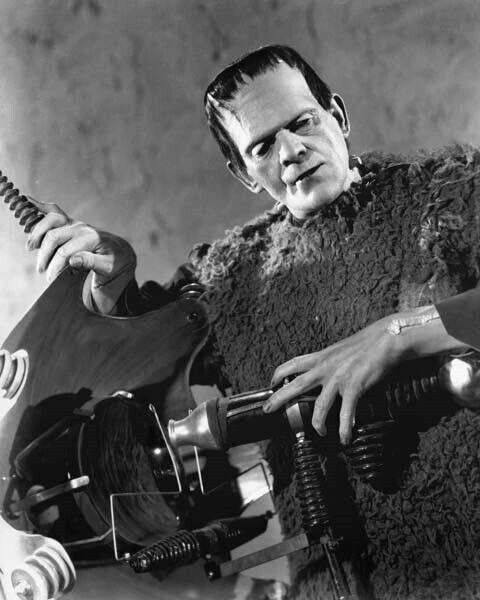
Boris Karloff as the famous "Monster" from the Frankenstein films (in this photo, The Son of Frankenstein). The make-up for all of the early Frankenstein movies was done by Jack Pierce, whom you could read more about in our previous articles here

From the Archives is our latest series of posts where we share photos from the Silverbanks Pictures collection. Some of these may have been sold in the past, and others may still be available for purchase at our eBay store: http://stores.ebay.com/Silverbanks-Pictures

Friday, February 23, 2024

Sh! The Octopus (1937)


"Gripping!..Daring!....Too Too Touching"

So reads the advertisement. 
I thought I saw 'em all, but this film tops the Beyond Incredulous list.


Kelly and Dempsey, two befuddled detectives, are driving along a secluded road one dark and stormy night when they hear a scream and out from the woods dashes a young Joan Crawford look-alike. She promptly faints in front of them as any good Joan Crawford look-alike ought to do and then proceeds to tell them that she saw the body of her stepfather... muuuurdered....  hanging by his feet from the top of the lighthouse.... dripping blood!

"What lighthouse?" 

"The lighthouse a few miles from shore." 

"Why?" 

"My stepfather is the inventor of a radium ray gun....so powerful that whoever controls it controls the world. Every nation is searching for it!"


The super-duper high-power radium ray gun is gone? Stolen by the arch-villain The Octopus??!! ( Shhh.. )

Holy tentacles, Batman! 

Our intrepid heroes, not ones to leave a lady in distress (even though Kelly's wife is having a baby and he is leaving her in her distress), decide to pop on over to the lighthouse to investigate. After all, it's only a few miles across the ocean via motorboat in a thunderstorm...with seven foot waves. What's a little water? 


GLAboutMeBedtimeBookCover

And so begins one of the wackiest films to ever be churned out of Warner Brothers studio. 

Sh! The Octopus (1937) has rather a cult reputation of being a wild parody of old-dark-house parodies themselves. When you find a film with supporting actors such as Hugh Herbert and Allen Jenkins playing the leads, you know you are in for watching a B movie, but in this case the "B" should be for "bewaaare". It truly is surreal, folks. 


A remote lighthouse, octopi, stolen plans, secret panels, an old sea captain, a hag with a witch's cackle...all prime ingredients for a thrilling mystery are thrown in this soup and then heaped on with a goodly dollop of unabashed burlesque. 


You can tell this was originally a stage play. For a lighthouse that is miles out at sea, it can get awfully crowded and the cast members are continually disappearing into rooms we never see. There is the so-called artist who purchased the lighthouse, then a retired seaman comes into the picture, Captain Hook (don't ask), the damsel's nanny (she was out for a stroll and stumbled upon the lighthouse), and a wise-cracking dame who happened to come ashore after her ship went down. Margaret Irving plays this role and she really is the highlight of the film. If this was an Abbott and Costello picture co-starring Joan Davis this would be a six-star picture. Casting can make all the difference. 


"Sh! The Octopus" was the concoction of Donald Gallagher and Ralph Murphy, who wrote the original stage play. Donald Gallagher had scored a success with The Gorilla on stage (later made into a film) and so in 1928 he teamed up with Murphy to bring this play to the Royale Theatre in New York, where it continued on for 47 performances. Harry Kelly and Clifford Dempsey starred as Kelly and Dempsey (who else?). 


In the film version, Allen Jenkins, the Irish Brooklynite, is excellent in his role as straight-man Dempsey, while Hugh Herbert performs his routine flibberity-jibbit quite flibberly. 

My sister and I watch movies in parts just before we head off to slumberland, usually 20 minutes per night, and we laughed ourselves silly with this film. Obviously, it held our attention for 3 days! The old witch's unmasking at the end is truly harrowing too. It has amazing special effects for its time (if you don't look at the strings on the octopus). 


" Quiet, while I do a little deducting...I'm just commencing to add two and two"

" Next week you'll be working on the alphabet"

There were a number of good one-liners and alot of "woo-woo"s but the funniest aspect of the picture is the film itself. Sh! The Octopus has a hypnotic attraction that makes you want to continue watching it even though it is woefully incoherent and just plain rotten. That's the beauty of it. The playwrights either thought their audience were complete idiots or just assumed that they can feed the public any mumbo-jumbo and get away with it so long as they take on the "Surprise! it's all a dream" ending. It didn't work this time, Mr. Gallagher.
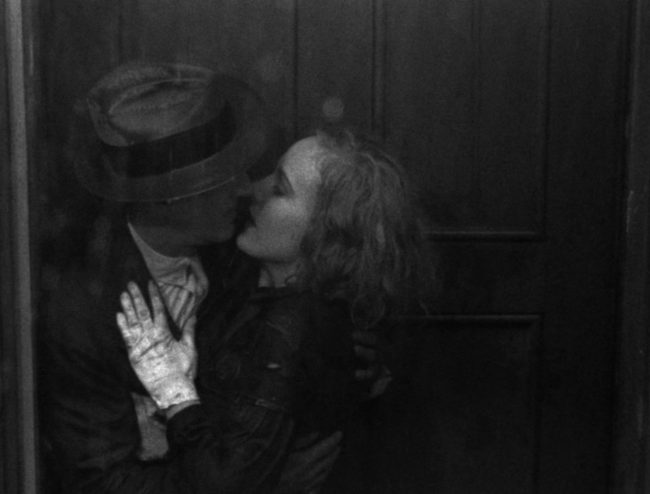

Actually, I enjoyed the exploding lighthouse end much better. They should have cut the umbilical cord right there and left the audience walking out of the theater wondering "did we really just watch that??"...something we are left wondering anyway. 

You really need to see it to believe it. 


This post is our contribution to the So Bad It's Good Blogathon being hosted by Rebecca Deniston at her blog Taking Up Room. Be sure to stop by to read more reviews of awful films that are so bad you just have to see them! 

Wednesday, February 21, 2024

By Candlelight (1933)

Paul Lukas stars as Josef, a butler employed to Prince Alfred, portrayed by the dashing Nils Asther. Josef loves working for the prince because he not only admires him but wishes to emulate him... especially when it comes to the prince's wooing technique, for the prince has a reputation of being a "great lover". 
One of his favorite methods of enchanting women is by candlelight. This method involves Josef turning off the electricity in the apartment while the prince is entertaining his latest lady love. In her surprise state, the prince steals a kiss, at which point Josef enters with candles in hand and declares, "It is a power outage, milord." A simple trick, but one that the prince enjoys.

Sometimes the prince's romances are interrupted by his lover's husbands. After his latest encounter with an irate husband, Josef suggests that the villa in Monte Carlo be opened to provide the prince with a change of scenery. "A capital idea!" the prince declares. 

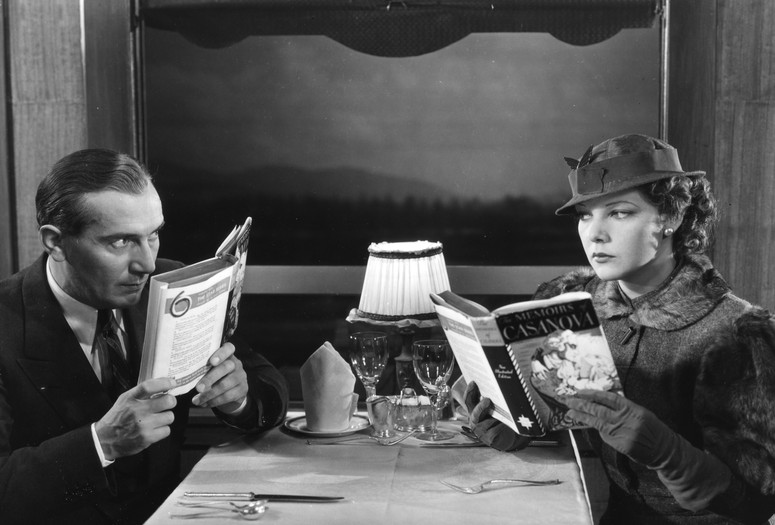
Josef then takes the train a day ahead of the prince to make preparations and, onboard, meets a young woman named Marie (Elissa Landi) in the dining car. He sees this as a marvelous opportunity to apply the mannerisms and phrases he learned from the prince for impressing women. Unfortunately, his play acting the prince goes a bit too far and Marie believes that Josef really is a prince, a charade he then tries to keep up in Monte Carlo. When the real prince arrives, he amusingly takes on the role of the butler!

By Candlelight, released in 1933, is an entertaining and surprisingly fast-moving romantic comedy from Universal Studios. Paul Lukas was ideally cast as the butler Josef and is charming in the role. However, it was hard for him to hold his own in any scene with Nils Asther. That Swedish actor had a mesmerizing way of stealing the spotlight. Asther played a debonair and quite convincing cad of a prince.

Since By Candlelight was filmed before the Hays Code was strictly enforced, the dialogue and visual situations are much more straight-forward then the subtle hinting techniques employed in the late 1930s sex comedies. Prince Alfred pinches women and openly flirts with married socialites while Josef proudly looks on. 

Director James Whale did a wonderful job of keeping the film amusing and not letting it get stage-bound, something that could have easily been done since it originated as an Austrian stage play. P.G. Wodehouse (the Jeeves and Wooster author) adapted "Candle Light" by Siegfried Geyer and Karl Farkas into an English play which, in turn, was purchased by Universal Pictures for filming. 

While James Whale is best known for directing horror films (The Invisible Man, Frankenstein, etc) he had the right touch for comedies and could have made a name for himself in that genre had he pursued it. He later filmed an equally amusing - and forgotten - comedy called Remember the Night? (1935).

Fortunately, By Candlelight is not so rare as to be unreleased and is available both on regular DVD and on Blu-Ray. 

Thursday, December 7, 2023

From the Archives: Bette Davis & Errol Flynn


Bette Davis and Errol Flynn are looking darling together in this publicity photo from The Sisters (1938), one of three films they made together at Warner Brothers studios where each was the reigning star for many years. 

From the Archives is our latest series of posts where we share photos from the Silverbanks Pictures collection. Some of these may have been sold in the past, and others may still be available for purchase at our eBay store: http://stores.ebay.com/Silverbanks-Pictures

Wednesday, June 14, 2023

What Leading Men Have Taught Madge Evans

One of the most sought-after leading ladies is Madge Evans. Although only twenty-five years old, she is really a “veteran” since she appeared on the screen at the age of six.

“Most of my knowledge of acting,” says Madge, “has been taught me by men. I believe that every masculine star with whom I have worked has contributed something to my training.”

Madge mentioned Ramon Novarro first. She made two pictures with him. Impossible Lover and Son of India.

“Ramon taught me more about charm than any other man. He taught me that with charm and grace any scene can be made effective.”

She said that during the production of Impossible Lover, she questioned the probability of a certain sequence, and suggested a change that was not agreeable with the director.

“Then Ramon told me a secret. ‘Play it,’ he said, ‘as if it were the most important scene in the world. Put everything you have into it. Tell yourself it’s the most beautiful piece of drama ever written, and act it accordingly.’

“Well,” said Madge, “I did, and it became the brightest sequence in the picture.”

She has been Robert Montgomery’s leading woman in three pictures — Lovers Courageous, Hell Below, and Fugitive Lovers.

“I learned much about the light touch from Bob,” Madge said. “It is natural with him. He employs it with suavity and grace.”

Madge cited an instance. When Lovers Courageous was being filmed she said she was afraid that parts of the story were too sentimental.

“But Bob’s acting circumvented this,” she said. “At just the right time, he would make a gesture or a funny little expression which would lighten the emotional burden and distract the audience.”

Otto Kruger’s chief charm for Madge is his voice. They played together in Beauty for Sale. Madge believes Kruger has more romantic appeal in his voice than any other man on the screen.

“The thrilling quality of his voice almost hypnotizes one into submission. In a love scene, when you’re in a man’s arms, you can’t be thrilled by the expression on his face or the light in his eyes — because you can’t see them. Your head is probably buried in his shoulder. But you can hear! And to hear Kruger’s voice is hearing the voice of all emotion.”

Madge named James Cagney next as a contributor to her dramatic education.

“Jim is a master at the art of pantomime. From him, I learned the use of my hands for expression. Jim has developed the art to such an extent that words sometimes seem superfluous.”

There is one thing which all these stars have, but which Lowell Sherman, in Madge’s opinion, has more of — the art of timing.

“At least, I learned it from him,” she said, “when we made The Greeks Had a Word For It. There were some excruciatingly funny lines in the picture, but on seeing the rushes each day I noticed that Lowell had somehow timed his lines so that laughter would never break in on dialogue.

“Yes, these men are fine actors,” she concluded, “and I shall never cease being grateful to them for what they taught me.”

The above article originally appeared in the 1934 issue of Film-Lovers Annual, published by Dean and Son, Ltd. Click here to read this article in its original context. 

Friday, June 9, 2023

From the Archives: The Adventures of Huckleberry Finn ( 1939 )


Mickey Rooney as Huck Finn poses with a "mess of fish" in this still photo from MGM's adaptation of Mark Twain's The Adventures of Huckleberry Finn ( 1939 ). Jackie Moran played the character of Huck a year earlier in The Adventures of Tom Sawyer

From the Archives is our latest series of posts where we share photos from the Silverbanks Pictures collection. Some of these may have been sold in the past, and others may still be available for purchase at our eBay store : http://stores.ebay.com/Silverbanks-Pictures

Friday, March 10, 2023

Beauty for Sale ( 1933 )

"I got a living to earn for two and I can't do it in Kentucky. You got to take your spoon where the soup is." - Letty

"Well, the soup's hot in New York, kid. You're likely to get burned." - Carol

Letty (Madge Evans) is a small-town girl who heads to New York City to work at Madame Sonia Barton's beauty salon. While there, she falls in love with Sherwood (Otto Kruger), the husband of one of her clients (Alice Brady). He does not want to divorce his wife and so Letty must decide whether to leave him or have a backstairs relationship with him for the rest of her life. 

MGM's Beauty for Sale was one of many variations of the oft-used three-working-girls plot first popularized in Sally, Irene, and Mary in 1925. It was still fresh in the 1930s and, by altering the setting, MGM was able to reuse it successfully throughout the decade in other films, none quite as good as this one. 

The three beauty parlor girls are played by Madge Evans, Una Merkel, and Florine McKinney, all of whom are low on lover's luck. Carol (Merkel) had a sour experience with real love that left her bitter and so she sets her eyes on catching a rich sugar daddy instead...which she does. Jane (McKinney) has fallen in love with Madame Sonia's son (Phillips Holmes) but is quickly abandoned when he learns she is pregnant. 

Letty judges her relationship with Sherwood in the light of both of her friend's experiences and decides to part ways with him. She reluctantly returns to her hometown beau (Eddie Nugent) but quickly regrets this decision. 

"I didn't make the world the way it is, but I gotta live in it."

A 1933 review from Variety magazine pegged Beauty of Sale perfectly: "Pulp magazine fiction made for subway-riding stenographers...romantic hoke skillfully dressed up." 

It may be hoke, but mighty entertaining hoke it is! Beauty for Sale is a well-shaken blend of drama and comedy. It begins with sentimentality, reaches a dramatic climax, and then takes a sudden and brief dip into screwball comedy. This may sound like a potent mixture for an MGM film, yet the final result is quite pleasing. The film was a forerunner of the lush - and much more dramatic - melodramas of the 1950s (e.g. Three Coins in a Fountain, The Best of Everything), and like those films, even when you know the ending you can sit through it over and over again and still enjoy it. 

"It's a pity mother didn't drown you as a pup!" - Carol

Eve Green and Zelda Sear's script, based on the Faith Baldwin novel "Beauty", is positively sparkling with wit. Una Merkel is given the best wisecracks, Alice Brady the most humorous lines, and Madge Evans has some of the sauciest remarks in the script. The direction, by Richard Boleslavsky (Theodora Goes Wild), is fast-paced and the cinematography is lovely. James Wong Howe used some clever angle shots and an abundance of soft-focus lenses. Madge Evans' close-ups are particularly beautiful. 

Evans was one of the most irresistible actresses to ever come out of Hollywood. She was also one of only a handful of child stars to have made a successful transition into being a leading lady of the screen. Her pre-code films were her best and Beauty for Sale ranks as one of her most popular films. 

In 1933, Evans and Merkel were the most in-demand players on MGM's roster with Evans making 16 films between 1933 and 34. She was often teamed with Robert Montgomery but Madge seems more enthralled by Otto Kruger than she ever was by Mr. Montgomery. They have wonderful on-screen chemistry together which is especially evident in one scene early in their relationship. Letty comes out of a restaurant during a thunderstorm and runs under a stoop only to bump into Sherwood. "There are only two things I am afraid of," she tells him, "thunderstorms and caterpillars!" Then a clap of thunder sends her flying into his arms. 

Kruger is quite effective as the unassuming lover even though Edmund Lowe or Warren William would have made an equally charming Sherwood. The cast is a who's-who of recognizable 1930s film characters. Alice Brady plays one of her usual dithery society dames, Charley Grapewin has a great part as Carol's benevolent boyfriend, Hedda Hopper plays the lofty Madame Sonia, and the great May Robson is wonderful as the mother of Letty's hometown boyfriend, Bill. 

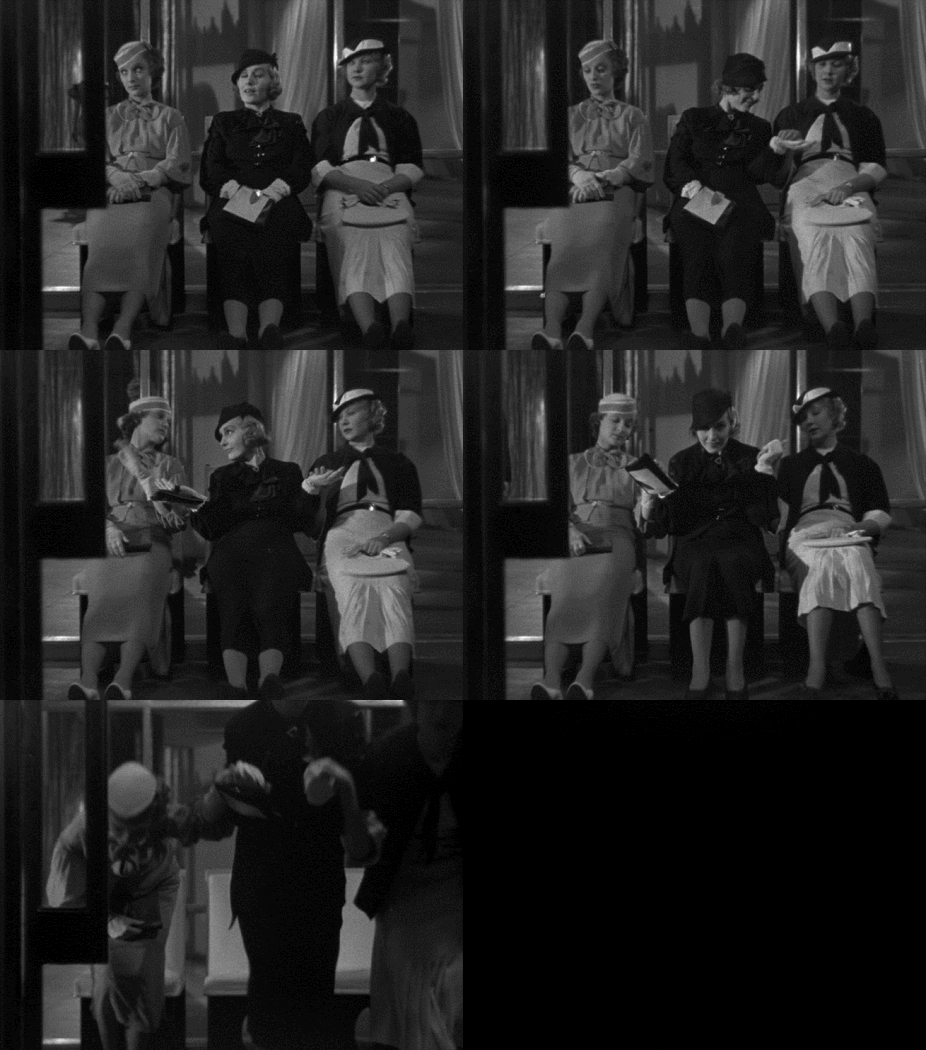
Beauty for Sale is available on Warner Archive's DVD and is shown periodically on television. If this film catches your fancy then be sure to check out Danny Reid's fabulous review at Pre-Code.com. He has loads of screenshots to enjoy, plus some neat gifs (some of which we stole above). 

Saturday, December 17, 2022

King of the Jungle ( 1933 )

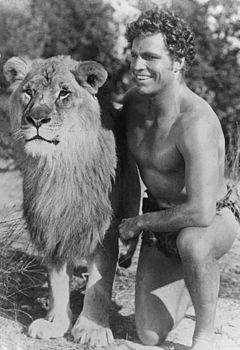
A young boy is raised by a pride of lions in Africa after his parents are killed while on a safari. He loves the lions and speaks to them as friends. Years later, a group of hunters captures "the lion man" as he is now known, and along with his lions, they ship him to San Francisco to be exhibited in a circus. The Lion Man ( Buster Crabbe ) quickly escapes and finds refuge in the apartment of two startled women - one of whom takes a fancy to this strange two-legged creature. With her guidance, the lion man is soon tamed, taught to speak, and eventually goes on tour with the circus.....but his heart remains in Africa and his one dream is to buy back his lions so that he can free them in the wild again. 

When MGM premiered the jungle adventure Tarzan the Ape Man in 1932, it became an overnight sensation and, not wanting to be outdone by their rivals, Paramount Pictures quickly put into production their own version of Edgar Rice Burroughs' Tarzan - Kaspa the Lion Man in King of the Jungle. In place of Johnny Weismuller, they starred Buster Crabbe, the 1932 Olympic gold medal-winning swimmer whose virile presence could rival Weismuller's in any jungle. 

Buster Crabbe was an ideal man to portray Kaspa, a wonderful wild man who had never seen "civilization" before. Buster had a boyish innocent face and a physique that made him seem twice the size of any man next to him. Just like when Dr. Banner turned into the Hulk, Crabbe's clothes looked like they would split at any moment if he flexed his muscles. 

Not surprisingly, Kaspa quickly found a mate for himself when he arrived stateside - the lovely Frances Dee. He sneaks into her apartment to eat the porkchop dinner she left on the table and within ten minutes she was by his side and off to the circus with him!

King of the Jungle runs for only 73 minutes but it is filled to the brim with excitement. The jungle scenes, as well as some of the circus scenes, are not for the faint of heart. Back in the day, Paramount was able to put a lion in a cage with a tiger and just film them brawling, a practice that animal leagues would definitely not approve of today. While the fight scenes are frightening, what is most amazing is how many lions they were able to film in the wild. It would be nice to think that large prides of lions are still roaming in Africa like this. 

Buster Crabbe learned how to train lions while making King of the Jungle so in many of the scenes where he appears with the lions, that is Crabbe himself doing his own stunts. Impressive. 

The film also boasts a strong cast of supporting players including Sidney Toler ( not playing Charlie Chan ), Nydia Westman, Robert Barrat and Patricia Farley. 

King of the Jungle is available on DVD as well as on Youtube here


Wednesday, October 26, 2022

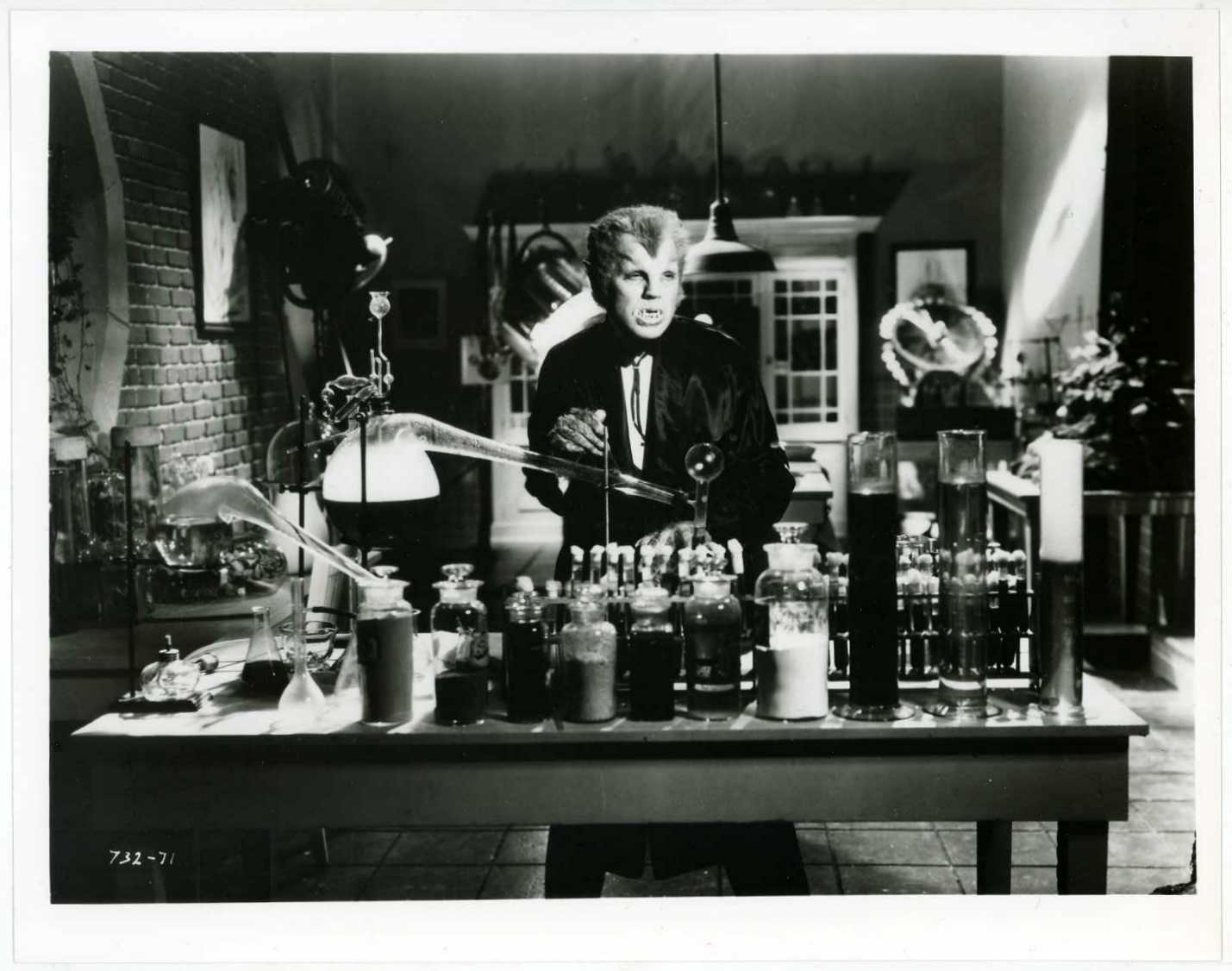
From the Archives: Werewolf of London ( 1935 )


Henry Hull, who usually plays kindly men in films, turned vicious in Universal Pictures' Werewolf of London ( 1935 ). Luckily, his friends and family only had to put up with his fierce lycanthropic side when the moon was full. 

From the Archives is our latest series of posts where we share photos from the Silverbanks Pictures collection. Some of these may have been sold in the past, and others may still be available for purchase at our eBay store : http://stores.ebay.com/Silverbanks-Pictures


Wednesday, December 29, 2021

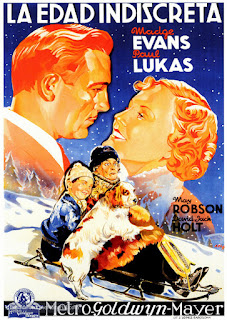
The Age of Indiscretion ( 1935 )

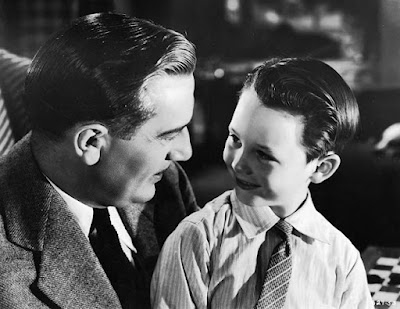
Robert Lenhart's ( Paul Lukas ) book publishing business is suffering from a sales slump. He has to cut back on expenses at the office as well as at home to save enough money to pay his creditors, but his young ambitious wife ( Helen Vinson ) is aghast at the thought of wearing yesterday's clothes and leaves him to marry her wealthy lover Felix Shaw ( Ralph Forbes ), willingly leaving behind their son Bill ( David Holt ).

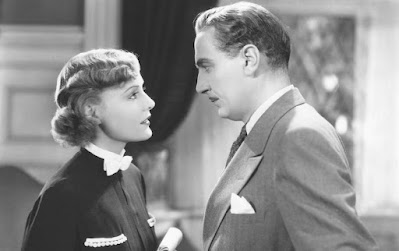
Robert is heartbroken but accepts the divorce. In the coming year, his loyal secretary, Ms. Bennett ( Madge Evans ), steps into his home life and acts as a surrogate mother to Bill. When Felix's mother ( May Robson ) starts yearning for a grandson she decides to use Ms. Bennett as a pawn to help her win custody of Robert's child. 

The Age of Indiscretion was one of many films MGM released in the early to mid-1930s that dealt with divorce, a common practice among society's rich. Lenore Coffee's story paralleled that of a popular news item of the time involving the Vanderbilt family trust. Instead of a grasping grandmother, it was an aunt who instigated the proceedings of a custody battle for young Gloria Vanderbilt and the four-million dollar trust. 


In this film, Mrs. Shaw witnesses an innocent pillow fight involving Ms. Bennett and Robert and uses it as grounds to obtain custody of Bill. May Robson portrays her usual crotchety character of a tough old dog whose bark is worse than her bite. Unfortunately, her scenes are brief and the reasons behind why she wants Bill are not adequately established. Much of the movie suffers from little incidents that are cut abruptly, leaving the audience to wonder what the motives behind certain actions were. This seems more like an editing error than the fault of director Edward Ludwig. 

Overall, The Age of Indiscretion is quite entertaining with the main draw being its winter setting (  Robert and his son rent a cabin in the mountains during the Christmas holiday ) and its principal cast. Paul Lukas gives a top-notch performance as the innocent publisher and Madge Evans is charming as the young secretary who is harboring a secret love for her employer. In one scene, Robert and she are enjoying an evening cocktail by the fireside on Christmas Eve. They discuss his recent divorce and her private life and, influenced by the scotch, she talks a little freer than usual....but never gives a hint of her true feelings. Nevertheless, Robert begins to see a side of her that he never realized she had. He saw her only as an efficient secretary and never imagined what she was like outside of that capacity. Little scenes like this give the film its sparkle. 

David Holt is also engaging as little Bill, even with his puzzling Southern accent. He was intended to be a male version of Shirley Temple but his career never reached such heights. Also in the cast are Shirley Ross, George Irving, and Minor Watson. 

Tuesday, September 21, 2021

Let's Fall in Love ( 1933 )

Edmund Lowe is a name that is instantly recognizable and yet, even among classic film fans, he is often overlooked as an actor. This gentleman was a leading player in numerous silent films and, after having successfully transitioned to talking pictures, continued to be a big player up until the mid-1930s, when he began to take on more supporting roles. He is best remembered for playing Sergeant Quirt in the 1926 drama What Price Glory? and for his role as Dr. Talbot in Dinner at Eight ( 1933 ). Lowe had great range as an actor and could play romantic parts, dramatic roles, or comedic roles equally well. 

I enjoy him best when he plays a romantic role and one such movie that highlights his light but deft touch as an actor is Let's Fall in Love, a wisp of a musical from Columbia Pictures studio. This film has a simple script that was probably written just to highlight and promote its theme song by Harold Arlen and Ted Koehler. The tune is quite memorable and very lovely to listen to, especially when it is performed by singer/actress Ann Sothern who had a fine soprano voice ( she sang with Artie Shaw and his Orchestra before becoming an actress ). 

Edmund Lowe plays Kenneth Lane, a director who is anxious to make a film with the Swedish sensation that he had helped mold as a Hollywood star ( sound familiar? ). Unfortunately, stardom went to her head and she becomes so demanding that he fires her from the film. Now, in search of a fresh new face, he puts ads in national papers calling for any and all Swedes to make a screen test. His search comes to an abrupt end when he goes to a traveling carnival and discovers Jean ( Ann Sothern ), a fetching young woman who isn't Swedish at all. He likes her and wants her to be the leading lady in his latest film. But since everyone, including his boss Max ( Gregory Ratoff ) knows he is searching for a Swede he decides to masquerade her as a visiting Swedish model, a plan that backfires on him when his jealous fiancee Lisa ( Betty Furness ) blurts out the truth. 

Let's Fall in Love is just a little over an hour-long but manages to pack in a number of entertaining scenes including some musical numbers. Lowe is wonderful as usual with his expressive features ( carried over from his silent-era days ), Sothern is sweet making googly eyes at him, and Gregory Ratoff is excellent as Max, head of Premier Studios. He later famously played another producer named Max in All About Eve ( 1950 ).  


Also in the cast is Greta Meyer as a jolly Swedish woman, Miriam Jordan, and tenor Arthur Jarrett. The film was remade in 1949 as Slightly French with Don Ameche and Dorothy Lamour playing the leads. 

Saturday, July 31, 2021

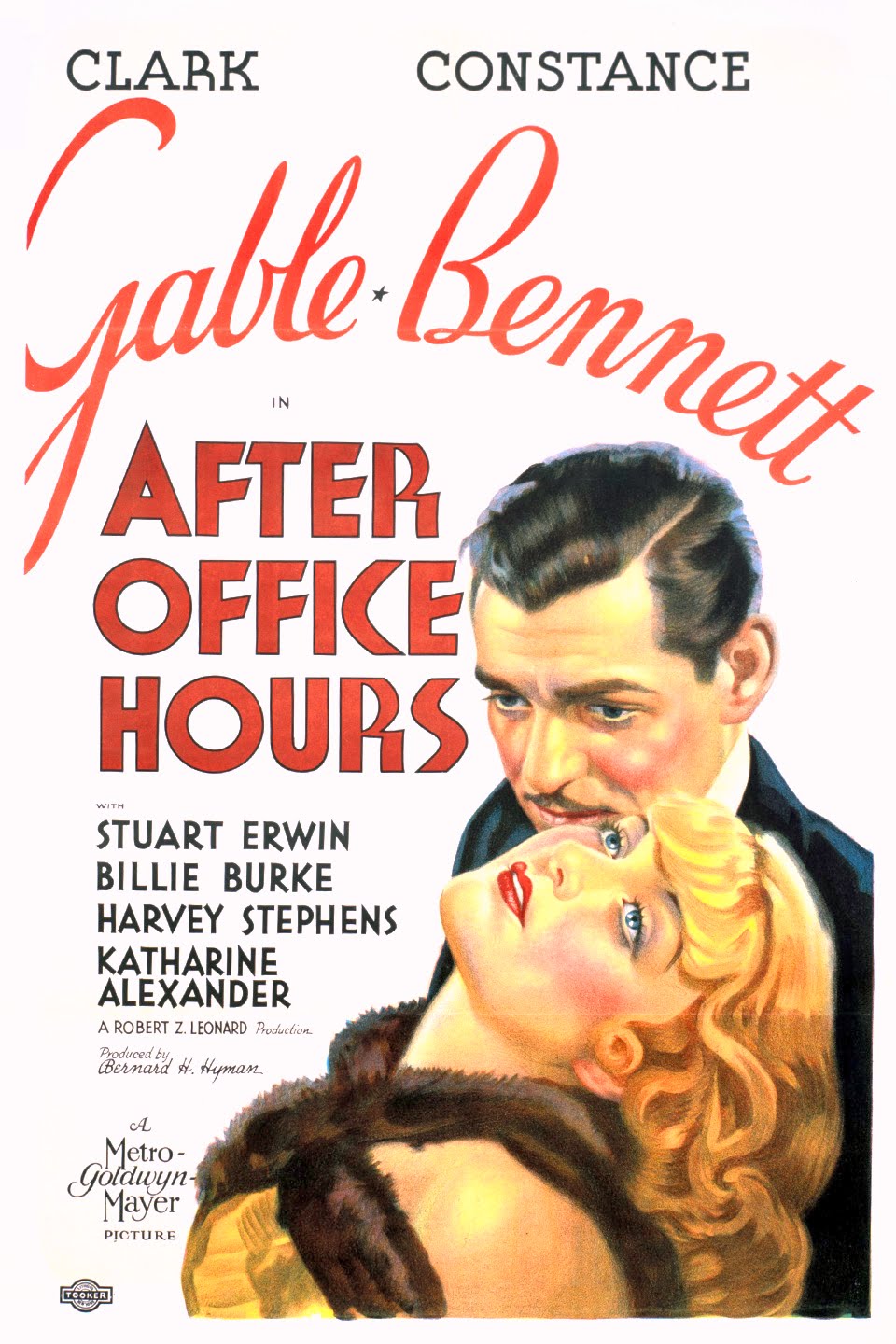
After Office Hours ( 1935 )

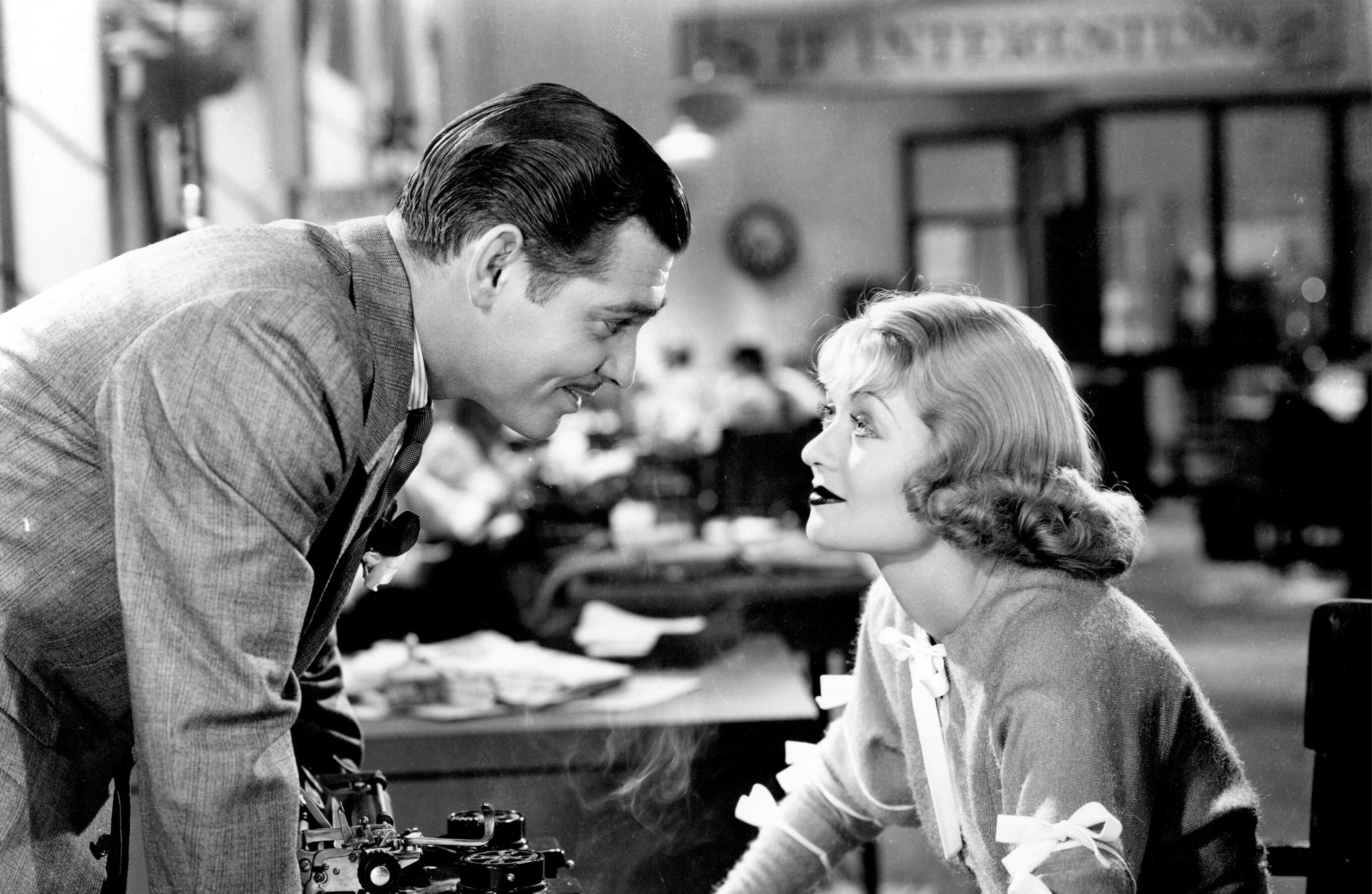
Clark Gable and Constance Bennett, two of the biggest stars in Hollywood in the early 1930s, teamed up only once for a fast-paced mystery/drama called After Office Hours ( 1935 ). 

This MGM release featured the King of Hollywood in a typical Gable-like role as Jim Branch, a hard-hitting New York news reporter who would do anything to scoop the headlines from his rival newspaper. The latest sensation is a rumor that Tommy Bannister ( Harvey Stephens ) is having an affair with the wife of millionaire Henry King Patterson ( Hale Hamilton ). Jim wants the dirt about the story but Henry King's circle of friends is strictly society grade. Luckily, he has Sharon Norwood ( Constance Bennett ) on his staff. She happens to be a socialite who is playing a working gal for a lark. She also happens to be good friends with Tommy Bannister. Jim decides to use her to get the inside story but falls in love with her in the process!

After Office Hours was clearly MGM's attempt to capitalize on the success of Columbia Studios' It Happened One Night ( 1934 ). Metro-Goldwyn-Mayer had loaned Gable out to Columbia as punishment for his affair with Joan Crawford. Frank Capra cast him as the cocky reporter in that film and it turned out to be a box-office smash, raking in nearly $2.5 million. When MGM received their golden boy back they quickly cast him in a film with a similar story. He's not chomping on a carrot in this film but his Bugs Bunny mannerisms are on display just like they were in It Happened One Night

The only thing After Office Hours lacked was the presence of a comedienne like Claudette Colbert. Ms. Bennett resembled a porcelain doll and was just as fragile. Herman Mankiewicz wrote a script packed with clever verbal repartee but Bennett lacked the ability to give her dialogue a humorous touch hence there was no zest in their interchanges. An actress like Claudette Colbert or Loretta Young would have made the film much more entertaining. 

Nevertheless, if you want a fast-paced mystery with some top-notch talent, then it is well worth checking out After Office Hours. Robert Z. Leonard did a great job of directing the film and MGM would later recognize his talents and give him big-budget assignments such as The Great Ziegfeld, Pride and Prejudice, and the Nelson Eddy/Jeanette MacDonald films. 

Also in the cast is Billie Burke, Stuart Erwin, Henry Travers, and Katharine Alexander.