Showing posts with label 1950s. Show all posts

Monday, May 4, 2026

Check it Out! The Rootes Archive's Rally Footages

We're taking a brief break from the monthly British Pathé series to put the spotlight on another great archive to be found on Youtube: The Rootes Archive. Unlike the British Pathé series of newsreels, The Rootes Archive focus solely on newsreels and short films/documentaries about automobiles, notably car rallies. 

The Rootes Archive is a trust founded in 2002 in England that preserves original drawings, microfilms, and promotional material from the Rootes Group which included the Hillman, Humber, Sunbeam and Singer among the automobiles that they manufactured. They are a relatively recent addition to Youtube, having joined in October 2025, but they already have a strong following and a very nice selection of classic rally-themed videos to watch, a few of which we have shared below. Check it out! 

The Rootes Archive on Youtube. 

European Holiday by Sunbeam Rapier (20:33) - This is a very entertaining short travelogue about a couple who take a Sunbeam Rapier overseas on their short holiday in Europe. This was filmed during the week of Prince Ranier and Grace Kelly's royal wedding in Monaco and during the Mille Miglia in Italy, so there is some lovely footage of the cities decorated for both events. The Sunbeam Rapier is quite impressive, too! If they were sold today, I'd be heading to a dealer to get one. 
The Monte Carlo Rally of 1956 (27:01) - Another exciting short film, this time about the Monte Carlo Rally of 1956 where a number of Sunbeams took part in the race. The roads are grueling, especially in the snow, so again this proves what a great car the Sunbeam was. 

Destination Capetown (22:23) - Did I say Monte Carlo was grueling? Wait till you see this crazy man from 1952 and his trek in a Humber Super Snipe nearly 6,000 miles to Capetown, Africa. Today, we have 4x4, navigation equipment, cellphones and repair stations nearby, but this man trekked it alone - and he did it twice before! 

Tuesday, April 21, 2026

Rewind Review: The Admirable Crichton (1957)

Lewis Gilbert's version of The Admirable Crichton is a handsome adaptation of one of J.M Barrie's most popular plays which, although often referred to as a "satire", was more than likely Barrie's way of disguising his gentle assault on the British class system. It's also a rather unabashed look at the utter helplessness the uppercrust have when they are thrust in a commonplace situation or, in this case, an un-commonplace situation. 


Lord Loam (Cecil Parker) is the father of three young women, each about to be betrothed. Loam is a just man - one of those easily swayed lords of the English realm. He fancies that he desires equality as much as the average working class gent... and he does, to a point. In fact, it is his embarrassing "servant's tea party" that leads him to embark on a yachting voyage to the South Seas, along with his daughters, their suitors and the ship's staff. 

When a spot of inclement weather frightens the crew into bailing, the passengers are left floating in a lifeboat in the mid-Pacific to fend for themselves. Thankfully, their unflappable manservant Crichton (Kenneth More) and a servant girl (Diane Cilento) are dunked overboard with them.... and it is Crichton who turns out to be their savior with his resourcefulness when they are marooned on a deserted island. As the toffs accustom themselves to island life they find a new social order emerging. The tables are reversed as Crichton becomes the lord of the land and they the servants; but when a passing ship comes to their rescue, Crichton must decide if they are to remain islanders or each return to their previous status. 


The Admirable Crichton, released as Paradise Lagoon stateside, was the first color adaptation of Barrie's beloved 1902 play, but not the first filming. There was G.B Samuelson's 1918 silent version, Cecil B.DeMille's lengthy 1919 retelling (Male and Female starring Gloria Swanson) and Paramount's Yankeefied take on the story, We're Not Dressing, released in 1934 and starring Bing Crosby and Miriam Hopkins. 

Lewis Gilbert displays a masterful hand at putting the shipwreck satire to film and Wilkie Cooper obviously delighted in photographing the island paradise, which the play could only suggest. His sumptuous Technicolor photography gave reason enough for Brits to leave their flats to see the film. 

The rich blue waters of Bermuda subbed for the unnamed South Seas island and a couple of well-placed artificial palms added to its appeal. The island sets are quite clever and were a precursor to the familiar bamboo sets of Gilligan's Island during the 1960s. 


It is really Britain's everyman, Kenneth More, however, who steals the show and makes this his own film. More isn't ones ideal image of a heartthrob that three gals would be pining over, but on a deserted island he takes on the appeal of a hero and his good points do indeed shine through. 

The always lovely Sally Ann Howes portrays the beautiful Mary, eldest daughter of the Loams, who finds she has lost her heart to her butler. Sally Ann Howes always seems to be running along a beach, but this time, alas, she is not singing "Truly Scrumptious". Cecil Parker is marvelous as Lord Loam; Diane Cilento (Mrs. Sean Connery at the time) plays the cockney Eliza, not unlike Eliza Dolittle; and Martita Hunt, Jack Watling, Peter Graves, Gerald Harper, Mercy Haystead, and Miranda Connell round out the cast. 

The Admirable Crichton is a very entertaining and underrated little gem that has been cast adrift by the critics. It is hard to imagine watching this story unfold within the confines of a stage. It certainly was a tale meant to be filmed in Technicolor. 


Although Barrie attempted to write a comical study of the folly of civilization's class system, he left The Admirable Crichton without a moral. What comes through in this film however, is that the poor class have as much, if not more snobbery, than the rich. It is Mary who desires to remain on the island married to Crichton and living the blissful life of a pair of castaways but Crichton is stubbornly proud of his "position" and fails to conceive how the daughter of his employer can love him for himself when the setting is changed. In short, he behaves like an utter ass. 

Tuesday, April 7, 2026

From the Archives: Father Brown (1954)


Alec Guinness, as Father Brown, is pictured with the beautiful 16th-century Benvenuto Cellini silver chess set that Flambeau attempts to steal in this rare still photo from The Detective (aka Father Brown), released in 1954. You can read our full review of this amusing mystery here

From the Archives is our latest series of posts where we share photos from the Silverbanks Pictures collection. Some of these may have been sold in the past, and others may still be available for purchase at our eBay store: http://stores.ebay.com/Silverbanks-Pictures 

Saturday, March 28, 2026

Don DeFore's Barbeque Restaurant

Back in the early days of Disneyland, actor Don DeFore operated a chicken restaurant with his brother Vern for five years. It was called The Silver Banjo Barbecue and was located in Frontierland right next to Aunt Jemima's Pancake House. After enjoying a rollickin' good time watching the Golden Horseshow Revue, Disneyland guests could mosey to the Silver Banjo to have the DeFore brothers serve up a heaping of their famous barbeque chicken dinners for $1.70 a plate. 

Don and his brother Vern DeFore pictured outside the restaurant in July 1959
During the 1950s, Disneyland offered five-year leases to a number of restaurants. Frito-Lay, who had previously occupied the space with Casa de Fritos, had requested a better location closer to the front of Frontierland, so Don DeFore - who had met Disney through their mutual participation on the Board of the Academy of Television Arts and Sciences - was asked if he wanted to open up a restaurant within the park. 

The Silver Banjo Barbecue opened its doors in the summer of 1957 and remained until its contract expired in March 1962. Barbeque chicken dinners were the specialty of the house and they included baked beans, french fries, cole slaw, and rolls and butter. Other options offered were spare ribs and Fish and Chips for $1.50.  

Aunt Jemima's Pancake House wanted to expand so the lease for The Silver Banjo Barbeque was not renewed in 1962. Instead, Vern took over as a manager of several other ventures within Disneyland while Don DeFore returned to acting starring as George "Mr. B" Baxter in the television series Hazel

This post is a part of our latest series entitled "Did You Know?".....sometimes we just feel like sharing interesting fragments of television and movie history and now we have a place to do just that. If you have a hot tip that you would like us to share on Silver Scenes, drop us a line!

Sunday, March 22, 2026

I Love Lucy - "Off to Florida!" (1956)

Lucy and Travel equal Trouble... and in "Off to Florida," that's exactly what she finds herself in. Granted, Lucy isn't to blame for most of the trouble she and Ethel encounter in this episode, but that doesn't make it any less funny.

Ricky, Fred, and Little Ricky set off to Florida for a few days of fishing, with Lucy and Ethel planning to join them later via train. Naturally, Lucy loses the train tickets, so the only option (or rather, the cheapest) is for them to scour the classifieds for someone looking to share a ride. That someone is none other than Elsa Lanchester. Lucy and Ethel think the ride sharing will work great until they set off with this Mrs. Grundy. She insists on driving from 4 a.m. to midnight, avoids the main highways, won't stop at any restaurant along the way or at any hotel, so Lucy and Ethel are left hungry and frazzled after sleeping in the car.

They turn on the radio one night to lull themselves to sleep and hear about Evelyn Holmby, the hatchet murderess who escaped from prison. The gray-haired woman was last seen in a cream-colored convertible, just like the one Mrs. Grundy has, heading south from New York City. Lucy instantly puts two and two together ("only travels at night... on back roads... won't stop anywhere...") and jumps to the conclusion that Mrs. Grundy and Evelyn Holmby are one and the same—an idea that Ethel at first dismisses until she remembers seeing the hatchet in the trunk!

"Hatchet!" - Lucy and Ethel

"We're just jumping to conclusions. She brought that hatchet along to, uh...to, uh..." - Ethel

"To what? Chop watercress?!" - Lucy

"Off to Florida!" was aired on CBS on November 12, 1956, as episode 6 in the sixth season of I Love Lucy. Lucy and the gang had already been to California and to Europe, so a trip to Florida was a great addition. The crazy redhead had already encountered every kind of character imaginable in previous episodes, so having her and Ethel meet up with a potential killer was a new one for the books—and what a great basis for comedy it made!

The episode is chock-full of humorous scenes, and the laughs escalate the nearer they get to the Sunshine State. The best scene is when they stop at a roadside coffee shop in Florida and Lucy, Ethel, and Mrs. Grundy all rush inside to call the police. When they learn the phone is out of order, they decide to gesture signs of distress to the waiter (Struther Martin), who says, "Y'all must be from up north," after watching the looney birds in action. 

"We have to stop so I can call my landlady and tell her my tub is running over." - Lucy

"I thought you said she [pointing to Ethel] was your landlady?" - Mrs. Grundy

"Oh....[facing Ethel] Landlady, my tub is running over!" - Lucy

Elsa Lanchester was perfectly cast as the dotty driver. This was her first appearance on I Love Lucy and one of her rare television roles in a sitcom. She always played eccentric characters so it seemed perfectly natural that she'd be an escaped criminal, or so Lucy thought. 

"Off to Florida!" is slightly different from the usual I Love Lucy episodes in that Ricky and Fred are only seen in the introduction and closing scenes. I guess the writers couldn't imagine a scenario with all four of them hitching a ride with a killer. Normally, their presence would be missed but this one is filled with so many funny moments you wouldn't even notice their absence. Check it out some time, it's well worth a watch! 

This post is our contribution to the 12th Annual Favorite TV Show Episode Blogathon being hosted by A Shroud of Thoughts. Click here to check out other reviews of favorite Classic TV episodes written by other bloggers. 

Sunday, March 15, 2026

Rewind Review: Alive and Kicking (1958)

Every once in a while, you might come across a wonderful film and wonder why it is not more well-known than it is. At least, I do that.... and, unfortunately, it is quite rare to find hidden gems; but Alive and Kicking is one such movie. I saw it for the first time a few weeks ago and loved it instantly. Granted, its plot would not appeal to a large audience so I can understand why it is as obscure as it is. 

Sybil Thorndike, Estelle Winwood, and Kathleen Harrison star as three elderly women who escape from a nursing home when they learn that they will be relocated to other nursing homes and separated. They take what little belongings they have and hike out on foot. After an escapade at sea, they arrive on a small island off the coast of Ireland and discover an abandoned stone cottage. However, the cottage isn't empty for long. Shortly after they claim it, a gentleman (Stanley Holloway) arrives and tells them that he just purchased the cottage and plans to move in. Darn the luck! 

They hope to discuss renting one of the rooms of the cottage from him, but lo! he disappears from the cliffside where they left him. All they can find is his hat floating on the ocean waves below. Since no one in the village met the man yet, the three crafty dames decide to pretend that he is living in the house and that they are his nieces (!). Much of the film after this point deals with how these women settle into the village and make a new life for themselves in Ireland. 

Alive and Kicking was probably banned from being shown in nursing homes because of its uplifting message of independence for the elderly. These three women have only a few pounds in their purse but somehow manage to procure a house, furniture, and plenty of food (thanks to one of them being a good shot). Most impressive however, is the positive effect they have on the villagers, even going so far as to start a new industry for the sheep farmers and their wives. 

Among these villagers are some familiar faces including Marjorie Rhodes (who was excellent as the mother in The Family Way), a young Richard Harris, Paul Farrell, Liam Redmond and Colin Gordon as a bird watcher who decides to perch on their property.

The comedy has a definite "Irish air" to it...but shush, don't tell the Irish...the movie was actually filmed on Easdale, one of the Slate Islands of Scotland. Life on a small island in the 1950s centered around agriculture and the village people and, with a village of that size, the arrival of three strange women would not go unnoticed for long so our heroines must be given credit for coming up with so many delicate lies to fool the villagers as long as they did. 

Sybil Thorndike is the ringleader of the group and she boasts the most brains as well. It is her idea to start a sweater-making industry to earn money for themselves and for the village. Estelle Winwood is clever too, while Kathleen Harrison plays her usual kindly cockney character. All of the principal players went on to live long lives after this film with both Winwood and Harrison "alive and kicking" past the age of 100. 

Director Cyril Frankel does a wonderful job of keeping the movie entertaining from start to finish and composer Philip Green penned a delightful score with an especially lovely folksy tune "One I Truly Love" performed by Olive McFarland. 

Saturday, February 7, 2026

From the Archives: Third Man on the Mountain (1959)


It looks like Rudi (James MacArthur) has a sweetheart! Who can resist the charms of cute Janet Munro? You just know she'll snag him by the end of the picture. This lobby card features a scene from the entertaining Third Man on the Mountain (1959), a Walt Disney film based on the Newbury Honor book "Banner in the Sky" by James Ramsey Ullman. Click here to read our full review of the film. 

From the Archives is our latest series of posts where we share photos from the Silverbanks Pictures collection. Some of these may have been sold in the past, and others may still be available for purchase at our eBay store: http://stores.ebay.com/Silverbanks-Pictures 

Friday, December 12, 2025

His Majesty O'Keefe (1954)

Back in the late 1860s, there was a great demand for copra (the dried meat of coconuts) in order to obtain its oil. Small islands such as Yap in the South Pacific, were fought over by trading companies to get exclusive rights to these coconuts. In His Majesty O'Keefe (1954), Captain David O'Keefe gets caught in the copra fever and decides to defy the large trading companies of Germany and Spain and claim the island of Yap for his own mercenary ends. 

O'Keefe (Burt Lancaster) first comes to the island when he is washed ashore after a band of mutineers toss him off his own ship. He sees all those palm trees on Yap as his opportunity to make his fortune but the people of the island don't want to work. They see no need to. 

Herr Tetins (Andre Morell), the representative for a German trading company, has his office on the island and becomes good friends with O'Keefe. He warns him that there is no way to make the people work for copra, but O'Keefe finds a way. He obtains his own ship from Hong Kong and helps them quarry for Rai stones on the island Palau, over 200 miles away. Normally, the Yap natives traveled in outriggers to this island, quarried the stone, and then sailed back with many men dying along the way. O'Keefe makes it easier for them to quarry the stone and transports the men and their stones back to Yap in his ship. The people are grateful to him until he tells them that they must harvest copra because they are indebted to him now. His trickery enrages Boogulroo, one of the leaders of the island, who becomes a threat to him later on. 

His Majesty O'Keefe was released by Warner Brothers and was co-produced by Burt Lancaster who paid to have the picture filmed on the beautiful island of Fiji. It's an enjoyable "Boy's Own Adventure" style yarn complete with fistfights, island uprisings, and even the beautiful native girl (Joan Rice). The island scenes never become monotonous because O'Keefe keeps making trips back to Hong Kong, where his partner Mr. Tang (Philip Ahn) resides. Lancaster was known for his athleticism, and he certainly had it on display in this film, climbing up coconut trees or swinging from high ropes. 

Dimitri Tiomkin composed a fitting theme to the picture and a great supporting cast (including Benson Fong and Abraham Sofaer) make this an overall thoroughly enjoyable film, one with a good lesson about greed. 

Click here to read about the real captain David O'Keefe in this Smithsonian Magazine article from 2011.

Saturday, October 25, 2025

Alfred Hitchcock Presents: The Perfect Crime (1957)

On October 20, 1957, television audiences were treated to a rare pairing of two masters of suspense: Alfred Hitchcock and Vincent Price in, what is hard to believe, their only work together. In The Perfect Crime, the third episode of Season 3 of Alfred Hitchcock Presents, Price dons the role of Charles Courtney, a smug prosecutor with a penchant for collecting case mementos—each one neatly labeled and shelved like trophies in a macabre curio cabinet. But there’s one conspicuous gap on the shelf, reserved for what he calls “The Perfect Crime.” You can guess where this is going.

Enter James Gregory as John Gregory (yes, the names are confusing), a defense attorney with a bone to pick. He believes Courtney sent an innocent man to the gallows, and he’s got the evidence to prove it. What follows is a tense tête-à-tête that spirals into murder and a chilling twist that only Hitchcock could deliver with such dry wit.

Price is in his element here—oozing charm, arrogance, and just the right amount of menace. However, much of the episode unfolds through Gregory’s riveting narration, as he reconstructs the tragic events that lead to the innocent man's unjust prosecution. 

Hitchcock, ever the showman, introduces the episode wearing a deerstalker and puffing bubbles from a calabash pipe—a cheeky nod to Sherlock Holmes and a wink to the audience that this mystery is anything but elementary.

The episode is one of only seventeen directed by Hitchcock himself, and it shows. The pacing is taut, the dialogue crisp, and the conclusion deliciously absurd. It’s a compact gem that reminds us why Alfred Hitchcock Presents remains a gold standard in televised suspense.

So if you’re in the mood for a little murder, a lot of ego, and a kiln that doubles as a crime scene, The Perfect Crime is a must-watch. Just don’t ask what’s in the vase.

Friday, September 5, 2025

From the Archives: Jane Powell and Boxer Lauro Salas


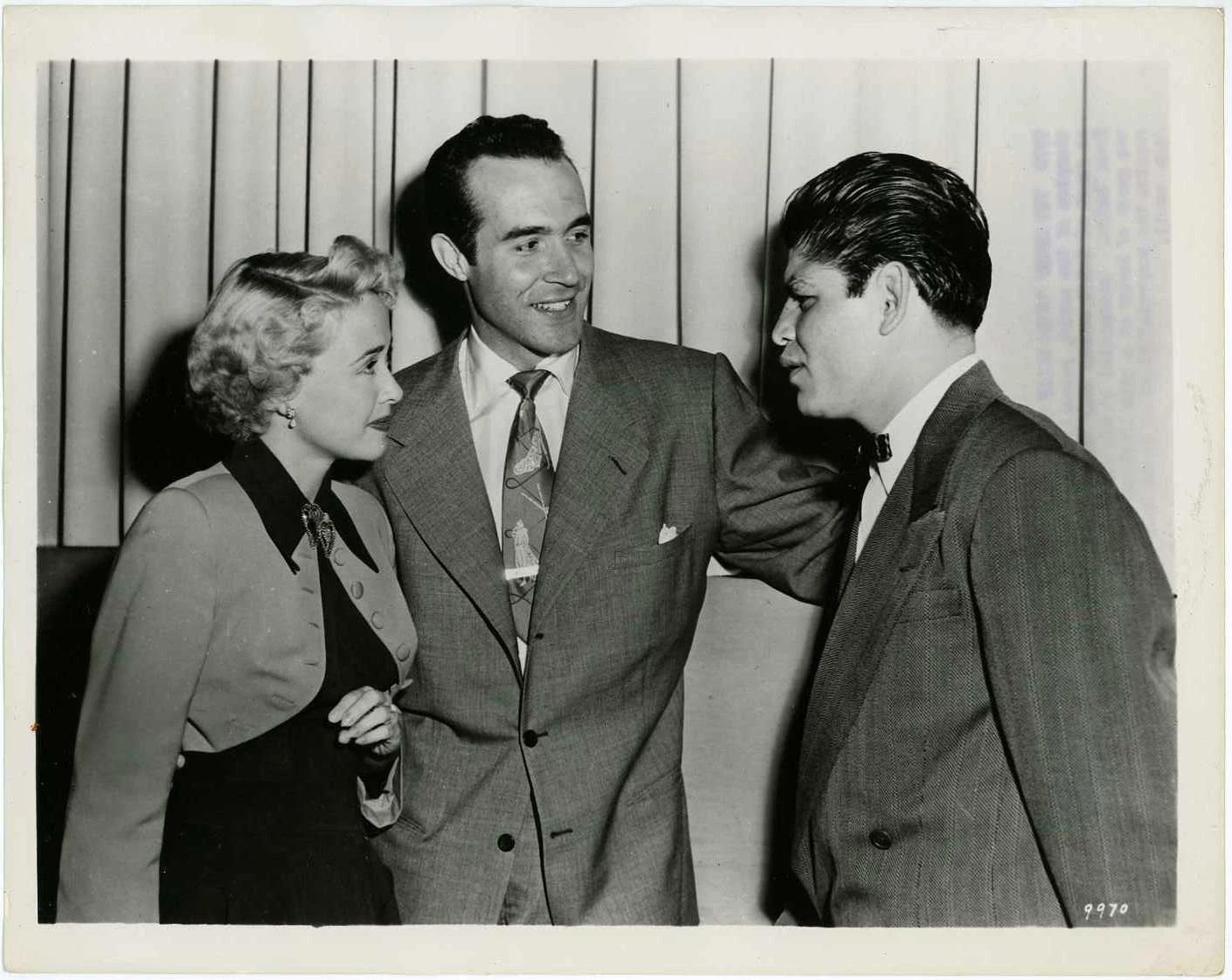
Jane Powell and Ricardo Montalban get to meet boxer Lauro Salas in this candid MGM publicity photo from 1952. Powell and Montalban had teamed up in the delightful musical "Two Weeks with Love" in 1950. 

From the Archives is our latest series of posts where we share photos from the Silverbanks Pictures collection. Some of these may have been sold in the past, and others may still be available for purchase at our eBay store: http://stores.ebay.com/Silverbanks-Pictures 

Saturday, July 12, 2025

From the Archives: 20,000 Leagues Under the Sea (1954)


Kirk Douglas spent a day at Disneyland in 1954 and clowned around with the pirates on the Pirates of the Caribbean ride during a publicity photo shoot for "20,000 Leagues Under the Sea" which was Disney's biggest live-action production to date. 

From the Archives is our latest series of posts where we share photos from the Silverbanks Pictures collection. Some of these may have been sold in the past, and others may still be available for purchase at our eBay store: http://stores.ebay.com/Silverbanks-Pictures

Sunday, June 15, 2025

Weekend with Father (1951)

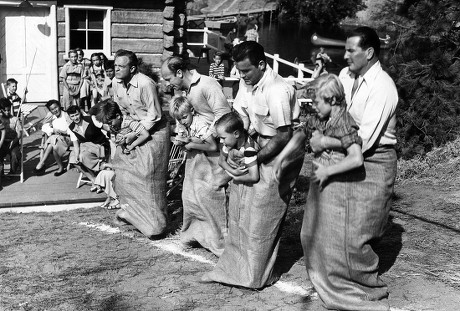
Today is Father's Day and to celebrate all of the wonderful daddies of the world, we picked a rare but wonderful daddy movie to review - Weekend with Father (1951). This Universal Pictures comedy stars Van Heflin and Patricia Neal and tells the story of widower Brad Stubbs and widow Jean Bowen who meet while taking their children to a summer camp. Even though sparks of love instantly fly between the happy couple, getting their children to accept a blended family proves to be more difficult...but "Daddy Stubbs" gives it his best try to make it work. 

"Mommy, is that Schmoe gonna be our father??"

Yes, unfortunately, Bowen's two boys see their new father as a failure, especially when compared to He-Man Don Adams (Richard Denning), the camp counselor, but Mrs. Bowen knows what a gem she found. Stubbs' two daughters are disappointed with "mother" as well.... they were hoping their dad was going to marry the glamorous TV star Phyllis Reynolds (Virginia Field) whom he has been dating for over a year.

Ironing up the difficulty with their children and trying to shake off the two cardboard idols makes up with the bulk of the film and provides ample opportunity for comedic moments, many of which were provided in Joseph Hoffman's script. Incidentally, this script feels like it was tailor-made for Fred MacMurray and Claudette Colbert. I wonder if they weren't initially planned to be the stars of this vehicle. Colbert would have been wonderful as Mrs. Bowen, but Patricia Neal does what she can with the role and what she does is rather good. 

Universal released so many entertaining comedies in the late 1940s and early 1950s and just about every actor on their payroll ended up appearing in at least one during their tenure with the studio. Van Heflin and Patricia Neal are generally considered serious actors, but they do a good job with these light-hearted roles.... especially Heflin, who should have gone on to make more comedies. 

Weekend with Father was directed by Douglas Sirk, who was such a versatile director. He made a series of comedies before switching to adventure films and later mushy romance pictures starring Rock Hudson. This film plays out quickly and keeps the laughs going. 

You can't help but feel sorry for both parents as they put up with their children's antics but faced with the same situation, I guess most couples would bend backward trying to get their children to like their newly chosen spouse. It's worth checking out this little-known classic and, to make the film extra special, why not pair this with Walt Disney's short cartoon "Father's Weekend" featuring Goofy?

Happy Father's Day!

Saturday, June 7, 2025

From the Archives: Around the World in 80 Days (1956)

 
David Niven and Cantiflas as Phileas Fogg and Passepartout pose for a photograph before embarking on their extraordinary adventure around the world in this scene from Around the World in 80 Days (1956). 

From the Archives is our latest series of posts where we share photos from the Silverbanks Pictures collection. Some of these may have been sold in the past, and others may still be available for purchase at our eBay store: http://stores.ebay.com/Silverbanks-Pictures

Friday, May 30, 2025

Film Albums: Miyoshi Sings for Arthur Godfrey


If you grew up watching the television series The Courtship of Eddie's Father, then you probably best remember Miyoshi Umeki as Mrs. Livingston, the housekeeper to Eddie and his father, but prior to this series she made a name for herself in the films Sayonara, Flower Drum Song, and comedies such as Cry for Happy and The Horizontal Lieutenant. Miyoshi was also a regular guest star on The Arthur Godfrey Show in the 1950s and it was through this show that she was introduced to American audiences...as a singer. Ms. Umeki began her career in Japan as a nightclub singer and she had a beautiful deep sultry voice that was quite unlike the soft speaking voice she used in her films. 

For her first US album (from Mercury Records) she performed some of her personal favorites in a mixture of Japanese and English languages. Personally, I favored her Japanese renditions and was hoping to find an album of hers in Japanese but no such luck...even in the 1950s, Japanese audiences wanted to hear American songs in English!

There are some lovely orchestra arrangements with these songs but what makes them especially wonderful is Miyoshi's rendering of these classics. She puts such heart in her singing. 

Click here to listen to the full album on Youtube. 

Track Listing:

Side A

If I Give My Heart to You

China Nights

I'm in the Mood for Love

My Baby's Comin' Home

How Deep is the Ocean

Slowly Go Out of Your Mind

Side B

Teach Me Tonight

Hanna Ko San

Can't Help Lovin' That Man

S'Wonderful

Over the Rainbow

Sayonara

Top Picks: China Nights, I'm in the Mood for Love, Hanna Ko San, Can't Help Lovin' that Man, Sayonara

Saturday, May 24, 2025

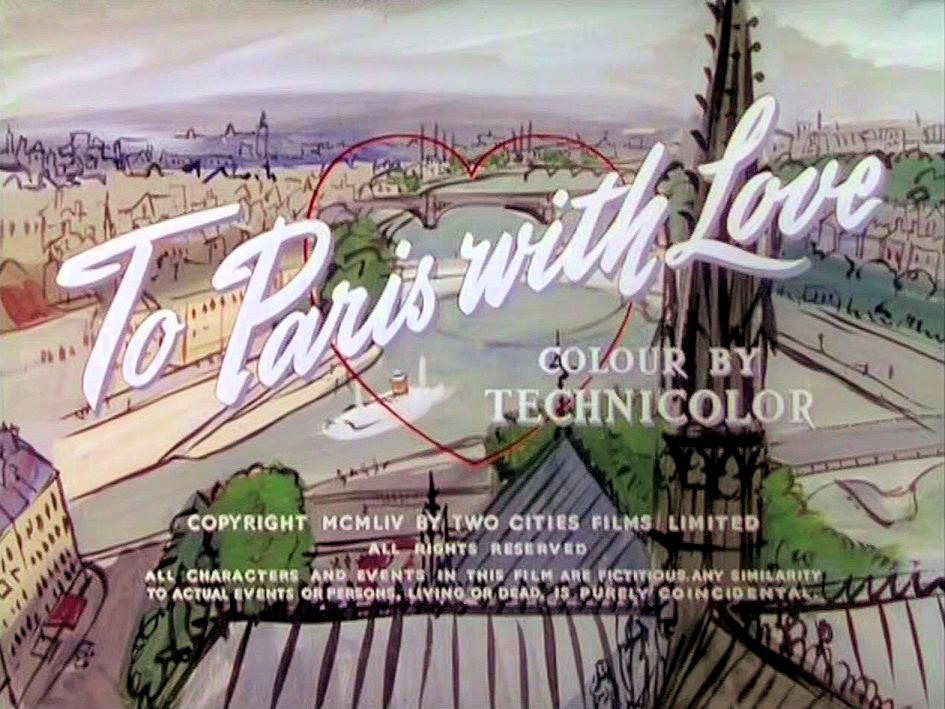
To Paris with Love (1955)

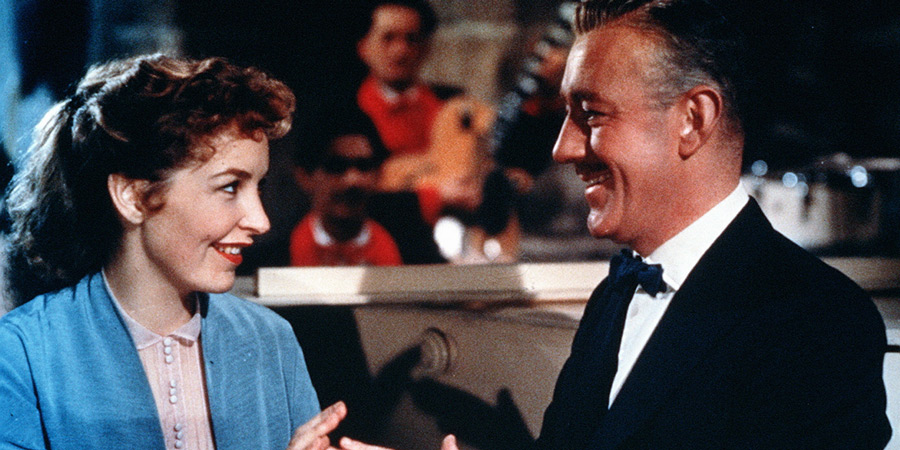
Alec Guinness is usually regarded as a serious actor due to his roles in The Bridge on the River Kwai, Tunes of Glory and Star Wars, but he was primarily a star of light comedies throughout the 1940s and 1950s and he made a number of entertaining films... one of which was To Paris with Love, released in 1955. 

In this film, Guinness plays Sir Edgar, a middle-aged Scotsman who is on holiday in Paris with his grown son John (Vernon Gray). He is secretly hoping that his son would find romance in Paris with a young pretty Parisian, while John is hoping his father would find romance with a rich middle-aged woman. They meet Lizette (Odile Versois), a salesgirl at a fashionable boutique, the first day they arrive and Sir Edgar thinks she is ideal for John so he arranges a meeting with her for lunch the next day. Meanwhile, John meets Sylvia (Elina Labourdette), the owner of the same boutique, and thinks that she is ideal for his father so he, too, arranges a meeting with her for lunch the next day. Before they know it, John is dating Sylvia who is twenty years his senior and Sir Edgar is dating Lizette, who is twenty years younger than he! Both found romance in Paris in an unexpected way and how the twosome work out their mixed-up affairs makes up the remainder of this short and delightful Parisian holiday. 

To Paris with Love is another one of those classic British comedies that in recent decades has somehow been overlooked stateside, yet at the time of its release it was quite popular in the U.S. The film was shot in Eastmancolor on location in Paris and the city looked lovely. The characters kept referring to "springtime in Paris" although it was clearly shot in the autumn with the color changes of the trees evident. 

Alec Guinness didn't show much display of emotion in this film yet his feelings for young Lizette seemed genuine and one can easily see how she can find him attractive. He was especially good in his little bits of humor, such as when he got his badminton birdie up in a tree and thought he was agile enough to climb up and get it. That he did...but getting down was a different story! Vernon Gray was the likeable young chap in Now and Forever and he played a similar character here, although this time he found an older woman more attractive than Janette Scott. 

Odile Versois made several good comedies in the early 1950s and this wasn't her first British production. The following year she starred in the entertaining crime drama Checkpoint (1956) with Stanley Baker. In To Paris with Love there is a secondary romance between her and a young postman who is enamored with her and a nice side comedy about her father being a taxi-driver. Also in the cast is Austin Trevor, Jacques Francois, and Claude Romain. 

To Paris with Love is currently available on DVD and it is worth checking out. It is one of those amusing light-hearted comedies that has such a relaxing pace and beautiful Paris setting that you'll end up rewatching it every few years. 

Saturday, May 17, 2025

The Student Prince (1954)

In 1954, Metro-Goldwyn-Mayer brought the delightful old play "The Student Prince" to the big screen. This lavish production was initially planned as a vehicle for their Italian singing sensation Mario Lanza, but this fun-loving tenor had put on a bit too much weight over the summer and ended up being axed as its star. Instead, the handsome English-import Edmund Purdum took on the lead role and lip-sung the songs that were pre-recorded by Mario Lanza. And it turned out quite well!

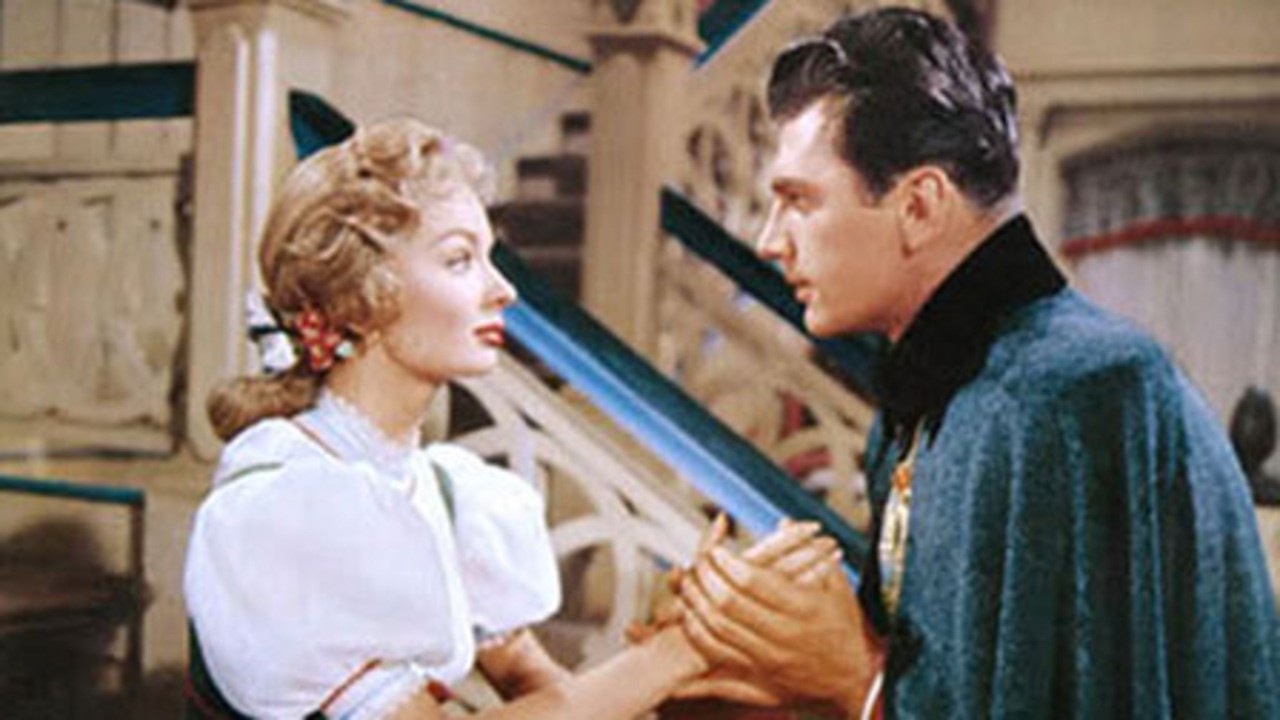
Sigmund Romberg musicalized the 1902 Wilhelm Meyer-Förster play "Old Heidelberg" in 1924 and turned it into one of the most popular operettas of the 20th century. The story centers around the young Prince Karl Franz of Karlsberg (Edmund Purdum), who is encouraged by his tutor, the kindly Doctor Engel (Edmund Gwenn), to attend the University of Heidelberg prior to capping the crown on his head. In this charming old German town, Prince Karl falls in love with Kathie (Ann Blyth), the barmaid at the local beerhall where all the students congregate after school. He wishes to marry Kathie but he is pledged to betroth Princess Johanna (Betta St. John), and so his heart is divided between his personal desire and duty for his country.

This simple but engaging plot was interwoven with over 15 glorious Romberg songs, including "Drink, Drink, Drink!", "Golden Days", the beautiful "Serenade", and "Deep in My Heart". Purdum did an excellent job of mimicking a tenor and Ann Blyth, of course, carried her own set of powerful lungs and sang better than she ever did on film. In between their romantic moments, Prinz Franz encountered some drama caused by a rival student (John Ericson), a little humor from the inn-keeper (S.Z. Sakall), and a good dose of paternal advice from his father King Ferdinand (Louis Calhern). Also in the cast was John Williams as the stiff valet Lutz, John Hoyt as the Prime Minister, and Richard Anderson as Franz's newfound friend at the university. 

The film looked beautiful in Cinemascope and the lovely Cedric Gibbons sets transported the audiences to old Germany and the grandeur of the German Empire before World War I began. 

"The Student Prince" was an immediate success upon its Broadway debut in 1924. It became the most popular musical of the 1920s, running even longer than "Show Boat". Hollywood brought it to the screen in 1927 as a silent film (!) starring Ramon Navarro and Norma Shearer and then it was shelved until this production in 1954. I always thought that it would have made an excellent Nelson Eddy-Jeannette MacDonald musical in the late 1930s but that never happened. 

This adaptation proved that a good story lasts for generations. MGM reaped more than double its return at the box-office and it launched Edmund Purdum's career in Hollywood. Shortly after The Student Prince was completed, Purdum went on to star in the epic The Egyptian over at 20th Century Fox. 

Friday, April 18, 2025

From the Archives: The Happy Road (1957)


These two wide-eyed youngsters are runaways from a Swiss boarding school, both of whom are trying to get to Paris to reunite with their father and mother in the delightful comedy "The Happy Road". Bobby Clark, the little brown-haired boy, plays the son of Gene Kelly while Brigitte Fossey plays the daughter of Barbara Laage. 

From the Archives is our latest series of posts where we share photos from the Silverbanks Pictures collection. Some of these may have been sold in the past, and others may still be available for purchase at our eBay store: http://stores.ebay.com/Silverbanks-Pictures

Saturday, April 12, 2025

Mardi Gras (1958)

Mardi Gras occurred a few weeks ago and if you are like most people, you probably didn't realize that there were a handful of classic films set during the Mardi Gras in New Orleans (as well as a bucketload of television episodes). 

Mardi Gras, released in 1958, is a Cinderella story aimed at a teenage audience. It is a little-seen color romance-musical starring Pat Boone and, honestly, it is not half-bad. It doesn't quite rank up there with April Love, but it has its moments. Pat stars as a Virginia Military Institute cadet who gets roped into participating in a raffle to win a date with a movie star - Michelle Marton (played by French import Christine Carere). Being the clean-cut country boy that he is, he never even heard of her before the raffle but ends up winning. After a few failed attempts to see her at her hotel, he gives up and instead asks a pretty young woman in the lobby for a date. Surprise! This happens to be Michelle herself.... she decided to don a Mardi Gras mask and enjoy a few hours vacation from the press. Naturally, they fall in love but then her publicity agent (Fred Clark) gets in the way and sees their romance as "great publicity" which causes a number of complications for both of them. 

Mardi Gras was a surprising hit upon its release and stayed at the top of the box-office charts for a number of weeks where it easily recouped its initial investment. Robert Wagner, Jeffrey Hunter and Tony Randall were initially set to star as the three cadets from VMI with Mitzi Gaynor playing the Hollywood actress. Later, Boone was cast with Shirley Jones as his co-star but then Shirley had to drop out due to being pregnant with her first son, Shaun Cassidy. Christine Carere had recently made a splash with her first American picture - A Certain Smile - so she was then cast and did a good job. She is like a French edition of Sonja Henie and is quite charming. 

Jerry Wald produced the film, which was directed by Edmund Goulding (Dark Victory, The Razor's Edge). The bare stone walls of the Virginia Military Institute didn't make the most colorful setting so the New Orleans shots had to make up for it...and those didn't seem all too good either. Nevertheless, Pat Boone's handsome looks and charisma and Carere's cuteness made up for the lack of scenery. The musical numbers throughout the film are quite good but, unfortunately, there were one or two too many and they stretch the picture to nearly two hours. The best of the songs was "I'll Remember Tonight" which became a hit for Pat Boone in 1958. 

Costarring with Boone as the cadets are Tommy Sands, Dick Sargeant, and Gary Crosby who was the spitting image of his papa, Der Bingel. Also in the cast is the beautiful Sheree North (sporting brunette hair) in a secondary role that wastes her talent and the dancer Barrie Chase. 

Mardi Gras is currently available on DVD as well as through Youtube

Monday, March 31, 2025

Rob Roy: The Highland Rogue (1953)

The setting is Scotland in the 18th century. A German has inherited the throne of England and Scotland and will rule as king. The appointment of King George I upsets many of the Scottish people and the highlanders especially who gather their clans together and rise up against the English troops occupying Scotland. The Duke of Argyll has quenched most of these rebel uprisings, except for a small but stubborn band of highlanders of the McGregor clan led by Rob Roy "the Highland rogue".His fight for Scottish independence leads him on a road to the gallows in London... and eventually, face to face with King George I himself. 

Walt Disney made a number of excellent adventure films in the 1950s and Rob Roy ranks as one of the best. It has all of the sweet ingredients for a rousing good adventure: highland rebels, romance, swordplay, beautiful locations, stirring music, and a grrraaand story. Technicolor filming and a cast of seasoned actors bake the cake. 

Richard Todd, who starred as the heroic Rob Roy, had just completed two period costume adventure films for Walt Disney Studios - The Story of Robin Hood and his Merrie Men and The Sword and the Rose - both of which were popular with UK audiences and Rob Roy proved to be a box-office hit as well. Unfortunately, these films did not do as well stateside and Disney decided not to pursue more costume films. This was also the last picture Disney released through RKO for shortly afterwards all of his productions were released through his own distribution company, Buena Vista.  

Rob Roy gathered together some excellent actors from throughout the United Kingdom including Irish-born (!) Richard Todd, Welsh actress Glynis Johns, James Robertson Justice of Scottish ancestry (who looked especially handsome donning long blonde hair), English character actors Michael Gough and Geoffrey Keen, and one of the most famous Scottish film actors to have ever lived: Finlay Currie. 

Rob Roy is a simple story of a rebel but he is one like Zorro or Robin Hood, where the audience takes sides with him and is pleased to see justice done in the end.The story was, in Disney's words, "based on history and legend" and written by one of his most dependable scriptwriters Lawrence Edward Watkin, who specialized in adapting adventure stories such as Treasure Island and The Story of Robin Hood.  

Location filming took place in Scotland around Corriegrennan and Aberfoyle and this Highland scenery was beautifully shot by legendary cinematographer Guy Green. What scenes they could not film were painted in by matte artist Peter Ellenshaw. Today, one can view Rob Roy and its colorful filming through Disney's subscription streaming service Disney + or by purchasing it on DVD. 

Sunday, March 23, 2025

Kirby Grant and Chinook in the Royal Mounted Police Movies

In the late 1940s and early 1950s, Kirby Grant starred in a series of Mountie films with "Chinook," a white German shepherd. Each film featured a mixture of adventure and mystery plots set in the wild Northwest territory of Canada. Grant played Corporal Roy Webb, a very personable officer of the Royal Mounted Police who traveled nowhere without his heroic companion Chinook. All of the stories featured Webb being assigned to a district to investigate a murder, robbery, or other crime. Usually when he arrives, he dons the garbs of the local folk and tries to weedle information from the suspects while incognito. 

The 10 films, released by Monogram Pictures, are all less than 70-minutes each and are very entertaining... even though they follow the same formula and tend to be forgotten within a week after watching. This formula included having the crime take place within the first three minutes of the film, Corporal Webb being assigned to the case, another murder to follow shortly after, Webb or Chinook being attacked and later recovering, a chase through the woods and over lots of large boulders, and finally, Webb catching his man... as all good Mounties are told to do. 

All of the Chinook films were based on novels written by James Oliver Curwood who, oddly enough, was not a former Mountie but rather a reporter who was hired by the Canadian government to tour Canada and write about the land to encourage tourism. Whether his stories helped to increase tourism is unknown, but they certainly made Curwood famous! He became one of the most popular adventure writers in the world and the highest paid writer of his era. 

The action in these pictures is better than most B-films and the stories keep you guessing. Sometimes the criminal is obvious and other times it is someone surprising like the kindly shopkeeper, the man who called the police in the first place (a clever way to divert suspicion), or even the sweet young woman whom Corporal Webb was beginning to fall in love with. The action scenes don't hold back on the grisly attacks either.... sometimes Webb gets shot, Chinook gets roughed up by a lone wolf or a mean hunter, or even the hero of the story might get killed suddenly. 


Kirby Grant does a wonderful job of playing the heroic Mountie and Chinook is good in the role, too, although he doesn't have the acting chops of Lassie. The series provided some B-actors with jobs and occasionally featured players who went on to more fame, such as Martha Hyer. 

Here are some short plot summaries to each of the films:

Trail of the Yukon (1949) 

In retaliation for jumping their mining claim, Matt Blaine and his son rob Dawson's Bank. While escaping, the men they hired to help them double-cross them and kill Matt. Corporal McDonald (he later became Webb) is then sent on the case to recover the bank's money and solve the murder. 

The Wolf Hunters (1949)

Four fur trappers have been slain and their furs stolen from them, so Corporal Webb investigates and saves the life of a fifth trapper enroute. Chinook has the only clue to the killer, a torn piece of cloth from the man's coat. Edward Norris and Helen Parrish star. 

Snow Dog (1950)

A fur-trapper and his sister help Corporal Webb track down a killer wolf while searching for their late uncle's treasure which is supposedly hidden in the woods. Elena Verdugo and Milburn Stone star.

Call of the Klondike (1950) 

Men are disappearing near an abandoned gold mine and Colonel Webb is sent to investigate. He finds a disgruntled foreigner causing trouble and the bodies of two of the men who went missing. Tom Neal and Anne Gwynne star. 

Yukon Manhunt (1951)

Payrolls from a mining camp are being stolen enroute to the men, so Corporal Webb is called in to help discover who could be robbing the payroll deliveries. Gail Davis, Margaret Field and Rand Brooks star.

Northwest Territory (1951)

Corporal Webb escorts recently orphaned Billy to his grandfather Pop Kellogg who lives in the woods of the Northwest Territory but finds Pop murdered and his "worthless" stake in land being scouted by a number of suspicious characters. Warren Douglas and Gloria Saunders star. 

Yukon Gold (1952)

The owner of a gambling saloon in the Klondike is tied in with a recent murder and Webb is sent to investigate. Martha Hyer and Frances Charles star. 

Fangs of the Arctic (1953)

A trapper is killed in Blackfoot Crossing territory and illegal beaver pelts are being smuggled out. Webb disguises himself as a trapper and investigates as more bodies pile up...including his new deputy. Warren Douglas and Lorna Hansen star. 

Northern Patrol (1953)

Corporal Webb hunts for the killer of a man who supposedly committed suicide in his cabin and gets tied up in a love triangle in the process. William Phipps, Marian Carr star. 

Yukon Vengeance (1954)

Corporal Webb travels to the wilds of Bear Creek to investigate the murders of three mail carriers, all of whom were mauled by a bear. Webb goes undercover as a mail carrier to see if the "bear" is of the two-footed variety. Monte Hale and Mary Ellen Kay star. 

All of the Kirby Grant and Chinook films have been beautifully restored and released by Warner Archives on DVD in three volumes.