Showing posts with label MGM. Show all posts

Saturday, November 29, 2025

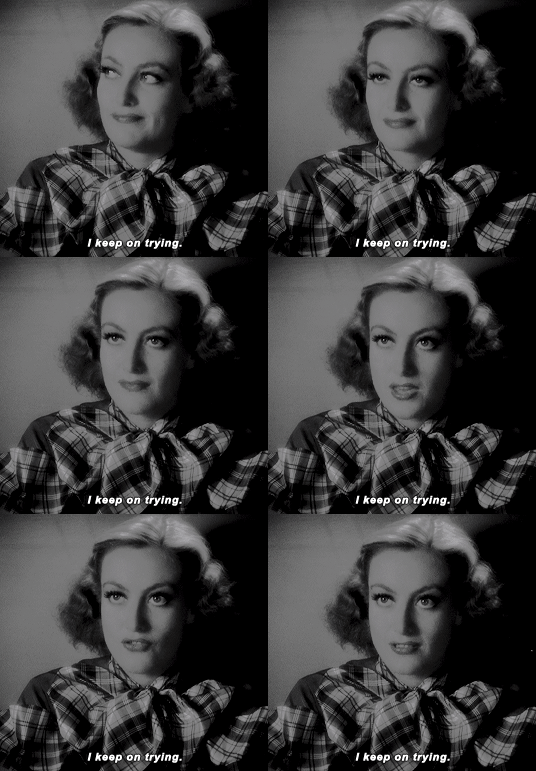
The Shining Hour (1938)

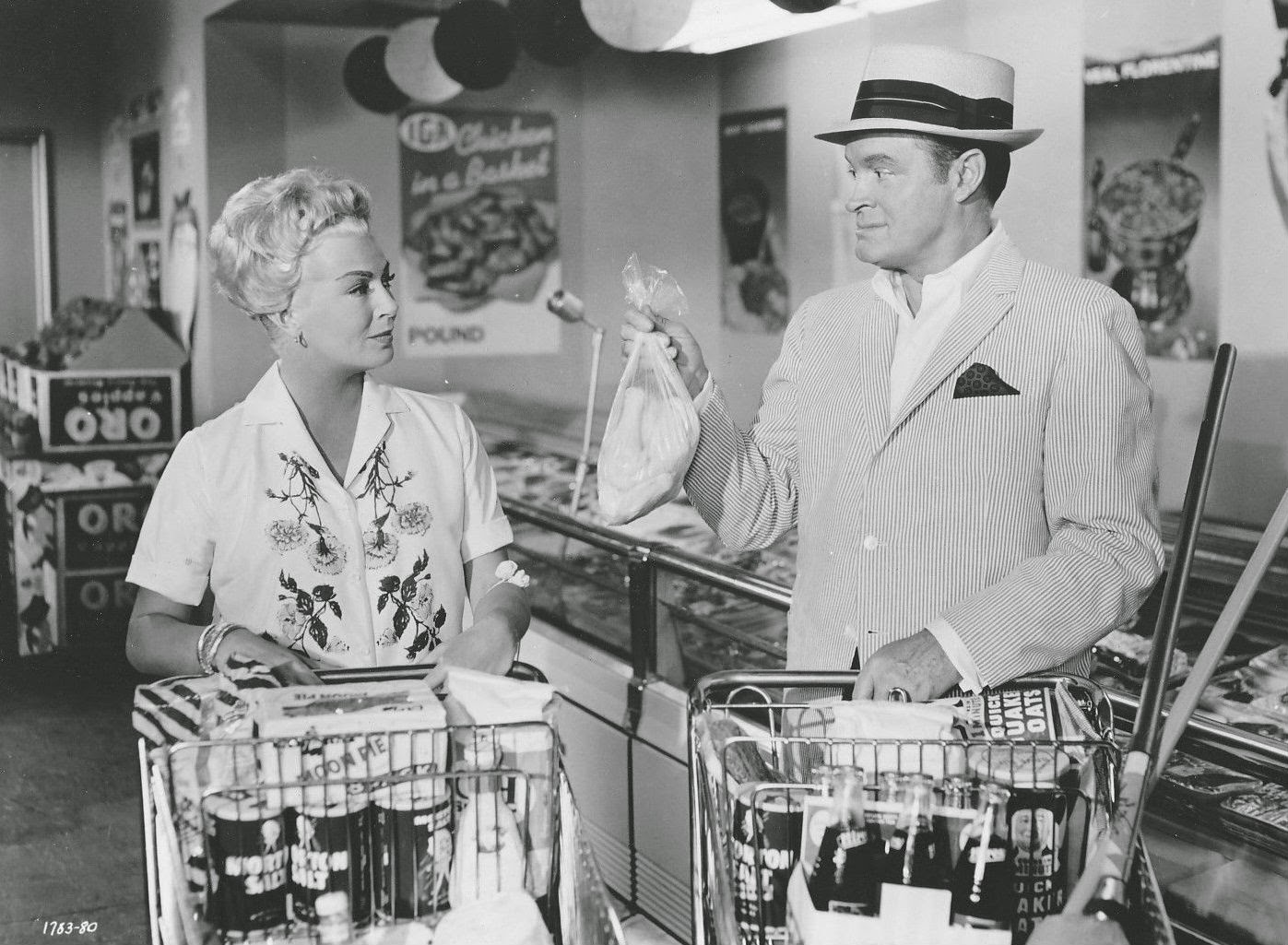
MGM films are easily distinguished by their production values, which were top in the industry. If you turn the TV on midway through an MGM movie, you are likely to know it is an MGM movie just by the quality of the set design, the music, the costumes, the cinematography, and of course the "big name" actors. 

The Shining Hour had all of the above - except for a quality script. Unfortunately, this brought the whole film down to a Columbia "B" movie status. As entertaining as the film was, the plot seemed so absurd mid-way through that it turned into a comedy - at least for the two of us watching it. We had a grand laugh! But I doubt this was the intention of Keith Winter's original stage play. 

The story around The Shining Hour is a simple love triangle turned into a rectangle. Henry Linden (Melyn Douglas) comes from a socially prominent Wisconsin farming family. On a trip to New York City, he falls in love with dancer Olivia Riley (Joan Crawford) and asks her to marry him. Henry's brother David (Robert Young) reads about their engagement in the newspaper and flies to New York City hoping to stop the "impossible" marriage. He hadn't met Olivia yet, but he already knew she didn't belong in the Linden family. Hrumph! David questions her integrity so she slaps him in the face and marries Henry. 

When the newlyweds arrive at the grand Linden estate, they are greeted by David and his wife Judy (Margaret Sullavan) but not by Hannah (Fay Bainter), Henry and David's sister, because she, too, was against the "impossible" marriage. These Lindens are making a bad impression as wealthy country snobs. 

Judy takes to Olivia instantly and the two become fast friends and Olivia tries her best to become one of the proud Lindens.... in fact, she fits like a glove. Hannah begins to tolerate her and all seems to be going well until David suddenly has a change of heart and falls in love with Olivia! She tries to resist his charm but he continues to pursue her, even during the party when Henry and Olivia are celebrating the completion of their big new beautiful house. Judy suspects as much but Henry is blissfully unaware of any complications until Olivia begs him to take her away on a long honeymoon - that very night.
This seems to be the crutch of the problem with the Lindens. They greet one another during the day like they never slept together the night before. All of their romantic entanglements seem like they are being played out at a college campus and not one of them is really married. Throughout the second half of the film, Olivia repeatedly says she is "no good" and does not deserve the love of Henry since she never really loved him when she married him, however, it is Olivia that is making the only effort to being a loving spouse. Henry continually leaves her alone as though he were a travelling salesman... as a gentleman farmer what could he possibly be doing on a farm so late at night? David is even more aloof towards Judy. He wears dinner whites in the evening and riding clothes during the day so, unlike Henry, I doubt he works on the farm and yet he barely talks to Judy. 

Sadly, Hannah is the worst of the lot. Towards the end of the film, she goes into a jealous rage and burns Henry's new house down. Director Frank Borzage captures this scene well and we see Fay Bainter dressed in black, her hair all tussled, and laughing like a mad woman. The next scene, Henry and David still have ash on their face from putting out the fire and Hannah is back to being primly dressed and calmly serving them a cup of coffee. It is these abrupt transitions that no doubt led critic Bosley Crowther to calling the film "a hackneyed story of a definitely inferior grade."

The hackneyed transitions could have been fixed if the runtime was just a bit longer. The Shining Hour is only 76 minutes long and that seems much too short for such a dramatic script - even the Andy Hardy films ran over 80 minutes! Audiences thought little of the film as well and MGM ended up swallowing a loss of over $137,000. Joan Crawford had suggested the play as a property worth buying so Louis B. Mayer was probably cross with her. 

After reading this review you may be thinking "Is this film even worth watching?" and the answer to that is, yes, definitely! Joan Crawford and Melvyn Douglas are wonderful in the movie, it's a top-notch production (except for the preposterous story), the Cedric Gibbons sets are gorgeous, the setting is scenic, you'll get to see Joan Crawford dance, and the ending is amusing, so why not watch it? 

Friday, September 5, 2025

From the Archives: Jane Powell and Boxer Lauro Salas


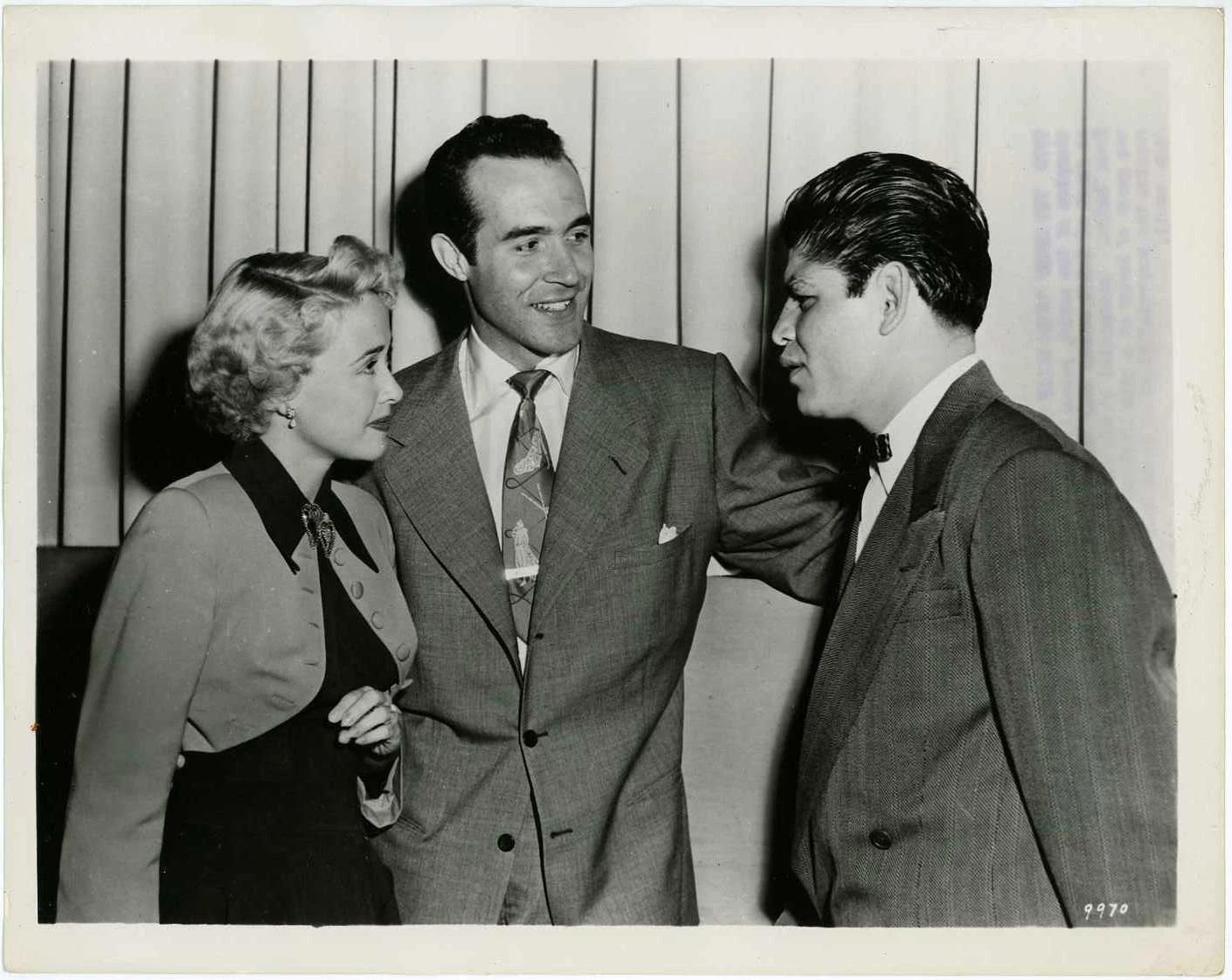
Jane Powell and Ricardo Montalban get to meet boxer Lauro Salas in this candid MGM publicity photo from 1952. Powell and Montalban had teamed up in the delightful musical "Two Weeks with Love" in 1950. 

From the Archives is our latest series of posts where we share photos from the Silverbanks Pictures collection. Some of these may have been sold in the past, and others may still be available for purchase at our eBay store: http://stores.ebay.com/Silverbanks-Pictures 

Saturday, August 9, 2025

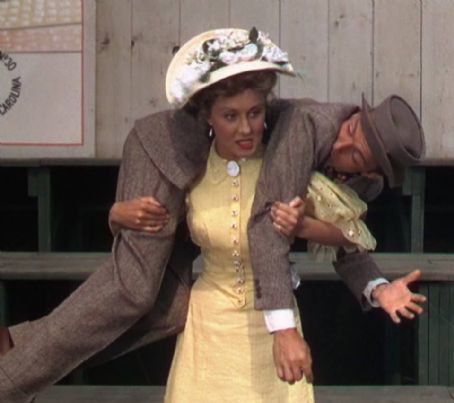
Take Me Out to the Ball Game (1949)

In 1948, Busby Berkeley was hired to direct the all-American musical Take Me Out to the Ball Game but midway through production he had to withdraw due to health issues. That's when Gene Kelly stepped up to the plate and hit a homerun with a blockbuster! 

Take Me Out to the Ball Game was the first film to team Gene Kelly, Frank Sinatra, and Jules Munshin and this winning threesome were so entertaining they joined forces right afterwards for the classic On the Town, both directed by Stanley Donen and Gene Kelly. 

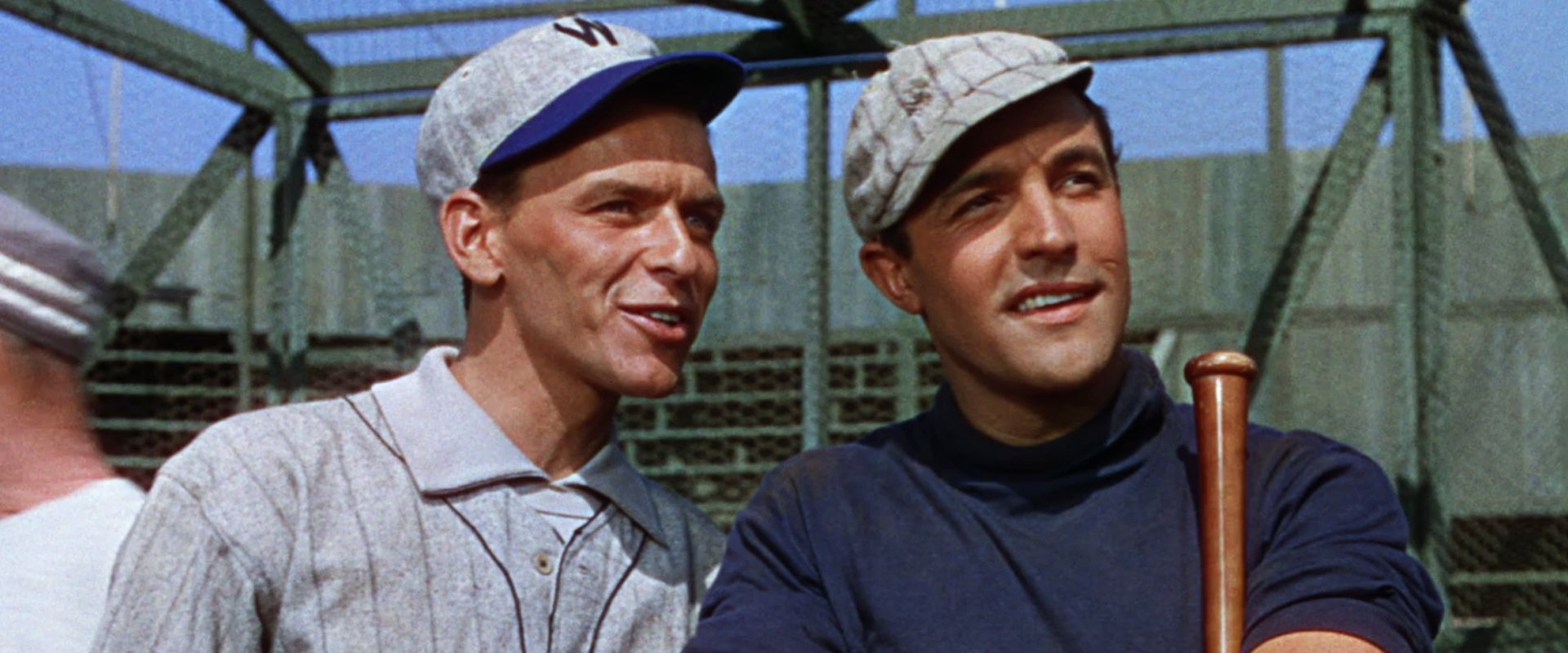
The Donen-Kelly duo were also responsible for penning this story, a wholesome blend of Americana, baseball, and good ol' gambling. Gene Kelly stars as Eddie O'Brien, short-stop of the fictional Wolves pro-ball team. When playing with his buddies, first baseman Dennis Ryan (Sinatra) and third baseman Nat Goldberg (Munshin), they're unbeatable. The owner of the Wolves recently passed away and his niece K.C. Higgins (Williams) arrives to take a "hands on" approach to ownership. At first, they resent this, but then they come to admire her.... all except Eddie, who is steamed that she moved up their curfew and increased the fine for breaking it. Eddie likes to entertain the girls at night, so that cramps his style. 

Eddie likes to entertain, period. When he isn't playing ball, he is cutting capers. Off season, he and Dennis are a popular vaudeville act. When Joe Lorgan (Edward Arnold), a big gambler in town, bets heavily against the Wolves, he uses Eddie's love of show business to lure him away from training. But when Eddie learns he has been made a stooge he rallies back to help the Wolves - and his buddies - win the pennant. 

Take Me Out to the Ball Game was a box-office success on its release and raked in nearly $3,000,000. It had that magical aura that only the Arthur Freed unit at Metro-Goldwyn-Mayer could create. This one also bore the unique stamp of Busby Berkeley, Stanley Donen, and Gene Kelly, who directed most of the dance sequences. 

Berkeley and Kelly originally wanted Judy Garland to play the leading lady but she was having substance problems, so Ginger Rogers was cast as her replacement. Ginger then backed out a month prior to filming and Esther Williams took over. What a jim dandy substitute! 

Williams was ideal for the role and perfectly cast. She was already a leading star and this role let her take a quick break from swimming - she only had one simple pool routine in the picture. However, as Williams put it in her autobiography, filming Take Me Out to the Ball Game was an experience of "pure misery." Kelly was too demanding as a director and, along with Donen, seemed to resent her. 

Betty Garrett, who had a wonderful role as a boy-crazy girl chasing the girl-shy Dennis Ryan, had a different experience. In her autobiography she wrote that "making Ball Game.. was pure joy and Frank was an absolute delight to work with." 

"Why don't you pick on somebody your own size?"

"There ain't nobody my size!"

Jules Munshin was making his breakthrough screen role in Take Me Out to the Ball Game. He had previously had a bit part in Easter Parade (1948) as a waiter and, on the strength of that performance, got this role. He made a great "third wheel" and was even more entertaining in On the Town.

Take Me Out to the Ball Game included a number of pleasant - albeit forgettable - musical numbers, the best of which feature Gene Kelly dancing. "O'Brien to Ryan to Goldberg" and "It's Fate Baby, It's Fate" are the most fun to watch, but the patriotic "Strictly U.S.A" number is classic MGM - lavish and entertaining. 

All in all, Take Me Out to the Ball Game is a pitch-perfect blend of song, slapstick, and sentiment and - with Gene Kelly and Frank Sinatra rounding the bases - the film scores big in every inning so, if you're in a baseball mood, this one's a grand slam in entertainment. 

Saturday, May 17, 2025

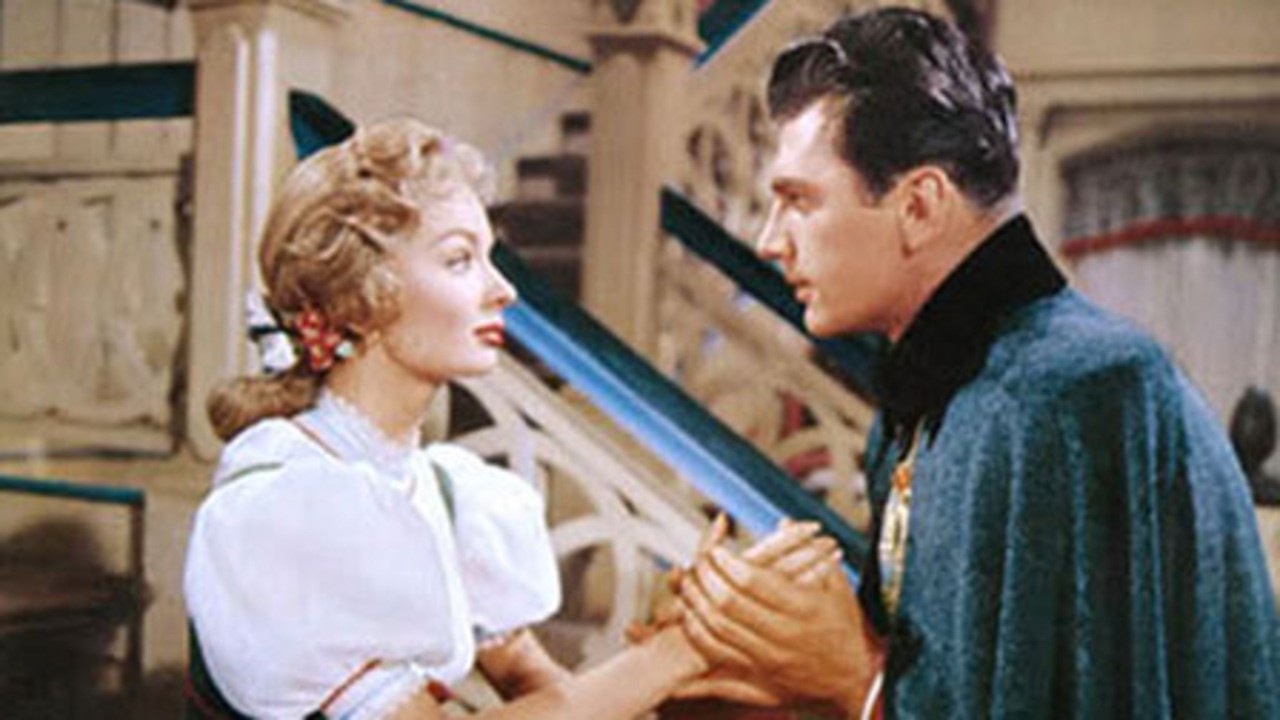
The Student Prince (1954)

In 1954, Metro-Goldwyn-Mayer brought the delightful old play "The Student Prince" to the big screen. This lavish production was initially planned as a vehicle for their Italian singing sensation Mario Lanza, but this fun-loving tenor had put on a bit too much weight over the summer and ended up being axed as its star. Instead, the handsome English-import Edmund Purdum took on the lead role and lip-sung the songs that were pre-recorded by Mario Lanza. And it turned out quite well!

Sigmund Romberg musicalized the 1902 Wilhelm Meyer-Förster play "Old Heidelberg" in 1924 and turned it into one of the most popular operettas of the 20th century. The story centers around the young Prince Karl Franz of Karlsberg (Edmund Purdum), who is encouraged by his tutor, the kindly Doctor Engel (Edmund Gwenn), to attend the University of Heidelberg prior to capping the crown on his head. In this charming old German town, Prince Karl falls in love with Kathie (Ann Blyth), the barmaid at the local beerhall where all the students congregate after school. He wishes to marry Kathie but he is pledged to betroth Princess Johanna (Betta St. John), and so his heart is divided between his personal desire and duty for his country.

This simple but engaging plot was interwoven with over 15 glorious Romberg songs, including "Drink, Drink, Drink!", "Golden Days", the beautiful "Serenade", and "Deep in My Heart". Purdum did an excellent job of mimicking a tenor and Ann Blyth, of course, carried her own set of powerful lungs and sang better than she ever did on film. In between their romantic moments, Prinz Franz encountered some drama caused by a rival student (John Ericson), a little humor from the inn-keeper (S.Z. Sakall), and a good dose of paternal advice from his father King Ferdinand (Louis Calhern). Also in the cast was John Williams as the stiff valet Lutz, John Hoyt as the Prime Minister, and Richard Anderson as Franz's newfound friend at the university. 

The film looked beautiful in Cinemascope and the lovely Cedric Gibbons sets transported the audiences to old Germany and the grandeur of the German Empire before World War I began. 

"The Student Prince" was an immediate success upon its Broadway debut in 1924. It became the most popular musical of the 1920s, running even longer than "Show Boat". Hollywood brought it to the screen in 1927 as a silent film (!) starring Ramon Navarro and Norma Shearer and then it was shelved until this production in 1954. I always thought that it would have made an excellent Nelson Eddy-Jeannette MacDonald musical in the late 1930s but that never happened. 

This adaptation proved that a good story lasts for generations. MGM reaped more than double its return at the box-office and it launched Edmund Purdum's career in Hollywood. Shortly after The Student Prince was completed, Purdum went on to star in the epic The Egyptian over at 20th Century Fox. 

Tuesday, October 31, 2023

The Hour of 13 (1952)

Metro-Goldwyn-Mayer Studios always had a flair for making period films, especially those with a Victorian setting.....and they made quite a number of them, too. Being quite a savvy production company, they also discovered that a good script is worth repeating. Hence, many of the Victorian-era thrillers that the studio made in the 1930s and 1940s were later remade. One such film was The Mystery of Mr. X (1935) which they remade in 1952 under the title The Hour of 13

Robert Montgomery starred in the original film as dapper gentleman thief Nicholas Revel. A killer known as "Mr. X" is on the loose in London targeting police constables. By a strange coincidence, his latest killing occurred the same night and in the same location as one of Revel's latest robberies. In order to clear his name, Revel decides to play an amateur detective and track down the fiend himself, all the while dodging the suspicious eye of Police Commissioner Sir Herbert Frensham (Henry Stephenson). 

The Mystery of Mr. X was based on the novel "X vs Rex", written by Philip MacDonald (The List of Adrian Messenger). Howard Emmett Rogers worked it into a quick and thrilling script and MGM had another winning Robert Montgomery picture in the theaters. 

What works once can work again, hence, seventeen years later, producer Hayes Goetz blew the dust off the script and hired screenwriter Leon Gordon to rework it into a vehicle for MGM's young star, Peter Lawford. What resulted was a charming gaslit London mystery that holds up quite well for its age. 

This time, Nicholas Revel is tracking down the killer known as The Terror. The police - primarily Inspector Connor (Roland Culver), believe that if they find the thief who stole Lady Elmbridge's emerald, they find the Terror. Since Revel stole the emerald, he wants the real Terror caught before they fence him in for a series of murders he did not commit. 

The Hour of 13 was made at the MGM-British Studios in Borehamwood, England and, while there are not many location scenes, the film sets are excellent and perfectly evoke that Jack-the-Ripper setting of old London. 

Peter Lawford is not my idea of a gentleman thief (Stewart Granger would have been excellent in this part) but he is surprisingly good. In fact, it would have been nice to see him in a series of Nicholas Revel mysteries. Playing his leading lady is English actress Dawn Addams who had a long career with MGM and an even longer career working in television. Also in the cast is Michael Hordern as Sir Henry Frensham, Derek Bond, Leslie Dwyer, and Colin Gordon. 

The Hour of 13 is available on DVD via Warner Archives.

Friday, June 9, 2023

From the Archives: The Adventures of Huckleberry Finn ( 1939 )


Mickey Rooney as Huck Finn poses with a "mess of fish" in this still photo from MGM's adaptation of Mark Twain's The Adventures of Huckleberry Finn ( 1939 ). Jackie Moran played the character of Huck a year earlier in The Adventures of Tom Sawyer

From the Archives is our latest series of posts where we share photos from the Silverbanks Pictures collection. Some of these may have been sold in the past, and others may still be available for purchase at our eBay store : http://stores.ebay.com/Silverbanks-Pictures

Sunday, April 16, 2023

Easy to Love ( 1953 )

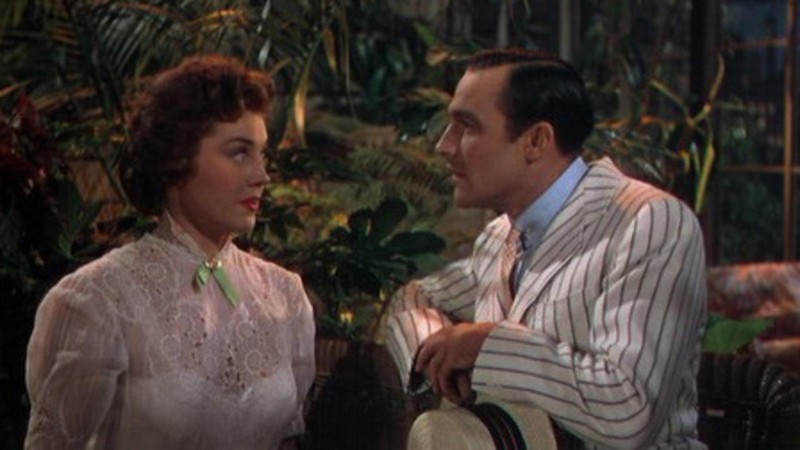
Julie Hallerton ( Esther Williams ) is the star attraction of the Cypress Gardens water show. She was groomed for success by her boss Ray ( Van Johnson ) ever since he discovered her at the age of 15, but Julie is tired of being exploited and working from morning till night with no time to herself. One day, she announces to Ray that she will be quitting to get married. This sends him into a panic ( he certainly doesn't want to lose his star attraction! ) so he decides to give her a vacation and invites her to New York with him. Julie has long been secretly in love with Ray, so she leaps at the chance...only to discover that he once again uses her and the trip to New York as a publicity opportunity. Luckily, she meets the dashing nightclub singer Barry Gordon ( Tony Martin ) in New York who not only shows her a night on the town but arouses Ray's jealous streak. 

Esther Williams teamed up with Van Johnson in four films, three of which I personally think were her best films: Thrill of a Romance ( 1945 ), The Duchess of Idaho ( 1950 ), and Easy to Love. Easy to Love was the last of these four, made in 1953, and it is a delightful romantic comedy - quite easy to love. 

Most of Esther Williams' films are light-hearted, amusing, and very colorful. Easy to Love is especially colorful. It was shot on location in Winter Garden, Florida at the beautiful Cypress Gardens and the area looked doubly lush and green in eye-popping Technicolor. The finale, filmed by helicopter, really showcases the talented waterskiers from Cypress Gardens. Esther Williams also got to don the famous Southern belle dresses with hoop skirts so often seen at Cypress Gardens. Tourism to the park surely must have gotten a boost after the film premiered.

In addition to the lovely locales, Easy to Love features beautiful costumes by Helen Rose ( William's NY evening gown is especially easy on the eyes ), an easy-to-follow script, and an easy-going cast of pros, along with some familiar character actors. 

Van Johnson is always good at comedy and, although his demeanor here is much more gruff than usual, it is still apparent why Julie wants to marry him so fervently. After all, he's Van! 

Tony Martin was never much of a leading man but he always makes a wonderful "other man". Here, he nearly lures Julie away from Ray with his affability, good looks, and crooning tenor voice. All of the songs in Easy to Love are performed by Tony Martin and include the delightful "Did'ya Ever?", "That's What a Rainy Day is For" ( penned by Lennie Hayton and George Stoll ) and the titular "Easy to Love" written by Cole Porter. 

Also in the cast is King Donovan in an Allen Jenkins-style part, Edna Skinner ( Mr. Ed ) as Julie's roommate, John Bromfield as a Cypress Gardens beefcake with his eyes on Julie, and Carroll Baker in her film debut. 

Easy to Love is available on Volume 2 of the TCM Spotlight Esther Williams DVD collection. 

Sunday, June 26, 2022

The MGM Blogathon is Here!

Kick up your heels and start singin' in the rain, for the MGM Blogathon is here!! 

Metro-Goldwyn-Mayer Studios, founded in 1924, is one of the oldest studios in Hollywood and certainly ranks as the best in movie-making history. To celebrate this legendary establishment, we are hosting The MGM Blogathon, a three-day event featuring wonderful posts about the marvelous films that they made and the talented people that called MGM their home.

Below you will find the entries listed in no particular order. Since the event will take place over three days ( June 26th-28th ), we will be adding the links to the posts as they are published. 

If you missed the blogathon announcement and want to add a post during or after the blogathon has ended, just shoot us an email and we will be glad to add your post to the list. 

So without more ado.....here are the entries! Scroll down below for snippets.


THE MASTER LIST

Irving Thalberg, MGM's Boy Genius - The Lady Eve
Arthur Freed and The Freed Unit at MGM - Silver Scenes


First, take a look at some candid snapshots taken on the set of famous MGM films with our Behind-the-Scenes at MGM post. It must have been a wonderful studio to work at. 


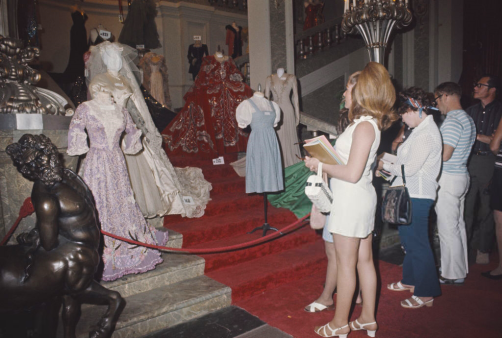
Taking Up Room tells us the story of The 1970 MGM Auction and how the Hollywood villain Kirk Kerkorian almost single-handedly dismantled MGM as a film studio. 


Critica Retro shares with us a review of Dancing Lady ( 1933 ), a milestone in Joan Crawford's film career. 


What would MGM have been without The Thin Man series? This low-budget 1934 film reaped such profits at the box office that the studio reunited William Powell and Myrna Loy for five sequels...the first of which was After the Thin Man ( 1936 ), reviewed here by Hamlette's Soliloquy.


One of the most popular comedy teams at MGM was undoubtedly The Marx Brothers, and one of their best films is reviewed by Critica Retro: A Day at the Races ( 1937 )


Gene Kelly made his home at MGM studios as well and Silver Screen Modes shares with us an excellent look at the making of the Academy Award winning, An American in Paris ( 1951 )


Father of the Bride was a big hit for MGM stars Spencer Tracy, Joan Bennett and Elizabeth Taylor. The wedding at the end of the film clearly hinted that a sequel was to come....and within a year it was released. Realweegiemidget Reviews gives us the story of Father's Little Dividend ( 1951 )


Warner Brothers Studio had Errol Flynn, but MGM had Stewart Granger, an English import who specialized in swashbucklers. Scaramouche was one of his best and to this day it remains one of the finest screen tellings of Raphael Sabatini's novel. The Caffeinated Fangirl shares her review of this classic. 


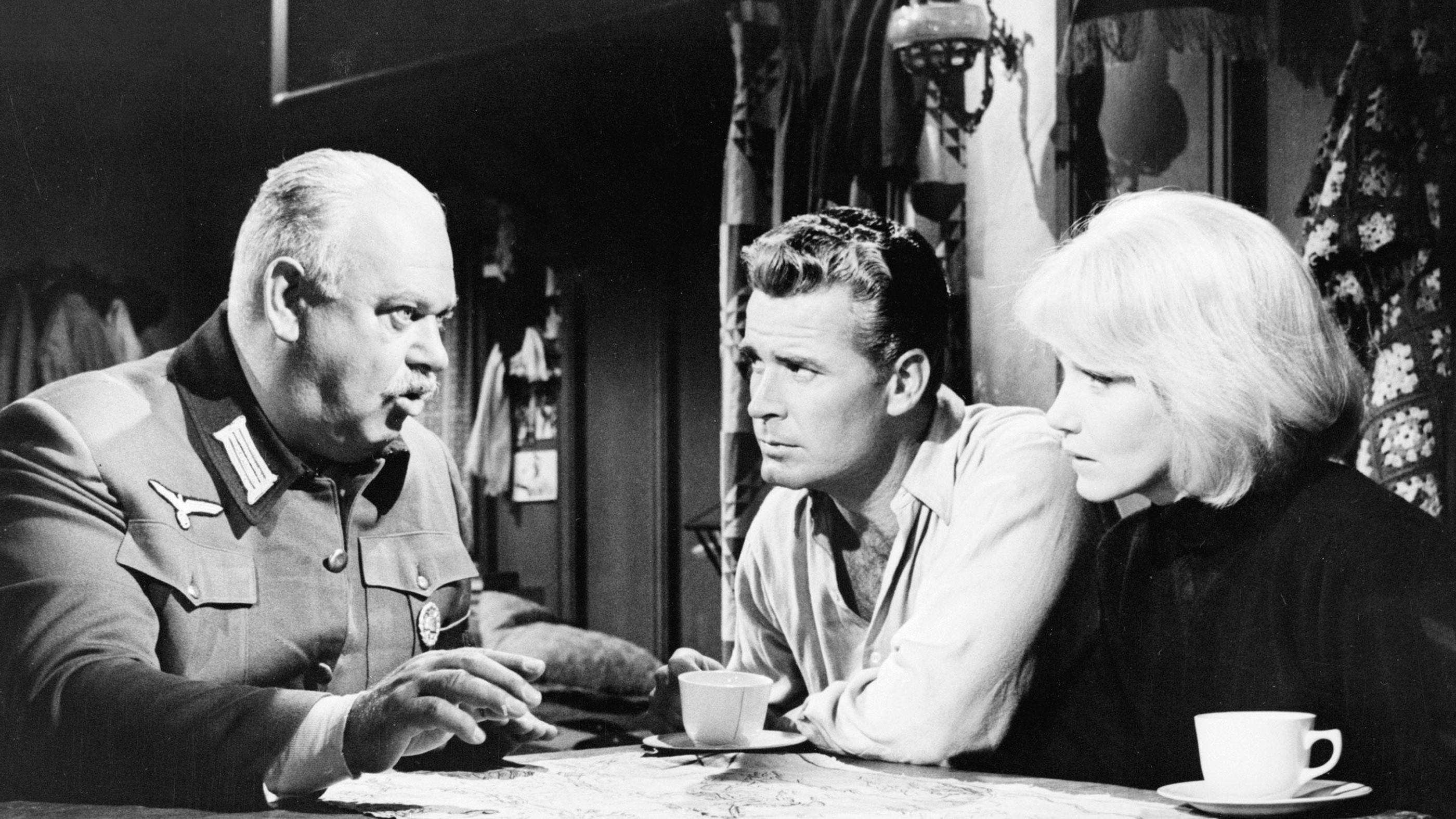
MGM produced films of all genres and Rick at the Classic Film and TV Cafe shares his review of the taut James Garner WWII thriller 36 Hours ( 1965 ).


Everyone can recognize MGM's famous logo with the roaring lion but do you know the name of that lion....or that there were multiple ones used throughout the years? Ruth gives us A Brief History of the MGM Lions over at her blog, Silver Screenings.


MGM's shining star Jean Harlow was the first and most famous of the "blonde bombshells" and Whimsically Classic shares with us an excellent bio of this talented actress with her post Jean Harlow - The First Blonde Bombshell.


What makes a star a "star"? Norma Desmond knew what it took...and A Person in the Dark convinces us that Joan Crawford knew the secret formula as well. She shares her thoughts in her post Joan Crawford - Channeling the Spirit of Norma Desmond.


Behind-the-Scenes at MGM

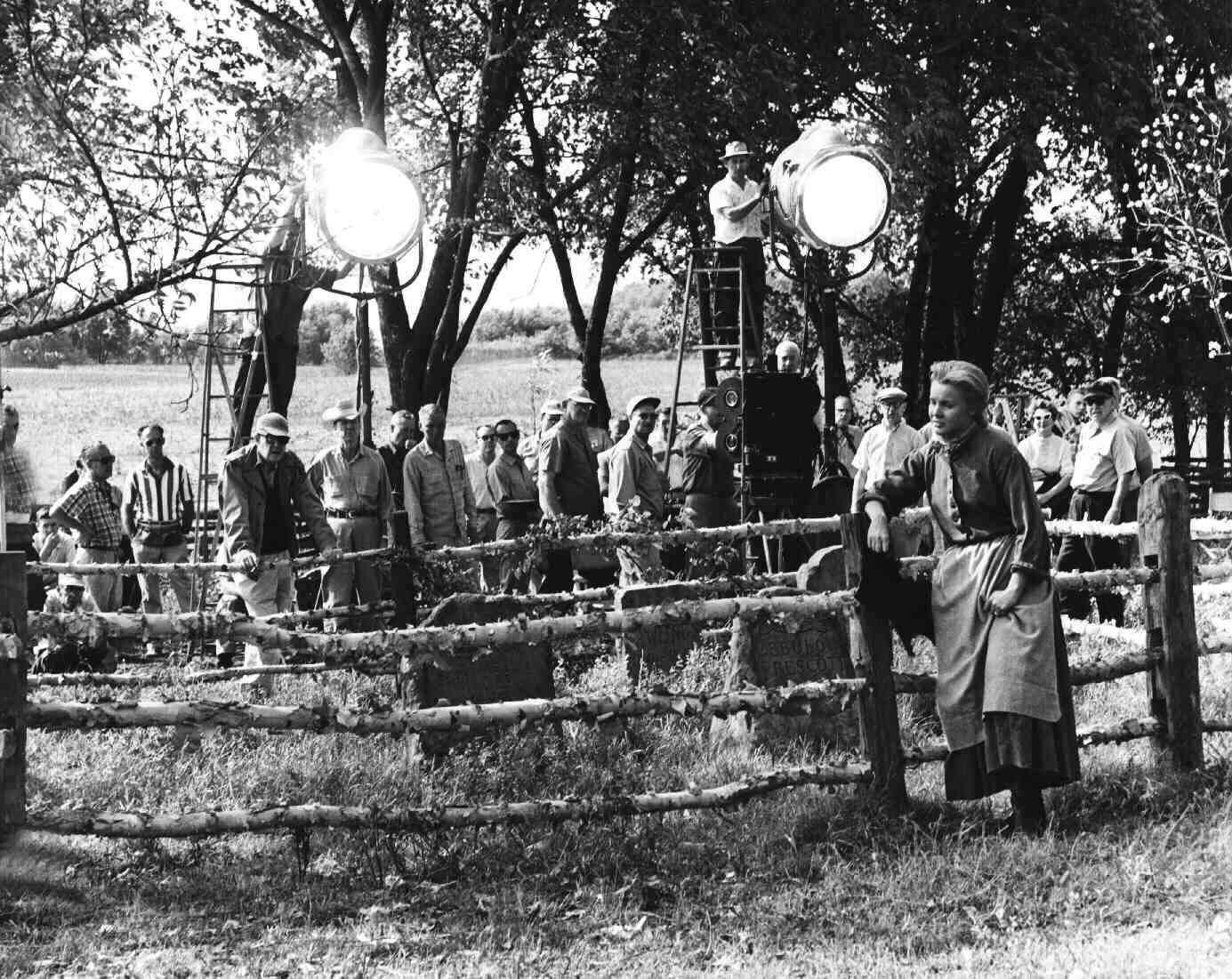
The MGM Blogathon is taking place today right here on Silver Scenes, so we thought we'd kick off the event with a photographic peek behind-the-scenes at one of the most famous film studios in the world. 

Metro-Goldwyn-Mayer was founded in 1924 after Marcus Loew merged Metro Pictures, Goldwyn Pictures, and Louis B. Mayer Pictures into one company. They hired a number of well-known actors of the time, as well as top-notch screenwriters, plunged lots of money into lavish sets, and then, with the benefit of Loew's own nationwide chain of motion picture theaters, released the films they made to the public, catapulting MGM into the top studio of the 1920s. 

The MGM logo bearing the famous roar of Leo the Lion was the trademark of a studio of quality. At MGM, there were no "B" films, all of their films were "A" productions or secondary features ( e.g. the Maisie or the Andy Hardy series ) made with just as much care but on a lower budget. 

For years, they reigned as the best studio in Hollywood, one which any actor longed to have a contract with. And then, in the 1950s, with the death of Louis B. Mayer and the dismissal of studio head Dore Schary, MGM began to flounder, relying heavily on big-budget productions such as Ben-Hur to give the studio a profit. By the 1960s, they were just a shadow of the wonderful studio they once were. In 2024, MGM will be celebrating its 100th anniversary, but clearly its golden age is over, so let's take a trip down memory lane by seeing a view of the MGM studios the audience rarely got to see - the behind-the-scenes view. 

Enjoy! 

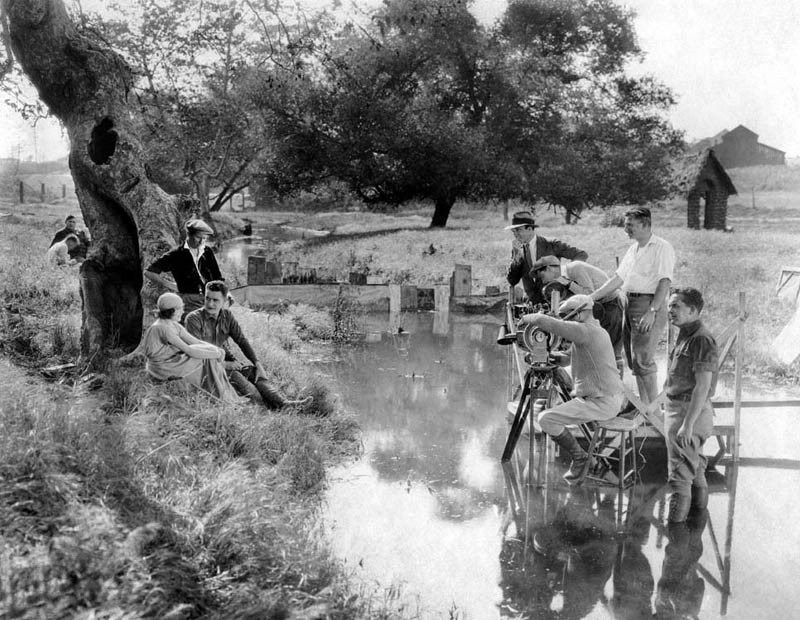
King Vidor directing John Gilbert in one of MGM's first major productions, The Big Parade ( 1925 )

Greta Garbo, soon to become MGM's biggest star, is looking a little anxious to be sitting so close to Leo the Lion

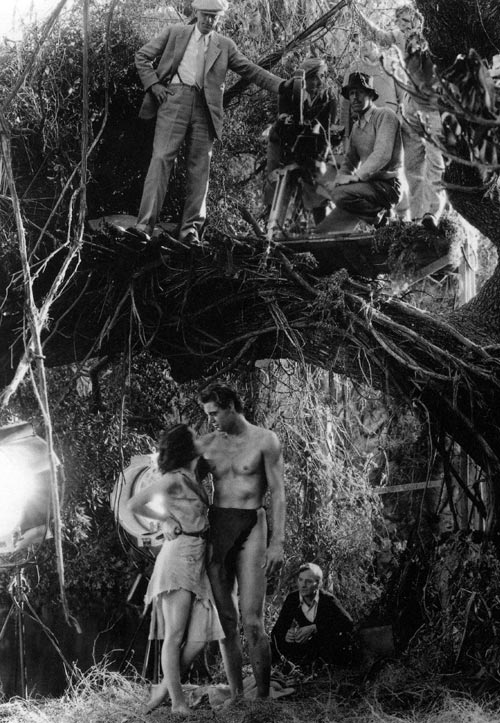
Tarzan tries to make love to Jane but he has a lot of onlookers

The MGM Wardrobe Department as seen in the early 1930s

Lace-makers are busy working on the bridal veil for Helen Hayes in White Sister ( 1933 )

W.S. Van Dyke directs William Powell and Myrna Loy in The Thin Man ( 1934 ), a film that launched one of the studio's most popular series

Norma Shearer getting a bite of lunch between scenes during the filming of Marie Antionette ( 1936 )

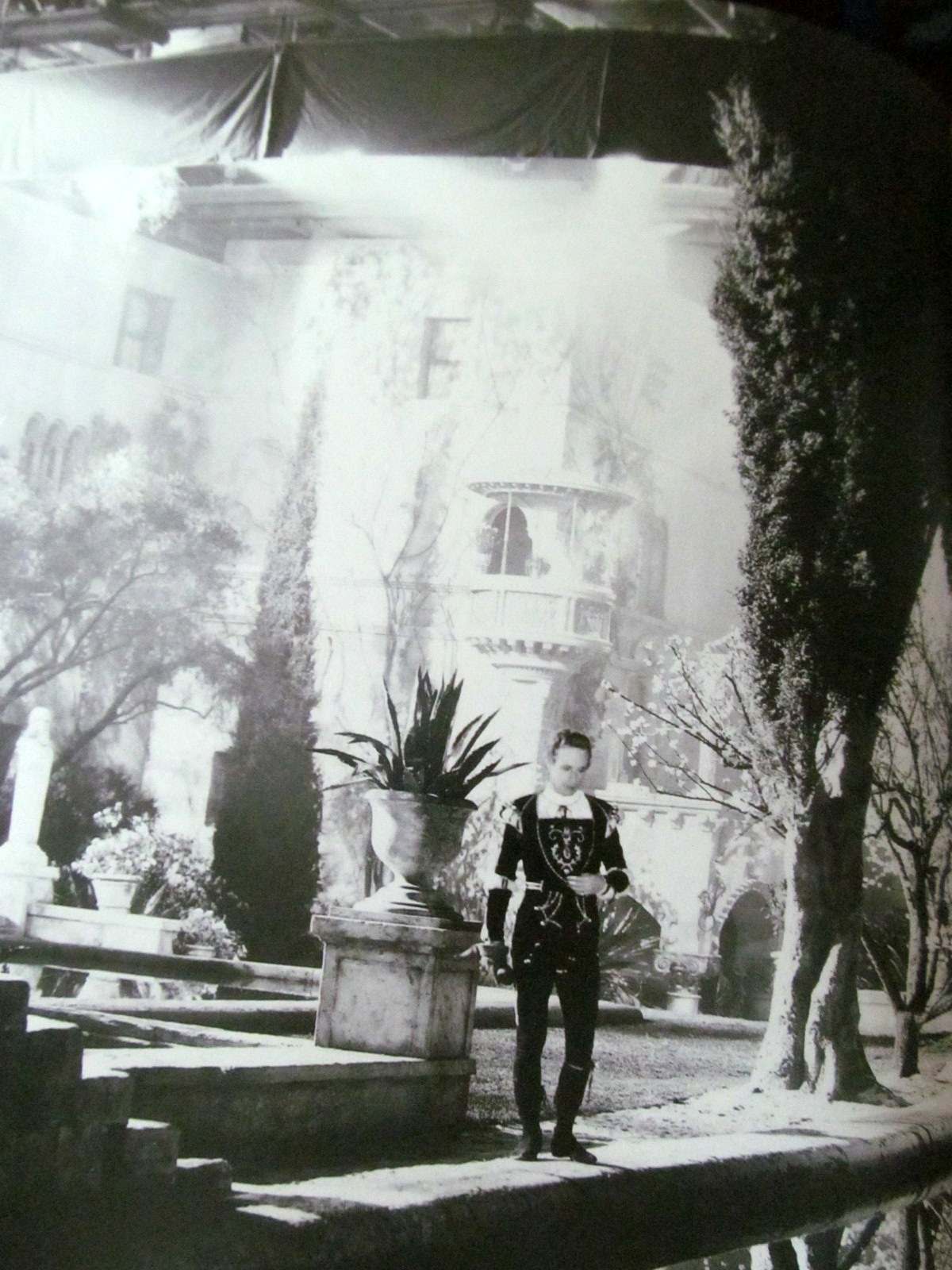
Leslie Howard on the ( massive ) set of Romeo and Juliet ( 1936 )

Studio head Louis B. Mayer playing a game of Sunday baseball with producer Irving Thalberg 

Director George Cukor and producer Hunt Stromberg with the "women" from The Women ( 1939 )

Lewis Stone celebrating his birthday on the set of one of the Andy Hardy films, another popular series
Basil Rathbone and Angela Lansbury enjoy some steak and hamburgers at the MGM commissary

Judy Garland displaying her ballgown for Little Nellie Kelly ( 1942 )

Frank Sinatra discusses a scene with director George Sidney on the set of Anchors Aweigh ( 1945 )

Greer Garson is getting a view from the scaffolding on the set of That Forsythe Woman ( 1949 )

Some of MGM's stars gathered for the studio's 25th anniversary....see how many you can recognize!

The Irving Thalberg Building at the MGM Studios at Culver City

Acting certainly isn't a private affair! William Welman directs the cast in this scene from The Next Voice You Hear ( 1950 )

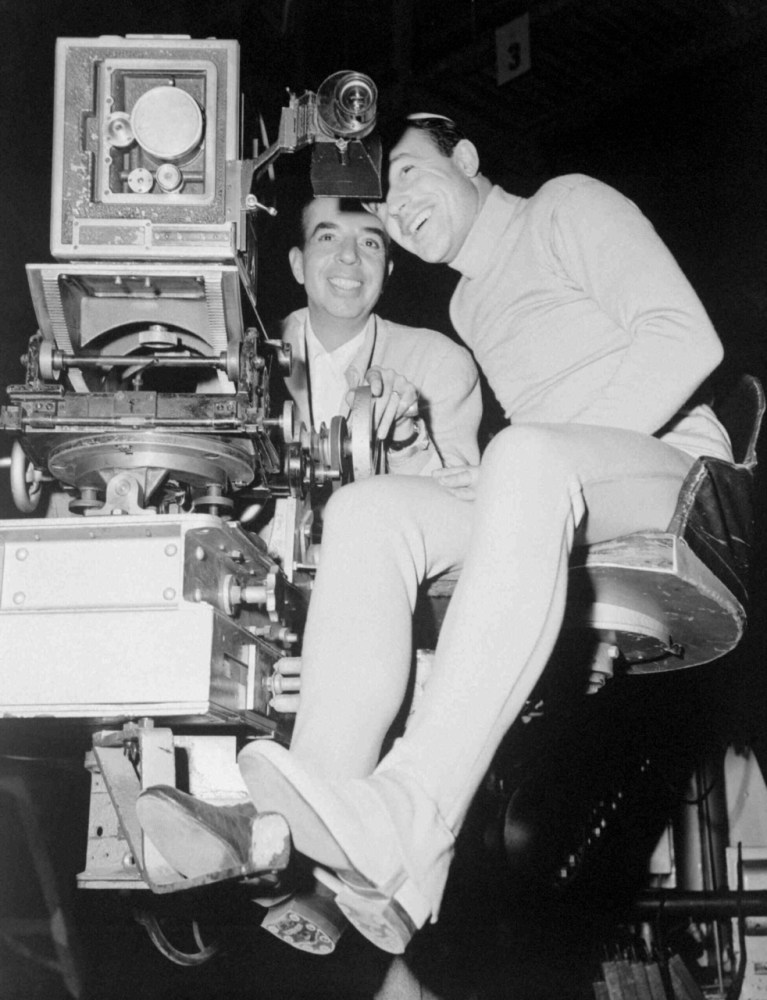
Gene Kelly gets to take a seat in the cameraman's chair on the set of An American in Paris ( 1951 )
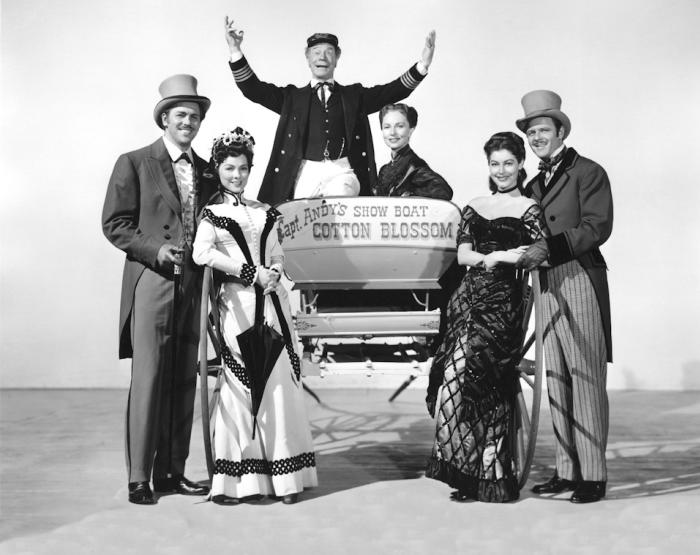
Howard Keel, Kathryn Grayson, and the Show Boat ( 1951 ) cast gather for a publicity photo

Esther Williams being filmed by a special underwater camera


Elizabeth Taylor and Paul Newman look over the script on the set of Cat on a Hot Tin Roof ( 1958 )

Charlton Heston and Stephen Boyd at the premiere of Ben-Hur ( 1959 )


The crew filming Carroll Baker in a scene from How the West Was Won ( 1962 ), one of MGM's last great epics