Showing posts with label Mona Freeman. Show all posts

Wednesday, August 14, 2024

Rewind Review: William Holden in "Dear Ruth" (1947)

When most people think of William Holden and the parts he played, they think of gritty characters such as Sheers (The Bridge on the River Kwai) and Pike Bishop (The Wild Bunch), or military men like Major Ferris (The 7th Dawn) and Lt. Col. Black (The Proud and the Profane), or even perhaps businessmen such as MacDonald Walling (Executive Suite); but very few think of him as "that handsome and pleasant young star of light-hearted comedies". Yet, that is exactly how one movie-goer dubbed him in a 1940s fan magazine. 

William "Bill" Holden was indeed a handsome and pleasant young star during his days as a Paramount contract player, starring in such comedies as Those Were the Days (1940), Meet the Stewarts (1942), The Fleet's In (1942), and The Remarkable Andrew (1942). After his marriage to Brenda Marshall in 1941, he even gained a reputation as being a devoted family man. It was not until he was cast as Joe Gillis, the ambitious screenwriter, in Sunset Boulevard (1950) that he received recognition for his dramatic acting ability. 

One of the best of his "handsome and pleasant young man" portrayals was that of Lieutenant Bill Seacroft in Paramount's Dear Ruth, released in 1947. 


Norman Krasna's "Dear Ruth" was one of the funniest comedies to hit the stage in the years following World War II. There wasn't a theater in America that wasn't putting on their own version of "Dear Ruth" at the time. John Dall had starred in a successful Broadway performance of the play (it ran for 20 months); Guy Madison and Diana Lynn were raising the roof in a performance at the newly-created La Jolla Playhouse in California (founded by Gregory Peck); and William Talman, who would later find fame as District Attorney Hamilton Burger on the Perry Mason television series, also starred in a successful run of "Dear Ruth" in New York. It wasn't surprising then, that Hollywood would snag the opportunity to replicate its success on film. 

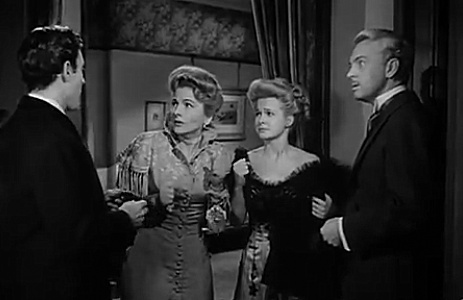
Dear Ruth centered around the Wilkins family, primarily their teenage daughter Miriam ( Mona Freeman ). Believing it to be her patriotic duty to support the morale of soldiers overseas, she begins writing letters to an Air Force lieutenant, Bill Secroft (William Holden), signing them with her older sister's name - Ruth. As might be expected, when the airman gets his leave he decides to make a surprise visit to meet the girl he has fallen in love with through her letters. Ruth (Joan Caulfield), surprised and unaware of Miriam's military pen-pal, decides to play along with the charade only until the soldier's leave is up, much to the chagrin of her fiance (Billy De Wolfe). Only it becomes apparent that Bill's intentions are marriage, and Ruth finds she does not want to brush off the soldier after all. 

Director William Russell kept the cast busy throughout handling one comedic situation after another in the film. Edward Arnold and the inimitable Billy De Wolfe stole all the scenes, but it was William Holden who really shined as the bewildered airman. 


At first, Bill Seacroft strikes audiences as a rather brash fellow, walking into the Wilkins household unannounced and boldly declaring to Ruth's father his intentions to marry his daughter...without even having met her. Once he does meet her, we see that it was just nervousness that made him so bold. All those hours spent in a bomber over Germany with only Ruth on his mind...it was a long awaited first-meeting finally coming true for him. To find that the girl he thought so much about was even more lovely in person would naturally make him puff his feathers. 

Seacroft was a part that suited William Holden to a tee (in real life he served in the Air Force during WWII as a lieutenant) and he brought an innocence to the role that made audiences, just like Ruth, feel sorry for him and yet love and admire him at the same time. 


The film's success with the movie public left it wide open for a sequel and it arrived, albeit two years late, in the equally amusing Dear Wife (1949) with, thankfully, the complete cast intact. This film focused on Bill and his father-in-law, Judge Wilkins (Edward Arnold), vying for a Senatorial seat. 

If William Holden's roles in comedies are unfamiliar to you, then I would highly recommend viewing Dear Ruth and Dear Wife. Both of these films showcase Holden in top form and at his most endearing. 

Tuesday, January 9, 2018

Darling, How Could You! ( 1951 )

Scottish novelist James M. Barrie is today best remembered for penning the classic children's story "Peter Pan" (1905), but during the turn-of-the-century he was one of the most popular playwrights in England, writing such plays as "The Little Minister," "Quality Street," and "The Admirable Crichton." He had a flair for comedy and one of his best comedic plays "Alice-Sit-by-the-Fire" (1905) - a story of a couple's reunion with their children after several years absence - was brought to the screen in 1951 as the charming Darling, How Could You! starring John Lund and Joan Fontaine.

Dr. Mark Gray (Lund) and his wife Alice (Fontaine) return home to Boston after having spent five years in Panama aiding in the yellow fever epidemic during the construction of the Panama Canal in 1900. Their three children, Amy (Mona Freeman), Cosmo (David Stollery), and baby Molly (Maureen Lynn Reimer), had remained in Boston and were being cared for by Mark's mother and a nursemaid (Angela Clarke).

Both Mark and Alice are impatient to be reunited with their children, but while Mark builds a rapport with the children in a snap, Alice is overly-anxious for instant love and finds the initial greetings awkward. She also has to contend with jealousy from the nursemaid who grew attached to baby Molly while they were away. Meanwhile, their imaginative daughter Amy is convinced their mother is having an affair with a friend of the family (Peter Hansen) after having accidentally seen a theatrical play that portrayed the "seamy side of life". 

Darling, How Could You! is a little-remembered comedy today and yet it boasts a great cast of pros that handle their parts with ease and features some very humorous moments ...two qualities which should make it more memorable. 
While the film starts off rather slow it builds up considerably when Lund and Fontaine enter the scene and ends with a tickling good comedic sequence involving Alice's misunderstood romantic entanglement.

John Lund is especially charming as the understanding Victorian father of the family. He cuts a dashing figure and is an admirably loving husband to Alice. Joan Fontaine didn't often get a chance to play comedy parts so she tackled her role with gusto and looked particularly beautiful while doing so. And the children were perfectly cast: David Stollery, later a veteran of Walt Disney television series such as Spin and Marty, is adorable as Cosmo, their little tough-talking son, while the underrated Mona Freeman displays perfect comedic timing as their winsome teenage daughter Amy. 

It may seem strange today that any young couple would choose to be separated from their children, but James Barrie's original play was set in London with the Grays returning home from British India. It was quite common at the time for couples who were residing in India to send their children back to England to be cared for by family members or nannies due to the risk of disease or uprisings in India. For the film, the setting was changed to Boston to appeal to American audiences, and so the yellow fever epidemic in Panama was given as the reason for the Grays absence for such a long period. Pretty clever. 

Darling, How Could You! is currently not available on DVD but can be rented and viewed online through Amazon. 

Sunday, April 17, 2016

William Holden in "Dear Ruth" ( 1947 )

When most people think of William Holden and the parts he played, they think of gritty characters such as Sheers ( The Bridge on the River Kwai ) and Pike Bishop ( The Wild Bunch ), or military men like Major Ferris ( The 7th Dawn ) and Lt. Col. Black ( The Proud and the Profane ), or even perhaps businessmen such as MacDonald Walling ( Executive Suite ); but very few think of him as "that handsome and pleasant young star of light-hearted comedies". Yet, that is exactly how one movie-goer dubbed him in a 1940s fan magazine. 

William "Bill" Holden was indeed a handsome and pleasant young star during his days as a Paramount contract player, starring in such comedies as Those Were the Days ( 1940 ), Meet the Stewarts ( 1942 ), The Fleet's In ( 1942 ), and The Remarkable Andrew ( 1942 ). After his marriage to Brenda Marshall in 1941, he even gained a reputation as being a devoted family man. It was not until he was cast as Joe Gillis, the ambitious screenwriter, in Sunset Boulevard ( 1950 ) that he received recognition for his dramatic acting ability. 

One of the best of his "handsome and pleasant young man" portrayals was that of Lieutenant Bill Seacroft in Paramount's Dear Ruth, released in 1947. 


Norman Krasna's "Dear Ruth" was one of the funniest comedies to hit the stage in the years following World War II. There wasn't a theater in America that wasn't putting on their own version of "Dear Ruth" at the time. John Dall had starred in a successful Broadway performance of the play ( it ran for 20 months ); Guy Madison and Diana Lynn were raising the roof in a performance at the newly-created La Jolla Playhouse in California ( founded by Gregory Peck ); and William Talman, who would later find fame as District Attorney Hamilton Burger on the Perry Mason television series, also starred in a successful run of "Dear Ruth" in New York. It wasn't surprising then, that Hollywood would snag the opportunity to replicate its success on film. 

Dear Ruth centered around the Wilkins family, primarily their teenage daughter Miriam ( Mona Freeman ). Believing it to be her patriotic duty to support the morale of soldiers overseas, she begins writing letters to an Air Force lieutenant, Bill Secroft ( William Holden ), signing them with her older sister's name - Ruth. As might be expected, when the airman gets his leave he decides to make a surprise visit to meet the girl he has fallen in love with through her letters. Ruth ( Joan Caulfield ), surprised and unaware of Miriam's military pen-pal, decides to play along with the charade only until the soldier's leave is up, much to the chagrin of her fiance ( Billy De Wolfe ). Only it becomes apparent that Bill's intentions are marriage, and Ruth finds she does not want to brush off the soldier after all. 

Director William Russell kept the cast busy throughout handling one comedic situation after another in the film. Edward Arnold and the inimitable Billy De Wolfe stole all the scenes, but it was William Holden who really shined as the bewildered airman. 


At first, Bill Seacroft strikes audiences as a rather brash fellow, walking into the Wilkins household unannounced and boldly declaring to Ruth's father his intentions to marry his daughter...without even having met her. Once he does meet her, we see that it was just nervousness that made him so bold. All those hours spent in a bomber over Germany with only Ruth on his mind...it was a long awaited first-meeting finally coming true for him. To find that the girl he thought so much about was even more lovely in person would naturally make him puff his feathers. 

Seacroft was a part that suited William Holden to a tee ( in real life he served in the Air Force during WWII as a lieutenant ) and he brought an innocence to the role that made audiences, just like Ruth, feel sorry for him and yet love and admire him at the same time. 

The film's success with the movie public left it wide open for a sequel and it arrived, albeit two years late, in the equally amusing Dear Wife ( 1949 ) with, thankfully, the complete cast intact. This film focused on Bill and his father-in-law, Judge Wilkins ( Edward Arnold ), vying for a Senatorial seat. 


If William Holden's roles in comedies are unfamiliar to you, then I would highly recommend viewing Dear Ruth and Dear Wife. Both of these films showcase Holden in top form and at his most endearing. 

This post is our contribution to The William Holden Blogathon being hosted by The Wonderful World of Cinema. To read more posts on the life and films of William Holden simply click here.