Showing posts with label Peter Cushing. Show all posts

Thursday, October 26, 2023

Hammer Horror - The Golden Era (1956-1967)

Each year along with the approach of Halloween comes the bombardment of Hammer Horror films on television. Blood, gore, and buxom babes are splattered onscreen in brilliant Eastmancolor, while sanguinary counts and grimly ghoulish characters lurk stealthily in dark corners of seedy districts intent on carrying out nefarious deeds on their unsuspecting prey.

And we…sweet, kind, gentle, innocent viewers…sit by with pizza in hand, eyes-a-goggled and heart-a-pounding as we stare transfixed at our screens while these deliciously diabolical scenes are being carried out.

Prior to the British Hammer film, there really was no such thing as a “gory” film. There were lords of tiny European hamlets suffering from lycanthropy, mad scientists making pastiches out of gently worn body parts, secluded islands inhabited by horrific animal creatures, misguided poor souls continually making themselves disappear, and of course the all-too-common haunted house filled with frustrated spirits (and the occasional runaway gorilla)……but alas, no gore. Hammer Studios had found a niche and filled it capitally.

Just what would Halloween be without Christopher Lee and Peter Cushing entertaining us?  

Hammer Productions was formed in 1934 by William Hinds, a comedian and businessman who once went by the name of Will Hammer on stage. His films were low-budget and simply made but, even with his own distribution company, he wasn’t able to find a market for them and filed for bankruptcy in 1937.

A year later, his son, along with producer James Carreras, resurrected the production company and began work on a series of BBC radio adaptions such as Dick Barton Special Agent, and The Adventures of PC 49. Many films were made during the 1940s and early 50s but nothing of noteworthy attention, until, that is…1955. This was the year Hammer Studios released The Quatermass Xperiment, a wonderfully chilling adaption of the popular BBC television series of the same name. 

Quatermass, also known as The Creeping Unknown, was about a missile sent into space with three astronauts on board. Only one of the men return to Earth and with him, brings an alien infestation which turns him into an ‘orrible blood-sucking monster. Professor Bernard Quatermass (played by American actor Brian Donlevy) becomes the first of many, many scholarly extraterrestrial/mythical/vampyr hunters to be featured in Hammer film….Van Helsing being the most famous of these.

The film became the first to ever receive an X rating certificate from the British Film Board and was so successful that similarly themed pictures were quickly put into production and released.

X- The Unknown (1956) 

Radiation tests done by the British Army in a remote Scottish village unearth an unknown radioactive “blob” that leaves only the bodies of its burnt victims behind. Dr. Royston sets out to stop the beast before it grows bigger and bigger and feeds off of them all! Dean Jagger, Leo McKern, Edward Chapman, Anthony Newley.

Quatermass II: Enemy from Space (1957) 

Professor Quatermass explores a deadly gas that is originating from a hidden factory in rural England. Unusual creatures just may be planning something deadly for planet Earth and, once again, Quatermass is the man to stop them. Brian Donlevy, John Longden, Sidney James, Brian Forbes.

But it was when The Curse of Frankenstein came out in 1957 that the studio earned its infamous title as a House of Horror. This was, officially, the start of Hammer Horror.

The Curse of Frankenstein (1957) Using the hands of a pianist and the brains of a renowned scholar, Doctor Frankenstein sticks together a "human" from leftover bodies and finds that it didn’t quite turn out to be the success he had planned. Peter Cushing, Christopher Lee, Hazel Court.

Peter Cushing and Christopher Lee, heretofore relatively unknown company players, quickly earned worldwide recognition for their roles as Dr. Frankenstein and his Monster and for the next ten years basked in the sunshine – or rather moonlight – of success.

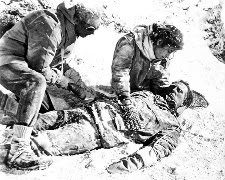
The Abominable Snowman (1958) High in the snow-covered Himalayan mountains, an English botanist and a burly American scientist lead an expedition to discover the legendary Yeti creature. Peter Cushing, Forrest Tucker, Maureen Connell.
Universal Studios was the American distributor of the Hammer horror series and since they earned such great returns off of them, they let them have access to their stock house of scripts. Numerous retellings of their horror classics were plotted out, and the studio focused all its efforts and funds on the making of these colorful adaptions.

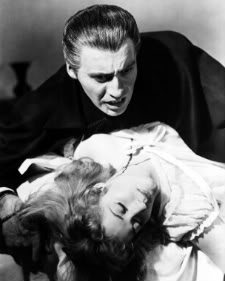
The Horror of Dracula (1958) After a man attacks Dracula in his castle (yes, bold man he be!), Dracula travels to a nearby village to seek revenge on his family and his fiancée. They turn to Professor Van Helsing, a fellow student of vampires, for help in destroying him. Peter Cushing, Christopher Lee, Michael Gough, Melissa Stribling.
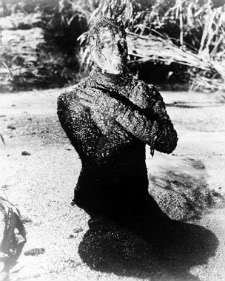
The Hound of the Baskervilles (1959) Sir Arthur Conan Doyle’s famous Sherlock Holmes novel gets a colorful retelling here, as the ace detective and his doctor friend come to the aid of a nobleman who is being threatened by supernatural hounds on the moors of his estate. Peter Cushing, Andre Morell, Christopher Lee, Marla Landi

The Hound of the Baskervilles was one of the less successful films in the series though Peter Cushing made an admirable Holmes, as did Andre Morell as Dr. Watson. During 1951 – 1967, Hammer Studios' home was in Bray, near Windsor, Buckinghamshire. A house (Down Place), a large backlot, and several smaller studios were on this property. The house was included in many of the films (it added a lot to that “Hammer atmosphere”) and the backlot was turned into a European village which was used again and again in different films. First in The Brides of Dracula, then as a Spanish village in The Curse of the Werewolf, as London in The Phantom of the Opera, and then as a Russian palace in Rasputin, the Mad Monk.

From 1960 on, Hammer consigned themselves to raising their monsters from their graves in sequels or rehashings of their previous successes…with the exception of The Phantom of the Opera, Curse of the Werewolf (another misfire), and The Gorgon…which were new characters to the series.

The Brides of Dracula (1960) A schoolteacher unknowingly sets free a young man ( of the undead variety ) in Transylvania, and worse yet, finds that he’s after her students at her school for girls. Peter Cushing, Martita Hunt, Yvonne Monlaur, David Peel

The Curse of the Werewolf (1961) A young Spanish boy on a hunting trip gets bitten by a wolf, and years later moonlights as a first-class howler in this retelling of the classic Universal The Wolf Man. Clifford Evans, Oliver Reed, Yvonne Romain

The Phantom of the Opera (1962) In Victorian London, a poor musical professor finds that his life work has been stolen by a corrupt lord and, with his fire-burnt disfigured face, he hides out in an Opera house as a “phantom” waiting for his moment of revenge. Herbert Lom, Edward de Souza, Michael Gough, Heather Sears

Kiss of the Vampire (1963) A young honeymooning couple gets stranded in a southern European village and are “helped” by an aristocratic family…who have a taste for newlywed blood. Clifford Evans, Edward de Souza.

Evil of Frankenstein (1964) – Penniless Baron Frankenstein, returns to his family castle to renew his work on his beloved Monster, only to find that an evil aid, Zoltan has been using his monster for his dirty work. Peter Cushing, Peter Woodthorpe, Duncan LaMont
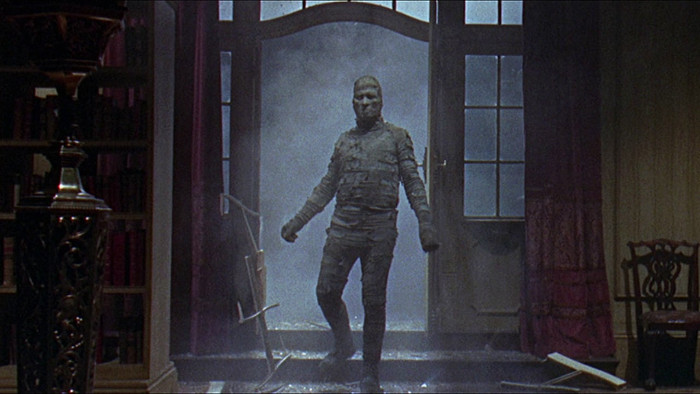
The Curse of the Mummy’s Tomb (1964) An Egyptian mummy is delivered to London, where it begins a rampage while under the control of a man with murderous intentions. Terence Morgan, Ronald Howard, Fred Clark

The Gorgon (1964)  In pre-WWII Germany, a small village is being plagued by a snake-haired gorgon who turns those who bear their eyes upon her to stone…only during full moons though. Professor Meister and Dr.Namaroff come to the aid of the townsfolk. Peter Cushing, Christopher Lee, Richard Pasco, Michael Goodliffe, Barbara Shelley

All of these Hammer Horror pictures really weren’t that scary (especially compared to today’s standards) but, in 1965, gore, as in bottles of oozy gooey goopy red ketchup, entered the picture. EEeeek!!

This was the year that the content of the Hammer films became more….ahem, mature…with the eyes of our blood-sucking fiendish friends glaring more fiercely, the bodices of their voluptuous prey creeping lower and lower, and pools of blood squirting to and fro, making Van Helsing’s appearance – along with his cross of Christ – all the more anticipated so we can see our anemic villains writhe in terror at their impending doom.

Dracula, Prince of Darkness (1966) Four unwary tourists take refuge in Count Dracula’s castle for the night (!). Within a few hours one of them is drained of his blood and his wife ( Shelley ) gets transformed into a vampire so the gruesome twosome can pursue the remaining two “guests”. Some hospitality. Christopher Lee, Barbara Shelley, Charles Tingwell

Island of Terror (1966) A group of doctors head to a remote island off the coast of Ireland to investigate a series of medical mysteries and discover a deadly lifeform unleashed. Peter Cushing, Edward Judd, Carole Gray, Keith Bell. 

Rasputin, The Mad Monk (1966) The story of the mad Russian “monk” Rasputin (aid to the Czars) is exploited in all its gory glory. Christopher Lee, Richard Pasco, Barbara Shelley, Suzan Farmer

Quatermass and the Pit (1967) While digging a subway in London, a construction crew discovers a skeleton and what seems to be a German missile….but in truth it is an alien spaceship. James Donald, Andrew Keir, Barbara Shelley

The Reptile (1966) While investigating his brother's death, a man and his wife move into his former cottage in a small village in England and become embroiled in a reptilian curse. Ray Barrett, Noel William, John Laurie, Jennifer Daniel. 

The Mummy's Shroud (1967) An archeological team discovers the remains of a mummy while on a dig in Egypt in 1920. Returning home to England with their find, the members are killed one by one. Andre Morrell, David Buck, Elizabeth Sellars, Maggie Kimberley.


There were also a number of "Scream Queens" that became associated with Hammer Horror (Hazel Court, Barbara Steele, and, later, Ingrid Pitt) but of them all, no one can top Barbara Shelley, that lovely English lady who somehow got caught in the vortex known as “the horror genre”. In total, she made seven pictures with the studio, sometimes as the victim, but not infrequently as a vampire herself.

Many believe that the golden age of Hammer Horror ended with Dracula: Prince of Darkness and that does indeed have some credibility to it, for the films made after this tend to be repetitious and rather malodorous.

All in all though, Hammer Studios had a long line of successes and it is during this bewitching month that we fans appreciate them the most. We get to sit back, have some popcorn, and enjoy Peter Cushing and those legendary ghouls give us goosebumps….what more fun could you have than that? 

Saturday, July 17, 2021

Cone of Silence aka Trouble in the Sky ( 1960 )

Captain Gort ( Bernard Lee ) has just been on trial for crashing one of the new Pheonix jets on takeoff. The verdict was pilot's error. Gort is in disbelief, as is his daughter Charlotte ( Elizabeth Seal ) who knows that her father always flies "by the book" and would never endanger the passengers or crew. Both believe that there was a fault with the new aircraft but the scientists investigating the crash are not convinced. After several months, Gort is allowed to return to his regular flight schedule but his flying ability is once again called into question when he has another low take-off in a Pheonix jet. This time, Captain Dallas ( Michael Craig ) begins to question the safety of the aircraft and investigates the matter, hoping to uncover the cause before another crash takes place. 

Cone of Silence is one of a multitude of aircraft-disaster pictures that were filmed in the 1960s. It seems like a film that Jack Hawkins would have starred in but instead it featured Bernard Lee ( best known for playing M in the James Bond films ). He does a great job of playing the dishonored pilot.

The script was based on the 1959 book of the same name by author David Beaty, which was loosely based on the de Havilland Comet crashes, much like the superior No Highway in the Sky ( 1951 ). 

Cone of Silence has some moments of excitement but overall it is more dramatic than adventerous. Michael Craig himself commented that "it wasn't much of a film and did nothing for anyone's career". However, it is worth checking out just to see the cast which was composed of a bevy of famous Brit actors. George Sanders portrays the prosceuting attorney at the trial, Charles Tingwell ( Murder She Said ) is a fellow pilot, as is Peter Cushing and Gordon Jackson; Andre Morrell and Geoffrey Bayldon have brief parts, and there is a small part for the beautiful Delphi Lawrence as well. 

The film was issued as Trouble in the Sky in the United States, but both titles have little to do with the story because most of the trouble is on the landing field at takeoff! Quite frankly, a film about Get Smart's "Cone of Silence" would be much more entertaining to watch.

Saturday, November 23, 2019

Arabian Adventure ( 1979 )

If you are looking for a fun 1970s adventure film set in Arabia, then here is a title to keep in mind: Arabian Adventure. Director Kevin Connor and producer John Dark, who made such corny classics as The Land That Time Forgot ( 1974 ), At the Earth's Core ( 1976 ), and Warlords of Atlantis ( 1978 ) turned from the Edgar Rice Burrough's themed adventure films to try his hand at an Arabian fantasy....and the result was pretty good. 

Variety dubbed Arabian Adventure "Star Wars with flying carpets" when it was released in November 21, 1979. It doesn't have any humanoids or loyal wookies like Chewbacca, but the film does bear a slight resemblance to George Lucas' space epic in its black and white portrayal of evil and goodness. 

Christopher Lee stars as Alquazar, an evil caliph who rules the Arabian kingdom of Jadur. Like most wicked rulers, he desires to be the most powerful man in all the world. In order to do this, he needs to obtain the Rose of Elil which can only be retrieved by someone who is pure and honest. When the handsome Prince Hasan ( Oliver Tobias ) comes to Jadur to woo Alquazar's stepdaughter Princess Zuleira ( Emma Samms ), Alquazar seizes his opportunity and sends the prince on the journey to capture the rose in his place. He agrees to give him the princess's hand in marriage if his expedition is successful but, in order to guarantee that the rose will be returned to him, Alquazar sends his backstabbing henchman, the bubbling Khasim ( Milo O'Shea ) on the journey with Prince Hasan. Also tagging along is Majeed ( Puneet Sira ), a beggar orphan boy, and his pet monkey. Once they reach Elili, they must battle with a genie, a valley of fire-breathing "dragons", and a swamp filled with groping hands before they can capture the rose. 
The script, written by Brian Hayles ( Warlords of Atlantis ), is a motley blend of Eastern fantasy tales. "These Eastern tales abound with lovely excursions into pure fantasy," John Dark exclaimed in a 1979 interview for Starlog magazine. "It was a very beautiful period and a very beautiful territory. We hope to recreate, in our story, the exciting architecture and costumes, as well as some exciting special effects, like an army of flying carpets. It's an amalgam of a lot of stories, a lot of lore, magic mirrors, wicked spells, benign and evil jinnees and one or two very special ideas of our own."

Kevin Connor assembled a fantastic cast for Arabian Adventure. Christopher Lee is delightful as the evil caliph. As Lee himself described his character, "Very small children can go to see it and they'll have a lot of fun - they won't feel threatened by my evil nature because they'll know I'm going to be done in by the film's end."
Oliver Tobias, a Swiss stage actor, is the handsome prince, rather sullen but a good fighter; and Emma Samms, the lovely English actress, was making her film debut as the princess. But it is Puneet Sira who steals the show as the orphan Majeed. Like Sabu's character in Alexander Korda's The Thief of Bagdad ( 1940 ), it is Majeed who often comes to the aid of the prince and proves himself to be the real hero in the end. 

Arabian Adventure also features some great cameo appearances: Peter Cushing as the imprisoned old ruler of Jadur; Mickey Rooney as a befuddled machinist; and Capucine as a beautiful genie who resides in a gemstone. 

Most of Kevin Connor's films tend to feature a number of warring creatures and a hero who has to spend a lot of time trying to make his escape from these creatures. Arabian Adventure differs in that it has very few creatures, even though the script gave many opportunities to include them. Instead, Prince Hasan and Majeed must contend with Alquazar's sword-wielding Arab henchmen, robotic dragons that guard the volcano where the rose is kept, and an ungrateful genie ( also taken from The Thief of Bagdad ). 

The film is clearly aimed at a younger audience, and while it is entertaining, it could have had more elements that would appeal to adults. The adventure to retrieve the Rose of Elil also could have been more exciting. But all in all, it is a fun Saturday afternoon flick that will probably send a child's imagination wild with fantasies of flying carpets, evil caliphs, genies, and endangered princesses. 

Friday, August 30, 2019

At the Earth's Core ( 1976 )

Kevin Connor is best known for directing a series of rather cheesy popcorn sci-fi/adventure film adaptations of Edgar Rice Burrough novels, a series which began with The Land That Time Forgot ( 1975 ).  Most of the films had great casts, adequate special effects and plenty of Jules Verne-ion atmosphere which helped off-set some of the - unfortunately frequent - boring scenes. 

Alas, At the Earth's Core's 89-minute runtime was made up primarily of yawn-inducing moments.  It had a great story premise but, like many of Kevin Connor's movies, was bogged down by too much emphasis on our heroes escape from the primitive tribe that was enslaving them. In this case, the tribe being the Mahars. 

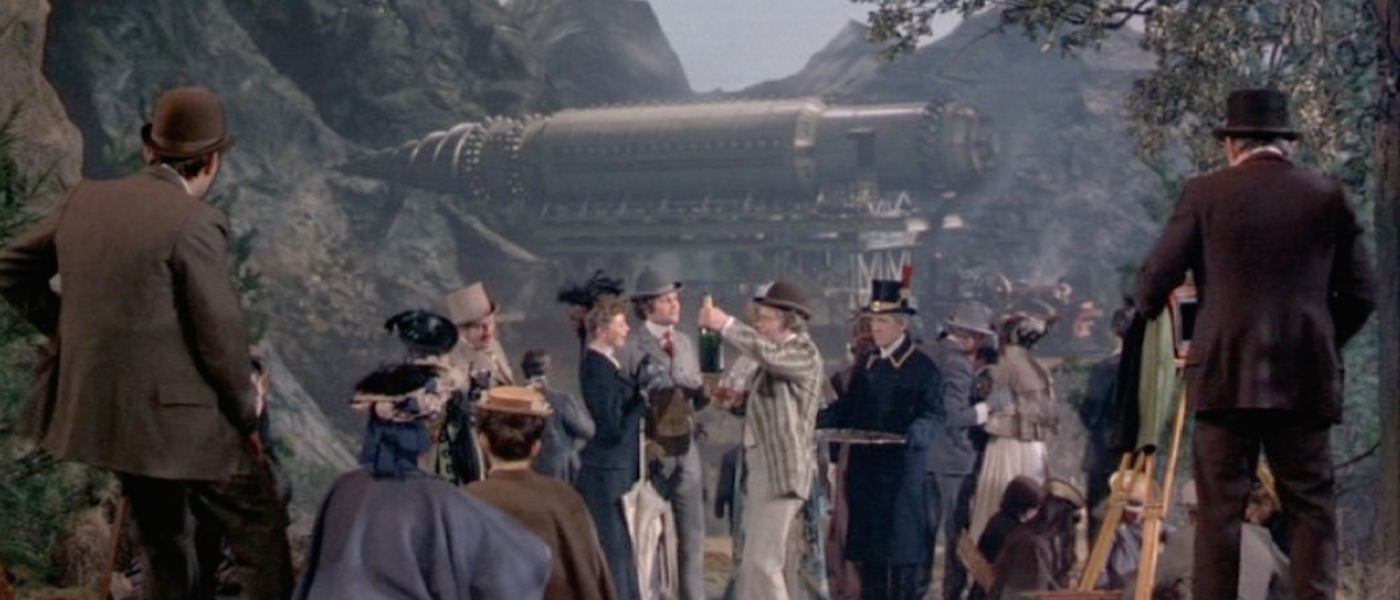
Peter Cushing gives a wonderful performance as the doddering Dr. Perry. This bespeckled British scientist has invented a machine called the Iron Mole which can bore through the Earth. Along with his partner, American financier David Innes ( Doug McClure ), they embark on a journey to the center of the Earth and discover a labyrinth where giant flying reptiles known as the Mahars rule a band of cavemen-like slaves. These slaves help to create tunnels where the Earth's molten lava is channeled away from their underground lair. Every once in awhile the Mahars get hungry and select a sacrificial victim to feast on. Princess Dia ( Caroline Munro ) is chosen to be their next dinner but David intervenes and rescues his newfound sweetheart, destroying the whole tunnel system in the process. 
A simple plot and a good one ( not unlike H.G Wells' First Men in the Moon ) but those darn Mahars were given too much of the film's attention. I am sure the male audience would have preferred the camera to linger on Caroline Munro rather than the giant reptiles. Not that there weren't other creatures to distract.....there were pig-snouted slave-drivers, giant rhino-like dinosaurs, and the mandatory pterodactyl. Yet, combined, they still weren't enough to wake-up the audience. 
It was refreshing to see Peter Cushing play a role so unlike the self-assured professor roles that he usually played in the Hammer films. Dr. Perry is eccentric but endearing and it would have been nice to see this character reappear in another film. Doug McClure gives his usual good performance and Caroline Munro is pleasant on the eyes ( she doesn't have much dialogue ). The remaining cast is obscured behind make-up, with the exception of Godfrey James and Cy Grant. 
At the Earth's Core was riding on the heels of the success of Kevin Connor's last film, The Land That Time Forgot ( 1975 ), and, in spite of its dull script, was very popular at the box-office. Connor would stick with his formula and make two more similiarly-themed films: The People That Time Forgot ( 1977 ) and Warlords of Atlantis ( 1979 ). 

Wednesday, October 23, 2013

Hammer Films' The Gorgon ( 1964 )

"It has been said that every legend and myth known to mankind is not entirely without some truth..." 

In the sleepy hamlet of Vandorf, a legendary 2,000 year old creature has reawakened and its spirit taken possession of one of the villagers. Seven gorgonizing deaths have taken place on foggy moonlight nights in the past five years; each one of the victims turned to stone. 

Paul Heitz ( Richard Pasco ), whose father and brother were the most recent victims, travels to Vandorf and, with the aid of Professor Meister ( Christopher Lee ), attempts to undercover the mystery behind these deaths. Alas, he finds himself confronted by a conspiracy of silence led by Dr. Namaroff ( Peter Cushing ) who, along with his associate, Carla Hoffman ( Barbara Shelley ), is protecting some sinister dark secret.

Peter Cushing, who often portrays the hero in such Hammer Film classics as The Mummy, The Curse of Frankenstein and The Horror of Dracula, this time reverses roles and plays our villain and a welcome change it is too. He brings a sympathetic appeal to the character of Namaroff despite his stoic and calculating nature. 

As Professor Meister, it is evident that Lee thoroughly relished the opportunity the role gave him. He creates a memorable eccentric who, like Van Helsing, seems quite capable of tracking and capturing any beast, creature, or phantom he happens to find... in a scientific way.

" We are men of science. I don't believe in ghosts or evil spirits, and I don't think you do either "

The always lovely Barbara Shelley was quickly becoming one of Hammer's biggest attractions when she starred in The Gorgon. She had leading roles in such horror flicks as Village of the Damned ( 1960 ) and Shadow of the Cat ( 1961 ) and in the next few years would go on to make Dracula: Prince of Darkness ( 1966 ) and Quatermass and the Pit ( 1967 ), justly earning the title of The First Leading Lady of British Horror. In The Gorgon, Shelley provides the romantic interest which becomes the key link behind the mysterious happenings in Vandorf. 

Other roles in the film are played by Michael Goodliffe ( Sink the Bismarck ) , Patrick Troughton ( Doctor Who ), and Jack Watson ( Grand Prix ).


Two of Hammer's most recent productions, The Old Dark House and The Damned, had failed at the box-office. They were desperate to find material that would appeal to the public and so they took a direct approach and placed an ad in "The Daily Cinema": 

"Got an idea you think would make a good film? One with an exciting title to match? ( Hammer was taking no chances ). If you have, contact James Carreras. Because good, compulsive selling ideas with the right titles are what Hammer are looking for right now"


The article brought in a good response from the trade and public alike and one idea generated enough enthusiasm to prompt Hammer to pursue it into production. It was a short story submitted by J. Llewellyn Devine about a legendary character from Greek mythological in a mid-European setting. Screenwriter John Gilling was called in to rework the story into a feasible screenplay. He did this and in place of Medusa, he renamed the gorgon Magaera ( one of the three Furies in mythology ). "The Gorgon" went on to become Hammer's first female monster.

Production began in late 1963 at Bray Studios shortly after The Evil of Frankenstein had completed shooting. Some of the sets were revamped to create the setting of Vandorf and the Castle Borski.


Barbara Shelley had suggested that she portray the gorgon herself and wanted to use a wig that - humanely - contained several live snakes. Producer Anthony Nelson Keys felt that, in order to protect the creature's secret identity, two actresses were needed and that the live snakes were unnecessary. Prudence Hyman, a former ballerina, took on the makeup and costumes of the gorgon. After the completion of the film however, Keys regretted his decision and had wished that real snakes were used. Since the gorgon is seen full-face in several shots, the impact of her petrifying glare was lessened by the use of rubber snakes. As Christopher Lee so aptly put it, "The only thing wrong with The Gorgon is the gorgon."


Makeup man Roy Ashton applied the hideous skin paint to Prudence Hyman while Syd Pearson, a special effects engineer at Hammer, had the task of creating Hyman's moving snake wig. Twelve plastic molds were made from which he cast latex rubber snakes. Twenty-five foots cables were attached to each snake, woven into the wig and run along the back of Hyman's costume which were then rigged to a peg and board contraption. When each peg was turned the tension created the illusion of the snake's moving independently.  Perhaps this was a bit easier to stage than the frame-by-frame technique Ray Harryhausen employed to create the Medusa in Clash of the Titans but the finished result was less than comparable. 

The Gorgon is not gory, nor is it oozing with terrifying moments, and for this reason it often falls short on the list of memorable Hammer classics, yet the film captures a unique Gothic atmosphere full of eerie foreboding and even director Terence Fisher considered it one of his personal favorites. 

Like all of the Hammer Studio films, The Gorgon contains richly detailed settings and beautiful colorful cinematography. James Bernard provides a mysterious score to enhance this mythological tale and implemented an early electronic keyboard, the Novachord, to create the effect of the Gorgon's call. It was most dreamlike and bewitching.

The Gorgon was released on August 21, 1964 and was double-billed with The Curse of the Mummy's Tomb. Critic reviews were quite favorable and these two films put Hammer back on track once again as one of the leading horror studios.

This post is part of the Hammer Halloween Blogathon hosted by the Classic Film and TV Cafe. Go to www.classicfilmtvcafe.com to view the complete blogathon schedule.