Showing posts with label What a Character!. Show all posts

Saturday, December 5, 2020

Joe Flynn - A Frustrated Fellow

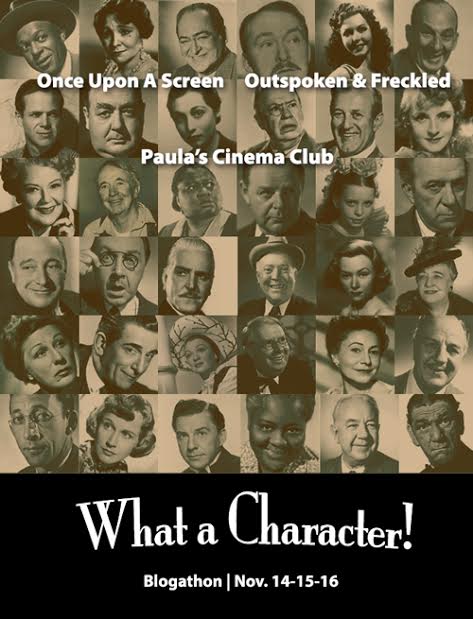
Aurora, author of the blog Once Upon a Screen, is hosting the 9th annual What a Character! Blogathon this weekend along with Kellee of Outspoken and Freckled and Paula of Paula's Cinema Club. This event celebrates the many many great character actors that have appeared in films since movie-making began. 

It is usually a difficult choice for me to pick just one face to profile, but this time around the decision-making came quickly because Joe Flynn has been delighting me all year. 

This loveable bespeckacled character actor is best known for playing Captain Wallace B. Birmingham on the television sitcom McHale's Navy ( 1962-1966 ), but he also had supporting roles in a number of fun Walt Disney films from the 1960s-1970s and I'd like to put the spotlight on these. 

Joe Flynn was born in Youngstown, Ohio on November 8, 1924. After attending Northwestern University he played in local theater and on radio before joining the Special Services Branch of the Army and entertaining troops overseas during World War II. 

Like many character actors, Joe Flynn began his career in uncredited roles playing extras or characters like assistants or reporters. He started film work when he was only 24 years-old but he never looked very young so he was quickly put into roles that called for a more mature face. He had small parts in The Desperate Hours ( 1955 ), The Steel Jungle ( 1956 ), and Portland Expose ( 1957 ) while alternating between steady television work on shows such as The Thin Man, The George Burns and Gracie Allen Show, The Life of Riley and The Real McCoys

He tried his hand at playing in some western television shows but he fitted modern-day business suits and military outfits much better and in the 1960s he found his niche in comedy parts where he usually played a businessman or officer in a position of authority who is frustrated working with incompetent people. "I could just scream!" became his catchphrase on McHale's Navy. It seems like a difficult task to add humor to a character who chews other people's heads off, but Joe pulls it off with ease. 

On the opposite spectrum, he could also play characters who have to take the gruff from others. He was the lowly Private Drexler in The Last Time I Saw Archie ( 1961 ), the obedient office worker Hadley in Lover Come Back ( 1961 ), and Thorndyke's stooge Havershaw in The Love Bug ( 1968 ). 

In 1962, Joe began his long association with the Walt Disney Studios when he had a small uncredited part in Son of Flubber. After The Love Bug, he was cast as Dean Higgins of Medfield College in The Computer Wore Tennis Shoes ( 1969 ). Dean Higgins was a man who had little faith in the intelligence of his students at Medfield, especially Dexter Riley ( Kurt Russell ) who was continually getting into mischief. In spite of his short temper, the college students always turned to him for advice even though it was they who usually ended up saving him from a financial scrape or personal embarrassment. 

In this clip from Now You See Him, Now You Don't, Dexter and his friends were unable to save Higgins from embarrassment and they can only watch as Higgins make a fool out of himself during a televisied golf tournament. Dean Higgins fancies himself a pro golfer after he had an amazing first game of golf but little did he realize that it was Dexter who, while invisible, was moving his ball around on the course. Since Dexter was unable to attend the tournament, Dean Higgins finds out just how hard a game of golf can be!


Joe Flynn was a natural-born scene-stealer and no matter who he was acting opposite, he managed to take the spotlight position away from them. It is hard not to like Joe, especially when he puts on his goofy expression of bewilderment. The Disney screenwriters saw what a ham he was and in the sequels to The Computer Wore Tennis Shoes, Dean Higgins' part was expanded on. 

He reprised the role of Dean Higgins in two more Dexter adventures - Now You See Him, Now You Don't ( 1972 ) and The Strongest Man in the World ( 1975 ) and also played opposite Kurt Russell in The Barefoot Executive ( 1971 ) where he got to mutter his frustration out on another wonderful character actor - Wally Cox. 

Joe Flynn was also a favorite among other comedians and one his friends was Tim Conway, with whom he starred with on The Tim Conway Show ( 1970 ). This short-lived series featured the two comics as pilots of a charter airline service. Conway was a good friend of Don Knotts and it may have been that connection that got Flynn a role in How to Frame a Figg ( 1971 ), a Universal Pictures comedy featuring Don Knotts. In this film, Flynn plays a corrupt member of city hall who is trying to finger the blame on Don Knotts. 

In real life, Flynn liked to fight for underdogs. Prior to coming to Hollywood, he had run for a  seat in the Ohio Senate as a Republican and, in the early 1970s, he launched a movement on behalf of the Screen Actors Guild for a more equitable distribution of TV residual payments. 

Throughout the 1970s, Flynn made guest appearences in a number of television sitcoms ( e.g. Family Affair, The Ghost and Mrs. Muir, That Girl ), game shows ( It's Your Bet, The Match Game ) and was a very frequent guest star on The Merv Griffin Show, making no less than 52 appearences on that show! 

His final film was The Rescuers, where he voiced the character of Mr. Snoops. Flynn passed away in 1977 at the age of 49 from a heart attack while he was swimming at home. One can only wonder what great parts he may have had as an older character actor if his life had not been cut so short

Now, for a really "egg"-cellant treat, check out this fascinating story about Joe Flynn and his egg-farming hobby that turned into a business venture lasting ten years, thanks to the unwelcomed support of Marlon Brando. 

Thank you for stopping by! To read more posts about character actors, click on this link to be taken to the What a Character! Blogathon main page where you will find articles from other bloggers. Enjoy! 

Sunday, December 16, 2018

Athene Seyler - A Commander of Comedy

The first time I saw character actress Athene Seyler she was examining a dead specimen of a man-eating plant from outer space under a microscope. She was doing this with her customary aplomb under the watchful eye of Mrs. Peel in "Man-Eater of Surrey Green", a classic episode of The Avengers.

The circumstance of this first encounter was unique in itself but what made it particularly memorable was how remarkably British Athene Seyler was. Across the spectrum of film and television, one comes across all varieties of Brits but certain people stand out as being quintessentially British. Athene is one of those people.

Just look at her face! It is so wonderfully English. Loose jowls, large round eyes with even larger bags underneath them, a rotund figure, and a perfectly circular head. She was often found wearing tweeds, stout shoes, and carrying a walking stick. Like most character actresses, she was a type and portraying delightfully dotty women was her specialty. Her characters were a marvelous median between the kind of roles that Margaret Rutherford or Dame May Whitty would play.
In "Man-Eater of Surrey Green", Athene's character, Dr. Sheldon, is fascinated with the plant specimen that John Steed and Mrs. Peel ask her to examine. The fact that it came in a space-ship from another planet doesn't seem to faze her in the least. She is more excited in discovering that the plant had a brain, an embryonic brain. "Such a shame it was axed!", she exclaims. Quintessentially British. 

But don't let her assumed dottiness fool you. Seyler was an accomplished actress on the stage as well as in film and television. It was in the theatre that she began her career, making her debut as early as 1909. Throughout the years, she had a number of fine roles in such classics as "Harvey", "Watch on the Rhine", "The Importance of Being Earnest" ( as Lady Bracknell ), "Romeo and Juliet", "The Cherry Orchard", "Bell, Book, and Candle" with Rex Harrison, and "Arsenic and Old Lace", where she starred alongside her dear friend Dame Sybil Thorndike as one of the murderous spinster sisters.

In film, she was often seen in Charles Dicken's adaptations, probably because her physical appearance was pure Dickensonian. She was Rachel Wardle in The Adventures of Mr. Pickwick ( 1921 ), Scrooge's charwoman in Scrooge ( 1935 ), Miss La Crevy in The Life and Adventures of Nicholas Nickleby ( 1947 ), Miss Witherfield in The Pickwick Papers ( 1952 ) and Miss Emily Pross in A Tale of Two Cities ( 1958 ).

Seyler was equally adept at portraying cockney-washerwomen and prison inmates as members of royalty...in fact, she passed herself off as Queen Elizabeth twice (Royal Cavalcade, Drake of England )! She often played ladies, dukes, and duchesses, but her most frequent role was that of an aunt or a curious spinster. She was Aunt Harriet in Happy is the Bride ( 1958 ), Aunt Buona in Francis of Assisi ( 1961 ), and Aunt Heather in I Thank a Fool ( 1962 ). 
Two of my personal favorite films of Athene Seyler are Yield to the Night ( 1956 ) and Curse of the Demon ( 1957 ). In the former, she portrayed Miss Bligh, a kindly old woman who makes regular rounds at prisons visiting with the inmates. She is one of the few visitors that Mary Hilton ( Diana Dors ), who is sentenced to hang for murder, takes pleasure in seeing. In Curse of the Demon, Seyler memorably portrayed Dr. Karswell's mother. She not only knows of her son's demonic associations but, as a spiritualist, aids him in his pursuits. 

Off-screen, Seyler was quite an independent and determined woman. In her youth, she campaigned against blood sports and was active in an ethical society. She learnt early on that she was "different from the other girls. I was much plainer" and so she made up for her lack of beauty through comedic talent. ‘I think to make people laugh is a lovely thing to do...When I was a little girl, my first performance, I went to make my exit, my drawers fell down. And the audience roared with laughter. I had to pick them up, you know. And I thought from that moment on I would do for a comic role.’’

After her first marriage fizzled in 1922, she met and fell in love with actor Nicholas Hannen. His wife had denied him a divorce but Seyler changed her legal name to Hannen regardless and she patiently waited until 1960, when Hannen's wife passed away, to marry him ( she lived with him in the years between! ). 
Indomitable is another aptly descriptive word for Athene. She penned a book entitled "The Craft of Comedy" in 1943 and was appointed a Commander of the Order of the British Empire ( CBE ) in 1959. She claimed to have never taken a holiday, enjoying her work so much, and, at the venerable age of 101, she appeared onstage at the Royal National Theatre.

When one thinks of fine character actresses Seyler's name rarely comes to mind, and yet this marvelous woman deserves to be ranked alongside those other fine character actresses, Dame Margaret Rutherford and Elsa Lanchester. 

This post is my contribution to the 7th Annual "What a Character! Blogathon" being hosted by Once Upon a Screen, Paula's Cinema Club, and Outspoken and Freckled. Be sure to visit any of these sites to read more articles about your favorite character actors of film and television. 

Friday, December 14, 2018

Geoffrey Keen - The Minister from England

Most avid James Bond fans, like my sister and I, can instantly recognize Bond actors when they appear in other films, no matter how brief their role may be. It's a knack that comes from having seen the movies so many times. For newbies interested in becoming Bond character-actor-spotters, there are three character actors associated with the 007 franchise that are uber easy to recognize: Lois Maxwell who played Bond's loyal secretary Miss Moneypenny, Desmond Llewelyn, the inimitable mechanical genius "Q", and Geoffrey Keen who portrayed Sir Fredrick Gray, head of the Ministry of Defense.

This week, Paula's Cinema Club is hosting the seventh annual What a Character! blogathon, where popular and lesser-known character actors are given the spotlight of attention. Geoffrey Keen is one of those actors whose name may not be familiar to many but his presence certainly is, and that's why we selected him.

My sister and I first saw Keen in the James Bond films and for years, not knowing his name, we simply referred to him as the "minister". As we watched more and more British films throughout the years we found that this nickname suited him well for, like most character actors, he had his little pigeon-hole: that of playing men in high government positions.

He began his career in the 1940s portraying either detectives or sergeants and later inspectors of police forces, but by the mid-1950s he was settling into roles that called for increasing responsibility: supervisors, deans, captains, and superintendents. As early as 1960 he was assistant chief of Naval Staff ( Sink the Bismarck ) and just one year later rose to the highest position he would play in film, that of the Prime Minister ( No Love for Johnnie ).

What was it about Geoffrey Keen that made him so well suited to play magistrates, commissioners, colonels, and the like? His appearance for one thing. He cut an imposing figure, was always well-groomed and cultured ( you'd never catch Keen among lowly people ), and walked in an air of authority. He often carried a stern countenance that told his inferiors that his commands were to be taken with the utmost seriousness.
But this does not mean that he was a hard taskmaster. Quite the contrary. The minister knew how to smile and he always issued his orders with kindness. His roles as magistrates suited him particularly well because Keen seemed to be a man with a keen sense of justice. As a prisoner on trial, I would feel comfort in knowing that he was judging my case. He would weigh the case very carefully and not let the flourishing words of the barristers sway his judgment.

He had a humorous side, too, and while James Bond's assumed flippancy would appear to irritate him, his eyes would twinkle nonetheless. It was this understanding and compassionate side of his nature that earned him the respect of the men and women who served under him.

Keen was born in Berkshire, England in 1916 to Malcolm Keen, a popular stage actor of the 1930s. Malcolm entered films as early as 1917, making his last film appearance in Life for Ruth ( 1962 ). Father and son appeared in three films together: Rob Roy, the Highland Rogue ( 1953 ), She Played with Fire ( 1957 ), and The Birthday Present ( 1957 )...and, like Geoffrey, Malcolm was often given roles of authority: lords, presidents, bishops, and the like. It must have been a family trait.

The younger Keen made his stage debut in 1932 and entered the Royal Academy of Dramatic Arts the following year. He had just joined the Royal Shakespeare Company when war broke out in 1939, and Keen enlisted with the Royal Army Medical Corps.

During the war, he appeared in an Army instructional film directed by Carol Reed, and this small part led to him being cast in several Reed films after the war ended: Odd Man Out ( 1947 ), The Fallen Idol ( 1948 ), and The Third Man ( 1949 ).

Keen's filmography throughout the 1950s was quite impressive. He had appearances in some top-notch US and British productions including Walt Disney's Treasure Island ( playing Isreal Hands ); he was a police inspector in The Clouded Yellow ( 1950 ), Hunted ( 1952 ), and the comedy Genevieve ( 1952 ). A brief role as a businessman in Turn the Key, Softly ( 1953 ), was followed by some excellent military roles such as General Nye in The Man Who Never Was ( 1956 ), Sink the Bismarck ( 1960 ), Torpedo Bay ( 1963 ) and The Heroes of Telemark ( 1965 ).

Keen often portrayed men in the medical and religious profession, too, as in Storm over the Nile ( 1955 ), Yield to the Night ( 1956 ), Sailor Beware ( 1956 ), and The Spanish Gardner ( 1957 ) where he played the kindly Dr. Harvey.

During this time, Keen also made a number of appearances in television in series such as The Edgar Wallace Mystery Theatre, The Wonderful World of Disney ( in the classic mini-series "Dr. Syn, the Scarecrow of Romney Marsh" ), The Saint, Secret Agent, The Persuaders, Mogul, The Venturers, and Crown Court. 

In 1977, Geoffrey Keen made his first appearance as Sir Fredrick Gray, the Minister of Defense, in the 007 film The Spy Who Loved Me. In most of the 007 pictures, Gray could be seen during the initial briefing of Bond's missions, occasionally mid-mission ( where he'd often ejaculate "Bond, what do you think you're doing?!" ) and during any crisis involving the nation's defense, of course.
Shortly after the release of The Spy Who Loved Me, Keen appeared in the Bond spoofs No. 1 of the Secret Service, starring Nicky Henson and Licensed to Love and Kill starring Gareth Hunt. His presence made these imitation Bond films a little bit more authoritative. At this time, Keen eased up on appearing in other films and made only occasional appearances on television and on stage. Instead, he focused solely on the James Bond movies, which included Moonraker ( 1979 ), For Your Eyes Only ( 1981 ), Octopussy ( 1983 ), A View to a Kill ( 1985 ) and The Living Daylights ( 1987 ).

Keen passed away in 2005 at the age of 89 leaving behind two daughters from his three marriages and a legion of Bond fans who adore spotting "The Minister" in the many films he made throughout the 1950s and 1960s.

This post is our contribution to the What a Character! Blogathon being hosted by Once Upon a Screen, Outspoken and Freckled and Paula's Cinema Club. Be sure to click on this link to read more great posts about your favorite character actors of film and television! 

Sunday, December 17, 2017

Connie Gilchrist - A Hard-Working Woman

Some character actors have such larger-than-life personalities that they literally seem to step out of the screen and walk among you. To me, Connie Gilchrist has always been that type of an actress. She is instantly recognizable and, even for the briefest uncredited appearance, she would give it her all....never making herself conspicuous, however. The mark of a truly great character actor is their ability to blend unobtrusively into the story.

Connie Gilchrist's specialty was portraying strong working-class women, often domestics with a New York or Irish accent. Gilchrist's thick Brooklyn accent was not a part of her act but her birthright. Rose Constance Gilchrist was born on February 2, 1901, in Brooklyn, New York. Her mother, Martha Daniels, was a stage actress and so Connie decided to follow in her footsteps, making her stage debut at the age of 16 in London. She toured with a repertory company throughout France and then appeared in various US stage companies before she made her Broadway debut in 1935. It was in 1940 that Metro-Goldwyn-Mayer studios offered her a ten-year contract and she then found constant work playing in such classics as A Woman's Face ( 1941 ), Johnny Eager ( 1941 ), Tortilla Flat ( 1942 ), Presenting Lily Mars ( 1943 ),  The Thin Man Goes Home ( 1945 ) and The Hucksters ( 1947 ). 

If that classic jig "The Irish Washerwoman" was based on a true-life woman, Gilchrist would have played her. You could also easily picture her walking the streets of Dublin peddling cockles and mussels. She had a loud voice and a big personality to match. Onscreen, Gilchrist was often seen with her shirtsleeves rolled up washing dishes or scrubbing a floor. She portrayed domestics in such films as The Valley of Decision ( 1945 ), Good News ( 1947 ), Big City ( 1948 ), and Luxury Liner ( 1948 ). 
No matter how tough the work she never despaired over it....neither was she ever ashamed of her position. Gilchrist always portrayed honest women who kept their heads held high. If she happened to be poor and had to scrub floors for a living, then she would set to the task with two strong hands and not complain - nor would she put up with hearing complaints from anyone else! Her motto could be: you simply do your best in life and never waste time wishing circumstances were different. 
Her characters were always level-headed and resourceful, very often spunky. She liked playing women who were troopers. When Sister Mary ( Claudette Colbert ) begins to lose hope in proving the innocence of Valerie Carnes ( Ann Blyth ) in Thunder on the Hill ( 1951 ), it is Sister Josephine ( Gilchrist ), one of the nuns who toils in the convent kitchen, who renews Sister Mary's faith. 

Gilchrist's characters made themselves at home wherever they happened to be. If she played a maid then the household that hired her would soon find that they gained a new member of the family. In Junior Miss ( 1945 ), she was memorable as Hilda, the apartment maid who helped to raise Harry Grave's two rambunctious daughters. Gilchrist had a special knack with children ( in real-life she had a daughter who became an actress, too ) and in many ways she was like Louise Beavers, playing huggable "mammies" who knew how to give a youngster a good scolding when needed. 
Sometimes Gilchrist made a departure from her usual characters and would portray slovenly women who enjoyed sticking their nose in a bottle of whiskey. In these situations, she had no shame in donning fuzzy slippers, a threadbare night robe, and messing up her hair to make herself look like a sleazy landlord or housewife. 

Gilchrist made occasional appearances in westerns, playing Hominy in the James Stewart classic The Far Country ( 1954 ), and later, on television, in The Adventures of Jim Bowie ( 1957 ) and The Restless Gun ( 1958 ), but her Brooklyn accent made her unsuitable for too many western roles, even though she had the face of a tough western woman. Instead, she enjoyed a recurring role in The Adventures of Long John Silver ( 1956 ) as Purity Pinker, a tavern owner who is intent on wedding Captain Long John. 
She returned to films in the late 1950s playing in Auntie Mame ( as Mame's maid Norah Muldoon ) and Some Came Running and, in the 1960s, interspersed constant television work ( Alfred Hitchcock Presents, Our Man Higgins, The Twilight Zone ) with film appearances in Walt Disney comedies ( The Misadventures of Merlin Jones, The Monkey's Uncle ). Gilchrist retired from acting in 1969 and settled down in New Mexico where she passed away at the age of 84 on March 3, 1985. 

Today, Connie Gilchrist is best remembered for portraying Linda Darnell's wise-cracking mother in A Letter to Three Wives ( 1949 ), a role that captured just about all the qualities that I love best in Gilchrist: her tough-talking mannerisms, her down-to-earth practicality, her maternal care, and her positive outlook. She was a tough but lovable broad. 

This post is our contribution to the What a Character! Blogathon being hosted by Once Upon a Screen, Paula's Cinema Club, and Outspoken and Freckled. Be sure to check out the main roster of posts because there are a lot of great profiles on some fabulous character actors of the 1930s-1970s! 

Friday, December 15, 2017

Henry Stephenson - A Lovable Old Gent

Once Upon a Screen, Outspoken and Freckled, and Paula's Cinema Club have once again teamed up to host the fabulous What a Character! Blogathon giving us film fans a chance to gush about those unsung heroes of the silver screen - character actors. What would classics such as Gone with the Wind be without the likes of Thomas Mitchell or Hattie McDaniel? What would It's a Wonderful Life be like without character actors Beulah Bondi, Henry Travers, Lionel Barrymore, or Samuel S. Hinds? It is the character actors who give a film that extra special touch, and recognizing these same actors appearing in similar parts in various films gives the audience a feeling of familiarity, making them all seem like dear old friends. 

Henry Stephenson is an especially lovable character actor. This kindly gentleman graced the stages of London and New York and the silver screen for nearly thirty years, often portraying genial men of distinction. His presence lent a touch of class to every film he appeared in. He played opposite Errol Flynn in five films at Warner Brothers, and Metro-Goldwyn-Mayer and 20th Century Fox studios kept Stephenson especially busy in historic period productions throughout the 1930s and 1940s. 

Henry Stephenson Garroway was born on April 16, 1871, in Granada ( British West Indies ) and was educated in England, where he also played rugby... but not professionally like that other famous British character actor C. Aubrey Smith. He made his Broadway debut around the turn of the century in "A Message from Mars" and, with the advent of motion pictures, Stephenson ventured into the new medium in 1917. Unfortunately, like many character actors, he did not make a name for himself until he settled into supporting roles, both on stage and in film. 


At MGM and RKO, Stephenson found his niche portraying both imposing and benevolent gentlemen in such classics as Red-Headed Woman ( 1932 ), A Bill of Divorcement ( 1932 ), Cynara ( 1932 ), What Every Woman Knows ( 1934 ), The Night is Young ( 1935 ) and Mutiny on the Bounty ( 1936 ). One of his most well-remembered films during this period was the classic Little Women ( 1933 ) starring Katharine Hepburn. Stephenson portrayed dear old Mr. Laurence, the March girls' neighbor, who although having a face that "may frighten some people, his eyes are kind and I like him!". C. Aubrey Smith would later portray Mr. Laurence in the 1949 MGM remake. 

In 1935, Stephenson appeared opposite Errol Flynn as Lord Willoughby in the classic swashbuckler Captain Blood. He would also perform with Flynn in The Charge of the Light Brigade ( 1936 ), The Prince and the Pauper ( 1937 ), and The Private Lives of Elizabeth and Essex ( 1939 ) portraying either lords or dukes. Stephenson simply had that regal bearing that befitted one born of royal blood. He was a count in Conquest ( 1937 ), Marie Antionette ( 1938 ), and Suez ( 1938 ), and in the Deanna Durbin vehicle Spring Parade ( 1940 ) he was promoted to an emperor, none other than Emperor Franz Joseph. 


Stephenson and Katharine Hepburn in Little Women ( 1933 ) 
But it was tender-hearted paternal roles that suited Henry Stephenson best. In the 20th Century Fox musical Down Argentine Way, Stephenson played Don Diego Quintana, a proud Argentinian who learned to quench the fire of an old family rivalry to see his son ( Don Ameche ) happily wed. Although he often portrayed wealthy and illustrious gentlemen, his characters were rarely arrogant, and never ever villainous. Quite the contrary. It was Sir Ronald Ramsgate ( Stephenson ) who enlisted the aid of the great Sherlock Holmes to protect the crown jewels in The Adventures of Sherlock Holmes ( 1939 ), and it was Mr. Brownlow who helps rescue little Oliver from the clutches of Fagin in Oliver Twist ( 1948 ). 

When World War II broke out in 1939, Stephenson found himself cast as military men in a number of morale-boosting films. Once again, he played men who had to carry responsibility and make judicial decisions that would impact a great many lives. He was General Cathaway in the romantic This Above All ( 1942 ), Colonel Blimpton in the B-film mystery Halfway to Shanghai ( 1942 ), and General Hetherton in The Hour Before the Dawn ( 1944 ). Stephenson was also memorable as General Fitzgerald in the enchanting Enchantment ( 1948 ) where he portrayed the sympathetic father who adopts the young orphan Lark ( Gigi Perreau ) to raise as his own. 


Stephenson with Dolores Costello, Freddie Bartholomew, and Una O'Connor in Little Lord Fauntleroy ( 1936 ) 
Stephenson's last film was made just a year later in Challenge to Lassie, the final installment of the popular Lassie film series. He would make a handful of television appearances before retiring. Stephenson passed away at the age of 85 in 1956. He was survived by his daughter and his wife of many years, Ann Shoemaker, who was herself an excellent character actress ( Alice Adams, Stella Dallas, My Favorite Wife ). 

Sunday, December 18, 2016

Thurston Hall - The Great Senator

You've seen him before...that imposing stature, that jovial smile, his booming voice, and those eyes, those eyes that bulge at just the right moments. Thurston Hall is his name and governors, senators, businessmen, and doting fathers are his game. His name is often confused with Thurston Howell III ( Jim Backus ) of Gilligan's Island fame, and although the series' creator Sherwood Schwartz never directly admitted that his multi-millionaire character was based on Hall, he certainly could have been!

Thurston made nearly 270 films in his career which spanned between 1915-1958. Westerns, dramas, musicals, comedies, adventure films....he did them all. If any film featured a blustery authoritarian you could be sure that it was Thurston Hall playing the part. 

This 6' tall Bostonian toured New England with a theatrical troupe in his youth, later forming his own theater company and traveling throughout Australia and South Africa. He was kept busy throughout the early 1900s and 1920s juggling both stage performances with numerous silent film appearances. However, his rich baritone voice could not be heard in silent films and so audiences did not embrace him as the leading man he could have been. It was not until he was nearing the age of 50 that he found his niche as a character actor appearing in films for just about every studio in Hollywood. 

Thurston was a delightful character, and it did not matter whether he played unscrupulous men, or pompous politicians...you just couldn't help but like him. A prime example of a typical Thurston Hall role was Mr. Bruce Pierce, publisher of the sensational Pierce paperbacks in The Secret Life of Walter Mitty ( 1947 ). Walter Mitty ( Danny Kaye ) would continually come up with excellent suggestions for company, all of which Mr. Pierce would later boast were his own brilliant ideas. Ten years earlier, he had portrayed a similar role as Irene Dunne's flustered New York publisher Arthur Stevenson in Theodora Goes Wild ( 1936 ). 
In Fast Company ( 1938 ) he was crooked District Attorney MacMillen, a man always ready to swoop down on the Sloanes...especially when he felt them breathing down his neck. In almost every film, Thurston had a fat cigar hanging from his lips, and he would often puff on it nervously when his character's underhanded political dealings were about to be exposed. It was these political roles that Thurston excelled at in particular. His face, his manners, and that voice of his were the ideal image of an American politician....particularly a congressmen or senator. The Great Gildersleeve ( 1942 ), Sherlock Holmes in Washington ( 1943 ), The Farmer's Daughter ( 1947 ), Welcome Stranger ( 1947 ), and Up in Central Park ( 1948 ) were just a few of the films where he played men of political prominence.

Remember that wealthy socialite Mr. Bel-Goodie in You Can't Cheat an Honest Man ( 1938 )? That was Thurston, too. When he wasn't portraying crooked financiers or politicians he played wealthy upper-crust men of society. In First Love ( 1939 ) Deanna Durbin made sure to tickle the snooty gent the right way because she was smitten with his son ( Robert Stack ). 
Thurston also played military men with ease, often portraying colonels or captains of the Army and Navy ( as in Going Places and Brewsters Millions ). When he wasn't donning a uniform you could find Thurston with a cowboy hat atop his head. Jasper Jim Bandy ( Swing the Western Way ), Big Jim Hanlon ( Rim of the Canyon ), Horatio Huntington ( Belle of Ole Mexico ), Big Jim Lassiter ( Whirlwind ), and Mr. Gaytes ( Texas Carnival ), were some of the larger than life Texan characters that Thurston tackled in the 1940s and 1950s. 

When Thurston Hall's film career came to a close in the mid-1950s, he focused his attention on television, appearing in episodes of The Abbott and Costello Show and My Little Margie as well as being a regular in The Adventures of Hiram Holliday and Topper. Incidentally, his role of the blustery boss Mr. Schuyler in Topper is what he is most remembered for. 

In Hollywood today there aren't many character actors who are known for playing one particular kind of role. Even if these actors still existed, we doubt that anyone could personify a politician as well as Thurston Hall. We like to call him "The Great Senator". After all, who could claim they were a senator so many times in their career? 

Paula's Cinema Club, Once Upon a Screen, Outspoken and Freckled are hosting the 5th annual What a Character! Blogathon and this year there are some really juicy posts about obscure character actors, so be sure to check out the other entries here


Sunday, November 22, 2015

Allyn Joslyn - Pompous but Adorable

If you are not an unabashed Allyn Joslyn fan then the first thing you will be thinking as you look to the right at this profile would be "Oh yes, that guy. He always plays unscrupulous fellows or pompous bores." And d'you know what? It's true, he often did...so if you like you can stop reading here. But, mark my words, there will come a time when you will be watching a movie with Allyn Joslyn in it and you'll find yourself saying "I like this guy! ( bore or not )". And then you'll wish you read on....

There's something about Joslyn's style that makes him likable in spite of the crummy characters he often played during the fifteen years he spent working at 20th Century Fox. His characters were never outright villains, they were just disreputable people not even worthy of being hissed at - unscrupulous journalists, cowards, grinning two-timers, and ( he may not have played this part but he could have ) men that would welsh on a bet. 

Allyn Joslyn was born in Milford, Pennsylvania on July 21, 1901. Directly out of high school he embarked on a career in acting and was kept busy throughout the 1920s playing on Broadway at theatres such as the Morosco, Apollo, and Garrick. It was his performance as Robert Law in "Boy Meets Girl" ( which also featured another famous character actor, Jerome Cowan ) that led him to Hollywood where he got his first film role as a brash reporter in 1937's They Won't Forget starring Claude Rains. It was an unsavory role for ones debut but Joslyn did not care. He would take on many more roles like this in his future. That's what I like about Joslyn. He'd tackle anything and don't think he didn't. Remember the character Chic Clark in My Sister Eileen ( 1943 )? He was the reporter that made unwelcome advances towards Eileen. That was Joslyn's role, by gum. Striped suits and spats fitted him so well. 


He played another reporter in the film noir classic I Wake Up Screaming ( 1941 ) and who can forget Don Ameche's obnoxious cousin Albert in the Ernst Lubitsch comedy Heaven Can Wait? What a snob! 

Joslyn could play lily-livered characters with such excellence that he made them appealing, so it's no wonder that when he played good-hearted men he was twice as lovable. In Immortal Sergeant, he was Cassidy, one of the five soldiers stranded in the North African desert during WWII. Here he portrayed a very Robert Coote-ish English soldier character. The men were lost and had to endure hunger and thirst but who was the only soldier who didn't complain? Cassidy. He even had a broken leg to put up with. When Cottrel ( played by Morton Lowry ) suggested that they leave the body of their sergeant behind without a decent Christian burial, Cassidy gave him a good piece of his mind. 

Another beloved role - Mortimor Brewster. Yes, you read that right. He starred as Mortimor in the original stage production of "Arsenic and Old Lace" at the Fulton Theatre on Broadway which played for an impressive 1444 performances. He managed to squeeze in 3-4 films a year while "Arsenic" was in production too. Jean Adair, Josephine Hull and John Alexander would go on to reprise their roles in Hollywood while Boris Karloff and Allyn Joslyn were surprisingly left out. 

In 1943 he received star-billing in Dangerous Blondes, a light-hearted romp where he and Evelyn Keyes portrayed a husband and wife detective duo attempting to solve the murder of a fashion photographer. This film never earned itself a sequel, but for his next film Joslyn once again got a prominent part - Strange Confession ( 1944 ). This was a more serious WW2 role compared to the stuffy comic Nazi he played in The Wife Takes a Flyer several years earlier. 

In the comedy Junior Miss ( 1948 ) Joslyn played a loving father who had to endure the hijinks of his two teenage daughters. Joslyn was a family man in real life, too ( with one daughter, rather than two ) so this character probably came easy to him. In fact, he was one of the few Hollywood actors who married once and for keeps. 

During the late 1940s and early 1950s he had a number of roles in popular films such as Harriet Craig, The Jazz Singer, If You Knew Susie, and Island in the Sky where he played J.H Handy, one of the crew members of the Douglas C-47 that makes a forced landing in the uncharted wildlands of Labrador. 

Any part that came Joslyn's way he grabbed and because of that he had steady work and his mustached face could be seen in dramas, musicals, westerns and comedies. A particularly good part was that of Clem Otis in Moonrise ( 1948 ) the kind and philosophical sheriff who's on the trail of Danny ( Dane Clark ) a man who is haunted by his father's criminal past. 

Joslyn once again donned the striped suit in Titanic ( 1953 ) returning to the slimy depths to play the ultimate of degradable characters - Earl Meeker, the man who dressed himself as a woman in order to sneak onto a lifeboat. You gotta love this guy. Even Clifton Webb is giving him a shameful glance and Webb was no saint himself in this film. 


When television became a staple in American's homes Joslyn switched to the new medium and was seen in numerous anthology "theater" productions as well as sitcoms. He had a recurring role as George Howall in The Eve Arden Show ( 1957 ) and later a starring role in his own series McKeever and the Colonel ( 1963 ) which lasted only one season.

After a brief part in The Addams Family ( 1966 ) as truant officer Sam Hilliard, Joslyn decided to call it quits and retired, returning to films once last time as a sheriff in The Brothers O'Toole ( 1973 ).                                                                                                  
This post is our contribution the fabulous What a Character! blogathon celebrating all the actors who faces we know but not their names. Be sure to head on over to Once Upon a Screen, Paula's Cinema Club or Outspoken and Freckled to check out the complete line-up of posts. 

Saturday, November 14, 2015

The Many Charms of Robert Coote

"You would come. I didn't want to show it to you, but, oh, no, no, you just had to see it!" 

Mr. Coombes, who uttered these words in the beloved 1947 classic The Ghost and Mrs. Muir, was just one of many characters portrayed by English actor Robert Coote. Like most character actors, Robert Coote's face is more familiar than his name and a quick search online would reveal that even that name is nearly forgotten. However, a forgotten name does not represent a forgettable player. 

Coote was born on February 4, 1909 in London and grew up in the atmosphere of the theatre with his mother being a dancer and his father, Bert Coote, a popular music hall comedian. The younger Coote loved the stage as a boy and at the age of 16 left school to join a touring repertory company where, in 1925, he made his stage debut as a manservant in The Private Secretary.

Coote dabbled in various productions throughout the 1920s and, in 1931, landed his first uncredited movie role in Sally in Our Alley as a waiter. After only a few small parts in other films, Coote portrayed a leading role as a flight lieutenant in Rangle River, a Zane Grey adventure flick. This part led to him landing the ducky role of Wavertree, a student who tries his darnest to get booted from Oxford, in A Yank at Oxford ( 1938 ), Metro-Goldwyn-Mayer's inaugural Anglo-American production. While Robert Taylor's character was garnering all the attention from the young ladies in the audience, Coote's character provided the comic relief in the story and kept things light and jolly. This was just one of Coote's many charms, he was such an amiable chap. 


In 1939 he was cast as Higgenbotham in Gunga Din with Cary Grant. He also played small parts in two nurse-themed pictures - Nurse Edith Cavell and Vigil in the Night

Coote could very well have had a steady career as a supporting player in British and Hollywood productions had it not been for the outbreak of World War II. Like most actors, he put his career on hold while he went off to serve his country. Oddly enough, he did not sign up with Britain's fighting legions but went on to join the Royal Canadian Air Force. Between 1940-1946, Coote served as a squadron leader taking time off to act only in the interest of the RCAF. He portrayed himself in the 1942 documentary Commandos Strike at Dawn and in 1943 helped organize a RCAF stageshow, Blackouts of 1943. He must have been a good squadron leader as well. 


After the war, one of the first roles Coote portrayed was that of an Air Force pilot in the Powell and Pressburger classic Stairway to Heaven. This was one of many films that he played in with his good friend Sir David Niven. They would also team up on television twenty years later for The Rogues ( 1964-1965 ), for which Coote was nominated for an Emmy Award. 

Another one of Coote's charms was his comradery and almost all of his career was spent portraying friends to the hero of the story. This was the case in A Yank at Oxford, Stairway to Heaven, The Prisoner of Zenda, and in The Three Musketeers, where he played one of the loyal sword-yielding comrades: Aramis. You could always find an ally in one of Coote's characters. 


The late 1940s were busy years for the Brit and he landed parts in nine different film productions, including The Ghost and Mrs. Muir, Forever Amber, and The Red Danube. The roles given to Robert Coote while he worked at Twentieth Century Fox were similar to those handed to Richard Haydn. These usually required a good dose of English pomposity or a touch of eccentricity and, like Haydn, he milked the most he could from these parts.

During the 1950s, Coote got to work alongside one of MGM's most popular leading men - Stewart Granger - in the swashbucklers Scaramouche and The Prisoner of Zenda. He also appeared for the first time on Broadway in The Love of Four Colonels and Dear Charles, receiving rave reviews for both comedic performances. 


Another charming feature of Coote's character was his aristocratic bearing. Upbringing means a lot to the British gentry and Robert had the bearing of a thoroughly well-bred Englishman. You would never find him portraying a beggar or a lowly sort of character. 

In 1956 he played his most famous role on Broadway, that of Colonel Pickering in the Lerner and Lowe production of My Fair Lady starring his friend Rex Harrison and Julie Andrews. This character embodied all of the charms that Robert Coote had become known for - affability, comradery, and gentility. Coote joined the cast on the national tour and appeared in the 1976 revival as well, but - like Andrews - did not reprise his role for the 1965 film adaption. Not surprisingly, he was nominated for a Tony Award for his performance as the Colonel.


Coote also originated the part of King Pellinore in the musical Camelot, appearing in 874 performances on Broadway in 1960 before trying his hand at a regular television series - The Rogues. Coote had welcomed with open arms the new medium of television during the early 1950s and, beginning with the Robert Montgomery Presents show, became a frequent player on televised dramatic plays and series ( including The Whitehall Worrier ) up until his last performance as a regular on the 1981 television series Nero Wolfe


Robert Coote died peacefully in his sleep at the age of 73. He had never married and lived the life of an ocean-hopper, splitting his time between his residence in London and at the New York Athletic Club. 

Although most film fans would agree that if this post was devoid of photos they would not even know how Coote looked like...trust us, after viewing his performances his many charms will become quite obvious. 

This post is our contribution to our favorite What a Character! Blogathon being hosted by Once Upon a Screen, Outspoken and Freckled, and Paula's Cinema Club. Head on over to any of these sites to check out the roster of writers covering their favorite character actors.