Tuesday, September 17, 2013

The Great Imaginary Film Blogathon is on its Way!

Get your thinking caps on....The Great Imaginary Film Blogathon is on its way!!  In less than two weeks it will be time to brainstorm, experiment, create, and share your ideas for all the wonderfully stupendous films that you wish were made - but never were.  


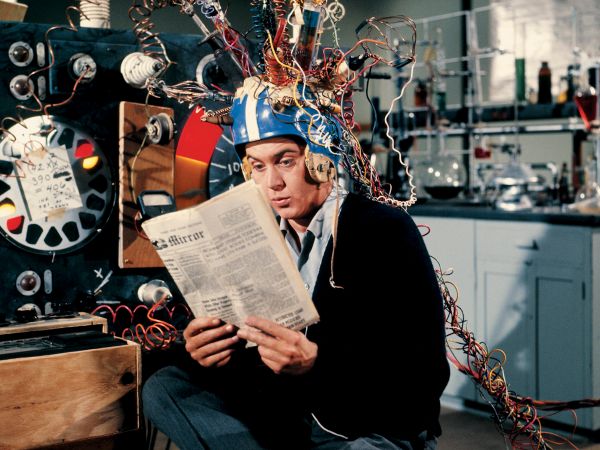
Merlin Jones knows the importance of preparation and he's reading up so he can store extra knowledge in his super-duper high-powered thinking cap. 

Well, you don't need that folks. All you need is what you got - a lot of creativity. So get those juices flowing! 

If you already have an idea for what you would like to contribute shoot us an email or leave a comment in the box below between now and October 1 and we'll add your topic to the Master List. Remember, you are not limited to one film idea. If you would like to create a musical, a drama, a mystery, a horror film AND an ultra cheesy B film, go right ahead! 

Can you change your mind? Certainly. Write about whatever you want, we're not fussy people.

Interested in joining? 

All are welcome right up until the day the blogathon starts... if you want to join after it begins, you can do so too. If you want to join us after it ends - sorry, tough luck there. Unlike other blogathons you don't have to be concerned about the film of your choice being "taken" because there are no films to be took! 

Still puzzled on what this is all about? Check out our sample posts : 

The Original Harry Potter ( 1938 ) 

The Missing Miss Marple Film 

You can read more about what the blogathon is about from our original post.  

"Just a little more Bogart and this will be the perfect noir formula!"


THE MASTER LIST 


OCTOBER  1 

They Don't Make 'Em Like They Use To - "A Place in the Sun" ( with a revised ending ) 

Hamlette's Soliloquy  - "Murder Most Foul" ( 1943 ) a film noir version of Hamlet 

The Hitless Wonder Movie Blog - The 1966 Hammer/Toho Production "Godzilla Vs. England".

Movies Silently - A 1926 all-star silent extravaganza entitled "The Golden Challenge"

Embarrassing Treasures  - Georgette Heyer's "The Corinthian" ( 1943 )


A Mythical Monkey - "Model Railroader Magazine : The Movie" 


OCTOBER  2

The Motion Pictures  - Classic re-castings of six favorite post-1970 films - Part I 

The Great Katharine Hepburn - The best Hepburn films that were never made

Caftan Woman  - "Charlie Chan in Hollywood" 

Films From Beyond the Time Barrier  - Universal's "Chamber of Horrors" ( 1943 ) 

Critica Retro - A 1934 gangster/musical


Silver Scenes  - The Top Ten Literary Film Adaptions Never Made


OCTOBER  3

Karavansara - John Huston's "The Man Who Would Be King" ( possibly )

The Lady Eve's Reel Life - "Just my Imagination ( Running Away with Me )" a look at Willa Cather's novella "My Mortal Enemy".

Scribblings - a silent film adaption of Josephine Preston Peabody's play "Marlowe". 

Classic Forever - to be announced. 

Wide Screen World - A 1971 film about the Brooklyn Dodgers

Furious Cinema - The Wizard ( 1974 ) starring Peter Boyle

Classic Film and TV Cafe - "Goldfinger" ( 1964 ) starring Cary Grant as James Bond

The Motion Pictures  -  Classic re-castings of six favorite post-1970 films - Part II

Nitrate Diva - A look at Louise Brooks in a 1940s film noir

Hamlette's Soliloquy - The Avengers re-cast for a super 1956 film.


We just jumbled everyone up into these days, but if you have a preference on when you would like to post, let us know. 

We are so pleased with the turnout so far and can't wait to read about all the fantastic film ideas everyone can conceive!

On the day of the blogathon keep a lookout for the "People's Choice Poll" on our sidebar. Here is where you can vote for your favorite Imaginary Film idea based on the entries we have received. 

Okay, that's all for now....bring out your movie-making machine, turn a knob here and there, add that extra special ingredient if need be, throw in some lightning, and a dash of discovery - play the mad scientist and create your dream film. But please, don't go overboard....what would the neighbors think?


Saturday, September 14, 2013

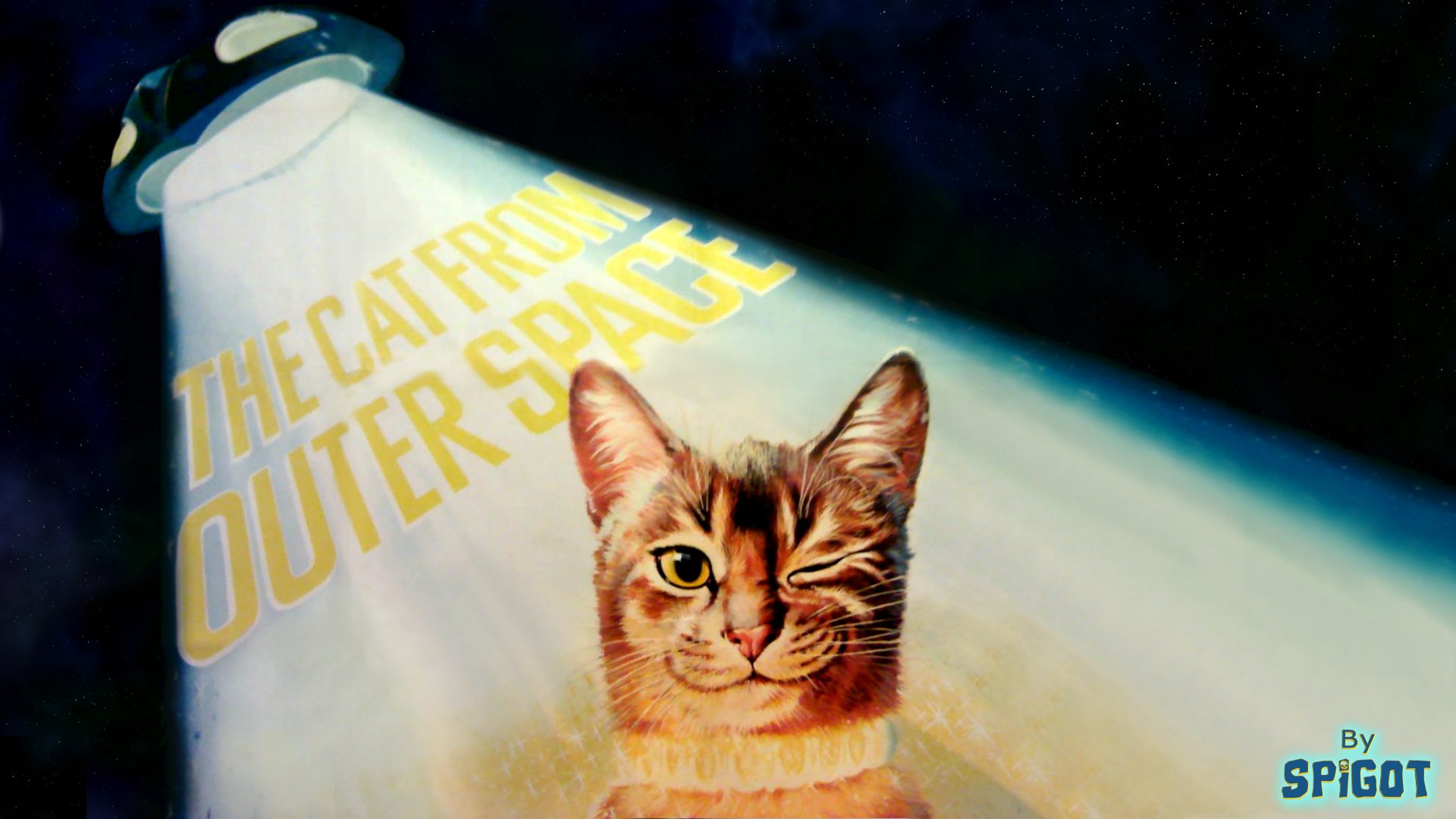
Furry Felines on Film

“They’re independent, they’re affectionate, they’re loyal, they’re sagacious, they’re mysterious, they’re inscrutable.”

These words, spoken by Dr. Michael Fox, leave the subject in question much to live up to. It’s unimaginable that a single being could embody such a myriad of adjectives. But there is a being that does embody them, and it is more than likely that every human on Earth has encountered it. What is it?


Your regular, every day pussycat.

As a lifelong cat owner myself, I have had the privilege to see felines embody every adjective Dr. Fox chose. When I’m feeling blue, my cats magically appear at my side and manage to make me laugh and feel loved. When I’m in pain, they become my heating blankets. And, if I happen to feel a bit overconfident, they never fail to bring me back down to earth by giving me unimpressed yawns and bored stares. Though I live with three other members of my family, I find myself seeking my cats’ company more than other humans’. Cats are medicinal to me; they possess an intuitive talent for sensing and soothing my emotions. Contrary to the idea that cats are wholly self-reliant, I would argue that cats want to befriend humans—as long as it is their choice to extend the olive branch. Longtime cat owner Joan Bernstein can attest to cat’s ability to reach out to humans. When suffering from chronic fatigue syndrome, she declared that, “Whatever I needed them [her cats] to be, they became.” They were her “hot water bottles” and, she went on to say that “simply petting a cat lowers human blood pressure…and benefits longevity.”

Why is it, then, that cats, who possess such a wealth of humor, charm, and intuition, have not become the staple of American culture dogs have?


One has only to review film history to see how dogs have the upper-hand in Americans’ hearts. Through endearing characters like Lassie, Rin Tin Tin, Old Yeller, Toto, and Asta, there seems to be no end of these beloved four-legged creatures in cinema. Perhaps the reason for cats’ lower status dates back to colonial times, when they were regarded with suspicion and even hatred as being devils incarnate. Indeed, cats in film are often shown at a witch or villain’s side. Just two examples of their dark portrayals are the demonic pussycat in Disney’s Cinderella (appropriately named Lucifer) and the insidious twin Siamese in “Lady and the Tramp” who gleefully shred curtains and sing about murdering a goldfish:


“Do you see that thing swimming round and round?

Maybe we can reach on in

And make it drown.

If we sneaking up upon it carefully,

There will be a head for you and a tail for me.”

With such malevolent archetypes of cats dominating the screen, it is not surprising that they have failed to become the heroic figures dogs have. However, when taking a closer look at film history, one can see that cats’ intriguing mix of superciliousness and warmth have immeasurably heightened comedy and drama from the silent era to today.

1919 marked the introduction of one of the first felines depicted on film. Before Mickey Mouse, the most popular animated character was a mischievous tuxedo kitty named Felix. Initially inspired in 1919 by Rudyard Kipling’s story of his wife’s love of strays, “The Cat Who Walked By Himself,” by the 1920s Felix had evolved into a kind of feline Charlie Chaplin. He was at once wily, sympathetic, and a curious cat ready to help those in need. His cartoon shorts had him engage in ingenious gags ala the famous comedians of the day. They always showed Felix outsmarting both other animals and humans. In the 1950s, Felix had a resurgence of popularity on television. The theme song to his program summarizes his delightful mix of slyness and likeability:


“Felix the cat,

The wonderful, wonderful cat,

Whenever he gets in a fix

He reaches into his bag of tricks....

You’ll laugh so hard your sides will ache...

Felix the cat,

The wonderful, wonderful cat!” 

              
Felix’s success went on to inspire more cartoon kitties, from Figaro in Disney’s “Pinocchio” to the feature film depicting a family of felines called “The Aristocats.” But perhaps the best remembered successor to Felix is another tuxedo cat, Sylvester of Looney Toons fame. Unlike Felix, Sylvester was not the archetypal sneaky and independent feline. He was a cat audiences (if possible) embraced even more than Felix. Sylvester posed no threat to human’s intelligence; rather, he was pure silliness and was the loser in his skits. He allowed audiences to both laugh with him and at him. With his lispy voice, it was impossible for Sylvester to maintain the dignity associated with cats, but filmgoers loved him for trying when he expressed his annoyance at Tweetie Bird with such sophisticated but bizarre vocabulary as, “That’th dethpicable!” and “Thuffering thuccotash!”


Cats’ contributions to comedy are not isolated to cartoons. One has to look no further than the classic silent comedies of Harold Lloyd to find sterling examples of flesh and blood cats stealing every scene in which they appear. Lloyd used cats in a large portion of his short and
feature length films. One particularly memorable 1924 film, “Hot Water,” has a cat playing the straight man to Lloyd. The cat succeeds in making Lloyd look as silly as Sylvester in the scenes they share. At one point, the mischievous cat climbs beneath a white sheet and walks toward Lloyd in the dark. The neurotic Lloyd mistakes the cat for a ghost and wreaks havoc on his household as he runs screaming from the “phantom.” The cat, in the meantime, emerges from beneath the blanket, watching the humans’ foolishness with blasé disinterest. 

In an earlier film, “Grandma’s Boy” (1922), Lloyd uses multiple cats to heighten his comedy. In one scene, kittens make it difficult for Lloyd to woo his girl when they swarm at his feet, licking the goose liver from his boots his grandma used to shine them. It was in a following picture, “The Freshman” (1924) that Lloyd most effectively employed cats as comedians. Early in the film, Lloyd finds himself on a stage before his entire college class. Unaware that the curtain has lifted, he is still holding a kitten he has just rescued from atop a shelf. Humiliated, he hides the kitten in his sweater when, halfway through his speech, the mother cat struts on stage and indignantly yowls at his feet for her child. The kitten promptly pops out of Lloyd’s collar, momentarily giving the illusion that Lloyd has a second, furry head. Finally, the kitten joins his mother, leaving Lloyd’s audience to uproariously laugh at him.


Lloyd’s cats are so humorous because they need no manipulation or embellishment to be so. Just by being themselves, they effortlessly make humans appear absurd in comparison to their confident, cool demeanors. Harold Lloyd’s cats allow audiences to laugh at themselves, but also leave them scratching their heads, wondering if perhaps they could learn something from felines. Perhaps Mark Twain, who at one time owned more than a dozen kitties, said it best: “If man be crossed with the cat it would improve man, but it would deteriorate the cat.”


Non-animated cats would not again be utilized so effectively in comedy until 1965. This year saw the release of arguably the most memorable kitty-centered comedy ever made: Walt Disney’s “That Darn Cat.” The film follows the story of a clever Siamese cat named “Darn Cat,” affectionately shortened to “D.C.” by his owner, Hayley Mills. D.C. becomes involved with a kidnapping perpetrated by bank robbers and proceeds to lead the police right to the crooks. D.C. emerges as a hero—something a cat had not yet been in a movie. Portrayed by Syn Cat, a talented kitty who previously appeared in “The Incredible Journey,” D.C. possessed the same charisma and ingenuity that endeared dogs like Rin Tin Tin and Asta to audiences.  But, unlike “Lady and the Tramp’s” Siamese cats, he communicated nothing insidious. Just a sampling of quotations from the film characterizes both the sly and loveable facets of D.C.’s character: “He’s diabolically clever” versus “You can’t own a cat like D.C. He’s family.” D.C. even won over Bosley Crowther of the New York Times, who lauded him as the Clark Gable of felines and declared him to be “elegant…a paragon of suavity and grace.” Though D.C. did make the perception of cats rise considerably, co-star Hayley Mills was wary of her co-star. To her, he too much embodied this line from the film’s theme song, “He’s a sly old codger, an Artful dodger…He’s the king, he makes that plain.” Mills declared that she always felt so “unnecessary to cats. They’re so independent. Not at all like dogs. Oh, I suppose it would be a real compliment if a cat grew to like you, whereas dogs will make friends with anyone.” However, Mills would learn through her work with Syn Cat that the old myth about cats being aloof to humans was just that: a myth. During filming, Syn Cat would prove to need friendship and encouragement as much as any human. Off camera, he could often be found cradled in Mills’ lap, kneading, and licking her affectionately.


It is the vulnerable, loving side of cats that has been most neglected in film. This is cinema’s loss, for the rare instances in which cats are used in drama, they pull at the heart more than their human counterparts. Disney produced one of the most moving depictions of the relationship between cats and humans in the 1963 film, “The Three Lives of Thomasina.” It tells the story of Thomasina, a ginger cat described in Time magazine as “a wise, furry oracle” who “majestically glides through the whole picture, occasionally ‘voicing’ footnotes on human folly, fear, and loneliness.” Thomasina’s ‘voice overs’ in the movie are done by a woman who sounds rather like Zsa Zsa Gabor. Though the anthropomorphizing of Thomasina undeniably adds to her charm, it is the comfort and devotion the cat gives to her owner, Mary, that truly debunks the image of cats as indifferent.  Mary is a motherless, lonely little girl whose father is withdrawn and taciturn. She finds a playmate, confidante, and mother in her cat. When Thomasina dies midway through the film, I dare anyone watching not to share Mary’s tears, just as I dare anyone not to share in the girl’s mirth when Thomasina comes back to Mary in another of her mythical nine lives. Thomasina brings love wherever she goes in the film. Through her love, she succeeds in reuniting Mary with her distant father and introducing him to a beautiful, hermetic women supposed to be a witch by the superstition townspeople. This woman kindly took care of Thomasina before she returned to Mary in her “third life.” The film proves that, just like superstitions about solitary women being witches is false, so is the conception that cats are self-reliant beings, immune to wanting human care and affection.


It was another ginger cat who also pulled at audience’s hearts two years earlier in 1961. Appropriately named Orangey off screen, this kitty is Audrey Hepburn’s “poor no named slob,” Cat, in “Breakfast at Tiffany’s.” Like Thomasina, Cat succeeds in uniting two lonely, lost humans (in this case, Holly Golightly and her struggling writer neighbor she alternately calls Fred and Paul).  Holly and Fred/Paul are as anonymous and rootless as Cat. This likeness immediately endears Cat to audiences. Near the close of the film, Holly discards Cat from a taxi on a rainy day, crying that he’s a big, tough guy and can take care of himself. She cried that she has “no right to give him a name. We don’t belong to each other!” She immediately regrets throwing him from the cab; when she loses him, she feels as if she has lost a part of herself as well. She runs after the cat and when she finds him, she and Paul kiss with Cat nestled between them. It’s obvious that people can belong to one another and find identity through love, just as a cat can belong to and identify with a person through the same kind of devotion and affection. Orangey won a Patsy award for his performance in the film (the equivalent to an Oscar for human actors), and he richly deserved the honor.


A more recent instance of a cat heightening drama is in the 1975 Art Carney film “Harry and Tonto.” Like Holly Golightly, Harry is rootless and confused about who he is or where is going. He sets out on a road trip with his cat, Tonto, at his side. Initially, Carney had the same reservations about cats as did Hayley Mills during filming of “That Darn Cat.” “Until the picture, I never liked cats,” he admitted. “But Tonto is a real trouper…In the last scene, where he’s dying, I just looked at him lying there in the cage and I was really sad and shaken.” 

Carney, like his character in the film, came to see Tonto as more like another human than an animal. He modeled his on-screen conversations with Tonto on his uncle’s conversations with his pet dog. “I never thought it strange,” Carney said of his uncle. “It was normal for someone living alone. My uncle would get up from his chair, walk into the next room, and share a thought with his dog.” When Tonto dies at the end of the film, it is traumatic for Harry, but with the cat’s loyal friendship during their odyssey together, Harry discovers a world he never seemed to have the time to see before. He finds a new life, makes new friends and says goodbye to old friends—the oldest of which is his beloved Tonto.

Cats are truly the most mysterious, fascinating creatures with which human have had the privilege to live. Though they have been featured in films that effectively show their capacity for humor and endearment, they still have never gained the same place in American’s culture and hearts as have dogs. Perhaps it is because they, unlike dogs, give the impression that they can take humans or leave them. They are a picture of subtlety and are too dignified to give their people the fanfare a pet dog would provide. Perhaps it is because they are so understated and untrainable that they have not been used more often in film. However, what is unique about cats is that when they do appear on screen, they need minimal anthropomorphizing to communicate humor or pathos. Just by being themselves they contribute laughter or tears to any film script. 


Though felines have been proven to be anything but villains in classic films like “That Darn Cat” and “The Three Lives of Thomasina”, in modern day their depiction in cinema has reverted back to the old archetype of villain. Popular movies like “Stuart Little (1999),” the “Austin Powers films (1997-2002),” “Babe (1995),” and “Cats and Dogs (2001)” invariably have cats as symbols of malevolence. The cartoon “Garfield” is one bright spot for modern cats (it began in 1978 and is still going strong today). The overweight, lasagna-loving kitty follows in the tradition of Felix and Sylvester as depicting a cat who is both endearing but witty and oftentimes more intelligent than his human and canine friends. 


I believe that anyone who has ever owned or known a cat would argue that, like Hayley Mills so aptly stated, it is indeed a compliment to be befriended by a cat. Once a person has a kitty’s friendship, he will find the animal a loyal and devoted companion who could rival any human counterpart. Perhaps the theme song to “The Three Lives of Thomasina” best sums up the fascinating mix of affection and indifference that makes cats so mysterious, frustrating, but ultimately entrancing to humans on and off screen: 


“Who is the most self reliant animal made since the world began?

Who can be the most defiant animal known to the world of man?

Born with emerald eyes, so cold, so warm, so wise,

Within her kingdom lies the world’s aria.

Do we need to ask more than that?

You must know now…

It’s a cat!”


Works Referenced


Cats: Caressing the Tiger. National Geographic video. 1991.  “Art who?” Time magazine. April 21, 1975
“Orangey the Cat” at imdb.com
“Syn Cat” at imbd.com
“Harry and Tonto” at imdb.com
“Breakfast at Tiffany’s” at imdb.com
“The Three Lives of Thomasina” by Howard Thompson. New York Times. December 12, 1963.
“That Darn Cat” by Bosley Crowther. New York Times. 1965.
Lyrics to “We Are Siamese” by Sonny Burke and Peggy Lee. 1955.
Lyrics to “That Darn Cat” by Richard and Robert Sherman. 1965.
“Felix the Wonderful Cat” lyrics by Joe Orido. 1958.
“Thomasina” lyrics by Terry Gilkyson. 1963.
“Hayley Mills.” Daytona Beach Morning Journal. October 15, 1964. 


Written by Cynthia Brideson

A special thanks to Cynthia for letting us reprint her article "And the Oscar Goes to...Cats" which originally was posted on the TCM Classic Film Union website. Cynthia Brideson is one half of the talented writing duo, Sara and Cynthia Brideson. They are authors of the wonderful book, Also Starring... Forty Biographical Essays on the Greatest Character Actors of Hollywood's Golden Era, 1930-1965. They are currently working on another book about master showman Florenz Ziegfeld.

Thursday, September 12, 2013

The Impossibly Difficult Name that Movie Game

Last month Caftan Woman amazed us with her deducting powers and correctly guessed "Northwest Frontier" to our screenshot featuring a soldier on a bridge overlooking train tracks. Since we featured railway tracks in that last shot, this edition of the Impossibly Difficult Name that Movie Game will show a train. 

Here is Didi's selection : 


To read the rules to the game click here. And don't forgot... the game will remain open for play until we have a winner.

Good luck guessing! 

Wednesday, September 11, 2013

George Washington Finally Arrived!!


Heads Up! The great day has arrived....George Washington Slept Here, Moss Hart's hilarious comedy, has crossed the bumpy bridge and finally made its made to a digital home. Oomph-oomph-oomph, that's right folks, yesterday Warner Archives released the Jack Benny/Ann Sheridan comedy to print-on-demand DVD. 

This means you can watch and re-watch it to your heart's content! ( or until the disc wears out ).

George Washington Slept Here was the first - and in our humble opinion the best - of the let's-build-a-house comedy films. Six years after its release Cary Grant and Myrna Loy became became blissful home builders in the MGM adaption, Mr. Blandings Builds a Dream House and a few decades later Tom Hanks and Shelley Long decided to ignore the lessons of these fine folks and undertook a house building project in The Money Pit, but it was in George Washington Slept Here that we first learned what a catastroph can come of fixing up a historical home. Charles Coburn and Percy Kilbride are stellar supports to wise-cracking Benny, and Hattie McDaniel, William Tracy, Lee Patrick round out the cast.

Whether or not this DVD will be available through Warner Archives website we are not sure, but for the moment it is an exclusive release through Movies Unlimited. 

George Washington Slept Here ( 1942 ) DVD - $19.99 

Tuesday, September 10, 2013

Nugget Reviews - 5


Clash of the Titans ( 1981 ) 14k 


The son of Zeus undertakes a perilous quest to rescue Andromeda from her fate of being a sacrifice to Kraken, the sea monster. Harry Hamlin, Laurence Olivier, Maggie Smith, Claire Bloom, Ursula Andress, Susan Fleetwood, Judi Bowker. MGM. Directed by Desmond Davis. 

Clash of the Titans is most notable for being the final film of special effects animator Ray Harryhausen. Here he demonstrates his talent by creating a giantic sea monster, Kraken, a mechanical owl, Medusa and Pegasus, the flying horse. The film includes a stellar cast but the screenwriter didn't really give the star attractions much to do. Great fun overall! 

                  ___________________________________________________________


Money From Home ( 1953 ) Elctr.


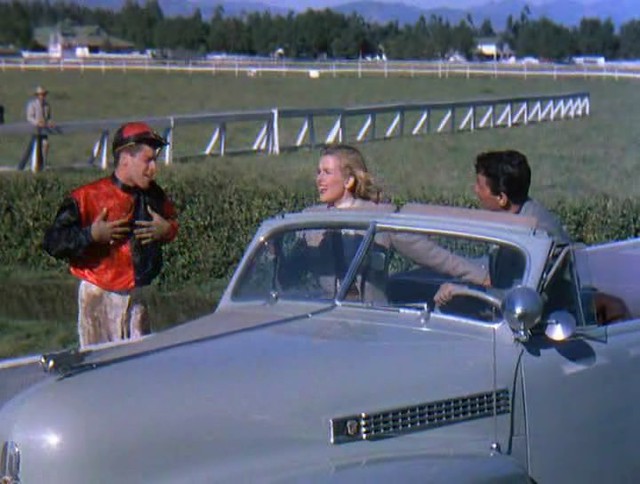
A two-bit gambler promised to fix a horse in an upcoming race in order to dodge a mobster who is after him. His cousin, a veterinarian, ends up being the stooge who will act as jockey. Dean Martin, Jerry Lewis, Richard Haydn, Marjie Millar. Paramount Pictures. Directed by George Marshall. 

Money from Home was sub par to Martin and Lewis' other hits although it did have the added bonus of being in color and 3D. Alas, it seems as though the writers intentionally slacked off on developing any plot because of that. Highlights include Lewis' Cyrano De Bergerac act, an ants-in-the-pants sequence at the country club and of course, Marjie Millar is stunning. 

                  ___________________________________________________________


Ma & Pa Kettle on Vacation ( 1953 ) 14k 


Pa Kettle is given an envelope by a passenger on an airplane en route to Paris which, unbeknownst to him, contain secret government papers. He aids U.S Embassy agents in catching the spies who are after the document. Marjorie Main, Percy Kilbride, Ray Collins, Sig Ruman, Oliver Blake. Universal Pictures. Directed by Charles Lamont. 

Oo la la, the wonders of the Ozark are off to see Pareee in this little gem. It's hard not to love a comedy that features spies, and this one has some particularly funny moments. Ma Kettle literally gets a "shakedown" from Sig Ruman, the enemy agent, and Pa has a difficult time trying to get the police to chase him to a jewelry store. 

                  ___________________________________________________________


Another Man's Poison ( 1951 ) 14k 


A mystery writer murders her husband and buries him in the muddy pond outside of her English estate; when her husband's partner shows up unexpectedly she must not only hide the truth but find a way to dump him as well. Bette Davis, Gary Merrill, Emyln Williams, Anthony Steel, Barbara Murray. Angel Productions. Directed by Irving Rapper. 

Bette Davis plays her usual biting self here. She is a successful author, an accomplished rider, and owns a secluded castle in England, so what does she do? She hits on her secretary's fiancee of course! Never satisfied.... Although the film seems suffocatingly stagy at certain points it does boast some great banter between Merrill and Davis and an excellent mystery-themed setting. There is a nice twist at the end as well. 

                  ___________________________________________________________


Town on Trial ( 1957 ) 18k


A gung-ho police detective turns a small town upside down in his investigation of the "Lover's Lane" killer...a murderer who strangles his victims with ladies pantyhose! John Mills, Charles Coburn, Barbara Bates, Derek Farr, Alec McCowen, Fay Compton. Columbia Pictures. Directed by John Guillermin. 

An exceptional little thriller, tautly directed and featuring some fine cinematography. Its dreary setting only adds to the suspense and the film keeps you guessing to the end. Charles Coburn is wonderful as Dr. Fenner, our number one suspect, and John Mills excels as Superintendant Halloran. It was too bad a series was not made on his character. 

COMING SOON : The Nugget Reviews are going to have their own page! Hopefully this way we can squeeze in more ratings. We get so far behind on writing reviews to all the films we watch, at the rate we are going it will take us three years just to cover the films we saw last month.

Saturday, September 7, 2013

The Original Harry Potter ( 1938 )

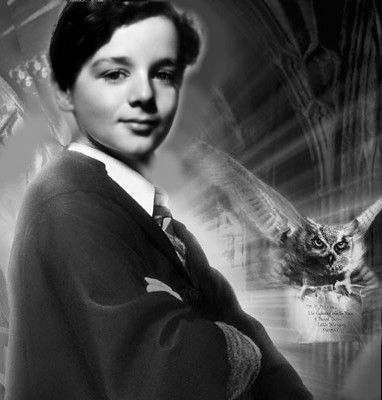
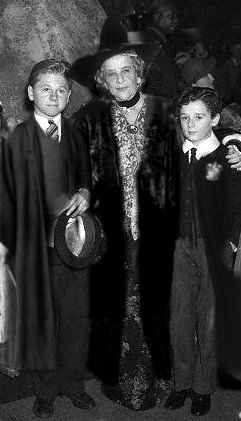
Ever wonder what the original Harry Potter series was like? We certainly did; and so in the spirit of the upcoming Great Imaginary Film Blogathon, we thought we'd share our review of the first film in the original Harry Potter series... and get this, he wasn't called Harry!  

Henry Potter ( 1938 ) 
aka School for Sorcerers  ( UK title )

Studio : MGM Pictures. 

Directed by Victor Fleming. 

Cast : Freddie Bartholomew ( Henry Potter ), Mickey Rooney ( Richard "Dodge" Woolsey  ), Joan Mortimer ( Lucille Griffith ), Jackie Cooper ( Dunkin Balfrey ), Basil Rathbone ( Snafferal Snake ), Harry Davenport ( Headmaster Humbledore ), Louis Hayward ( Professor Quinttin ), May Robson ( Headmistress Margaret McDonagall ), Wallace Beery ( Rupert Haggin, Groundskeeper ),  Lennox Pawle ( Mr. Wanderers ). 


The Story : 

The film takes place in 1876 London, and opens with a young orphan, Henry Potter, being sold to rather dubious foster folk who agree to provide him food and lodging provided he work in exchange. One day, while running an errand to the meat shop in town, he happens to pass by Wanderers Magic Shop, a shop he has not seen before even though he just passed the storefront on his way to town. Mr. Wanderers beckons him in and tells him he has been expecting young Henry. 


His face was not pasted on. We kid you not!

He informs Henry that he is a little warlock - quite a famous one at that, having survived an attack from the villainous Lord Valdimere as a baby. He then equips Henry with a basic entry-level witch kit complete with cape, a wand and a magic spell book and sends him off into the streets..which have been magically transformed to Dungeon Alley, a hidden wizardry avenue filled with students preparing for the fall semester of school. Henry boards the train at Queen's Station which takes him to Higgens School of Witchcraft, where he has been invited to attend. 


Henry Potter and Dunkin Balfrey


Once at school Henry meets Dodge Woolsey and Lucy Griffith, two chums he will remain lifelong friends with..as well as Dunkin Balfrey, at first a schoolhouse rival, but then a good friend. He also finds Headmaster Humbledore to be a trusted ally and mentor. Humbledore reveals to Henry details about his birth and the death of his parents that he was unaware of before and warns him against Lord Valdimere, who may return to harm him. Sinister events at the school make Henry suspect that one of his professors is aiding Valdimere in his desire to kill him. It will take a pure heart, a good knowledge of witchcraft, and the help of his friends for Henry to overcome the evil Valdimere. 

The adorable May Robson as Headmistress MacDonagall

The Review : 

Although it falls into the routine "Tom Brown's Schooldays" formula upon occasion, overall the movie is quite enjoyable and it was a great introduction to a series that ran for over six years. Freddie Bartholomew and Mickey Rooney are a great duo ( they made five other films together in addition to the Henry Potter films ) and Joan Mortimer provided good sweetheart-support as little Lucille Griffith. Joan Mortimer would be busy in the early 1940s as she juggled between doing the Henry Potter series in addition to the Henry Aldrich series with Jimmy Lydon. She must of loved working with Henrys!

Unfortunately, Freddie Bartholomew was pigeon-holed into playing English school-boy roles ever since his appearance in David Copperfield in 1935. Bartholomew was fourteen years old when the Potter series began and by the time the fourth film in the series was filmed he was edging near twenty. Because of his growing age the studio execs decided to cancel the series...much to the disappointment of its loyal followers. 


One of the most notable performances in Henry Potter is from villain-extraordinaire Basil Rathbone. Little Henry has his eye on him from the start and it's no wonder...you never know whether to trust Snake or not. 

Basil Rathbone was famous in the 1930s for playing villains in such notable films as Captain Blood, Kind Lady, and The Adventures of Robin Hood ( filmed the same year ). However, in the late 1930s he would star in what would become his most famous role, that of Sherlock Holmes, in a string of classic films released by Universal. 

MGM was generally not inclined to film stories dealing with witchcraft, however since Henry Potter focused on the predicaments of three school age children, Louis B. Mayer felt that youngsters would relate to the trials and tribulations they must go through in spite of its underlying theme. And with three of the studio's top child actors in the lead roles, it was sure not to miss! 

Henry Potter was released on Sept. 18, 1938 and ranked in above-average at the box-office. Most of the film was shot in the sound stages at MGM and on the backlot where Dungeon Alley and the Higgins School of Witchcraft were constructed with MGM's usual stamp of set design brilliancy. 

Later releases included : 

Henry Potter's Secret ( 1940 ) 

Henry Potter Fights Back ( 1942 ) 

Henry Potter and the Black Bird ( 1944 ) 


The quality of the original films remained throughout but with much of the cast evolving as the series progressed it was difficult to match the enchantment of the original. Overall, its a series well worth checking out! 

For more information, or if you would like to participate in the Great Imaginary Film Blogathon click here.

Tuesday, September 3, 2013

Back to School, Kiddies!

Yeeeeees Teacher! We'd sign a lifetime commitment to attending public high school if we could get Mr. Novak ( James Franciscus ) as our prof. Sighhhhh. In this snapshot he seems really happy to get back to Jefferson High for another term of teaching English lit.