Showing posts with label Adventure. Show all posts

Friday, December 12, 2025

His Majesty O'Keefe (1954)

Back in the late 1860s, there was a great demand for copra (the dried meat of coconuts) in order to obtain its oil. Small islands such as Yap in the South Pacific, were fought over by trading companies to get exclusive rights to these coconuts. In His Majesty O'Keefe (1954), Captain David O'Keefe gets caught in the copra fever and decides to defy the large trading companies of Germany and Spain and claim the island of Yap for his own mercenary ends. 

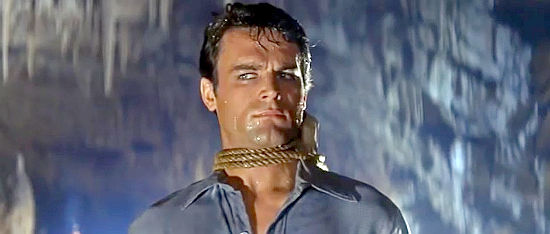
O'Keefe (Burt Lancaster) first comes to the island when he is washed ashore after a band of mutineers toss him off his own ship. He sees all those palm trees on Yap as his opportunity to make his fortune but the people of the island don't want to work. They see no need to. 

Herr Tetins (Andre Morell), the representative for a German trading company, has his office on the island and becomes good friends with O'Keefe. He warns him that there is no way to make the people work for copra, but O'Keefe finds a way. He obtains his own ship from Hong Kong and helps them quarry for Rai stones on the island Palau, over 200 miles away. Normally, the Yap natives traveled in outriggers to this island, quarried the stone, and then sailed back with many men dying along the way. O'Keefe makes it easier for them to quarry the stone and transports the men and their stones back to Yap in his ship. The people are grateful to him until he tells them that they must harvest copra because they are indebted to him now. His trickery enrages Boogulroo, one of the leaders of the island, who becomes a threat to him later on. 

His Majesty O'Keefe was released by Warner Brothers and was co-produced by Burt Lancaster who paid to have the picture filmed on the beautiful island of Fiji. It's an enjoyable "Boy's Own Adventure" style yarn complete with fistfights, island uprisings, and even the beautiful native girl (Joan Rice). The island scenes never become monotonous because O'Keefe keeps making trips back to Hong Kong, where his partner Mr. Tang (Philip Ahn) resides. Lancaster was known for his athleticism, and he certainly had it on display in this film, climbing up coconut trees or swinging from high ropes. 
Dimitri Tiomkin composed a fitting theme to the picture and a great supporting cast (including Benson Fong and Abraham Sofaer) make this an overall thoroughly enjoyable film, one with a good lesson about greed. 

Click here to read about the real captain David O'Keefe in this Smithsonian Magazine article from 2011.

Monday, March 31, 2025

Rob Roy: The Highland Rogue (1953)

The setting is Scotland in the 18th century. A German has inherited the throne of England and Scotland and will rule as king. The appointment of King George I upsets many of the Scottish people and the highlanders especially who gather their clans together and rise up against the English troops occupying Scotland. The Duke of Argyll has quenched most of these rebel uprisings, except for a small but stubborn band of highlanders of the McGregor clan led by Rob Roy "the Highland rogue".His fight for Scottish independence leads him on a road to the gallows in London... and eventually, face to face with King George I himself. 

Walt Disney made a number of excellent adventure films in the 1950s and Rob Roy ranks as one of the best. It has all of the sweet ingredients for a rousing good adventure: highland rebels, romance, swordplay, beautiful locations, stirring music, and a grrraaand story. Technicolor filming and a cast of seasoned actors bake the cake. 

Richard Todd, who starred as the heroic Rob Roy, had just completed two period costume adventure films for Walt Disney Studios - The Story of Robin Hood and his Merrie Men and The Sword and the Rose - both of which were popular with UK audiences and Rob Roy proved to be a box-office hit as well. Unfortunately, these films did not do as well stateside and Disney decided not to pursue more costume films. This was also the last picture Disney released through RKO for shortly afterwards all of his productions were released through his own distribution company, Buena Vista.  

Rob Roy gathered together some excellent actors from throughout the United Kingdom including Irish-born (!) Richard Todd, Welsh actress Glynis Johns, James Robertson Justice of Scottish ancestry (who looked especially handsome donning long blonde hair), English character actors Michael Gough and Geoffrey Keen, and one of the most famous Scottish film actors to have ever lived: Finlay Currie. 

Rob Roy is a simple story of a rebel but he is one like Zorro or Robin Hood, where the audience takes sides with him and is pleased to see justice done in the end.The story was, in Disney's words, "based on history and legend" and written by one of his most dependable scriptwriters Lawrence Edward Watkin, who specialized in adapting adventure stories such as Treasure Island and The Story of Robin Hood.  

Location filming took place in Scotland around Corriegrennan and Aberfoyle and this Highland scenery was beautifully shot by legendary cinematographer Guy Green. What scenes they could not film were painted in by matte artist Peter Ellenshaw. Today, one can view Rob Roy and its colorful filming through Disney's subscription streaming service Disney + or by purchasing it on DVD. 

Wednesday, July 17, 2024

Master of the World (1961)

In Morgantown, Pennsylvania, in 1868, a giant voice was heard booming from the mountain ridge known as The Great Eyrie. It was quoting from the Holy Book. John Strock (Charles Bronson), an agent for the United States Department of the Interior, decides to investigate this phenomenon and asks inventor/arms manufacturer Mr. Prudent (Henry Hull) to journey up to the mountain with him in his air balloon. Going along the ride is Prudent's daughter Dorothy (Mary Webster) and her fiancĂ©e Philip (David Frankham). 

However, the foursome never make it to the summit because their balloon is shot down by a giant airship called The Albatross. At the helm is Robur, a Nemo-like character who wants to stop warfare by forcing nations to disarm by the threat of destroying their instruments of war. Strock and the others are held prisoners onboard the Albatross until Strock hatches a plan to destroy Robur and his flying weapon. 

Producer Samuel Arkoff is best-known for his budget horror films (War of the Zombies, The Raven) and beach-party comedies (Bikini Beach, Beach Blanket Bingo) but Master of the World, released in 1961, marked his foray into Irwin Allen's territory of family-friendly sci-fi adventure. It wasn't a bad venture, either. 

Charles Bronson plays a likeable hero; the rest of the cast are engaging enough (especially Henry Hull), and the set design and bright color schemes are pleasant on the eye. The story, based on two novels by Jules Verne, is pretty much "20,000 Leagues Under the Sea" now set in the air. Vincent Price plays a good Robur, but he lacks the convincing anguish that James Mason gave to Nemo in the 1954 classic 20,000 Leagues Under the Sea and it is hard to feel compassion for his character. Perhaps it is because the audience is never given a reason why Robur is bent against stopping warfare, unlike Nemo whose family was killed in a war. 

The film could have used a sprinkling of comedy. 20th Century Fox's excellent sci-fi adventure Journey to the Center of the Earth was released just two years prior to Master of the World but what a world of difference in terms of production quality and entertainment. Master of the World would have been marvelous with James Mason, Pat Boone, Diane Baker and perhaps Richard Haydn cast as the aerial prisoners. Vito Scotti's kitchen humor just wasn't enough to add the element of fun to Master of the World, something the film needed. 

Nevertheless, the movie is one that I can re-watch numerous times. It is a classic steampunk picture released years before the term was even invented. 

The music, by conductor Les Baxter, is lovely and the supporting cast, made up of several less-known players are good in their parts. David Frankham, who plays Philip, was a familiar face on the small screen where he did numerous guest appearances in sitcoms, westerns, and dramas throughout the 1960s. Mary Webster was also a television actress (Arkoff was always mindful of the budget) and this was one of the rare feature films she made. Henry Hull was one of the few big-names on the roster, being an old character actor from the 1940s.

American International Pictures released Master of the World along with Konga as a double-feature in 1961, so if sci-fi did not appeal to the audience they could be entertained by a gorilla.

Sunday, February 25, 2024

Rewind Review: Journey to the Center of the Earth (1959)

Back in 1864, Jules Verne penned "Journey to the Centre of the Earth", a novel about a group of intrepid individuals who undertake a subterranean journey to discover the very center of our Earth. Why would anyone want to take such a journey? As one of the explorers in this expedition explains, "Why does man freeze to death to try and reach the North Pole? Why does man drive himself to suffer the steam and heat to discover the Amazon? Why does he stagger his mind with the math of the sky? Once a question arises in the human brain the answer must be found, whether it takes a hundred years or a thousand years." 

It is the spirit of adventure that is celebrated in the act of exploring the unknown, and the ultimate aim of all Science is to penetrate this unknown. Scientists spent years exploring the many features of the earth's surface but who has penetrated its depths? Arne Saknussemm has! Or so this movie claims. The 16th-century Icelandic alchemist was ridiculed for his preposterous attempt to reach the Earth's core, but 350 years later, Professor Oliver Lindenbrook ( James Mason ) stumbles upon evidence that proves he did just that, and ventures forth to go there himself. 

By the time he leaves, the party has grown to five members: Alec ( Pat Boone ), a student of his at the University of Edinburgh; Carla ( Arlene Dahl ), the widow of a fellow explorer; a burly Icelander named Hans ( Peter Ronson ) and his pet duck Gertrude ( excellently played by herself ). Spending a year beneath the surface, they encounter a cavern of luminescent crystals, large deposits of salt, an ocean, the lost city of Atlantis, and even another explorer...bent on making sure his own name goes down in history as the first man to reach the center of the Earth!

Journey to the Center of the Earth was released in 1959 by 20th Century Fox and was the first film adaptation of Verne's popular novel. Producer Charles Brackett called the original story "a delightful book, written for young people. We simply couldn't have any solemnity about it. I wanted very much to do it at this time. I'm tired of all these films based on thoughts at the back of sick minds......Our picture describes action and events, with not the slightest shadow of Freud. The serious thing about Jules Verne is that all he does is tell a story in exciting episodes, but his stories have always pushed man a little closer towards the unknown. What we've tried to do is retell his story in the best way of all - in the Verne vernacular."
Indeed, the film captures all of the excitement of the original novel without getting bogged down with Verne's scientific details. Walter Reisch ( Gaslight, Niagara ), who had written a number of science fiction stories, was called in to adapt the novel into a script. He cleverly added story elements that made it more palatable for filmgoers, including adding an extra member of the expedition - Carla Thompson. This provided an opportunity for a touch of romance between her and Professor Lindenbrook. Arlene Dahl was excellent in this part. She made Carla an independent-thinker, strong-willed and capable and yet retained her feminine charms. Carla took on the mother-role of the group providing moral support and cooking skills and enjoyed letting the men provide for her and the rest of the group's practical needs.

The comradery between all of the members of the expedition - and the actors who portrayed these characters - is what makes Journey to the Center of the Earth particularly enjoyable to watch. They strike out on an adventure into unknown territory and, like true Victorian explorers, are heedless to the dangers that lie ahead. In jolly spirits, they take all they encounter in stride, carefully making detailed observations for those who may follow in their path, never doubting that they will return to the surface of the Earth to show others the way.

Reisch also added some introductory material to his adaptation and set the events in Edinburgh, Scotland. Here, we witness Professor Lindenbrook in his native habitat, teaching geology at the University of Edinburgh. The events leading up to the journey unfold when his prize pupil Alec, gifts him with an unusual volcanic rock, a lump of lava that contains a hastily scrawled message from long-lost explorer Arne Saknussem. The intrepid professor endeavors to set off at once to follow in Arne's footsteps, but soon discovers that his secret discovery is not so very secret. Two men are already on his trail and set to foil him, one of them being the villainous Count Saknussem ( Thayer David ), a burly descendant of Arne. 

James Mason was tailor-fit for the part of the professor and gives a rousing performance. Surprisingly, Mason was not the first choice for the part. Clifton Webb was originally cast but, having recently undergone surgery, had to withdraw from the production just before shooting began because the physicality of the role would have been detrimental to his health. 
Pat Boone was obviously cast to make the film appealing to younger audiences. He does an excellent job as well, singing only two songs throughout the film ( he had more musical numbers but they were later cut ). Diane Baker was added as his love-interest, the lovely Jenny Linden. The poor girl patiently waited two years to see her sweetheart re-emerge from the depths of the earth. Also in the cast is Alan Napier, Ivan Triesault, and Edith Evanson. 

Journey to the Center of the Earth did extremely well at the box-office, raking in nearly $10,000,000 ( it had a $3.4 million budget ). It had incredible fantasy elements and showed its audience that a whale of a good time could be had beneath the Earth's crust. The Lindenbrook expedition encountered everything from man-eating lizards and giant mushrooms to the lost city of Atlantis, all without the benefit of CGI. 
The film was nominated for these special effects as well as for its art direction. The talented Lyle Wheeler was responsible for these sets, which were highly imaginative and colorful. Wheeler captured the atmosphere of old Edinburgh in the opening scenes, created the beautiful interior sets of Lindenbrook's house ( including an impressive library ), and served up a veritable smorgasbord of fanciful sets for the center-of-the-Earth sequences, including a beautiful cavern of fluorescent rocks. 

Walt Disney's 20,000 Leagues Under the Sea (1954) was one of the first color film adaptations of a Jules Verne novel and its success created a whole new genre of Victorian adventure films. Like Leagues, Journey to the Center of the Earth not only boasted beautiful sets but a striking color palette that set the tone for all other films in its genre, including The Time Machine (1960), The Lost World (1960), Mysterious Island (1961), and First Men in the Moon (1964). 
It also had an impressive score by Bernard Herrmann. The opening theme heralds the approaching adventure to be enjoyed and the rest of the score captured all the beauty, thrills, and wonderment to be found in the caverns of the deep.

Sixty years after its release, Journey to the Center of the Earth remains one of the best adventure films ever made because at the core of the film is rock-solid entertainment, pure movie magic that ignites your imagination and inspires you to set off on your own adventure. And that is the stamp of excellence for any adventure flick. 

Tuesday, January 31, 2023

Mr. Forbush and the Penguins ( 1971 )

Richard Forbush is a rich young philanderer. He likes to woo girls and wear smart-looking clothes to college. His professor considers him to be one of the most academically brilliant students in his class with "the potential to be an outstanding biologist," but Forbush has little interest in biology, only mating. 

One day, he meets Tara (Hayley Mills), the new waitress at his local pub, and, smitten with her, attempts to impress her with tales of how he will go "down the Amazon" and be one of the last men to undertake a great scientific adventure. When his professor offers him the opportunity to live the great adventure by spending six months in Antarctica tracking the population and habits of a penguin colony, he turns it down.... until a casual remark made by Tara changes his mind. 

"That's all you are. Wind. Empty wind."

He is aghast that Tara does not succumb to his charms and is downright offended when she calls him "empty wind". He decides to accept the position after all but begins to regret it soon after. 

"It's a grim prospect, all that ice. I don't know how I am going to get back in one piece. I feel rather like poor Captain Oates. Remember what he said when he walked into the blizzard to die, 'I'm just going outside and may be some time'"

Within a few weeks, Forbush is dropped off at Shackleton's Hut at Cape Royds with a two-way radio being his only link to the outside world. He is told not to interfere with nature but he grows attached to the penguins he is studying and their plight to survive. After months of watching skuas steal the penguins' eggs, he attempts to destroy them by building a catapult to hurl rocks at them. All is in vain and Forbush comes home realizing that every living creature depends in some way upon every other.

Mr. Forbush and the Penguins, also released as Cry of the Penguins, is not your typical arctic adventure film. Instead of the man-battling-the-elements plot line, this film focuses on how six months spent alone with penguins can change a man. It does indeed transform Mr. Forbush dramatically. 

John Hurt gives a wonderful sensitive portrayal of the young playboy turned penguin fancier. It is hard to imagine that the man throwing rocks at the invading skuas at the end of the film is the same Mr. Forbush who showed little to no interest in arctic birds at the beginning of the picture. Hurt has such a marvelously silky voice that it is a pleasure to hear him narrate the penguin sequences. Hayley Mills also gives a good performance in what is strangely listed on the credits as a guest appearance. Also in the cast is Tony Britton as Forbush's professor, Dudley Sutton, Thorley Walters, and Judy Campbell.

The production for Mr. Forbush and the Penguins was rather rocky. Alfred Viola, a commercial director, was making his directorial debut when he signed on for the production but mid-way through was dismissed by producer Roy Boulting, who took over directing himself. Boulting also put his wife Hayley Mills in the role of Tara, in place of Susan Fleetwood, whom Hurt preferred. Swedish director Arne Sucksdorff flew to the Arctic for location filming and captured some beautiful footage of the penguins in their natural habitat while John Addison (Tom Jones) created a compelling score for the film. 

Unfortunately, after all that effort (and a nearly £600,000 investment), Mr. Forbush and the Penguins tanked at the box office.  The publicity department mistakenly tried to publicize the movie as a comedy, plastering the posters with corny taglines like "It's not often that 740,000 penguins can help a love affair!" and "the zaniest bunch of birds on the South Pole!". 

If one is looking for comedy, then this film would fall short. In fact, the first 15 minutes are rather a drag. But after the professor hands Forbush his opportunity to become an explorer of old, the film becomes an absorbing blend of documentary and drama. A look into the life of one man and over half-a-million tuxedo-clad arctic birds.... quite a novel idea for a film. And speaking of novels, if you want to enjoy this story in print, read Graham Billing's original 1965 novel "Forbush and the Penguins". 

Saturday, December 17, 2022

King of the Jungle ( 1933 )

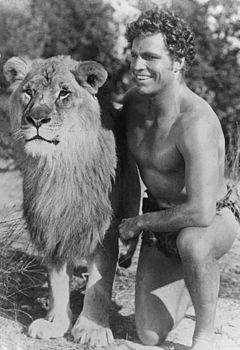
A young boy is raised by a pride of lions in Africa after his parents are killed while on a safari. He loves the lions and speaks to them as friends. Years later, a group of hunters captures "the lion man" as he is now known, and along with his lions, they ship him to San Francisco to be exhibited in a circus. The Lion Man ( Buster Crabbe ) quickly escapes and finds refuge in the apartment of two startled women - one of whom takes a fancy to this strange two-legged creature. With her guidance, the lion man is soon tamed, taught to speak, and eventually goes on tour with the circus.....but his heart remains in Africa and his one dream is to buy back his lions so that he can free them in the wild again. 

When MGM premiered the jungle adventure Tarzan the Ape Man in 1932, it became an overnight sensation and, not wanting to be outdone by their rivals, Paramount Pictures quickly put into production their own version of Edgar Rice Burroughs' Tarzan - Kaspa the Lion Man in King of the Jungle. In place of Johnny Weismuller, they starred Buster Crabbe, the 1932 Olympic gold medal-winning swimmer whose virile presence could rival Weismuller's in any jungle. 

Buster Crabbe was an ideal man to portray Kaspa, a wonderful wild man who had never seen "civilization" before. Buster had a boyish innocent face and a physique that made him seem twice the size of any man next to him. Just like when Dr. Banner turned into the Hulk, Crabbe's clothes looked like they would split at any moment if he flexed his muscles. 

Not surprisingly, Kaspa quickly found a mate for himself when he arrived stateside - the lovely Frances Dee. He sneaks into her apartment to eat the porkchop dinner she left on the table and within ten minutes she was by his side and off to the circus with him!

King of the Jungle runs for only 73 minutes but it is filled to the brim with excitement. The jungle scenes, as well as some of the circus scenes, are not for the faint of heart. Back in the day, Paramount was able to put a lion in a cage with a tiger and just film them brawling, a practice that animal leagues would definitely not approve of today. While the fight scenes are frightening, what is most amazing is how many lions they were able to film in the wild. It would be nice to think that large prides of lions are still roaming in Africa like this. 

Buster Crabbe learned how to train lions while making King of the Jungle so in many of the scenes where he appears with the lions, that is Crabbe himself doing his own stunts. Impressive. 

The film also boasts a strong cast of supporting players including Sidney Toler ( not playing Charlie Chan ), Nydia Westman, Robert Barrat and Patricia Farley. 

King of the Jungle is available on DVD as well as on Youtube here


Sunday, September 25, 2022

The Men of Sherwood Forest ( 1954 )

Before Hammer Film Studios began its regular output of horror films, they made quite a number of dramas and also experimented in other genres...including swashbucklers. One year before Richard Greene became the idol of youth in television's The Adventures of Robin Hood, Hammer tried their hand at spinning a yarn of the legendary English outlaw with The Men of Sherwood Forest ( 1954 ). 

In this jolly outing, Robin Hood and Friar Tuck attempt to track down a band of thieves who had attacked an abbot passing through Sherwood Forest, an abbot who was carrying a secret message hidden within a small statue. King Richard, who was held captive in Austria, has been freed and is returning to England to reclaim his throne from Prince John. The message tells where and when he will land, but it is now in the hands of one of Prince John's noblemen who will use the information to set a trap to kill the king. Only Robin Hood and his band of merry men can save the king!

The Men of Sherwood Forest was the first film that Hammer Studios shot in color and it proved successful enough for them to continue making color productions, even though this was costly for such a small production company. In 1951, Hammer signed a four-year distribution agreement with Lippert Pictures, an American producer. Robert Lippert insisted that the films he would be receiving from Hammer have American actors in their leads so that they would be more marketable stateside. Hence, in The Men of Sherwood Forest, we see a band of British outlaws led by a very American Robin Hood - Don Taylor. At first, this bit of casting seems strange ( especially since Don makes no attempt at an English accent ) but as the film progresses, his portrayal of Robin Hood grows more likable and by the film's end you'll find yourself thinking what a fun Robin Hood he made!

The film is indeed a merry lark. The plot is not substantial, romance is minimal, and it is sorely missing the presence of Little John ( although Reginald Beckwith makes up for this omission with his amusing portrayal of Friar Tuck ), but the location filming in England is scenic and the antics and escapades that Robin finds himself in are fun to watch. 

It was refreshing to see a new Robin Hood tale being spun from its old familiar characters. Allan MacKinnon penned the screenplay. Val Guest ( The Abominable Snowman ) did a fine job directing the sprightly 77-minute film, keeping the action flowing and not allowing for boredom.  

Eileen Moore plays Lady Alys in the film, a winsome lass who is captivated by the presence of the famous outlaw. Douglas Wilmer makes a suitably contemptuous villain and Patrick Holt portrays the noble King Richard. Also in the cast are David King-Wood and Harold Lang. 

The Men of Sherwood Forest is available on DVD. 

Sunday, June 5, 2022

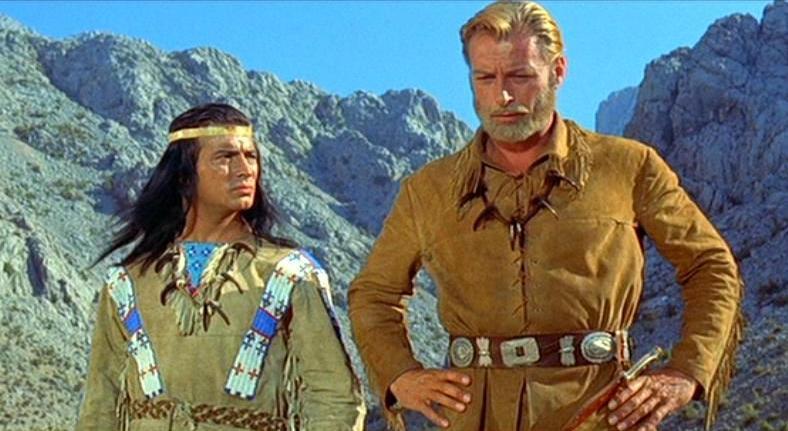
The Winnetou Films - Classic European Westerns

The Foreign Western Blogathon is taking place this weekend over at Moon in Gemini so we are joining in on the celebration of non-Hollywood westerns with this peek at one of Germany's most popular Western film series - the Winnetou Saga. 

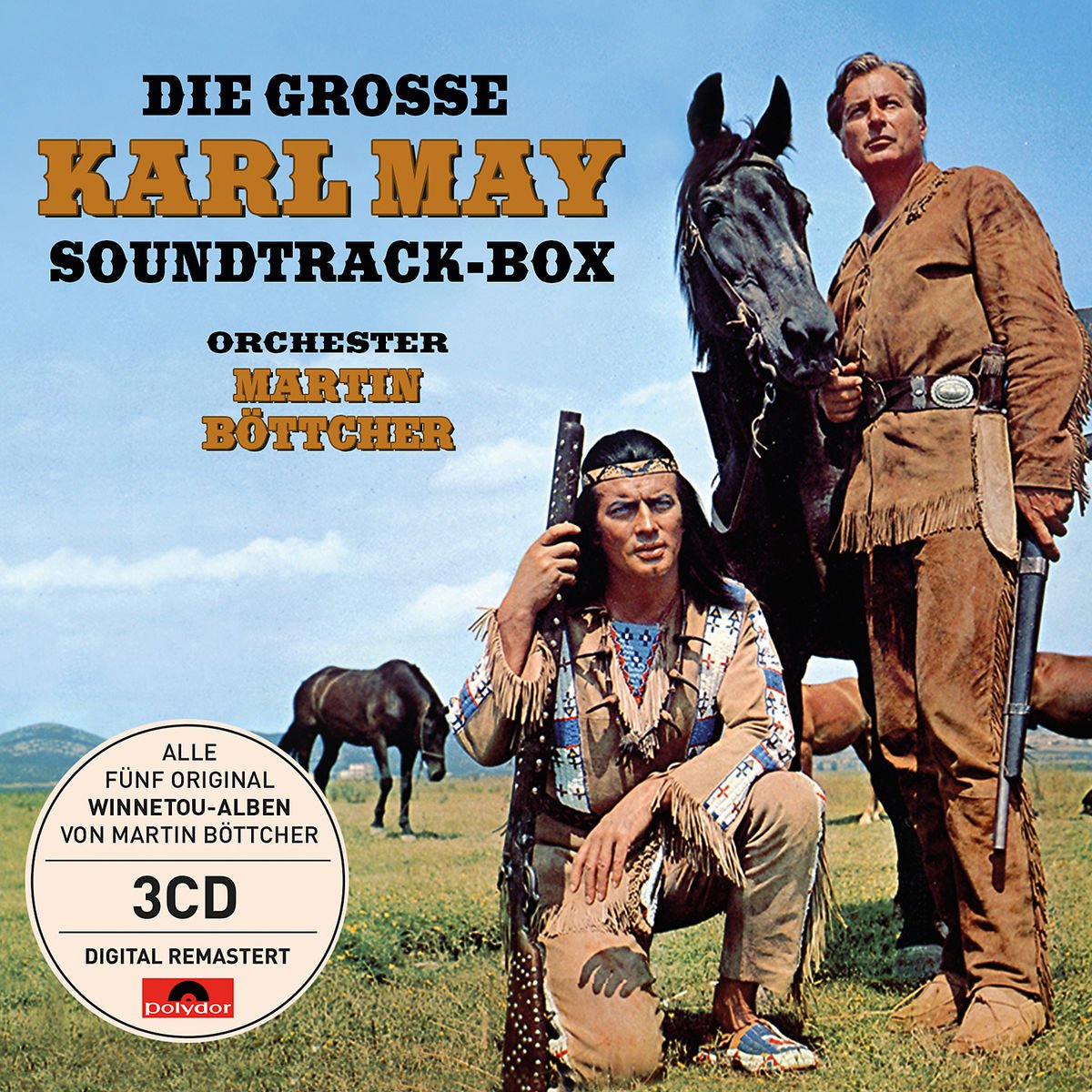
The Winnetou films were based on Karl May's popular western novels dating from the late 1800s. Karl May penned nearly thirty tales of the great Apache warrior Winnetou and his blood-brother Old Shatterhand between 1875 and 1910 and millions of copies were sold throughout Europe. 

Old Firehand ( 1875 ) was the first book in the series and it tells the story of Winnetou, an Apache Indian chief. His father and sister are slain by the white bandit Santer so Winnetou seeks revenge and encounters Old Shatterhand, a scout, during his adventure tracking down this villain. At first, they perceive each other as enemies, but they soon become friends and, eventually, blood brothers. 

As popular as the books were, it was not until 1962 that Winnetou was first brought to the screen in a German-French-Yugoslavian co-production from Rialto Film studios titled Treasure of Silver Lake ( Der Schatz im Silbersee ). French actor Pierre Brice took on the role of the great Apache and American actor Lex Barker portrayed Old Shatterhand with other parts going to Götz George, Herbert Lom, and Karin Dor. The production was directed by Harald Reinl, a popular Heimatfilm director, and shot in color in the beautiful Plitvice Lakes region of Yugoslavia ( standing in the for the American West ). 

Treasure of Silver Lake had a modest budget but became a phenomenal success on its release, ranking as the highest-grossing film in Germany in 1962 and raking in sales throughout France, Italy, Spain, Russia, and Eastern Europe. Its unexpected success launched the production crew into making a sequel within the next few months and in 1963, Winnetou the Warrior aka Apache Gold, was released. This film was even more popular than Treasure of Silver Lake and the cast and crew once again plunged into a follow-up film. 

A total of eleven Winnetou films were released between 1962 and 1968 with each subsequent film boasting a larger budget and cast ( Stewart Granger took over as Old Shatterhand when Lex Barker left the series ). The films were re-released for years to come and, in 1980, a television mini-series was made featuring Winnetou - Mein Freund WinnetouIt was the success of the Winnetou pictures that even inspired Italian director Sergio Leone to create the first of his own series of "spaghetti westerns" - A Fistful of Dollars - in 1964. 

Instead of reviewing each film in the series, we have put together some photos from each of the films to give you a hint at what the Winnetou Saga has to offer. 


The Winnetou Films

  • Treasure of Silver Lake aka Der Schatz im Silbersee ( 1962 )
  • Apache Gold aka Winnetou 1 Teil ( 1963 )
  • Old Shatterhand ( 1964 )
  • Last of the Renegades aka Winnetou 2 Teil ( 1964 )
  • Frontier Hellcat aka Unter Geiern ( 1964 )
  • Rampage at Apache Wells aka Der Olprinz ( 1965 )
  • The Desperado Trail aka Winnetou 3 Teil ( 1965 )
  • Flaming Frontier aka Old Surehand 1 Teil ( 1965 )
  • Winnetou and the Crossbreed aka Winnetou und das Halbblut Apanatschi  ( 1966 )
  • Winnetou and Old Firehand aka Winnetou und sein Freund Old Firehand ( 1966 )
  • The Valley of Death aka Winnetou und Shatterhand im Tal der Toten ( 1968 )


Click here to watch some of the original German trailers, and you must definitely check out Martin Bottcher's fantastic Winnetou theme ( this particular link is for the Old Shatterhand film ). 

Saturday, February 5, 2022

The 7th Voyage of Sinbad ( 1958 )

"From the land beyond beyond, from the world past hope and fear, I bid you Genie now appear!"

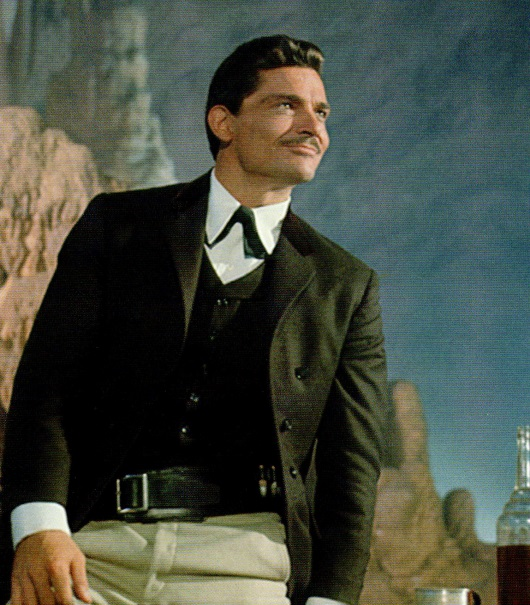
Legendary adventurer Sinbad the Sailor (Kerwin Mathews) lands on the island of Colossa for provisions when he encounters and helps rescue the magician Sokurah (Torin Thatcher) who is fleeing from the giant cyclops on the island. After their boat is overturned in the escape, Sokurah loses the magic lamp he was carrying which is then retrieved by the cyclops. The conniving magician attempts to bribe Sinbad to return to the island for the lamp but to no avail and so he shrinks Princess Parisa (Kathryn Grant), Sinbad's betrothed, to the size of a doll. The potion to restore her to her normal size requires the shell of a bird's egg that can only be found on Colossa. With no choice before him, Sinbad agrees to make the journey back to Colossa where he must fight the cyclops and battle with Sokurah's magic to save the princess. 

The 7th Voyage of Sinbad was producer Charles Schneer's fourth film collaboration with special effects artist Ray Harryhausen and it features some of Harryhausen's finest stop-motion animation, including the first appearance of his famous fighting skeleton figure. This film was also notable for being the first fantasy film that Harryhausen worked on, having previously created creatures for science-fiction films such as 20 Million Miles to Earth (1957) 

In Sinbad, our hero encounters a wide array of beasts that he must contend with. There is the giant man-eating cyclops, the two-headed roc, the fighting skeleton, and the fierce guardian dragon Taro, all of which were created by Harryhausen in the newly-dubbed Dynamation process. 


Charles Schneer pulled out all the stops with The 7th Voyage of Sinbad and it had the largest budget of any of his films to date - $650,000. It took Harryhausen eleven months to create the stop-motion effects alone, in which time the cast was filming the live-action sequences under the capable hand of director Nathan Juran. Location filming took place in sunny Spain, a locale that would be used in most of Schneer's subsequent fantasy films. 

The brilliant composer Bernard Herrmann (a favorite of Alfred Hitchcock) was called in to compose the score for Sinbad and what he created was a marvelous and imaginative composition that conjures up ancient Arabia in its musical strains. He teamed up with Charles Schneer and Ray Harryhausen again to create the music for Mysterious Island (1961) and Jason and the Argonauts (1963).

Kerwin Mathews plays our Arabian hero Captain Sinbad and he does a wonderful job with the part. His loyal companion is Harufa, portrayed by Alfred Brown, and his beloved Princess Parisa is played by pretty Kathryn Grant. Child-actor Richard Eyer also gives a good performance the echo-voiced genie, Barani. Being a loyal albeit reluctant genie, no matter what deed he is asked to perform Barani does his best to accomplish, meekly answering, "I shall try, o master, I shall try."

Also in the cast is the great character actor Torin Thatcher who redefined the word villain with his performance of the devious magician Sokurah. He desperately wants the genie's lamp and would willingly trade all the treasure hoarded by the cyclops' in place of that lamp, knowing full well the power it wields. 
The 7th Voyage of Sinbad would be classified as juvenile fare, but it really does entertain no matter what age you are. From its opening sequence at sea to its finale, it features non-stop action. The film was very popular at the box office earning over $3 million in receipts and inspiring Harryhausen to pursue more fantasy films, but it would not be until 1973 that audiences would see another Sinbad film - The Golden Voyage of Sinbad, which was later followed by the equally entertaining Sinbad and the Eye of the Tiger (1977).