Sunday, February 9, 2014

Editor - Cotton Warburton

For anyone who is a Walt Disney film fan the name "Cotton Warburton" will ring a bell, even if you can't quite recall where you have seen that name. Of course, if you never pay attention to credits ( gasp!! ) then that name will probably not be ringing any bells in your carillon. But for my sister and I, we see "Cotton Warburton" flash upon the tele at least once a week - for that's about how often we watch a Disney film. Starting in 1956, Warburton had a long career with the Walt Disney Studios as a film editor, working on 35 films in that time period. Even though he is best known for his Disney work, Warburton edited a number of films throughout the 1940s for Metro-Goldwyn-Mayer as well. Let's highlight a little of this man's work and his life : 

Irvine Eugene Warburton was born on October 8, 1911 in San Diego, California. During his high school years at San Diego High he excelled in sports and especially enjoyed track and field events, winning several championships for his running speed. When he entered USC he joined the Trojans football team and went on to become an All-American Quaterback in 1933. While Warburton was quarterback, USC had a winning streak that lasted for 27 games, a record which remained unsurpassed until 1980. 

When "Cotton", as he was nicknamed, left college in 1934 he was offered the opportunity to become a pro football player with the Chicago Bears, but declined, instead choosing to enter the film industry. Hoorah for Cotton!  

He first tried his hand at acting, appearing briefly in Big City ( 1937 ) but then decided to venture behind the camera and became a film editor. This was where he found his forte. His first film at MGM studios was a short Laurel and Hardy comedy entitled Air Raid Wardens, released in 1943. 

Comedy was the genre that Warburton began his career with and which he excelled at best. Several more "B"-comedy films followed ( Three Hearts for Julia, Up Goes Maisie, Love Laughs at Andy Hardy ) before Warburton moved up to the "A" films such as Cynthia, Neptune's Daughter, the delightful Two Weeks with Love, and Three Guys Named Mike ( 1951 ). 
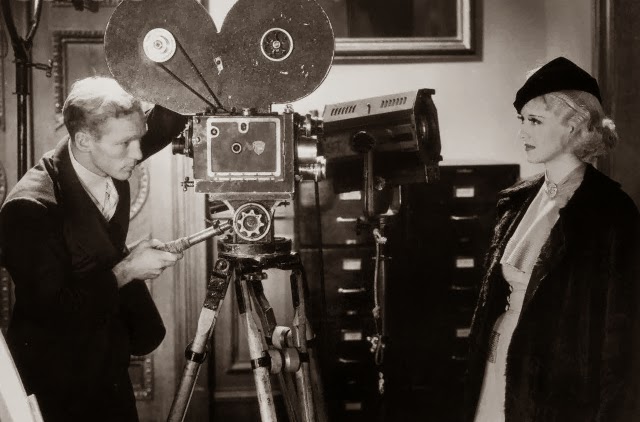

Warburton continued editing for musicals and dramas into the 1950s, working on such films as Sombrero, Above and Beyond, and Skirts Ahoy! before he decided to try his hand at the new medium called television. One of his first forays in editing for the small screen was The Adventures of Ozzie and Harriet. 

The next project Warburton undertook was editing a western film for Walt Disney studios : Westward Ho the Wagons. It was a happy experience for Warburton and it led to him switching studios permanently. From 1957-1959 he edited one of Walt Disney's most popular television series, Zorro, as well as the film The Sign of Zorro...which were mainly episodes from the first season of the show spliced together to create a feature film. 


Some of Warburton's other credits in the late 1950s, early 1960s included The Absent-Minded Professor, Son of Flubber, Moon Pilot, Miracle of the White Stallions and The Misadventures of Merlin Jones ( 1964 )

The same year Warburton completed The Misadventures of Merlin Jones, he also worked on another project for Walt Disney...a much bigger film : Mary Poppins. It was for the creative editing in this supercalifragilisticexpialidocious musical that he was awarded the Academy Award in Best Editing during the 37th annual awards ceremony. The competition that year included Becket, Father Goose, Hush, Hush, Sweet Charlotte and the other musical favorite of the year, My Fair Lady


Warburton had to work closely with the animators for the Jolly Holiday sequence but it was the chimney pot sequence of Mary Poppins which was the creme-de-la-creme of Warburton's editing work. It was crisply edited and, combined with the stellar animated special effects, created a toe-tappin', eye popping entertaining musical feast. 


The entry for Wikipedia describes the job of a film editor as thus : Film editing is often referred to as the "invisible art" because when it is well-practiced, the viewer can become so engaged that he or she is not even aware of the editor's work. On its most fundamental level, film editing is the art, technique, and practice of assembling shots into a coherent sequence. The job of an editor isn’t simply to mechanically put pieces of a film together, cut off film slates or edit dialogue scenes. A film editor must creatively work with the layers of images, story, dialogue, music, pacing, as well as the actors' performances to effectively "re-imagine" and even rewrite the film to craft a cohesive whole. Editors usually play a dynamic role in the making of a film. 

We believe much of what makes a Disney film so entertaining, especially the comedies, can be attributed to Warburton's clever editing and perfect comedic timing. He never lets a shot rest on an actor's expression or on an action sequence for longer than is necessary to capture the humor or the excitement of the moment.

Take a look at this short sequence from That Darn Cat ( 1965 ) and you can see what we mean :

&bp

Some other Disney classics that Cotton Warburton edited during the late 1960s were The Happiest Millionaire, The One and Only Genuine Original Family Band, The Love Bug ( and the Herbie sequels ) as well as the amusing The Computer Wore Tennis Shoes. After Walt Disney's death in 1966, the studio was reeling from not having one leader in charge of production. A committee took over to head up the studio and the following year they decided the best project they could undertake would be to finish a film that Walt had started in the early 1960s as a back-up plan in the event that P.L. Travers would not let Mary Poppins be made - Bedknobs and Broomsticks ( 1971 ). Once again, it was Cotton Warburton who was called upon to edit the finished film. He did a marvelous job on the musical numbers ( especially With a Flair ) and the famous marching armor finale, but alas....times had changed. Bedknobs and Broomsticks suffered from major cuts upon its release and failed to be the box-office smash the studio had hoped for. Warburton's editing went unrecognized at the Academy Awards that year as well. 


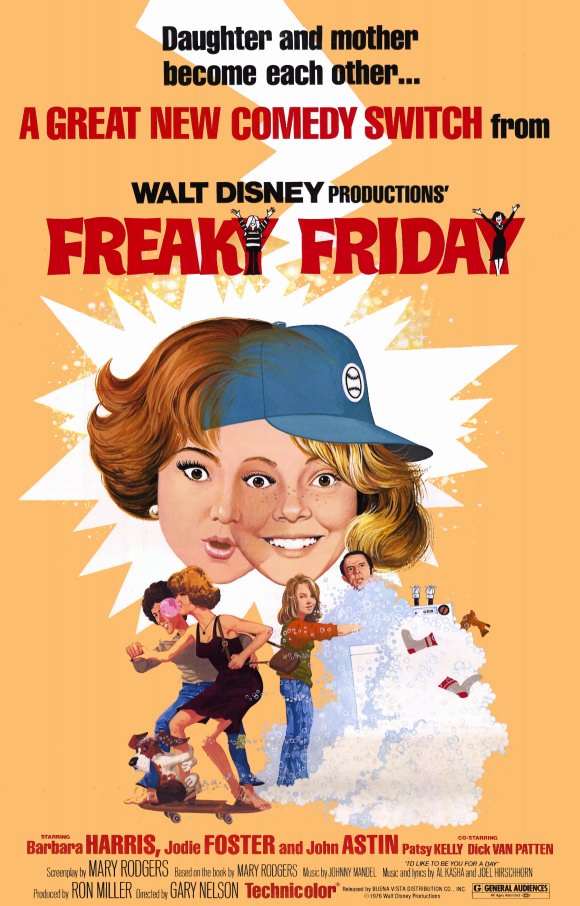
Warburton went on to edit the comedies that the Walt Disney Studios was creating throughout the early 1970s ( The Stongest Man in the World, No Deposit No Return, Freaky Friday ) and continued until his retirement in 1976. His final film was The Cat from Outer Space. Not the altogether best film to end one's career with but a fun flick nonetheless. 

Filmmaking is a collaborative form of art. No one person can make a masterpiece.  Even if a film has a marvelous cast, great cinematography, and a fine script, the whole film can fall apart in the hands of a bad editor. Each person has to be at the top of their game, and just like football...each man has an equally important position. Cotton Warburton played football like a pro and he brought his game-face into every film project he worked on as well, making sure he wasn't the man who would foul up the game with a "tumble". In our book Warburton was a true All-American Editor.

This post is apart of the 31 Days of Oscar ( Feb. 1- March 1 ) blogathon hosted by Paula's Cinema ClubOnce Upon a Screen, and Outspoken and Freckled. Be sure to check out all of the other great entries in this blogathon!

Friday, February 7, 2014

The Impossibly Difficult Name That Movie Game


A mysterious woman hiding in the bushes and a happy hiker.....this is a key scene in a engrossing dramatic film. Can you guess which film? Give it a try and if you want some more picture puzzles, check out our past Impossibly Difficult Name that Movie game posts. Most of them have not been solved yet!

If you are not familiar with the rules to The Impossibly Difficult Name that Movie game or the prize, just click here

Good luck guessing! 

GAME OVER. 

Congratulations on Phyl, who correctly guessed the film "The Unguarded Hour" ( 1936 )!

Sunday, February 2, 2014

Set Design - Suez ( 1938 )

My sister and I began watching Suez ( 1938 ) last week. For those not familiar with the movie it's a so-called "biopic" on the life of French diplomat, Ferdinand de Lesseps, who dreamed of building a canal to connect the Mediterranean and Red Seas. We had never seen the film before, but once the credits began rolling we knew we were in for a good picture judging from the talent involved ( Tyrone Power, Loretta Young, Annabella, Joseph Schildkraut, Leon Ames, Henry Stephenson, Nigel Bruce, Darryl F. Zanuck production, Philip Dunne screenplay, Alan Dwan direction, etc ). 

However, ten minutes into the film, we knew we weren't in for just a good picture, but a great picture! Was it the cinematography that grabbed us? Nope. Was it the elaborate costumes? No, although they were lovely. Was it the quality in acting? No... we didn't expect bad acting. IT WAS THE SETS. 

Within these 10 minutes the audience is shown three different humongous sets - that of a tennis arena, the foyer and the ballroom of Napoleon's palace. Simply breathtaking. And this was only the beginning, for throughout the film there are over 17 different sets. 


Suez begins with a young Ferdinand de Lesseps ( Tyrone Power ) giving his friend the vicomte Rene de Latour ( Joseph Schildkraut ) a whallop during a rousing game of tennis in an elaborate recreation of an authentic indoor tennis arena of the period. The game being played out was a mixture of our modern tennis and racquetball (and one that looks more exciting than both ). Loretta Young, as Countess Eugenie de Montijo, is cheering on her sweetheart Fernidad, when she is espied by the President of France, Louis Napoleon ( played with particular malice by Leon Ames ).


At a state ball which our principal players are invited to, a fortune teller predicts that Eugenie will have a troubled but great life and wear a crown, while de Lesseps will spend his life digging ditches. Prophetic words. Napoleon's displeasure with de Lesseps presence in Paris quickly gets him an assignment to Egypt to assist his father, the French consul. While there he is inspired with the dream of building a canal to bridge the two great seas and makes it his life's ambition despite the personal costs involved. 


Darryl F. Zanuck's historical spectacle, Suez, was given a two million dollar budget when production began in the spring of 1938. Obviously, the sets and special effects ( Suez boasts two excellent disaster sequences - a rock slide and a sand storm ) were given the most prominent chunk of the budget pie, with costumes coming in a close third. 


Fox was currently indulging in a series of historical films which depicted characters loosely based on real people ( The House of Rothchild, Clive of India, Lloyds of London ) and several which included big-budget disaster sequences ( San Francisco, In Old Chicago ). When Suez was released it received unfavorable reviews from the critics because of the liberties it took with historical facts, but regardless of the dissing from the critics the public adored the film and it easily earned back its investment in box-office receipts the very same year. Most of the heirs to Ferdinand de Lesseps approved of the fictionalized depiction of their father, save for one of his sons who sued Zanuck for libel. As Allen Dwan, the director of the film, once said "We gave him a romance with Eugenie, and [he] objected to it, so [he] took us to court. And the court told [him] that this picture did so much honor to France that no matter what [he thought], the case must be discarded, and they threw it out of court".


Ronald Colman was screenwriter Philip Dunne's original choice for the part of de Lesseps, who would have been splendid in this role. Nevertheless, Tyrone Power plays de Lesseps with great conviction even though he couldn't resemble the real de Lesseps with ten pounds of makeup on, and was much too young for the part. Midway through the film a touch of grey on the sides of his head was supposed to give us the impression that he aged 40 years. 

Loretta Young was not pleased at being usurped as the reigning star of the picture by the French beauty, Annabella. She knew her role was mainly a piece of set-dressing and so she decided to be the most glamorously dressed woman in any scene in the film. Working with her costume designer, Royer, her skirts grew to enormous size when filming began. In one particular scene her hoop-skirts were so large that the set builders had to widen the doorways to make room for her entrance. 


The responsibility of designing the sets was shared by two great artisans, Bernard Herzbrun and Rudolph Sternard, both of whom had created beautiful sets in two other Tyrone Power epics - Alexanders Ragtime Band ( 1937 ) and In Old Chicago ( 1937 ). 

Rudolph Sternad ( 1906-1963 ) worked in Hollywood as an art director, and later a production designer, starting in 1936. He designed sets for The Rose of Washington Square, The More the Merrier and High Noon, which began an association with Stanley Kramer that lasted for twenty films including The Caine Mutiny, Judgement at Nurenberg, Inherit the Wind and It's a Mad, Mad, Mad, Mad World. Although he was nominated for three Academy Awards, he never won. 


Bernard Herzbrun ( 1891-1964 ) created sets for over 270 films, which included several Shirley Temple films, Harvey, Creature from the Black Lagoon, and Magnificent Obsession, between 1930-1955. Herzbrun was nominated for an Academy Award for his work on Alexander's Ragtime Band, and it was this recognition which earned him the assignment to create the sets for Suez

Herzbrun helped create designs for 42 films in 1938 alone. It was an extremely busy year for him and yet you can tell what a fastidious man he was by the details in Suez's sets. Alexander's Ragtime Band would end up being the only nomination Herzbrun ever received, for surprisingly, he was snubbed at the Oscars in 1938! 


While Suez was nominated for three Academy Awards ( Best Cinematography, Best Sound Recording, Original Score ) its set design was not included which must have been one of the greatest oversights in the history of art direction. But....to be fair...Suez was up against stiff competition that year. The eleven nominees included The Adventures of Tom Sawyer ( Lyle Wheeler ), Carefree ( Van Nest Polglase ), If I Were King ( Hans Drier ), Marie Antoinette ( Cedric Gibbons ), Herzbrun's own Alexander's Ragtime Band and the winner that year - The Adventures of Robin Hood, featuring sets created by Carl J. Weyl.

Even though Suez was not historically accurate, it remains an entertaining and thrilling spectacle; a film which features fine acting, beautiful music, stellar special effects, and most of all, magnificent sets which transported its audience back to Napoleon's Europe during the mid-1800s.

This post is apart of the 31 Days of Oscar ( Feb. 1- March 1 ) blogathon hosted by Paula's Cinema Club, Once Upon a Screen, and Outspoken and Freckled. Be sure to check out all of the other great entries in this blogathon!

Thursday, January 30, 2014

Metro's Golden Stars


Today's flashback still shot is this darling photo of the box-office contract players of MGM studios. Judy Garland is looking cute and chic, Mickey is being adorable Mickey, and Shirley Temple is beaming with pride..and why not? she's holding the "King"'s hand!

Sunday, January 26, 2014

The South-of-the-Border Musicals

When Carmen Miranda sambaed her way into the Broadway musical revue scene in 1939, her energetic style and eye-rolling fractured musical interpretations of English words, took America by storm. Soon everyone was swaying their hips to the bongo-beating rhythm of the Bando de Lua and taking six easy dance lessons from Madame La Zonga. 

Meanwhile, in Hollywood, 20th Century Fox was getting their top talents together to produce a colorful musical treat to dazzle the moviegoers and please the president. President Roosevelt, that is. He was reaching his hand across the border to encourage trade and wanted all of Latin America to know we were their neighbors. Darryl Zanuck, always a friend of the Washington politicians, was more than glad to help. He saw the Good Neighbor Policy as a good box-office policy and quickly thrust the studio's loveliest leading lady, Alice Faye, into their most entertaining new musical to date, Down Argentine Way. Alas, the lovely lady had an attack of appendicitis and so the glamorous Betty Grable stepped into a role that would ultimately launch her into pin-up stardom. 

Down Argentine Way tells the story of a wealthy girl who has a romance with a dashing and equally wealthy Argentine horse breeder, Don Ameche. The movie dispensed good cheer and tropical radiance to moviegoers nationwide whilst it gaudily painted a Utopian perspective of the elite Argentine horse set in lush Techni-colors. But, more astonishing than the fiery new Latin scenery it showcased, was the introduction of the much publicized Brazilian sensation, Carmen Miranda. Never was there a performer more delightful and engaging to watch. She was mesmerizing. With arms waving, fingers clicking, and her fruit bowl top jiggling, she cheerfully invited the audience to taste life, love, and romance "The South American Way". In one short musical number she did more to promote South America then ten ambassadors could have. A strong supporting cast which included Charlotte Greenwood, Henry Stephenson, and J. Carroll Naish, and Fox's customary vivid tones and razor sharp imagery helped to ignite Down Argentine Way into a zesty box-office bombshell. 


In 1941, Betty Grable took a trip to the sunshine state in Moon Over Miami and then paused for some dramatic roles in black and white films, which gave Alice Faye plenty of time to recuperate and then have a moonlit romance with Don Ameche south of the border herself - this time in Rio. In That Night in Rio, Don Ameche takes on the duel roles of an aristocratic baron and a debonair entertainer, with Faye playing the baron's confused wife. The story was a reworking of Folies Bergere ( 1935 ) starring Maurice Chevalier. Even though the risque quality of the original was replaced by Ameche's more humorous performance, the film was visually appealing, featured a supporting cast including S.Z. Sakall, J. Carroll Naish, Frank Puglia and Leonid Kinskey and spotlighted some splendid Mack Gordon/Harry Warren numbers, including two of Miranda's most imitated songs, "Chica Chica Boom Chic" and "I'yi, Yi, Yi, I Like You Very Much". 


Having a look-a-like husband must have been too much stress for Faye, for that very same year she was off with the tall, dark, and handsome John Payne for a Weekend in Havana. This light-hearted comedy/musical cast Payne as the son of a ship company's owner who travels to Cuba to handle a case involving one of the company's ships which has gone aground. One passenger ( Faye ) refuses to sign a waiver unless she gets reimbursed for her vacation...now. And with a guarantee that she'll have a good time. Payne undertakes to personally show her a "good time" and ends up falling for her charms instead. 


Weekend in Havana was originally written as a Henry Fonda vehicle, but when he declined the part it was offered to Don Ameche, who also refused. Step in Payne! The movie has a quick pace, beautiful sets, lovely costumes ( by Gwen Wakeling ) and a great supporting cast including George Barbier, Cobina Wright, Leonid Kinsky and Billy Gilbert. Cesar Romero, the debonair dancer, was featured in an entertaining supporting role as Carmen Miranda's wayward beau who had a fancy for the pretty women and high stakes gambling tables. The role suited Romero's personality and gave him a chance to showoff his fancy footwork in several numbers.

In 1942, Fred Astaire danced his way across the border to Argentina with Rita Hayworth, who never looked lovelier than in You Were Never LovelierThis monochrome musical told the story of the Acunas, a rich family who must marry their daughters off in accordance with famiyl tradition...eldest first, down to the youngest. As second sibling, Rita feels the pressure from her younger sisters but has not yet met a man that she liked.....until an American dancer ( Astaire ) stumbles into her life. 

Shortly before the United States' entry into WWII, the US Department of State commissioned a Disney goodwill tour of South America in the hopes that Walt Disney would produce a film based on the material he gathered on the journey...which he did. Nelson Rockefeller guided Walt Disney and a staff of animators, technicians and composers on a several week tour of the samba land. They came back with rumba on their brains, tropical colors in their washes, and a heap of new material to work with, resulting in a series of short cartoons inspired by the colorful nations. The government wasn't all too pleased with this however, since each cartoon would only be valid in the country at head, so Walt Disney had his four shorts strung together and filled with some of the 16mm color footage taken during the trip. What then resulted was a cartoon too long to be a short, and too short to be a feature. Nevertheless, upon its release ( in 1942 ), Saludos Amigos was a tremendous success and unlike the previous Fox musicals, actually showed its audience footage of South America. 


In the first of the four cartoon segments we find Donald Duck, a typical tourist, exploring the surrounding mountainside region of Lake Titicaca with a stubborn llama. We are given a brief aerial tour of the route from Santiago, Chile to Mendoza through the eyes of Pedro, the little airplane, and then Goofy learns the way of the gauchos in the Pampas region. A visit to South America is not complete without seeing the Carnival in Rio and so, in the final segment, Joe Carioca gives Donald a watercolor tour of the continent. 

Saludos Amigos allowed the Disney animators to dabble with new animation "gags" and its commercial success encouraged Disney to produce a similar South American cartoon - The Three Caballeros, released in 1945. This kaleidoscopic film centered around Donald Duck's birthday and the special box he received as a present from his South American pal, Joe Carioca. Inside he finds a reel of film bearing the titles Aves Raras ( rare birds ) which introduces us to a Pablo the penguin cartoon. An old Uruguayan gaucho then tells us the story of another "strange bird" - the flying donkey : the playful Burrito and his young friend Gauchito. Donald opens his last gifts which include a wild rooster and Joe Carioca himself, who then take Donald on a whirlwind flying carpet tour over the beaches of Acapulco. 


Metro-Goldwyn-Mayer missed the Latin frenzy of the early 1940s but decided it was better late than never to join the bandwagon and in 1945 they released Holiday in Mexico starring their newest singing sensation Jane Powell.  In this frothy musical, Jane Powell plays mother to her widowed father ( Walter Pidgeon ) and gets into a tither when she finds out he is about to remarry to an opera star ( Ilona Massey ). A puppy love romance with another MGM juvenile star, Roddy McDowall, drew in the younger crowds.  


Jane Powell was Louis B. Mayer's latest find and Holiday in Mexico was the perfect vehicle to showcase her beautiful voice and delightful personality. Alas, this role would also determine the character for all her future projects with the studio - that of a sprightly ingenue determined to take matters in her own hands with the help of a few benevolent friends - in this case, pianist Jose Iturbi and bandleader Xavier Cugat. 

Iturbi was a famed pianist who signed a contract with Metro in 1943 and, even though he was Spanish, often portrayed Latin Americans. "Turbolent Iturbi", as he had come to be nicknamed, had refused an earlier offer to perform on film but later excepted MGM's request since they allowed him more creative freedom. He also had an easy job of acting, since he portrayed himself! Some of his best films included Anchors Aweigh, Two Girls and a Sailor, That Midnight Kiss, and Three Daring Daughters. 

Xavier Cugat was another talented musician who reached his peak in popularity during the early and mid-1940s when he appeared in a number of MGM musicals with his orchestra and his pet chihuahua, whom he often smuggled under his dinner jacket. Prior to the South American film fever, Cugat appeared in several short films in the late 1920s and 30s : A Spanish Ensemble ( 1928 ), Mexicana ( 1929 ), and Let's Go Latin ( 1937 ). Like Carmen Miranda, he had a magnifico personality that lit up the screen when he appeared and his infectious rhythms always gave the films a boost.  

The studio kept Jane Powell busy in three pictures in 1948 - Three Daring Daughters, A Date with Judy ( also featuring Miranda and Cugat ) and Luxury Liner - before sending her south-of-the-border once again in Nancy Goes to Rio, a tepid - albeit colorful - remake of a Deanna Durbin classic ( It's a Date ). Aside from some cardboard backdrops, very little of Rio is seen while the cameras instead focus their close-up lens on its two leading ladies ( Powell and Ann Sothern ) and the tutti-frutti Carmen Miranda, this time appearing in a refreshing change of role - that of Barry Sullivan's secretary. 


By 1945 Bing Crosby and the Andrews Sisters were singing "South America Take it Away!" , pleading for them to "take back your samba - ay! - your rumba - ay! - and your conga - ay, yi, yi!" and complaining of aching spines and creaky sacroiliacs. Audiences still adored Latin American themed films in spite of the fun words, but by the late 1940s the movie studios had gone Continental and wanted to showcase the glamorous post-war Paris and London scene. 

One exception however, was Carnival in Costa Rica ( 1947 ), a now forgotten musical starring crooner Dick Haymes, Vera-Ellen, Cesar Romero and Celeste Holm. It told the story of two pairs of Costa Rican lovebirds both trying to thwart their arranged marriages with each other. Anne Revere, J. Carroll Naish, and Pedro de Cordorba rounded out a great cast. Many of the location shots used in Carnival in Costa Rica were filmed just prior to the civil war of 1948, and many Costa Ricans consider this film to be of historical value because of that. 

One of the last forays MGM would take south of the Tropic of Cancer would be Latin Lovers, released in 1953, a vibrantly colored musical featuring the beautiful Lana Turner and a true red-blooded Mexican, Ricardo Montalban. Fernando Lamas, the Beunos Aires born playboy, was originally slated to play Montalban's role, but recently he had broke off an affair with Lana Turner and she insisted he be replaced. They be Latin lovers no more. 

Latin Lovers told the story of the hazards of being a wealthy woman. Nora Taylor, a millionairess, is afraid that every man she meets is just after her money, until she falls in love with Roberto, a man she thinks is a poor farmer...but in fact has a crop of healthy cabbage of his own sitting in the bank. The film featured plenty of samba, romance, lush settings and even a polo playing sequence. 


The south-of-the-border musicals were a product of their time and it is unlikely that a Latin frenzy will ignite in Hollywood anytime again soon, at least not one resulting in such colorful and entertaining musicals. These were stress-free, light-hearted films that captured the essence of South America - the gaiety, the charm, the romance and the hip-shaking splendor of the continent. If you cannot afford a trip to South America yourself, sit back, grab some bananas and a bowl of fruit and enjoy one of these south-of-the-border musicals. Ay yi! they will surely not disappoint you!  

Thursday, January 23, 2014

Nugget Reviews - 8


Son of Ali Baba ( 1951 ) Elctr.


A runaway slave gal gets Kasha, the son of Ali Baba, in hot soup with the wicked caliph when it turns out she is in fact a princess who was supposed to be given as a gift to the visiting prince. Or was it a king? Tony Curtis, Piper Laurie, Hugh O'Brien, Susan Cabot, Victor Jory. Universal Studios. Directed by Kurt Neumann. 

Piper Laurie and newcomer Tony Curtis were such a success in their first film together, "The Prince Who Was a Thief" that the studio reteamed them in this adventure flick. Son of Ali Baba has a rather lackluster plot ( with leading characters named Kashma and Kiki, how can it not be? ) but does feature some swanky Arabian garb and colorful Technicolor sequences. You'd think with all the possibilities of Arabian adventures they could come up with something more ingenious then the same runaway slave plot....

                _________________________________________________________


Tycoon ( 1947 ) 14k 


An engineer, working for a rich tycoon, marries his daughter against his wishes and then must build a bridge the tycoon ordered completed in spite of the setbacks he puts in his way. John Wayne, Laraine Day, Cedric Hardwicke, Judith Anderson, James Gleason. RKO Pictures. Directed by Richard Wallace. 

Even though this film boasts a great cast, it features too much dust and sweat to be enjoyable and the two lovebirds get into a quarrel midway through which bursts the romance aspect of the picture. But....who can resist the Duke? Especially when he practically builds this bridge single-handedly and pushes every setback out of the way...including the birds. "Get outta the way pidgeons!"

                    ________________________________________________________


The Moonspinners ( 1964 ) 14k 


A girl and her aunt travel to Greece where they meet a mysterious young man who disappears altogether one day. The temperamental hotel owner hushes up his absence which only helps to intrigue the girl even more into his whereabouts, and just what mystery does the Bay of Dolphin hold? Hayley Mills, Peter McEnery, Joan Greenwood, Eli Wallach. Walt Disney Productions. Directed by James Neilson.

Before Hayley Mills got herself a nice bob hairdo and played detective chasing her cat, she took a vacation to Greece with her aunt and got herself involved in intrigue....and muuuurder. At least, attempted murder. The Moonspinners tends to get a bad wrap from critics, even amongst Disney fans, but the film is really quite entertaining and holds up well under multiple viewings ( replay value is always a sure sign of a good film ). Location filming and engaging characters make this is a winner in our book. 

                    _______________________________________________________


Come to the Stable ( 1949 ) 18k


Two nuns come to Bethlehem to build a children's hospital with no funds, no land and no workers...but plenty of faith! Loretta Young, Celeste Holm, Hugh Marlowe, Elsa Lanchester. 20th Century Fox. Directed by Henry Koster.

"Come to the Stable" -once a big motion picture - has practically fallen into obscurity. For a long time it was not available on DVD and cable channels neglected to play it, but nevertheless fans have always remembered it fondly. And we're among the fans. A simple but lovely plot, fine acting from all the principal players, humorous supporting scenes and great settings make this entertaining to watch again and again. Celeste Holm steals every scene she is in with her French nun performance and received a nomination for Best Supporting Actress but lost that year to Mercedes McCambridge ( All the Kings Men ). 

                   _______________________________________________________


Charlie Chan in Panama ( 1940 ) 14k 


Charlie Chan must  investigate a group of travelers, one of whom is suspected of plotting to sabotage the fleet passing through the Panama canal within the next 24 hours. Sidney Toler, Jean Rogers, Lionel Atwill, Mary Nash, Victor Sen Yung.20th Century Fox. Directed by Norman Foster. 

This is one of Charlie's best escapades. The film has a nice sprightly pace to it, a flock of shady characters, nice locales and a good twist ending. Charlie spills some great chanisms too, like "Best to slip with foot rather than tongue". Keep an eye out for regulars Lionel Atwill and Kane Richmond as well as serial star Jean Rogers. 

Sunday, January 19, 2014

Costume Designer - Travis Banton

For our very first entry in the new Behind the Screen: The Hidden Masters of the Golden Age of Filmmaking series we are going to feature Travis Banton, one of the most recognized costume designers in Hollywood during the 1930s. During his tenure at Paramount, Twentieth Century Fox and Universal studios he created over 250 beautiful gowns for stars such as Marlene Dietrich, Claudette Colbert, Kay Francis, Mae West and Carole Lombard. 

Travis Banton was born in Waco, Texas on August 18, 1894. At the age of two his family moved to New York City where, being surrounded by the fashionable society women of the Big Apple, he formed an early appreciation for beautiful fabric. This fascination led him to study fashion design and art at Columbia University and the Art Students League. 

In 1915, while still a fledgling student, he was given the opportunity to design Norma Talmadge's wardrobe for Poppy, an upcoming film production about to be shot in New York City. He created a beautiful beige tailored suit for Ms. Talmadge with a hat bearing green feathers to showcase her daringly new bobbed hairdo. He was a nervous, awkward youngster but, in spite of a few mistakes in his drawings, Norma Talmadge accepted each sketch with enthusiasm and praise. 


The gowns of Sinners in the Sun ( 1932 )

When World War I broke out, Banton shipped overseas to help fight and his costume-sketching was put on hold temporarily, but upon his return he plunged once again into the never-ending battle of beauteous fashion. His next assignment was to create the wardrobe for one of Hollywood's up and coming stars, Alice Joyce. His pleasant experience with Ms. Talmadge and Ms. Joyce gave him the school-boy illusion that all female movie stars were gracious, charming and patient. As he grew in experience, he later learned otherwise. 


Esther Ralston sharing sketches Banton created for her '27 film, "Fashions for Women"

In the early 1920s Banton was working for famous Madame Frances of New York fashion boutique. One of his spring creations, a bridal gown of bouffant white net, had received wide comment and publicity. It received even more publicity a few weeks later when Mary Pickford chose the gown for her celebrated marriage to Douglas Fairbanks. This only helped to make Banton more famous in the world of fashion and a short time later he opened his own dressmaking salon. Creating designs for the Ziegfeld Follies was only one of the assignments his salon had. In 1924, a phone call from Paramount Studios brought Banton out to Hollywood to sign a contract. 


Dietrich's beautiful fur gown in Shanghai Express ( 1932 )

Once in tinseltown, Banton designed costumes for Pola Negri, Florence Vidor and even the "It" girl herself, Clara Bow, in films such as The Dressmaker from Paris, The Grand Duchess and the Waiter, and Wings. When Paramount's chief designer Howard Greer left the studio in 1927 Banton was promoted to the position and was responsible for dressing the studio's most illustrious stars. 


Mae West in Belle of the Nineties

Throughout the 1930s and 1940s he created an extensive amount of beautiful fashions, notably Mae West's stunning blue velvet gown in Belle of the Nineties ( 1934 ), Claudette Colbert's scantily clad gold and black piece in Cleopatra ( 1934 ), and Loretta Young's lovely satin queen's robe with pearl-studded crown in The Crusades ( 1935 ). 


A stunning fringed evening gown and the famous Cleopatra head mask 

During the 1930s Banton's "look" veered towards dressing the female stars in suits, dress pants and other masculine wear. Carole Lombard and Marlene Dietrich helped to make this style especially appealing in films such as Shanghai Express, The Scarlett Empress, and No Man of her Own.


Dietrich in The Scarlet Empress and a sketch for her "Morocco" suit

Fifteen years of the pressure of creating fashions on schedule while feuding with the stars and the executives over costume details were beginning to take their toll on Banton and he turned to drinking. In the late 1930s he was becoming increasingly erratic in behavior, often difficult and not very reliable due to his alcoholism and, at the instigation of his subordinate Edith Head, was forced to leave Paramount Pictures in 1938. After this, he joined Howard Greer's label, Greer Inc. and also designed freelanced for Columbia Pictures and Twentieth Century Fox, where he worked for two years. 


Rita Hayworth modeling Banton's Cover Girl gown

While at Fox, he fashioned the magnificent matador outfits for Tyrone Power and the lovely gowns for Linda Darnell in The Mark of Zorro ( 1940 ) and Blood and Sand ( 1941 ), and created the colorful south-of-the-border inspired dresses for Alice Faye and Betty Grable in the musicals Down Argentine Way ( 1940 ), That Night in Rio ( 1941 ), and Moon Over Miami ( 1941 ). 


Grable's golden gown in Down Argentine Way

Most memorable of all were the fruit-topped concoctions he designed for Carmen Miranda in these films. With beads and fruit galore atop her head she jingled and jangled in tune with the songs that she sang.


The Tutti-Frutti Lady

From 1945-1948 Travis Banton worked at Universal Pictures where he designed the gowns used in films such as I'll Be Yours ( 1947 ), Morning Becomes Electra ( 1947 ),  The Paradine Case ( 1947 ) and Letter from an Unknown Woman ( 1948 ).  


One of his most striking designs though was not a gown at all - it was Kitty March's black negligee in Scarlet Street ( 1945 ). When Fritz Lang and Joan Bennett teamed up again for another film noir, Secret Beyond the Door, Travis Banton was once again called in to design wardrobe, which this time included more contemporary wear, such as the black and white dress suit she wears when she pleads with Michael Redgrave. 

This was one of the last films that Banton worked on before he retired from the hustle-bustle of cinema costume designing and focused all his attention on his fashion salon he set up with the Russian couturier Marusia Sassi. He returned to Hollywood only once, in 1956, to dress the always stylish Dinah Shore for an episode on her Chevy Show. 

Travis Banton passed away two years later, in 1958 at the age of 63, from throat cancer. His last creations were the sumptuous gowns that Rosalind Russell bedecked herself in, in "Auntie Mame" on Broadway in 1956. 

Today, many of Banton's creations can be seen in museums across the nation where they look just as modern and chic as the day he created them. Timeless fashion, now that is the mark of a truly great fashion designer. 

This post is a part of our ongoing series Behind the Screen : The Hidden Masters of the Golden Age of Filmmaking. 


Travis Banton ( 1894-1958 )