Showing posts with label Tyrone Power. Show all posts

Friday, March 15, 2024

The Luck of the Irish Airing Tomorrow

St. Patrick's Day, that most honored of Irish holidays, be comin' o'er the week-end and if ye be feeling for a bit o' whimsy then look no further than The Luck of the Irish, a gem of a film starring himself, that handsome lad Tyrone Power. 

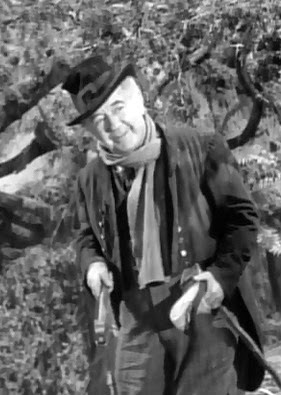
Tyrone Power plays a freelance writer named Steven Fitzgerald who befriends a leprechaun ( Cecil Kellaway ) while he is stranded in a village in Ireland. He manages to capture him and demand his gold but, not wanting to take the old man's life savings, returns the pot to him. The leprechaun is so grateful he follows Fitzgerald back to New York City and helps him realize his heart's desire.

The Movies! channel will be airing The Luck of the Irish (1948) on Saturday at 11am EST and again on Friday, March 22nd, at 7:20am EST. 

To read our review of the film, click here. To read Movies! TV Network's article on a behind-the-scenes look at the film click here. 

Thursday, December 3, 2015

Winter Sports in Films of the 1930s and 1940s

Whether you were born in a warm climate or the heart of the Arctic itself, the appeal of winter sports is undeniable. The crisp cold air, the thrill of the high-speeds, the beauty of the surrounding scenery capped off with the enjoyment of warming up with a cup of hot cocoa while sitting beside a roaring fire is one of the best pleasures to be had in winter. And if you are lucky enough to have a roasted sweet-potato near by, grab it. 

However, if there are palm trees blowing gently in the breeze outside your window, or so much snow has fallen that you can't shovel your way out of the house, then the next best thing to participating in winter sports is watching others romp in the snow. 


So grab a cola, find some pretty brunettes ( or a Jerry Colonna ) to sit beside and enjoy some good old-fashioned winter fun courtesy of Hollywood's dream factory. 

SKATING

All of the popular stars of the 1930s and 1940s strapped on a pair of skates and hit the ice ( sometimes the hard way ) for at least one film. Sonja Henie, the most famous ice skater of the 1930s starred in ten productions for 20th Century Fox during her reign as the studio's ice queen. You can see her twirl in dizzying circles in One in a Million ( 1936 ), Happy Landing ( 1938 ), Second Fiddle ( 1939 ) and Wintertime ( 1943 ) where she starred opposite such glamour boys as Don Ameche and Cesar Romero.

Don't go expecting any triple-salchows however. While Sonja was the top in her field in her day ( she won three Olympic gold medals ), ten-year old skaters can outdo her moves these days. The Norwegian gal with the dimples had charm and that made up for a large part of her star appeal. Incidentally, the "ice" that she skated on was primarily frozen milk. On black and white film, water did not give off the milky white texture that the studios wanted so they mixed some cow's milk into it to give it a shine. 

The Ice Follies, which began in 1936 and toured around the world, were all the rage in the 1930s and, of course, when something is the rage Hollywood is bound to make a film about it. Joan Crawford was pushed onto the ice along with James Stewart and Lew Ayres ( playing a drunk again ) in The Ice Follies of 1939. The movie has its entertaining moments ( including a sparkling Technicolor finale with Roy and Eddie Shipstad, the founders of the Ice Follies, doing some of the skating routines ) but it crashed at the box office. 


That didn't stop Republic from releasing another Follies-themed film just two years later : Ice-Capades starring James Ellison. He looked good on ice, and so did Clark Gable and Jean Harlow when they attempted to glide without falling in Wife Vs. Secretary ( 1936 ). 

Bette Davis tried skating, too, but she fell on her rump in The Man Who Came to Dinner ( 1942 ). If you want to learn how to showoff on skates like Joseph Cotten did in The Farmer's Daughter ( 1946 ), then it's best to watch a tutorial first. Mickey Mouse gives viewers some points in On Ice ( 1935 ). 


Of course, having a partner to support you helps - just look at how much fun Loretta Young had with Cary Grant in The Bishop's Wife ( 1947 ). 


SKIING 

If you don't care for the graceful art of figure skating then how about experiencing the thrill of cold air rushing against your face as you head down the slopes on a pair of skis? We're cross-country ski enthusiasts ourselves, so instead of risking our necks on the mountainside we prefer to watch our favorite stars hit the slopes...by standing in front of a backdrop screen. 


One of our all-time favorite actors - Melvyn Douglas - could often be found playing in the artificial snow. Claudette Colbert met him on the slopes at St. Moritz in I Met Him in Paris ( 1937 ) and Mary Astor stumbled down the hill with him in And So They Were Married ( 1936 ). 

Greta Garbo also found him in the snowbanks in Idaho in Two-Faced Woman ( 1941 ). Barbara Stanwyck went to Lake Arrowhead to look for Melvyn but all she found was George Brent in My Reputation ( 1946 ). It cost her her reputation too. 

That's what happens when you don't know how to ski, you end up bumping into fellows you didn't plan on meeting. If that is a common problem then it's best to learn the fundamentals of skiing. Goofy demonstrates proper technique in The Art of Skiing ( 1941 ) with comical results. It makes you want to consider buying life insurance. 

The Alps were the ideal place and definitely the "in" place to ski during the 1930s. European socialites would go sloping on the mountains for amusement just as American society went slumming in the cities. 

Even members of royalty like Prince Rudolph ( Tyrone Power ) went to Switzerland to enjoy the fresh mountain air and the excitement of downhill skiing. It was his only form of relaxation, poor boy. Not only did he manage to get a few days of skiing into his busy schedule but he met another winter sports enthusiast ( Sonja Henie ) whom he fell in love with in Thin Ice ( 1937 ). Robert Young found romance with Florence Eldridge on the Alpine slopes as well in Paradise for Three ( 1938 ).

Most Americans could not afford to travel to the Alps, so they opted to head to the most famous ski resort of the West - Sun Valley, Idaho. 

Not only was the snow perfect for skiing but you could find Sonja Henie there too ( she certainly got around ). In Sun Valley Serenade ( 1941 ) she played a Norwegian refugee showing off her skiing and skating talent to the band manager at a Sun Valley resort - who just happened to be played by John Payne, another actor who looked great in cold-climate pictures. 

Bud Abbott and Lou Costello caught ski-fever when they headed out to Sun Valley for Hit the Ice ( 1943 ). They tried dog-sledding but found out that rolling like a snowball gets you down a hill faster! 

American society enjoyed the fun to be had in Sun Valley too. Gene Tierney played an heiress who meets a swell looking guy ( Tyrone Power ) at a resort in That Wonderful Urge ( 1948 ). Alright, he turned out to be a reporter, but heiresses can't expect everything to be perfect. 

Well, there you have it folks....these are just a few film suggestions to get you off of your couch and out of the house where you can enjoy the brisk cool air and the pleasure to be found in winter sports. 

See you on the slopes!
This post is our contribution to the Winter Sports Blogathon being hosted by Le Mot du Cinephiliaque . Be sure to head on over there to read more posts on films that featured your favorite winter sports.


Tuesday, March 17, 2015

The Luck of the Irish ( 1948 )

"You don't always wait for an invitation to follow the brave music of a distant drum"

It's not often when a man is clever enough and quick enough to capture a leprechaun. While travelling in Ireland, Steven Fitzgerald (Tyrone Power) does just that and then, having done so, lets the leprechaun free...without claiming his pot of gold! 

'Tis a rare man indeed who would do such a thing, and the leprechaun knows it. He feels a debt of gratitude to this American and, leaving the comfort of his homeland and his secluded waterfall, he follows him into the "cold, inhospitable city" of New York to serve him and to help him realize his heart's desire. 

"You are a proud, free man, and it is for that reason that I am proud to serve you"

Fitzgerald is a news reporter who believes in writing the truth to the public, but the lure of acquiring wealth by working for power-hungry publisher-turned-politician Augur (Lee J. Cobb) proves to be irresistible, even if it costs him his integrity as a free-thinking man. Egging him on in his decision to accept this position is Augur's daughter (Jayne Meadows), a woman who wants to be by Fitzgerald's side as he climbs the ladder of success, no matter what it takes. 


The Luck of the Irish is a dramatic fantasy filled with many whimsical moments. It does not have the sugary sweetness of a children's fable, making it all the more satisfying. Instead it has a lasting charm which makes it ideal for annual viewing on St. Patrick's Day, or any time of the year for that matter. 

The first half of the film parallels Michael Powell's I Know Where I'm Going (1945) in that we see a city dweller stranded in a small village, anxious to escape on the next boat available and frustrated with the local people's slow and inefficient ways. It is not until the opportunity to escape becomes available that these characters begin to have doubts on whether they truly want to leave. In both films, it is the romance they find in these villages which make the characters wish to remain, not the lure of the tranquil community. 


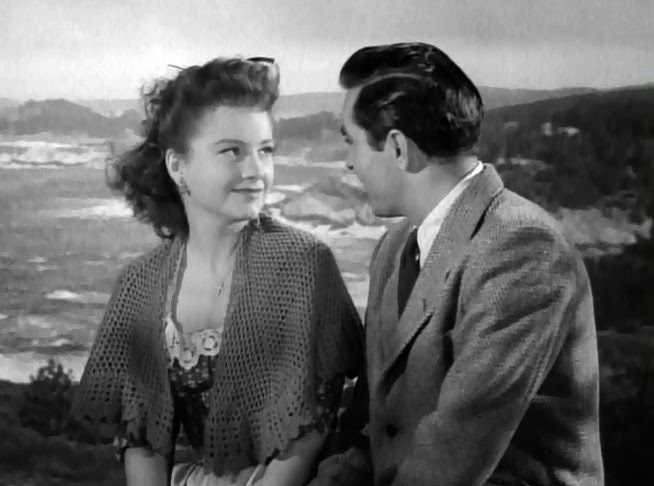
In The Luck of the Irish, Fitzgerald meets and falls in love with Nora (Anne Baxter), a quiet innkeeper's daughter, and upon his return to New York he sees her once again, by chance, on a subway. He has a notion that the leprechaun may have had a hand in bringing her to New York but he struggles to relinquish his dream of wealth in place of returning to Ireland with Nora.  

"You brought Nora here, didn't you?" 
"No, you brought her yourself...in your mind, long ago."


Steven Fitzgerald is an ageless character - working men are forever torn between following the dreams of their heart or selling out their ideals (and sometimes their morals) to other men for the sake of financial stability. He is a cynical man and does not easily get himself beguiled into believing in leprechauns or other folklore but, in this situation, his belief becomes his blessing. 


The Luck of the Irish is not your traditional fairy-tale story and the irascible leprechaun with his proverbial pot of gold is not portrayed as a cultural image but instead becomes the incarnation of Fitzgerald's conscious and a vehicle of divine influence in changing his circumstances. The moral of film is summed up in its tagline "Choosing good is the real pot of gold". 

"I offered you gold. 'Tis not my fault that you prefer a pebble"

The Luck of the Irish premiered on September 14, 1948, and for its original showing featured a wee bit o' something green - all of the Ireland sequences were tinted the color of the Irish landscape itself. Indeed, the opening sequences of Ireland are so pleasant that it is a shame when, midway through the film, its focus shifts to New York City. 


A roster of 20th Century Fox's regular talents gathered together to make this a stand-out picture: director Henry Koster, who was an old hand at filming humorous dramas; Lyle Wheeler, Fox's resident art director extraordinaire; Philip Dunne, who hammered out on his magical typewriter this whale of a grand adaptation (from the novel by Guy and Constance Jones); and producer Fred Kohler, who had footed the bill one year prior for that other excellent romantic-fantasy The Ghost and Mrs. Muir. The strains of traditional Irish and English melodies can be heard in the background thanks to the musical wizardry of Cyril Mockridge.


Cecil Kellaway steals the film with his performance of "Horace", the leprechaun turned manservant, and he nails the Irish accent and mannerisms of one of the little people. He was nominated for an Academy Award for Best Supporting Actor for his portrayal. James Todd also co-starred as Fitzgerald's wise-cracking pal Bill Clark, and J.M. Kerrigan and Phil Brown round out the stellar cast. 

Anne Baxter is particularly fetching and these years were certainly the peak of her career. The brightness of Tyrone Power's star had been waning a few years prior to The Luck of the Irish and he must have sensed that his days of being the studio's No. 1 glamour boy were nearly over, even though he was as handsome as ever. Jayne Meadows related a story about this in the special "Jayne Meadows Remembers" included on the DVD: 

"[in-between takes during the banquet scene] he said, 'You see that tall man over there, the one with the grey hair? He was a star once. A very big star. Sad...now he is an extra'. And I said 'Isn't it wonderful that he's still working' because, you know, the man looked like he needed something to hold him up. When I later found out that Ty started as an extra, I thought 'isn't it interesting that his first reaction was to the old man who was a star and is now an extra.' " 

Perhaps Tyrone Power felt that eventually this would be his fate as well.


This post is our contribution to The Luck of the Irish Blog o'thon, being hosted by yours truly. To check out all of the grand posts about Irish actors and films, click here

Thursday, March 13, 2014

Irish Nuggets


The Luck of the Irish ( 1948 ) 18k


During a visit to Ireland, an American reporter finds and catches a leprechaun who sticks with him and helps him decide whether to remain or  return to New York to marry his fiancee and achieve success in politics. Tyrone Power, Anne Baxter, Cecil Kellaway, Jayne Meadows. 20th Century Fox. Directed by Henry Koster. 

The Luck of the Irish never achieved classic cult status on St. Patrick's Day like The Quiet Man or Darby O'Gill and yet it should have for it's a delightful film. Cecil Kellaway, adorable in any role he plays, is especially suited to the leprechaun part. The DVD release includes two versions, one entirely in black and white, and another in the original release format of black and white and green tint. 'Tis a pot of gold for sure!

                    __________________________________________________________


Top O' The Morning ( 1949 ) 14k


A singing insurance investigator comes to Ireland to recover the stolen Blarney Stone and romance the local policeman's daughter. Bing Crosby, Barry Fitzgerald, Ann Blyth, Hume Crownyn. Paramount Pictures. Directed by David Miller. 

Alright, we cheated a bit with including this film among the nuggets for we haven't seen it yet. It just sounds like such a good film we would really doubt if it turns out to be a dud. With such a great cast, how can it fail to be anything but bragha.

                    __________________________________________________________


The Quiet Man ( 1952 ) 24k


A former boxer comes to Ireland to purchase his mother's cottage and make a new life for himself, but first he must square himself with his wife, who believes him to be a coward for not putting up a fight for her dowry. John Wayne, Maureen O'Hara, Barry Fitzgerald, Victor MacLaglen, Mildred Natwick. Republi Pictures. Directed by John Ford.

This is one of those beautiful films where everything falls into place perfectly...the cast, the script, the music, the cinematography the locations. It just couldn't be any better than it is. It ranks as one of John Ford's greatest films ( if not his best ) and certainly one of the finest pictures to ever come out of Republic Pictures. You'll be spouting Quiet Man-isms forever after viewing this film. "And who taught you to be playing patty fingers in the Holy water?"


                    __________________________________________________________


Darby O'Gill and the Little People ( 1958 ) 18k


Darby O'Gill, caretaker to Lord Fitzpatrick, is unhappy when he is replaced by a new lad, but gladly decides to matchmake him with his daughter so that he may remain at his cottage. Later he beguiles King O'Brian, the king of the leprechauns to help him save his daughter when the banshee comes knocking on their door. Albert Sharpe, Sean Connery, Janet Munro, Jimmy O'Dea. Walt Disney Productions. Directed by Robert Stevenson.

"Sparkling with Leprechauns and Laughter" is right! Darby is one of those films that has great replay value. You can watch it every St. Patrick's Day and never tire of it. King Brian finally met his match when it came to old Darby. A special shout-out to Peter Ellenshaw for his magnificent matte paintings in this film. They surely do transport us to the beautiful land of the leprechauns. 

                    __________________________________________________________


The Secret of Boyne Castle ( 1969 ) 14k


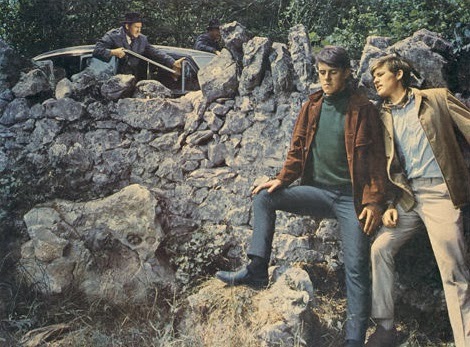
A young student and his friend help deliver a secret message to Boyne Castle to aid an American spy and help an Eastern European agent defect. Retitled "Guns in the Heather" for its feature film release. Kurt Russell,  Glenn Corbett, Alfred Burke, Patrick Dawson. Walt Disney Productions. Directed by Robert Butler. 

Most of the television movies made for Walt Disney's Wonderful World of Color are tough to find on DVD, and bootleg versions that are available are often very blurry. Alas, that is the case with this film but from what we made out of the picture it sure was entertaining. The movie pairs Kurt Russell with a young Irish boy ( who, quite frankly, we thought was a villain ) and together they play like a Hardy Boys duo. Why Walt Disney never put Kurt Russell in a Hardy Boys series I certainly don't know, but at least this movie got all the great mysteries of one of them - a motorcycle chase, a secluded castle, a glider ride, and a really clever spy ( not like those bungling crooks Disney films always had in the 1990s ). 


Sunday, February 2, 2014

Set Design - Suez ( 1938 )

My sister and I began watching Suez ( 1938 ) last week. For those not familiar with the movie it's a so-called "biopic" on the life of French diplomat, Ferdinand de Lesseps, who dreamed of building a canal to connect the Mediterranean and Red Seas. We had never seen the film before, but once the credits began rolling we knew we were in for a good picture judging from the talent involved ( Tyrone Power, Loretta Young, Annabella, Joseph Schildkraut, Leon Ames, Henry Stephenson, Nigel Bruce, Darryl F. Zanuck production, Philip Dunne screenplay, Alan Dwan direction, etc ). 

However, ten minutes into the film, we knew we weren't in for just a good picture, but a great picture! Was it the cinematography that grabbed us? Nope. Was it the elaborate costumes? No, although they were lovely. Was it the quality in acting? No... we didn't expect bad acting. IT WAS THE SETS. 

Within these 10 minutes the audience is shown three different humongous sets - that of a tennis arena, the foyer and the ballroom of Napoleon's palace. Simply breathtaking. And this was only the beginning, for throughout the film there are over 17 different sets. 


Suez begins with a young Ferdinand de Lesseps ( Tyrone Power ) giving his friend the vicomte Rene de Latour ( Joseph Schildkraut ) a whallop during a rousing game of tennis in an elaborate recreation of an authentic indoor tennis arena of the period. The game being played out was a mixture of our modern tennis and racquetball (and one that looks more exciting than both ). Loretta Young, as Countess Eugenie de Montijo, is cheering on her sweetheart Fernidad, when she is espied by the President of France, Louis Napoleon ( played with particular malice by Leon Ames ).


At a state ball which our principal players are invited to, a fortune teller predicts that Eugenie will have a troubled but great life and wear a crown, while de Lesseps will spend his life digging ditches. Prophetic words. Napoleon's displeasure with de Lesseps presence in Paris quickly gets him an assignment to Egypt to assist his father, the French consul. While there he is inspired with the dream of building a canal to bridge the two great seas and makes it his life's ambition despite the personal costs involved. 


Darryl F. Zanuck's historical spectacle, Suez, was given a two million dollar budget when production began in the spring of 1938. Obviously, the sets and special effects ( Suez boasts two excellent disaster sequences - a rock slide and a sand storm ) were given the most prominent chunk of the budget pie, with costumes coming in a close third. 


Fox was currently indulging in a series of historical films which depicted characters loosely based on real people ( The House of Rothchild, Clive of India, Lloyds of London ) and several which included big-budget disaster sequences ( San Francisco, In Old Chicago ). When Suez was released it received unfavorable reviews from the critics because of the liberties it took with historical facts, but regardless of the dissing from the critics the public adored the film and it easily earned back its investment in box-office receipts the very same year. Most of the heirs to Ferdinand de Lesseps approved of the fictionalized depiction of their father, save for one of his sons who sued Zanuck for libel. As Allen Dwan, the director of the film, once said "We gave him a romance with Eugenie, and [he] objected to it, so [he] took us to court. And the court told [him] that this picture did so much honor to France that no matter what [he thought], the case must be discarded, and they threw it out of court".


Ronald Colman was screenwriter Philip Dunne's original choice for the part of de Lesseps, who would have been splendid in this role. Nevertheless, Tyrone Power plays de Lesseps with great conviction even though he couldn't resemble the real de Lesseps with ten pounds of makeup on, and was much too young for the part. Midway through the film a touch of grey on the sides of his head was supposed to give us the impression that he aged 40 years. 

Loretta Young was not pleased at being usurped as the reigning star of the picture by the French beauty, Annabella. She knew her role was mainly a piece of set-dressing and so she decided to be the most glamorously dressed woman in any scene in the film. Working with her costume designer, Royer, her skirts grew to enormous size when filming began. In one particular scene her hoop-skirts were so large that the set builders had to widen the doorways to make room for her entrance. 


The responsibility of designing the sets was shared by two great artisans, Bernard Herzbrun and Rudolph Sternard, both of whom had created beautiful sets in two other Tyrone Power epics - Alexanders Ragtime Band ( 1937 ) and In Old Chicago ( 1937 ). 

Rudolph Sternad ( 1906-1963 ) worked in Hollywood as an art director, and later a production designer, starting in 1936. He designed sets for The Rose of Washington Square, The More the Merrier and High Noon, which began an association with Stanley Kramer that lasted for twenty films including The Caine Mutiny, Judgement at Nurenberg, Inherit the Wind and It's a Mad, Mad, Mad, Mad World. Although he was nominated for three Academy Awards, he never won. 


Bernard Herzbrun ( 1891-1964 ) created sets for over 270 films, which included several Shirley Temple films, Harvey, Creature from the Black Lagoon, and Magnificent Obsession, between 1930-1955. Herzbrun was nominated for an Academy Award for his work on Alexander's Ragtime Band, and it was this recognition which earned him the assignment to create the sets for Suez

Herzbrun helped create designs for 42 films in 1938 alone. It was an extremely busy year for him and yet you can tell what a fastidious man he was by the details in Suez's sets. Alexander's Ragtime Band would end up being the only nomination Herzbrun ever received, for surprisingly, he was snubbed at the Oscars in 1938! 


While Suez was nominated for three Academy Awards ( Best Cinematography, Best Sound Recording, Original Score ) its set design was not included which must have been one of the greatest oversights in the history of art direction. But....to be fair...Suez was up against stiff competition that year. The eleven nominees included The Adventures of Tom Sawyer ( Lyle Wheeler ), Carefree ( Van Nest Polglase ), If I Were King ( Hans Drier ), Marie Antoinette ( Cedric Gibbons ), Herzbrun's own Alexander's Ragtime Band and the winner that year - The Adventures of Robin Hood, featuring sets created by Carl J. Weyl.

Even though Suez was not historically accurate, it remains an entertaining and thrilling spectacle; a film which features fine acting, beautiful music, stellar special effects, and most of all, magnificent sets which transported its audience back to Napoleon's Europe during the mid-1800s.

This post is apart of the 31 Days of Oscar ( Feb. 1- March 1 ) blogathon hosted by Paula's Cinema Club, Once Upon a Screen, and Outspoken and Freckled. Be sure to check out all of the other great entries in this blogathon!