Saturday, February 27, 2016

The Oscars Snubs Blogathon Has Arrived!

The 88th Annual Academy Awards will be taking place this Sunday night and, like most years, when they announce the winners for the coveted golden statuette there will be mixed feelings of whether the Academy awarded the Oscar to the right recipient. 

Film fans often disagree on who deserved Oscars in any particular year, but we rarely sit down to discuss the reasons behind these beliefs. Well, beginning today, you can read arguments from a variety of fans who express their outrage over some famous snubs made throughout the years. 

We are proud to be co-hosting The Oscars® Snubs Blogathon along with Quiggy of The Midnite Drive-In.


The Oscars® Snubs Blogathon Roll Call 

Copied from The Midnite Drive-In, be sure to check out Quiggy's site for the latest updates. 


Silver Scenes presents a solid case for Debbie Reynolds in The Unsinkable Molly Brown


There's a riot in the cell block over Joe McDoakes' snub by Movie Movie Blog Blog.


Silver Screenings proves it's not such a wonderful life when It's A Wonderful Life was snubbed.


Robert Preston gets his well-due praise from A Person in the Dark for Victor/Victoria.


Angelman's Place says Auntie Roz was robbed in Auntie Mame


 Yours truly (The Midnite Drive-In) makes a case for Peter O'Toole in The Stunt Man


Cinemaven's Essays from the Couch presents some excellent points on Sunset Boulevard's snubs. She also covers nine other great performances that have been passed over by the Academy.


Gary at MovieFanFare makes a case for six-time snub victim Thelma Ritter. 


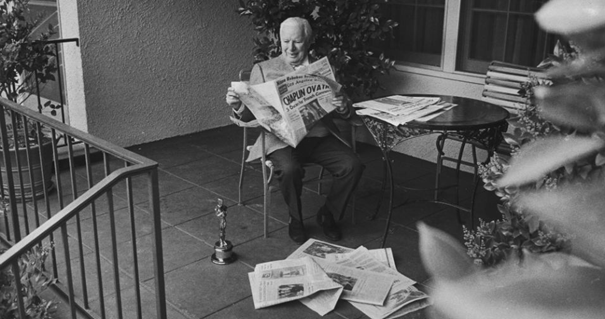
Little Bits of Chaplin gives us an overview of the Little Tramp, Charlie Chaplin, and his hits and misses at the Academy Awards.


Sometimes They Go to Eleven tells us why The Lost Weekend should have lost Best Picture and why Mildred Pierce should have won.


The Hitless Wonder Movie Blog ponders about "Missy" Barbara Stanwyck's frequent misses at the Oscars. 


William Powell's snubs is the subject du jour for Phyllis Loves Classic Movies


100 characters were not enough for Peter Sellers to win an Oscar, Critica Retro opines. 


Margaret Perry enumerates several Oscars Katharine Hepburn should have received. 


A Shroud of Thoughts has some thoughts on the Beatle's snub. 


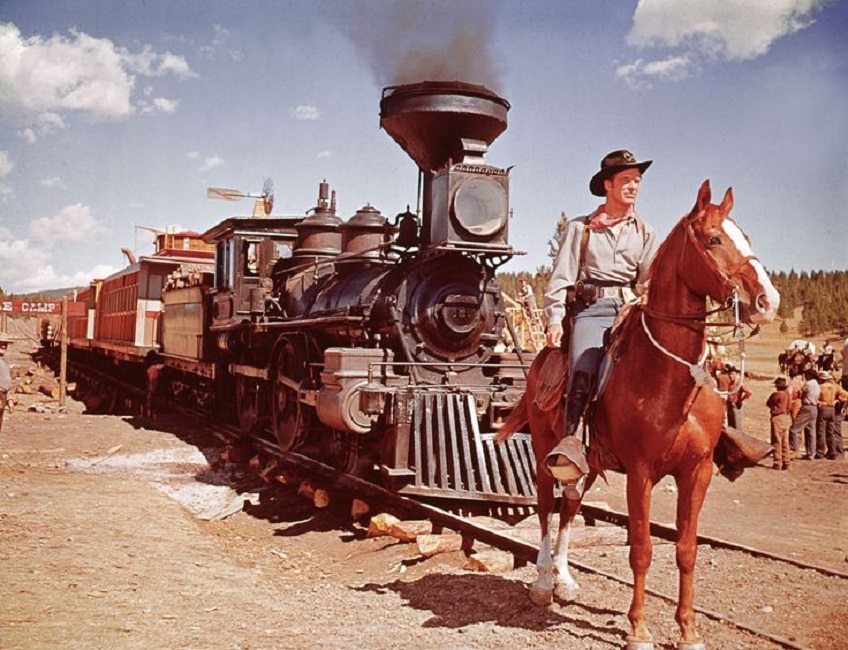
Silver Scenes thinks How the West Was Won should have won the Best Cinematography award...but it didn't. 


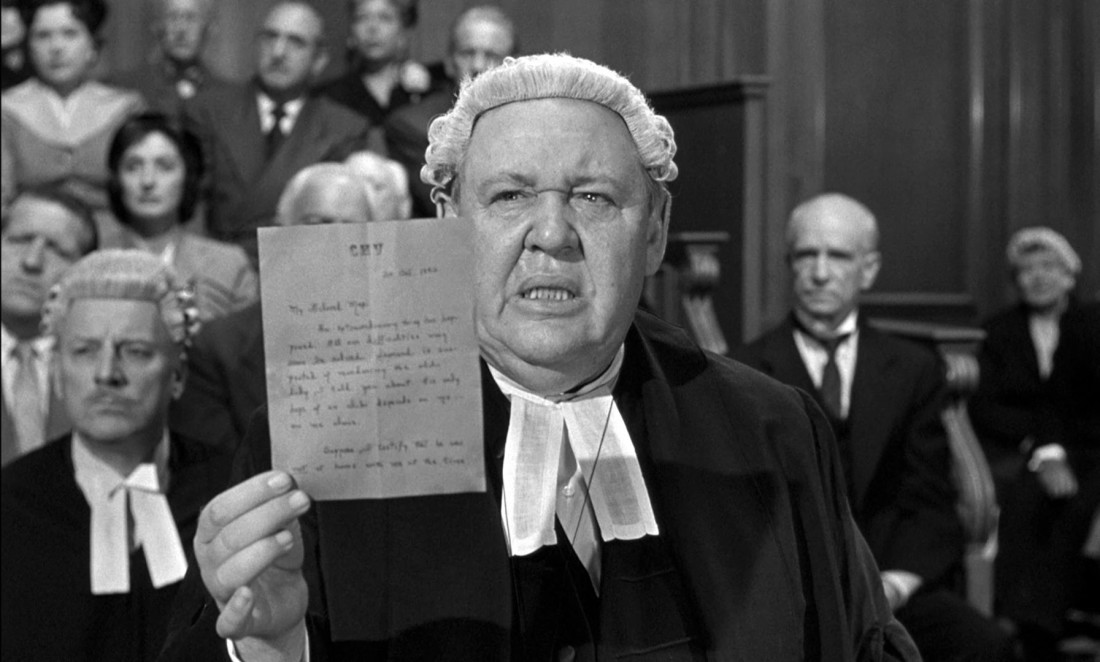
The Movie Night Group feels an injustice was served when Charles Laughton lost the Best Actor award for Witness to the Prosecution.


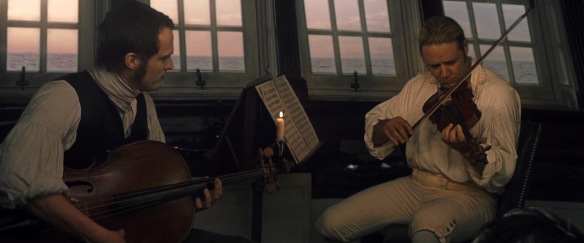
The Love Pirate is frustrated that Master and Commander : Far Side of the World did not command all of the Oscars it was nominated for in 2003.


 Defiant Success covers the many snubs of director Sidney Lumet. 

Check back each day as we update the roll call! 

Disclaimer : Silver Scenes and The Midnite Drive-In are in no way affiliated with the Academy of Motion Pictures Arts and Science. This event was organized purely for the enjoyment of readers and the sharing of thoughts. 

Thursday, February 25, 2016

Debbie Reynolds in The Unsinkable Molly Brown ( 1964 ) - An Oscar Snub

"I Ain't Down Yet!"

Molly Brown hollered and bucked like a wild bronco anxious to jump the rural fence and prance into Denver society, but she was constantly being reined in by discouraging circumstances. She lost a fortune, lost her friends, lost her husband, and finally found herself sailing on the doomed ship Titanic, but each time you think circumstances would get her down, she would rise again shouting "I Ain't Down Yet!". Indeed, she was unsinkable. 

In her role as Molly Brown in The Unsinkable Molly Brown, Debbie Reynolds gave it her all in a bravado performance that breathed life into a woman that would have become just another obscure character in history. She justly deserved her Best Actress Oscar nomination for 1964. But she didn't win the golden statuette that year...and that surely must have got Debbie down. 

Who were her competitors for the Best Actress award? 
  • Anne Bancroft in The Pumpkin Eater 
  • Kim Stanley in Seance on a Wet Afternoon
  • Julie Andrews in Mary Poppins
  • Sophia Loren in Marriage Italian Style

Let's take a look at these performances. Sophia Loren had earned her first Best Actress Oscar just three years prior for her portrayal of an Italian widow who gets raped in Two Women. Another Oscar-winning actress, Anna Magnani, was intended to play the part but turned it down. Loren proved that she had acting talent in addition to a busty figure and that made quite a large splash in the Hollywood scene. Also Italian films were all the rage during the late 1950s-early 1960s so, while Loren did a great performance in Marriage Italian Style, getting a nomination may have also been the "in" thing for the voters to do.

Anne Bancroft's performance in the highly-depressing The Pumpkin Eater, was not nearly as good as her portrayal of Helen Keller's teacher Anne Sullivan in The Miracle Worker ( 1962 ) for which she did win the award as Best Actress. End of that argument. Kim Stanley did a really good job in Seance on a Wet Afternoon, and she had plenty of laurels for that part - she was nominated for a BAFTA award, won the New York Critics Circle award and won Best Actress for the National Board of Review. She could have gone for a sweep with the Oscar too, but compared to Debbie Reynold's part, it just didn't cut the grade. 

That leads me to the final competitor, and the winner of the 1964 Best Actress Award - Julie Andrews. You won't find a more devoted fan of Mary Poppins then myself but, as much as I loved Julie Andrews performance, it wasn't Oscar-worthy. Her singing was beautiful, as was Julie herself; her comradery with the children adorable, and her final-parting look touching....but it still wasn't a performance that would make you say "I hope she won an Oscar for this, because she was fabulous!". 

But that's exactly what would be said about Debbie Reynolds' performance as Molly Brown. Debbie raised a ruckus in one hell of a great performance. She hollered till her voice went hoarse, swung from a tree, was bellyed up to the bar in a rousing dance sequence, was stomped on, kicked about, and shouted at, and yet she still managed to give a touching and sympathetic performance of a rough country bumpkin. She transformed Molly from being a young illiterate backwoods girl into a glamorous world-travelling society woman with backbone. 


Molly Brown was a part that Tammy Grimes had made popular in the Broadway version of The Unsinkable Molly Brown, co-starring with Harve Presnell. Presnell reprised his role in his screen debut, but Grimes did not have a name with movie audience drawing-power. Producers Roger Edens and Laurence Weingarten wanted Shirley MacLaine for the part, but Shirley was locked in a contract at the time for another film, so Debbie was offered it. However, director Charles Walters was hoping Debbie would turn it down and even asked her to decline it. When she asked "Why?", he commented that she was too short. Like Molly Brown would have done herself, Debbie retorted "Just how short is the part?" and ended the discussion. 

Throughout the film she fought to prove the part suited her, and did it ever! Even non-fans of Ms. Reynolds can't help but agree because Debbie and the real Molly Brown share a lot in common: they are both hard-working, tough-as-nails, glamorous, spunky women, and when the going gets tough that's when they really shine. Debbie considered this her favorite film and, after she lost the Oscar to Julie Andrews, you can imagine her telling herself "I Ain't Down Yet"  

This post is our contribution to The Oscars Snubs Blogathon being hosted by The Midnite Drive-In and yours truly, Silver Scenes. Click here to read more posts on films, stars, and craftsmen who have been snubbed at the Oscars. Enjoy! 

Sunday, February 21, 2016

Helen Rose - Costume Designer

For Behind the Screen : The Hidden Masters of the Golden Age of Filmmaking, our continuing series of profiles on the men and women who worked behind the cameras, we have chosen to aim the spotlight on Helen Rose, an extremely talented costume designer of the 1940s-1960s. Since the Oscars are approaching, our choice is especially apropos considering Helen Rose was nominated for no less than ten awards for Best Costume Design, including The Merry Widow ( 1952 ), Executive Suite ( 1954 ), and I'll Cry Tomorrow ( 1955 ).

Like her fellow female associate, Edith Head, Helen Rose had risen from staff designer to become chief costume designer of a major film studio. Head worked at Paramount and Irene at Metro-Goldwyn-Mayer up until 1949, when she left the studio. Shortly thereafter, Helen Rose became the new chief designer. Her style was elegant and innovative, and some of the dresses she created were the most beautiful seen on film. 

Helen Rose began designing stage and nightclub costumes when she was but 15 years old for the Lester Costume Company who specialized in costumes for vaudeville. In the late 1930s she was hired as head designer for the skating spectaculars, the Ice Follies.

Love Me or Leave Me
It was in 1941 that she was hired to create costumes for musicals over at Twentieth Century Fox. This tenure lasted only two years, when Louis B. Mayer beckoned her into the lion's den at MGM. Their chief designer, Adrian, had resigned and the studio was looking for fresh talent in their wardrobe department. Helen Rose assisted Irene for the next five years, helping work on such productions as Two Sisters from Boston ( 1946 ), Till the Clouds Roll By ( 1947 ), The Courage of Lassie ( 1946 ), Cynthia ( 1947 ) and Julia Misbehaves ( 1947 ). 

MGM was churning out musicals, comedies, and dramas in such quantity during the late 1940s to satisfy the demands of post-war audiences that, even though Irene was still head of the costume department, Helen Rose had a chance to exercise her creative couture skills in a number of fine productions. 

For The Harvey Girls ( 1946 ), Rose designed a plethora of beautiful period gowns. In addition to the traditional waitress wardrobe of the Harvey girls, Judy Garland sported over seven different outfits including a cream-colored puffed-sleeved dress, a wedding gown, a light-blue chiffon nightgown, and a lovely white ballgown with ruffled tulle on the shoulders. However, it was Angela Lansbury, as feisty saloon gal Em, who wore the most eye-popping Technicolor creations. The golden gown Rose created for Em, studded with beads, deserved an Oscar nomination in itself but, unfortunately, the entire film was overlooked for the costume design category. Oddly enough, almost all of the films that showcased Helen Rose's best work were overlooked. 


In The Unfinished Dance ( 1947 ), Rose designed not only the principal actors' wardrobe but many of the ballerinas dresses as well. Mademoiselle Ariane Bouchet ( Cyd Charisse ) was the prima-donna ballerina who wore fashions as chic as her name. One of the most memorable gowns she wore was a velvet dress ( which fetched $2,750 during Debbie Reynolds' major wardrobe auction in 2014 ). 

The velvet gown seen in The Unfinished Dance ; Good News

For Good News ( 1948 ) Helen Rose help transport audiences back into the roaring 1920s with her authentic college garb of the period. 

Annie Get Your Gun ( 1950 ) was another career highlight for Helen Rose. The western costumes that Betty Hutton wore combined the bright colors of the 1950s with the rugged utility that the real Annie Oakley would have needed as a sharpshooter touring across the world with Buffalo Bill's Wild West Show. Rose's designs were undoubtedly inspiration for much of the western wear for men, women, and children that were sold in catalogs throughout the decade. 

Helen Rose had a knack for creating costumes that perfectly suited the style of the wearer. Jane Powell's dainty hourglass figure was emphasized in the dresses she wore in A Date with Judy ( 1948 ), Luxury Liner ( 1948 ), Nancy Goes to Rio ( 1950 ) and Two Weeks with Love ( 1950 ). 

Lana Turner had a figure all women would envy and her petite height made her an ideal model for below-the-knee skirts and dresses. For The Merry Widow ( 1952 ) and Latin Lovers ( 1953 ), Rose designed some beautiful Spanish-inspired evening gowns. Years later, for Bachelor in Paradise ( 1961 ), Turner wore Helen Rose creations again...and surprisingly, her glam figure was unchanged!

Period costumes from Two Weeks with Love

Esther Williams created many of her own swimsuit designs when she launched her own swimsuit company, but during her reign at MGM, she and Helen Rose worked together to create swimwear that looked stunning both wet and dry. Duchess of Idaho, Pagan Love Song, Texas Carnival, Million Dollar Mermaid, Easy to Love and Dangerous When Wet all featured costumes designed by Rose. 


The costumes seen in Father of the Bride ( 1950 ) were also some of Rose's best work. Elizabeth Taylor adored the wedding gown that she wore in the film so much that she asked Helen Rose to design her wedding gown for her marriage to Nicky Hilton that same year. 

Grace Kelly was another great admirer of Rose's sophisticated taste. She wore Rose creations in Mogambo, High Society, and The Swan, and like Taylor, also hired Rose to design her wedding gown. Over 25 yards of vintage Brussels rose point lace and silk faille was used in the gown, and it was a creation that was admired the world over. 

Elizabeth Taylor's wedding dress was less memorable, but the simple and elegant white chiffon Grecian gown that she wore in Cat on a Hot Tin Roof ( 1958 ) became an iconic dress. That same year Rose launched her own label featuring ready-to-wear clothing accessible to the public through high-end department stores such as Bonwit Teller, Marshall Fields, and Joseph Magnin. Some of her more simple designs were also available as patterns distributed through Advance and Spadea. 

Chiffon was Helen Rose's material of choice and she especially liked the way it moved and picked up light. An example of one of her most beautiful chiffon dresses was the simply white ensemble worn by Shirley Jones in The Courtship of Eddie's Father ( 1963 ). Dina Merrill also wore a gorgeous light blue chiffon dress in the same film, as well as this elegant business "suit". 

Dina Merrill and Shirley Jones in The Courtship of Eddie's Father

During the 1960s, Debbie Reynolds fashioned some of the best of Rose's creations in The Gazebo ( 1959 ), and Goodbye, Charlie ( 1964 ). Helen Rose probably never realized that so many of the dresses, gowns, and suits she designed for actors in all of those MGM films would end up in Reynolds' personal collection of costumes. 

Goodbye, Charlie! ( 1964 )

In 1966, Helen Rose left MGM to open up her own design business, catering to wealthy clients. She also kept busy writing a fashion column and penning two books, one being her autobiography "Just Make Them Beautiful"....a fitting title, for that's just what she did. 


This post is our contribution to the 31 Days of Oscar blogathon being hosted by Paula's Cinema Club, Outspoken and Freckled, and Once Upon a Screen. Head on over to any of these sites to read more about the actors, films, and craftsman who were awarded Academy Awards.

To read more profiles in our Behind-the-Screen : The Hidden Masters of the Golden Age of Filmmaking, click here! 

Friday, February 19, 2016

Lillian Bronson - The Sweetest Spinster

So often we see character actors on the screen doing their parts with such wonderful finesse and ease that we never stop to think much about the real actor behind the character. They are often not the people that they play onscreen. Lillian Bronson was one of those actors. She portrayed teachers, librarians, devoted secretaries, servants, and other "old maid" roles quite frequently. Each of these characters displayed a quiet gentle nature and all seemed quite lonely and pitiable. The real Lillian Bronson, however, had a large family and was loved by many. She was also known by many, many people outside of the film community when, in 1974, her portrait was painted as a 30ft tall mural and displayed on the Los Angeles freeway. 

Lillian Bronson was born in 1902 in Lockport, New York. Her family was well-to-do since her father designed and built carriages for a living. Ms. Bronson acquired a taste for the stage in her school days when she acted in a high school play. Her English teacher gave her such encouragement that she attended Bryn Mawr and the University of Michigan studying dramatics. Finding a job as an actress was no easy task during the Depression, so she and her sister instead exercised their fingers and opened the Bronson Studio, designing and making toy animals and pillows. 


It was not until the early 1930s that she landed small parts in a handful of Broadway productions including Camille starring Lillian Gish. Then in 1939, it was off to Hollywood. Her first role was in the Deanna Durbin musical First Love where she played a violinist. It was a small uncredited part and, like most character actors, it paved the way for a lifetime of small, but nonetheless important, parts. 

Ms. Bronson specialized in portraying several different kinds of characters, which we have spotlighted below. In the 1940s, during the peak of her career she was making up to twelve films a year. Steady employment for sure! 


Maid/Housekeeper -


Bronson played a wide variety of different occupations on film and, while she didn't have the face or demeanor for your usual maid ( she seemed much too educated ), she found herself portraying domestics quite often. In The Pearl of Death ( 1944 ) she has a brief part as Dr. Harker's housekeeper who plays along with Sherlock Holmes in setting a trap for the Creeper. She also had a part in another Sherlock Holmes entry, Dressed to Kill,  as a minister's wife. 

In Junior Miss ( 1945 ), she was the maid to the surly J.B Curtis.  Ms. Bronson also played maids in The Brighton Strangler ( 1945 ) and Sleep, My Love ( 1948 ). 


Secretary -


Lillian was best in roles that asked for loyal characters. If one had a secretary like Ms. Bronson, you would feel certain that she would be a 100% confidential secretary and would never divulge a secret business deal. 

In Over 21 ( 1945 ) she played Irene Dunne's secretary, helping her organize all of the notes for her latest book. Miss Hammer kept Clark Gable's business papers in order and reminded him of all his appointments in The Hucksters ( 1947 ). He came to trust her judgement in personal matters too. In Here Come the Nelsons ( 1952 ), Bronson played Ozzie Nelson's cheerleading secretary Miss Tompkins, spurring him on to create a winning advertising campaign for a big client. Years later, Miss Bronson played one of the highest secretarial positions in America...that of presidential secretary to Polly Bergen, the first female president, in Kisses for my President ( 1964 ). 

Teacher -


Miss Bronson's gentle and patient nature made her an ideal actress for portraying teachers and librarians too. In A Tree Grows in Brooklyn ( 1945 ), little Peggy Ann Gardner visits the library and checks out a huge book on medical conditions. Miss Bronson inquires why she would be interested in such a book and the girl replies that she is reading every book in the library and this was the next book on the shelf. Miss Bronson gives her a kindly look and then sneaks in a small book of fairy tales for her to read as well. 

In I've Always Loved You ( 1946 ) she played a music teacher. In Father of the Bride ( 1950 ) she had an uncredited part as a schoolteacher, also invited to Elizabeth Taylor's big wedding. In Room for One More ( 1952 ) she was a teacher pleased with Cary Grant and Betsy Drake's decision to adopt two orphans and give them a welcoming home. 

Spinsters -


If there was one role that Miss Bronson really excelled in, it was playing spinsters. Although she was quite pretty she had the bird-like quality of a timid old maid. In Welcome, Stranger ( 1947 ) she played Miss Lennek, one of the townsfolk who has a sour opinion of the new doctor ( Bing Crosby ) until he wins the townsfolk over. In Family Honeymoon ( 1948 ) she had a large role as Claudette Colbert's maiden sister who handles all the details of her wedding and honeymoon. In The Good Old Summertime ( 1950 ) she was Judy Garland's aunt, another spinster we presume, whom she lives with.

That same year she played one of two sisters who were eager to marry a young William Holden in Father is a Bachelor, and she was one of the regular guests who attended the Catskills resort hotel in MGM's Two Weeks With Love. 


With the advent of television Miss Bronson found herself busier than ever, playing in such shows as Topper, Schiltz Playhouse, The Adventures of Jim Bowie, The Millionaire, The Rifleman, Peter Gunn, Thriller, and Have Gun, Will Travel. Westerns, dramas, comedies...she played in them all. On Perry Mason, she portrayed a female judge in three episodes. In Dragnet, she was a kindly old lady ( see color photo above ). She was the elderly Miss Cooper in the classic Haunted House episode of Leave it to Beaver and, on The Andy Griffith Show, she was Erma Bishop in The Beauty Contest. Her last television appearance was playing Fonzie's motorcycle-riding grandmother on Happy Days. 


Off the screen, Lillian Bronson raised a family which included two step-daughters. One of her daughters married actor James Whitmore, whom Bronson had appeared with in The Next Voice You Hear ( 1950 ) and The McConnell Story ( 1955 ). 

Ironically, Miss Bronson's greatest claim to fame came after she retired from acting. Artist Kent Twitchell was looking for the ideal model for a large mural he was planning on painting. He wanted a woman that resembled and reminded him of his grandmother and, flipping through a Screen Actors Guild catalogue, came across a photo of Miss Bronson. She graciously posed for him during a series of sketches and eventually Twitchell painted the final artwork which overlooked the 101 Freeway in Echo Park. It was the first freeway mural in Los Angeles and was an enormous success with commuters. Lillian Bronson was portrayed as a spry old lady, with her halo of white hair creating an other-worldly effect. The painting was dubbed "The Freeway Lady" and Miss Bronson's kindly face became known to many people who were unaware of her acting past. 


Check out this article about artist Kent Twitchell's painting of the New Freeway Lady, created in 2015. 

Saturday, February 13, 2016

Valentine's Day Nuggets

To celebrate Valentine's Day we have selected a handful of favorite romantic classics for your enjoyment. There is only one golden nugget among the lot, but each and every one of these films are entertaining in their own way. Happy Valentine's Day! 


Rome Adventure ( 1962 ) 14k


A schoolteacher takes her first trip to Rome to "learn about love" in the city of romance and falls in love with a young architect who is already in a romantic entanglement of his own. Troy Donahue, Suzanne Pleshette, Rossano Brazzi, Angie Dickinson. Warner Bros Pictures. Directed by Delmar Daves. 

Rome Adventure was geared towards young lovers when it was made but over the years an older crowd has been attracted to it....most likely due to Suzanne Pleshette looking so beautiful in the film ( her first picture ) and Rossano Brazzi looking so dashing in his Italian way. The location filming in and around Rome is gorgeous and the film features Emelio Pericoli singing "Al Di La" which went on to become an Italian standard. Donahue and Pleshette played the part of lovers so well that off-screen they fell in love and were wed shortly after the film's release. However, their marriage only lasted eight months. 

___________________________________________________________


Wuthering Heights ( 1939 ) 24k


A traveler who stops at Wuthering Heights during a snowstorm is told the tale of two childhood lovers who were torn apart by the barrier of class and wasted their lives in loveless marriages. Laurence Olivier, Merle Oberon, David Niven, Geraldine Fitzgerald. Samuel Goldwyn Productions. Directed by William Wyler.

This is undoubtedly the best film re-telling of Emily Bronte's novel "Wuthering Heights" and Samuel Goldwyn himself considered it his favorite film. It was nominated for eight Academy Awards but since it was 1939 - the golden year - it only won one award for its cinematography...which was indeed marvelous. Laurence Olivier and Merle Oberon are both excellent in the roles of Heathcliff and Cathy. Alfred Newman wrote a haunting score in keeping with the film's somber theme of doomed and tragic love. If you are in the mood for a melodramatic romantic film, this is it. Want a double feature? Pair it with The Ghost and Mrs. Muir ( 1947 ). 

         ___________________________________________________________


An Affair to Remember ( 1957 ) 14k


A playboy and a nightclub singer have a shipboard romance en route to the south of France. Once back in New York they decide to reunite in six months and meet at the top of the Empire State Building but one of them does not show up. Cary Grant, Deborah Kerr, Richard Denning, Cathleen Nesbit. 20th Century Fox Pictures. Directed by Leo McCarey.

It wouldn't be an official list of romantic films without An Affair to Remember. I always thought that this one was rather stilted compared to the original Love Affair ( starring Charles Boyer and Irene Dunne, and also directed by Leo McCarey ) but the more you watch it the more it grows on you. The color cinematography is beautiful. Have a box of hankies near by for the tear-inducing ending.
___________________________________________________________


Sabrina ( 1954 ) 14k


The daughter of a chauffeur travels to Paris for two years and blossoms into a beautiful young woman upon her return to the States. The rich playboy son of her father's employer, whom she was in love with for years, becomes smitten with her but she decides he may not be the man she was searching for after all. Humphrey Bogart, Audrey Hepburn, William Holden, Martha Hyer. Paramount Pictures. Directed by Billy Wilder.  

Billy Wilder made a number of great films in the 1950s, and Sabrina ranks as one of his most entertaining. Audrey Hepburn does a marvelous job of playing first the young Sabrina, innocent and starry eyed, and then the more mature Sabrina, eager to play the society woman. This is definitely a girls picture and indeed, it was one of the earliest "classics" we can recall watching growing up, but if you pair it up with Roman Holiday you have a great Audrey Hepburn themed romantic evening to enjoy...without your lover of course, he probably wouldn't go near these films. 

___________________________________________________________


Random Harvest ( 1942 )  18k 


A WWI officer stricken with amnesia escapes from a mental institution and meets a sympathetic cabaret singer. They fall in love, marry, and he makes a new life for himself, but less than a year later a head injury triggers his memory of the past. Will he return to his new wife or go back to the life he led before? Greer Garson, Ronald Colman, Susan Peters, Philip Dorn. Metro-Goldwyn-Mayer Pictures. Directed by Mervyn LeRoy.

At the time of Random Harvest's release, critics panned the film and labeled it an "empty" and "unreal" film. James Agee wrote that "I would like to recommend this film to those who can stay interested in Ronald Colman's amnesia for two hours and who can with pleasure eat a bowl of Yardley's shaving soap for breakfast." Ouch! In spite of the critics, audiences came to the theatres in droves to see Greer Garson, one of MGM's most popular leading ladies, and the great English actor Ronald Colman together on screen. The film reaped over $8 million in sales. Garson and Colman were both in top form, as was the lovely Susan Peters. Its cinematography, fine script, and its beautiful score ( by Herbert Stothart ) make this a gem. 

Thursday, February 11, 2016

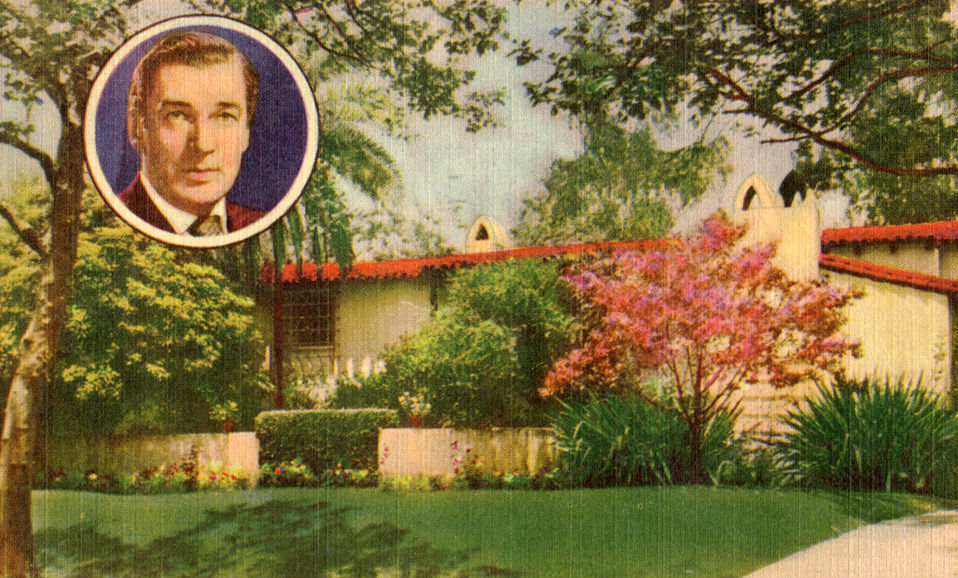
Hollywood Home Tour - Walter Pidgeon

"All aboard the Silver Scenes Hollywood Home Tour Bus! Make sure you got all your belongings. Everybody in now? Off we go! 

"Since we've had a long lunch break, I'll be speeding up the bus quite a bit and showing you folks a number of beautiful Hollywood homes before we take our next break. So sit back, relax, and enjoy the ride. 

710 Walden Drive, Beverly Hills

"The first home will be coming up on your left in just a couple hundred yards. This is Walter Pidgeon's Spanish stucco estate that he purchased in the late 1930s, just about the time when he was really making a name for himself in Hollywood. His mother, Edna, also lived with him and his wife, Ruth Walker, for a time at this house. The famous architect Walter Neff built this lovely home in 1926, but don't be deceived by its humble front, it is over 5000 square feet in size. 

"You enter the house through a rotund foyer and then as you make a turn into the living room you'll catch your breath as you see the two story cathedral beamed ceilings and exquisite iron railings throughout the place.

"Pidgeon's neighbors at the time included his long-time screen partner Greer Garson, as well as Arthur Hornblow Jr ( 704 ), Joe E. Brown ( 707 ), Gloria DeHaven and John Payne ( 708 ). 

"However, no use straining your eyes trying to catch a glimpse of Pidgeon...he no longer lives here. In the 1940s he purchased an English-style home ( very befitting to his onscreen persona ) over on Strata Corda Road in Bel-Air, where he still lives today. We'll be driving over that way later in the tour, so you can bring out your cameras at that time."

Up-to-Date News : This Neff estate fetched a whopping $7 million in 2013 when it was listed for sale. Pidgeon passed on in 1984 after suffering a series of strokes at his home in Bel-Air. 


Friday, February 5, 2016

Mrs. Mike ( 1949 )

Speakeasy and Silver Screenings are hosting the O Canada Great White North Blogathon for the second year in a row, and for this event we wanted to write a little bit about Mrs. Mike, an overlooked gem from 1949. 

Evelyn Keyes stars as the titular Mrs. Mike, a gentle young Bostonian who, for the love of the Mountie she married, forsakes the comfort of the city to go off and face hardships and loneliness in Northern Alberta in 1907. 

Kathy O'Fallon has the youthful woman's zealous thoughts of what life would be like married to such a heroic figure as Mike Flannigan ( Dick Powell ), a sergeant of the Northwest Mounted Police, whom she meets while visiting her uncle in Canada. Mike warns her of its hardships -- "It's no life for a city gal" he proclaims -- but, being staunchly Irish, she boldly declares she is plucky enough to persevere. And persevere she does! Mr. Mike was mighty proud of her, and so were audiences by the end of the picture, but she had to learn many a lesson before she came to realize just what fortitude becoming a Mountie's wife required. 

Mrs. Mike was based upon the real-life adventures of Katherine Mary O'Fallon Flannigan, a city gal who went to visit her uncle in Alberta and fell in love with a Mountie. Kathy took the stories of her Canadian adventures to Hollywood believing it to be good material for a film. A talent agent felt it would make a better book however, and introduced her to husband-and-wife authors Benedict & Nancy Freedman, who fictionalized her 5-page outline into a novel. 


"Mrs. Mike" went on to become a best-selling book, republished and translated around the world into over twenty different languages. Surprisingly, none of the major studios purchased the screen rights to "Mrs. Mike". An independent producer, Samuel Bischoff, eventually approached the Freedmans for the rights to the novel, casting crooner Dick Powell in the lead. Powell had found great success with his first dramatic role in Murder, My Sweet ( 1945 ) and continued to play in dramatic pictures from then on. In this film, he portrays Mike as a very noble servant-of-the-people, level-headed in all situations and courageous. Dudley Doright could pick up a tip or two from Mike Flannigan. 


Most American's conception of Canada is that it's cold and densely wooded with Mounties guarding every five square miles, ready to aid anyone in danger or capture an errant criminal. Films like Mrs. Mike helped forge these conceptions, showing us a region of Canada that is beautiful but isolated from the rest of civilization. Only stout-hearted souls are brave enough to endure the loneliness of the country and survive on their own. These Albertans are strong people who have come to expect hardship. They do not regard life as easy, but they do not complain. As a Mountie, Mike is required to live in these isolated outposts and protect and serve the villagers, but the villagers themselves choose to stay, wanting to create a new settlement and make a better life for themselves and their children. 

When Kathy first arrives at Fort Wilderness, the second outpost Mike gets transferred to, she is amazed at the other women's patience and courage. But the coldness and ruggedness of some of these women frighten her and she fears that in ten or twenty years she will turn into the kind of people she and Mike were sent out to aid. It is not until she sees the lifestyle of these hearty folk that she realizes the comforts and conveniences of the city that she took for granted. Women give birth to babies without doctors or medication and parents must be grateful if their children lose only a limb in an accident or an epidemic and not their life. So many women that she speaks to talk of their "first" family and their "second" family, since they often lost all of their children at once to some malady. To Kathy it seems as though life in the wilderness is not living at all, but merely surviving and she begins to wonder if she should have just stayed in Boston. 

Mrs. Mike is a gentle drama and a very entertaining picture. It is a testimony to all pioneers who had the courage to venture into unknown lands and create settlements. In addition to Powell and Keyes, the film also features K.M Kerrigan, Angela Clarke, Will Wright and Nan Boardman. 

Be sure to check out all the other great posts about Canadian films and actors over at the O Canada Great White North Blogathon's main page available here!