Showing posts with label Child Actors. Show all posts

Sunday, January 27, 2019

Heidi ( 1952 ) and Heidi ( 1965 )

Johanna Spyri's beloved children's novel "Heidi" ( 1881 ) was first brought to film in 1937 with Shirley Temple in the starring role. It was a sweet film that, I think, perfectly captured the heart of the novel even though it wasn't true to the original story. This still remains the most popular American production of "Heidi". There has been over 18 different film and television adaptions since, including a popular 1968 TV movie starring Maximilian Schell.

Heidi is about a little girl who comes to live in a secluded mountain chalet with her stern grandfather. One day, her aunt Dete takes her - against her will - to live in Frankfurt as a hired companion to a wealthy girl named Clara, who is regarded as an invalid. Even though Heidi is homesick, her simple kindness and positive outlook help to heal Clara. Eventually, she is taken back to her grandfather who then realizes how much he loves Heidi and how much he missed her. 

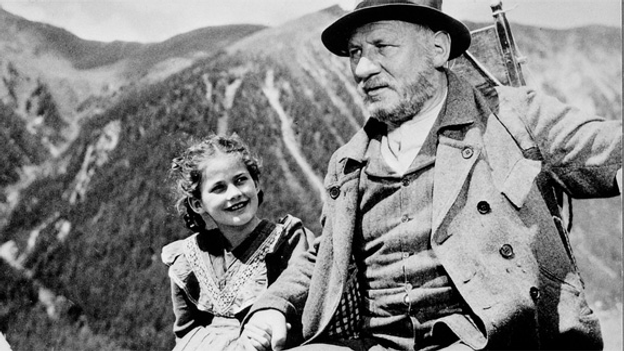
In Europe, it was not until 1952 that "Heidi" was made into a movie and this version is still considered by many fans to be the most accurate adaptation of Spyri's novel. The film stars Elsbeth Sigmund in the title role and features a slew of popular European actors in supporting roles. The film was dubbed in both English ( in 1954 ) and French ( with Francoise Dorleac speaking as Heidi ).
Heidi is an adorable little girl but - since I'm partial to the Hollywood version - she seems to lack Shirley Temple's charm. Elsbeth Sigmund's Heidi neither possesses the influential nature to change Clara's outlook nor to soften both her aunt and governess Rottenmeier's attitudes.

The rest of the cast is wonderful. Heinrich Gretler, a marvelous actor, plays Heidi's grandfather; Isa Günther ( Das Doppelte Lottchen ) is Clara; Willy Birgel plays Clara's father, and Elsie Attenhofer is Dete. Theo Lingen, a very popular German actor and comedian of films of the 1940s-1960s, is great as Sebastian, Herr Sesemann's butler, and proves to be a fast friend to Heidi.

Heidi was so popular throughout Europe that Heidi und Peter, the sequel, was released just three years later. This film features the ending from the original novel with Clara coming to visit Heidi and her grandfather in the mountains and learning to walk. 

In 1965, Heidi was also remade in color scene-for-scene in an Austrian production with Eva Maria Singhammer in the title role. Gustav Knuth played Heidi's Großvater and Rudolf Prack had a brief part as the priest. Like the 1952 version, this film featured beautiful music but it, too, lacked the heart needed to make the story come alive. So it looks like, in spite of all the film versions of "Heidi" that exist, the ideal one has yet to be made. 

Thursday, December 27, 2018

Kathy O ( 1958 )

Child-actress Patty McCormack became a household name after the enormous success of The Bad Seed ( 1956 ) where she portrayed Rhoda Penmark, a little girl with an evil bent. She had a difficult time following up this film with another dramatic picture and never did find a role to equal The Bad Seed in popularity. Instead, McCormack did a number of television guest appearances and made two Christmas-themed movies - All Mine to Give ( 1957 ) and the delightful Kathy O ( 1958 ). 

This hard-to-find little gem features McCormick as Kathy O'Rourke, a popular child actress who is beloved by millions of children onscreen but is loathsome to the adults who have to work with her on the set. She's a Shirley Temple when the cameras are rolling and a Rhoda Penmark when the scene cuts. Dan Duryea stars as Harry Johnson, a publicity agent who works at the studio that employs the bratty star.

Ms. Celeste Saunders ( Jan Sterling ), a writer for a major New York magazine, is coming to Hollywood to do a feature on O'Rourke and personally requests Harry to help her with the interview. Celeste is Harry's ex-wife and she is shrewd when it comes to discerning human nature, so - in fear of losing his job - Harry tries his darnest to keep her from discovering the "truth" about Kathy. But, to his surprise, the two become endeared to one another. It turns out little Kathy just wants to be a normal child and longs for the love she is not receiving from her Aunt Harriet ( Mary Jane Croft ). However, Harry finds himself in a scrape when Kathy decides to run away to be with Celeste, and he is accused on a kidnapping charge!
Dan Duryea, a legend of film-noirs, tries his hand at comedy for the part of Harry and... surprise, surprise....he is wonderful! I never particularly enjoyed his work before but he is marvelous in Kathy O and displays a true knack for humor. It certainly helps that the film features a witty script from Sy Gomberg ( Summer Stock ) and Jack Sher ( My Favorite Spy, Four Girls in Town, Move Over Darling ), who also directed the picture. 

Kathy O' takes place during Christmastime and is set in the suburbs of North Hollywood, California where Harry lives with his second wife and two children in a mid-century modern ranch. The picture moves along briskly and is never tiresome. Quite the contrary. It's a truly entertaining family film. Jan Sterling never looked prettier and Mary Fickett ( All My Children ), who plays Harry's current wife, is lovely. 
Patty McCormack was an extremely talented little girl and she pulls off the duel-nature of this part with ease, making the audience's compassion for her character grow with each subsequent scene. 

Kathy O' has not yet been released on DVD but if you happen to catch it playing on television some night, it's well worth watching. 

Saturday, November 17, 2018

Pete's Dragon ( 1977 )

"Boo-Bop-BopBop-Bop, I love you, too!" 

Good ol' Elliott. He is exactly the kind of companion any child would wish to have. Strong, clever, amusing, cuddly, fun to be with, and he has the ability to make himself invisible when asked ( how many friends do you know who will disappear for you? ). Elliott's best quality is undoubtedly who he is - a dragon. Friends come in all shapes and sizes, and Elliott is just about the best shape and size of any dragon you can imagine. He is of the jolly-green-giant variety. 

How does one get a friend such as Elliott? Well, as his pal Pete explains, "nobody owns Elliott, he just sort of goes to those who need him". Truly need him. Pete ( Sean Marshall ) was such a boy. He was an orphan who was purchased by the nasty Gogan family to be used as an extra hand on their farm. He ran away one night and came to the town of Passamaquoddy where he met Nora ( Helen Reddy ) and her father Lampie ( Mickey Rooney ), who operate the lighthouse in the seaside village. Pete wants to belong to someone - and someplace - and he feels like Nora and Passamaquoddy are where he belongs. Only, the Gogans are anxious to get the full value of the $50 they paid for Pete and have come to bring him home. 

"That boy is our legal property, same as the family cow!"
Pete's Dragon was based on an original short-story by Seton I. Miller, who was famous for penning the screenplays to some of Errol Flynn's best films of the 1930s and 1940s ( The Adventures of Robin Hood, The Dawn Patrol, The Sea Hawk ). Walt Disney had purchased the rights to his unpublished work in the 1950s with the intention of adapting it for television. It sat on a shelf until S.S Field fleshed out the idea and Malcolm Marmorstein ( Dark Shadows ) typed out the screenplay in 1977. 

Walt Disney Studios always had a flair for creating entertaining musicals suitable for children of all ages and Pete's Dragon certainly combines all the elements you would hope to find in a family fantasy film: a touch of magic, a dastardly yet highly amusing villain by the name of Doctor Terminus ( Jim Dale ), quaint settings, a beautiful feminine lead, and a dash of romance - in the form of a long-lost sea captain.

Surprisingly, Pete's Dragon was made at a time when the studio was floundering. Animated films, which Walt Disney had always been known for, were no longer popular in the theatres and even family-based entertainment such as this story, was viewed as being passé. The studio was going through its dark ages for sure, so it is a wonder that Pete's Dragon was such a success at the box-office, raking in nearly four times its $10 million budget. 

"Life is lollipops and raindrops with the one you love, Someone you can always be with, Argue and agree with....climb the highest tree with..."

The film benefits from a great cast which includes the old legend of Hollywood, Mickey Rooney, along with Red Buttons and Shelley Winters ( as Mrs. Gogan ). Helen Reddy, who hailed from Australia, was a singer who had made an international hit with the Grammy award-winning song "I Am Woman". She had a brief appearance in Airport 1975 ( as Sister Ruth ) before she was offered the lead in Pete's Dragon. Reddy had a natural talent for acting and this should have been the start of a long acting career but, unfortunately, that never came about. 
Sean Marshall, who portrayed Pete, had a few roles in films and television shows prior to Pete's Dragon. After this film, he was a regular on two short-lived television series, The Fitzpatricks, and The MacKenzies of Paradise Cove, and then retired from film. Jim Dale was marvelous as Dr. Terminus. He began acting in the British Carry-On film series from the 1960s and made a few more Disney films after Pete before focusing his talent on voice-recordings, being especially famous for reading the Harry Potter books for audio release. Also in the cast was Jim Backus, Gary Morgan, Charlie Callas, Charles Tyner, and Jane Kean. 

Pete's Dragon boasts an engaging Oscar-nominated musical score, conducted by Disney great Irwin Kostal. For once, the famous Sherman Brothers could not be credited with writing the music to this film, even though Joel Hirschhorn and Al Kasha's songs featured some equally clever lyrics. "Candle on the Water" and "It's Not Easy" are two of the most memorable tunes. 
Pete's Dragon does run rather long and could have benefited from a few well-placed editing cuts, but on the whole, it's a colorful film with some very entertaining brazzle-dazzle moments. 

Friday, September 22, 2017

James MacArthur and Janet Munro - A Disney Duo

Every once in a while when you are watching a film you probably find yourself proclaiming, "Hey! These two actors also played together in [fill in the blank]!" 
Well, like you, the bloggers behind The Flapper Dame and Phyllis Loves Classic Movies experienced this, too, and so they decided to launch The Duo Double Feature Blogathon giving us clever film buffs a chance to compare the different characters and films of a duo of our choice. I chose James MacArthur and Janet Munro. They were an adorable young couple who starred together in only two Walt Disney films: Third Man on the Mountain ( 1959 ) and Swiss Family Robinson ( 1960 ), and then went on their own separate acting paths, with MacArthur focusing on television work and Monro attempting to alter her wholesome image with spicier British dramas. 

James MacArthur, the son of screenwriter Charles MacArthur and actress Helen Hayes, made his Disney debut in Light in the Forest ( 1958 ), opposite Carol Lynley, and he proved himself to be a talented and very personable actor. Walt Disney liked his honest face and natural acting ability, and young girls liked his rugged good looks and shy demeanor. He was an ideal hero for Disney's live-action features. 

Third Man on the Mountain was his second feature for the studio and Janet Munro was selected to portray his sweetheart Lizbeth in the film. Munro caught the eye of Disney when she came to audition among 300 other actresses for the part of Katie O'Gill, the green-eyed winsome Irish lass in Darby O'Gill and the Little People ( 1959 ). She had an appealing spunky nature and was quickly signed to a five-picture contract for the studio.

Third Man on the Mountain tells the story of a boy who joins a famous mountaineer's climbing expedition in the hopes of discovering a route to reach the top of the Matterhorn, which was long deemed insurmountable. His mother and uncle aim to curtail the boy's desire to become a mountain guide but he is encouraged to pursue his passion by two dear friends, hotel owner Theo ( Laurence Naismith ) and Lizbeth ( Munro ). 

MacArthur's character, Rudi, is a bright lad who has a love for mountaineering ingrained in his heart. His father died attempting to find a path to the Matterhorn's pinnacle, and so he understands his family's fear for him when he takes off climbing but, at the same time, he knows that this is his passion and what he was meant to do in life. He is brave enough to stand up against the other mountain guides who ridicule him as a "mere boy" but he finds he must curb his impetuousness during his climbs, especially when it endangers the lives of those whom he is guiding. 
Munro's character, Lizbeth, is only happy when Rudi is happy. Together with Theo, she helps Rudi train for his climb up the Matterhorn, keeps him focused on climbing, and also strengthens his confidence. She is a sweet girl who always has a smile on her face. She is also frank and fearless. She tells Rudi exactly what she thinks of him if he fails in any way to live up to the hero she believes him to be. 

MacArthur and Monro's second film together came just a year later. Swiss Family Robinson was an adventurous re-working of Johann Wyss' famous 1812 novel about a family ( John Mills, Dorothy McGuire, Tommy Kirk, MacArthur, and Kevin Corcoran ) who get shipwrecked on an uncharted island. Janet Munro's character, Roberta, shows up unexpectedly when she and her father arrive on the island as prisoners of pirates.  

MacArthur's character, Fritz, is quite a different fellow compared to Rudi. He is practically a grown man; he displays admirable leadership qualities, is willing to work hard with his family to make the island a decent home, and demonstrates good judgment in difficult situations. Roberta admires these qualities, but at times he seems too proud and cock-sure of himself, and so she amuses herself with his younger brother Ernst ( Kirk ), sparking jealous feelings between the brothers. 

Roberta isn't the carefree country girl of Third Man in the Mountain. She is a well-bred young lady from London's society. To her the prospect of choosing to live in seclusion on a deserted island is preposterous. But Fritz's pioneering spirit and his hard-working ways eventually win her over and, at the end of the time, we are to suppose that they wed. 

A wedding between MacArthur and Monro is something that I for one would have liked to have seen happen in real life because they made such a lovely couple onscreen. Offscreen, there was no spark of romance between them ( Munro was actually married at the time of filming Third Man on the Mountain ), but had Munro or MacArthur pursued their careers with Walt Disney studios I'm sure they would have been teamed up again.

Saturday, August 15, 2015

Hayley Mills - Disney Legend

If there was any one person that embodied the qualities we associate with a Walt Disney film ( humorous, colorful, cheerful ), it’s Hayley Mills….this gal is a sheer delight to watch! And judging from box-office sales she was not only Disney’s living screen representative but his greatest asset as well. 

Hayley Mills captured audiences the world over from her very first film appearance at the age of 13 in Tiger Bay ( 1959 ) and over fifty years later she’s still gaining new followers with every screening of her films. She’s just simply irresistible. 

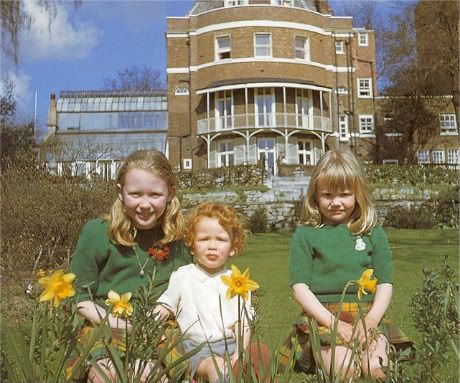
Hayley Catherine Rose Vivien Mills was born on April 18th, 1946 in London, England, her father being Sir John Mills, the celebrated stage and screen actor, and her mother Mary Hayley Bell, a playwright/novelist. Talent obviously was hereditary in the Mills family, for her older sister Juliet Mills, also became a well-known actress. A younger brother, Jonathan, was born shortly after too.

The children often spent time with their parents on tour, on the film sets, and at parties and because of this, were very intelligent and outgoing. 


During a cocktail party in 1958 at the Mills household, director J. Lee Thompson noticed the precocious young Hayley and suggested to her father that she audition for the role of Gillie in his upcoming thriller, Tiger Bay. The role was originally intended for a young boy but sporting a cropped top and a muddy pair of jeans, Hayley made do and played it as a “tomboy” to perfection. She was critically lauded for her part as the frightened little witness to a port-town murder and received a Silver Bear Award ( for special performance ) at the Berlin Film Festival.

Lillian Disney was among the admirers of this fresh new face and thought she’d be an ideal choice for the title role in Pollyanna. She suggested this to her husband, Walt Disney; he agreed, Hayley agreed, the Mills agreed, a five year contract was signed and presto! a star was born. Indeed, and what would Pollyanna ( 1960 ) had become if not for Hayley! With those big bright blue eyes and that enchanting grin, she became Pollyanna. Or rather…she simply played herself and Miss Goody Two-shoes forever became associated with Hayley. 


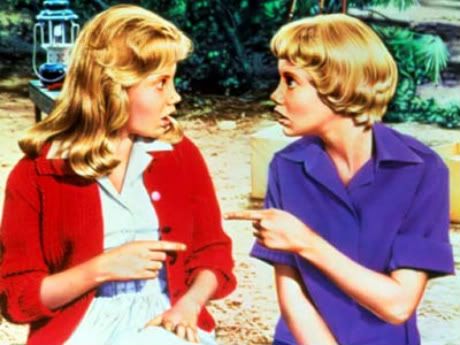
After the enormous success of Pollyanna, Walt Disney had his team of writers quickly develop another script for their star, and a popular German story by children’s author Erich Kastner called “Das Doppelte Lottchen” was rewritten as The Parent Trap. This tale of twin sisters who scheme to reunite their divorced parents was a perfect choice too…it gave Hayley the opportunity to play not one but two roles, and double Hayley, double the FUN ( and double the profits! ). To this day, The Parent Trap is Hayley Mill’s most recognized work on film. It’s no surprise either, it is such a wonderful and sweet movie. 

The film’s popularity established her as America’s favorite child actress ( in spite of being English and quite ladylike ) and throughout the early 60s Hayley’s face could be seen on posters, paperdoll books, magazine covers, record albums, and paperbacks. She had a pleasant singing voice too, and not only sang in most of her films but cut a few singles as well. 


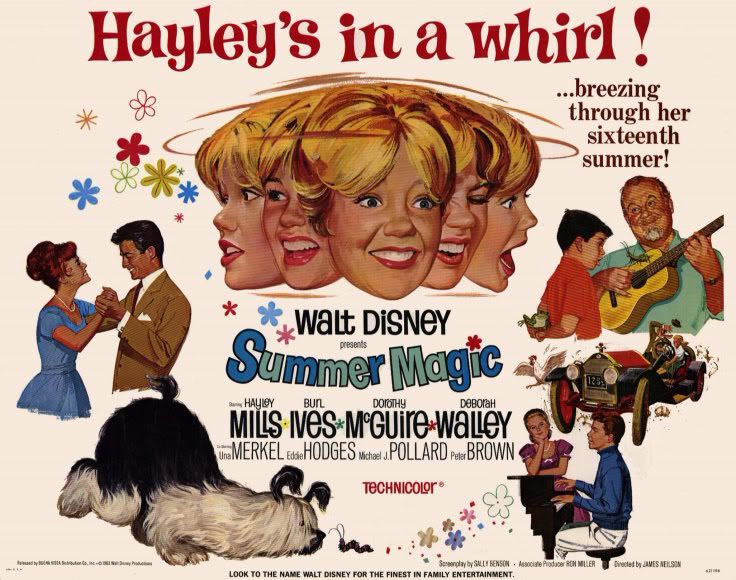
During the next several years Hayley went on to make four more pictures for Walt Disney Studios : the adventurous In Search of the Castaways ( 1962 ) with Maurice Chevalier and Michael Anderson Jr. ; the lovely Summer Magic ( 1963 ) with Dorothy McGuire and Burl Ives; The Moonspinners ( 1964 ), filmed with the scenic backdrop of Greece’s Cretan coast; and That Darn Cat ( 1965 ) with Dean Jones and Dorothy Provine. 


Her contract with Disney was not exclusive though and this permitted her to make many films for other studios as well. In 1963 she starred in the Rank production of Whistle Down the Wind, a story about a group of children in Lancashire who shelter a criminal believing him to be Jesus Christ. It was based on the novel of the same name, written by her mother. 


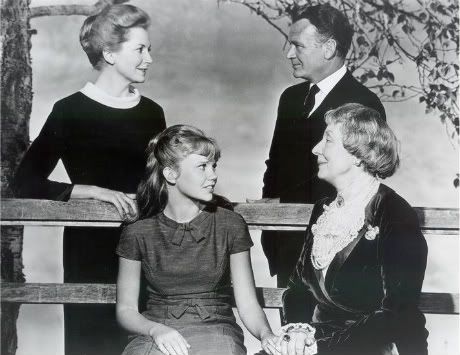
She displayed her underrated dramatic talent as a malevolent child of secrets in Universals’ screen adaptation of Enid Bagnold’s mesmerizing play The Chalk Garden ( 1964 ) co-starring her father John Mills and the beautiful Deborah Kerr. Hayley bit into her role as Laurel and delivered an in-depth performance where the sinister and vulnerable sides of her character are shown with great skill and emotion. 


Around this time she also starred in The Truth About Spring, once again cast opposite her father. James MacArthur, David Tomlinson, and Lionel Jeffries also starred in this light-hearted seafaring adventure, but even with such a grand cast it lacked that magical Disney touch ( which it sorely needed ). 

In 1965, Hayley’s contract with Walt Disney studios expired and the first role she took on as an “independent” was the heartwarming The Trouble with Angels, directed by Ida Lupino. Hayley was superb in this film and sadly, this was the last of her more wholesome adolescent roles.

She shocked her fans by appearing nude in the British drama/comedy The Family Way and even though she continued to make films frequently up until 1972, her popularity declined dramatically. Times were changing, public tastes were changing, and good roles were hard to come by. 

During the making of The Family Way, Hayley had a well-publicized affair with its director Roy Boulting ( 33 years her senior ). They lived together for several years before marrying in 1971, having a son Crispian in 1973, and then divorcing shortly after. 

In 1981 she starred in the miniseries The Flame Trees of Thicka about a young girl’s view on life on a British plantation in Africa. Of course, Hayley played the mother here…not the young girl. Yes, and her fans were old enough to be mothers themselves ( gasp! ). And with their children now watching The Parent Trap what better than to have sequels made... Not one, not two, but three were released by the Disney Channel. Hayley revived her role as Sharon McKendrick and now played a mother to her very own set of twins. 


During the 1990s Hayley Mills did many other Disney television movies and was quite popular on the series Good Morning, Miss Bliss and it’s spin-off Saved by the Bell. Today she still keeps herself busy with film and television work and makes appearances at numerous events. 

Hayley Mills is the pink of perfection. As children, we all grew up watching her and most of us { girls } grew to emulate her too. Her characters were always capable, cunning and cute and Hayley never had a shortage of that good ol' American spunk. Although I focused on her Disney films in this post, she made many a fine performance throughout her career. Hayley well deserves the title "Legend", not only for her work with the Disney Studios but because she is a legend. She is a true Pollyanna and her films bring a lot of joy into our lives. The words she once spoke about Walt Disney apply most certainly to herself as well... 

" You always come out of his movies feeling happier than when you went in and feeling better about humanity and the human condition " 

Saturday, May 25, 2013

Beloved Brat - Bonita Granville

Bonita Granville was one of Hollywood's finest and most versatile child actors. On the big screen she perfected a characterization of a malicious child that had not been portrayed previously. Bonita Granville was uniquely Bonita Granville....a "beloved brat". No other actress was quite able to rival her in these roles. Virginia Weidler was a contemporary and was often given mischievous juvenile parts but unlike Bonita she was perceived as a child. Naughty, and perhaps conniving, but nevertheless a child, whereas Bonita had a maturity about her that made her viciousness particularly fearful. She was the original "bad seed". It was not until the late 1950s that child actors like Patty McCormick and Martin Stephens ( "Village of the Damned" ) perfected these kinds of portrayals again. 

Bonita Granville was born on February 2, 1923 in Long Island, New York and came from a family rich in entertainment lineage. Her mother was Rosa Timponti, an actress, whose parents included a ballerina for the Ballet Russes in Monaco, and a conductor of the famed La Scala opera house in Milan, Italy. Bonita's father, Bernard Granville, was a vaudeville actor who had appeared with the Ziegfeld Follies on the New York stage. 

The Granvilles lost much of their fortune during the Great Depression and, due to an illness Bonita had contracted, decided to head out West to California, the land of promise and sunshine cures. Bonita quickly recovered and a casting director spotted the sprightly little blonde in a hotel lobby one day and decided she belonged in the "talking pictures". 


Her first role was in 'Westward Passage" ( 1932 ) at the age of tender age of nine. She played Little Olivia Allen opposite such big names as Ann Harding and a young Laurence Olivier. Other bit parts quickly followed in movies such as "Little Women", "Anne of Green Gables", and a small role in Noel Coward's "Cavalcade" ( 1933 ) which went on to win the Academy Award for Best Picture that year. It was in 1936 that Bonita performed in the movie that would really bring her to stardom - "These Three". Based on Lillian Hellmann's play, The Children's Hour, it told the story of two teachers whose lives are wrecked by the lies of one of their students. Bonita Granville played this student and was so utterly spiteful and malicious that she stole every scene she was in away from Miriam Hopkins and Merle Oberon. Her performance did not go unnoticed and she was nominated for an Academy Award for Best Supporting Actress ( not a "miniature" one either ). She lost to Gale Sondergaard for "Anthony Adverse" but her career was well boosted by the publicity and parts came pouring in. 

Unfortunately, many of these parts were once again roles calling for a particularly hateful child. In 1937's "Maid of Salem" she portrays a little girl who spreads accusations that Claudette Colbert is a witch who deserves to be burned. That same year she had minor roles in "The Plough and the Stars", "Quality Street", "My Bill", as well as the title role in "Beloved Brat". How well that title suited her! This film told the story of an unruly girl whose father sends her away to a private school where she reforms under the loving care of the principal ( played by the beautiful Dolores Costello ). 

As is often the case in Hollywood, many of the actors who portray the vilest villains onscreen are the sweetest characters in real life, and so was the case with Bonita Granville. She was called "Bunny" by her friends, which included Marcia Mae Jones, Helen Parrish and Deanna Durbin, and enjoyed horseback riding, dress designing, and collecting ivory elephant figurines. She spoke fluent French and Italian and was raised a devout Catholic, attending church regularly.

One of her first boyfriends was Jackie Cooper, another child star, whom she got to work with in "Syncopation"( 1940 ), a very un-syncopated story of two jazz-obsessed youths. 


In 1938, Warner Brothers cast her as the spunky Nancy Drew in the first of a series of four films featuring Carolyn Keene's beloved girl sleuth. Although the stories didn't bear much resemblance to the books they were a hit at the box-office and are today still a sheer delight to watch. Nancy Drew has remained her most fondly remembered role. Several other parts in mystery films developed because of the Drew series, including "Gallant Sons" ( with Jackie Cooper again ), a story of several boys who solve a murder, and "Down in San Diego" ( 1941 ) about a group of teenagers who foil an enemy spy ring. 


In 1940 she starred in two charming films that look back with nostalgia on America at the turn-of-the-century..."Wild Man from Borneo" ( with Frank Morgan ) and "Those Were the Days!" ( 1940 ) featuring William Holden in one of his first major roles. 


Bonita was finally getting roles for characters that let her exercise her range as an actress. "Seven Miles from Alcatraz" ( 1943 ) featured Bonita as the daughter of a lighthouse keeper
who aids two convicts in hiding from the authorities. Since one of the convicts happens to be handsome James Craig ( sigh ), romance naturally ensues between them. 


That same year Bonita starred in the film she claimed was her favorite, "Hitler's Children". This was a violent pot-boiler about the horrors young women had to face in the Vaterland for refusing sterilization for childbirth. It slipped by the censorship office under it's disguise of educational patriotic fare and became RKO's top box-office champion of the year, grossing over three million dollars. Tim Holt, Kent Smith and Otto Kruger also starred in this sensational expose. 

As with most juvenile leading ladies at MGM, Bonita got to star in several Andy Hardy films. In "Now, Voyager" she played Charlotte Vale's rather tart-tongued niece who helped drive Charlotte to a much-needed nervous breakdown. She also had meaty roles in two excellent films, "H.M Pulham Esq" ( as Robert Young's sister ) and the film noir classic, "The Glass Key" starring Alan Ladd and Veronica Lake. 


In 1947, Bonita married Jack Wrather, an entrepreneur, oil tycoon, and ex-Marine officer. In the years following she would let her career take a back-seat interest while she helped her husband grow Wrather Corporation into an entertainment and broadcasting empire. Throughout the 1950s, Jack Wrather acquired television properties such as "Lassie", "Sergeant Preston of the Yukon", and "The Lone Ranger" which were developed into icons of American pop culture. Bonita Granville Wrather took the helm as executive producer of "Lassie" while her husband pursued development of another branch of the corporation - tourist attractions.
In 1955, Walt Disney selected him to build and oversee the Disneyland Hotel across from which Wrather successfully did when others considered Disneyland a risky venture. 

Around this same time he also purchased Howard Hughes' Spruce Goose and a controlling interest in the Queen Mary in Long Beach, California and transformed them into tourist attractions. Along with Associated Television Ltd. of England, the Wrather Corporation founded International Television Corp. ( ITC ) which became one of the major television distribution companies of the 1960s and 70s.

During the 1950s Bonita kept busy with her involvement in Jack's interests as well as in raising their two children, Christopher and Linda. Little Linda appeared in several episodes of her parents television show "Lassie" as Wilhemena Brewster. Still, Bonita found time to appear occasionally on television in several Studio One and Playhouse 90 productions and in the film version of "The Lone Ranger". 


In later years she was a leader in charitable and civic causes and served on the boards of the Los Angeles Orphanage Guild and the Children's Bureau of Los Angeles. With Jack she helped support their good friend Ronald Reagan into the governorship and later with his bid for presidency. 


When her husband died in 1984, she directed the numerous enterprises of the corporation until its sale to the Disney Corporation in 1988. She also served as chairman of the American Film Institute from 1986 until her death at the age of 65, in 1988.

Bonita Granville began her career as a beloved brat and then blossomed into an All-American girl hero as Nancy Drew, and a lovely leading lady....and later in life grew to be a true humanitarian. Unlike many child stars, she had no difficulty in making the transition to adult roles. Perhaps this was due to the fact that her roles, even as a child, were well beyond her years. 

This post is my contribution to Comet Over Hollywood's Children in Film Blogathon dedicated to some of the cutest and most talented child stars of the golden age of film. To read  about the other entries in this series click here.