Showing posts with label German. Show all posts

Sunday, June 5, 2022

The Winnetou Films - Classic European Westerns

The Foreign Western Blogathon is taking place this weekend over at Moon in Gemini so we are joining in on the celebration of non-Hollywood westerns with this peek at one of Germany's most popular Western film series - the Winnetou Saga. 

The Winnetou films were based on Karl May's popular western novels dating from the late 1800s. Karl May penned nearly thirty tales of the great Apache warrior Winnetou and his blood-brother Old Shatterhand between 1875 and 1910 and millions of copies were sold throughout Europe. 

Old Firehand ( 1875 ) was the first book in the series and it tells the story of Winnetou, an Apache Indian chief. His father and sister are slain by the white bandit Santer so Winnetou seeks revenge and encounters Old Shatterhand, a scout, during his adventure tracking down this villain. At first, they perceive each other as enemies, but they soon become friends and, eventually, blood brothers. 

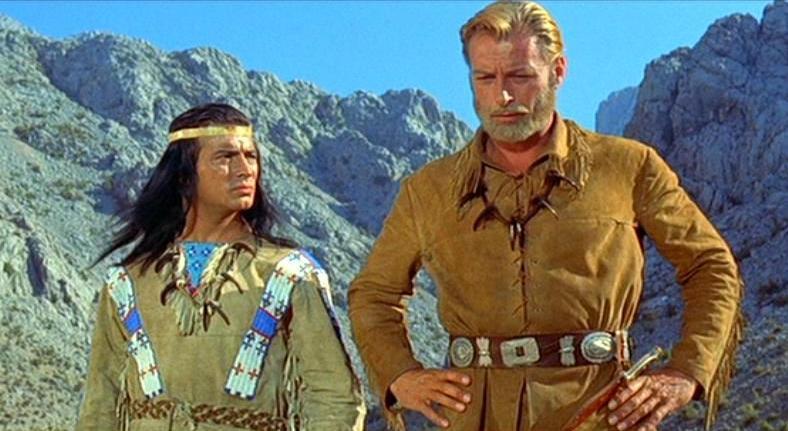
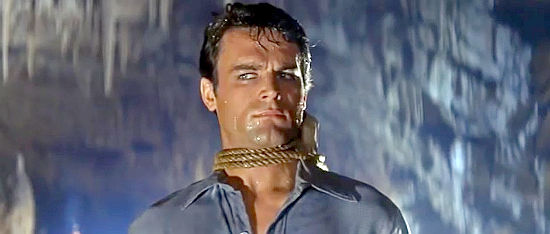
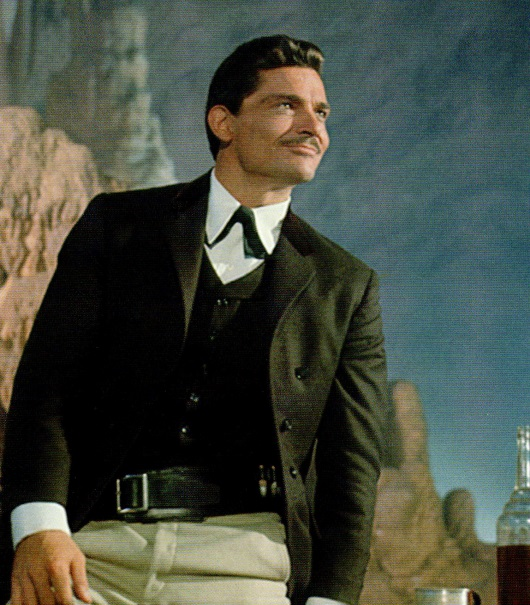
As popular as the books were, it was not until 1962 that Winnetou was first brought to the screen in a German-French-Yugoslavian co-production from Rialto Film studios titled Treasure of Silver Lake ( Der Schatz im Silbersee ). French actor Pierre Brice took on the role of the great Apache and American actor Lex Barker portrayed Old Shatterhand with other parts going to Götz George, Herbert Lom, and Karin Dor. The production was directed by Harald Reinl, a popular Heimatfilm director, and shot in color in the beautiful Plitvice Lakes region of Yugoslavia ( standing in the for the American West ). 

Treasure of Silver Lake had a modest budget but became a phenomenal success on its release, ranking as the highest-grossing film in Germany in 1962 and raking in sales throughout France, Italy, Spain, Russia, and Eastern Europe. Its unexpected success launched the production crew into making a sequel within the next few months and in 1963, Winnetou the Warrior aka Apache Gold, was released. This film was even more popular than Treasure of Silver Lake and the cast and crew once again plunged into a follow-up film. 

A total of eleven Winnetou films were released between 1962 and 1968 with each subsequent film boasting a larger budget and cast ( Stewart Granger took over as Old Shatterhand when Lex Barker left the series ). The films were re-released for years to come and, in 1980, a television mini-series was made featuring Winnetou - Mein Freund Winnetou. It was the success of the Winnetou pictures that even inspired Italian director Sergio Leone to create the first of his own series of "spaghetti westerns" - A Fistful of Dollars - in 1964. 

Instead of reviewing each film in the series, we have put together some photos from each of the films to give you a hint at what the Winnetou Saga has to offer. 


The Winnetou Films

  • Treasure of Silver Lake aka Der Schatz im Silbersee ( 1962 )
  • Apache Gold aka Winnetou 1 Teil ( 1963 )
  • Old Shatterhand ( 1964 )
  • Last of the Renegades aka Winnetou 2 Teil ( 1964 )
  • Frontier Hellcat aka Unter Geiern ( 1964 )
  • Rampage at Apache Wells aka Der Olprinz ( 1965 )
  • The Desperado Trail aka Winnetou 3 Teil ( 1965 )
  • Flaming Frontier aka Old Surehand 1 Teil ( 1965 )
  • Winnetou and the Crossbreed aka Winnetou und das Halbblut Apanatschi  ( 1966 )
  • Winnetou and Old Firehand aka Winnetou und sein Freund Old Firehand ( 1966 )
  • The Valley of Death aka Winnetou und Shatterhand im Tal der Toten ( 1968 )


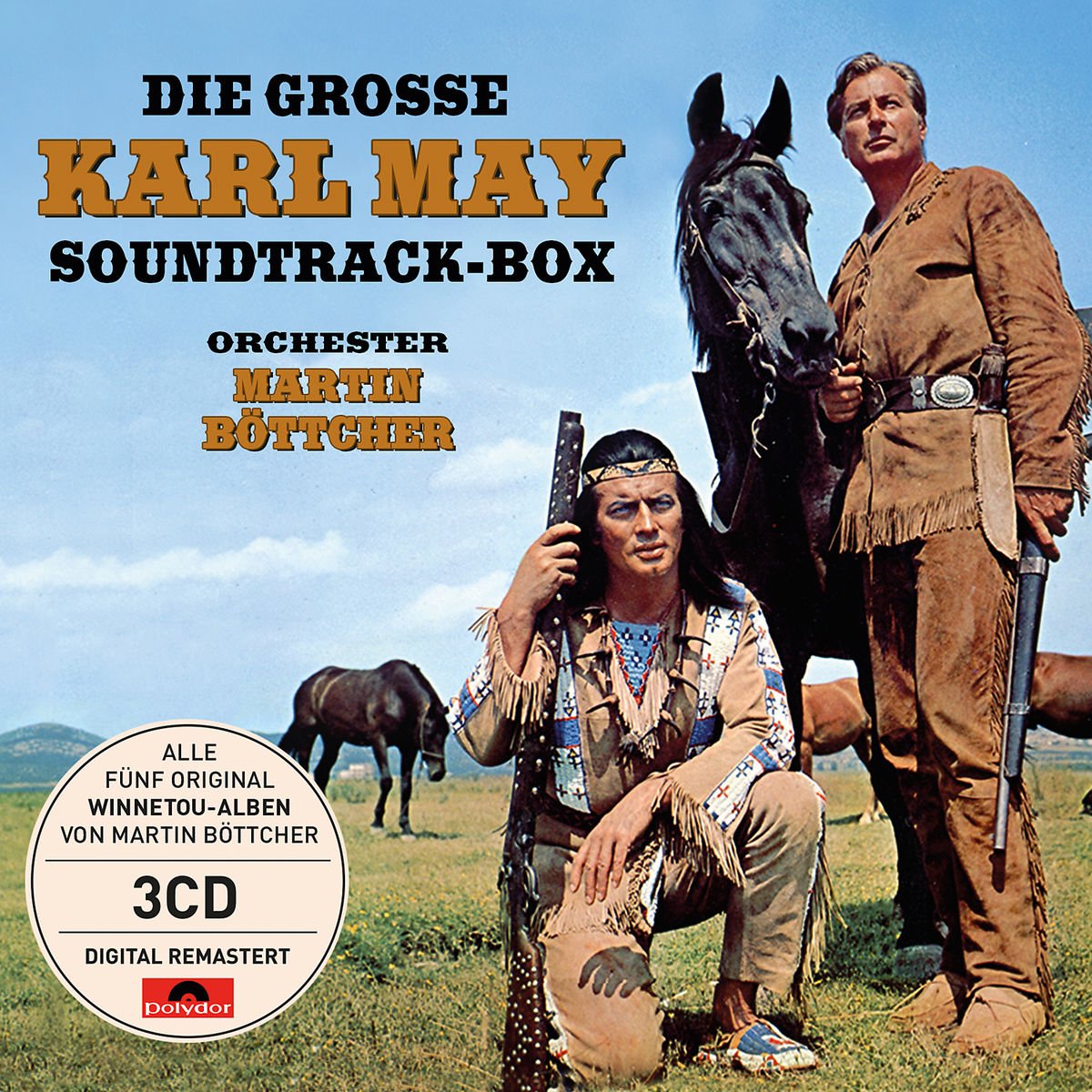
Click here to watch some of the original German trailers, and you must definitely check out Martin Bottcher's fantastic Winnetou theme ( this particular link is for the Old Shatterhand film ). 

Sunday, February 9, 2020

Der Klosterjäger ( 1953 ) aka The Monastery's Hunter

Haymo ( Erich Auer ) is the official "jäger" ( forest ranger ) for the monastery at Berchtesgaden. One day while patrolling the mountains he hears a cry for help. It is Gittli ( Marianne Koch ), a young woman who lost her footing on a dangerous cliffside while picking flowers. Haymo rescues her and falls in love with her at first sight. 

Gittli brings the flowers that she picked to the bailiff hoping to win his favor as she pleads on behalf of her brother Wolfrat ( Kurt Heintel ) for extra time in paying the rent that is due for their family's hut. During the 1600s ( the time of the story's setting ), provinces in Germany were owned by princes who required their tenants to pay them rent money for their farms. Gittli's brother is a desperate man. He not only has no money for the rent, but his daughter is also terribly ill. The local "bader" ( country doctor ) tells him that only the sweat of an ibex can cure his daughter. 

Hunting game of any kind is strictly verboten, but Wolfrat decides to risk being caught by the jäger Haymo in his attempt to shoot an ibex ( a large wild goat ) to save his daughter. However, he is spotted and, in fear, he stabs the jäger as he tries to escape. Poor Gittli then attempts to save the life of her beloved Haymo, while worrying that her brother will be caught for his crime. 
Der Klosterjäger was the third film adaptation of Ludwig Ganghofer's classic novel of the same name. It paired two actors who were extremely popular in the Heimatfilme genre - Erich Auer and Marianne Koch. They made a lovely couple onscreen. Auer was an Austrian actor who became a rather unlikely leading man in the 1950s, often playing in historical films. Marianne Koch had a long career both in Germany, Italy, and the United States and is best known to American audiences for playing Marisol in A Fistful of Dollars ( 1964 ). For many years she was a panelist on the German version of "What's My Line?" and later switched careers to become a doctor. 
Like most fairy tale romances, Der Klosterjäger has a predictable plot, yet this doesn't mean it fails to be entertaining. There is a mountaintop bear fight, plenty of drama, and the location filming in the Bavarian Alps is beautiful. The sets are also excellent, and the supporting cast is made up of many familiar German character actors including Willy Rösner, Karl Skraup, and Paul Hartmann. Also in the cast is Paul Richter who starred as Haymo in the 1935 film adaptation. 

Der Klosterjäger is still shown frequently on ZDF, a German television channel, as one of the "classics". It is not available on DVD in the United States but appears occasionally on Youtube. 

Monday, April 29, 2019

Heimweh....dort wo die Blumen Blüh'n ( 1957 )

Somewhere I read that if you watch one Heimatfilm you've seen them all. That is a bit of a stretch, but it is true that after seeing twenty or so, they begin to blur together. 

In Hollywood pictures you would find character actors who appeared more frequently in one type of genre than in others...e.g Harry Carey Jr. or Edgar Buchanan liked westerns while Marjorie Main and Mary Wickes preferred comedies. In Germany, this was also the case, and many of the main actors and supporting players who starred in Heimatfilms enjoyed that genre and made a number of them. So you cannot rely on the actor's faces to bring to mind the title. Then, the similarities of the titles do not help matters much either. This film, Heimweh....dort wo die Blumen Blüh'n ( 1957 ), is not to be confused with Heimatlos ( 1958 ), Wenn die Alpenrosen blüh'n ( 1955 ), Solange noch die Rosen blüh'n ( 1956 ), or Dort oben, wo die Alpen glühen (1956). Lots of bloomin' titles! 

In this film, you will find a little more drama than usual in a Heimatfilm. A young woman ( Sabine Bethman ) attempts to commit suicide by throwing herself into a river but is saved by a priest  ( Hans Holt ) who is traveling with a busload of sängerknaben ( choir boys ). The priest takes her to the monastery and the boys and the parish staff all try to cheer her, but to no avail. It is not until she enters confession with Father Benedict and tells him the story of her lost romance that she feels her depression begin to subside. Of course, this flashback sequence is for the benefit of the audience who get to witness a little romance between her and her engineer supervisor ( Rudolf Prack ). 

Heimweh has some pleasant moments but on the whole, it is very forgettable. The only memorable part of the film is its theme song "Heimweh" performed by Freddy Quinn and played throughout the movie. Freddy was an extremely popular entertainer from Austria and "Heimweh" ( the German version of Dean Martin's "Memories are Made of This" ) was his first million-selling hit single. So it seems as though Heimweh...dort wo die Blumen Bluh'n was the result of some screenwriters who hurriedly typed out a script to cash in on the popularity of the song. 

The film also features a great supporting cast but unfortunately, their talents are all wasted in parts that are too insignificant. The lovable Joseph Egger could have been a comforting character to the poor young woman but instead, he is in only a few scenes tinkering with a radio or bickering with Annie Rosar, another great actress who has too small a part. 

Hans Holt may be familiar to The Sound of Music fans because he played Captain von Trapp in the original Die Trapp Familie ( 1956 ). Rudolf Prack is always a pleasure to watch, and also in the cast is Paul Horbiger, a legend in German cinema. 

Heimweh....dort wo die Blumen Blüh'n is not yet available on DVD but if you are willing to see where "the flowers bloom" then you can view it on Youtube.

Sunday, January 27, 2019

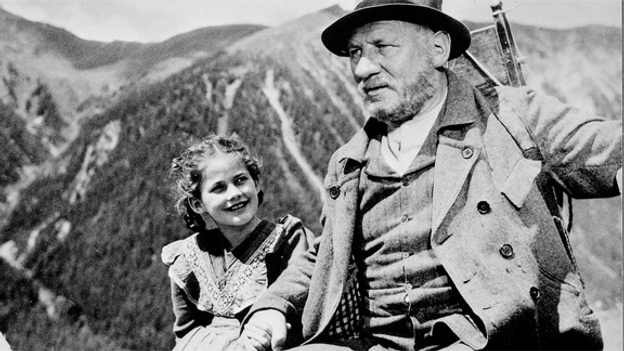
Heidi ( 1952 ) and Heidi ( 1965 )

Johanna Spyri's beloved children's novel "Heidi" ( 1881 ) was first brought to film in 1937 with Shirley Temple in the starring role. It was a sweet film that, I think, perfectly captured the heart of the novel even though it wasn't true to the original story. This still remains the most popular American production of "Heidi". There has been over 18 different film and television adaptions since, including a popular 1968 TV movie starring Maximilian Schell.

Heidi is about a little girl who comes to live in a secluded mountain chalet with her stern grandfather. One day, her aunt Dete takes her - against her will - to live in Frankfurt as a hired companion to a wealthy girl named Clara, who is regarded as an invalid. Even though Heidi is homesick, her simple kindness and positive outlook help to heal Clara. Eventually, she is taken back to her grandfather who then realizes how much he loves Heidi and how much he missed her. 

In Europe, it was not until 1952 that "Heidi" was made into a movie and this version is still considered by many fans to be the most accurate adaptation of Spyri's novel. The film stars Elsbeth Sigmund in the title role and features a slew of popular European actors in supporting roles. The film was dubbed in both English ( in 1954 ) and French ( with Francoise Dorleac speaking as Heidi ).
Heidi is an adorable little girl but - since I'm partial to the Hollywood version - she seems to lack Shirley Temple's charm. Elsbeth Sigmund's Heidi neither possesses the influential nature to change Clara's outlook nor to soften both her aunt and governess Rottenmeier's attitudes.

The rest of the cast is wonderful. Heinrich Gretler, a marvelous actor, plays Heidi's grandfather; Isa Günther ( Das Doppelte Lottchen ) is Clara; Willy Birgel plays Clara's father, and Elsie Attenhofer is Dete. Theo Lingen, a very popular German actor and comedian of films of the 1940s-1960s, is great as Sebastian, Herr Sesemann's butler, and proves to be a fast friend to Heidi.

Heidi was so popular throughout Europe that Heidi und Peter, the sequel, was released just three years later. This film features the ending from the original novel with Clara coming to visit Heidi and her grandfather in the mountains and learning to walk. 

In 1965, Heidi was also remade in color scene-for-scene in an Austrian production with Eva Maria Singhammer in the title role. Gustav Knuth played Heidi's Großvater and Rudolf Prack had a brief part as the priest. Like the 1952 version, this film featured beautiful music but it, too, lacked the heart needed to make the story come alive. So it looks like, in spite of all the film versions of "Heidi" that exist, the ideal one has yet to be made. 

Monday, September 3, 2018

Love is Forever ( 1954 ) aka Und Ewig Bleibt die Liebe

Some films have a way of drawing you into the story within the first ten minutes. Perhaps it is a practice that screenwriters learned from newspaper journalists who knew how to "hook" the audience with the first lead line. Hollywood productions had this act down pat. German productions were not so good at this technique, and it usually takes twenty minutes before you find yourself attached to the characters. But there were some exceptions. 

Une Ewig Bleibt die Liebe ( "Love is Forever" ) is one of those exceptions. The plot is rather simple and there is never anything exciting going on in the film and yet it has a lot of drama, and it is presented in such a soapy fashion to make it irresistible. 

The Swedish beauty, Ulla Jacobssen, who made a name for herself in Arne Mattsson's One Summer of Happiness ( 1951 ), stars as Marieke, a young woman who was adopted by the Vogelreuther family as a baby. She recently discovered that her birth mother is none other than "die Elster" - "the Magpie" - ( Hilde von Stolz ), the village thief and drunkard. She was recently released from prison after serving eight years in jail. This shames Marieke to no end. She loves her adopted parents and sister more than anyone else but feels she ought to publicly acknowledge her birth mother. 
This angst over her mother is ruining her love life, too. Georg ( Karlheinz Böhm ), her cousin, has loved her for years but she never returned his love because she knows he feels bound in gratitude to the Vogelreuther's as well and they want to see him marry Trude, Marieke's little sister. Georg does show affection for Trude ( Ingrid Andree ) and at the beginning of the film we learn they are to be wed in less than a week's time. Georg would still rather marry Marieke but she would never marry him now because she knows how much her sister loves him and her sister's happiness is more important to her than her own. So, as you can see, there is quite a bit of drama going on in the film.... And it is played out really well, especially by the principal leads. 

Paul Dahlke and Magda Schneider ( Romy Schneider's mother ) also star in the film as Marieke's adopted parents. 

Love is Forever was based on the play "Johannisfeuer/Fires of St. John" by Hermann Sudermann. In Germany, where the film takes place, the celebration of the midsummer solstice on St. John's Eve ( June 23/24 ) is extremely popular. People light huge bonfires which they dance around well into the night. The festival is featured in the film and also in Johannisnacht, released in 1956, which features this celebration near the climax.

The story of Und Ewig Bleibt die Liebe is a good example of how gratitude, when taken too far, can ruin people's lives. Instead of being honest with their feelings to those they love, both Marieke and George would rather sacrifice their own happiness for the family that raised them. 

Want to watch Und Ewig Bleibt die Liebe right now? It's available on Youtube...just click here. 

Thursday, May 24, 2018

Das Doppelte Lottchen ( 1950 ) - The Original Parent Trap

If you ever read the credits to Walt Disney's The Parent Trap ( 1961 )  you would have noticed that the film was based upon a book by the popular German author Erich Kastner entitled "Das Doppelte Lottchen" which was written in 1949. As famous as The Parent Trap was in the States, few children or adults can claim to have read the book....ourselves included. But last week, we did see the original German film that Disney based The Parent Trap on, and it is absolutely delightful. 

Like the Americanized version, Das Doppelte Lottchen tells the story of twin sisters who were separated at birth by their parents, with the father and the mother each taking one of the girls. The children meet up by accident at a summer camp and, once they realize they are sisters, they decide to switch places so that they can have the opportunity of meeting the parent they never knew. Of course, they know that their parents will notice the switch in due time but that is a part of their scheme, too, because their parents will then have to reunite to un-switch them. Clever gals! 

Erich Kastner wrote the screenplay to and narrated this entertaining adaptation of his novel, which was directed by Josef von Báky, a Hungarian filmmaker best known for directing Munchausen ( 1943 ). Lotte and Luise, the twins, are portrayed by two real-life twins, actresses Jutta and Isa Gunther, and while they are not quite as appealing or as natural as Hayley Mills doubled-up, their performances are very good....and quite different.  
Hayley's Susan and Sharon got easily frustrated with their parents ( especially their father's plans to remarry ), but Lotte and Luise take things with a calmer and sadder attitude, which seems a bit more true-to-life. This makes their parents' separation all the more heartbreaking because the two gals lack the independent spunk needed to offset their single-parent upbringing. Each one is especially close to the parent who raised them and, once they meet the father and mother they never knew, they come to love them, too. However, they have no scheme in mind for foiling their father's plan to remarry, which is an interesting change to note. In American films, children are often shown outwitting their parents, or cleverly manipulating them for their own benefit, because this appeals to younger audiences but, in Germany, one doesn't often find that kind of plot line in films. 

The twins' father, Papa Ludwig ( Peter Mosbacher ) is a youthful good-natured man with a passion for music. He is a composer and conductor of opera and resides with Louise and their housekeeper in a large apartment in Vienna, Austria. Their mother, portrayed by Antje Weisgerber, works at a newspaper office. She is less formal, enjoys nature, and lives in a smaller apartment with Lotte in Munich. The differences between the children's upbringing are not as great as the screenwriters made it out to be in the 1961 Disney version, and so they are able to pull off the "switch" with greater ease. In fact, the parents have no inkling that their daughter is not the same girl who they dropped off at summer camp. 
Das Doppelte Lottchen lacks the beautiful setting ( especially that fabulous California ranch that Mitch Brennan owned ) and the humor of Walt Disney's remake but more than makes up for it in heart. The affection that the parents show their children is wonderful to see and Erich Kastner's commentary throughout the film is enjoyable to listen to as well - rarely do authors narrate a film based on their own book! 

Wednesday, February 28, 2018

Vater Braucht Eine Frau ( 1952 ) aka Father Needs a Wife


Who wants to get a new housekeeper when you can have a new mother? 

Widower Hans Neumeister and his four children have just lost their most recent housekeeper who, like the other women before her, stormed out in aggravation over the children's playful antics. So Papa Neumeister is once again on the hunt for a housekeeper...but his children have other plans. They would rather have a permanent live-in housekeeper - a new mother! 

On behalf of their father, they place an ad in the marriage column of a local newspaper and within a day receive over 30 written responses from a variety of women, many of whom included a photograph of themselves. One photo, in particular, catches their eye, that of Susanne Meissner who happens to be standing in front of a chateau next to a Mercedes 300. The children do not realize that Susanne is not a well-to-do society woman, but simply a fashion model. However, once their father has a chance to meet her, her lack of high-society status becomes very unimportant. 

Vater Braucht Eine Frau is a charming film that combines all the elements of great family entertainment: humor, romance, and parallel plots that both children and adults could enjoy. The dialogue is timeless, the cinematography ideal, and the music ( by Franz Grothe ) is lovely....but what really makes the film work is the spot-on casting. Each of the principal actors is wonderful in their parts. 
This was the first film to feature the pairing of Ruth Leuwerik with Dieter Borsche and it established them as one of the most popular onscreen duos of the 1950s. They would go on to make five films together. 

Dieter Borsche brought warmth and a surprising comedic flair to the role of Hans. This unusual casting, at the time, echoed Walt Disney's unorthodox casting of Western hero Brian Keith as Hayley Mill's father in the family comedy The Parent Trap ( 1961 ). Who would have guessed that these men were so good at comedy? In one scene, Hans returns home to his apartment after a date with Susanne and, being on cloud nine, releases his joy by swinging on his children's indoor swing. Without a word, Dieter manages to express the elation of a widower who didn't believe he could ever fall in love again. 

Ruth Leuwerik is lovely as Susanne. Although she made one film before Vater Braucht Eine Frau, it was this comedy that launched her to stardom. Her role as Maria von Trapp in Die Trapp Familie and Die Trapp Familie in Amerika later established her as "The First Lady of German Cinema". Ruth had a way of projecting so much emotion with the slightest of gestures and she brings a hint of a maternal nature to Susanne which helps draw her to the children. 
Angelika Meissner leads the children's cast as Hans' eldest daughter Ulla. Like Ruth, Angelika had very expressive eyes and often conveyed more than what the script may have called for. She was excellent in parts like this. She later went on to play Dick in Die Mädels vom Immenhof ( 1955 ) one of the most popular family films of all-time ( in Germany ). Portraying the younger Neumeister boys are curly-haired brothers Urs and Migg Hess and little runny-nose Oliver Grimm. 

Also in the cast is Günther Lüders, a well-beloved German comedian, and Bruni Löbel as "Cuckoo".

Sunday, December 24, 2017

The Trapp Family ( 1956 ) - The Original Sound of Music

Every Christmas season for the past ten years, ABC has been airing The Sound of Music ( 1965 ) which has sparked a new holiday-viewing tradition for many. Well, nine years before Julie Andrews portrayed the real-life nun-turned-governess Maria von Trapp in the famous musical, Ruth Leuwerik took on this role in Die Trapp-Familie aka The Trapp Family ( 1956 ). 

Anyone who has not seen this German classic would be surprised at just how similar it is to the 1965 Robert Wise remake... and how quickly the story chugs along without the musical interludes. Yes, the original The Sound of Music was not a musical! There are, of course, a few numbers that the children perform for their audiences ( and one lovely piece that Ruth Leuwerik sings to the children ), but instead, the film focuses more on Maria befriending the Trapp household and how they made their start in America as a family. 

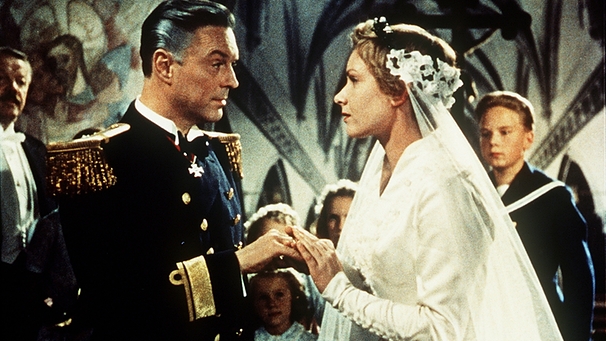
Die Trapp-Familie begins in Salzburg in the early 1930s. Maria, a happy energetic novice who teaches children at a convent, learns from her superior that she will be sent to the home of Captain von Trapp ( Hans Holt ) to tutor his seven children. The task is not an easy one for the children have driven away 26 governesses within the past four years, but Maria quickly gains their admiration and their love. She also wins the affection of their father, and within a short period they wed. As the children's governess, Maria had taught the children to laugh and play - and to sing - which is something they had not done with the disciplinarian naval captain. 
When the local priest, Dr. Wasner ( Josef Meinrad ) hears the children singing together, he helps to train them so that they may perform for charity benefits. It is during one of these benefits that a talent scout for an American song agency notices them and offers the family a contract to perform in the States. This proves to be a fortunate invitation because Captain von Trapp had lost much of his wealth during the Depression and the Nazis emergence made Maria and the Captain realize it was time to leave Austria which was becoming a totalitarian regime. However, their arrival in the States isn't all roses and fanfare, especially when the talent scout informs them that their act is no longer wanted and they find themselves Trapp-ed at Ellis Island! 

Die Trapp Familie is a beautiful film with a lot of heart. It bears many similarities to The Sound of Music, from the lovely cinematography down to the almost identical costume designs, and it differs only in its emphasis on certain aspects of the von Trapps' life. For example, the drama of the rise of the Nazi power and how this influenced the Captain to flee Austria is very much downplayed. Also, the children are not as predominately featured and are younger than they were cast in The Sound of Music. 
What I enjoyed most about the original film is its realistic portrayal of the von Trapps coming to America. In typical Hollywood fashion, The Sound of Music closes sensationally with Christopher Plummer, Julie Andrews, and the children climbing the Alps into Switzerland carrying all of their belongings on their backs. In Die Trapp Familie we see them at the overcrowded immigration gateway of Ellis Island huddled together with other immigrants awaiting entrance into the States. When they are told that it would be weeks before they are permitted to work, Maria cries, blaming herself for bringing the family into this situation. Somehow this seems much more credible! 

The film also boasts an impressive cast comprised of some of Germany's most famous stars. Ruth Leuwerik, who is often cited as the First Lady of German Cinema, is an enchanting Maria von Trapp. She deftly portrays Maria in all her stages of growth: as a youthful zealous nun, to a clever governess, to a protective mother of seven. Hans Holt is a much more appealing Captain von Trapp than Christopher Plummer, while the children are excellently cast, too. 
Upon its release, Die Trapp Familie was such a box-office sensation in Europe that a sequel - Die Trapp-Familie in Amerika - shortly followed which depicted the family's continuing adventures in Vermont. Unfortunately, the US release of The Trapp Family in 1956 did not fare well. It was not until The Sound of Music hit theaters in 1965 that audiences fell in love with the story of the von Trapps, undoubtedly due to the appeal of the beautiful Rodgers & Hammerstein melodies. 

Sunday, December 10, 2017

Nugget Reviews - 24

Alas, there be no golden nuggets among this batch of films, but some of these movies are mighty entertaining nonetheless. 

Can't Help Singing ( 1944 )  14k 


A senator's daughter joins a wagon train en route to California in the hopes of meeting up with the lieutenant she wants to marry. On the way, she falls in love with a card shark. Deanna Durbin, Robert Paige, Akim Tamiroff, Leonid Kinskey, Ray Collins, David Bruce. Universal Pictures. Directed by Frank Ryan.

After making thirteen black-and-white films, the powers-that-be at Universal Studios decided to showcase their number one box-office attraction, Winnipeg's Sweetheart, in her first Technicolor production Can't Help Singing. The film was a great success combining light-hearted comedy and romance with beautiful western locales and some lovely tunes by Jerome Kern ( which were nominated for two Oscars ). A slew of wonderful character actors also appear, including Akim Tamiroff and Leonid Kinskey, who do a great bit of schtick involving Durbin's trunk. 

___________________________________________________________

How to Frame a Figg ( 1971 ) 14k


A city accountant gets framed by crooked politicians in a $50,000 swindle and must use the new accounting computer, L.E.O, to help him prove his innocence. Don Knotts, Frank Welker, Joe Flynn, Edward Andrews, Elaine Joyce. Universal Pictures. Directed by Alan Rafkin.

Don Knotts is fun to watch in every movie he made. How to Frame a Figg isn't as memorable as The Ghost and Mr. Chicken or The Reluctant Astronaut but it has its moments...many of them highly amusing. This was the last of a series of comedies that Knotts made for Universal Pictures. Later, he would team up with Tim Conway in such Disney classics as The Apple Dumpling Gang and Hot Lead, Cold Feet. Incidentally, while Frank Welker was great as Hollis' friend Prentiss, Tim Conway would have been an even better addition to the film. 

         ___________________________________________________________


The Man from the Alamo ( 1953 ) 14k.


John Stroud is branded a coward when he leaves the scene of the Alamo to check on his and the other soldiers' families back at their ranches in Ox Bow, but he later gets a chance to prove his courage when he protects a wagon train being attacked by a gang of outlaws. Glenn Ford, Julie Adams, Chill Wills, Victor Jory, Hugh O'Brien. Universal Pictures. Directed by Budd Boetticher. 

Throughout the 1950s, Budd Boetticher directed a number of low-budget westerns starring Randolph Scott. The Man from the Alamo could have easily been a Scott western, but instead, it stars the delightful Glenn Ford as the downcast soldier Stroud who is branded a coward. Julie Adams, one of the busiest Western stars of the era, didn't get much of a romantic part in this movie but adds a feminine touch to a very masculine film. Little Marc Cavell is also adorable as Stroud's only friend, Carlos. Overall, it's an entertaining but not very memorable western. 

___________________________________________________________

The Unholy Intruders aka Hinter Klostermauern ( 1952 ) 14k.


A middle-aged man returns home from the war and, unable to find lodging for his girlfriend and child, he moves them into an abandoned convent. When the nuns return to occupy it again, he refuses to leave and his presence proves to be a thorn to the nuns. Olga Tschechowa, Philip Dorn, Katharina Mayberg, Dorothea Wieck. Delta-Venus. Directed by Harald Reinl.

Thomas and Kathrin are two protagonists that you instantly want to hate, and it is very difficult for a film to hold the attention of its audience with the presence of anti-heroes. Yet, as Thomas ( Philip Dorn ) is just about to go from bad to worse, he has a change of heart and his redemption becomes the drawing feature of the film. Olga Tschechowa, that legend of the silent era, plays the prioress in this movie with such conviction. At one time Olga was accused of being a Russian agent in Nazi Germany. She obviously knows how to play many parts well! 

___________________________________________________________


Anne of Windy Poplars ( 1940 ) 14k


Anne Shirley takes up her first position as vice-principal in the town of Windy Poplars but finds she must first win over hostile faculty and feuding citizens before she receives a welcome. Anne Shirley, James Ellison, Slim Summerville, Henry Travers, Louise Campbell. RKO Pictures. Directed by Jack Hively. 

Six years passed before RKO decided to film a sequel to Anne of Green Gables ( 1934 ) which was based on L.M. Montgomery's book series of the same name. Anne Shirley, who portrayed Anne Shirley in the original film, returns to her namesake role, this time playing an older and more mature schoolteacher. The film trots along at a gentle pace and, while it isn't anything special, there are a number of good scenes, especially those involving character actors Slim Summerville and Henry Travers. Poor Anne sure has to put up with a lot of curmudgeons in Windy Poplars, but with her gentle ways she naturally wins them over by the end of the film....and gains a daughter too.