Showing posts with label Chitty Chitty Bang Bang. Show all posts

Saturday, September 13, 2025

Film Albums: Big Hits from Chitty Chitty Bang Bang by the New Christy Minstrels


The MGM Classics channel aired Chitty Chitty Bang Bang (1968) this afternoon and that was so enjoyable to watch that I followed up the pleasure by listening to the album "Big Hits from Chitty Chitty Bang Bang" released by Columbia records. There were many Chitty albums released after the film became popular, but this one is unique because the songs are performed by the New Christy Minstrels folk group along with Arthur Treacher. Yes, you read that correctly, Arthur Treacher, the toe-tapping butler of the Shirley Temple films (or if you prefer, the founder of the fish and chicken fast-food chain).

The New Christy Minstrels had big hits with "Green, Green" and "Today" in the early 1960s, during the Hootenanny craze. You would think that these beautiful Sherman Brothers songs wouldn't sound very well converted to folk songs complete with banjo and tambourine, but it is actually an entertaining blend and Arthur Treacher's voice is well-suited for "Posh" and "You Two." The only unusual song added to the album is "Fun Fair" which may have been a music-only track on the original album that had lyrics added to it because it certainly wasn't in the original film.

Click here to listen to the full album on Youtube. 


Track Listing


Side One:


"Chitty Chitty Bang Bang"

"Posh!"

"Hushabye Mountain"

"Doll on a Music Box/Truly Scrumptious"

"Chu-Chi Face"

"Fun Fair"

Side Two:

"Me Ol' Bamboo"

"You Two"

"Roses of Success"

"Lovely Lonely Man"

"Toot Sweets"

"Chitty Chitty Bang Bang - Reprise"

Top Music Picks: Hushabye Mountain, Doll on a Music Box/Truly Scumptious, You Two, Lovely Lonely Man

Saturday, March 10, 2018

Hayley Mills & The Chitty Chitty Bang Bang Windmill

Every fan of the 1968 musical Chitty Chitty Bang Bang remembers inventor Caractacus Potts' beautiful workshop, but what many do not know is that the windmill where it was filmed was once owned by Hayley Mills, the star of numerous Walt Disney films of the 1960s. 

In 1967, producer Albert "Cubby" Broccoli sent location scouts throughout the English countryside to select a picturesque windmill to become the workshop of the magnificent inventor Professor Potts, portrayed by Dick Van Dyke. In the parish of Ibstone in Buckinghamshire, they discovered Cobstone Mill, a lovely 1816 smock mill that was used to grind cereal until the late 1800s. After a fire damaged the center post, the mill went into disrepair and, by the time the scouts discovered it, it needed extensive renovation. Broccoli footed the bill for a cosmetic restoration....of the exterior only. Paper sails were fitted to mock blades that actually worked, making the sails turn in the wind. Since the scenes featuring the interior of the workshop would be shot on a soundstage, there was no need for repairs to be made on the inside of the mill. 
Three years after Chitty Chitty Bang Bang was released in theaters, Hayley Mills and her husband, director Roy Boulting, discovered the mill and purchased it at an auction for £30,000. Over the next four years, they invested nearly £90,000 in restoring the mill, which proved to be quite a challenge. By 1975, they had the mill up for sale...at a cost that just about covered their restoration expenses. It looks like Mills was put through the mill for that purchase.

Since the 1960s, Cobstone Mill has been seen in television episodes of The New Avengers, Midsomer Murders, Jonathan Creek, and Little Britain. Today, it still stands proudly overlooking the village of Turville and is admired by the occasional Chitty Chitty Bang Bang fan who happens to be passing by. 

This entry is a part of our series entitled "Did You Know?".....sometimes we just feel like sharing interesting fragments of television and movie history and now we have a place to do just that. If you have a hot tip that you would like us to share on Silver Scenes, drop us a line!

Friday, May 20, 2016

Baron von Bomburst of Chitty Chitty Bang Bang ( 1968 )

"I vaaahnt dat caaar!"

When Baron von Bomburst wants something you can be sure he'll get it, for his minions will go to any length to satisfy the childish whims of their dictator, or else.....their heads would roll! 

Baron von Bomburst is different than your usual villain because he doesn't look dangerous. In fact, he looks quite amiable with his curly Bavarian mustache and beady black eyes. But mentally, he is quite verrückt. He's a pirate masquerdaing as a king, with no interest whatsoever in the well-being of his people. The baron believes that the peasants are only there to serve him, and his subordinates realize that the only way they can spare their own lives is by kowtowing to the demands of their mad ruler. 

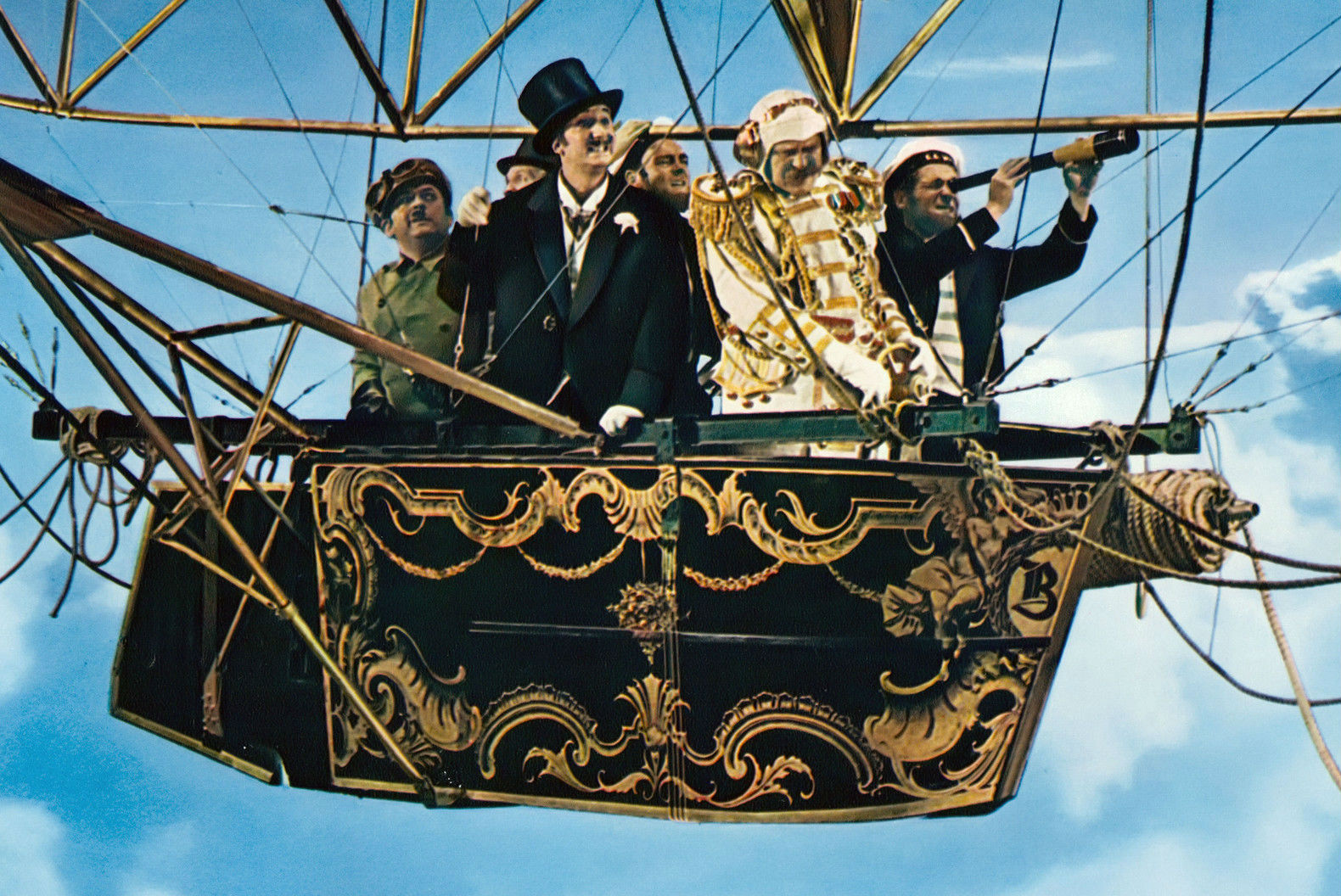
One day, while patroling the sea for ships to capture, the Baron happens to spy Professor Caractacus Pott's beautiful motorcar Chitty Chitty Bang Bang skimming gracefully across the waters, and decides then and there that he must get his hands on the floating car to add to his collection of toys. ( Yes, he's a pirate who likes toys ). When he discovers that the car can fly, too, he demands its capture and employs his top henchmen to retrieve it for him....namely, his two spies X and Bacon. Together, they devise ingenious ways to capture the car, but when all else fails, the Baron resorts to kidnapping the Professor to build the same such motorcar for himself...only, being the blunderer that he is, he kidnaps Grandpa Pott's instead! 
Caractacus Potts and the children witness the kidnapping and follow Bomburst's airship which leads them to his castle in Vulgaria. There, they not only rescue Grandpa but lead an ambush on the castle to dethrone the baron and free the hundreds of children he kept locked in his dungeons. 

German actor Gert Frobe ( best known as Auric Goldfinger in Goldfinger ) plays the part brilliantly, and, from his first appearance onscreen, we anticipate his downfall. Frobe played a similar character in Those Magnificent Men in their Flying Machines ( 1965 ) but, in that film, he managed to create a scoundrel that was both comical and quite lovable. Baron von Bomburst is simply bombastic. 

While Ian Fleming initially created the character of Bomburst in his 1964 children's book "Chitty Chitty Bang Bang", he was nothing like the man we see on screen. Screenwriter Roald Dahl is the creative genius who transformed him into such a marvelous and outrageous villain for the 1968 musical film adaptation. 

Dahl combines in Bomburst all of the qualities a child would imagine in a storybook villain without any of the devilry of villains seen in adult films. He's not a pyschologically complex character...he's just a bellowing obnoxious bear in ridiculious costume, wielding power and money to satisfy any demand he could possibly make. 

Among his collection of toys is his wife ( Anna Quayle ), an "oochie choochie" doll he initially adored, and then, like his other toys, grew bored with. Instead of casting her aside he likes to try different methods of disposing of her - none of which work. 
Both the Baron and Baroness are repulsed by children, and so, to rid Vulgaria of their presence, he lets loose the Child-Catcher. This man is certainly one of the most frightening characters to ever appear in a children's film. With his long black hair, pointy nose, snow-white skin, and flowing cape, he prances throughout the streets of the town singing out "treacle tarts, gum drops..." to lure children to their doom: the caged wagon from whence they are thrown into the damp dungeon of the castle. 

Robert Helpmann, one of England's great ballet stars, is fantastic in this part and can be credited with giving more children nightmares than any other actor on both sides of the Atlantic. 
It's ironic that both Bomburst and his wife despise children so much, considering they are both juvenile in nature themselves. Bomburst is a middle-aged man going through his second-childhood, obsessed with owning the most unique car ever built - a flying car. He needs constant entertainment to squelch his boredom ( and his tantrums ) and even employs toymakers to continuously create new forms of amusement for him. 

It is this childish quality about Baron von Bomburst that makes him the brute you love to hate. He's like a silent-film villain who would tie a damsel to a train-track and then suck his thumb in gleeful anticipation of an approaching train. 

What makes Gert Forbe's portrayal of Bomburst so great is that he isn't playing the part for laughs. He takes his role seriously, and - like Robert Helpmann, too - ends up creating a character that inspires hisses and boos after repeated viewings. And that's, ultimately, what being a great villain is all about. 

This post is our contribution to the annual The Great Villain Blogathon being hosted by Speakeasy, Silver Screenings, and Shadows and Satin. Be sure to check out the complete roster for more great posts about wicked kings, evil-doers, and conniving churls of the silver screen.

Saturday, October 24, 2015

Chitty Chitty Bang Bang ( 1968 ) - The Story of the Motorcar

The Classic Movie Blog Association is currently hosting the Planes, Trains and Automobiles blogathon from Oct. 19-24th and we decided to take a behind-the-scenes look at one of the most iconic movie cars ever built - Chitty. 

In 1967, Albert "Cubby" Broccoli assembled a stellar cast and crew to film Ian Fleming's children's story "Chitty Chitty Bang Bang" in a grand musical version that would rival any film Walt Disney Studios could make. The book was originally a three-volume series written by Fleming in 1964 for his son Caspar and told the story of an eccentric inventor, Caractacus Potts, who rebuilds an old racing car for his children. As the family drives the car around town they begin to find that it is a magical car, capable of flying and floating. 

Roald Dahl was hired by Broccoli to write the screenplay to the film and he weaved elements of Fleming's book into a marvelous fantasy story centering around Potts, the motor-car, and Baron Bomburst, a mad German who wants to steal the car for his own collection. 

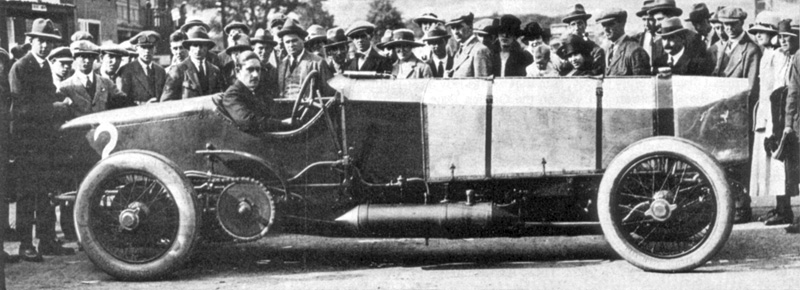
Count Zborowski's Chitty 1 in 1921
Chitty is undoubtably the star-attraction in the film, even though it boasted a splendid cast including Dick Van Dyke, Sally Ann Howes, Lionel Jeffries, Gert Frobe, James Robertson Justice, Benny Hill, Robert Helpmann, Anna Quayle and Adrian Hall and Heather Ripley as Potts two children. Fleming took his inspiration from a series of aero-engined racing cars built by Count Louis Zborowski in the early 1920s which was nicknamed Chitty Bang Bang . The name of the car was coined by the sound the airplane engine makes as it starts and runs. Zborowsi built four different Chittys in his lifetime but the Chitty 1 was his most famous model. Built with a 23-liter 6-cylinder Maybach aero-engine it nearly reached 120mph on one occasion. Eventually the car was purchased by Arthur Conan Doyle's sons. 


In the film, Jeremy and Jemima discover that their favorite "playcar" at Mr. Coggin's junk yard is going to be sent to the fiery furnace as scrap metal, and so they rush home to plead with their father to purchase the car instead. Mr. Potts is a poor inventor, but after Lord Scrumptious buys his invention of whistling treats for dogs, he gleefully returns home with Chitty in tow. And then for two days he hides himself in the garage rebuilding the motor car using scrap material found around the house. What results is a magnificent testament to what an eccentric inventor can create with a little bit of ingenuity and a heap of skill. 

Chitty Chitty Bang Bang's production designer Ken Adams ( Goldfinger, Dr. Strangelove ) worked with British cartoonist Frederick Rowland Emmett to create a new look for Chitty, a marvelous design that combined elements of a ship with a flying machine. 


Seven different Chittys were built for the film including one fully functional road-going model with UK registration GEN 11. Alan Mann Racing in Hertfordshire built this car and fitted it with a Ford 3000 V6 engine. Dick Van Dyke claimed that the motor car "was a little difficult to maneuver, with the turning radius of a battleship". Nevertheless it turned hundreds of heads in whichever village it traveled through. 

Pierre Picton with his GEN 11
After the movie was completed, Pierre Picton, Dick Van Dyke's stand-in driver for the film, purchased two Chittys, auctioning one in the 1970s and keeping another, which he drove to numerous charity races up until 2011, when he decided to have that one also auctioned. At one point, Michael Jackson desired to purchase the car, but Picton refused, wishing to have Chitty remain in Britain. Director Sir Peter Jackson purchased the car for $805,000 and currently plans to use it for charity drives. 

The remaining Chittys were constructed as props for the various scenes requiring transformations. One Chitty was built with wings, another with the hovercraft attachment; there is a smaller road-going version and an engine-less model for trailer use, as well as the "junk" model which the children initially discovered. 


Most of these were later equipped with engines and used to promote the film worldwide. Two of these Chittys are in Florida today. One resides at the Denzer Car Museum in North Miami, another is owned by a private collector. The National Motor Museum in Beauleiu, UK also houses one of these models. 

In addition, many fans of the Chitty Chitty Bang Bang built their own versions of the beloved motor car, many of them being exact replicas. So there are plenty of Chittys across the world!


To conclude our look at this fine four-fendered friend, here are a few specifications to give you a start so that too could construct your own Chitty: 

Length : 17' 7" 
Height : 6' 3" 
Width : 5' 9" 
Maximum Speed : 100 mph
Features : 

  • Ejector seat with parachute
  • Built-in Chittyfied GPS
  • Hovercraft capabilities
  • Flies for hours without supervision

Be sure to head on over to the Classic Movie Blog Association's website to read more reviews of your favorite films featuring planes, trains and automobiles. Thanks for stopping by!


Sunday, November 10, 2013

Lionel Jeffries - What a Character! Blogathon

Lionel Jeffries was one of the most delightful and unique character actors to ever grace the British cinema. Bald, bewhiskered and bumbling he was an instantly recognizable actor in over 100 films, and however brief his appearances he was always an asset in comedies, thrillers, and dramas alike. Whether he be Grandpa Potts in Chitty Chitty Bang Bang or the inventor Cavor in First Men in the Moon, Jeffries excelled at playing charming crackpots and inquisitive and spirited characters.

Unlike Terry-Thomas who exaggerated toothy eccentrics for comic effect, Jeffries portrayed peculiar personas in a compelling and queer manner which made them strangely believable. His characterizations were of people that you might find and meet one day. Lionel Jeffries brought an element of reality to every character he portrayed. 

"I was constantly rewriting the words of the characters I was given to bring them a comic humanity. Most of the people I played were caught in desperation. In their hearts they knew they were failures - but they would never admit it, even to themselves."

Jeffries was born on June 10, 1926 in Forest Hill, London. As a boy he attended Queen Elizabeth Grammer School in Wimborne Minster, Dorset while his parents worked in a mission in London's East End with the Salvation Army. 


At the age of 19, he received a commission in the Oxford and Buckinghamshire Light Infantry, serving first in Burma, where he worked for the Rangoon radio station and later with the Royal West African Frontier Force where he rose to the rank of captain in 1945. After the war he trained at the Royal Academy of Dramatic Arts, where one short year later he won the Kendel award for his acting and writing. He felt out of place at the Academy however, being the only bald student among the bunch. He had lost all of his hair before the age of 20! Perhaps the war had that bad of an effect on his head. 

"Of course I was upset. Tried a toupee once, but it looked like a dead moth on a boiled egg". 

Upon completing his schooling in the early 1950s he quickly embraced the film medium and plunged into a series of roles in some memorable British comedies and spy thrillers in spite of being told by his agent that he was too young for character parts and not good-looking enough for leading man roles. His baldness certainly put him at a disadvantage but he took his egghead and used it to his advantage instead. 

One of his first film roles was a small part in Hitchcock's marvelous little thriller, Stage Fright ( 1950 ). Roles in Windfall and The Black Rider followed but then he hit a rough patch and as his agent predicted, parts were hard to come by and few and far in between. In 1953 he turned to stage and appeared in the Westminster Theatre production of Carrington VC with Alec Clunes. Stage was not his cup of tea and although he did a few more productions he quickly stepped out of the stage scene and was not behind the floodlights again until 1984, when he played Horace Vandergelder in Hello Dolly! at the Prince of Wales theatre in London. 


One day, in early 1955, he attended the cast audition for The Colditz Story and with holes in his shoes he walked away with the third lead to Eric Portman and John Mills. From then on he was always in demand for his quirky characterizations, often playing an officious policeman or bungling crook in these early roles. Some of his most memorable parts of the 1950s included the inquisitive reporter in The Quatermass Xperiment, Gelignite Joe, the diamond robber in Blue Murder at St. Trinians, Major Proudfoot in Law and Order, and a prison officer in The Two-Way Stretch, a Peter Sellars comedy. Jeffries also appeared in a number of dramas and crime films including the suspenseful Vicious Circle with John Mills, Hour of Decision and Man in the Sky with the always competent Jack Hawkins. 


It was in the 1960s, however, that Lionel Jeffries reached his comedic peak, first with his role of a priest in the wacky Bob Hope spy flick, Call Me Bwana, then as key suspect Captain Rhumstone in Murder Ahoy, and lastly in one of my all-time favorite roles, as the highly-strung Professor Cavor in the delightful Charles Schneer/Ray Harryhausen adaptation of H.G Wells' First Men in the Moon featuring Edward Judd and Martha Hyer. Here, Jeffries plays a reclusive scientist who invented a paste that combats gravity and, not wanting to dilly-dally with simple everyday uses, intends to launch a sphere into space on a voyage to the moon. 

Jules Verne's Rocket to the Moon was another film that featured Lionel Jeffries in a similiar role, but that same year he starred in one of his most memorable films - Chitty Chitty Bang Bang. Jeffries gladly accepted the role of Grandpa Potts, Caractacus' travel-loving father, even though he was in fact six months younger than Dick Van Dyke. 


Jeffries thoroughly enjoyed playing in wholesome children's films such as Chitty. He believed there were more wise children than wise adults and wanted to see entertainment geared towards children that adults could enjoy as well. In an era when society was bombarded with images of sex and violence Lionel Jeffries stood out for his gentler sensibilities. He was a devoted Catholic and deplored permissivism. Unlike alot of Hollywood marriages, Jeffries remained married to one woman, former actress Eileen Walsh, for over 59 years ( until his death ), with whom he had one son and two daughters. One day, his eight-year old daughter Martha came to him with a book she was reading - Edith Nesbit's delightful classic "The Railway Children" - and told her father "I think this would make a good film". Papa agreed and he promptly purchased a short option on the film rights for £300. 


He wrote a script that retained all of the charm of Nesbit's book and took it to Bryan Forbes, then head of Elstree Studios, to get his opinion of it. Jeffries and his wife had met Forbes at Richmond Hill, home of Sir John Mills, where they often socialized with the Oliviers, the Nivens, and the Attenboroughs.  Jeffries confined to Forbes that he "secretly harbored a longing to direct the film" himself. The Railway Children was indeed Jeffries first experience behind the camera as a director and it was a smash hit. The film, featuring Bernard Cribbins, Jenny Agutter, and Dinah Sheridan remains a cult classic in Britain, being shown year after year at Christmas Time. 


On the wake of its success, Jeffries was inspired to direct some more children's films but continually hit a stone wall when it came time to finding a producer. They were indifferent at best, and he came to the conclusion that "No one wants family entertainment anymore. They want explicit sex". Nevertheless he did find backers to several more productions, The Amazing Mr. Blunden ( 1972 ), Baxter! ( 1973 ), Wobbling Free ( 1977 ) and, his final film as a director, The Water Babies ( 1978 ). 


Throughout the 1980s and 1990s, Lionel Jeffries turned to television, a medium which he had originally shunned years before because of its inferior production values. An appearance in the drama Cream in My Coffee altered his opinion and launched a belated career on the tiny tube. He had guest appearances in Inspector Morse, The Collectors, Lovejoy and portrayed grandpas in Rich, Tea and Sympathy and Woof!.

For years Lionel Jeffries was playing characters older than himself because of his premature baldness, but in these later roles, his age had finally caught up with his missing hair! Lionel Jeffries passed away on February 18, 2010 after several years of suffering from declining health ailments. He was 83 years old.

This post is our contribution to the What a Character! blogathon, a celebration of some of the most talented actors in Hollywood, the beloved "character actors". Don't miss visiting Once Upon a Screen or Paula's Cinema Club to view a complete schedule and find links to great posts on nearly fifty other great character actors. 

Sunday, June 16, 2013

My Heart Belongs to Daddy - Top Favorite Movie/TV Dads

Practically every movie ever made had a father figure of some sort hiding somewhere among its characters, but in spite of the sheer number of fatherly roles the movies ( and television ) offered, relatively few of these characters were remarkable. 

In celebration of Father's Day we wanted to praise some of the truly great fathers of the silver screen, those men whom we consider our favorites and who stand out among the others. 

Here we have spotlighted our Top 8 Daddies : 


8. Gomez Addams in "The Addams Family" ( 1964 ) 


The crowning king of the Addams lair, Gomez Addams was pretty much a grown-up man with the everlasting heart of a little boy. He had toy rooms galore for the kiddies ( and himself ) to enjoy, always schemed up devilishly clever ideas for amusement, never quibbled about money, and was generous to a fault. When he found out that the school was feeding his youngsters scary literature such as Snow White and the Seven Dwarfs and Hansel and Gretl he exclaimed aghast,  "What are they doing in schools these days? Poisoning our children's minds with...with fairytales!?" and then quickly took action. Gomez always showed a good example by trying to right wrongs through personal action ( especially in government matters ) and by often letting his children know that there isn't really anything in life worth worrying over. 


7. Jim Anderson in "Father Knows Best" ( 1954 ) 


Father Knows Best ...or so we'd like to think. Actually, Robert Young proved that a father doesn't always know best, but rather that he's always learning how to make the best decision for his family. It's a growing thing. At times "Bud" disagreed with him, "Princess" misunderstood his decisions, and "Kitten" put her father in many a scrape but they all loved him dearly and at the end of an episode usually came to the conclusion that their father does know a bit more than they do, even if he does seem old-fashioned to them at times. 


6. Professor Russell Lawrence in "Gidget" ( 1965 ) 


Like most California teenage girls, rambunctious, spunky Gidget had a life that revolved around school, boys and surfing. Unlike her classmates though, she did not have a full house to come home to, for Gidget Lawrence had no siblings and no mother. Russell Lawrence was a college professor by trade, but he more than made up for being both mother and father to Gidget as well, and they had a bond unlike any other father/daughter duo on television. If Gidget ever wanted to have a heart-to-heart talk she headed home to spill her feelings to dad. 


5. Oliver Dana in "Nice Girl?" ( 1941 )


Robert Benchley, one of the most popular humorists of the 20th century, was hardly what you would consider the fatherly type and yet in 1939's "Nice Girl?" he slipped into the patriarchal shoes with ease. In "Nice Girl?" he played the father of three girls of various personalities, one of whom is Deanna Durbin ( obviously his "pet" favorite ). He's relaxed, amusing, lovable, scholarly, and most importantly...always there. That's a boon for being a work-at-home papa.


4. Mitch Evers in "The Parent Trap" ( 1961 )  


Mitch Evers was a perfect daddy - handsome, strong, rough and rugged and yet fun, loving and gentle. It was this combination that made him so appealing to twin Sharon when she met her father for the first time after switching places with her sister Susan. She wasn't going to give up having a father and go back to Boston again! Brian Keith was perfect in the role of Mitch, especially when he demonstrated his awkwardness when he tried to answer what he thought were questions on the "facts of life" during an afternoon golf game. 


3. Carson Drew in " Nancy Drew: Detective" ( 1938 ) 


Nancy Drew's father, Carson Drew, the ace lawyer of River Heights, knew how to handle impetuous girl-sleuth Nancy - he always let her have her way. She had her daddy tied around her little finger and there wasn't much he could do to control her, in spite of his numerous warnings of the dangers she was getting herself into. But no matter how many scraps she found herself in, at the end of her escapades Carson Drew was always there with his arms outstretched to save his little girl. 


2. Andy Taylor in "The Andy Griffith Show" ( 1960 )


Sheriff Andy Taylor always had time for his boy Opie. These two bonded like glue and Andy was the perfect role model for a young boy, especially growing up in a single-parent home. He was kind, understanding and always knew how to spin a simple example into a mighty powerful moral on life. In one of the most popular episodes of The Andy Griffith Show, 'Opie the Birdman', Opie shoots a mother bird from a tree with his slingshot and Andy reprimands him by having him care for the little baby birds until they are ready to leave their nest....a lesson that teaches Opie how hard it is to lose what you love. 

1. Professor Caractacus Potts in "Chitty Chitty Bang Bang" ( 1968 ) 


The No. 1 Movie Dad!


What other father told his children fantasy stories, clowned around, wore his cardigan inside out, joined a circus to earn money to buy a car his children wanted, and could sing and dance too? Actually, our daddy did...and that's the main reason we chose Professor Potts as our number one Dad. He's the only movie dad that comes closest to our father. Much like Jeremy and Jemima, we grew up being schooled at home ( by Daddy ), driving around in antique cars that he fixed on in the garage, going on picnics, and discovering the "treasures" that can be found in a junkyard.                                              
Our dad is a fix-it-all extraordinaire by trade and when we were young he amused us by dancing around with Molly the mop, singing "You Two" to us while setting the supper table and of course, by watching classic movies with us - especially Chitty Chitty Bang Bang

Nancy Drew may think her father is the cat's meow, Gidget may think her dad is real solid, Opie has his pride in Sheriff Taylor, and Susan and Sharon can fight over Mitch but we know we have the real award-winning father....and better yet, we don't have to turn on a television screen to have him close at hand.