Showing posts with label Musical. Show all posts

Friday, June 26, 2026

I Love Melvin (1953)

Melvin Hoover (Donald O'Connor), a photographer's apprentice for Look magazine, wants to impress Judy (Debbie Reynolds), a budding stage actress, and so he claims he is a photographer doing a spread for the magazine. After shooting hundreds of pictures of her, he is reluctant to admit that they won't appear in print. While Judy likes Melvin, she feels she must respond to her boyfriend Harry's (Richard Anderson) marriage proposal in order to please her parents. To stall the situation, Melvin makes a fake cover of Judy on the front of Look but then he doesn't have a chance to tell her it's not real! 

I Love Melvin was a typical musical outputted from the MGM factory. It doesn't stand out as anything extra special but it sure rates high in entertainment nonetheless, thanks to the appeal of its two lead stars. The Technicolor is beautiful and the costumes are nice but it is the songs that are especially lovely. Composer Josef Myrow (The Girl Next Door, The French Line) penned some unique melodies such as "A Lady Loves", "I Wanna Wander", and "We Have Never Met as Yet" and, if these weren't pleasant enough, their arrangements are really nice. Too bad Josef Myrow didn't get more music assignments with MGM then what he did. 

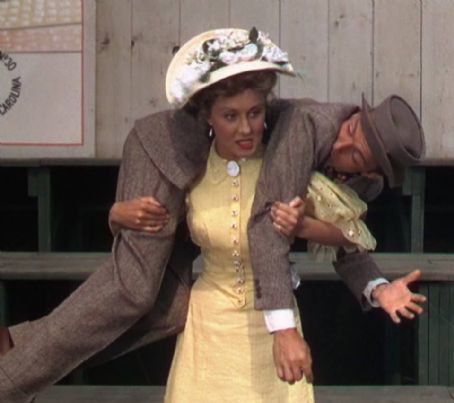
Debbie Reynolds looked cute as a button in the film (as did Noreen Corcoran as Judy's little sister), and she had clearly shed her baby fat as she rose to the ranks of leading lady. This was a great "coming out" film for Ms. Reynolds. She once wrote in her autobiography that she "worked her butt off" at MGM and I think this film in particular was what she was referring to. Debbie had a lot of dance numbers for such a short picture and, in addition to these, she had to be thrown around on stage as a football!

Robert Alton staged the dances for I Love Melvin and they are highly creative and great fun to watch. Donald O'Connor got the really exciting dance routines including one on roller skates. He has a fun Danny Kaye-style solo number, too, where he showcases not only his singing and dancing ability but his comedy style. 

As darling a couple as Melvin and Judy were, I doubt that their romance could have survived through marriage. Poor Melvin couldn't hold a job! 

Also in the cast was Allyn Joslyn, playing a role not unlike his character in Junior Miss (1945), Richard Anderson as the handsome but bland Harry, Jim Backus in a great part as Melvin's smart-aleck co-worker, and Les Tremayne as the manager of Look magazine. Keep your eye out for a brief view of the striking Look building in New York City. It was built in 1948, and since Look's management occupied the top floors, became known as the Look building. It is still standing at 488 Madison Avenue. 

A neat behind-the-scenes fact: Look Magazine actually released the cover design with the photo of Debbie Reynolds as Judy the same month I Love Melvin premiered as a tie-in. 

Friday, March 20, 2026

The Daughter of Rosie O'Grady (1950)

In 1943, Betty Grable starred in the colorful Fox Technicolor musical Sweet Rosie O'Grady. Seven years later, her screen sister, June Haver, was featured in a sort of follow-up film, The Daughter of Rosie O'Grady, which was equally colorful and just as entertaining. 

In this film, "Junie Baby" (as Fred MacMurray would call her) played Patricia O'Grady, the daughter of Rosie O'Grady, a once-popular music hall entertainer. Along with her two sisters, Katie (Marcia Mae Jones) and Maureen (Debbie Reynolds), Patricia resides with her father, Dennis O'Grady (James Barton), a stern Irishman who works as a trolley conductor. He loves his daughters and wants to keep them by his side. He also wants them to go nowhere near the theater district for fear they will want to become performers themselves and, as Papa claims, "That's no life for anyone!" He and his dear departed Rosie spent years living out of a trunk and traveling from one town to the next. He wants his daughters to marry college-educated men and settle down.

Little does he know that his eldest daughter is already secretly married to a policeman and about to have a child, and that darlin' Patty has fallen in love with none other than Tony Pastor (Gordon MacRae), the owner of the local musical—and, saints preserve us!—wants to join his acting troupe!

You can guess that there is enough drama in the film to fill its 105-minute runtime. Nevertheless, squeezed in between the Irish fighting spirits are plenty of musical interludes, including a lovely rendition of the titular song. When Gordon MacRae isn't singing, Gene Nelson entertains the audience with his impressive dancing skills. June Haver was quite a dancer herself and does many a fancy step with Gene, while S.Z. Sakall adds some comic relief as Papa O'Grady's co-worker and family friend.

Overall, it's an entertaining entry from the Fox film factory, although not very memorable... Within a year of viewing, you'll probably get this title confused with Sweet Rosie O'Grady or When Irish Eyes are Smiling!

Sunday, January 25, 2026

Ski Party (1965)

American International Pictures must have thought that if teenagers would flock to theaters to see Frankie Avalon at the beach, they’d happily watch him having fun in the mountains, and they weren’t wrong. Ski Party, released in 1965, was the snow-covered sibling of the sun-drenched Beach Party films. The Malibu shoreline was replaced with the frosty slopes of Sun Valley but, other than that, every zany ounce of the AIP teen-movie formula was kept intact from the jealous misunderstandings to the pop tune interludes to the inevitable “boys learn their lesson” finale. Like the Beach Party films, it's an unabashedly corny teen romp, but Ski Party is so dyed‑in‑the‑wool goofy that resisting its charm becomes downright impossible after a viewing or two. Or three. Or five. Honestly, this film gets more amusing each time we watch it!

Todd (Frankie Avalon) and his best pal Craig (Dwayne Hickman) are baffled by the eternal mystery of what girls want. Their girlfriends, the bubbly Linda (Deborah Walley) and the stylish Barbara (Yvonne Craig), seem to fall for the charms of the swaggering jock Freddie (Aron Kincaid). When Freddie's ski club and the girls all head to Sun Valley for the weekend, Todd and Craig decide to trade the sand for snow to make sure Freddie doesn't steal their sweethearts and to study the mysterious ways of the opposite sex. 

At the resort, Freddie swooshes down the slopes with the grace of a snowbound Apollo, so Todd and Craig decide that if they master the rudiments of skiing, it's a cinch that the girls will flock around them, just like they do with Freddie. Their plan? To disguise themselves as girls to infiltrate the female ski class. Donning floppy wigs and falsetto voices, they become British co-eds "Jane" and "Nora". Naturally, no one questions why Frankie Avalon in a wig still looks exactly like Frankie Avalon in a wig. Complications arise for the two Casanova wannabes when Freddie falls for "Nora" and Barbara gets jealous of Craig's attention to "Jane". 

Ski Party was allotted a larger budget than the Beach Party films and the usual director William Asher (known for his TV work) was replaced with Alan Rafkin (The Ghost and Mr. Chicken), an experienced comedy film director. His direction - and the better script - made Ski Party one of the most entertaining entries in the series. Plus, there was the added bonus of the beautiful location filming at Sawtooth National Forest and the Sun Valley Resort in Sun Valley, Idaho. 

While Annette Funicello's presence is missed (she has a brief cameo in the film), Dwayne Hickman more than makes up for her absence. Television's "Dobie Gillis" was a natural comic and he should have appeared in more of the Beach films in place of the wacky Harvey Lembeck. 


"And so we see the male becomes the most romantic between the ages of 17 and 19." - Professor Sonya Roberts (Annette)
[Sound of chalk on a chalkboard] "It sounds like my mating call." - Todd
"Mine's much noisier." - Craig

Ski Party also boasts some good musical breaks including Leslie Gore singing the catchy "Sunshine, Lollipops and Rainbows" on the bus enroute to the lodge, James Brown and the Famous Flames appearing as a ski patrol and singing "I Feel Good" and Frankie Avalon bopping with "Lots More Where That Came From" and "Painting the Town". 

Ski Party is definitely juvenile fare with lots of teenage hijinks but it's a fun winter romp so brightly colored and so shamelessly goofy that it becomes more endearing with each viewing.

Tuesday, December 23, 2025

Film Albums: Scrooge (1970)

In our family, the Christmas season just wouldn't be the same without a viewing of the 1970 musical Scrooge. My sister and I grew up watching this film with our "Oma" Rozi because it was one of her favorites. Since her passing, we have watched it every year with our father because it is one of his favorites, too....and ours. We have come to learn that watching Scrooge is a part of many people's Christmastime traditions. That's heartwarming. 

Albert Finney gives a tour-de-force performance as the old miser Ebenezer Scrooge and the ending to the film is probably one of the most joyous ever made. Leslie Bricusse created such a magnificent score for this huge production that one cannot think of Charles Dicken's classic ghost story without associating it with his beautiful songs. I'm sure every fan has a favorite number from the film, so if you want to share yours, leave a comment below. For me, the best song in the film is "Happiness" sung by the lovely Suzanne Neve but my personal favorite is "December the 25th" performed by Laurence Naismith, Kay Walsh, Albert Finney, Suzanne Neve and the whole company of dancers. 

If you have not seen Scrooge in many a year or have never seen it (shame, shame!!), then do not listen to the soundtrack first....watch the film so you can see these songs in their proper context. But if you are an old fan of Scrooge and do not have time to watch it this year, why not listen to the soundtrack while you wrap presents this evening? Check it out ad-free on the Internet Archive


Track Listing

Side One:

Overture

Main Title (A Christmas Carol)

Christmas Children

I Hate People

Father Christmas

See the Phantoms

December the 25th

Happiness

You....You


Side Two: 

I Like Life

The Beautiful Day

Happiness (Reprise)

Thank You Very Much

I'll Begin Again

I Like Life (Reprise)

Father Christmas (Reprise)

Top Music Picks: Christmas Children, December the 25th, Happiness, Thank You Very Much, I'll Begin Again

Wednesday, October 15, 2025

Film Albums: Half a Sixpence (1967)


Every October, around Columbus Day, I get the urge to watch two films: Doctor Dolittle and Half a Sixpence, both of which were released in 1967. Some people consider the 1960s a musical revival decade and others consider it the worst decade in musical history.... personally, I think the 1960s had some good productions and this is definitely one of them. You can read our full review of the film here, for this post we will just be sharing what stands out with this score. 

For one thing, you cannot go wrong with any production conducted by Irwin Kostal. This brilliant arranger/conductor is most famous for his work on Mary Poppins (1964) but he also did a splendid job adapting the Sherman Brothers music in Chitty Chitty Bang Bang (1968), Bedknobs and Broomsticks (1971) and Charlotte's Web (1971). 

For Half a Sixpence, Kostal had some fantastic music by David Heneker to work with and Tommy Steele, with his unmistakable Cockney accent, performed all of the numbers with his usual lovable zeal. The tunes are all befitting an English turn-of-the-century setting and definitely lean towards the music hall sound. 

Highlights of this album include the titular "Half a Sixpence" with its beautiful instrumental interlude, "She's Too Far Above Me," the lilting "If the Rain's Gotta Fall" performed by Steele (as Artie) and the chorus, and "This is My World." Artie's gal Ann was played by Julia Foster but her singing voice was dubbed by Marti Webb who had played the role in the original 1963 London production. Marti's lovely soprano voice can be heard best in the reprise of "Half a Sixpence" at the end of the album. 

Click here to listen to the full album on Youtube. 


Track Listing


Side One:

"Overture"

"All in the Cause of Economy"

"Half a Sixpence"

"Money to Burn"

"I Don't Believe a Word"

"I'm Not Talking to You"

"A Proper Gentleman"

Side Two:

"If the Rain's Gotta Fall"

"Lady Botting's Boating Regatta Cup Racing Song (The Race)"

"Roses of Success"

"Entr'Acte, Flash, Bang Wallop"

"I Know What I Am"

"This is My World"

"Half a Sixpence - Reprise"

Top Music Picks: Half a Sixpence, She's Too Far Above Me, If the Rain's Gonna Fall, This is My World

Saturday, September 20, 2025

Make A Wish (1937)

In 1936, Bobby Breen hit the big screen in his first starring role in the film Let's Sing Again. The curly-mopped youngster was a male edition of Shirley Temple with a similar twinkle in his eyes and a decidedly better singing voice. 

Little Bobby Breen (no relation to the film censor Joseph Breen) was indeed a talented youngster and, while he remained young, RKO Studios milked his image for all its worth featuring him in eight films within three years. 

Unfortunately, little boys do not remain little boys forever and as Bobby's bones grew, his audience diminished. The studio didn't quite know what to do with a teenage singing sensation, especially when his soprano voice was beginning to take on tenor tones. The moment his voice broke, Bobby broke with Hollywood and decided to concentrate on his school education before entering the US Army during World War II.

While he was on top, he made some entertaining films, the best of which was Make a Wish co-starring Basil Rathbone and opera star Marion Claire. 

In this film, Rathbone played Johnny Selden, a composer of operettas, who likes to vacation in a cottage across the lake from a boy's summer camp. One day while fishing, he meets "Chip" Winters (Bobby Breen), a friendly lad with a beautiful singing voice who is staying at the camp. Chip's mother is a musical stage star. Chip shares with Mr. Selden one of the letters his mother wrote to him, and this triggers Mr. Selden's creative juices to bubble over, so much so that he bases his new operetta around Chip's mother who inspired it. When Mrs. Winters (Marion Claire) arrives at camp, Mr. Selden finds her ideal and asks her to star in his latest production in New York. She likes the idea but her fiancé, the stuffy Mr. Mays (Ralph Forbes), is set against it. This provides the drama of the film. Donald Meek provides the comedy in the form of a butler who wants to compose music himself. He teams up Henry Armetta and Leon Errol to unintentionally destroy Mr. Selden's final act. 

Make a Wish is a light-hearted musical aimed at children but entertaining enough for adults to enjoy as well. It leaves you with a feel-good feeling which makes it timeless. Like the Shirley Temple films, the script has some implausibilities in it, like Mr. Selden's theatrical producer deciding to go ahead with staging an opera while the third act remains incomplete (!) It also seems unthinkable that Mr. Selden would not be aware that his show was being made until opening night - Where was he, on an African safari with no phone or newspaper access?

The music in Make a Wish is delightful. Oscar Strauss (The Chocolate Soldier) wrote the score while Paul Francis Webster and Louis Alter penned the lyrics. Three songs stand out: the titular "Make a Wish", "Music in My Heart", and "Campfire Dreams" which oddly enough was not written by Strauss. It was composed by Louis Alter. 

Bobby Breen's movies have not yet been given a proper DVD release but they can all be found on Youtube in varying conditions. This one is a worth see if only to enjoy Bobby's fine singing voice. 

Saturday, August 9, 2025

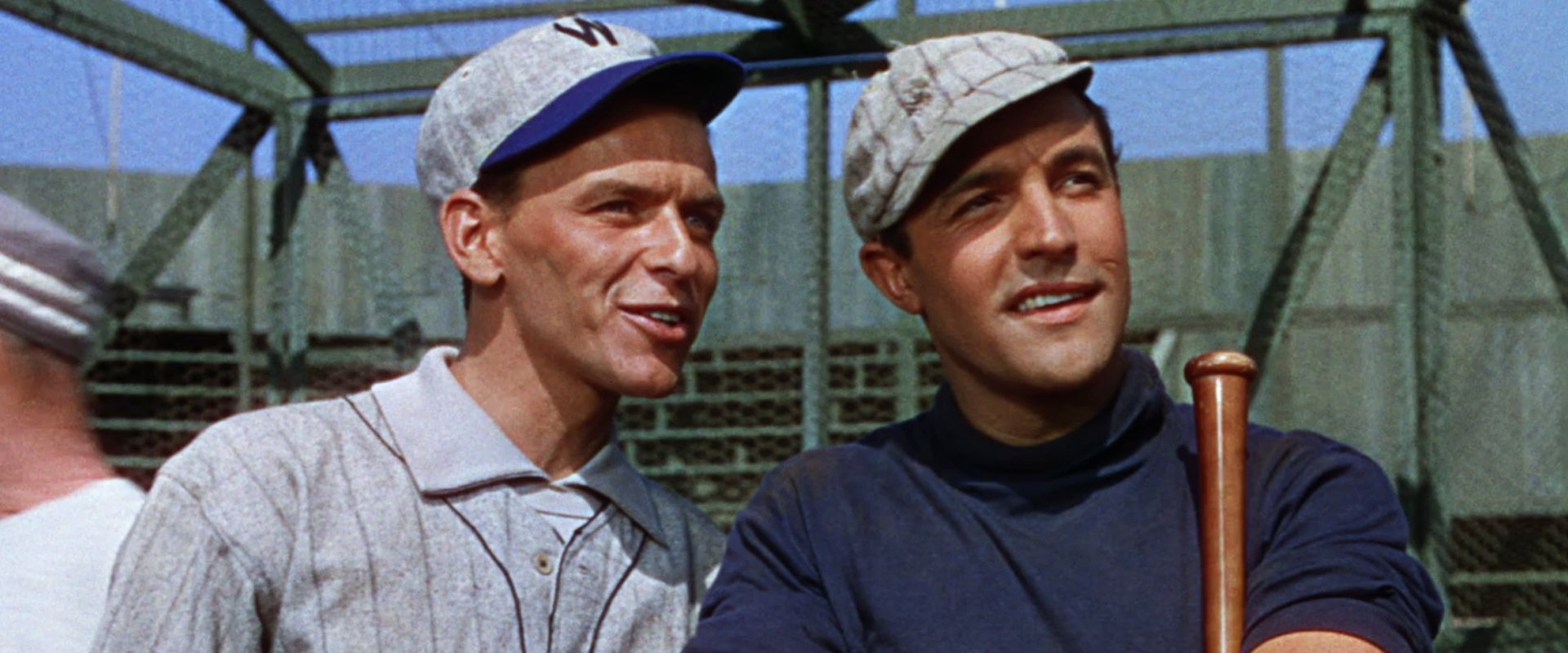
Take Me Out to the Ball Game (1949)

In 1948, Busby Berkeley was hired to direct the all-American musical Take Me Out to the Ball Game but midway through production he had to withdraw due to health issues. That's when Gene Kelly stepped up to the plate and hit a homerun with a blockbuster! 

Take Me Out to the Ball Game was the first film to team Gene Kelly, Frank Sinatra, and Jules Munshin and this winning threesome were so entertaining they joined forces right afterwards for the classic On the Town, both directed by Stanley Donen and Gene Kelly. 

The Donen-Kelly duo were also responsible for penning this story, a wholesome blend of Americana, baseball, and good ol' gambling. Gene Kelly stars as Eddie O'Brien, short-stop of the fictional Wolves pro-ball team. When playing with his buddies, first baseman Dennis Ryan (Sinatra) and third baseman Nat Goldberg (Munshin), they're unbeatable. The owner of the Wolves recently passed away and his niece K.C. Higgins (Williams) arrives to take a "hands on" approach to ownership. At first, they resent this, but then they come to admire her.... all except Eddie, who is steamed that she moved up their curfew and increased the fine for breaking it. Eddie likes to entertain the girls at night, so that cramps his style. 

Eddie likes to entertain, period. When he isn't playing ball, he is cutting capers. Off season, he and Dennis are a popular vaudeville act. When Joe Lorgan (Edward Arnold), a big gambler in town, bets heavily against the Wolves, he uses Eddie's love of show business to lure him away from training. But when Eddie learns he has been made a stooge he rallies back to help the Wolves - and his buddies - win the pennant. 

Take Me Out to the Ball Game was a box-office success on its release and raked in nearly $3,000,000. It had that magical aura that only the Arthur Freed unit at Metro-Goldwyn-Mayer could create. This one also bore the unique stamp of Busby Berkeley, Stanley Donen, and Gene Kelly, who directed most of the dance sequences. 

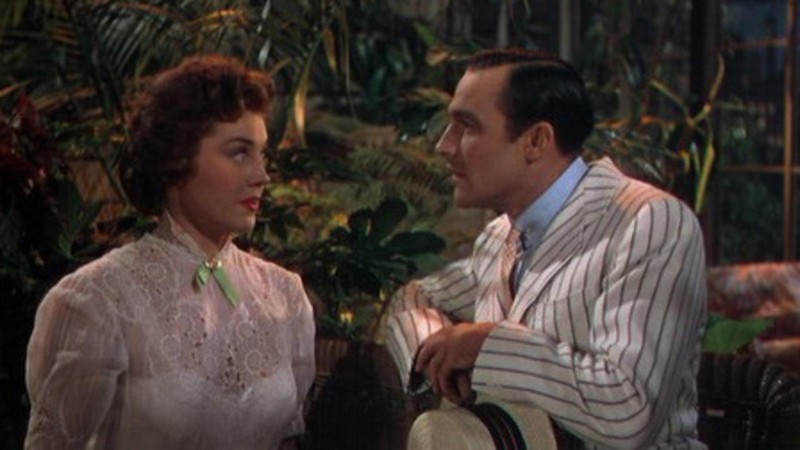
Berkeley and Kelly originally wanted Judy Garland to play the leading lady but she was having substance problems, so Ginger Rogers was cast as her replacement. Ginger then backed out a month prior to filming and Esther Williams took over. What a jim dandy substitute! 

Williams was ideal for the role and perfectly cast. She was already a leading star and this role let her take a quick break from swimming - she only had one simple pool routine in the picture. However, as Williams put it in her autobiography, filming Take Me Out to the Ball Game was an experience of "pure misery." Kelly was too demanding as a director and, along with Donen, seemed to resent her. 

Betty Garrett, who had a wonderful role as a boy-crazy girl chasing the girl-shy Dennis Ryan, had a different experience. In her autobiography she wrote that "making Ball Game.. was pure joy and Frank was an absolute delight to work with." 

"Why don't you pick on somebody your own size?"

"There ain't nobody my size!"

Jules Munshin was making his breakthrough screen role in Take Me Out to the Ball Game. He had previously had a bit part in Easter Parade (1948) as a waiter and, on the strength of that performance, got this role. He made a great "third wheel" and was even more entertaining in On the Town.

Take Me Out to the Ball Game included a number of pleasant - albeit forgettable - musical numbers, the best of which feature Gene Kelly dancing. "O'Brien to Ryan to Goldberg" and "It's Fate Baby, It's Fate" are the most fun to watch, but the patriotic "Strictly U.S.A" number is classic MGM - lavish and entertaining. 

All in all, Take Me Out to the Ball Game is a pitch-perfect blend of song, slapstick, and sentiment and - with Gene Kelly and Frank Sinatra rounding the bases - the film scores big in every inning so, if you're in a baseball mood, this one's a grand slam in entertainment. 

Saturday, May 17, 2025

The Student Prince (1954)

In 1954, Metro-Goldwyn-Mayer brought the delightful old play "The Student Prince" to the big screen. This lavish production was initially planned as a vehicle for their Italian singing sensation Mario Lanza, but this fun-loving tenor had put on a bit too much weight over the summer and ended up being axed as its star. Instead, the handsome English-import Edmund Purdum took on the lead role and lip-sung the songs that were pre-recorded by Mario Lanza. And it turned out quite well!

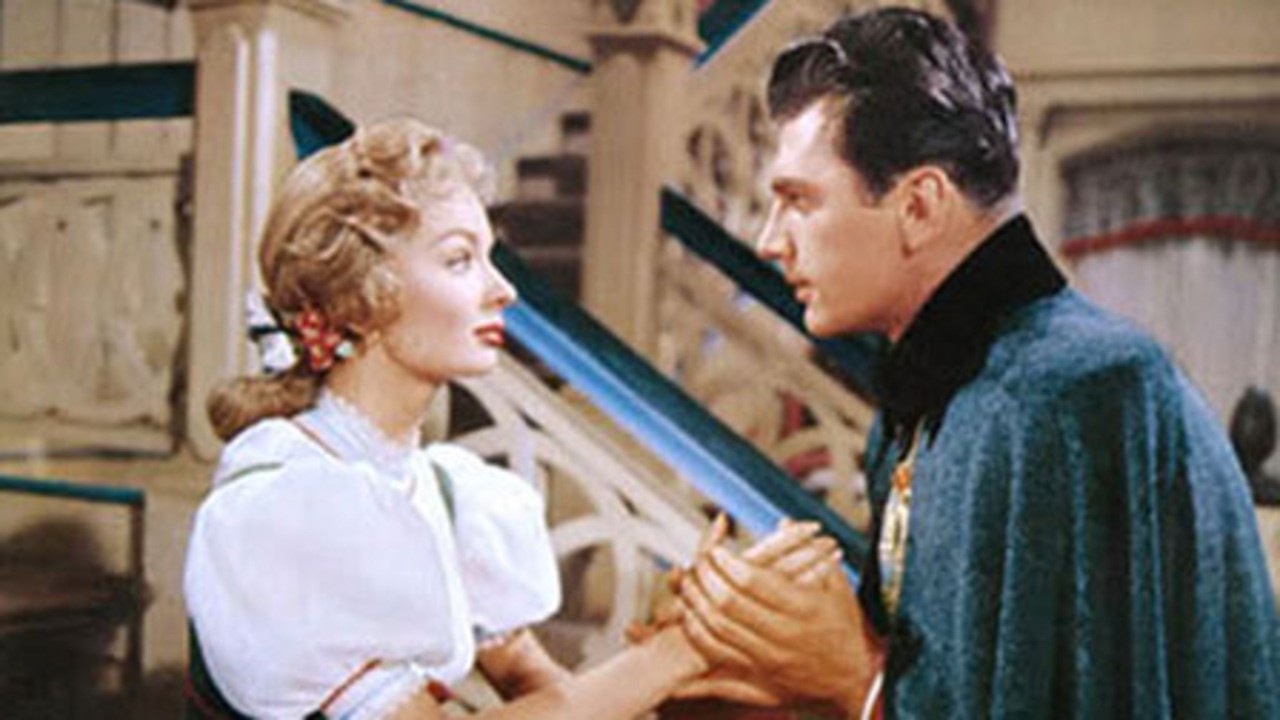
Sigmund Romberg musicalized the 1902 Wilhelm Meyer-Förster play "Old Heidelberg" in 1924 and turned it into one of the most popular operettas of the 20th century. The story centers around the young Prince Karl Franz of Karlsberg (Edmund Purdum), who is encouraged by his tutor, the kindly Doctor Engel (Edmund Gwenn), to attend the University of Heidelberg prior to capping the crown on his head. In this charming old German town, Prince Karl falls in love with Kathie (Ann Blyth), the barmaid at the local beerhall where all the students congregate after school. He wishes to marry Kathie but he is pledged to betroth Princess Johanna (Betta St. John), and so his heart is divided between his personal desire and duty for his country.

This simple but engaging plot was interwoven with over 15 glorious Romberg songs, including "Drink, Drink, Drink!", "Golden Days", the beautiful "Serenade", and "Deep in My Heart". Purdum did an excellent job of mimicking a tenor and Ann Blyth, of course, carried her own set of powerful lungs and sang better than she ever did on film. In between their romantic moments, Prinz Franz encountered some drama caused by a rival student (John Ericson), a little humor from the inn-keeper (S.Z. Sakall), and a good dose of paternal advice from his father King Ferdinand (Louis Calhern). Also in the cast was John Williams as the stiff valet Lutz, John Hoyt as the Prime Minister, and Richard Anderson as Franz's newfound friend at the university. 

The film looked beautiful in Cinemascope and the lovely Cedric Gibbons sets transported the audiences to old Germany and the grandeur of the German Empire before World War I began. 

"The Student Prince" was an immediate success upon its Broadway debut in 1924. It became the most popular musical of the 1920s, running even longer than "Show Boat". Hollywood brought it to the screen in 1927 as a silent film (!) starring Ramon Navarro and Norma Shearer and then it was shelved until this production in 1954. I always thought that it would have made an excellent Nelson Eddy-Jeannette MacDonald musical in the late 1930s but that never happened. 

This adaptation proved that a good story lasts for generations. MGM reaped more than double its return at the box-office and it launched Edmund Purdum's career in Hollywood. Shortly after The Student Prince was completed, Purdum went on to star in the epic The Egyptian over at 20th Century Fox. 

Saturday, April 12, 2025

Mardi Gras (1958)

Mardi Gras occurred a few weeks ago and if you are like most people, you probably didn't realize that there were a handful of classic films set during the Mardi Gras in New Orleans (as well as a bucketload of television episodes). 

Mardi Gras, released in 1958, is a Cinderella story aimed at a teenage audience. It is a little-seen color romance-musical starring Pat Boone and, honestly, it is not half-bad. It doesn't quite rank up there with April Love, but it has its moments. Pat stars as a Virginia Military Institute cadet who gets roped into participating in a raffle to win a date with a movie star - Michelle Marton (played by French import Christine Carere). Being the clean-cut country boy that he is, he never even heard of her before the raffle but ends up winning. After a few failed attempts to see her at her hotel, he gives up and instead asks a pretty young woman in the lobby for a date. Surprise! This happens to be Michelle herself.... she decided to don a Mardi Gras mask and enjoy a few hours vacation from the press. Naturally, they fall in love but then her publicity agent (Fred Clark) gets in the way and sees their romance as "great publicity" which causes a number of complications for both of them. 

Mardi Gras was a surprising hit upon its release and stayed at the top of the box-office charts for a number of weeks where it easily recouped its initial investment. Robert Wagner, Jeffrey Hunter and Tony Randall were initially set to star as the three cadets from VMI with Mitzi Gaynor playing the Hollywood actress. Later, Boone was cast with Shirley Jones as his co-star but then Shirley had to drop out due to being pregnant with her first son, Shaun Cassidy. Christine Carere had recently made a splash with her first American picture - A Certain Smile - so she was then cast and did a good job. She is like a French edition of Sonja Henie and is quite charming. 

Jerry Wald produced the film, which was directed by Edmund Goulding (Dark Victory, The Razor's Edge). The bare stone walls of the Virginia Military Institute didn't make the most colorful setting so the New Orleans shots had to make up for it...and those didn't seem all too good either. Nevertheless, Pat Boone's handsome looks and charisma and Carere's cuteness made up for the lack of scenery. The musical numbers throughout the film are quite good but, unfortunately, there were one or two too many and they stretch the picture to nearly two hours. The best of the songs was "I'll Remember Tonight" which became a hit for Pat Boone in 1958. 

Costarring with Boone as the cadets are Tommy Sands, Dick Sargeant, and Gary Crosby who was the spitting image of his papa, Der Bingel. Also in the cast is the beautiful Sheree North (sporting brunette hair) in a secondary role that wastes her talent and the dancer Barrie Chase. 

Mardi Gras is currently available on DVD as well as through Youtube

Saturday, November 9, 2024

From the Archives: About Face (1952)


This is a lovely behind-the-scenes photo of Gordon MacRae, Phyllis Kirk, and Dick Wesson on the set of About Face (1952), a Technicolor remake of the classic Brother Rat.
From the Archives is our latest series of posts where we share photos from the Silverbanks Pictures collection. Some of these may have been sold in the past, and others may still be available for purchase at our eBay store: http://stores.ebay.com/Silverbanks-Pictures

Saturday, April 27, 2024

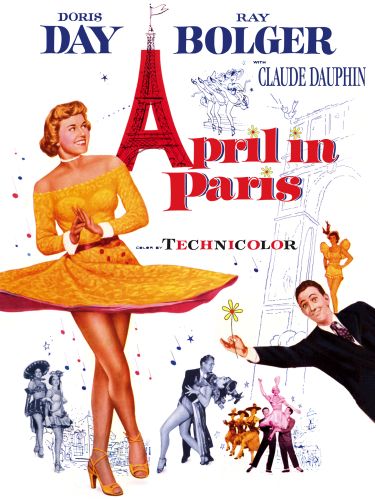
April in Paris (1952)

S. Wintrop Putnam made a terrible mistake. As Assistant Secretary to the Assistant to the Undersecretary of State, his task was to send an invitation to Ethel Barrymore asking her to visit Paris as a personal representative of the American theater at the International Festival of Arts. Instead, he addressed the invitation to Ethel "Dynamite" Jackson, a New York City chorus girl(!).

His faux-pas turns out to be "a stroke of genius!" and S.Wintrop (Ray Bolger) is sent to accompany the well-built Miss Jackson (Doris Day) on her ocean voyage to Paris - and naturally falls in love with her en route. 

April in Paris was one of the many comedy-musicals that Doris Day made in the early 1950s. It does not rank as one of her best, but it has its funny moments, especially during the shipboard scenes. Director David Butler, always a reliable professional, seems to have done his best with the material he had but the material he had was not substantial to begin with. Jack Rose's script needed more broader humor to support its thin plot or else a stronger - and sillier - leading man, such as Danny Kaye. 

As it is, the film feels like it was rushed into production and the script was hastily written while shooting began. Gay ooh-la-la Paree deserved better. 

French actor Claude Dauphin was given a large supporting role as a friend of both Ethel and Wintrop, but even this part needed a man with a more vibrant personality, like Fernandel. Fortunately, both Doris Day and Ray Bolger had plenty of opportunity to sing and dance and they were best in their numbers together. The "I'm Gonna Ring the Bell Tonight" performance is especially fun. Other songs included the titular "April in Paris" by Yip Harberg, and "That's What Makes Paris Paree", where Doris Day showed off one of the many beautiful Leah Rhodes costumes for the film.

The supporting cast of April in Paris included Eve Miller as Winthrop's betrothed, Paul Harvey and George Givot. 

Sunday, March 17, 2024

Little Nellie Kelly (1940)

Mix together Judy Garland, George Murphy, a little romance, and some lovely Irish folk tunes and what have ye? Little Nellie Kelly, that's what. This MGM musical from 1940 features Judy Garland playing not one, but two parts. You may be sad to see her character Nellie Kelly die within the first 20 minutes of the film but shortly after she pops again, this time in the form of the daughter of Nellie Kelly. 

Nellie is the apple of her father's eye and when she elopes with Jerry Kelly (George Murphy) behind his back, he fills his heart with spite against the young man. Jerry takes his new bride and his father-in-law Michael (Charles Winniger) to America, gets a job as a policeman in New York, and faithfully supports both of them. When Nellie dies giving childbirth, Michael's stubborn anger towards Jerry increases but the two remain together to raise little Nellie.

Time goes by and Little Nellie (Garland again) eventually finds a beau of her own and then decides it is about time that her grandfather made peace with her father.

While Little Nellie Kelly is titled after its main character, most of the story revolves around Michael Noonan (Winniger) and his stubborn Irish ways. "If only he would work, then he wouldn't have so much time to complain," Jerry Kelly declares. And how right he is! I have an uncle just like Michael Noonan. He worked once when he was in his 20s and never again. So, without any hobby to fill his life, he spends all his time complaining... mainly about what his family is up to and how they should be supporting him. Mchael Noonan may seem like an improbable character, but he is quite common in many households, Irish or not!

Charles Winniger does a wonderful job at playing this curmudgeon, who's likeable in spite of his biting tongue, but some may find his stubbornness just too much to bear. Dear Jerry Kelly must have had the patience of St. Patrick himself to put up with him all those years! George Murphy gives a grand performance as the winsome lad whom Nellie first comes to love in Ireland and, later, he convincingly ages to become Little Nellie's father, a captain of a New York police force no less.

It is Judy Garland who is the star attraction, however. Little Nellie Kelly was based on the 1922 stage musical by George M. Cohan and it was rumored that Cohan sold the rights to MGM studios expressly on the condition that it be a vehicle for Judy Garland. She's a little sweetheart in this film. Had MGM decided to groom her as a rival for Deanna Durbin, she would have been wonderful in similar ingenue roles.

Several Irish songs that were supposed to be in the film were cut from the final release, including the famous "Danny Boy", but Judy does get to sing the lovely "A Pretty Girl Milking a Cow" as well as "It's a Grand Day for the Irish", which she sings with her Babes in Arms co-star Douglas McPhail. 

McPhail had a marvelous baritone voice and, in Little Nellie Kelly, he plays Nellie's sweetheart Dennis Fogarty, the son of Michael Noonan's friend Timothy Fogarty (Arthur Shields). Like Jerry Kelly, Dennis is patient enough to put up with Nellie's grandfather for her sake and eventually wins his approval. 

Little Nellie Kelly is one of those MGM classics that you watch once and soon find yourself re-watching it every year... on St. Patrick's Day, of course. While the film on a whole is entertaining, the first scenes set in Ireland are my favorite and I cannot help but wonder what a wonderful film this could have been had the entire picture been set there. 

Sunday, October 15, 2023

Bedknobs and Broomsticks (1971)

Treguna Mekoides and Trecorum Satis Dee....

"I don’t want locomotionary substitution or remote in transitory convolution, only one precise solution is the key…. substitutionary locomotion it must me!"

Yes, Eglantine Price was searching, not for locomotionary substitution, nor for remote in transitory convolution, but for that secret magical spell – Subsitutiary Locomotion – that would be the key to single-handedly quenching the onslaught of the Nazis and putting a stop to the war!

In her secluded country estate in the cover of night, mild-mannered apprentice witch Miss Price, along with her scraggly looking cat Cosmic Creepers, practiced her latest lessons from Professor Emelius Browne’s Correspondence College of Witchcraft. However, when three evacuee children from London take lodging in her home, her top-top secret identity is discovered and, as an exchange for their silence, she gives them a special Travelling Spell.

“The game’s up Miss Price, we know what you are”

A bedknob (and its matching bed) become the initiators of this fantastic spell, and it is put to good use quickly when Miss Price and the children set out for London to enlist the aid of Professor Browne in searching for the all-important magic words of Substitutiary Locomotion. Their quest takes them to Portobello Road - the street where the riches of ages are stowed - where they meet the wily Bookman (Sam Jaffe), another Substitutiary Locomotion spell-hunter and his knife-wielding henchman Swinburne; to the Beautiful Briny Sea where they have a chance to get a better peep at the plants and creatures of the deep; and to the not-so-mythical animated Isle of Namboombo, a land of talking animals and where the legendary magician Astoroth (the spell’s creator) was believed to have spent his final days. Aha!….but do they find the magic words to Subtitutiary Locomotion AND put it to use before the approaching Nazis invade Pepperinge Eye and the coast of England?


Well, this being a Walt Disney movie, I’m sure we all know the answer to that question.

Bedknobs and Broomsticks was based on two books written by children's author Mary Norton in the mid-1940s. "The Magic Bedknob, or How to be a Witch in Ten Easy Lessons" and its sequel "Bonfires and Broomsticks" were originally purchased by Walt Disney in 1963 as a backup plan in case P.L Travers did not like the retelling of her story "Mary Poppins", a movie which was already in its pre-production stages at the time.

Since "Mary Poppins" got the go-ahead, Bedknobs and Broomsticks was put on the back burner and it was not until 1969 that Bill Walsh blew the dust off the kettle and got it boiling again.


Initially, Julie Andrews was offered the part of Eglantine Price (Leslie Caron and Lynn Redgrave being other choices) but had turned down the role. She later changed her mind, feeling she owed her start to Disney and wanted to work at the Studios again, but by this time Angela Lansbury had already been offered the part and gladly accepted.… signing the contract on Halloween Day of 1969.

And what a great choice she was! Miss Lansbury played Eglantine, the apprentice witch, with conviction and heart. And the wonderful David Tomlinson ( Mr.Banks of Mary Poppins ) played penny-any magician Professor Emilius Browne, a role he took to with a flair.

Mr. Browne: Bookman! Before your very eyes, I shall cause this bed, and all the occupants upon it, to disappear!

Bookman: Disappear? I should like to see a cheap-jack tenth-rate entertainer do a trick like that.

Mr. Browne: Cheap-jack entertainer. Now that was naughty.


The three children (Ian Weighall, Roy Snart, Cindy O’Callaghan) were all making their screen debuts and, save for Cindy O’Callaghan, have not done any other film work since then. A pity, because they were very good child actors.


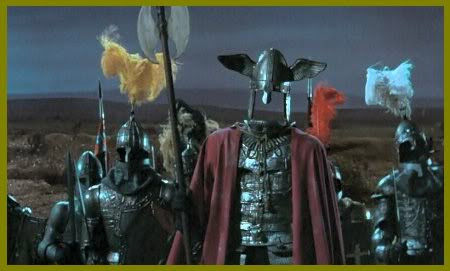
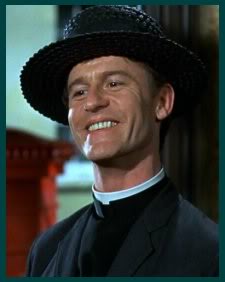
Roddy McDowall played Mr.Jenks, a priest with an eye for Miss Price (or rather, her valuable bit of property); Reginald Owen was…well, Reginald Owen….mouth wide-agape and commandeering the soldiers of the Old Home Guard; Tessie O’Shea played shopkeeper, town gossip and postmistress Mrs. Hobday, and rounding out the cast was John Erikson as the Nazi captain who has a bad fall-in with some headless fighting armor.

Bedknobs and Broomsticks is a heartwarming and bewitchingly enchanting movie and like most Walt Disney films, the supercalifragilistic Sherman brothers song-writing team had a big part in contributing to this. Bedknobs is chock full of wonderful whistlable tunes like “The Beautiful Briny Sea”, “Portobello Road” and “Eglantine, Eglantine!” and best of them all is the lovely “The Age of Not Believing” (nominated for an Academy Award). Its words brilliantly capture that period in life that we all go through at times when we doubt our own abilities and lose faith in our dreams.

Miss Price wasn’t a very capable witch, even for an amateur. She couldn’t fly a broom straight, nor turn a person into a frog (although she did have a knack for morphing them into fluffy white rabbits) but she had a heart of gold and tried the best she could to save her beloved England. Technically, a witch is a lady unless circumstances dictate otherwise, and, at the closing, we see this clearly demonstrated in Eglantine as she dons her battle helmet and pulls out all the stops to fight the Nazis had on.

"Filigree, apogee, pedigree, perigee!"

Bedknobs and Broomsticks premiered in 1971 at Radio City Music Hall as part of their Christmas show but, unfortunately, over thirty minutes of this wonderful movie had to be cut to fit into its two-hour time slot. For some reason, this sliced footage was left out of all the subsequent national showings as well. It was not until 1997, for the 25th anniversary video edition, that most of this deleted footage was reinstated. It is still missing a few key scenes, but we’ll not complain…after all, it’s a step in the right direction.

"Oh, bother! I do hate shoddy work!"

Monday, August 28, 2023

From the Archives: Pete's Dragon (1977)


"Boo Bop Bopbop Bop, I love you, too!" Elliott and Pete (Sean Marshall) are the best of friends as can be seen in this lobby card from Walt Disney's Pete's Dragon (1977). 

From the Archives is our latest series of posts where we share photos from the Silverbanks Pictures collection. Some of these may have been sold in the past, and others may still be available for purchase at our eBay store : http://stores.ebay.com/Silverbanks-Pictures

Sunday, April 16, 2023

Easy to Love ( 1953 )

Julie Hallerton ( Esther Williams ) is the star attraction of the Cypress Gardens water show. She was groomed for success by her boss Ray ( Van Johnson ) ever since he discovered her at the age of 15, but Julie is tired of being exploited and working from morning till night with no time to herself. One day, she announces to Ray that she will be quitting to get married. This sends him into a panic ( he certainly doesn't want to lose his star attraction! ) so he decides to give her a vacation and invites her to New York with him. Julie has long been secretly in love with Ray, so she leaps at the chance...only to discover that he once again uses her and the trip to New York as a publicity opportunity. Luckily, she meets the dashing nightclub singer Barry Gordon ( Tony Martin ) in New York who not only shows her a night on the town but arouses Ray's jealous streak. 

Esther Williams teamed up with Van Johnson in four films, three of which I personally think were her best films: Thrill of a Romance ( 1945 ), The Duchess of Idaho ( 1950 ), and Easy to Love. Easy to Love was the last of these four, made in 1953, and it is a delightful romantic comedy - quite easy to love. 

Most of Esther Williams' films are light-hearted, amusing, and very colorful. Easy to Love is especially colorful. It was shot on location in Winter Garden, Florida at the beautiful Cypress Gardens and the area looked doubly lush and green in eye-popping Technicolor. The finale, filmed by helicopter, really showcases the talented waterskiers from Cypress Gardens. Esther Williams also got to don the famous Southern belle dresses with hoop skirts so often seen at Cypress Gardens. Tourism to the park surely must have gotten a boost after the film premiered.

In addition to the lovely locales, Easy to Love features beautiful costumes by Helen Rose ( William's NY evening gown is especially easy on the eyes ), an easy-to-follow script, and an easy-going cast of pros, along with some familiar character actors. 

Van Johnson is always good at comedy and, although his demeanor here is much more gruff than usual, it is still apparent why Julie wants to marry him so fervently. After all, he's Van! 

Tony Martin was never much of a leading man but he always makes a wonderful "other man". Here, he nearly lures Julie away from Ray with his affability, good looks, and crooning tenor voice. All of the songs in Easy to Love are performed by Tony Martin and include the delightful "Did'ya Ever?", "That's What a Rainy Day is For" ( penned by Lennie Hayton and George Stoll ) and the titular "Easy to Love" written by Cole Porter. 

Also in the cast is King Donovan in an Allen Jenkins-style part, Edna Skinner ( Mr. Ed ) as Julie's roommate, John Bromfield as a Cypress Gardens beefcake with his eyes on Julie, and Carroll Baker in her film debut. 

Easy to Love is available on Volume 2 of the TCM Spotlight Esther Williams DVD collection. 

Tuesday, September 21, 2021

Let's Fall in Love ( 1933 )

Edmund Lowe is a name that is instantly recognizable and yet, even among classic film fans, he is often overlooked as an actor. This gentleman was a leading player in numerous silent films and, after having successfully transitioned to talking pictures, continued to be a big player up until the mid-1930s, when he began to take on more supporting roles. He is best remembered for playing Sergeant Quirt in the 1926 drama What Price Glory? and for his role as Dr. Talbot in Dinner at Eight ( 1933 ). Lowe had great range as an actor and could play romantic parts, dramatic roles, or comedic roles equally well. 

I enjoy him best when he plays a romantic role and one such movie that highlights his light but deft touch as an actor is Let's Fall in Love, a wisp of a musical from Columbia Pictures studio. This film has a simple script that was probably written just to highlight and promote its theme song by Harold Arlen and Ted Koehler. The tune is quite memorable and very lovely to listen to, especially when it is performed by singer/actress Ann Sothern who had a fine soprano voice ( she sang with Artie Shaw and his Orchestra before becoming an actress ). 

Edmund Lowe plays Kenneth Lane, a director who is anxious to make a film with the Swedish sensation that he had helped mold as a Hollywood star ( sound familiar? ). Unfortunately, stardom went to her head and she becomes so demanding that he fires her from the film. Now, in search of a fresh new face, he puts ads in national papers calling for any and all Swedes to make a screen test. His search comes to an abrupt end when he goes to a traveling carnival and discovers Jean ( Ann Sothern ), a fetching young woman who isn't Swedish at all. He likes her and wants her to be the leading lady in his latest film. But since everyone, including his boss Max ( Gregory Ratoff ) knows he is searching for a Swede he decides to masquerade her as a visiting Swedish model, a plan that backfires on him when his jealous fiancee Lisa ( Betty Furness ) blurts out the truth. 

Let's Fall in Love is just a little over an hour-long but manages to pack in a number of entertaining scenes including some musical numbers. Lowe is wonderful as usual with his expressive features ( carried over from his silent-era days ), Sothern is sweet making googly eyes at him, and Gregory Ratoff is excellent as Max, head of Premier Studios. He later famously played another producer named Max in All About Eve ( 1950 ).  


Also in the cast is Greta Meyer as a jolly Swedish woman, Miriam Jordan, and tenor Arthur Jarrett. The film was remade in 1949 as Slightly French with Don Ameche and Dorothy Lamour playing the leads.