Showing posts with label Family. Show all posts

Friday, May 29, 2026

Rewind Review: The Barefoot Executive (1971)

"He's gonna make it!"

Steven Post (Kurt Russell) is a young mailroom clerk with high ambitions and a lot of enthusiasm. He wants to see UBC, the faltering television studio that he works for, become the leading network but his boss Mr. Wilbanks (Joe Flynn) won't listen to any of his suggestions, one of which is making a series called Abraham Lincoln's Doctor's Dog

Steve's girlfriend Jen (Heather North) recently found herself caring for a chimp named Raffles who loves watching television. Steve thinks the shows that Raffles likes to watch are awful, but they seem to be what the public enjoys as well. After a few days of studying his primetime TV picks, Steve is convinced that the chimp knows the public's taste and can predict which pilot shows will become the next top-rated series. He is clever enough to know that he cannot go to his boss with this information, so Steve pretends that he himself has the knack for picking winners. This plan works well for a time, but Steve soon begins to feel undeserving of all of the praise that he is receiving for being the boy wonder of the studio. 
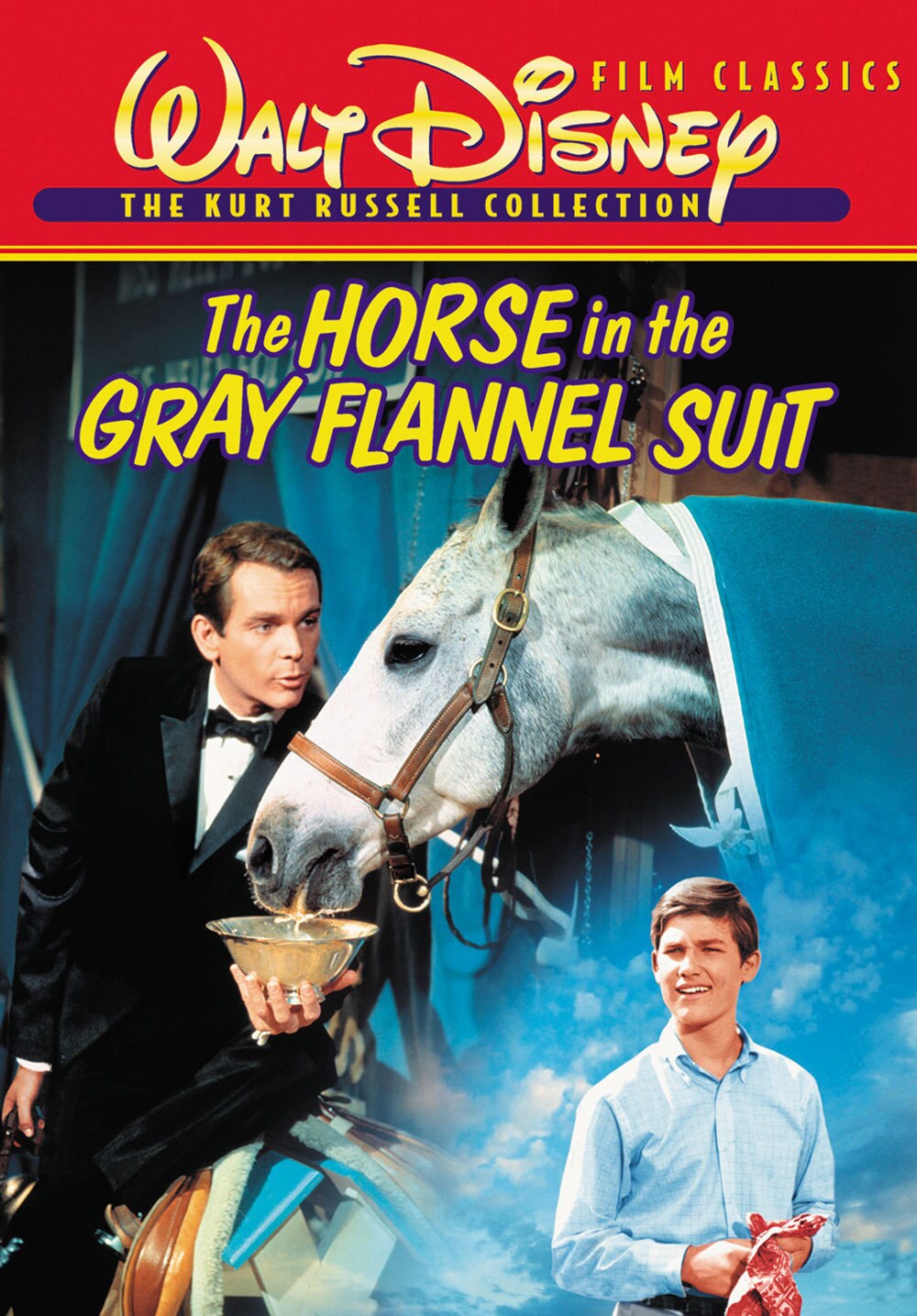
Kurt Russell began his film career with Walt Disney Studios as a child star and, when he got older, he played the leading man in a number of great comedies for the studio. The Barefoot Executive was released right in the midst of a series of college-themed comedies (beginning with The Computer Wore Tennis Shoes) that featured the recurring character Dexter Reilly (Kurt Russell). Instead of attending college, Steven Post goes to the Moonrise Night School, something that his rival Roger (John Ritter) finds laughable. 

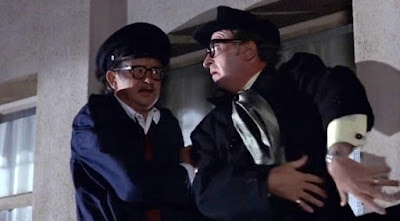
Like most Disney films, the movie has a lot of humor, most of which is delivered by the straight-faced character actors. In The Barefoot Executive, it is Joe Flynn and Wally Cox who steal all the funny moments. These two comedians made a great team and are especially entertaining when they are walking on the ledge of a high-rise building attempting to steal Raffles the chimp. 

"Maybe I shouldn't say this, but you've been complaining ever since we've been up here. If you don't like the way I wheeze and hiccup, why don't you go find your own ledge to stand on?" - Wally Cox

Incidentally, Raffles was making his film debut in this movie and then took a hiatus from Hollywood before returning for one last film in 1975 - an X-rated sex comedy called Sodom and Gomorrah (he needed a better agent). Raffles has such a sweet and expressive face and looks especially cute in the plumber's outfit that Steve dresses him in. 

John Ritter's role is rather small and, as Roger, he does not have any of the charms of Jack Tripper. All of the charisma belongs to Kurt Russell who was a wonderful clean-cut role model for young teenagers. It's no wonder he had such a long career at Walt Disney Studios. Not just any actor can build a convincing rapport with a chimp co-star. 

Also worth mentioning is Heather North, who is adorable as his girlfriend Jen. This lovely girl is best known for voicing Daphne for the Scooby-Doo franchise. Harry Morgan, Alan Hewitt, Hayden Rorke, and Iris Adrian round out the cast on this fun family classic. 

Tuesday, April 21, 2026

Rewind Review: The Admirable Crichton (1957)

Lewis Gilbert's version of The Admirable Crichton is a handsome adaptation of one of J.M Barrie's most popular plays which, although often referred to as a "satire", was more than likely Barrie's way of disguising his gentle assault on the British class system. It's also a rather unabashed look at the utter helplessness the uppercrust have when they are thrust in a commonplace situation or, in this case, an un-commonplace situation. 


Lord Loam (Cecil Parker) is the father of three young women, each about to be betrothed. Loam is a just man - one of those easily swayed lords of the English realm. He fancies that he desires equality as much as the average working class gent... and he does, to a point. In fact, it is his embarrassing "servant's tea party" that leads him to embark on a yachting voyage to the South Seas, along with his daughters, their suitors and the ship's staff. 

When a spot of inclement weather frightens the crew into bailing, the passengers are left floating in a lifeboat in the mid-Pacific to fend for themselves. Thankfully, their unflappable manservant Crichton (Kenneth More) and a servant girl (Diane Cilento) are dunked overboard with them.... and it is Crichton who turns out to be their savior with his resourcefulness when they are marooned on a deserted island. As the toffs accustom themselves to island life they find a new social order emerging. The tables are reversed as Crichton becomes the lord of the land and they the servants; but when a passing ship comes to their rescue, Crichton must decide if they are to remain islanders or each return to their previous status. 


The Admirable Crichton, released as Paradise Lagoon stateside, was the first color adaptation of Barrie's beloved 1902 play, but not the first filming. There was G.B Samuelson's 1918 silent version, Cecil B.DeMille's lengthy 1919 retelling (Male and Female starring Gloria Swanson) and Paramount's Yankeefied take on the story, We're Not Dressing, released in 1934 and starring Bing Crosby and Miriam Hopkins. 

Lewis Gilbert displays a masterful hand at putting the shipwreck satire to film and Wilkie Cooper obviously delighted in photographing the island paradise, which the play could only suggest. His sumptuous Technicolor photography gave reason enough for Brits to leave their flats to see the film. 

The rich blue waters of Bermuda subbed for the unnamed South Seas island and a couple of well-placed artificial palms added to its appeal. The island sets are quite clever and were a precursor to the familiar bamboo sets of Gilligan's Island during the 1960s. 


It is really Britain's everyman, Kenneth More, however, who steals the show and makes this his own film. More isn't ones ideal image of a heartthrob that three gals would be pining over, but on a deserted island he takes on the appeal of a hero and his good points do indeed shine through. 

The always lovely Sally Ann Howes portrays the beautiful Mary, eldest daughter of the Loams, who finds she has lost her heart to her butler. Sally Ann Howes always seems to be running along a beach, but this time, alas, she is not singing "Truly Scrumptious". Cecil Parker is marvelous as Lord Loam; Diane Cilento (Mrs. Sean Connery at the time) plays the cockney Eliza, not unlike Eliza Dolittle; and Martita Hunt, Jack Watling, Peter Graves, Gerald Harper, Mercy Haystead, and Miranda Connell round out the cast. 

The Admirable Crichton is a very entertaining and underrated little gem that has been cast adrift by the critics. It is hard to imagine watching this story unfold within the confines of a stage. It certainly was a tale meant to be filmed in Technicolor. 


Although Barrie attempted to write a comical study of the folly of civilization's class system, he left The Admirable Crichton without a moral. What comes through in this film however, is that the poor class have as much, if not more snobbery, than the rich. It is Mary who desires to remain on the island married to Crichton and living the blissful life of a pair of castaways but Crichton is stubbornly proud of his "position" and fails to conceive how the daughter of his employer can love him for himself when the setting is changed. In short, he behaves like an utter ass. 

Friday, March 20, 2026

The Daughter of Rosie O'Grady (1950)

In 1943, Betty Grable starred in the colorful Fox Technicolor musical Sweet Rosie O'Grady. Seven years later, her screen sister, June Haver, was featured in a sort of follow-up film, The Daughter of Rosie O'Grady, which was equally colorful and just as entertaining. 

In this film, "Junie Baby" (as Fred MacMurray would call her) played Patricia O'Grady, the daughter of Rosie O'Grady, a once-popular music hall entertainer. Along with her two sisters, Katie (Marcia Mae Jones) and Maureen (Debbie Reynolds), Patricia resides with her father, Dennis O'Grady (James Barton), a stern Irishman who works as a trolley conductor. He loves his daughters and wants to keep them by his side. He also wants them to go nowhere near the theater district for fear they will want to become performers themselves and, as Papa claims, "That's no life for anyone!" He and his dear departed Rosie spent years living out of a trunk and traveling from one town to the next. He wants his daughters to marry college-educated men and settle down.

Little does he know that his eldest daughter is already secretly married to a policeman and about to have a child, and that darlin' Patty has fallen in love with none other than Tony Pastor (Gordon MacRae), the owner of the local musical—and, saints preserve us!—wants to join his acting troupe!

You can guess that there is enough drama in the film to fill its 105-minute runtime. Nevertheless, squeezed in between the Irish fighting spirits are plenty of musical interludes, including a lovely rendition of the titular song. When Gordon MacRae isn't singing, Gene Nelson entertains the audience with his impressive dancing skills. June Haver was quite a dancer herself and does many a fancy step with Gene, while S.Z. Sakall adds some comic relief as Papa O'Grady's co-worker and family friend.

Overall, it's an entertaining entry from the Fox film factory, although not very memorable... Within a year of viewing, you'll probably get this title confused with Sweet Rosie O'Grady or When Irish Eyes are Smiling!

Sunday, January 25, 2026

Ski Party (1965)

American International Pictures must have thought that if teenagers would flock to theaters to see Frankie Avalon at the beach, they’d happily watch him having fun in the mountains, and they weren’t wrong. Ski Party, released in 1965, was the snow-covered sibling of the sun-drenched Beach Party films. The Malibu shoreline was replaced with the frosty slopes of Sun Valley but, other than that, every zany ounce of the AIP teen-movie formula was kept intact from the jealous misunderstandings to the pop tune interludes to the inevitable “boys learn their lesson” finale. Like the Beach Party films, it's an unabashedly corny teen romp, but Ski Party is so dyed‑in‑the‑wool goofy that resisting its charm becomes downright impossible after a viewing or two. Or three. Or five. Honestly, this film gets more amusing each time we watch it!

Todd (Frankie Avalon) and his best pal Craig (Dwayne Hickman) are baffled by the eternal mystery of what girls want. Their girlfriends, the bubbly Linda (Deborah Walley) and the stylish Barbara (Yvonne Craig), seem to fall for the charms of the swaggering jock Freddie (Aron Kincaid). When Freddie's ski club and the girls all head to Sun Valley for the weekend, Todd and Craig decide to trade the sand for snow to make sure Freddie doesn't steal their sweethearts and to study the mysterious ways of the opposite sex. 

At the resort, Freddie swooshes down the slopes with the grace of a snowbound Apollo, so Todd and Craig decide that if they master the rudiments of skiing, it's a cinch that the girls will flock around them, just like they do with Freddie. Their plan? To disguise themselves as girls to infiltrate the female ski class. Donning floppy wigs and falsetto voices, they become British co-eds "Jane" and "Nora". Naturally, no one questions why Frankie Avalon in a wig still looks exactly like Frankie Avalon in a wig. Complications arise for the two Casanova wannabes when Freddie falls for "Nora" and Barbara gets jealous of Craig's attention to "Jane". 

Ski Party was allotted a larger budget than the Beach Party films and the usual director William Asher (known for his TV work) was replaced with Alan Rafkin (The Ghost and Mr. Chicken), an experienced comedy film director. His direction - and the better script - made Ski Party one of the most entertaining entries in the series. Plus, there was the added bonus of the beautiful location filming at Sawtooth National Forest and the Sun Valley Resort in Sun Valley, Idaho. 

While Annette Funicello's presence is missed (she has a brief cameo in the film), Dwayne Hickman more than makes up for her absence. Television's "Dobie Gillis" was a natural comic and he should have appeared in more of the Beach films in place of the wacky Harvey Lembeck. 


"And so we see the male becomes the most romantic between the ages of 17 and 19." - Professor Sonya Roberts (Annette)
[Sound of chalk on a chalkboard] "It sounds like my mating call." - Todd
"Mine's much noisier." - Craig

Ski Party also boasts some good musical breaks including Leslie Gore singing the catchy "Sunshine, Lollipops and Rainbows" on the bus enroute to the lodge, James Brown and the Famous Flames appearing as a ski patrol and singing "I Feel Good" and Frankie Avalon bopping with "Lots More Where That Came From" and "Painting the Town". 

Ski Party is definitely juvenile fare with lots of teenage hijinks but it's a fun winter romp so brightly colored and so shamelessly goofy that it becomes more endearing with each viewing.

Saturday, October 11, 2025

Codename Icarus (1981)

Just when you think you have discovered all the miniseries there are to discover, you find a new one. That was the case with Codename Icarus. We thought we had exhausted the field of British children's television programs and then Paul, a wonderful film collector, shared this hard-to-find title. 

Codename Icarus (1981), a quietly unsettling conspiracy thrillerwas the brainchild of screenwriter Richard Cooper. It poses the query, "what if an organization used gifted children to develop scientific breakthroughs for their own diabolical means?" If an organization could separate the children with advanced minds from their regular schools and then train them to work on problems for their own use, what could stop them? Well, in the series, one man could stop them. At least, he will try. 

Martin Smith (Barry Angel) is one of the eccentric gifted children who was most recently brought to Falconleigh, a private school in the country run by the shadowy Icarus Foundation. He was told that he could pursue his own studies and that teachers - who act more like servants - will be able to provide him with "challenges" which he can work on to engage his mind. These homework assignments are actually pieces of research projects that other scientists are having difficulty solving. 

At Falconleigh, pupils are addressed with strict formality, social bonds are discouraged, and “The Game” — conducted in a deserted squash court — subjects them to interrogation, hypnosis, and mental conditioning. Martin, who was at first delighted to be going to a school that recognized his talent, soon discovers the real "game" that Falconleigh is playing on the students. He wants to escape but is unable to. 

Parallel to the child-strand is an adult storyline, led by intelligence officer Andy Rutherford (Jack Galloway), investigating why British missiles keep failing in testing — and gradually tracing the threads of sabotage back to Falconleigh and Icarus. 

It’s this structural balance — the youthful and the grown-up plots proceeding in tandem — that makes Icarus feel less like “children’s TV with spies” and more like a compact, morally serious drama. British screenwriters always seem to be pushing the boundaries of what defines children's television and normally a program such as Codename Icarus would have been a treat to watch. However, Richard Cooper's script pushed the boundaries a bit too far. Why would children be anxious to tune into next week's program to watch other children undergo drug treatment or be interrogated? Even this extreme possibility may have happened if Barry Angel made his Martin Smith character a likable chap. 

Codename Icarus could have been a series about two or three highly intelligent children banding together to escape the school and expose its founder to the British secret service. Adults would have enjoyed the trials of Andy Rutherford while children could have related to Martin and his compatriots. Instead, Martin is an uneasy, brittle centre: he’s prickly, defensive, and full of resentment at being misunderstood....in short, a thoroughly unentertaining character to watch. The adult cast, especially Galloway’s Rutherford, offers counterweight, but not enough to save the series from just being a dark and unsettling bit of sci-fi television. 

If you cherish the BBC’s tradition of intelligent children’s serials, then you are better off exploring Timeslip (1970), Escape into Night (1972), Children of the Stones (1977), The Bells of Astercote (1980), or The Witches and the Grinnygog (1983). Not only are these more entertaining, but they spark the imagination far more vividly.

Friday, September 26, 2025

Check it Out! How TV Series

Have you ever heard of "How"? I'm sure you haven't....at least, most Americans have not. This was a British series geared towards children but enjoyable for all ages. A panel of four presenters shared various "how-to"s within a half-hour span. The series was so entertaining that it lasted for 17 seasons between 1966 and 1981. 

Next month we are going to give a more thorough look into this fascinating show but, for now, check out a clip from a 1980 episode and see just how interesting this series was! 

Saturday, September 20, 2025

Make A Wish (1937)

In 1936, Bobby Breen hit the big screen in his first starring role in the film Let's Sing Again. The curly-mopped youngster was a male edition of Shirley Temple with a similar twinkle in his eyes and a decidedly better singing voice. 

Little Bobby Breen (no relation to the film censor Joseph Breen) was indeed a talented youngster and, while he remained young, RKO Studios milked his image for all its worth featuring him in eight films within three years. 

Unfortunately, little boys do not remain little boys forever and as Bobby's bones grew, his audience diminished. The studio didn't quite know what to do with a teenage singing sensation, especially when his soprano voice was beginning to take on tenor tones. The moment his voice broke, Bobby broke with Hollywood and decided to concentrate on his school education before entering the US Army during World War II.

While he was on top, he made some entertaining films, the best of which was Make a Wish co-starring Basil Rathbone and opera star Marion Claire. 

In this film, Rathbone played Johnny Selden, a composer of operettas, who likes to vacation in a cottage across the lake from a boy's summer camp. One day while fishing, he meets "Chip" Winters (Bobby Breen), a friendly lad with a beautiful singing voice who is staying at the camp. Chip's mother is a musical stage star. Chip shares with Mr. Selden one of the letters his mother wrote to him, and this triggers Mr. Selden's creative juices to bubble over, so much so that he bases his new operetta around Chip's mother who inspired it. When Mrs. Winters (Marion Claire) arrives at camp, Mr. Selden finds her ideal and asks her to star in his latest production in New York. She likes the idea but her fiancé, the stuffy Mr. Mays (Ralph Forbes), is set against it. This provides the drama of the film. Donald Meek provides the comedy in the form of a butler who wants to compose music himself. He teams up Henry Armetta and Leon Errol to unintentionally destroy Mr. Selden's final act. 

Make a Wish is a light-hearted musical aimed at children but entertaining enough for adults to enjoy as well. It leaves you with a feel-good feeling which makes it timeless. Like the Shirley Temple films, the script has some implausibilities in it, like Mr. Selden's theatrical producer deciding to go ahead with staging an opera while the third act remains incomplete (!) It also seems unthinkable that Mr. Selden would not be aware that his show was being made until opening night - Where was he, on an African safari with no phone or newspaper access?

The music in Make a Wish is delightful. Oscar Strauss (The Chocolate Soldier) wrote the score while Paul Francis Webster and Louis Alter penned the lyrics. Three songs stand out: the titular "Make a Wish", "Music in My Heart", and "Campfire Dreams" which oddly enough was not written by Strauss. It was composed by Louis Alter. 

Bobby Breen's movies have not yet been given a proper DVD release but they can all be found on Youtube in varying conditions. This one is a worth see if only to enjoy Bobby's fine singing voice. 

Wednesday, August 27, 2025

McHale's Navy Joins the Air Force (1965)

Tim Conway cracks me up. I always enjoyed his antics when he was paired with Don Knotts, but now I find he is even funnier with Joe Flynn. Having not seen the television series McHale's Navy, nor the feature film, I plunged into this sequel regardless and loved it! You don't have to be familiar with the show or its characters to enjoy this one. I didn't even miss Ernest Borgnine who wasn't present in this McHale outing sans "McHale".

Why he isn't in this sequel is a mystery... even Borgnine later confessed that he never knew the reason why he wasn't asked to be in it. Perhaps Universal wanted to test the waters with Joe Flynn and Tim Conway as a new Laurel & Hardy-like comedy duo...or they may have been simply saving money by axing the main star. Whatever the reason, with or without him it is a hoot. 

The comedy all starts with a case of mistaken identity—Ensign Parker (Tim Conway) gets confused as a defecting Russian naval officer after having one gin too many, so Quartermaster Christy dresses him in the uniform of Air Force Lt. Wilbur Harkness (Ted Bessell), General Harkness' son, who has a reputation as a ladies' man. Before long, our clueless hero is suddenly irresistible to the likes of Susan Silo, Jean Hale, and other young women who are convinced he’s a legendary Romeo. Things spiral further when Parker is forced to pose as a bomber navigator, dragging a very unwilling Binghamton (Joe Flynn) along for the ride. The two manage to turn a routine flight into a catastrophe, eventually plummeting out of the plane in a jeep dangling from a rope!

Throughout the 1960s, Universal Pictures were outputting the best comedies of all the studios. McHale's Navy Joins the Air Force was a typical product of this studio, much in the vein of the Don Knotts comedies from that same era. Sure, the sets are basic (they look like they were made for the TV series), but the acting is a riot, and it is packed with familiar character actors like Tom Tully, Jacques Aubuchon, Cliff Norton, Henry Beckman, and Willis Bouchey. And let’s not forget Bob Hastings as Carpenter, Binghamton’s ever-loyal lackey.

Best of all, it has plenty of Tim Conway and Joe Flynn. I grew up with Joe Flynn from his Disney work so the character of Captain Binghamton is new to me but it's Flynn all over. He always played men of authority who were frustrated by the idiots around him - yet, he was often the biggest boob of the bunch! McHale's Navy Joins the Air Force has a number of great scenes with Binghamton getting frustrated with Parker...the best of which is when the two of them squeeze inside a link trainer and Parker keeps making remarks that imply that they are flying ("We must be hitting turbulence"..."I think we hit water!"). Binghamton's exasperation keeps growing as he blurts out, "Link trainers can't fly!".... yet they end up in the Pacific Ocean! Another fun scene is where Parker and Binghamton come across a shipment of brassieres without the faintest idea of what they are. It’s all silly, harmless fun—but crazy enough to get you laughing. 

Thankfully, McHale's Navy ran for four seasons on television so now that this film whetted my appetite for navy comedy, I'll be plunging into the series. If you want to check out McHale's Navy Joins the Air Force for yourself, it is paired with McHale's Navy (1964) on a double-feature DVD from Shout! Factory. 

Thursday, August 14, 2025

From the Archives: A Ticklish Affair (1963)

 
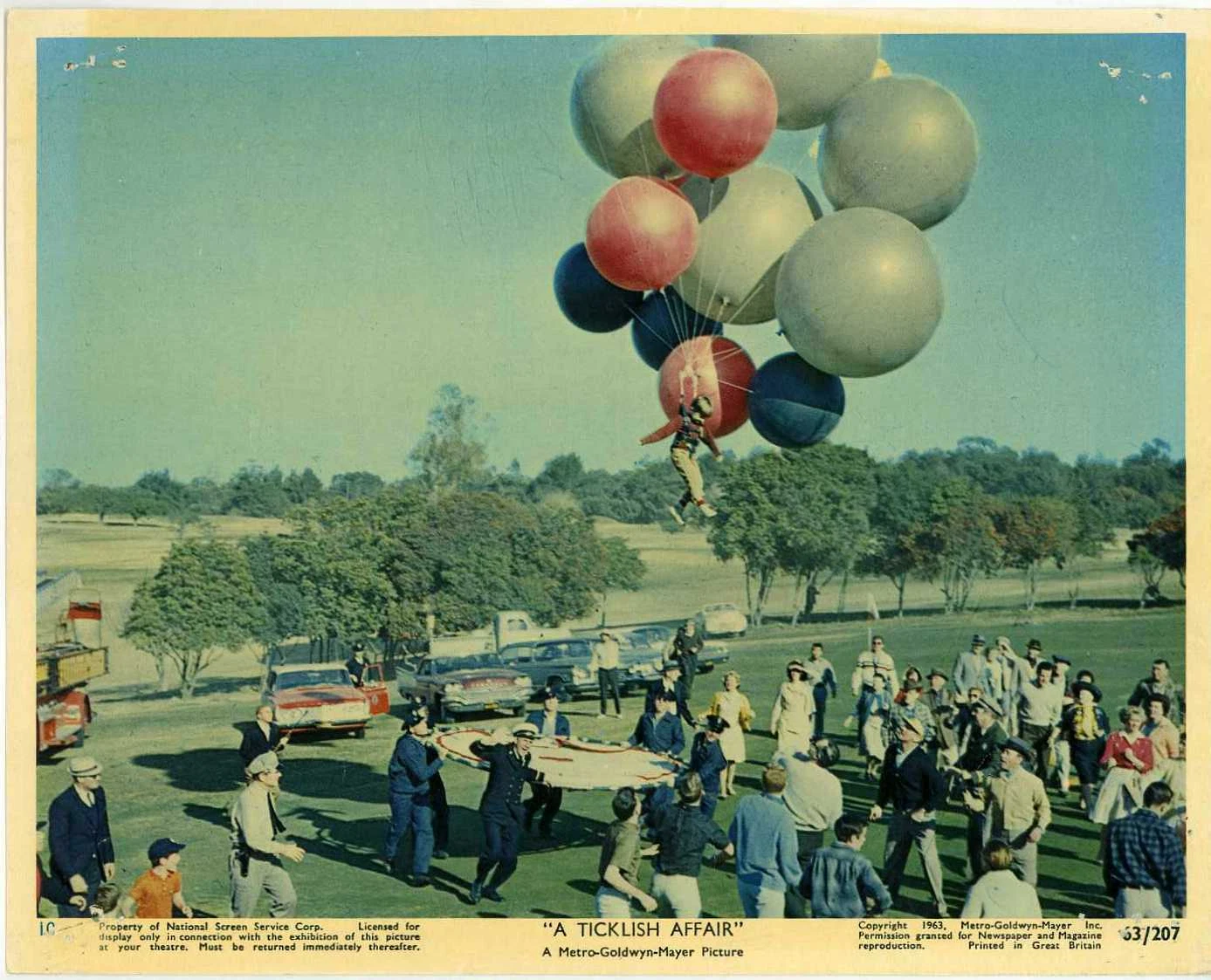
Little Grover (Peter Robbins) was taking a flight on some tethered weather balloons when he decided to cut the ropes and really soar in 1963's A Ticklish Affair. This brought Officer Key (Gig Young) and a fleet of patrol cars out trying to chase him down...a difficult task to do with San Diego's shifting winds.

From the Archives is our latest series of posts where we share photos from the Silverbanks Pictures collection. Some of these may have been sold in the past, and others may still be available for purchase at our eBay store: http://stores.ebay.com/Silverbanks-Pictures 

Monday, July 21, 2025

The Computer Wore Tennis Shoes (1969)

Dexter Riley (Kurt Russell), a popular but not-too-smart student at Medfield College, becomes a walking whiz-kid when he accidentally electrocutes himself with the donated computer the college received from wealthy businessman A.J. Arno (Cesar Romero). Now he has encyclopedic knowledge and lightning-fast recall. Dexter's mechanical brain turns him into a national sensation, and he finds his newfound skill going to his head when Arno recruits him to his business, but he soon discovers that "everyone is out for themselves!". A.J. wants to exploit Dexter’s abilities for his own gain, while the deans of two colleges are attempting to recruit him for academic competitions so they can win funds for the school. 

Dexter doesn't realize that he absorbed sensitive data from the computer - incriminating information about Arno's illegal gambling rings. When he accidentally blurts it out on live television during an academic quiz challenge, Arno's henchmen kidnap him, prompting his college friends to mount a rescue to get Dexter back on TV so they can win for good ol' Medfield!

"The State Collegian Classification Test is tomorrow. As you know, we came in 36th last year. I think we can improve on that." (Dean's announcement)

"36th? You know Dexter, there are only 37 colleges in the state." - Annie

"Gee, I wonder who we beat?" - Dexter

The Computer Wore Tennis Shoes is a light-hearted comedy from Walt Disney that was geared for the teenage market when it was released. It proved to be so popular that two more Dexter Riley films were made, each one featuring a different scientific breakthrough: invisibility (Now You See Him, Now You Don't) and super-strength (The Strongest Man in the World). 

Kurt Russell was ideally cast as Dexter, your average good-looking but not-too-bright college student. He's loyal to little Medfield College and means well in all he does, but things always tend to backfire and, when it does, his pal Schuyler (Michael McGreevey) is usually right beside him. Dexter is a genius compared to Schuyler who really bumbles things. Luckily, their recurring opponent - A.J. Arno and his stooge Chillie (Richard Bakalyan) aren't the sharpest sharks in the tank. Like most Disney films of the 1960s and 1970s, the Dexter Riley series end with a chase scene and this is when A.J. and his gang always get caught. 

Kurt Russell is not usually considered a comedian but he was great in all the Dexter films. In The Computer Wore Tennis Shoes, he is especially funny when he tries to sputter out the answers to the remaining quiz questions agonizingly slow while his "computer" is shutting down. 

The Computer Wore Tennis Shoes boasts a great supporting cast of character actors: the talented William Schallert plays Medfield's science teacher Professor Quimby whom the students love but the dean despises; Alan Hewitt plays Dean Collingsgood of the rival State College, and Joe Flynn portrays Medfield's Dean Higgins, a lovable fussbucket. Joe had previously appeared in Disney's The Love Bug but, as Dean Higgins, he had a chance to showcase his unique comedic talent. He reappeared in both Dexter Riley sequels as well as in The Barefoot Executive with Kurt Russell, before his death in 1974. 

Jon Provost, Frank Webb, Debbie Paine, and Frank Welker have supporting roles as Dexter's college pals. 

There's a lot to like in this film: its groovy opening (with computer punch card graphics!), the small town college vibes, the dunebuggy chase, and the TV quiz show finale - not to mention Kurt Russell. If you enjoy it - as we certainly did - then check out the sequels. Luckily, all of Russell's Disney films are on DVD and are available to stream through Disney+.

Sunday, June 15, 2025

Weekend with Father (1951)

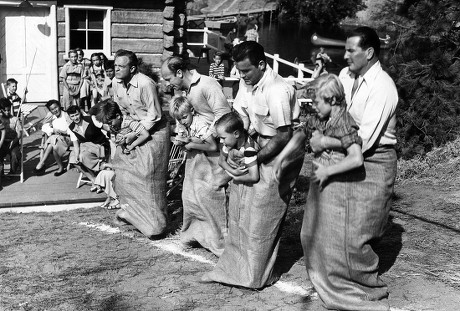
Today is Father's Day and to celebrate all of the wonderful daddies of the world, we picked a rare but wonderful daddy movie to review - Weekend with Father (1951). This Universal Pictures comedy stars Van Heflin and Patricia Neal and tells the story of widower Brad Stubbs and widow Jean Bowen who meet while taking their children to a summer camp. Even though sparks of love instantly fly between the happy couple, getting their children to accept a blended family proves to be more difficult...but "Daddy Stubbs" gives it his best try to make it work. 

"Mommy, is that Schmoe gonna be our father??"

Yes, unfortunately, Bowen's two boys see their new father as a failure, especially when compared to He-Man Don Adams (Richard Denning), the camp counselor, but Mrs. Bowen knows what a gem she found. Stubbs' two daughters are disappointed with "mother" as well.... they were hoping their dad was going to marry the glamorous TV star Phyllis Reynolds (Virginia Field) whom he has been dating for over a year.

Ironing up the difficulty with their children and trying to shake off the two cardboard idols makes up with the bulk of the film and provides ample opportunity for comedic moments, many of which were provided in Joseph Hoffman's script. Incidentally, this script feels like it was tailor-made for Fred MacMurray and Claudette Colbert. I wonder if they weren't initially planned to be the stars of this vehicle. Colbert would have been wonderful as Mrs. Bowen, but Patricia Neal does what she can with the role and what she does is rather good. 

Universal released so many entertaining comedies in the late 1940s and early 1950s and just about every actor on their payroll ended up appearing in at least one during their tenure with the studio. Van Heflin and Patricia Neal are generally considered serious actors, but they do a good job with these light-hearted roles.... especially Heflin, who should have gone on to make more comedies. 

Weekend with Father was directed by Douglas Sirk, who was such a versatile director. He made a series of comedies before switching to adventure films and later mushy romance pictures starring Rock Hudson. This film plays out quickly and keeps the laughs going. 

You can't help but feel sorry for both parents as they put up with their children's antics but faced with the same situation, I guess most couples would bend backward trying to get their children to like their newly chosen spouse. It's worth checking out this little-known classic and, to make the film extra special, why not pair this with Walt Disney's short cartoon "Father's Weekend" featuring Goofy?

Happy Father's Day!

Saturday, May 17, 2025

The Student Prince (1954)

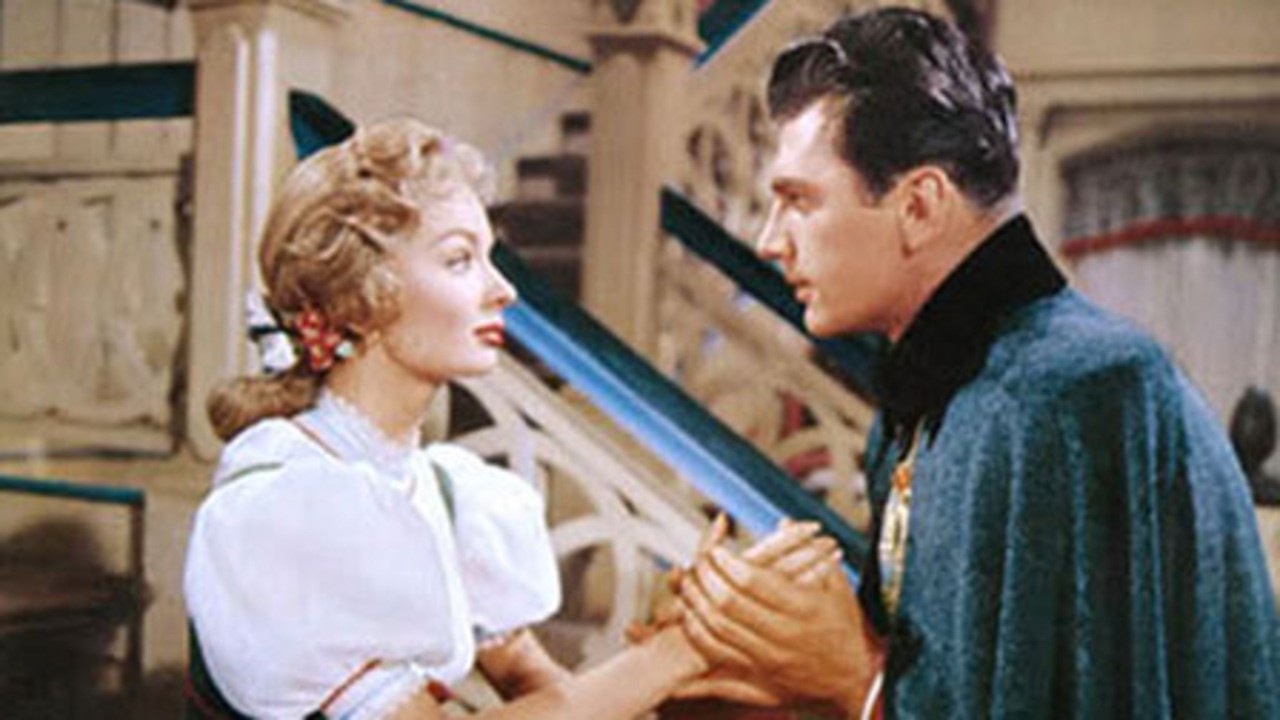
In 1954, Metro-Goldwyn-Mayer brought the delightful old play "The Student Prince" to the big screen. This lavish production was initially planned as a vehicle for their Italian singing sensation Mario Lanza, but this fun-loving tenor had put on a bit too much weight over the summer and ended up being axed as its star. Instead, the handsome English-import Edmund Purdum took on the lead role and lip-sung the songs that were pre-recorded by Mario Lanza. And it turned out quite well!

Sigmund Romberg musicalized the 1902 Wilhelm Meyer-Förster play "Old Heidelberg" in 1924 and turned it into one of the most popular operettas of the 20th century. The story centers around the young Prince Karl Franz of Karlsberg (Edmund Purdum), who is encouraged by his tutor, the kindly Doctor Engel (Edmund Gwenn), to attend the University of Heidelberg prior to capping the crown on his head. In this charming old German town, Prince Karl falls in love with Kathie (Ann Blyth), the barmaid at the local beerhall where all the students congregate after school. He wishes to marry Kathie but he is pledged to betroth Princess Johanna (Betta St. John), and so his heart is divided between his personal desire and duty for his country.

This simple but engaging plot was interwoven with over 15 glorious Romberg songs, including "Drink, Drink, Drink!", "Golden Days", the beautiful "Serenade", and "Deep in My Heart". Purdum did an excellent job of mimicking a tenor and Ann Blyth, of course, carried her own set of powerful lungs and sang better than she ever did on film. In between their romantic moments, Prinz Franz encountered some drama caused by a rival student (John Ericson), a little humor from the inn-keeper (S.Z. Sakall), and a good dose of paternal advice from his father King Ferdinand (Louis Calhern). Also in the cast was John Williams as the stiff valet Lutz, John Hoyt as the Prime Minister, and Richard Anderson as Franz's newfound friend at the university. 

The film looked beautiful in Cinemascope and the lovely Cedric Gibbons sets transported the audiences to old Germany and the grandeur of the German Empire before World War I began. 

"The Student Prince" was an immediate success upon its Broadway debut in 1924. It became the most popular musical of the 1920s, running even longer than "Show Boat". Hollywood brought it to the screen in 1927 as a silent film (!) starring Ramon Navarro and Norma Shearer and then it was shelved until this production in 1954. I always thought that it would have made an excellent Nelson Eddy-Jeannette MacDonald musical in the late 1930s but that never happened. 

This adaptation proved that a good story lasts for generations. MGM reaped more than double its return at the box-office and it launched Edmund Purdum's career in Hollywood. Shortly after The Student Prince was completed, Purdum went on to star in the epic The Egyptian over at 20th Century Fox. 

Monday, March 31, 2025

Rob Roy: The Highland Rogue (1953)

The setting is Scotland in the 18th century. A German has inherited the throne of England and Scotland and will rule as king. The appointment of King George I upsets many of the Scottish people and the highlanders especially who gather their clans together and rise up against the English troops occupying Scotland. The Duke of Argyll has quenched most of these rebel uprisings, except for a small but stubborn band of highlanders of the McGregor clan led by Rob Roy "the Highland rogue".His fight for Scottish independence leads him on a road to the gallows in London... and eventually, face to face with King George I himself. 

Walt Disney made a number of excellent adventure films in the 1950s and Rob Roy ranks as one of the best. It has all of the sweet ingredients for a rousing good adventure: highland rebels, romance, swordplay, beautiful locations, stirring music, and a grrraaand story. Technicolor filming and a cast of seasoned actors bake the cake. 

Richard Todd, who starred as the heroic Rob Roy, had just completed two period costume adventure films for Walt Disney Studios - The Story of Robin Hood and his Merrie Men and The Sword and the Rose - both of which were popular with UK audiences and Rob Roy proved to be a box-office hit as well. Unfortunately, these films did not do as well stateside and Disney decided not to pursue more costume films. This was also the last picture Disney released through RKO for shortly afterwards all of his productions were released through his own distribution company, Buena Vista.  

Rob Roy gathered together some excellent actors from throughout the United Kingdom including Irish-born (!) Richard Todd, Welsh actress Glynis Johns, James Robertson Justice of Scottish ancestry (who looked especially handsome donning long blonde hair), English character actors Michael Gough and Geoffrey Keen, and one of the most famous Scottish film actors to have ever lived: Finlay Currie. 

Rob Roy is a simple story of a rebel but he is one like Zorro or Robin Hood, where the audience takes sides with him and is pleased to see justice done in the end.The story was, in Disney's words, "based on history and legend" and written by one of his most dependable scriptwriters Lawrence Edward Watkin, who specialized in adapting adventure stories such as Treasure Island and The Story of Robin Hood.  

Location filming took place in Scotland around Corriegrennan and Aberfoyle and this Highland scenery was beautifully shot by legendary cinematographer Guy Green. What scenes they could not film were painted in by matte artist Peter Ellenshaw. Today, one can view Rob Roy and its colorful filming through Disney's subscription streaming service Disney + or by purchasing it on DVD. 

Friday, February 28, 2025

Gidget Goes to Rome (1963)

"Gidget Goes to Rome....and it was never like home!"

After riding the waves in Malibu and basking in the Hawaiian sun, our favorite Southern California beach girl, Gidget, traded in her surfboard for a passport and embarked on her most exciting journey yet—a trip to Rome!  In Gidget Goes to Rome (1963), Francesca "Gidget" Lawrence (now played by Cindy Carol) explores the Eternal City with her ever-doting boyfriend Moondoggie (James Darren) and the "gang" from back home. 

Rome proves to be the perfect playground for Gidget's romantic and cultural escapades. She gets to marvel at the Colosseum, daydream in the Roman Forum, toss coins into the Trevi Fountain, and also find time to go over the deep end for a sophisticated Italian magazine writer, Paolo (Cesare Danova), who claims to be writing an article about an American girl's impressions of Rome. He is really keeping an eye on her as a favor to her father, an old war buddy, but poor Gidge doesn't realize this. 

Jeff aka "Moondoggie" takes Gidget's romantic fling in stride because he has fallen in love himself - with Daniela (Danielle DeMetz), the group's curvaceous tour guide.  

"Everyone falls in love in Rome, Jeff. It is our national pastime - like your baseball."


While Gidget and Moondoggie adjust to their new pairings, she also gets involved in a series of comedic mishaps, all set against the stunning backdrop of a postcard-perfect Italy. The film captures a breezy, early-1960s ideal of international travel—where every piazza is picturesque and romance is always just around the corner. This was a dream trip that every college student at the time wanted to take. 

Gidget Goes to Rome plays like a Technicolor travelogue, making full use of its on-location shooting in Italy. Director Paul Wendkos, who helmed all three Gidget films, gives audiences a delightful tour of Rome’s most iconic landmarks, from the Spanish Steps to St. Peter’s Basilica.

The sights aren't the only dazzling part of the film—the wardrobe is just as eye-catching. The girls get to wear gorgeous Fontana fashions, and a highlight of the film is the elegant fashion show sequence at the legendary Fontana studio where Gidget accidentally stumbles onto the runway. 

Cindy Carol, who steps into the shoes of Sandra Dee and Deborah Walley, plays Gidget with a sprightly flair all her own. Gidget Goes to Rome was the first Gidget film that I watched as a young girl and the movie - as well as Cindy Carol's performance in it - still remain my favorite in the series. Who can resist the catchy title song by James Darren, too? 

Joby Baker returns as Jeff's pal Judge, while Peter Brooks, Noreen Corcoran, and Trudi Ames round out the cast as Gidget's travelling companions. Of course, no Gidget movie would be complete without parental intervention, and this time it’s in the form of the not-so-watchful chaperone Aunt Albertina played by the wig-swapping Jessie Royce Landis.

Gidget Goes to Rome is a typical light-hearted romance adventure that was perfectly in step with the beach-party films and globetrotting romances of the era. It’s a breezy farewell to the Gidget film series and well worth a watch. Just don’t expect too many waves—this time, the only surfing Gidget does is through the winding streets of Rome.

Friday, January 31, 2025

Robert's Robots (1973-1974)

Robert Summerby is not your ordinary brilliant eccentric inventor. He has developed a group of humanoid robots in the laboratory of the country house he shares with his aunt and uses two of them - the clunky "KT" and the much more advanced Eric - to help him build and develop other robots as well as do chores around the house. The scrapes that he and his robots get into formed the basis of Bob Block's 1973 children's sitcom Robert's Robots... and they certainly got into a lot of them! 

Bob Block was the brains behind several memorable children's comedies, including Pardon My Genie and Rentaghost, so when his name comes on the screen, you know it's going to be a funny show. What provides the most humor in Robert's Robots is the fact that Robert Summerby wants to keep his humanoid robots a secret, even from his fiancée Angela, and comes up with wild excuses for the way they sometimes behave. Adding to the fun is Mr. Marken and Mr. Gimble. Marken (Leon Lissek) represents a foreign electronics firm who wants to find out what Summerby's latest invention is and so he hires Mr. Gimble (Richard Davies), a private detective, to find out. Each episode has the twosome peering into or above bushes trying to look into Summerby's laboratory. Marken speaks English well enough but has a tendency to pick other words that sound like the ones he wants to use. 

"I can smell from the aroma that this is not immediate coffee. Has it been soiled?"

"He means ground."

John Clive was cast as Robert Summerby and he is marvelous as the English inventor always coming up with new ideas or ways to improve the robots... for example, he recircuited Eric's emotional control once to make him less impatient and more caring towards humans. This backfired of course, but it was a clever idea. Clive tends to talk nervously so luckily his calm and comforting Aunt Millie (Doris Rogers) is always there to give him some stability. She thinks Robert's work is wonderful and uses the robots throughout the house. Katie "KT" (Brian Coburn) always listens to Aunt Millie but sometimes does things wrong. "And what did we do wrong, Katie?" she asks him every time he busts through the door without opening it first. 

Eric (Nigel Pegram) on the other hand, never makes mistakes and often rolls his eyes at Katie and the other robots' incompetency. Eric is so life-like that Robert's fiancée Angela (Jenny Hanley) thinks he is Robert's lab assistant. It is not until the final episode of season 1, that she realizes he is a strange character... and then we never see Angela again. Season 2 brought a few other changes, like the replacement of Mr. Gimble with Mr. Plummer (David Pugh) as the private "eyeball". 

Unfortunately, Robert's Robots lasted just two seasons and, since they were UK shows, each season only have 7 episodes so it was a short-lived program but a memorable and a funny one. 

Saturday, January 11, 2025

Gidget Grows Up (1969)

Gidget Grows Up has been playing a number of times on the Cinevault channel on Roku over the past few months and I always happened to catch little bits of it but never had time to sit and watch it all the way through... until today, that is. 

Like many women, I grew up with the Gidget film series and have seen them all many times over. A lot of people say Sandra Dee is their favorite Gidget, no doubt because she was the first and defined the role, but I always liked Cindy Carol in Gidget Goes to Rome and Sally Field in the Gidget television series. Years ago, I read about a television movie being made with Karen Valentine in the role but never looked into it, so when Gidget Grows Up started playing on television, I had to check it out...and I am so glad that I did! 

Karen Valentine does an excellent job of playing Gidget in her various stages of maturing. She begins much like Sally Field, as an energetic headstrong girl and then blossoms - in the span of one hour and fifteen minutes - into a lovely young woman. As one might expect, Gidget has a breakup with her surf-hero Moondoggie again (played by Paul Peterson) and once more falls for an older man, but not the grizzled Kahuna from the first Gidget movie, instead it is the dapper Australian diplomat Alex McLaughlin (Edward Mulhare). For you see, Gidget has taken on the job of being a guide at the United Nations building in New York City so she is a long way from the beach now. 

Frances Lawrence aka Gidget is learning about love and relationships in a deeper way then what she experienced at the beach, and this makes the film more touching than any of the other Gidget pictures. Yet, it still has a light and playful air about it in keeping with the series. 

The film has a surprisingly good cast of seasoned actors for a made-for-television movie. These include Robert Cummings as Gidget's father, Paul Lynde as a movie-loving landlord, Nina Foch as her teacher at the UN, and Warner Anderson as an ambassador. In addition to the big name actors, you will enjoy spotting a number of bit-time actors who were busy in television in the late 1960s and 1970s. 

James Sheldon, a veteran TV director, did an excellent job of filming Gidget Grows Up and the musical montages are especially nice. The background music is performed by Jean King who sings "Growing Up" beautifully. You can hear it in this sequence

Gidget Grows Up is currently available to watch on DVD, via streaming with Tubi (along with all of the other Gidget films), or for free on Youtube

Thursday, December 19, 2024

The Private War of Major Benson (1955)

Atten-shun!! Get ready to muster for some good family entertainment with The Private War of Major Benson, a little-known gem of a comedy from Universal Pictures. 

Charlton Heston stars as Major Benson, an overly strict army officer but one whose bark is worse than his bite. He opened his mouth once too often and ended up being booted from active service and assigned to command a military boarding school co-run by Catholic nuns. The "men" he needs to drill into soldiers range from age six to fifteen, one of whom has trouble keeping his pants up. 

"We've gotta turn these milkshake drinking school boys into whiskey drinking soldiers!"

If it isn't humiliating enough to be in this position, Major Benson gets pegged ten notches lower when the boys go over his head and sign a petition to have him ousted. Benson then does some soul searching to discover where he went wrong as a leader and, with the aid of Mother Redempta (Nana Bryant) and the lovely Ms. Lambert (Julie Adams), he tries to win back their approval. 

The Private War of Major Benson was one of many entertaining family comedies that Universal Pictures released in the 1950s. This came a year before Heston donned sandals and staff to portray Moses in Cecil B. DeMille's The Ten Commandments. No matter how rough Heston pretended to be as Major Benson, he still comes out looking like a swell guy - a little chipped, but still lovable. 

At least, the school's doctor Ms. Lambert aka "Lammy" thinks so. The boys think otherwise, especially little "Tiger" played by the scene-stealing Tim Hovey. The other boys who consider Benson a fink include Tim Considine, Sal Mineo, Butch Jones and Gary Pagett. 

"This is our school's founder. He was canonized in 1857." - Mother Redempta [showing Benson a portrait of a priest] 
"Aw, gee... That's too bad." - Major Benson

Jerry Hopper does a great job of directing The Private War of Major Benson and keeps the fun going from start to finish. The script was penned by Joe Connelly and Bob Mosher who later created "Leave it to Beaver" on television. Also in the cast is William Demarest as the school's handyman, Milburn Stone as Benson's commanding officer, and Don Haggerty. Major Benson doesn't have the makings of a four-star general, but he gets four stars for entertainment!