Showing posts with label Romance. Show all posts

Thursday, February 12, 2026

That Funny Feeling (1965)

Sandra Dee is just too cute... and how adorable was it that she found a sweetheart just as cute as she was - Bobby Darin! The twosome met while making Come September in Italy in 1960 and after a whirlwind courtship by Darin (who sent Dee 18 yellow roses every day), they married in December 1960. They remained married for seven years and in that time made two more romantic-comedy films together where they played the junior-set version of Rock Hudson and Doris Day: If a Man Answers (1962) and That Funny Feeling (1965).

That Funny Feeling is about swinger Tom Milford (Darin) who uses a maid service to clean his apartment after his nightly parties. He has never seen this maid and she (Dee) thinks the playboy that she cleans after is a horrible man judging from the aftermath of his messy wingdings. He is about to be sent on an assignment in California so he leaves a note for his maid telling her she doesn't have to come by for 10 days. That same day he meets Joan Howell (Dee) and when he offers to take her home she gives the cab driver Milford's address since she is embarrassed of her tiny one-room apartment. When Milford insists taking her to her door, he is naturally surprised when she opens up his apartment with a key! He is even more surprised when she tells him her name is Joan Milford!

The story to That Funny Feeling is about a simple mix-up like this and that's all it takes to make a very amusing comedy. Of course, having two cute stars with a natural acting flair helps make the film so entertaining. This could easily have been a script written for a Rock Hudson and Doris Day comedy but one can't picture Doris Day living in such a tiny apartment with a roommate, nor being a maid. That's why a college-aged actress was needed and Sandra Dee was perfect for the part. Playing her roommate Audrey is Nita Talbot who is best known for portraying Russian spy Marya on the television series Hogan's Heroes. She's the younger version of Thelma Ritter, complete with the snarky remarks and New York accent. 

Also co-starring in the film is Donald O'Connor as a Tony Randall-ish boss to Tom Milford. He is all in a tither about his valuable paintings (which are being stored in Tom's apartment) being in danger of getting damaged. Donald is always good to watch and his character adds a nice addition to the chaos Tom is already experiencing. Also in the cast is Larry Storch as another roommate and Leo G. Carroll as a nosy pawnbroker. 

Bobby Darin sings the title song "That Funny Feeling" (which he also wrote) but, other than that, we don't get to hear him croon any tunes in this picture - darn. Aside from that minor disappointment, there's not much to dislike about That Funny Feeling, it's genuinely funny and delightful to watch - especially for Valentine's Day. 💗

Saturday, May 24, 2025

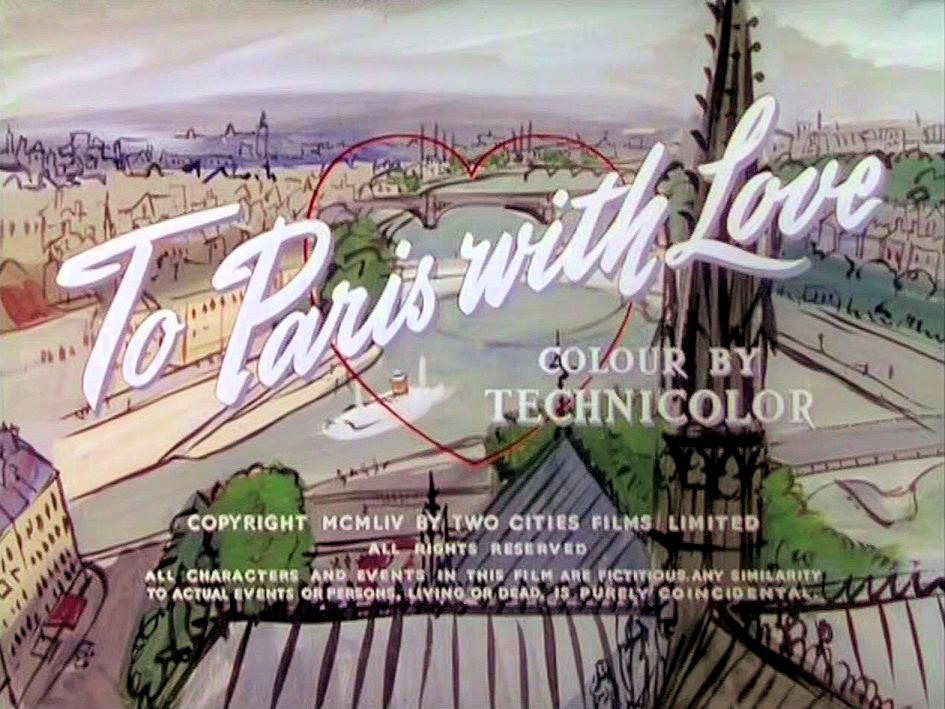
To Paris with Love (1955)

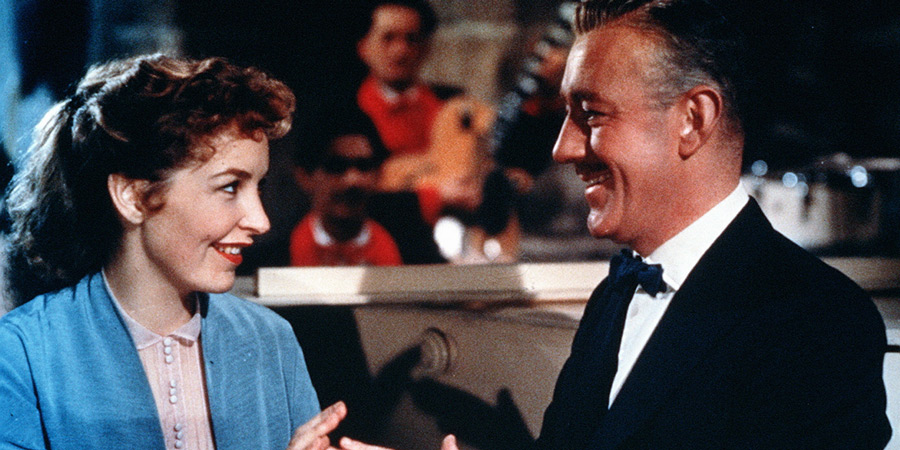
Alec Guinness is usually regarded as a serious actor due to his roles in The Bridge on the River Kwai, Tunes of Glory and Star Wars, but he was primarily a star of light comedies throughout the 1940s and 1950s and he made a number of entertaining films... one of which was To Paris with Love, released in 1955. 

In this film, Guinness plays Sir Edgar, a middle-aged Scotsman who is on holiday in Paris with his grown son John (Vernon Gray). He is secretly hoping that his son would find romance in Paris with a young pretty Parisian, while John is hoping his father would find romance with a rich middle-aged woman. They meet Lizette (Odile Versois), a salesgirl at a fashionable boutique, the first day they arrive and Sir Edgar thinks she is ideal for John so he arranges a meeting with her for lunch the next day. Meanwhile, John meets Sylvia (Elina Labourdette), the owner of the same boutique, and thinks that she is ideal for his father so he, too, arranges a meeting with her for lunch the next day. Before they know it, John is dating Sylvia who is twenty years his senior and Sir Edgar is dating Lizette, who is twenty years younger than he! Both found romance in Paris in an unexpected way and how the twosome work out their mixed-up affairs makes up the remainder of this short and delightful Parisian holiday. 

To Paris with Love is another one of those classic British comedies that in recent decades has somehow been overlooked stateside, yet at the time of its release it was quite popular in the U.S. The film was shot in Eastmancolor on location in Paris and the city looked lovely. The characters kept referring to "springtime in Paris" although it was clearly shot in the autumn with the color changes of the trees evident. 

Alec Guinness didn't show much display of emotion in this film yet his feelings for young Lizette seemed genuine and one can easily see how she can find him attractive. He was especially good in his little bits of humor, such as when he got his badminton birdie up in a tree and thought he was agile enough to climb up and get it. That he did...but getting down was a different story! Vernon Gray was the likeable young chap in Now and Forever and he played a similar character here, although this time he found an older woman more attractive than Janette Scott. 

Odile Versois made several good comedies in the early 1950s and this wasn't her first British production. The following year she starred in the entertaining crime drama Checkpoint (1956) with Stanley Baker. In To Paris with Love there is a secondary romance between her and a young postman who is enamored with her and a nice side comedy about her father being a taxi-driver. Also in the cast is Austin Trevor, Jacques Francois, and Claude Romain. 

To Paris with Love is currently available on DVD and it is worth checking out. It is one of those amusing light-hearted comedies that has such a relaxing pace and beautiful Paris setting that you'll end up rewatching it every few years. 

Saturday, April 12, 2025

Mardi Gras (1958)

Mardi Gras occurred a few weeks ago and if you are like most people, you probably didn't realize that there were a handful of classic films set during the Mardi Gras in New Orleans (as well as a bucketload of television episodes). 

Mardi Gras, released in 1958, is a Cinderella story aimed at a teenage audience. It is a little-seen color romance-musical starring Pat Boone and, honestly, it is not half-bad. It doesn't quite rank up there with April Love, but it has its moments. Pat stars as a Virginia Military Institute cadet who gets roped into participating in a raffle to win a date with a movie star - Michelle Marton (played by French import Christine Carere). Being the clean-cut country boy that he is, he never even heard of her before the raffle but ends up winning. After a few failed attempts to see her at her hotel, he gives up and instead asks a pretty young woman in the lobby for a date. Surprise! This happens to be Michelle herself.... she decided to don a Mardi Gras mask and enjoy a few hours vacation from the press. Naturally, they fall in love but then her publicity agent (Fred Clark) gets in the way and sees their romance as "great publicity" which causes a number of complications for both of them. 

Mardi Gras was a surprising hit upon its release and stayed at the top of the box-office charts for a number of weeks where it easily recouped its initial investment. Robert Wagner, Jeffrey Hunter and Tony Randall were initially set to star as the three cadets from VMI with Mitzi Gaynor playing the Hollywood actress. Later, Boone was cast with Shirley Jones as his co-star but then Shirley had to drop out due to being pregnant with her first son, Shaun Cassidy. Christine Carere had recently made a splash with her first American picture - A Certain Smile - so she was then cast and did a good job. She is like a French edition of Sonja Henie and is quite charming. 

Jerry Wald produced the film, which was directed by Edmund Goulding (Dark Victory, The Razor's Edge). The bare stone walls of the Virginia Military Institute didn't make the most colorful setting so the New Orleans shots had to make up for it...and those didn't seem all too good either. Nevertheless, Pat Boone's handsome looks and charisma and Carere's cuteness made up for the lack of scenery. The musical numbers throughout the film are quite good but, unfortunately, there were one or two too many and they stretch the picture to nearly two hours. The best of the songs was "I'll Remember Tonight" which became a hit for Pat Boone in 1958. 

Costarring with Boone as the cadets are Tommy Sands, Dick Sargeant, and Gary Crosby who was the spitting image of his papa, Der Bingel. Also in the cast is the beautiful Sheree North (sporting brunette hair) in a secondary role that wastes her talent and the dancer Barrie Chase. 

Mardi Gras is currently available on DVD as well as through Youtube

Friday, February 28, 2025

Gidget Goes to Rome (1963)

"Gidget Goes to Rome....and it was never like home!"

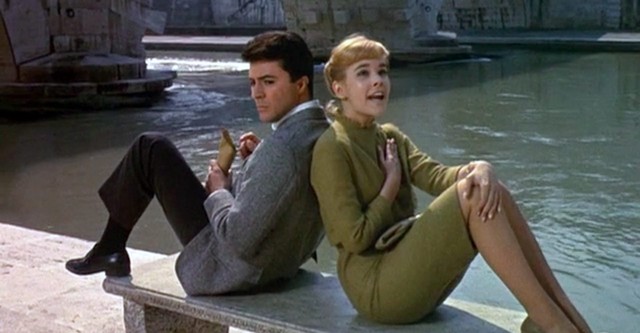
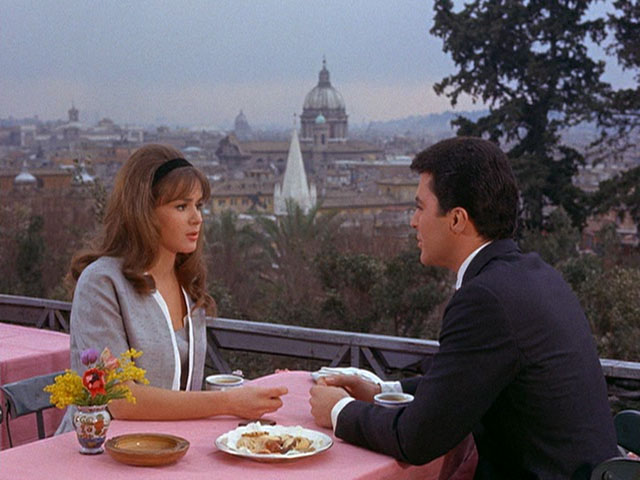
After riding the waves in Malibu and basking in the Hawaiian sun, our favorite Southern California beach girl, Gidget, traded in her surfboard for a passport and embarked on her most exciting journey yet—a trip to Rome!  In Gidget Goes to Rome (1963), Francesca "Gidget" Lawrence (now played by Cindy Carol) explores the Eternal City with her ever-doting boyfriend Moondoggie (James Darren) and the "gang" from back home. 

Rome proves to be the perfect playground for Gidget's romantic and cultural escapades. She gets to marvel at the Colosseum, daydream in the Roman Forum, toss coins into the Trevi Fountain, and also find time to go over the deep end for a sophisticated Italian magazine writer, Paolo (Cesare Danova), who claims to be writing an article about an American girl's impressions of Rome. He is really keeping an eye on her as a favor to her father, an old war buddy, but poor Gidge doesn't realize this. 

Jeff aka "Moondoggie" takes Gidget's romantic fling in stride because he has fallen in love himself - with Daniela (Danielle DeMetz), the group's curvaceous tour guide.  

"Everyone falls in love in Rome, Jeff. It is our national pastime - like your baseball."


While Gidget and Moondoggie adjust to their new pairings, she also gets involved in a series of comedic mishaps, all set against the stunning backdrop of a postcard-perfect Italy. The film captures a breezy, early-1960s ideal of international travel—where every piazza is picturesque and romance is always just around the corner. This was a dream trip that every college student at the time wanted to take. 

Gidget Goes to Rome plays like a Technicolor travelogue, making full use of its on-location shooting in Italy. Director Paul Wendkos, who helmed all three Gidget films, gives audiences a delightful tour of Rome’s most iconic landmarks, from the Spanish Steps to St. Peter’s Basilica.

The sights aren't the only dazzling part of the film—the wardrobe is just as eye-catching. The girls get to wear gorgeous Fontana fashions, and a highlight of the film is the elegant fashion show sequence at the legendary Fontana studio where Gidget accidentally stumbles onto the runway. 

Cindy Carol, who steps into the shoes of Sandra Dee and Deborah Walley, plays Gidget with a sprightly flair all her own. Gidget Goes to Rome was the first Gidget film that I watched as a young girl and the movie - as well as Cindy Carol's performance in it - still remain my favorite in the series. Who can resist the catchy title song by James Darren, too? 

Joby Baker returns as Jeff's pal Judge, while Peter Brooks, Noreen Corcoran, and Trudi Ames round out the cast as Gidget's travelling companions. Of course, no Gidget movie would be complete without parental intervention, and this time it’s in the form of the not-so-watchful chaperone Aunt Albertina played by the wig-swapping Jessie Royce Landis.

Gidget Goes to Rome is a typical light-hearted romance adventure that was perfectly in step with the beach-party films and globetrotting romances of the era. It’s a breezy farewell to the Gidget film series and well worth a watch. Just don’t expect too many waves—this time, the only surfing Gidget does is through the winding streets of Rome.

Sunday, April 16, 2023

Easy to Love ( 1953 )

Julie Hallerton ( Esther Williams ) is the star attraction of the Cypress Gardens water show. She was groomed for success by her boss Ray ( Van Johnson ) ever since he discovered her at the age of 15, but Julie is tired of being exploited and working from morning till night with no time to herself. One day, she announces to Ray that she will be quitting to get married. This sends him into a panic ( he certainly doesn't want to lose his star attraction! ) so he decides to give her a vacation and invites her to New York with him. Julie has long been secretly in love with Ray, so she leaps at the chance...only to discover that he once again uses her and the trip to New York as a publicity opportunity. Luckily, she meets the dashing nightclub singer Barry Gordon ( Tony Martin ) in New York who not only shows her a night on the town but arouses Ray's jealous streak. 

Esther Williams teamed up with Van Johnson in four films, three of which I personally think were her best films: Thrill of a Romance ( 1945 ), The Duchess of Idaho ( 1950 ), and Easy to Love. Easy to Love was the last of these four, made in 1953, and it is a delightful romantic comedy - quite easy to love. 

Most of Esther Williams' films are light-hearted, amusing, and very colorful. Easy to Love is especially colorful. It was shot on location in Winter Garden, Florida at the beautiful Cypress Gardens and the area looked doubly lush and green in eye-popping Technicolor. The finale, filmed by helicopter, really showcases the talented waterskiers from Cypress Gardens. Esther Williams also got to don the famous Southern belle dresses with hoop skirts so often seen at Cypress Gardens. Tourism to the park surely must have gotten a boost after the film premiered.

In addition to the lovely locales, Easy to Love features beautiful costumes by Helen Rose ( William's NY evening gown is especially easy on the eyes ), an easy-to-follow script, and an easy-going cast of pros, along with some familiar character actors. 

Van Johnson is always good at comedy and, although his demeanor here is much more gruff than usual, it is still apparent why Julie wants to marry him so fervently. After all, he's Van! 

Tony Martin was never much of a leading man but he always makes a wonderful "other man". Here, he nearly lures Julie away from Ray with his affability, good looks, and crooning tenor voice. All of the songs in Easy to Love are performed by Tony Martin and include the delightful "Did'ya Ever?", "That's What a Rainy Day is For" ( penned by Lennie Hayton and George Stoll ) and the titular "Easy to Love" written by Cole Porter. 

Also in the cast is King Donovan in an Allen Jenkins-style part, Edna Skinner ( Mr. Ed ) as Julie's roommate, John Bromfield as a Cypress Gardens beefcake with his eyes on Julie, and Carroll Baker in her film debut. 

Easy to Love is available on Volume 2 of the TCM Spotlight Esther Williams DVD collection. 

Friday, February 10, 2023

From the Archives: Sabrina ( 1954 )


Audrey Hepburn falls in love in the delightful romantic comedy Sabrina ( 1954 ). In this scene, the chauffeur's daughter Sabrina ( Hepburn ) has just arrived home from Paris and catches the eye of her father's employer David Larabee ( William Holden ). 

From the Archives is our latest series of posts where we share photos from the Silverbanks Pictures collection. Some of these may have been sold in the past, and others may still be available for purchase at our eBay store : http://stores.ebay.com/Silverbanks-Pictures

Monday, August 22, 2022

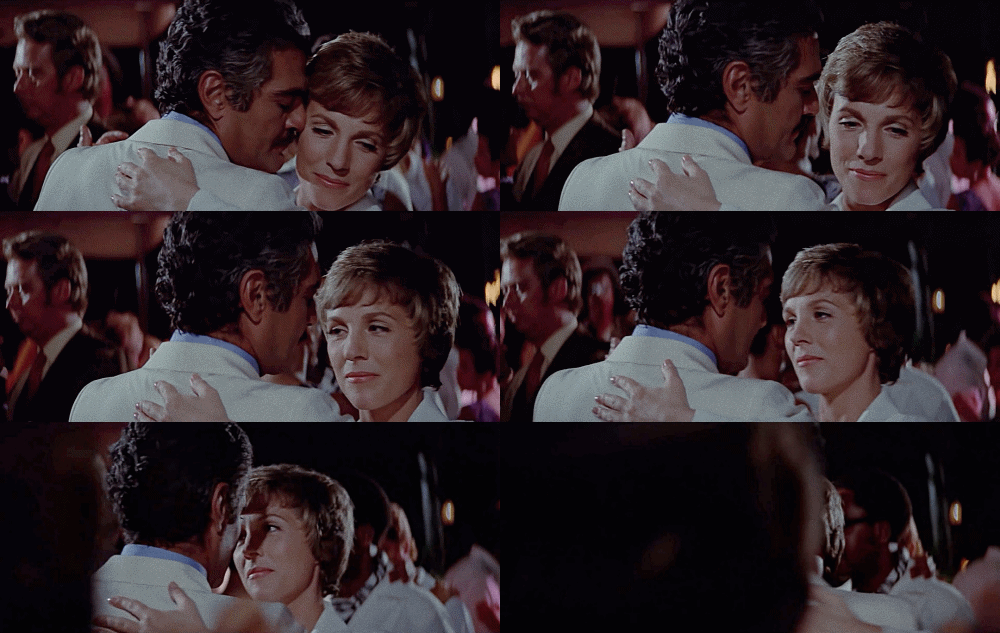
The Tamarind Seed ( 1974 )

Judith Farrow (Julie Andrews) is still grieving over the breakup of a rather lurid liaison with her married paramour Group Captain Richard Patterson (David Baron). She is vacationing in Barbados, attempting to clear her muddled mind and heal her broken heart, when she meets the suave Colonel Feodor Sverdlov (Omar Shariff), a Soviet military attaché who is also vacationing for a respite. Feodor works in the Paris embassy circle and happens to know Captain Patterson. Coincidentally, he is also acquainted with Sam Neilson of the British Home Office, for whom Judith works as a personal assistant. 

Back in London, British intelligence officer Jack Loder (Anthony Quayle) and Home Secretary Fergus Stephenson (Daniel O'Herlihy) are curious as to why Feodor is in Barbados and decide to keep surveillance on him and his supposedly coincidental encounter with Judith. Loder believes Feodor is conspiring to win Judith over "to the other side" so that the Russians could use her as an inside agent. 

Judith thought she met a kind and understanding friend on her holiday but when Loder approaches her with his suspicions of Feodor's motives for meeting her, she begins to wonder if she is indeed being used as a pawn in a political chess game between the East and the West. 

The Tamarind Seed is an engrossing romantic espionage drama from director Blake Edwards. It is a long picture (125-minutes), and the pace is slow, yet the story is riveting and the film never becomes tiresome. This is due to the fine performances of all the principal players and Edwards' compelling script, which was based on Evelyn Anthony's 1971 bestselling novel. 

Julie Andrews, who was married to Edwards at the time, delivers an excellent performance as the bewildered Ms. Farrow. Andrews portrays Judith as a woman of intelligence and strength, lost and confused though she may be. Judith follows her heart, in spite of being warned against doing so. "He's going to recruit you, isn't he?" Loder tells her. "You're wrong. He'll never do anything like that. I know him." "Do you? I doubt that, Mrs. Farrow"...."If you are right and he tries to involve me in anything, I will tell you, but I will not be used to spy against him," she replies. 

Feodor does indeed seem to be the honest undeceptive gentleman she believes him to be. As their holiday in Barbados comes to a close, they agree to meet again - discreetly - in Paris. Here Feodor informs her that he told his superior General Golitsyn (Oskar Homolka) that he is building a relationship with her in the hopes of recruiting her as a KGB agent and that she must be frank and tell Loder of their meeting as well. “Let me teach you the first lesson about these little games,” Feodor explains. “You must try to tell the truth as long as possible. That way, when times change and you have to lie, there is a great chance that you will be believed.” 

Judith has no taste for these Soviet cat-and-mouse games and yet she finds herself embroiled in them through her relationship with Feodor, a relationship she has no intention of pursuing since he is a married man and decidedly Marxist. "It is a good sign that we have many dialectic disagreements and yet get along so well together", Feodor exclaims. Perhaps so, but when Feodor's life becomes endangered, Judith must weigh her feelings for him against her loyalty to her own values.

The Tamarind Seed was released in theaters in the summer of 1974 and was received with critical acclaim. The film was chosen to be shown for a Royal Command Performance and returned over three times its $2.4 million budget at the box office.

Freddie Young's beautiful cinematography elevates the film beyond a standard espionage drama and makes you feel like you are watching an epic. Indeed, with location filming in London, Paris, Barbados, and Switzerland and John Barry's lush score (not to mention Wilma Reading's wonderful rendition of "Play it Again"), it could very well be classified as a dramatic spy epic.

Also in the cast are Sylvia Syms, Bryan Marshall, Kate O'Mara, and Celia Bannerman.

The Tamarind Seed is currently available on DVD and via streaming on Tubi.

Friday, November 26, 2021

Come Fly With Me ( 1963 )

"A Romantic Round the World Manhunt!" 

Three airline hostesses jet-set across Europe searching for handsome rich men to marry in the engaging 1963 MGM romantic comedy Come Fly With Me. Like How to Marry a Millionaire, all three women find themselves attached to men who are very much different than what they had in mind but they nevertheless have fun hunting and the audience has fun watching them on the prowl. 

Dolores Hart stars as pretty Donna Stuart, a cynical girl who has her heart set on wearing sable. She meets the dashing Baron Franz von Elzingen ( Karl Boehm ) and believes she found her Prince Charming....until she realizes that he is using her to smuggle stolen diamonds between Paris and Vienna. 

Carol Brewster ( Pamela Tiffin ) is more sensible and sets her eyes on the pilot ( Hugh O'Brian ). She thinks he is her knight in shining armor until she discovers he is having an affair with a married woman ( Dawn Addams ). 

It's the lovely Hilda Bergstrom ( Lois Nettleton ) who ends up with the cream of the crop: Texas millionaire Walter Lucas ( Karl Malden ). She's a thrifty girl who wants her man to be saving his pennies as well, little does she know that he has $40 million dollars to spare. Like most good comedies of the 1960s, the film ends with each of the girls happy with their romantic choices. 

Come Fly With Me is light-hearted entertainment that will take you back to an era when jet travel was oh-so-glamorous ( and when airlines gave you room to stretch your legs ). The script seems like it was penned directly for the film but it was actually based on a chick-lit novel called "Girl on a Wing" by Bernard Glemser. The working title was The Friendliest Girls in the World but was later changed to Come Fly With Me to capitalize on the popularity of the Frank Sinatra hit. In the opening of the film, the song is swingingly rendered by Frankie Avalon.

Director Henry Levin keeps the pace of the film moving swiftly and the location scenery throughout Paris and Vienna is beautifully filmed by cinematographer Oswald Morris ( Moby Dick, Scrooge ). Interiors were shot at the Metro-Goldwyn-Mayer Studios in Boreham Wood, England. 

The movie is notable for being Dolores Hart's final picture before she retired from acting and entered the Abbey of Regina Laudis. She looks particularly beautiful in this film and gives a wonderful farewell performance. Lois Nettleton also gives a good performance as the level-headed "Bergie" and Karl Malden is excellent as usual. Richard Wattis, James Dobson and Lois Maxwell, who was filming Dr. No in England that same year, are also in the cast. 

Saturday, September 25, 2021

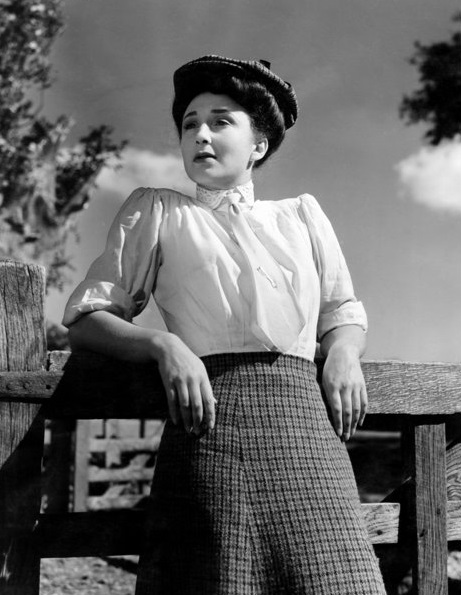
The Loves of Joanna Godden ( 1947 )

"I'll run the farm myself....A farm can't have two masters"

Joanna Godden ( Googie Withers ) is a determined woman. After the death of her father, the townsfolk of Romney Marsh assumed that she would marry her childhood friend and neighbor-farmer Arthur ( John McCallum ), joining her father's farm with his to make it one of the largest in the county. Instead, she boldly declares that she does not wish to marry Arthur and, defying the conventions of the time, wants to run the farm by herself. Her farmhands are none too pleased with the notion of a single woman taking charge of the farm and Arthur is certainly disappointed to hear that she does not wish to marry him. If this wasn't news enough, she announces that she will take her father's pedigree sheep and crossbreed them. "She's a filly that's never been properly broke in, that's what she is!" the farmers exclaim. 

The Loves of Joanna Godden may seem like just another British film about farming and shepherding but it is much more than that. It is the profile of a headstrong young Edwardian woman and the decisions - mainly regrettable ones - that she makes within a several-year span that leads to her growth as a woman. Joanna does indeed take control of the farm as she wanted, but she stubbornly refuses to listen to the admonitions of her neighbor farmers who warn her against crossbreeding sheep and soon regrets not heeding their warning. The new breed of sheep has a coat much too thin to brave the cold wind that blows on the marsh and many of them die. When she does choose to marry a man ( Derek Bond ) that turns out tragic as well. 

Director Charles Frend does an admirable job of creating a unique Edwardian English-country atmosphere for The Loves of Joanna Godden. The only other film that comes close to capturing this setting is 20th Century Fox's The Ghost and Mrs. Muir, which was released the same year. Both films are similarly themed and focus on a two-year period in the life of a strong-willed Edwardian woman. Widow Mrs. Muir ( Gene Tierney ) wishes to be independent of her in-laws and make her own life in the seaside town of Whitecliff-by-the-sea. 

In The Loves of Joanna Godden, Joanna is content to stay at her childhood home but wants the freedom to run it as she pleases without taking orders from a man. Eventually, both characters regret not having a husband to "take the helm". If these films were made today, their directors would probably take a more feminist approach and show audiences that a woman can be independent and happy as well, but these old classics reflected Edwardian sentiments and personally, I like that. 

H.E. Bates' screenplay condenses Sheila Kaye-Smith's 1921 novel into a concise 90-minute film without losing any of the major plot points or its biting dialogue. The Loves of Joanna Godden also features a sweeping score by Ralph Vaughn Williams and beautiful cinematography. Oscar-nominated cinematographer Douglas Slocombe ( Dead of Night, The Great Gatsby ) is often considered to be one of the best in the industry. Through his lens, we get to travel to Kent and see the beauty of Romney Marsh throughout the seasons. 

Googie Withers gives a wonderful performance as the headstrong Joanna. She's a stubborn character and she could easily have been a dislikable woman but Googie lets the audience know that beneath Joanna's hard exterior is a soft and vulnerable woman. Arthur knows this already and that makes it painful for him to stand by and witness Joanna shun all help in her attempt to stand on her own feet when he would willingly work beside her. 

John McCallum was a popular and extremely capable actor who made many British films in the 1940s. He and Googie wed shortly after filming was completed on this picture. McCallum later turned to producing ( the Australian children's series Skippy was one of his productions ) and Googie went on to have a long career on stage and television, notably as Governess Fay Boswell in Within These Walls.  

Jean Kent, another popular leading lady in British films, has a supporting role as Joanna's sister Ellen. At first, Ellen is quite a charming young lady but she quickly becomes a conniving and spoiled brat and the cause of ruination for Arthur. Derek Bond gives a good performance as the young aristocrat Martin who sweeps Joanna off her feet, and Australian legend Chips Raffery has a small part as Joanna's looker ( shepherd ). Also in the cast are character actors Henry Mollison and Edward Rigby. 

The Loves of Joanna Godden is available on DVD as one of four films on Network's "Ealing Studios Rarities Collection, Volume 4".

This post is our contribution to the 8th Annual Rule, Britannia blogathon being hosted by A Shroud of Thoughts. This is a jolly good event that allows bloggers to review British films from all eras, so if you want to explore some new-to-you titles, be sure to head on over to the event for a full listing of entries. 

Tuesday, September 21, 2021

Let's Fall in Love ( 1933 )

Edmund Lowe is a name that is instantly recognizable and yet, even among classic film fans, he is often overlooked as an actor. This gentleman was a leading player in numerous silent films and, after having successfully transitioned to talking pictures, continued to be a big player up until the mid-1930s, when he began to take on more supporting roles. He is best remembered for playing Sergeant Quirt in the 1926 drama What Price Glory? and for his role as Dr. Talbot in Dinner at Eight ( 1933 ). Lowe had great range as an actor and could play romantic parts, dramatic roles, or comedic roles equally well. 

I enjoy him best when he plays a romantic role and one such movie that highlights his light but deft touch as an actor is Let's Fall in Love, a wisp of a musical from Columbia Pictures studio. This film has a simple script that was probably written just to highlight and promote its theme song by Harold Arlen and Ted Koehler. The tune is quite memorable and very lovely to listen to, especially when it is performed by singer/actress Ann Sothern who had a fine soprano voice ( she sang with Artie Shaw and his Orchestra before becoming an actress ). 

Edmund Lowe plays Kenneth Lane, a director who is anxious to make a film with the Swedish sensation that he had helped mold as a Hollywood star ( sound familiar? ). Unfortunately, stardom went to her head and she becomes so demanding that he fires her from the film. Now, in search of a fresh new face, he puts ads in national papers calling for any and all Swedes to make a screen test. His search comes to an abrupt end when he goes to a traveling carnival and discovers Jean ( Ann Sothern ), a fetching young woman who isn't Swedish at all. He likes her and wants her to be the leading lady in his latest film. But since everyone, including his boss Max ( Gregory Ratoff ) knows he is searching for a Swede he decides to masquerade her as a visiting Swedish model, a plan that backfires on him when his jealous fiancee Lisa ( Betty Furness ) blurts out the truth. 

Let's Fall in Love is just a little over an hour-long but manages to pack in a number of entertaining scenes including some musical numbers. Lowe is wonderful as usual with his expressive features ( carried over from his silent-era days ), Sothern is sweet making googly eyes at him, and Gregory Ratoff is excellent as Max, head of Premier Studios. He later famously played another producer named Max in All About Eve ( 1950 ).  


Also in the cast is Greta Meyer as a jolly Swedish woman, Miriam Jordan, and tenor Arthur Jarrett. The film was remade in 1949 as Slightly French with Don Ameche and Dorothy Lamour playing the leads. 

Thursday, February 13, 2020

From the Archives: The Sands of Iwo Jima ( 1949 )


John Agar and Adele Mara enjoy a posed smooch for the photographer for this publicity photo from the war drama The Sands of Iwo Jima ( 1949 ). The publicity department was trying to promote the romantic story angle of the film. Adele Mara, born Adelaida Delgado, was a popular pin-up gal of the 1940s and in this particular image she bears a striking resemblance to another bombshell of the era - Gloria Grahame. I wonder if Shirley Temple was jealous of her husband ( John Agar ) enjoying his "work" at the studio!

From the Archives is our latest series of posts where we share photos from the Silverbanks Pictures collection. Some of these may have been sold in the past, and others may still be available for purchase at our eBay store : http://stores.ebay.com/Silverbanks-Pictures

Sunday, February 9, 2020

Der Klosterjäger ( 1953 ) aka The Monastery's Hunter

Haymo ( Erich Auer ) is the official "jäger" ( forest ranger ) for the monastery at Berchtesgaden. One day while patrolling the mountains he hears a cry for help. It is Gittli ( Marianne Koch ), a young woman who lost her footing on a dangerous cliffside while picking flowers. Haymo rescues her and falls in love with her at first sight. 

Gittli brings the flowers that she picked to the bailiff hoping to win his favor as she pleads on behalf of her brother Wolfrat ( Kurt Heintel ) for extra time in paying the rent that is due for their family's hut. During the 1600s ( the time of the story's setting ), provinces in Germany were owned by princes who required their tenants to pay them rent money for their farms. Gittli's brother is a desperate man. He not only has no money for the rent, but his daughter is also terribly ill. The local "bader" ( country doctor ) tells him that only the sweat of an ibex can cure his daughter. 

Hunting game of any kind is strictly verboten, but Wolfrat decides to risk being caught by the jäger Haymo in his attempt to shoot an ibex ( a large wild goat ) to save his daughter. However, he is spotted and, in fear, he stabs the jäger as he tries to escape. Poor Gittli then attempts to save the life of her beloved Haymo, while worrying that her brother will be caught for his crime. 
Der Klosterjäger was the third film adaptation of Ludwig Ganghofer's classic novel of the same name. It paired two actors who were extremely popular in the Heimatfilme genre - Erich Auer and Marianne Koch. They made a lovely couple onscreen. Auer was an Austrian actor who became a rather unlikely leading man in the 1950s, often playing in historical films. Marianne Koch had a long career both in Germany, Italy, and the United States and is best known to American audiences for playing Marisol in A Fistful of Dollars ( 1964 ). For many years she was a panelist on the German version of "What's My Line?" and later switched careers to become a doctor. 
Like most fairy tale romances, Der Klosterjäger has a predictable plot, yet this doesn't mean it fails to be entertaining. There is a mountaintop bear fight, plenty of drama, and the location filming in the Bavarian Alps is beautiful. The sets are also excellent, and the supporting cast is made up of many familiar German character actors including Willy Rösner, Karl Skraup, and Paul Hartmann. Also in the cast is Paul Richter who starred as Haymo in the 1935 film adaptation. 

Der Klosterjäger is still shown frequently on ZDF, a German television channel, as one of the "classics". It is not available on DVD in the United States but appears occasionally on Youtube. 

Saturday, December 7, 2019

Lorna Doone ( 1934 )

R.D. Blackmore's classic novel "Lorna Doone" was brought to the big screen in 1934 for the first time as a talking picture. The thrilling romance was made into a silent film five times before ATP Studios made this production which stars John Loder and Victoria Hopper. 
Network Distributing released Lorna Doone on DVD in 2014 in Volume 11 of their Ealing Studios Rarities Collection. Usually, this company does excellent transfers but this time the film could have been restored better. Many of the scenes were dark and grainy. It is difficult then to watch a movie without judging it based on its transfer, especially since so many Hollywood films from this same time period have been beautifully restored through Warner Archives. 

Nevertheless, Lorna Doone is a fascinating story, a true classic romance, and this particular adaptation - although quaint - captures the excitement of the tale and the period setting ( the English moorlands of the 1600s ) beautifully. John Loder stars as John Ridd, a farmer whose father was murdered by a thieving band of rogues known as the Doones. The law has never been able to capture any of the Doones because they live in their own community in a valley hidden away from other villages. One day, as a young boy, John is rescued by a pretty girl near a waterfall. He never forgets her and years later, when he grows to manhood, he catches sight of her again near that same waterfall. Her name is Lorna Doone and she is the adopted daughter of the king of the thieves, Counsellor Doone. 
A love blossoms between the two even though Lorna is aware that she could never leave the Doones, especially to wed one of the Ridds. John sees his only chance of marrying Lorna would be to kidnap her before she is betrothed to another member of the rogues....which he does, sparking an all-out war between the families. 

Lorna Doone was filmed on location in Exmoor, Somerset, England and this really brings the rural atmosphere of the novel to life. There is a thrilling scene near the end when John Ridd rides on horseback chasing after the vile Carver Doone to fight with him singlehandedly. The music in the film is also lovely. Composer C. Armstrong Gibbs interspersed the dramatic story with lyrical pieces that were inspired by the music of the 17th-century. 

A young Roger Livesey has a supporting role as Tom Faggus, a lovable rascal who has his eyes on John's sister Anne, played by Margaret Lockwood who was making her film debut. Lockwood would play a highwayman herself in one of her most famous films, The Wicked Lady ( 1945 ), which was also set in 17th-century England. 

Roy Emerton portrays the evil Carver Doone and also in the cast is George Curzon ( as King James II ), Edward Rigby and Mary Clare. 

Tuesday, December 3, 2019

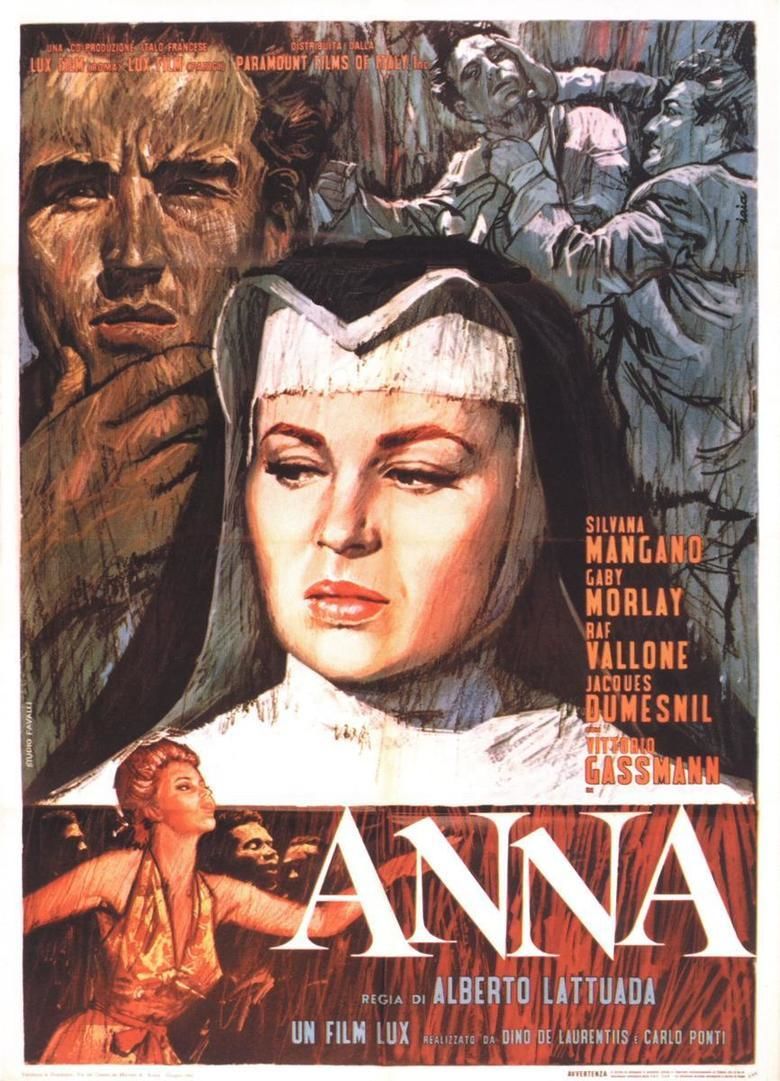
Anna ( 1951 )

Silvana Mangano was a beautiful and talented actress who was popular in Italian films of the 1950s, when Italy was going through its post-war film renaissance. This sensuous bombshell ascended to stardom after a sizzling performance in the 1949 drama Bitter Rice. She married Dino De Laurentiis, an emerging producer, and he cast her in some fine films, one of which was Anna (1951). 

This melodrama, like many Italian films, conveys raw emotions in such a frank and simple manner. The story switches back and forth between the present life of novice nun Sister Anna (Mangano), who works as a nurse at a busy hospital in Milano, and her steamy past life. Anna was a nightclub entertainer at a popular cafe. She had a sexual yen for Vittorio (Vittorio Gassman) and would often spend her nights with him. One day, she meets a rich farmer named Andrea (Raf Vallone) who does not see her as an easy pick-up but respects her and treats her as the beautiful young woman she is. 


After a brief courtship, he asks her to visit his mother and proposes marriage, but Anna, who is still spending her nights with Vittorio, feels unworthy of the gentle-hearted Andrea. It is this unworthiness that eventually leads her to become a nun - or so we are led to think. What makes Anna such an interesting film is that there is a lot of unspoken dialogue which makes it ripe for interpreting the story in various ways. 
Anna may have chosen to become a nun because she felt she was a "bad influence" and would never have made Andrea a good wife, or it may have been because she felt a true calling to help others as a nurse. She hints several times that this is the reason and yet she makes her decision to join the holy order prior to knowing anything about nursing. It seems as though it is the confinement of the walls of the hospital that appeals to her more, or perhaps the chance to atone for her past through service to others. 

Anna was beautifully filmed by director Alberto Lattuada. It is a wonderfully soapy melodrama bubbling over with fine performances from all of the principal cast members. Silvana Mangano gives an especially appealing performance. She was such a beauty in her time and, like many of the stars of silent era pictures, she was able to convey so much through her eyes alone. 

Raf Vallone, the leading man, was a handsome actor with great virility. Unlike actors such as Marcello Mastroianni or Vittorio Gassmann, Raf Vallone does not look like a movie star. He was a representative of Italy's "everyman" and often took on roles of commoners: farmers, soldiers, miners, and machinists. No matter what role he was given or how brief it was, he always made a memorable impression. 

Vittorio Gassmann, Raf Vallone, and Silvana Mangano all had major roles in Bitter Rice, so Anna marked a reunion for these actors. Also starring in the film are Silvana Mangano's two sisters: Patrizia, who plays Anna's sister Luisa, and Natascia, who portrays Andrea's younger sister. The wonderful actress and voice-over performer Tina Lattanzi is Andrea's mother and two great French actors, Jacques Dumesnil and Gaby Morlay, play in the hospital sequences as, respectably, the doctor and Mother Superior. 
Anna also features two excellent nightclub music sequences where Silvana dances and sings to the beautiful "Non Dimenticar" - popularized in the US by Nat King Cole - and the enticing baião "El Negro Zumbon" (click here to watch). This song became an instant classic in Italy and Spain, but it was not until 2004 that American audiences heard it through Pink Martini's rendition. 

Anna is often overshadowed by other Italian film classics of the era, but it was a huge commercial success at the time and its entertainment value has not diminished over the years. 

Thursday, October 3, 2019

The Spoils of Poynton ( 1970 )

Adele Gereth ( Pauline Jameson ) has amassed antique treasures that she and her late husband collected from around the world. She stores all of these in her Jacobian estate "Poynton". She hopes to pass Poynton and its furnishings to her son Owen ( Ian Ogilvy ) and the woman he chooses as a bride, but when she meets his choice, Mona ( Diane Fletcher ), she is sorely disappointed and refuses to part with the possessions. Mona, who had not the slightest interest in the antiquities, now feels rebuffed and is angry towards Owen for not taking her side and waging a legal war against his mother.
Witnessing this family squabble - and unwittingly taking part in it -  is Fleda Vetch ( Gemma Jones ), a minister's daughter whom Adele has taken under her wing. Adele wants to see Fleda become mistress of Poynton in place of Mona, and things begin to go her way until Fleda complicates matters when she lets pride rule over love. 

Henry James' novel "The Spoils of Poynton" first appeared in print in 1896 when it was published in serial format in The Atlantic Monthly under the title "The Old Things". Henry James' most famous works are three novels that have been frequently adapted to film and television: "The Turn of the Screw" ( filmed as The Innocents in 1963 ), "Washington Square" ( better known as The Heiress to film fans ), and "The Aspern Papers". He wrote many many fine stories in addition to these that were also adapted into films, including The Wings of the Dove, The Portrait of a Lady, The Golden Bowl, and The Bostonians. 
The Spoils of Poynton is an excellent adaptation featuring some top-notch performances from Ian Ogilvy ( The Saint ) and Gemma Jones ( The Duchess of Duke Street ). The BBC made a number of really rich television productions in the 1970s and this one is truly a gem. It was like capturing a fine performance of a great play on film that can be enjoyed over and over again. 
Pauline Jameson is excellent as Adele Gareth. Her character is haughty, terribly houseproud and materialistic and yet Pauline makes her endearing to watch. Young Fleda takes a liking to her instantly and they share a bond in their love of beautiful objects. Fleda would make an ideal match to Adele's son Gareth and Adele well knows this. She hopes that love will blossom between the two and, to her good fortune, it does. 

Fleda Vetch is such a darling character but one cannot help feel that she muddles up matters too much out of her sense of righteousness and decency. She loves Owen dearly and he loves her, too, yet she insists that he return to Mona to patch things up properly and therefore smashes to pieces her future, Owen's future, Adele's happiness and Poynton's legacy. 
The Spoils of Poynton can be difficult to watch because it is hard to see people wrestle over material objects with such passion. Foolish Mona has no interest in the household treasures whatsoever and yet she allows her relationship with Owen to be ruined in an argument over who will get possession of them. It's quite a fascinating story. And interwoven through it is this growing romance between Owen and Fleda that spurs the story onward. The materials themselves act only as a catalyst to all the events that happen to the four main characters. 

BBC made a number of film adaptations of Henry James novels and if this one interests you, then be sure to check out the equally engrossing mini-series The Golden Bowl ( 1972 ) starring Daniel Massey and Jill Townsend.

Saturday, August 3, 2019

20 Great Little-Known British Films of the 1940s-1960s

The great film studios of England ( Rank Pictures, London Films, Gainsborough Pictures, Ealing Studios, Janus Films ) made so many wonderful pictures that have fallen into obscurity over the years - not so much in England, but certainly here in the States. So to help remedy that situation and expose classic film lovers to some of these hidden gems, here is our selection of twenty great little-known British films of the 1940s-1960s. Most of these films are available on DVD or through streaming services such as Amazon Prime. 

Plot descriptions courtesy of imdb.com, Network DVD, and Renown Pictures. Our comments about the film then follow. 


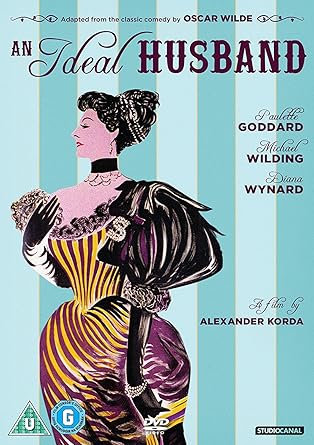
An Ideal Husband ( 1947 )

A prominent politician is preparing to expose a financial scandal. But then a woman who has invested heavily in the shady venture threatens to uncover a damaging secret in the politician's past if he exposes the speculation as a fraud. His problem is compounded by his wife's intolerance of the slightest character flaws.

"If we men married the women we deserved....we should have a very bad time of it."

Oscar Wilde's sparkling comedy comes alive in this delightful film adaption from Alexander Korda. Paulette Goddard is especially charming as the high-society snake-in-the-grass and the color photography is beautiful. 

While I Live ( 1947 ) 

A young composer and pianist Olwen Trevelyan, troubled and sleepless over her inability to finish the final notes of her composition, falls to her death from the cliffs of Cornwall. As the years pass, Olwen’s sister Julia obsessively keeps her memory alive. The young composer gains posthumous fame because of her tragic death and her haunting, unfinished composition, “The Dream of Olwen.” 25 years later, still mourning the death of her composer sister Julia believes she has returned, reincarnated, in an amnesiac woman who chances upon her house seeking help… Contains the haunting music “The Dream of Olwen” composed by Charles Williams.

This one is indeed haunting, primarily because of its beautiful theme song and its spiritual plot. Sonja Dresdel, who stars as Julia, was a very talented actress who had a great career in films, television, and in theatre in England. 

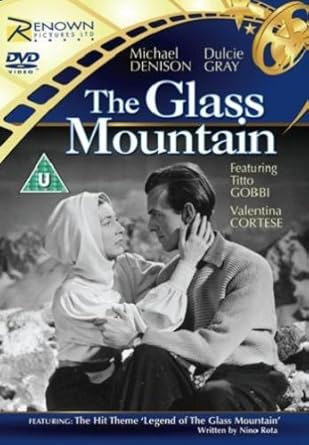
The Glass Mountain ( 1949 ) 

Featuring the peerless voice of legendary baritone Tito Gobbi, The Glass Mountain is a classic British film romance enriched with the sublime music of Italian opera.

Shot down and badly injured over the Italian alps during the second world war, RAF pilot Richard Wilder (Michael Dennison) is rescued and nursed back to health by Alida (Valentina Cortese), a beautiful young Italian girl. As she shares with him the local fables of the Glass Mountain, they begin to fall in love.


This is another film that benefits greatly from its musical score. This one is written by Nino Rota who is most famous today for his love theme for Romeo and Juliet ( 1968 ). Michael Dennison ( The Importance of Being Earnest ) plays an earnest lover here and the setting of the picture is ideal. 

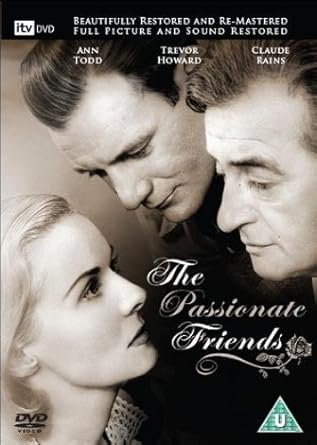
The Passionate Friends ( 1949 ) 

The Passionate Friends were in love when young but then separated. Mary Justin ( Ann Todd ) later married an older man. Then Mary meets Steven Stratton ( Trevor Howard ) again and they have one last fling together in the Alps.

This is your classic British melodrama weepie. It plays out a lot like Brief Encounter ( 1946 ) only with the added presence of Claude Rains as a jealous/suspicious husband. In this case, he has every right to be suspicious as Mary really is carrying on an affair with her old lover. 

Beautiful cinematography and location filming are an additional plus to this lesser-known classic. 


The Small Back Room ( 1949 ) 

The best bomb disposal officer during World War II was badly injured and is in frequent pain. He finds solace and relief from his pain in the whiskey bottle & the pills that are never far away. A new type of booby-trapped Nazi bomb pushes his nerves & resolution to the limit.

The directing/screenwriting team of Michael Powell and Emeric Pressburger are famous on both sides of the pond but this little gem seems to elude most critics. David Farrar and Kathleen Byron both give excellent performances. You can read our full review of this classic here

Ha'Penny Breeze ( 1950 ) 

At the end of the Second World War, David and his Australian friend Johnny return to David's Suffolk village to find the community spent and demoralized. Gradually, however, they gather support for David's scheme to enter a yachting race with a converted fishing smack. Winning it could prove to be a lifeline for the village...

Associated British Pathe made some excellent minor "B" films in the late 1940s-1950s and Ha'Penny Breeze is one of them. This was only the second film that Edwin Richfield had starred in at the time, but he would go on to become a popular character actor in British television appearing in numerous episodes of The Avengers, The Champions, and Doctor Who. 
Philip Green composed a lovely theme for this film which you can hear by clicking on this link.


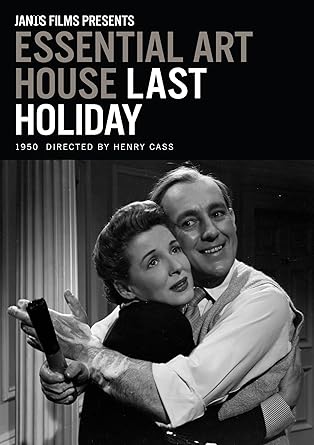
Last Holiday ( 1950 )

George Bird's rather lonely, anonymous existence as an underappreciated seller of farm machinery is jarred when his physician informs him that he is suffering from the rare malady Lampington's Disease, and only has a few weeks to live. Believing he has nothing to lose, Bird resigns his position and withdraws his modest life savings in order to spend his remaining time in a "posh" seaside resort. There he keeps his own counsel about his condition and meets people who live in a world he could never have imagined existed. Incredibly, he finds personal and professional opportunities now open to him that that he never dreamed would be his, but unfortunately, he is no position to take advantage of them, until fate lends a hand.

Last Holiday features one of Alec Guinness' best performances. It is such a touching story sprinkled with lessons about life, love, and the pursuit of happiness. 


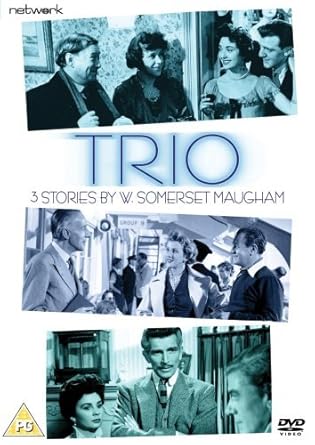
Trio ( 1950 ) 

Three short stories are introduced by author W. Somerset Maugham in the second of his anthology film trilogy. In "The Verger," a church verger of seventeen years is fired by his new straight-laced vicar when it's discovered that he cannot read or write. Forced to make life-altering decisions, the life-long bachelor proposes to his landlady and becomes an entrepreneur. In "Mr. Know-All" an obnoxiously pushy and irrepressibly boorish dealer in jewelry alienates all his fellow passengers on an ocean cruise despite his cheerful nature and generosity, but later is sensitive enough to realize that sacrificing his ego at a key moment is important to a woman's happiness. "The Sanatorium" revolves around the lives of tuberculosis patients at an exclusive Scottish sanatorium including a pair of doomed lovers who choose quality over quantity of life.

William Somerset Maugham's short stories were spotlighted in three entertaining films - Quartet ( 1948 ), this film, and Encore ( 1951 ). Each has their highlights, but we enjoy Trio the best because it features one of our favorite stories, "The Sanatorium", which you can read more about here. 

Street Corner ( 1953 ) 

A pseudo-documentary in style with an emphasis on the daily work and routine of women police built around three different storylines. The first involves 18-year-old Bridget Foster (Peggy Cummins) who is picked up for shoplifting but let off lightly. She has a small child, an often-absent husband and mother-in-law trouble. To compound that she takes up with a petty hoodlum who commits a jewel robbery. The second story tells of a young girl who deserts the Army to marry a boy who needs her and commits bigamy in the process, but it all works out. The third story is about a baby who is mistreated by its father and step-mother, but is reunited, through police work, with its real mother.

Police dramas are always interesting but this one is rare because it focuses on policewomen. Back in the 1950s, they were more popular in England than they were in the United States. Anne Crawford gives a very good performance....as usual. She was an excellent actress. 

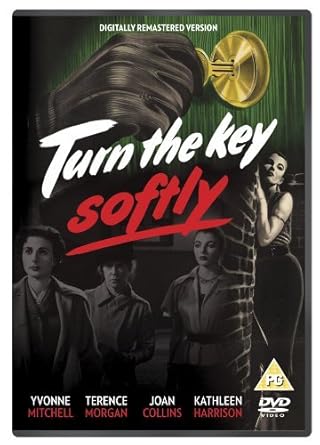
Turn the Key Softly ( 1953 ) 

Three women are released from Holloway prison on the same morning into the bustle of post-war London with its trolleybuses and rationing. They meet for a meal in the West End in the evening after a day trying to pick up their lives, and with at least two of them needing to decide whether it is time to start afresh.

From the good ones ( the policewomen of Street Corner ) we turn to the "baddies" - three women who have just been let out of prison. None of them are really bad and all of them have intriguing stories. British cinema featured a number of films with the "tableau" style story plot. You can read our full review of this gem by clicking here. 


The Divided Heart ( 1954 ) 

The Divided Heart engages in a different and movingly direct way with the aftermath of the war, tracing the struggle between two mothers for custody of a boy. Smuggled out of Yugoslavia for safety, and adopted by a German couple, he is reclaimed years later by his birth mother, a survivor of Auschwitz. The play of emotion is delicately handled so that it’s hard not to sympathize equally with the ‘good German’ adoptive parents and with the Yugoslav mother – and indeed with the trio of judges who have to decide. Both Michael Balcon and his wife had a special commitment to this project, and regretted its relative failure at the time, despite good reviews. Sixty years on, it is one of the Ealing films that comes up very fresh and prompts a reassessment of its director Charles Crichton, best known for comedy ( The Lavender Hill Mob, The Titfield Thunderbolt ) but here doing admirable work of a different kind. 

Lease of Life ( 1954 ) 

The parson of a small rural community knows he is dying and this makes him reconsider his life so far and what he can still do to help the community. 
Lease of Life is among the least dramatic of film titles, and the film itself is one of the most modest of Ealing productions; in his index to ‘British Sound Films’ David Quinlan calls it a ‘sincere, quiet, close-to-dull drama.’ But it is far from dull, if you give it a chance. 

Lease of Life is indeed a very engaging film to watch and Robert Donat gives an excellent performance as the rural parson. It also features a wonderful supporting cast with Kay Walsh and Adrienne Corri. 


The Admirable Crichton ( 1957 )

Lord Loam has modern ideas about his household; he believes in treating his servants as his equals - at least sometimes. His butler, Crichton, still believes that members of the serving class should know their place and be happy there. But when the Loam family are shipwrecked on a desert island with the self-reliant Crichton and between maid Tweeny, the class system is put to the test.

The story premise of a group of individuals stranded on a desert island is not a new one, but The Admirable Crichton is a fresh take on this old idea. It was based on a popular play by J.M Barrie, the author of "Peter Pan", and this film adaptation boasts a wonderful cast which includes Kenneth More as Crichton, Sally Anne Howes, Cecil Parker and Diane Cilento. You can read more about the film here. 

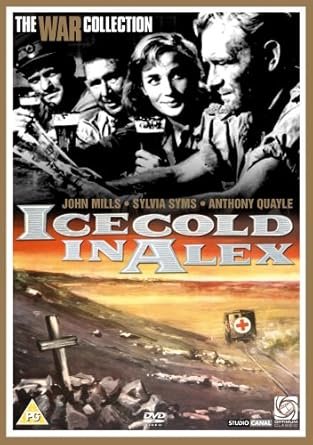
Ice Cold in Alex ( 1958 ) 

A group of Army personnel and nurses attempt a dangerous and arduous trek across the desert of North Africa during World War II. The leader of the team dreams of his ice-cold beer when he reaches Alexandria, but the problems just won't go away.

Ice Cold in Alex is the 1950s version of Humphrey Bogart's Sahara. Sylvia Syms and John Mills were probably two of the biggest box-office stars of the 1950s in England and it was great to see them teamed up in this adventure classic. Also in the cast is Anthony Quayle who not only made six films with Syms but starred with her in a number of television episodes as well ( including one from his own show The Strange Report ). 

Passionate Summer ( 1958 ) 

Set in Jamaica, an island paradise…where human emotions are laid bare under the tropical sun! Douglas Lockwood, (Bill Travers) is a gifted teacher at Leonard Pawley’s experimental school situated in Jamaica. During one summer, a private plane crashes into the mountains a short distance from the school. Lockwood helps rescue passenger Judy Waring (Virginia McKenna) and quickly develops a romantic interest in her while she convalesces at the school. Meanwhile, Leonard Pawley’s wife (Yvonne Mitchell) has her own romantic interest in Lockwood and a love triangle quickly develops. The love interest of the adults and the behavior of the school children see temperatures rise under the burning summer sun.

Passionate Summer certainly brims with passion! The hot locales make all of our leading characters drip in sweat and naturally, this oppressive heat causes their emotions to heat up as well. It is a soap opera alright, but a highly entertaining one. 


Conspiracy of Hearts ( 1960 ) 

In wartime Italy nuns in a convent regularly smuggle Jewish children out of a nearby internment camp. The Italian army officer in charge suspects what may be going on but deliberately turns a blind eye. When the Germans take over the camp security the nuns' activities become far more dangerous.

Betty Box is not a familiar name to American audiences but she - and her husband - were prolific producers and some of the best British films of the 1960s were Box productions. Conspiracy of Hearts is a difficult film to watch because it does not mask the prickly situation these nuns were in and show quite plainly what they had to contend with in getting the youngsters to safety. As you have probably guessed, Yvonne Mitchell is one of our favorite actresses, and she is in this film as well, but it is Lilli Palmer and Slyvia Syms who are the main attractions. Incidentally, this film reunited Mitchell and Syms who starred together in the box-office hit Woman in a Dressing Gown ( 1958 ). 


The Barber of Stamford Hill ( 1962 ) 

Mr. Figg, the barber, is fond of telling customers about his family, but he hasn't really got one - he's a bachelor quite alone in the world. He wants this status to change and soon makes up his mind that he will be a bachelor no longer. 

The Barber of Stamford Hill was originally a half-hour television play that became so popular that its screenwriter stretched it into this marvelous one-hour long film. There are only three principal players in the cast ( John Bennett, Megs Jenkins, Maxwell Shaw ) and each gives a tender performance in this very entertaining film all about character. 


The Fast Lady ( 1962 ) 

Murdoch Troon (Stanley Baxter), a naive Scotsman, puts away his bicycle and attempts to woe the daughter (Julie Christie) of wealthy businessman Charles Chingford (James Robertson Justice) by way of impressing her with a vintage Bentley - The Fast Lady of the title.

The Fast Lady is a fun comedy with a great cast. Stanley Baxter made a number of films but none so entertaining as this one ( although the follow-up, And Father Came Too is quite enjoyable ).

Want to read more? We reviewed this film several years ago and you can read about it here.


Young and Willing ( 1962 ) 

Harry Brown ( Ian McShane ) is a somewhat rough student (the wild) at Kilminster University, who has the ability to win friends, especially the underdogs like Phil ( Sir John Hurt in his introductory movie role ) who doesn't play "rugger", and can't sink a whole pint of beer, and African student Reggie ( Johnny Sekka ). He also has a way with the girls ( the willing ), one of whom is his professor's wife ( Virginia Maskell ), who likes the students, but also her comfortable life with her boring husband more. After Harry is rebuffed, he takes up the challenge to hang a banner from the dangerously crumbling University tower. The rather weak Phil insists on being part of this escapade.

Ian McShane makes an impressive film debut as the young Harry Brown. Young and Willing ( also released under the title The Wild and the Willing ) is not a cheerful picture of university life ( if you want to see a more light-hearted film take a peek at Bachelor of Hearts with Hardy Kruger ) but it is very engrossing. Virginia Maskell was a fine actress of the 1960s who died much too young. She gives an impressive understated performance here as the prof's wife. Also in the cast is a young Samantha Eggar. 

Nobody Runs Forever ( 1968 )

Scobie Malone ( Rod Taylor ), an Australian outback police detective is sent on a special assignment to the UK, to return an Australian citizen ( Christopher Plummer ) accused of murder. Only this is not an ordinary man, he is a UN high commissioner for peace talks taking place in London.

Nobody Runs Forever ( also released as The High Commissioner ) is one of many espionage/thrillers that were released in the wake of James Bond's popularity. Rod Taylor's tough-talking Australian character is quite endearing and this could have been a great start to a series of Scobie Malone pictures. Also in the cast is Franchot Tone in his last screen appearance. The wonderful opening theme was written by Georges Delerue. This is another great Betty Box production. 

To read more about the film, check out our review here

This post is our contribution to the 6th Annual Rule Britannia blogathon being hosted by A Shroud of Thoughts. Click on this link to read more posts about British actors and films from the 1920s-2000s. Be sure to search "Rule Britannia" to also read prior entries from this great blogathon.