Showing posts with label Irwin Allen. Show all posts

Monday, August 10, 2026

Rewind Review: Voyage to the Bottom of the Sea (1961)

"Dive! Dive!"

Film producer/director Irwin Allen let audiences dive deep into the waters of adventure with Voyage of the Bottom of the Sea, his second of three feature films that he made at 20th Century Fox studios in the early 1960s. Prior to gaining a reputation as "The Master of Disaster" because of his disaster-themed films of the 1970s, Allen tried his hand at writing, producing and directing adventure pictures. His first production for Fox - Lost World (1960) - was co-written by Charles Bennett and its success at the box-office led to the two men collaborating on another Jules Vernes-like story. They took some inspiration from "20,000 Leagues Under the Sea" and created a clever story about a modern era atomic submarine 

Walter Pidgeon stars as the cigar-chomping Admiral Nelson, inventor and commander of the newly built atomic sub Seaview. The Seaview is on diving trials in the Arctic Ocean when they discover boulder-size pieces of ice crashing into the sea around them. They surface and find that temperatures are over 100 degrees and the sky is aflame. A meteor shower had pierced the Van Allen radiation belt and caused it to catch on fire. Admiral Nelson and his right-hand man, Commodore Emery (Peter Lorre) believe that the Earth can be saved from burn-up if a missile were to be shot into the Van Allen belt to create an explosion. According to their calculations, this missile can only be launched from the Mariana Islands, and so the Seaview races to the south to reach the islands before the entire world burns. 
Along for the ride is Dr. Susan Hiller (Joan Fontaine), a psychologist who is studying crews for their reaction to stress, Vice-Admiral B.J. Crawford (John Litel), and Congressman Parker (Howard McNear). The voyage progresses smoothly until doubts begin to arise in the mind of Captain Lee Crane (Robert Sterling) as to whether the admiral is making a sound and safe decision. Lt. Connors (Barbara Eden) has complete faith in the admiral but cannot explain the unusual happenings onboard the Seaview... acts of sabotage that appear to be of Admiral Nelson's doing. 
Voyage to the Bottom of the Sea is a fun adventure flick packed with action. The race-against-time element makes the story exciting enough, but Allen threw in a touch of mystery with the added story of the saboteur. There are also two octopus attacks and a great mine-field sequence. 

The Van Allen radiation belts had only recently been discovered when Irwin Allen began writing Voyage to the Bottom of the Sea, and so much about them was still unknown. The idea of the Van Allen belt catching on fire was later proven to be impossible, but at the time, it probably sent shivers down audiences thinking about it being an actual possibility. 

Even though most of the film takes place within the confines of the Seaview, the film never feels stagebound. The sets, created by Herman Blumenthal, were very imaginative (they were later reused for the television series). The Seaview itself is an especially good design. 
Irwin Allen plunged $1.5 million dollars into the making of Voyage to the Bottom of the Sea and it paid off handsomely. Critics gave the picture mixed reviews but audiences loved it and the movie raked in over $8 million dollars. 

Teen singing-sensation Frankie Avalon helped to lure in the young female audience. His part was not very dramatic and, surprisingly, he didn't sing in the film but you can hear his voice crooning the opening credits. 

Also in the cast was Michael Ansara (who fell in love with and married Eden after making the movie), Regis Toomey, Henry Daniell, Skip Ward and Mark Slade. 

Saturday, January 7, 2023

From the Archives: Land of the Giants ( 1968 )


"Gadzooks! It's a man!"

Yes, man never looked so towering and terrifying as he did in Land of the Giants, Irwin Allen's 1968 sci-fi series. In this scene, Gary Conway, Deanna Lund, Kurt Kaszner, Heather Young, and the rest of the cast stare up at what we may surmise to be a giant cat or rat. 

From the Archives is our latest series of posts where we share photos from the Silverbanks Pictures collection. Some of these may have been sold in the past, and others may still be available for purchase at our eBay store : http://stores.ebay.com/Silverbanks-Pictures

Saturday, May 21, 2022

Dell Movie Classics: The Lost World ( 1960 )

In the 1950s, Dell Comics launched a fantastic movie tie-in series that featured comic books of current hit films. The majority of the titles they chose for this series were aimed at children, so Walt Disney titles often graced the cover of their comics, but also a good number of action and adventure films ( e.g. Hatari, Dr. Who and the Daleks, Jason and the Argonauts ). One favorite was Irwin Allen's The Lost World ( #1145 ).

This colorful comic cost a mere 10 cents when it was first released in 1960 and featured color photos from the film on the cover as well as black-and-white photos on the inside cover. The comic story follows the film quite closely and boasts some great artwork by Gil Kane. 

David Hedison and Jill St. John don't quite look like their normal selves, but he captured a good likeness of the dinosaur lizards mauling each other. 

Today, this comic sells for $20-$50 which may be a bit steep for the casual film fan, but if you are an Irwin Allen enthusiast, then it is well worth the buy. 

Saturday, June 20, 2020

Voyage to the Bottom of the Sea ( 1961 )

"Dive! Dive!"

Film producer/director Irwin Allen let audiences dive deep into the waters of adventure with Voyage of the Bottom of the Sea, his second of three feature films that he made at 20th Century Fox studios in the early 1960s. Prior to gaining a reputation as "The Master of Disaster" because of his disaster-themed films of the 1970s, Allen tried his hand at writing, producing and directing adventure pictures. His first production for Fox - Lost World ( 1960 ) - was co-written by Charles Bennett and its success at the box-office led to the two men collaborating on another Jules Vernes-like story. They took some inspiration from "20,000 Leagues Under the Sea" and created a clever story about a modern era atomic submarine 

Walter Pidgeon stars as the cigar-chomping Admiral Nelson, inventor and commander of the newly-built atomic sub Seaview. The Seaview is on diving trials in the Arctic Ocean when they discover boulder-size pieces of ice crashing into the sea around them. They surface and find that temperatures are over 100 degrees and the sky is aflame. A meteor shower had pierced the Van Allen radiation belt and caused it to catch on fire. Admiral Nelson and his right-hand man, Commodore Emery ( Peter Lorre ) believe that the Earth can be saved from burn-up if a missile were to be shot into the Van Allen belt to create an explosion. According to their calculations, this missile can only be launched from the Mariana Islands, and so the Seaview races to the south to reach the islands before the entire world burns. 
Along for the ride is Dr. Susan Hiller ( Joan Fontaine ), a psychologist who is studying crews for their reaction to stress, Vice-Admiral B.J. Crawford ( John Litel ), and Congressman Parker ( Howard McNear ). The voyage progresses smoothly until doubts begin to arise in the mind of Captain Lee Crane ( Robert Sterling ) as to whether the admiral is making a sound and safe decision. Lt. Connors ( Barbara Eden ) has complete faith in the admiral but cannot explain the unusual happenings onboard the Seaview...acts of sabotage that appear to be of Admiral Nelson's doing. 
Voyage to the Bottom of the Sea is a fun adventure flick packed with action. The race-against-time element makes the story exciting enough, but Allen threw in a touch of mystery with the added story of the saboteur. There are also two octopus attacks and a great mine-field sequence. 

The Van Allen radiation belts had only recently been discovered when Irwin Allen began writing Voyage to the Bottom of the Sea, and so much about them was still unknown. The idea of the Van Allen belt catching on fire was later proven to be impossible, but at the time, it probably sent shivers down audiences thinking about it being an actual possibility. 

Even though most of the film takes place within the confines of the Seaview, the film never feels stagebound. The sets, created by Herman Blumenthal, were very imaginative ( they were later reused for the television series ). The Seaview itself is an especially good design. 
Irwin Allen plunged $1.5 million dollars into the making of Voyage to the Bottom of the Sea and it paid off handsomely. Critics gave the picture mixed reviews but audiences loved it and the movie raked in over $8 million dollars. 

Teen singing-sensation Frankie Avalon helped to lure in the young female audience. His part was not very dramatic and, surprisingly, he didn't sing in the film but you can hear his voice crooning the opening credits. 

Also in the cast was Michael Ansara ( who fell in love with and married Eden after making the movie ), Regis Toomey, Henry Daniell, Skip Ward and Mark Slade. 

Sunday, February 24, 2019

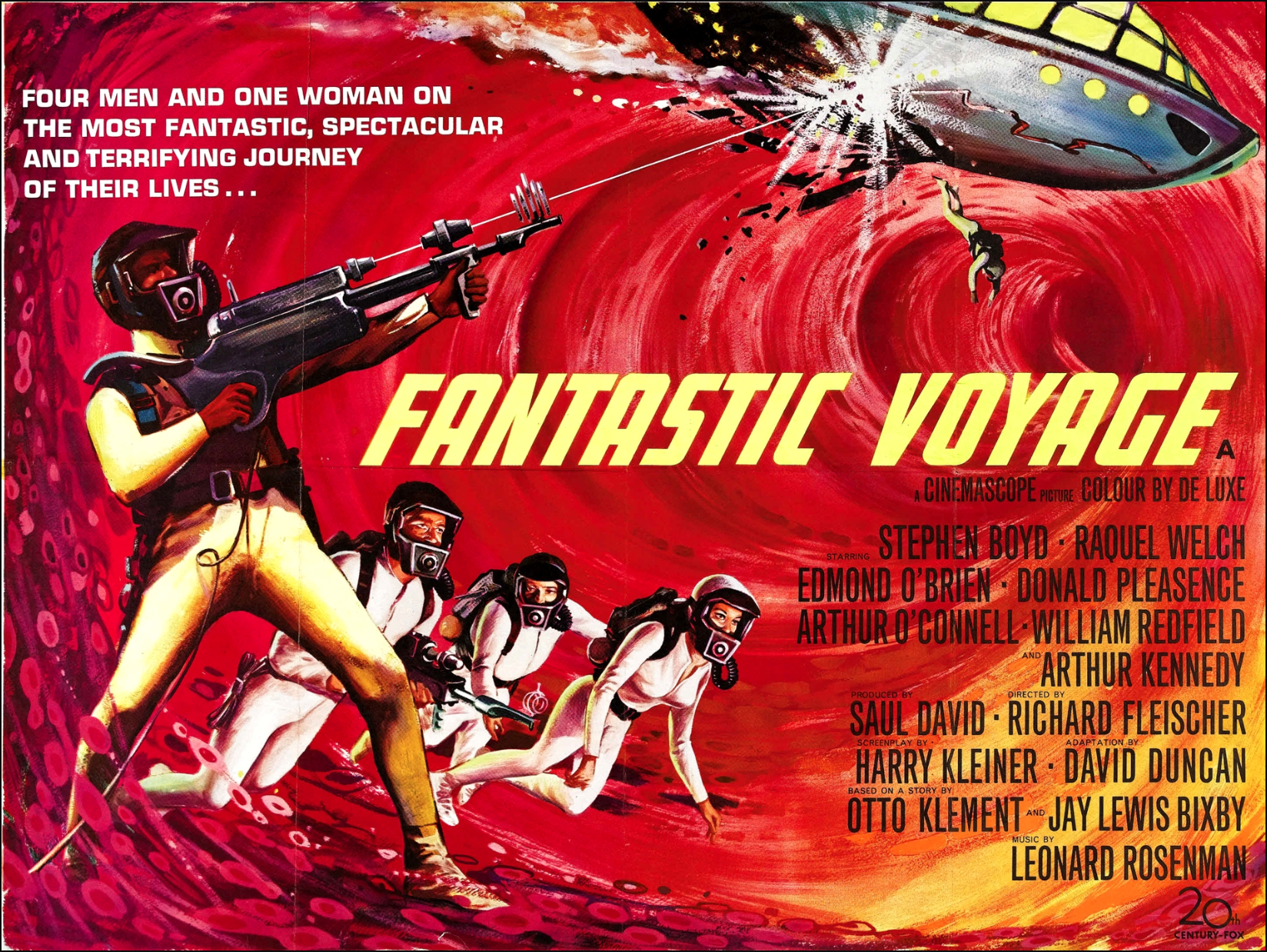
On the Set of "Fantastic Voyage" ( 1966 )


"Four men and one woman on the most fantastic, spectacular and terrifying journey of their lives!" 

Director Richard Fleischer helmed this classic 1966 sci-fi film about five intrepid individuals who undertake the most fantastic voyage of their lives - a journey through the bloodstream of an ailing scientist. Shrunk to microscopic size, they battle the body's incredible defenses to make a desperate attempt to save his life. 

Stephen Boyd, Edmund O'Brien, Donald Pleasance, Arthur O'Connell and Arthur Kennedy all have feature parts but the film became popular primarily due to the presence of the curvaceous Raquel Welch. This exciting adventure features a clever premise of microscopic medical research.... years before nano-technology was even developed! 

Let's take a peek at some behind-the-scenes images of the cast and crew during the making of Fantastic Voyage


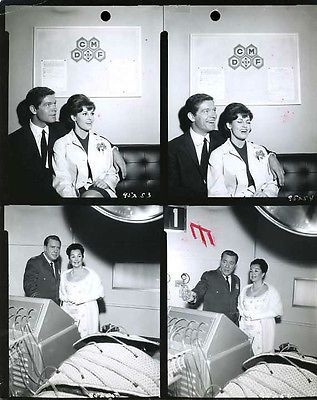
A contact sheet featuring behind-the-scenes images of Stephen Boyd, Donald Pleasance, and Raquel Welch

A view of the Proteus Submarine before being miniaturized.

Interior view of the Proteus
Constructing the "intestines"
Ick...the human body can be difficult to travel through!

Dale Hennesy and Jack Martin Smith were responsible for the art direction of Fantastic Voyage while Stuart A. Reiss and Walter M. Scott handled set decor. Hennesy was also the production designer for Young Frankenstein ( 1974 ) and King Kong ( 1976 ). 

Raquel Welch, taking a breather during filming

Raquel Welch pictured in that famous tight-fitting diver suit
"Fantastic Voyage" utilized the "blue screen" which was later replaced with graphics of the insides of a human body

Ms. Welch posing in front of the screen

Another contact sheet, this time with Raquel striking some glamour poses for the photographer

A scene with the blue-screen visible in the background....

...and a similar scene with the graphics inserted.

Publicity photo of Stephen Boyd and Raquel Welch

A contact sheet of the publicity shots that were taken

A costume test photo showing that the film was in production in April 1965

An original ABC television publicity photo

Tuesday, March 4, 2014

Set Design - The Lost World ( 1960 )

Before Irwin Allen became famous for his edge-of-your-seat action thrillers such as The Poseidon Adventure ( 1972  ), The Towering Inferno ( 1974  ), and Flood! ( 1976 ), or his adventure television series ( Lost in Space, The Time Tunnel ), he was famous for adventure thrillers.

The Lost World, released in 1960, was the first of these colorful flicks. The story revolved around an expedition, led by Professor George Edward Challenger ( played by Claude Rains ), to a volcanic plateau in the heart of the Amazon jungle to prove the existence of dinosaurs. Tagging along is Lord Roxton ( Michael Rennie ), a famous hunter and playboy, newswriter and photographer Ed Malone ( David Hedison ), socialite Jennifer Holmes and her brother ( Jill St. John and Ray Stricklyn ), and Challenger's chief rival Professor Summerlee ( admirably played by Richard Haydn ).


Our intrepid group not only encounter dinosaurs ( actually lizards and baby alligators with make-up on ) but come across a missing explorer ( Ian Wolfe ) and a band of hostile cannibals too. 


Willis O'Brien, creator of King Kong, spent several years during the late 1950s making preparations for a big-budget remake of his 1925 version of The Lost World. He made his pitch to producer Irwin Allen and the big wheels at 20th Century Fox, showing them the hundreds of pre-production drawings and paintings he had done. He succeeded in persuading them to make the film -- but Fox refused to let O'Brien do the film's special effects, substituting the stop-motion dinosaurs originally planned with poorly embellished reptiles instead.

The Zoological Institute 

Whether the final film's story bears any resemblance to Sir Arthur Conan Doyle's novel we're not sure of, but overall it makes for an entertaining romp into the land of the lost. It starts off at a good pace, lags slightly midway through the film and then picks up again near the end when the expedition team attempt to descend the plateau.

The ticket line to the Jungle Cruise

For this post we'd like to focus on the art direction of The Lost World, which is credited to Duncan Cramer. Most of Cramer's work was for television productions ( he did all of the sets for the television series "Family Affair" ), however he designed a number of good sets for some films as well - Flaming Star ( 1960 ), Madison Avenue ( 1962 ), and Harlow ( 1965 ). 

What a spacious cockpit.

Sharing the art direction title with Cramer was Walter M.Simons, who had a brief but fulfilling career in Hollywood both as an art director and as a production designer ( one of these days we'll write a post describing the difference between these jobs ). Some of Simons credits include Marty ( 1955 ), The Second Time Around ( 1961 ), State Fair ( 1962 ), Fluffy ( 1965 ), I Saw What You Did ( 1965 ), The Omega Man ( 1971 ) and Gumball Rally ( 1976 ). 

Wait! Where did all the people go?

"In the middle of the Twentieth Century, you fall off the brink of time!" was what the poster's tagline claimed. The audience never really does fall off the brink like the lizards do, but the film's characters have a number of great jungle settings to trip their feet over. Let's take a closer look at the individual sets : 

After a helicopter ride takes the passengers to the top of the plateau ( mysteriously described as being "cut off from evolutionary development" ) they bed down for the night only to be awakened by the sound of giant footsteps in the jungle and discover a slinking dinosaur smashed their chopper to smithereens.

With no method of getting down from the plateau they decide to press on into the interior and see what they came to see - the dinosaurs up close. Instead, newsman Ed Malone spies a shapely native in the brushes and chased her through a spider's web....where a giant green-glowing arachnid awaits. Eeek! 


The fauna of the island proves to be especially interesting to Professor Summerlee. And Professor Summerlee proves to be quite interesting to the fauna as well. Once he steps into one of the pods they gentle close upon him. 


Later, the group find a cavern to use as their sleeping quarters ( what happened to all the camping equipment they brought along? ). A cozy fire and some nice fluffy ferns bring them all the comforts of home.... 


...but the good times don't last for long. The headhunters come and get them and carry them off to their Easter island inspired lair. Here plenty of bones gives us the hint of what's to become of our leading players. 


These guys obviously can't wait for supper. Grandpa Longhair likes the large white bones best it seems. 

Through the help of the shapely native girl, they are led away from the headhunters and taken to their old abandoned pal Burton White, who tells them the secret to escaping from the soon-to-be-erupting caverns. 

The skeletons are a nice touch. 
They quickly take the advice of blind man Burton ( why not? what have they got to lose?...except their heads ) and journey to the Cave of Fire, the only passage that will take them out of the plateau. The natives believe this is the altar to their fire god and are too scared to pass it... 


.... but they give them a good chase nonetheless. Here we see the grandest of the sets so far, this one sporting old dinosaur shells, spewing fires, and plenty of sooty smoke. Of course, a passageway like this can only mean one thing...


.....there's a gila monster up ahead!!! 


That is...a dinosaur. This fella seems to enjoy the lava bath that he gets just before the film's ending, unlike Professor Challenger whose hanging on the brink of being boiled. 


Journey to the Center of the Earth, released a year prior to The Lost World was another let's-go-on-a-scientific-expedition classic.  This film was also released by 20th Century Fox but unlike TLW, features sets that bear the quality mark of the studios head of the art department, Lyle Wheeler. 

Nevertheless, in spite of the paper-mache caverns and feather-light boulders, Duncan Cramer and Walter M. Simons' sets feature some creative designs that really do transport us into Challenger's lost world.