Saturday, December 31, 2016

Let's Ring in the New Year!


Happy New Year to all of our readers! 

It's time to ring in 2017! A brand spanking new year of exploring obscure classic films, delving into Hollywood's past, and discovering the wonders of British entertainment as well. Are you ready for 2017? We certainly are!

Here's a toast to you, our faithful audience, wishing you the merriest and most blessed new year! 

Thursday, December 29, 2016

A Note to Debbie

Debbie, I miss your wonderful smile already. In your youth, your exuberance and your energetic spunk were marvelous to watch. Later, as you grew older and matured, you blossomed into a beautiful young woman. Your tender rendition of "Tammy" will last for ages. I loved your pizzazz in Singin' in the Rain ( 1952 ) and your winsome country ways in The Mating Game ( 1959 ). MGM would not have been the same without you. 

You were even more beautiful in the 1960s. You were the ideal woman of the West in How the West Was Won ( 1962 ), one of your best films; and you personified Molly Brown herself in The Unsinkable Mollie Brown ( 1965 )....your favorite film. I loved when you let your hair down in The Catered Affair ( 1956 ) - a great performance - and The Pleasure of His Company ( 1961 ).....you should have kept that style. You were wildly funny in Goodbye, Charlie ( 1964 ) and How Sweet it is ( 1968 ) and you even convinced me that you were a woman of habit in The Singing Nun ( 1966 ). 

I look forward to exploring all of the films you made that I have not yet seen, but right now I just miss you. At least, you are happily reunited with your daughter and your old friends. Try not to argue too much with Eddie.....

Saturday, December 24, 2016

The Christmas Carols of Alfred Burt

During the Christmas season we are often bombarded with Christmas tunes on the radio and television and they become so familiar to us that we overlook the story behind these songs. One such story is the tale of Alfred Burt, a young man who wrote and then sent out carols, in place of a Christmas card, to his friends and families. This tradition began with his father, Reverend Bates Gilbert Burt, who wrote both the music and lyrics to Christmas carols that he would send out to friends and parishioners throughout the 1920s and 1930s.

Alfred Burt helped set his father's lyrics to music during the WWII years and, after his discharge from the Army Air Force, he toured America, along with his wife, working as a trumpeter with an orchestra and writing many of the band's arrangements as well. In 1946, he surprised his father by presenting him with his very own Christmas carol. When Al's father suffered a fatal heart attack in 1948, Al and his wife decided to carry on Reverend Burt's Christmas carol tradition. 

Originally their list of Christmas carol recipients amounted 50, but after touring with the Alvino Rey Orchestra, they met so many new people that it quickly grew to 450 cards to mail out! 


In the early 1950s, Alvino Rey's orchestra kept them in the San Fernando Valley, and so they decided to settle there. Al became active in all phases of the Hollywood musical scene. In 1952, during a rehearsal with the Blue Reys ( Alvino Rey's singing group ), Al asked if they could sing his latest carol "Come, Dear Children" just so that he could check the harmonies on it.....but they liked the song so much they pleaded with him to use it during their annual King Family Christmas party performance. It was a great hit and in the coming year Al spent many hours working with Rey and the King singers for a television show they were putting together. He took a break from this work to set up the Horace Heidt orchestra for a road tour but, upon his return, he looked tired and worn. His wife insisted he see a doctor and his diagnosis hit them like a wave - Al had lung cancer with less than a year to live. 

The Burts were crushed with this news. They had a young daughter, and Al had not yet accomplished his dream of writing a musical, but since his fate was inevitable, he wanted each remaining day to be filled with happiness and humor. A friend of theirs, upon hearing the news, alerted James Conkling, president of Columbia Records, to record Al's carols as a final gift. Al was thrilled with the news, and managed to attend the recording which featured a volunteer chorus of some of Hollywood's finest singers. 

Alfred Burt wrote his final carol - "The Star Carol" - just a day before he passed away...at the age of 33. His wife and daughter sent out this Christmas carol, his most beautiful, in Christmas 1954, including a note telling of the end of the Burt carol tradition. 

In the years following the release of "The Christmas Mood", Columbia's first release of Burt's carols, his music was recorded by so many popular singers of the time, including Bing Crosby, the Fred Waring Orchestra, Nat King Cole, Johnny Mathis, Tennessee Ernie Ford, Anita Bryant, and Andy Williams. 

Today, Burt's songs have joined the ranks of being traditional Christmas carols, sung in many people's homes and performed around the world during the holiday season. Little did Al realize that the Christmas carols that he wrote just for friends would become so popular and become a part of so many people's lives.

Below we have a selection of Youtube videos featuring some of our favorite Burt carols. Enjoy.....and Merry Christmas! 


All on a Christmas Morning ( 1946 ) - This was one of the very first carols that Alfred Burt helped to write along with his father, Reverend Burt. This version is performed by the Dick Major Singers, which today is a little remembered singing group.


Sleep Baby Mine ( 1949 ) - This is a lullaby inspired by the birth of the Burt's daughter, Diane. It features lyrics written by Wihla Huston, who wrote most of the lyrics to Burt's carols.


Some Children See Him ( 1951 ) - Andy Williams performs the tender "Some Children See Him", which is probably Burt's most recognized work. Only Andy could sing it with such passion!


O Hearken Ye ( 1953 ) - Fred Waring and the Pennsylvanians performed many of Burt's carols in the 1960s. This one is much more upbeat than Burt's usual carols.


The Star Carol ( 1954 ) - This was the last carol that Alfred Burt composed before he died, and it is certainly his most beautiful. The Lennon Sisters performed it many times on television and in live performances. This particular clip is from the 1966 Christmas special of The Lawrence Welk Show.

To read more about Alfred Burt, his music, and his daughter's work in continuing his legacy, check out this link. 

Thursday, December 22, 2016

The Impossibly Difficult Name that Movie Game


Lately, we've been posting some screenshots that have been truly impossible to guess, but since this is the season to be generous, today we have posted a Not-So-Impossibly difficult screenshot! This one features a lovely winter landscape, and two backs of heads that look very familiar....don't you think? Be the first to guess the movie this shot is from, and you'll win a prize for Christmas! 

As always, if you are not familiar with the rules to the Impossibly Difficult Name that Movie game or the prize, click here!

GAME OVER. 

Congratulations to Vienna who correctly answered The Farmer's Daughter ( 1947 ). Those familiar looking backsides belong to Ethel Barrymore and Charles Bickford and those two figures running are none other than Joseph Cotten and Loretta Young. Katie Holstrom ( Young ) believes that running keeps her in shape for skating, while skating keeps her in shape for running. Only a Swede would be brave enough to go jogging in the snow!

Sunday, December 18, 2016

Thurston Hall - The Great Senator

You've seen him before...that imposing stature, that jovial smile, his booming voice, and those eyes, those eyes that bulge at just the right moments. Thurston Hall is his name and governors, senators, businessmen, and doting fathers are his game. His name is often confused with Thurston Howell III ( Jim Backus ) of Gilligan's Island fame, and although the series' creator Sherwood Schwartz never directly admitted that his multi-millionaire character was based on Hall, he certainly could have been!

Thurston made nearly 270 films in his career which spanned between 1915-1958. Westerns, dramas, musicals, comedies, adventure films....he did them all. If any film featured a blustery authoritarian you could be sure that it was Thurston Hall playing the part. 

This 6' tall Bostonian toured New England with a theatrical troupe in his youth, later forming his own theater company and traveling throughout Australia and South Africa. He was kept busy throughout the early 1900s and 1920s juggling both stage performances with numerous silent film appearances. However, his rich baritone voice could not be heard in silent films and so audiences did not embrace him as the leading man he could have been. It was not until he was nearing the age of 50 that he found his niche as a character actor appearing in films for just about every studio in Hollywood. 

Thurston was a delightful character, and it did not matter whether he played unscrupulous men, or pompous politicians...you just couldn't help but like him. A prime example of a typical Thurston Hall role was Mr. Bruce Pierce, publisher of the sensational Pierce paperbacks in The Secret Life of Walter Mitty ( 1947 ). Walter Mitty ( Danny Kaye ) would continually come up with excellent suggestions for company, all of which Mr. Pierce would later boast were his own brilliant ideas. Ten years earlier, he had portrayed a similar role as Irene Dunne's flustered New York publisher Arthur Stevenson in Theodora Goes Wild ( 1936 ). 
In Fast Company ( 1938 ) he was crooked District Attorney MacMillen, a man always ready to swoop down on the Sloanes...especially when he felt them breathing down his neck. In almost every film, Thurston had a fat cigar hanging from his lips, and he would often puff on it nervously when his character's underhanded political dealings were about to be exposed. It was these political roles that Thurston excelled at in particular. His face, his manners, and that voice of his were the ideal image of an American politician....particularly a congressmen or senator. The Great Gildersleeve ( 1942 ), Sherlock Holmes in Washington ( 1943 ), The Farmer's Daughter ( 1947 ), Welcome Stranger ( 1947 ), and Up in Central Park ( 1948 ) were just a few of the films where he played men of political prominence.

Remember that wealthy socialite Mr. Bel-Goodie in You Can't Cheat an Honest Man ( 1938 )? That was Thurston, too. When he wasn't portraying crooked financiers or politicians he played wealthy upper-crust men of society. In First Love ( 1939 ) Deanna Durbin made sure to tickle the snooty gent the right way because she was smitten with his son ( Robert Stack ). 
Thurston also played military men with ease, often portraying colonels or captains of the Army and Navy ( as in Going Places and Brewsters Millions ). When he wasn't donning a uniform you could find Thurston with a cowboy hat atop his head. Jasper Jim Bandy ( Swing the Western Way ), Big Jim Hanlon ( Rim of the Canyon ), Horatio Huntington ( Belle of Ole Mexico ), Big Jim Lassiter ( Whirlwind ), and Mr. Gaytes ( Texas Carnival ), were some of the larger than life Texan characters that Thurston tackled in the 1940s and 1950s. 

When Thurston Hall's film career came to a close in the mid-1950s, he focused his attention on television, appearing in episodes of The Abbott and Costello Show and My Little Margie as well as being a regular in The Adventures of Hiram Holliday and Topper. Incidentally, his role of the blustery boss Mr. Schuyler in Topper is what he is most remembered for. 

In Hollywood today there aren't many character actors who are known for playing one particular kind of role. Even if these actors still existed, we doubt that anyone could personify a politician as well as Thurston Hall. We like to call him "The Great Senator". After all, who could claim they were a senator so many times in their career? 

Paula's Cinema Club, Once Upon a Screen, Outspoken and Freckled are hosting the 5th annual What a Character! Blogathon and this year there are some really juicy posts about obscure character actors, so be sure to check out the other entries here


Saturday, December 17, 2016

The River ( 1951 )

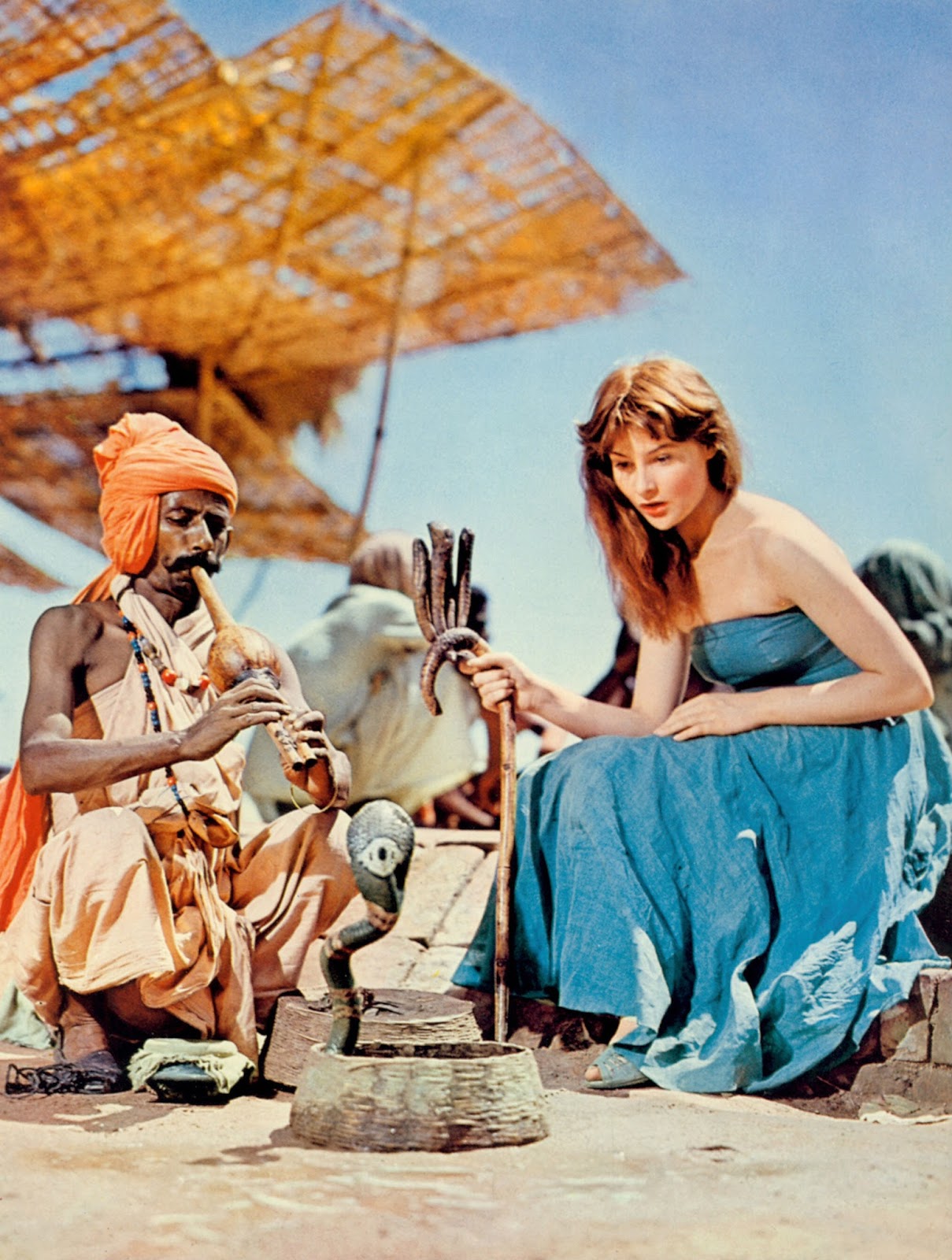
Jean Renoir is often revered for directing two brilliant cinematographic films of the 1930s - La Grande Illusion (1937) and The Rules of the Game (1939) - both considered by critics to be among the greatest films ever made, but Renoir also voyaged into the realm of Technicolor in the early 1950s and produced what could be considered one of the most vibrant color films ever made - The River (1951), shot entirely in India. 
This film won the International prize at the Venice Film Festival when it was first released, but it has since fallen into obscurity, especially among Hollywood film fans. It may be because Renoir chose to use amateur actors for the leads, and while they handle their parts adequately, many feel that their performances kept this film from becoming the classic it could have been. 

I feel their naturalness adds to the charm of the picture, which often takes on the tone of a documentary. The River is one woman's reminiscences about her childhood in India and the growing pains she encountered as a girl: that woman being Rumer Godden. She wasn't a glamorous girl, and felt awkward at times...hence, the actress chosen to portray her (Bengal-native Patricia Walters) was not glamorous and often awkward herself. 


The other main characters in her story are her childhood friends, Melanie (Radha), a half-British/half-Indian girl, and Valerie (Adrienne Corri), a flighty beauty who isn't sure where her emotions stem from. Their peaceful childhood together growing up among the banks of the Bengal river are disrupted when a soldier, Captain John (Thomas Breen) comes for a prolonged visit with their neighbor. The captain is a handsome youth with flaming red hair, and the three girls quickly become smitten with him. Little do they realize that their romantic fantasies aren't shared by him. Captain John lost a leg in the war, and he has come to India primarily to escape the pity he feared he would receive back home. He also hopes to find inner peace and an acceptance for his condition, but leaves finding neither.

All of the characters in The River are truly misfits. Melanie does not know whether her viewpoints about life and marriage are more Eastern or Western; Valerie is beautiful but immature. The main character, Harriet, is wise but homely in appearance; Harriet's father has only one eye; and Captain John is the most lamentable of them all for he feels that his missing leg makes him less whole than others. 
Captain John is portrayed by Thomas Breen, son of Joseph I. Breen, a film censor who was appointed by Hays to enforce the Production Code in Hollywood. Thomas had his leg amputated after injuring it in combat in Guam during World War II. Esmond Knight and Nora Swinburne, two prolific English actors, portray Harriet's parents. They lend a touch of professionalism to an otherwise all-amateur cast.

The River is a gentle and thoughtful film and it meanders along at a refreshingly slow pace while it explores these themes of love and hatred, acceptance of our situation, as well as life and death. Renoir makes his audience feel as though they were taking a slow boat journey down the river with plenty of time to stop and observe the locals in their daily activities and meditate on the constancy of the circle of life. If you have the time, it is well worth taking this journey. 

Seen The River already? Then check out Alexander Sesonske's splendid essay on the film over at Critieron's website. 

Tuesday, December 6, 2016

From the Archives : Octopussy ( 1983 )


"It's all in the wrist." 

Bond proves that Kamal Khan's luck with dice is more than mere wrist action in the action packed James Bond classic Octopussy. 

From the Archives is our latest series of posts where we share photos from the Silverbanks Pictures collection. Some of these may have been sold in the past, and others may still be available for purchase at our eBay store : http://stores.ebay.com/Silverbanks-Pictures