Tuesday, February 26, 2019
From the Archives: McLintock! ( 1963 )
John Wayne's son Patrick is grinning like a cheshire cat in this lovely scene from the western comedy McLintock! ( 1963 ). Also pictured is Yvonne DeCarlo and Aissa Wayne ( John's daughter ). It obviously was a family affair.
From the Archives is our latest series of posts where we share photos from the Silverbanks Pictures collection. Some of these may have been sold in the past, and others may still be available for purchase at our eBay store : http://stores.ebay.com/Silverbanks-Pictures
Sunday, February 24, 2019
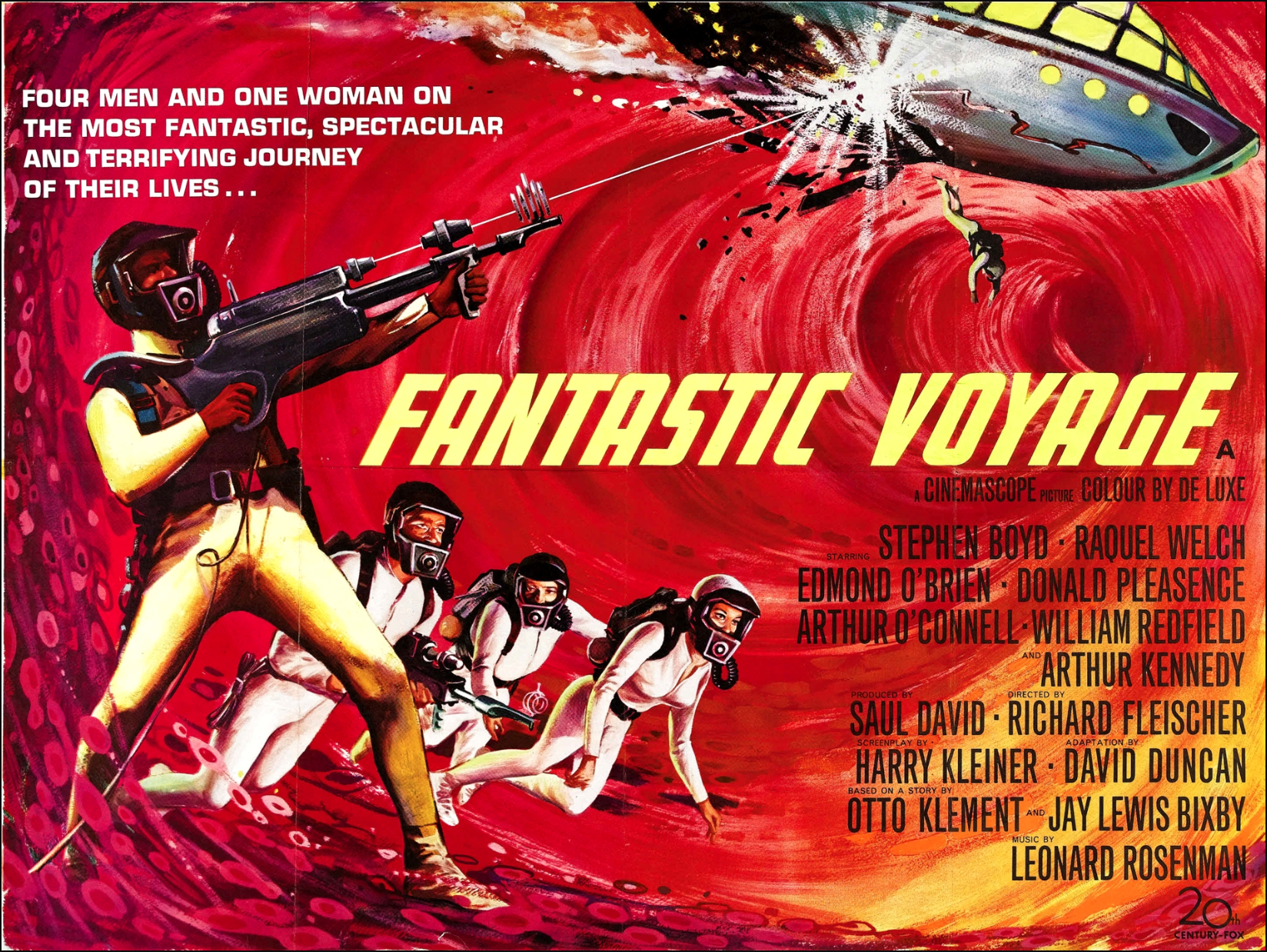
On the Set of "Fantastic Voyage" ( 1966 )
"Four men and one woman on the most fantastic, spectacular and terrifying journey of their lives!"
Director Richard Fleischer helmed this classic 1966 sci-fi film about five intrepid individuals who undertake the most fantastic voyage of their lives - a journey through the bloodstream of an ailing scientist. Shrunk to microscopic size, they battle the body's incredible defenses to make a desperate attempt to save his life.
Stephen Boyd, Edmund O'Brien, Donald Pleasance, Arthur O'Connell and Arthur Kennedy all have feature parts but the film became popular primarily due to the presence of the curvaceous Raquel Welch. This exciting adventure features a clever premise of microscopic medical research.... years before nano-technology was even developed!
Let's take a peek at some behind-the-scenes images of the cast and crew during the making of Fantastic Voyage:
![]() |
| A contact sheet featuring behind-the-scenes images of Stephen Boyd, Donald Pleasance, and Raquel Welch |
![]() |
| A view of the Proteus Submarine before being miniaturized. |
![]() |
| Interior view of the Proteus |
![]() |
| Constructing the "intestines" |
![]() |
| Ick...the human body can be difficult to travel through! |
Dale Hennesy and Jack Martin Smith were responsible for the art direction of Fantastic Voyage while Stuart A. Reiss and Walter M. Scott handled set decor. Hennesy was also the production designer for Young Frankenstein ( 1974 ) and King Kong ( 1976 ).
| Raquel Welch, taking a breather during filming |
![]() |
| Raquel Welch pictured in that famous tight-fitting diver suit |
![]() |
| "Fantastic Voyage" utilized the "blue screen" which was later replaced with graphics of the insides of a human body |
![]() |
| Ms. Welch posing in front of the screen |
![]() |
| Another contact sheet, this time with Raquel striking some glamour poses for the photographer |
![]() |
| A scene with the blue-screen visible in the background.... |
![]() |
| ...and a similar scene with the graphics inserted. |
![]() |
| Publicity photo of Stephen Boyd and Raquel Welch |
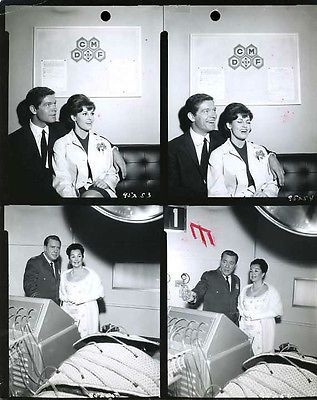
![]() |
| A contact sheet of the publicity shots that were taken |
![]() |
| A costume test photo showing that the film was in production in April 1965 |
![]() |
| An original ABC television publicity photo |
Thursday, February 21, 2019
The Impossibly Difficult Name that Movie Game
Hmmm....we have here a handsome Indian brave sitting atop a horse. You're probably wondering when was the last time you saw a movie with a shirtless American Indian on a horse, and I'll tell you something, they are not as common as you'd think!
All you have to do is tell me the name of the movie this scene is from ( you don't even have to guess the name of the brave ) and you win this round of The Impossibly Difficult Name that Movie Game!
GAME OVER.
Congratulations to Damsbo for correctly guessing "The Indian Fighter" ( 1955 ) starring Kirk Douglas. This Indian - Grey Wolf ( Harry Landers ) appears within the first ten minutes of the film and is very distrustful of Johnny Hawks ( Douglas ). They will later battle to the death for the life of Wes Todd ( Walter Matthau ).
Saturday, February 16, 2019
Tintin et le Temple du Soleil ( 1969 )
Tintin, the beloved comic book creation of Belgium illustrator Herge, was transferred to the big screen as a fabulous full-length feature film in 1969 - Tintin et le Temple du Soleil. It was based upon one of Tintin's most famous escapades, his search for the missing Professor Calculus and a band of archeologists who are under the spell of an ancient Incan curse. The film took the two-part adventure ( from the books The Seven Crystal Balls and The Prisoner of the Sun ) and condensed it into one 77-minute film.
This was a French production from Belvision studios and the animation is spot-on, matching Herge's style as closely as if the artist himself painted each cel. This isn't surprising, considering Raymond LeBlanc was the producer of the film. LeBlanc was the publisher of the original Tintin magazine series, as well as the founder of Editions du Lombard and Belvision Studios. He was a giant in the Belgium animation industry, much like Walt Disney was here in the States.
In 1957, Belvision brought the Tintin stories to television as an animated serial of five-minute episodes which covered seven of Hergé's most popular books. The success of this series made the studio attempt two animated feature-length films: Asterix the Gaul ( 1967 ) and Asterix and Cleopatra ( 1967 ), both featuring the comic strip character Asterix. These films were great successes and it led them to bring Tintin to the screen.
Tintin and the Temple of the Sun differs only slightly from Hergé's original story, with a few additional scenes added and Thompson and Thompson ( the twin detectives ) getting a much larger role. Like the book series, however, it is filled with adventure and plenty of opportunities for Captain Haddock to lose his temper..."Ten thousand thundering typhoons!!" Beautiful music by François Rauber also enhances the picture.
Three years later Tintin returned for Tintin and the Lake of Sharks which featured many of the same actors voicing the characters. Both pictures are available on DVD in their original French language version and dubbed in English.
In 1957, Belvision brought the Tintin stories to television as an animated serial of five-minute episodes which covered seven of Hergé's most popular books. The success of this series made the studio attempt two animated feature-length films: Asterix the Gaul ( 1967 ) and Asterix and Cleopatra ( 1967 ), both featuring the comic strip character Asterix. These films were great successes and it led them to bring Tintin to the screen.
Tintin and the Temple of the Sun differs only slightly from Hergé's original story, with a few additional scenes added and Thompson and Thompson ( the twin detectives ) getting a much larger role. Like the book series, however, it is filled with adventure and plenty of opportunities for Captain Haddock to lose his temper..."Ten thousand thundering typhoons!!" Beautiful music by François Rauber also enhances the picture.
Three years later Tintin returned for Tintin and the Lake of Sharks which featured many of the same actors voicing the characters. Both pictures are available on DVD in their original French language version and dubbed in English.
Saturday, February 9, 2019
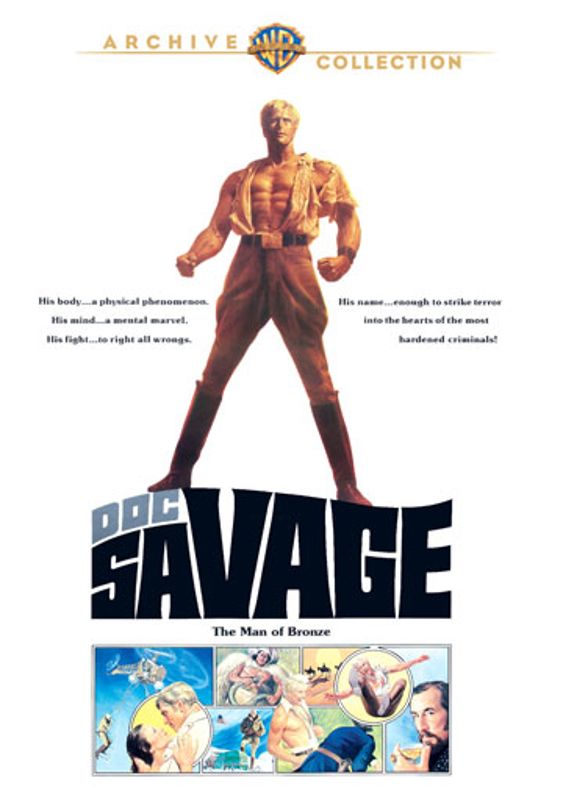
Doc Savage: The Man of Bronze ( 1975 )
Have no fear, Doc Savage is here!
The intrepid Doc Savage and his Fabulous Five journey to the wilds of South America to investigate Doc's father's death in the jungles of Hidalgo. En route, they encounter numerous dangers as the maniacal Captain Seas tries to thwart them as they come closer to discovering his vast treasure of stolen Incan gold.
Doc Savage: The Man of Bronze is a delightful globe-trotting adventure film based on the popular 1930s pulp fiction character. It features some exotic locales, great set design, plenty of excitement, and loads of tongue-in-cheek humor...much in the vein of the original Batman! television series.
Savage is indeed a "man of bronze". He's an American who has Herculean strength, shiny white teeth, perfectly groomed hair, and impeccable manners. He also has the morals of a Boy Scout and would never hesitate to aid an old lady crossing the street. When asked what he would like to be served onboard Captain Seas' yacht he responds, "A Coke, please".
His Fabulous Five are equally honorable and, like typical comic book characters, have a range of capabilities to help their leader in times of trouble. There is Monk, a chemist ( Michael Miller ); Major Roberts, an electrical wizard ( Paul Gleason ); Littlejohn, an archeologist ( Eldon Quick ), Ham, the "brains" ( Darrell Zwerling ), and Colonel Renny, a construction engineer aka "the strongman" ( William Lucking ). Like Doc, these men, devote their lives to traveling around the world for the sake of justice.
Also in the cast are Pamela Hensley as Mona, a love interest for Doc; Carlos Rivas, and Paul Wexler as the diabolical Captain Seas.
The character of Dr. Clark Savage Jr. originally appeared in magazine format in 1933, written by Lester Dent under the pseudonym Kenneth Robeson. The series lasted for 181 issues and was brought to even greater fame in the 1960s when artist James Bama created new cover designs for the Bantam Books paperback re-issues. By the mid-1970s, over 20 million Doc Savage stories had been sold around the world. Hence, he was a fantastic character to bring to the silver screen.
This idea was considered in 1966 after the James Bond films proved to be such box-office attractions. Chuck Connors was to star in the filming of the 1934 story "The Thousand-Headed Man", but the securing of the film rights failed and it was shelved. It was not until 1974 that producer George Pal decided to make a Doc Savage film and obtained both film and television rights with the plans of creating a televised adventure series after the picture was released.
Pal originally hoped to cast Hercules-legend Steve Reeves as Savage. But he changed his mind eventually and selected Ron Ely ( Tarzan ) for the part instead, dying the man's hair blonde for the role. He was an excellent Doc, exuding charm and uttering his campy lines with dead seriousness.
"Mona, you're a brick!"
However, in spite of all its merits, the film bombed at the box-office. The timing of its release was just a matter of ill fortune. This was the mid-1970s and not many people wanted to watch a 1930s-themed adventure film with such goody-two-shoes humor. By the late 1970s, the mood had changed and the similarly campy Wonder Woman did very well on television. Perhaps Doc Savage would have performed better if it was geared towards adults and made into a dramatic adventure flick instead.
It truly is unfortunate that Doc Savage became such a loss for George Pal ( it was the last film he produced ) because, while it isn't a comedic gem, it really is colorful and quite entertaining. So entertaining, that it is disappointing to learn that the sequel ( promised at the end of the credits ) was never put into production! It would have been great to see the follow-up.
The intrepid Doc Savage and his Fabulous Five journey to the wilds of South America to investigate Doc's father's death in the jungles of Hidalgo. En route, they encounter numerous dangers as the maniacal Captain Seas tries to thwart them as they come closer to discovering his vast treasure of stolen Incan gold.
Doc Savage: The Man of Bronze is a delightful globe-trotting adventure film based on the popular 1930s pulp fiction character. It features some exotic locales, great set design, plenty of excitement, and loads of tongue-in-cheek humor...much in the vein of the original Batman! television series.
Savage is indeed a "man of bronze". He's an American who has Herculean strength, shiny white teeth, perfectly groomed hair, and impeccable manners. He also has the morals of a Boy Scout and would never hesitate to aid an old lady crossing the street. When asked what he would like to be served onboard Captain Seas' yacht he responds, "A Coke, please".
His Fabulous Five are equally honorable and, like typical comic book characters, have a range of capabilities to help their leader in times of trouble. There is Monk, a chemist ( Michael Miller ); Major Roberts, an electrical wizard ( Paul Gleason ); Littlejohn, an archeologist ( Eldon Quick ), Ham, the "brains" ( Darrell Zwerling ), and Colonel Renny, a construction engineer aka "the strongman" ( William Lucking ). Like Doc, these men, devote their lives to traveling around the world for the sake of justice.
Also in the cast are Pamela Hensley as Mona, a love interest for Doc; Carlos Rivas, and Paul Wexler as the diabolical Captain Seas.
The character of Dr. Clark Savage Jr. originally appeared in magazine format in 1933, written by Lester Dent under the pseudonym Kenneth Robeson. The series lasted for 181 issues and was brought to even greater fame in the 1960s when artist James Bama created new cover designs for the Bantam Books paperback re-issues. By the mid-1970s, over 20 million Doc Savage stories had been sold around the world. Hence, he was a fantastic character to bring to the silver screen.
This idea was considered in 1966 after the James Bond films proved to be such box-office attractions. Chuck Connors was to star in the filming of the 1934 story "The Thousand-Headed Man", but the securing of the film rights failed and it was shelved. It was not until 1974 that producer George Pal decided to make a Doc Savage film and obtained both film and television rights with the plans of creating a televised adventure series after the picture was released.
Pal originally hoped to cast Hercules-legend Steve Reeves as Savage. But he changed his mind eventually and selected Ron Ely ( Tarzan ) for the part instead, dying the man's hair blonde for the role. He was an excellent Doc, exuding charm and uttering his campy lines with dead seriousness.
"Mona, you're a brick!"
However, in spite of all its merits, the film bombed at the box-office. The timing of its release was just a matter of ill fortune. This was the mid-1970s and not many people wanted to watch a 1930s-themed adventure film with such goody-two-shoes humor. By the late 1970s, the mood had changed and the similarly campy Wonder Woman did very well on television. Perhaps Doc Savage would have performed better if it was geared towards adults and made into a dramatic adventure flick instead.
It truly is unfortunate that Doc Savage became such a loss for George Pal ( it was the last film he produced ) because, while it isn't a comedic gem, it really is colorful and quite entertaining. So entertaining, that it is disappointing to learn that the sequel ( promised at the end of the credits ) was never put into production! It would have been great to see the follow-up.
Thursday, January 31, 2019
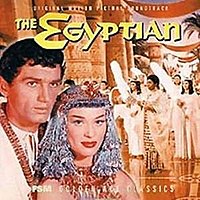
The Egyptian ( 1954 )
"I feel the fever of Thebes in my blood, and I know that I was born to live in the sunset of the world and that nothing matters, nothing, but what I see in your eyes."
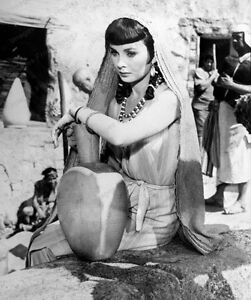
Sinuhe, a poor orphan in Egypt during the eighteenth-dynasty, rises to fame as a great physician and, along with his friend Horemheb (Victor Mature) is appointed to the service of the new Pharaoh (Michael Wilding). During the span of ten years, he learns dangerous secrets in the royal court, discovers enemies plotting against the pharaoh, learns who his true friends are, and has a life-changing encounter with the temptress, Nefer (Bella Darvi). Along the journey, Sinuhe seeks to find the answer to a question that has aroused his curiosity since his youth - Who Am I? and Who is My God?
The Egyptian, a 20th Century Fox release, was beautifully filmed in Cinemascope and featured a magnificent score by Alfred Newman and Bernard Herrmann. It should rank among the top epics of the 1950s but unfortunately, it has not yet shaken its reputation of being the first box-office flop shot in Cinemascope.
Why did it fail at the box-office? That's difficult to fathom because the film really is entertaining and the production quality is top-notch. Additionally, it was helmed by an old pro, director Michael Curtiz (Casablanca, Mildred Pierce) and based on a best-selling novel.
Mika Waltari's "The Egyptian" was first published in 1945 in Finnish and is still considered one of the greatest books in Finnish literary history.
On the opposite scale is another romance, a much more animal relationship, between the Pharoah's sister (Gene Tierney) and Horemheb, who is seeking to use her to climb his way up to becoming the commander of the Egyptian army.
The Egyptian has as much intrigue in its production history as it does in its plot. The film was originally planned as an epic vehicle for Marlon Brando. Kirk Douglas and Jean Peters were to be his co-stars but, just a week before filming was to begin, Brando backed out.The role was then given to MGM-star Edmund Purdum (after Cameron Mitchell, Farley Granger, and Dirk Bogarde were all first considered).
Peters was later replaced by Simmons, and Kirk Douglas went on to make 20,000 Leagues Under the Sea for Walt Disney instead. Bella Darvi was a protege of producer Darryl Zanuck and his wife Virginia ("Darvi" is a combination of their first names) and, at the time of filming, Darryl was besotted with Bella, so the film really became a way for him to promote her career as well.
The picture had an enormous budget of $3.5 million dollars. Many of the sets, costumes, and props were later loaned to Paramount for Cecil B. DeMille's The Ten Commandments, which was released the same year. Peter Ustinov, when asked what it was like being involved in such an enormous production, said, "It was like being on a monstrously huge set of Aida and not being able to find the way out."
"I have spent my life in seeking knowledge. This is what I know. I have written this for you my son, wherever you are and for your children and your children's children. It is a poor legacy. But it is all I have."
The Egyptian has always been a personal favorite of mine because it mixes action and adventure with romance and the drama of Sinuhe's life, from his quick rise to becoming the Pharaoh's physician, to being a condemned criminal and an outcast in his homeland. The entire cast is excellent, especially Peter Ustinov, who provides some comic relief. Also in the cast is Henry Daniell, John Carradine, Judith Evelyn, Tommy Rettig, and Michael Ansara.
This review is my contribution to the 90 Years of Jean Simmons Blogathon running today through January 31st. It is being hosted by The Wonderful World of Cinema and Phyllis Loves Classic Movies, so be sure to head over to either of these sites to read more Jean Simmons film reviews!
Sinuhe, a poor orphan in Egypt during the eighteenth-dynasty, rises to fame as a great physician and, along with his friend Horemheb (Victor Mature) is appointed to the service of the new Pharaoh (Michael Wilding). During the span of ten years, he learns dangerous secrets in the royal court, discovers enemies plotting against the pharaoh, learns who his true friends are, and has a life-changing encounter with the temptress, Nefer (Bella Darvi). Along the journey, Sinuhe seeks to find the answer to a question that has aroused his curiosity since his youth - Who Am I? and Who is My God?
The Egyptian, a 20th Century Fox release, was beautifully filmed in Cinemascope and featured a magnificent score by Alfred Newman and Bernard Herrmann. It should rank among the top epics of the 1950s but unfortunately, it has not yet shaken its reputation of being the first box-office flop shot in Cinemascope.
Why did it fail at the box-office? That's difficult to fathom because the film really is entertaining and the production quality is top-notch. Additionally, it was helmed by an old pro, director Michael Curtiz (Casablanca, Mildred Pierce) and based on a best-selling novel.
Mika Waltari's "The Egyptian" was first published in 1945 in Finnish and is still considered one of the greatest books in Finnish literary history.
The unchanging nature of mankind is essentially the theme to the novel and this provides the basis of the film, too, but, it being a Hollywood production, Nefer's seduction of Sinuhe and how this leads to his downfall gets the spotlight attention. Bella Darvi entraps her man so cunningly that he is bewitched and does not know that he is sacrificing everything he worked so hard to earn. Or rather, he does know but is addicted to her love by that point.
It is only Kaptah (Peter Ustinov) and Merit (Jean Simmons), his two dear friends from his days in poverty, that stay near him in his hour of peril. Merit has loved him since he was a boy but he is blind to it and instead, searches for a greater meaning to his life outside of his medical work.
On the opposite scale is another romance, a much more animal relationship, between the Pharoah's sister (Gene Tierney) and Horemheb, who is seeking to use her to climb his way up to becoming the commander of the Egyptian army.
The Egyptian has as much intrigue in its production history as it does in its plot. The film was originally planned as an epic vehicle for Marlon Brando. Kirk Douglas and Jean Peters were to be his co-stars but, just a week before filming was to begin, Brando backed out.The role was then given to MGM-star Edmund Purdum (after Cameron Mitchell, Farley Granger, and Dirk Bogarde were all first considered).
The picture had an enormous budget of $3.5 million dollars. Many of the sets, costumes, and props were later loaned to Paramount for Cecil B. DeMille's The Ten Commandments, which was released the same year. Peter Ustinov, when asked what it was like being involved in such an enormous production, said, "It was like being on a monstrously huge set of Aida and not being able to find the way out."
"I have spent my life in seeking knowledge. This is what I know. I have written this for you my son, wherever you are and for your children and your children's children. It is a poor legacy. But it is all I have."
The Egyptian has always been a personal favorite of mine because it mixes action and adventure with romance and the drama of Sinuhe's life, from his quick rise to becoming the Pharaoh's physician, to being a condemned criminal and an outcast in his homeland. The entire cast is excellent, especially Peter Ustinov, who provides some comic relief. Also in the cast is Henry Daniell, John Carradine, Judith Evelyn, Tommy Rettig, and Michael Ansara. This review is my contribution to the 90 Years of Jean Simmons Blogathon running today through January 31st. It is being hosted by The Wonderful World of Cinema and Phyllis Loves Classic Movies, so be sure to head over to either of these sites to read more Jean Simmons film reviews!
Tuesday, January 29, 2019
Trio ( 1950 ) - The Sanatorium
During my school years, William Somerset Maugham was one of my favorite authors. He is famous for his novels "The Razor's Edge", "The Moon and Sixpence" and "Of Human Bondage", but he was also an excellent short story writer and many of his best works were short stories.
In 1948, Gainsborough Studios decided to film a selection of these stories as an anthology film. It was called Quartet and included the tales "The Facts of Life", "Alien Corn", "The Kite", and "The Colonel's Lady". These were excellent adaptations and because they were so entertaining and so well received, two more compilations were made: Trio ( 1950 ) and Encore ( 1951 ).
Trio included three great stories - "The Verger", the story of a man who climbs to business success not even knowing how to read; "Mr. Know-All", about an obnoxious jewelry dealer who has a change of heart onboard a cruise ship; and the best of the three, "The Sanatorium". This little 45-minute gem shares the stories behind the patients of a rest home in a secluded part of Scotland.
Most of these patients suffer from tuberculosis and, because of the care they need, have been living at the sanatorium anywhere from two to twenty years. The film focuses on the lives of four of the patients with a particular emphasis on Major Templeton ( Michael Rennie ), the latest arrival. The Major is a hero from battles in British India and is also regarded as quite the ladies' man. He was, and is, a confirmed bachelor. However, the moment he sets his eyes on Evie Bishop ( Jean Simmons ), he desires to not only woo her, but win her as his wife. Miss Bishop has been living at the sanatorium for seven years and, in spite of the lack of social entertainment and companions her own age, is cheerful, confident, and quite flirtatious. Bishop, however, shows very little interest in Templeton at first and it is only slowly that he gains her admiration - and love.
Roland Culver stars as Mr. Ashedon, sort of the narrator of the story. We come to know the inhabitants of the sanatorium through his eyes and his astute observations of them. He is particularly interested in Mr. Chester ( Raymond Huntley ) and the way he treats his wife when she comes for her monthly visits. For a man who looks forward to seeing his wife as eagerly as Mr. Chester does, Ashedon wonders why he behaves so rudely and indifferent to her when she finally arrives.
Then there is Campbell ( John Laurie ) and MacLeod ( Finlay Currie ), the two fighting Scotsmen. They are constantly at each other's throats over their game of chess and yet are very dear companions.
The Sanatorium is beautifully filmed by Geoffrey Unsworth and features a stunning array of English character actors. The episode is filled with so many wonderful details and subtle interchanges between these characters. These really shine when seen over multiple viewings ( the segment's short length lends itself easily to this ), but it is the romance between Major Templeton and Miss Bishop that I find so very entertaining. Both are independent spirits who have no interest in getting involved in marriage and yet, when they find out the state of their health, it is marriage that instantly comes to the forefront of their thoughts.
Jean Simmons was such a talented actress, even as a child, and, in spite of her youthful appearance, always acted with a maturity beyond her years. When The Sanatorium was filmed, she was twenty years old and never looked more beautiful. Simmons was often cast in films with a contemporary setting but she was so well-suited for these period films, possessing the beauty of Edwardian women.
Her character, Miss Bishop, is both independent and headstrong and yet demure and gentle, and Simmons brings out both of these qualities excellently. It is easy to see why Major Templeton is so quickly taken by her charms.
Unfortunately, Trio is not yet available on DVD in the United States, but it is available in PAL format through Network DVD both independently and as part of the three-film W. Somerset Maugham collection.
This review is my contribution to the 90 Years of Jean Simmons Blogathon running today through January 31st. It is being hosted by The Wonderful World of Cinema and Phyllis Loves Classic Movies, so be sure to head over to either of these sites to read more Jean Simmons film reviews!
In 1948, Gainsborough Studios decided to film a selection of these stories as an anthology film. It was called Quartet and included the tales "The Facts of Life", "Alien Corn", "The Kite", and "The Colonel's Lady". These were excellent adaptations and because they were so entertaining and so well received, two more compilations were made: Trio ( 1950 ) and Encore ( 1951 ).
Trio included three great stories - "The Verger", the story of a man who climbs to business success not even knowing how to read; "Mr. Know-All", about an obnoxious jewelry dealer who has a change of heart onboard a cruise ship; and the best of the three, "The Sanatorium". This little 45-minute gem shares the stories behind the patients of a rest home in a secluded part of Scotland.
Most of these patients suffer from tuberculosis and, because of the care they need, have been living at the sanatorium anywhere from two to twenty years. The film focuses on the lives of four of the patients with a particular emphasis on Major Templeton ( Michael Rennie ), the latest arrival. The Major is a hero from battles in British India and is also regarded as quite the ladies' man. He was, and is, a confirmed bachelor. However, the moment he sets his eyes on Evie Bishop ( Jean Simmons ), he desires to not only woo her, but win her as his wife. Miss Bishop has been living at the sanatorium for seven years and, in spite of the lack of social entertainment and companions her own age, is cheerful, confident, and quite flirtatious. Bishop, however, shows very little interest in Templeton at first and it is only slowly that he gains her admiration - and love.
Roland Culver stars as Mr. Ashedon, sort of the narrator of the story. We come to know the inhabitants of the sanatorium through his eyes and his astute observations of them. He is particularly interested in Mr. Chester ( Raymond Huntley ) and the way he treats his wife when she comes for her monthly visits. For a man who looks forward to seeing his wife as eagerly as Mr. Chester does, Ashedon wonders why he behaves so rudely and indifferent to her when she finally arrives.
Then there is Campbell ( John Laurie ) and MacLeod ( Finlay Currie ), the two fighting Scotsmen. They are constantly at each other's throats over their game of chess and yet are very dear companions.
The Sanatorium is beautifully filmed by Geoffrey Unsworth and features a stunning array of English character actors. The episode is filled with so many wonderful details and subtle interchanges between these characters. These really shine when seen over multiple viewings ( the segment's short length lends itself easily to this ), but it is the romance between Major Templeton and Miss Bishop that I find so very entertaining. Both are independent spirits who have no interest in getting involved in marriage and yet, when they find out the state of their health, it is marriage that instantly comes to the forefront of their thoughts.
Jean Simmons was such a talented actress, even as a child, and, in spite of her youthful appearance, always acted with a maturity beyond her years. When The Sanatorium was filmed, she was twenty years old and never looked more beautiful. Simmons was often cast in films with a contemporary setting but she was so well-suited for these period films, possessing the beauty of Edwardian women.
Her character, Miss Bishop, is both independent and headstrong and yet demure and gentle, and Simmons brings out both of these qualities excellently. It is easy to see why Major Templeton is so quickly taken by her charms.
Unfortunately, Trio is not yet available on DVD in the United States, but it is available in PAL format through Network DVD both independently and as part of the three-film W. Somerset Maugham collection.
This review is my contribution to the 90 Years of Jean Simmons Blogathon running today through January 31st. It is being hosted by The Wonderful World of Cinema and Phyllis Loves Classic Movies, so be sure to head over to either of these sites to read more Jean Simmons film reviews!
Subscribe to:
Posts (Atom)