Showing posts with label BBC. Show all posts

Friday, February 27, 2026

The Model World of Robert Symes (1979)

The British Broadcasting Corporation, better known as the BBC, has released on Youtube a wealth of fantastic television programs and documentaries from their vast archives. These programs vary in subject from gardening to travel to education to the histories of just about anything and everything related to England. The documentaries about crafts and craftsmen are the most fascinating and top of this line-up is The Model World of Robert Symes, a 48-minute presentation released on BBC in 1979.

Robert Symes was a teddy-bearish television host best known for co-hosting Tomorrow's World in the 1960s. Off-screen, he was a railway enthusiast and a model builder, two loves which he merged in the 1970s when he hosted the ten-part series Model World (1975). This series showcased various types of models and how to build them.

The Model World of Robert Symes spins off of that concept slightly and instead briefly spotlights the pleasures to be found in each different kind of model hobby: model railroading, toothpick modeling, R/C planes and automobiles and model dioramas. The only subject he neglected to cover was model sailboat racing. Symes examines each of these crafts and talks with an expert in each field. We also get to see Robert's own garden railway line in the backyard of his property.

Whether you are a miniature enthusiast or not, this is a highly entertaining program worth watching. Programs like these introduced youngsters and adults to the pleasures that can be found in model making. If only a new program would do the same!

Ready to watch The Model World of Robert Symes? Simply click here.

Friday, December 19, 2025

A Ghost Story for Christmas: The Treasure of Abbot Thomas (1974)

Ever since Victorian times, it has been a tradition in England to tell ghost stories at Christmastime and the BBC, in keeping with this tradition, aired an annual teleplay of a ghost story each year beginning in 1971. This series of supernatural tales were released under the title A Ghost Story for Christmas. 

They were inexpensive productions but their filming (in 16mm), by director Lawrence Gordon Clark, was excellent and the actors who starred in them were excellent as well. The series ran for 8 years and then it was revived again in 2004 and 2005 by BBC Four productions. 

Most of the original 1970s episodes were based on short stories by that legendary writer of the supernatural, Mr. M.R. James. Since his stories were short so were the episodes with most clocking in at under 40 minutes. It's not a lot of time to tell a chilling tale and yet the stories are surprisingly compact and manage indeed to send chills down your spine... especially if you watch them at night. 

One particular episode, The Treasure of Abbot Thomas, we do not recommend watching on Christmas Eve as it will leave you with a decidedly gooey feeling afterwards... but it's worth checking out this week before the holiday.

The Treasure of Abbot Thomas tells the tale of a young lord who is studying Latin under the tutelage of the Reverand Justin Somerton (Michael Bryant), a medieval historian and a clergyman. One of the documents that Lord Peter (Paul Lavers) is learning to decipher is a book written by Abbot Thomas, a monk from the 15th century who was disgraced by his involvement with alchemy. His words speak of a treasure of gold which he himself hid near the grounds of the very abbey where the Reverand and Lord Peter study. 

In the document, he shares the first clue to finding this treasure, which the twosome decide to investigate. It leads them to an old stained-glass window featuring images of four Biblical characters, each of whom have a cryptic phrase written in Latin beneath them (“They have on their vestments writing which no-one knoweth”, “On one stone are seven eyes” "He looks down high to see what is hidden"). These clues lead them eventually to a culvert where the Rev. Somerton believes the treasure may be hidden. Despite the fact that Abbot Thomas had warned that he "set a guardian" to protect his treasure, the Reverand goes in search of the fabled gold.... much to his regret. 

M.R. James' "The Treasure of Abbot Thomas" was heavily revised by screenwriter John Bowen for this teleplay but, unlike some script revisions, Bowen's improved upon the original. As in many of James’s tales, the plot follows academic characters whose rational worldview unravels when they encounter something supernatural. In the Reverand's case, we sense that he wanted to believe that there really was a legendary golden treasure to be found but at the same time, disbelieved in the message being true. It is only Lord Peter's eagerness and insistence that sparks Somerton's curiosity as well. Bowen's script adds new characters and situations to James' story but he also leaves in James' hints of ambiguity. At the end we are left wondering whether Lord Peter returned the treasure or kept it for himself. A nice touch. 

Michael Bryant and Paul Lavers play their parts so well that it makes one wish they had paired up again as these characters for a series of mysteries. It certainly would have been better than many of the crime shows that were available stateside in the 1970s. The music for this particular episode also contributes greatly to its eerie ambiance. It is a strange concoction of vocal chanting and drumming that was later mimicked in Children of the Stones (1977), another spine-tingling British television production. 

Feeling intrigued enough to watch this? Check it out on AMC+ or at this link. 

Saturday, October 11, 2025

Codename Icarus (1981)

Just when you think you have discovered all the miniseries there are to discover, you find a new one. That was the case with Codename Icarus. We thought we had exhausted the field of British children's television programs and then Paul, a wonderful film collector, shared this hard-to-find title. 

Codename Icarus (1981), a quietly unsettling conspiracy thriller, was the brainchild of screenwriter Richard Cooper. It poses the query, "what if an organization used gifted children to develop scientific breakthroughs for their own diabolical means?" If an organization could separate the children with advanced minds from their regular schools and then train them to work on problems for their own use, what could stop them? Well, in the series, one man could stop them. At least, he will try. 

Martin Smith (Barry Angel) is one of the eccentric gifted children who was most recently brought to Falconleigh, a private school in the country run by the shadowy Icarus Foundation. He was told that he could pursue his own studies and that teachers - who act more like servants - will be able to provide him with "challenges" which he can work on to engage his mind. These homework assignments are actually pieces of research projects that other scientists are having difficulty solving. 

At Falconleigh, pupils are addressed with strict formality, social bonds are discouraged, and “The Game” — conducted in a deserted squash court — subjects them to interrogation, hypnosis, and mental conditioning. Martin, who was at first delighted to be going to a school that recognized his talent, soon discovers the real "game" that Falconleigh is playing on the students. He wants to escape but is unable to. 

Parallel to the child-strand is an adult storyline, led by intelligence officer Andy Rutherford (Jack Galloway), investigating why British missiles keep failing in testing — and gradually tracing the threads of sabotage back to Falconleigh and Icarus. 

It’s this structural balance — the youthful and the grown-up plots proceeding in tandem — that makes Icarus feel less like “children’s TV with spies” and more like a compact, morally serious drama. British screenwriters always seem to be pushing the boundaries of what defines children's television and normally a program such as Codename Icarus would have been a treat to watch. However, Richard Cooper's script pushed the boundaries a bit too far. Why would children be anxious to tune into next week's program to watch other children undergo drug treatment or be interrogated? Even this extreme possibility may have happened if Barry Angel made his Martin Smith character a likable chap. 

Codename Icarus could have been a series about two or three highly intelligent children banding together to escape the school and expose its founder to the British secret service. Adults would have enjoyed the trials of Andy Rutherford while children could have related to Martin and his compatriots. Instead, Martin is an uneasy, brittle centre: he’s prickly, defensive, and full of resentment at being misunderstood....in short, a thoroughly unentertaining character to watch. The adult cast, especially Galloway’s Rutherford, offers counterweight, but not enough to save the series from just being a dark and unsettling bit of sci-fi television. 

If you cherish the BBC’s tradition of intelligent children’s serials, then you are better off exploring Timeslip (1970), Escape into Night (1972), Children of the Stones (1977), The Bells of Astercote (1980), or The Witches and the Grinnygog (1983). Not only are these more entertaining, but they spark the imagination far more vividly.

Friday, January 15, 2021

Portrait of a Lady ( 1968 ) - BBC

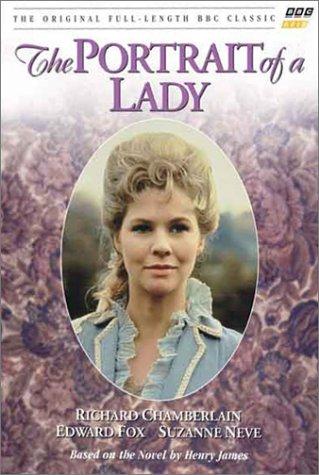
In 1968, BBC produced an excellent television adaptation of Henry James' critically acclaimed 1880 novel "The Portrait of a Lady". It aired as a two-part mini-series in January of that year. 

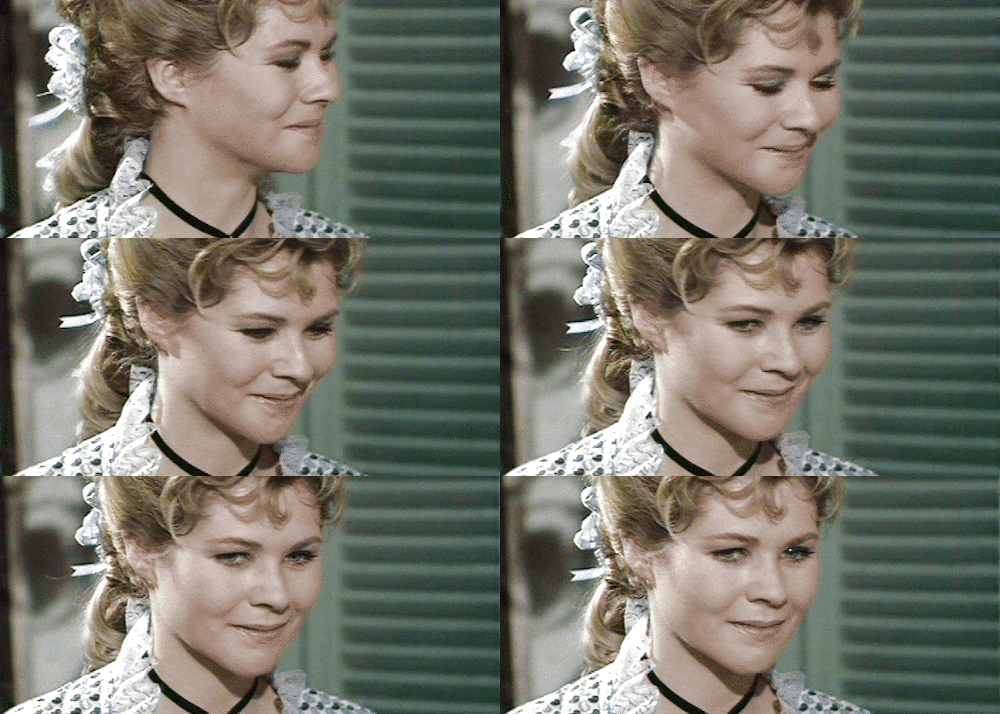
Suzanne Neve starred as Isabel Archer, the beautiful and spirited American woman who travels to England and becomes heir to a large fortune. This sudden windfall was meant to give her the opportunity to live her life as she pleases, to do as she likes without feeling an obligation to marry for "security".  Unfortunately, she wastes this opportunity when she decides to wed Gilbert Osmond ( James Maxwell ), an artist with extremely high-standards of living. She realizes her mistake too late and - having pride and a great deal of dignity - decides to simply bear it. 

If you are familiar with the work of Henry James then you will realize that The Portrait of a Lady plays James' usual tune of sorrow and disappointment. However, his extremely direct dialogue makes it a highly entertaining lament. 

This BBC production is not lavish in any way but the cast play their roles so well that even if they were standing on a bare stage their characters would come alive. Suzanne Neve is excellent as Isabel. Her character is so admirable that even her misguided decisions can be easily forgiven. Her cousin Ralph Touchett ( Richard Chamberlain ) certainly forgives her for letting him down. He put her on a pedestal the first moment he met her and delighted in watching her dare to dream and do all the things he could not due to his illness. Once she met Gilbert, those dreams vanished, and although Ralph warned her against marrying Gilbert, he still found it easy to love her for the eagle-like spirit she once displayed. 

Henry James often wrote stories that featured unusually spirited women ( for his time ). Ms. Archer is a woman who seems to have a glorious destiny ahead of her and yet no one is able to tell her what that destiny may be....and she certainly hasn't an inkling of what others expect of her, nor of what she expects of herself. When she meets Gilbert, she believes that becoming his benefactor may just be the greatest service she could render to the world but quickly discovers she was mistaken and finds herself in a disastrous marriage. 
Fortunately, this television adaptation focuses more on the events leading up to her marriage and does not spend much time dealing with the details of her marital sufferings. These events include Isabel meeting the handsome Ralph, being courted by the kindly Lord Warburton ( Edward Fox ), trying to dodge Casper Goodwood ( Ed Bishop ), and traveling the world with her Aunt Lydia ( Beatrix Lehmann ). 

Richard Chamberlain gives a stand-out performance as the sickly, but always happy, Ralph. Chamberlain had just completed his television series Dr. Kildare and this was quite a change from the kind of role that one would expect him to play. His performance garnered such critical acclaim that he remained in England and continued to do period films and other literary adaptations, eventually becoming known as the "King of the Miniseries". 

The Portrait of a Lady also features excellent performances by Rachel Gurney ( as Madame Merle ), Kathleen Byron ( as Countess Gemini ), Sarah Brackett, Alan Gifford and Sharon Gurney ( Rachel's real-life daughter playing her daughter on screen ). 

Like most of the BBC stage-to-screen teleplays, The Portrait of a Lady was split into episodes and aired over the course of several weeks. This play was aired in six parts ( 45 minutes each ). Despite the minimal set decor and simple direction, the episodes are never tiresome. In truth, there should have been one extra episode because some of the scenes skim over large spans of time too quickly. 

Sunday, April 19, 2020

The Price of Fear - BBC Radio Serial

In July 1973, BBC Radio aired "Remains to be Seen", the first episode of The Price of Fear, a newly written radio series that featured the voice of the master of macabre - Vincent Price. 

This late-night horror anthology serial featured 30-minute tales of spine-tingling drama penned by some of the most popular authors of the day. Each episode was introduced with a shrill violin theme followed by Price's euphonious voice welcoming listeners with "Hello, there..."

John Dyas, the producer of the series, was good friends with Vincent Price and his wife Coral Browne and came up with the idea of having Price host a radio series that would echo the classic horror programs of the 1930s and 1940s. "Merely to cast Vincent as narrator would have been all too easy," says Dyas. "My intention was to make the series far more personalized, to involve Vincent in the action, to make him a participant, even a helpless onlooker of the dreadful events we would concoct for him."*

Vincent Price loved the concept and embraced the opportunity to work in radio again. Beginning in 1936, Price had a long career in the medium and was featured in nearly 1000 episodes ranging from suspense programs like Escape and Suspense, to dramas such as Lux Radio Theatre, to guest appearances in comedies such as The Jack Benny Show. Price is probably known for being the voice of The Saint between 1947-1949. 

BBC initially aired five episodes of The Price of Fear nightly in the summer of 1973 and these proved to be so popular that an additional five stories were ordered for the fall season. The series continued in 1974 and 1975 and then was brought back in 1983, this time with Price acting solely as a narrator. 


The first-episode cast gathering during a break: Mervyn Johns, William Ingram, Diana Bishop, Robin Browne, Avril Angers, Vincent Price, Clive Swift, and Michael Gwynne. 

The series was delightfully eerie and Price injected his own tongue-in-cheek humor into the narrative which made them doubly enjoyable. The stories were also unique because of the writing talent involved. Science-fiction and detective novelists like Robert Arthur, Charles Birken, William Ingram, and Stanley Ellin all helped contribute highly imaginative stories of phantom encounters, bizarre love triangles, and spooky tales of revenge. 

Listeners with keen ears will recognize the voices of some of the actors, many of whom were popular in British television. 

Below are three episodes from The Price of Fear. To listen to all 22 episodes and to read more behind-the-scenes info about this series, check out The Sound of Vincent Price website. 

Lot 132 ( 10/6/73 )

Price sells a portrait of Nathaniel Blackwell that he purchased at an auction to a friend who then ax-murders his family! Before he can regain the painting it is sold again and Vincent worries that he may not be able to track it down before another murder occurs. 

The Waxwork ( 10/13/73 )

Price recalls the time he met writer Raymond Hewson, who died under mysterious circumstances while spending the night in a Baker Street waxworks museum.

Specialty of the House ( 4/13/74 )

Vincent Price has a fondness for Lamb Amirstan, the "specialty of the house" at Sbirros, an exclusive New York restaurant. Is it just a coincidence that every time this dish is served one of the restaurant's regular customers disappears? 

* From an article by Peter Fuller, published on The Sound of Vincent Price.


This post is part of The Vincent Price Blogathon being hosted by Realweegiemidget Reviews and Cinematic Catharsis. Click here to read more articles about Vincent Price - Enjoy! 

Thursday, October 3, 2019

The Spoils of Poynton ( 1970 )

Adele Gereth ( Pauline Jameson ) has amassed antique treasures that she and her late husband collected from around the world. She stores all of these in her Jacobian estate "Poynton". She hopes to pass Poynton and its furnishings to her son Owen ( Ian Ogilvy ) and the woman he chooses as a bride, but when she meets his choice, Mona ( Diane Fletcher ), she is sorely disappointed and refuses to part with the possessions. Mona, who had not the slightest interest in the antiquities, now feels rebuffed and is angry towards Owen for not taking her side and waging a legal war against his mother.
Witnessing this family squabble - and unwittingly taking part in it -  is Fleda Vetch ( Gemma Jones ), a minister's daughter whom Adele has taken under her wing. Adele wants to see Fleda become mistress of Poynton in place of Mona, and things begin to go her way until Fleda complicates matters when she lets pride rule over love. 

Henry James' novel "The Spoils of Poynton" first appeared in print in 1896 when it was published in serial format in The Atlantic Monthly under the title "The Old Things". Henry James' most famous works are three novels that have been frequently adapted to film and television: "The Turn of the Screw" ( filmed as The Innocents in 1963 ), "Washington Square" ( better known as The Heiress to film fans ), and "The Aspern Papers". He wrote many many fine stories in addition to these that were also adapted into films, including The Wings of the Dove, The Portrait of a Lady, The Golden Bowl, and The Bostonians. 
The Spoils of Poynton is an excellent adaptation featuring some top-notch performances from Ian Ogilvy ( The Saint ) and Gemma Jones ( The Duchess of Duke Street ). The BBC made a number of really rich television productions in the 1970s and this one is truly a gem. It was like capturing a fine performance of a great play on film that can be enjoyed over and over again. 
Pauline Jameson is excellent as Adele Gareth. Her character is haughty, terribly houseproud and materialistic and yet Pauline makes her endearing to watch. Young Fleda takes a liking to her instantly and they share a bond in their love of beautiful objects. Fleda would make an ideal match to Adele's son Gareth and Adele well knows this. She hopes that love will blossom between the two and, to her good fortune, it does. 

Fleda Vetch is such a darling character but one cannot help feel that she muddles up matters too much out of her sense of righteousness and decency. She loves Owen dearly and he loves her, too, yet she insists that he return to Mona to patch things up properly and therefore smashes to pieces her future, Owen's future, Adele's happiness and Poynton's legacy. 
The Spoils of Poynton can be difficult to watch because it is hard to see people wrestle over material objects with such passion. Foolish Mona has no interest in the household treasures whatsoever and yet she allows her relationship with Owen to be ruined in an argument over who will get possession of them. It's quite a fascinating story. And interwoven through it is this growing romance between Owen and Fleda that spurs the story onward. The materials themselves act only as a catalyst to all the events that happen to the four main characters. 

BBC made a number of film adaptations of Henry James novels and if this one interests you, then be sure to check out the equally engrossing mini-series The Golden Bowl ( 1972 ) starring Daniel Massey and Jill Townsend.

Friday, September 23, 2016

Children of the Stones ( 1977 )

In January 1977, the BBC aired the first episode of an engrossing seven-part children's miniseries entitled Children of the Stones. This program, destined to become one of the most highly regarded British television series ever made, gave its audience gigantic goose-pimples, and inspired decade-lasting nightmares in youngsters. Even its title sequence, a series of photographs featuring neolithic monuments shot at jarring angles with unsettling background choral vocalizations, scared away the faint-at-heart.
But those who turned off their television set would have missed a truly entertaining series, one that stands as a testament to the compelling power of a good script well-acted.

Its story centers around Milbury, a quaint English village, whose inhabitants are held in curious captivity by the psychic forces that appear to be generated by the huge circle of neolithic stones surrounding the village. One by one, newcomers to the "circle" fall victim to a state of hypnosis, awaking with an overwhelming sense of happiness.

Astrophysicist Professor Adam Brake ( Gareth Thomas ), and his young son Matthew ( Peter Denim ), a budding scientist himself, have come to secluded Milbury to study electromagnetivity on the surviving 53 stones of the ancient stone circle. Once inside its boundaries, Professor Brake and his son discover that the village is a center of power which proves much easier to enter than leave, and that they must use the strength of pure mathematics and modern science to battle the forces of age-old mysticism and rural legend in order to escape.

"I deny the existence of that which exists"

Margaret ( Veronica Strong ), curator of the local museum, is also a newcomer to the village along with her daughter Sandra ( Katherine Levy ). She warns the professor that he will soon feel very alone here as the residents are an odd bunch, seemingly divided into regular people and inhumanly docile "Happy Ones". Margaret and Sandra find allies in Adam and Matthew and decide to work together to discover the secret behind Milbury's mysterious power.

Similarly to Invasion of the Body Snatchers ( 1956 ) and the television series The Invaders ( 1967 ), it is difficult to distinguish those who have been transformed from those who have not except for the presence of a small sign. In Milbury, it is the peaceful spirit of happiness that is engulfing the villagers and those that once were outsiders greet one another with "Happy day!", boasting an extremely high intellect, the power to read minds, and the desire to live harmoniously. These are virtues in themselves, but our principal characters fear they will be sucked into a world where individuality and the freedom to inquire have been permanently dispelled.

This mysterious power of Milbury seems to be controlled by one of the village's most prominent citizens, Rafael Hendrick ( Ian Cuthbertson ), a former astronomer and the discoverer of an imploded star, a so-called "black hole", which lies at the heart of this complex mystery. Hendrick has since crossed the realm of egocentricity, becoming a high priest to an unknown celestial force with the task of "harvesting" the citizens of Milbury to dance around ancient ritual sites and become mindless worshipers to an unusual shaft of light. He instantly recognizes the questioning scientific minds of the Brakes as being a threat to the peaceful villager's existence. However, he is confident that his secret will remain undiscovered long enough for him to change them into "happy ones" as well.

Children of the Stones is an oddity among children programming because, while it was aimed towards an after-school audience, it featured some thought-provoking subject matter with themes of parallel time-warps and eternal return. The serial was made on location at Avebury, site of a 5,000 year old sun temple, and at Bristol Studios.

Peter Graham Scott, who had a long-history in television working on episodes of Danger Man and The Avengers during the 1960s, produced and directed Children of the Stones. Those who are familiar with the Quatermass series will recognize echoes of Nigel Kneale's work in Trevor Ray and Jeremy Burnham's script. These writers must be given credit for not oversimplifying their story for its juvenile audience. 

This serial was made at a time when ITV was turning out top-notch entertainment. Special effects and production design were next to nothing, but they are entirely unnecessary when a good script is created and excellent actors are on hand to perform it. Veronica Strong ( wife of co-author Jeremy Burnham ) and her daughter gave the story an extra romantic angle for the more mature teens to enjoy and it is their presence in the story that creates the emotional drama at the climax. Also in the cast is Freddie Jones, Ruth Dunning, and June Barry. 

American audiences did not experience the thrill of Children of the Stones until 1983, when the program aired on Nickelodeon's The Third Eye television series. It has since earned cult classic status as one of the most frightening children's series ever filmed...even though the story element, itself, is not very terrifying.

Children of the Stones is available on DVD, fully restored, through Network Distributing Limited. If you can't wait to watch the series it is available for viewing on Youtube via this link.  Want to check out more reviews of Network releases? Click here!

Tuesday, October 29, 2013

The Quatermass Report - Part One

A BIRD'S EYE VIEW

Before The Invaders and other television series such as The X-Files popularized investigations of alien invasions there was Professor Quatermass, a pioneer in the field of experimental science who often encountered bizarre extraterrestrial happenings in and around London.

Professor Bernard Quatermass, head of the British Experimental Rocket Group, was the brainchild of screenwriter Nigel Kneale. Kneale had won the prestigious Somerset Maugham Award in 1950 for his book, Tomato Cain and Other Stories and had joined the BBC staff of writers shortly after that. The professor's unusual surname was plucked from a London telephone book and his christian name was dubbed in honor of astronomer Bernard Lovell, who in the 1950s was making news experimenting with his telescope at Jodrell Bank observatory. 

Unlike scientists today who rely heavily on computer-generated data, Professor Quatermass did not need any technology to help him in his quest to explore the unknown. A few rubber gloves, a microscope and some crude radar equipment would suffice for him. Afterall, Britain was still recuperating from the destruction and chaos of WWII and it was make-do-and-mend men like Quatermass that were getting the nation firmly back on its feet again. Besides, Quatermass did not fight two-headed green-skinned aliens of mortal substance, but rather had to battle the most maddening of foes: the shifting, shapeless, unknown variety. Cardboard instruments would do quite well for that task.


Quatermass had an unlimited supply of confidence and resilience. He knew his duty lay in saving England from beastly intruders, wherever they came from, and when approached with bureaucratic setbacks he busted through the red tape like a juggernaut. 

Professor Quatermass was introduced to the public on July 18, 1953 in the first of six half-hour BBC episodes collectively entitled The Quatermass Experiment and it was this program that laid the foundation for what would become one of Britain's most memorable sci-fi franchises. 

THE QUATERMASS EXPERIMENT


When The Quatermass Experiment crackled onto teles all across Britain in the summer of 1953, the viewing public, two million Brits to be exact ( in a rough sort of way ), had not seen anything like it before. Television serials were a common programming feature but no show prior to this had been so engrossing and so plum absorbing to watch. At least, for adults. When majority of the sci-fi programming on television in the early 1950s was geared towards little tykes, Quatermass was meaty entertainment for adults. Nigel Kneale cheerfully admitted, "we didn't get the kids". The Quatermass Experiment reached out to the audience to ask the ultimate mind-engaging question, "What if?"....and it gave these viewers an entire week to ponder the answer before they found out what happened.

What exactly was the "if" question all about? An experimental B.E.R.G rocket, manned by three astronauts, crashes in the remote countryside of England after having been broken off orbit some time earlier. There is one surviving crew member. The other two men have been completing annihilated  Nothing remains but the empty suits they once wore....nothing except a gooey blob of sticky substance that is. Professor Quatermass attempts to discover what caused the rocket to break off of orbit and what creature - or alien presence - has entered the ship during flight and destroyed the two men. 

Andre Morrell was originally approached to portray the tired, desperate Professor Quatermass for this television serial but declined the part and so director Rudolph Cartier offered it to Reginald Tate, whom he had previously worked with for the teleplay It is Midnight, Dr. Schweitzer. Tate brought authenticity to the character which compelled audience members to tune in to their sets every Saturday night for the next five weeks to see how the brilliant prof could save mankind from the dreadful state it was in. Tate had had much experience on stage and this was fortuitous since most of television productions were broadcast live. 


Today, only one episode - the first - remains intact since video was a rather expensive film medium and many programs were taped over to cut costs. Although the sets were quite flaky, the lighting bad, and the "scientific procedures" alarmingly simple ( how does one test to see if a rocket's shell has cooled sufficiently? Pat it with your hands )...the story touched on the imagination of its viewers. In fact these primitive production techniques only helped to enhance the feeling of the impending chaos that Britain would find itself in had aliens attacked. 

In 1954, Hammer Film Productions, one of Britain's fledgling film studios, purchased the screen rights to the serial, shrewdly sensing a golden film property. Hammer Productions had yet to gain their reputation as one of the leading horror film factories, but their adaptation of The Quatermass Xperiment would be a key project in helping them reach that status. 


The Quatermass Xperiment, released in the US as The Creeping Unknown became Hammer's highest-grossing film to date and still remains one of the most memorable of the British sci-fi classics. Brian Donlevy starred as Professor Bernard Quatermass and was woefully miscast, portraying the professor more as a ruthless businessman than an inquisitive man of science. 

Most people remember this film because of Jack Warner's striking portrayal of the sole surviving member of the doomed experimental rocket ship. Without speaking one word, he conveyed the anguish he was feeling internally through the blank helpless look on his face. This character, with hardly any makeup, is one of Hammer's most frightening.

The British Board of Censors issued an X certificate for the film upon its release and in order to emphasize this the studio changed the title from The Quatermass Experiment to "X"periment. 


Hammer Productions were anxious to quickly create a sequel to follow-up on the wake of the success of The Quatermass Xperiment, and so they hired Jimmy Sangster to pen another oh-so-mysterioso science fiction tale. They entitled their film X-The Unknown but much to their dismay Kneale refused them the rights to use the name of Quatermass in that production, a decision made in part because of his disappointment with the studio casting Donlevy as Quatermass in the first adaptation. This film, however, did not feature Donlevy, but rather Dean Jagger in the role of the resolute professor. 


QUATERMASS II

The success of The Quatermass Experiment, and the launching of ITV network ( which ended BBC's broadcasting monopoly ) empowered the studio's programmers to develop more competitive programs, and the first thing they undertook was to commission Nigel Kneale to write a sequel to The Quatermass Experiment. 

Inspired by the news reports about the UK Ministry of Defense's secret research establishments and the fears they were creating to the reading public, Kneale devised a story around Quatermass doing top-secret research work for the Defense.


In this next series, originally aired in the autumn of 1955, Quatermass is asked to investigate unusual meteor showers. He discovers that aliens are conspiring to infiltrate mankind, targeting mainly the highest members of British government. 

Quatermass II has the distinction of being the earliest surviving complete British sci-fi television production. Like the original series, it was quite compelling and this time featured John Robinson as the renowned professor. The lead change came about for a very simple reason: Reginald Tate had passed away suddenly, at the age of 58, just one month prior to when filming was scheduled to begin. Robinson did an adequate job filling his shoes but had difficulty in learning some of the technical dialogue and his delivery of the lines has often been criticized. 

Hugh Griffith, the ebullient Welsh actor, portrayed Dr. Leo Pugh, Quatermass' chief assistant. Monica Grey ( as Quatermass' daughter Paula ), John Stone, and Roger Delgado ( Doctor Who ) also starred. 


Hammer Productions once again was anxious to receive the film rights for this second serial, and did so, this time with Kneale joining the staff of screenwriters to ensure that his characterization of Quatermass remained intact. 

Brian Donlevy returned in the role of Quatermass, inspite of Kneale's arguments to the contrary, and Quatermass II ( issued as Quatermass 2 in the states ), released in 1957, was once again a smashing success. The film featured John Longden, Sid James and Brian Forbes in supporting roles. Donlevy's portrayal of Quatermass mellowed a bit this time around but he still managed to succeed in looking frightfully out of place. 

James Bernard, who went to write the wonderfully eerie scores to so many Hammer films, concocted a beautiful medley of percussion and strings for Quatermass II. This was also production designer Bernard Robinson's first picture for Hammer, later he went on to create many of the beautiful sets for the studio's gothic films, such as The Phantom of the Opera and The Gorgon. 

To be continued....