Showing posts with label British. Show all posts

Monday, May 4, 2026

Check it Out! The Rootes Archive's Rally Footages

We're taking a brief break from the monthly British Pathé series to put the spotlight on another great archive to be found on Youtube: The Rootes Archive. Unlike the British Pathé series of newsreels, The Rootes Archive focus solely on newsreels and short films/documentaries about automobiles, notably car rallies. 

The Rootes Archive is a trust founded in 2002 in England that preserves original drawings, microfilms, and promotional material from the Rootes Group which included the Hillman, Humber, Sunbeam and Singer among the automobiles that they manufactured. They are a relatively recent addition to Youtube, having joined in October 2025, but they already have a strong following and a very nice selection of classic rally-themed videos to watch, a few of which we have shared below. Check it out! 

The Rootes Archive on Youtube. 

European Holiday by Sunbeam Rapier (20:33) - This is a very entertaining short travelogue about a couple who take a Sunbeam Rapier overseas on their short holiday in Europe. This was filmed during the week of Prince Ranier and Grace Kelly's royal wedding in Monaco and during the Mille Miglia in Italy, so there is some lovely footage of the cities decorated for both events. The Sunbeam Rapier is quite impressive, too! If they were sold today, I'd be heading to a dealer to get one. 

The Monte Carlo Rally of 1956 (27:01) - Another exciting short film, this time about the Monte Carlo Rally of 1956 where a number of Sunbeams took part in the race. The roads are grueling, especially in the snow, so again this proves what a great car the Sunbeam was. 

Destination Capetown (22:23) - Did I say Monte Carlo was grueling? Wait till you see this crazy man from 1952 and his trek in a Humber Super Snipe nearly 6,000 miles to Capetown, Africa. Today, we have 4x4, navigation equipment, cellphones and repair stations nearby, but this man trekked it alone - and he did it twice before! 

Tuesday, April 21, 2026

Rewind Review: The Admirable Crichton (1957)

Lewis Gilbert's version of The Admirable Crichton is a handsome adaptation of one of J.M Barrie's most popular plays which, although often referred to as a "satire", was more than likely Barrie's way of disguising his gentle assault on the British class system. It's also a rather unabashed look at the utter helplessness the uppercrust have when they are thrust in a commonplace situation or, in this case, an un-commonplace situation. 


Lord Loam (Cecil Parker) is the father of three young women, each about to be betrothed. Loam is a just man - one of those easily swayed lords of the English realm. He fancies that he desires equality as much as the average working class gent... and he does, to a point. In fact, it is his embarrassing "servant's tea party" that leads him to embark on a yachting voyage to the South Seas, along with his daughters, their suitors and the ship's staff. 

When a spot of inclement weather frightens the crew into bailing, the passengers are left floating in a lifeboat in the mid-Pacific to fend for themselves. Thankfully, their unflappable manservant Crichton (Kenneth More) and a servant girl (Diane Cilento) are dunked overboard with them.... and it is Crichton who turns out to be their savior with his resourcefulness when they are marooned on a deserted island. As the toffs accustom themselves to island life they find a new social order emerging. The tables are reversed as Crichton becomes the lord of the land and they the servants; but when a passing ship comes to their rescue, Crichton must decide if they are to remain islanders or each return to their previous status. 


The Admirable Crichton, released as Paradise Lagoon stateside, was the first color adaptation of Barrie's beloved 1902 play, but not the first filming. There was G.B Samuelson's 1918 silent version, Cecil B.DeMille's lengthy 1919 retelling (Male and Female starring Gloria Swanson) and Paramount's Yankeefied take on the story, We're Not Dressing, released in 1934 and starring Bing Crosby and Miriam Hopkins. 

Lewis Gilbert displays a masterful hand at putting the shipwreck satire to film and Wilkie Cooper obviously delighted in photographing the island paradise, which the play could only suggest. His sumptuous Technicolor photography gave reason enough for Brits to leave their flats to see the film. 

The rich blue waters of Bermuda subbed for the unnamed South Seas island and a couple of well-placed artificial palms added to its appeal. The island sets are quite clever and were a precursor to the familiar bamboo sets of Gilligan's Island during the 1960s. 


It is really Britain's everyman, Kenneth More, however, who steals the show and makes this his own film. More isn't ones ideal image of a heartthrob that three gals would be pining over, but on a deserted island he takes on the appeal of a hero and his good points do indeed shine through. 

The always lovely Sally Ann Howes portrays the beautiful Mary, eldest daughter of the Loams, who finds she has lost her heart to her butler. Sally Ann Howes always seems to be running along a beach, but this time, alas, she is not singing "Truly Scrumptious". Cecil Parker is marvelous as Lord Loam; Diane Cilento (Mrs. Sean Connery at the time) plays the cockney Eliza, not unlike Eliza Dolittle; and Martita Hunt, Jack Watling, Peter Graves, Gerald Harper, Mercy Haystead, and Miranda Connell round out the cast. 

The Admirable Crichton is a very entertaining and underrated little gem that has been cast adrift by the critics. It is hard to imagine watching this story unfold within the confines of a stage. It certainly was a tale meant to be filmed in Technicolor. 


Although Barrie attempted to write a comical study of the folly of civilization's class system, he left The Admirable Crichton without a moral. What comes through in this film however, is that the poor class have as much, if not more snobbery, than the rich. It is Mary who desires to remain on the island married to Crichton and living the blissful life of a pair of castaways but Crichton is stubbornly proud of his "position" and fails to conceive how the daughter of his employer can love him for himself when the setting is changed. In short, he behaves like an utter ass. 

Wednesday, April 15, 2026

Soldier and Me (1974)

In 1974, Granada Television aired one of the most gripping afternoon adventure serials ever aimed at younger audiences, the nine-part thriller Soldier and Me. This unusually intelligent series plunged its viewers into a world of Cold War spies, urban grit, and genuine danger, proving that teenage drama could be every bit as tense and sophisticated as adult thrillers.

Its story begins in a rough northern schoolyard, where Jim Woolcott (Gerry Sundquist), a tough but fundamentally decent Manchester schoolboy, comes to the aid of a bespectacled Czech refugee named Istvan Szolda (Richard Willis). Jim jokingly shortens his awkward surname into “Soldier,” and from that moment the two boys, so different in temperament and background, are drawn into an uneasy friendship that soon becomes a desperate alliance when Soldier overhears a plot between Czech agents to eliminate a dissident - "an old crippled man." 

Soldier has a dickens of a time persuading Jim that what he heard was true, but when they do investigate they become unwilling witnesses to the murder of this man. The police don't believe the boys, especially when they go to visit the old man and he is very much alive ("Did anyone shoot you tonight?" the police ask him). However, the Czech agents know they witnessed the killing and before long the boys are racing across northern England pursued by these men who are determined to silence them forever.

This is when Soldier and Me veers away from city drama and turns into a breathless cross-country pursuit through the Pennines and the Lake District, with the boys fleeing through forests, scrambling over hillsides, hiding in an abandoned quarry, and even leaping from a moving train. Unlike many children’s serials of the period, this one never softens the reality of the boys’ plight. Hunger, exhaustion, fear, and the chilling realization that adults cannot be trusted all become part of their journey.

"It's a technical map....a technical map!!"

In many ways, Soldier and Me plays out like a parallel English version of The Secret of Boyne Castle (1969). In that serial, which aired on Walt Disney's The Wonderful World of Color, Kurt Russell and Patrick Dawson were the two boys being pursued by spies, only it was set in Ireland instead of England. There were 4-5 agents in that story as well who, like in Soldier and Me, appear to cover every road in all directions. In spite of the constant danger the lads were in, the chase seemed thrilling - almost fun - in the Disney version, even while the action was similar (being chased on a motorbike, jumping off a train, running across fields, being kidnapped, etc). Not so in this series. The boys are having anything but fun. It also doesn't help that Soldier gets on Jim's nerves so much that throughout the chase he is wishing the "twit" would get lost. 

The relationship between these two young leads is what makes this series especially memorable. Gerry Sundquist gives Jim a dry, deadpan resilience that perfectly suits the hard-edged realism of the production, while Richard Willis makes Soldier both impossibly "twit"ish and yet quietly courageous. At first, Jim regards the younger refugee boy as an annoyance who simply refuses to go away, but as the pursuit intensifies, their friendship deepens into one forged by fear, hunger, and survival. The gradual shift from irritation to mutual trust gives the serial its emotional ballast and keeps it from becoming merely a chase story. Jim's narration throughout the series also provides the humor the series required, as he makes his thoughts known to the audience. 

Like The Owl Service and The Intruder, two other great Brit series of the 1970s, Soldier and Me carries an almost documentary sense of realism, no doubt helped by its location filming and its no-nonsense direction. The script was based on the book "Run for Your Life" written by Lionel Davidson ("The Night of Wenceslas"), an adventure writer who took up the pseudonym of David Line for this young adult novel. After Soldier and Me's popularity on television, Line penned a similar spy-adventure thriller "Mike and Me" in 1974. 

Soldier and Me can be viewed on Youtube here

Tuesday, April 7, 2026

From the Archives: Father Brown (1954)


Alec Guinness, as Father Brown, is pictured with the beautiful 16th-century Benvenuto Cellini silver chess set that Flambeau attempts to steal in this rare still photo from The Detective (aka Father Brown), released in 1954. You can read our full review of this amusing mystery here

From the Archives is our latest series of posts where we share photos from the Silverbanks Pictures collection. Some of these may have been sold in the past, and others may still be available for purchase at our eBay store: http://stores.ebay.com/Silverbanks-Pictures 

Sunday, March 15, 2026

Rewind Review: Alive and Kicking (1958)

Every once in a while, you might come across a wonderful film and wonder why it is not more well-known than it is. At least, I do that.... and, unfortunately, it is quite rare to find hidden gems; but Alive and Kicking is one such movie. I saw it for the first time a few weeks ago and loved it instantly. Granted, its plot would not appeal to a large audience so I can understand why it is as obscure as it is. 

Sybil Thorndike, Estelle Winwood, and Kathleen Harrison star as three elderly women who escape from a nursing home when they learn that they will be relocated to other nursing homes and separated. They take what little belongings they have and hike out on foot. After an escapade at sea, they arrive on a small island off the coast of Ireland and discover an abandoned stone cottage. However, the cottage isn't empty for long. Shortly after they claim it, a gentleman (Stanley Holloway) arrives and tells them that he just purchased the cottage and plans to move in. Darn the luck! 

They hope to discuss renting one of the rooms of the cottage from him, but lo! he disappears from the cliffside where they left him. All they can find is his hat floating on the ocean waves below. Since no one in the village met the man yet, the three crafty dames decide to pretend that he is living in the house and that they are his nieces (!). Much of the film after this point deals with how these women settle into the village and make a new life for themselves in Ireland. 

Alive and Kicking was probably banned from being shown in nursing homes because of its uplifting message of independence for the elderly. These three women have only a few pounds in their purse but somehow manage to procure a house, furniture, and plenty of food (thanks to one of them being a good shot). Most impressive however, is the positive effect they have on the villagers, even going so far as to start a new industry for the sheep farmers and their wives. 

Among these villagers are some familiar faces including Marjorie Rhodes (who was excellent as the mother in The Family Way), a young Richard Harris, Paul Farrell, Liam Redmond and Colin Gordon as a bird watcher who decides to perch on their property.

The comedy has a definite "Irish air" to it...but shush, don't tell the Irish...the movie was actually filmed on Easdale, one of the Slate Islands of Scotland. Life on a small island in the 1950s centered around agriculture and the village people and, with a village of that size, the arrival of three strange women would not go unnoticed for long so our heroines must be given credit for coming up with so many delicate lies to fool the villagers as long as they did. 

Sybil Thorndike is the ringleader of the group and she boasts the most brains as well. It is her idea to start a sweater-making industry to earn money for themselves and for the village. Estelle Winwood is clever too, while Kathleen Harrison plays her usual kindly cockney character. All of the principal players went on to live long lives after this film with both Winwood and Harrison "alive and kicking" past the age of 100. 

Director Cyril Frankel does a wonderful job of keeping the movie entertaining from start to finish and composer Philip Green penned a delightful score with an especially lovely folksy tune "One I Truly Love" performed by Olive McFarland. 

Thursday, October 30, 2025

G-G-Ghost!! 1960s British Pathe Ghost Clips

This month's featured British Pathe clip is actually three newsreels in one and all suitably spooky for Halloween. Titled "G-G-Ghost!", British Pathe assembled these spirited shorts dating from the 1950s and 1960s into one entertaining video. The first is from 1953's "Ghost Hunters" and features the Sussex ghost hunters examining an old country house and why three caretakers were frightened away it. If this sparks your interest, check out BBC's 1975 documentary "Ghost Hunters" to learn more about these Sussex fellows. 

The second newsreel is "Dig that Ghost" and features the haunted Chequers Inn in Amersham. This 18th-century inn once housed three men who were burned at the stake the following day for being Protestant. Finally, the last is 1957's "Pathe Probes that Ghost" where the ghost of half a man named George appears to the owner of the Pilgrim's Cottage in Wilbarston. He was supposedly disturbed by the digging up of tombstones in a nearby graveyard and is looking for a new resting place. 

Ready to watch "G-G-Ghost!"? Simply click on this link.  

Other similarly themed British Pathe shorts: 

English Witch Cave (1962) - 0:47 sec 

The Ghost Town of Lucknow (1967) - 1:08 sec 

Saturday, May 24, 2025

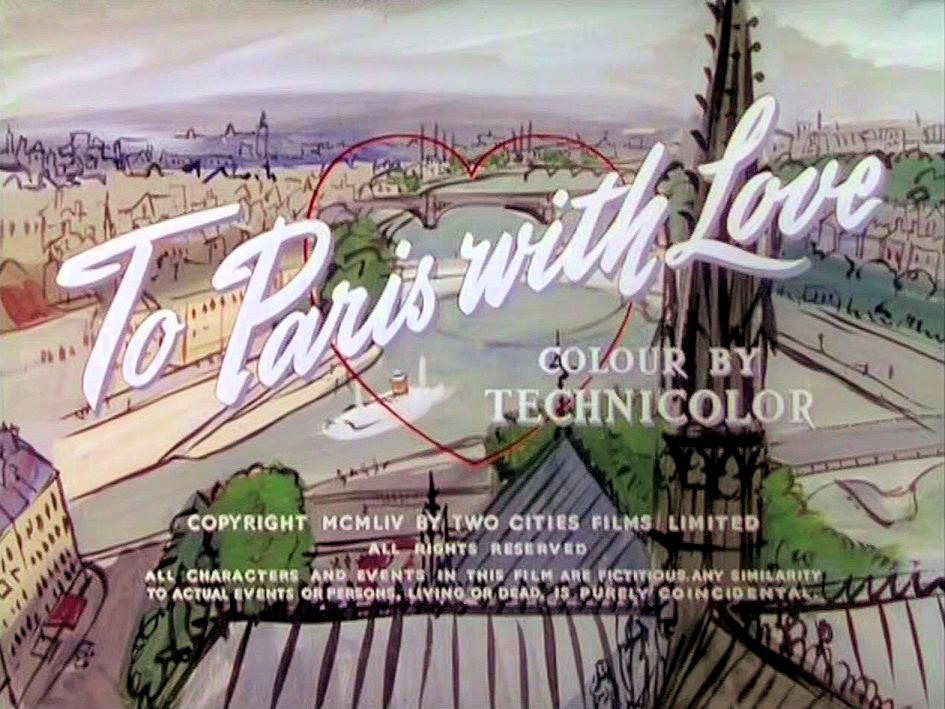
To Paris with Love (1955)

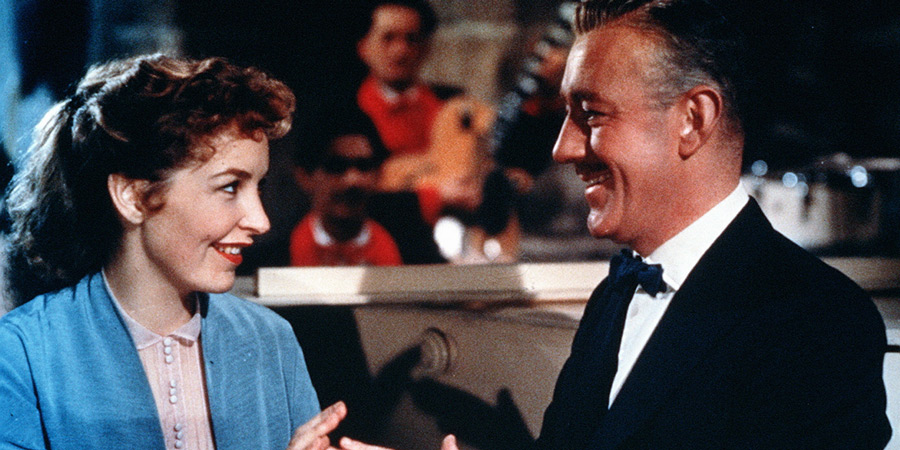
Alec Guinness is usually regarded as a serious actor due to his roles in The Bridge on the River Kwai, Tunes of Glory and Star Wars, but he was primarily a star of light comedies throughout the 1940s and 1950s and he made a number of entertaining films... one of which was To Paris with Love, released in 1955. 

In this film, Guinness plays Sir Edgar, a middle-aged Scotsman who is on holiday in Paris with his grown son John (Vernon Gray). He is secretly hoping that his son would find romance in Paris with a young pretty Parisian, while John is hoping his father would find romance with a rich middle-aged woman. They meet Lizette (Odile Versois), a salesgirl at a fashionable boutique, the first day they arrive and Sir Edgar thinks she is ideal for John so he arranges a meeting with her for lunch the next day. Meanwhile, John meets Sylvia (Elina Labourdette), the owner of the same boutique, and thinks that she is ideal for his father so he, too, arranges a meeting with her for lunch the next day. Before they know it, John is dating Sylvia who is twenty years his senior and Sir Edgar is dating Lizette, who is twenty years younger than he! Both found romance in Paris in an unexpected way and how the twosome work out their mixed-up affairs makes up the remainder of this short and delightful Parisian holiday. 

To Paris with Love is another one of those classic British comedies that in recent decades has somehow been overlooked stateside, yet at the time of its release it was quite popular in the U.S. The film was shot in Eastmancolor on location in Paris and the city looked lovely. The characters kept referring to "springtime in Paris" although it was clearly shot in the autumn with the color changes of the trees evident. 

Alec Guinness didn't show much display of emotion in this film yet his feelings for young Lizette seemed genuine and one can easily see how she can find him attractive. He was especially good in his little bits of humor, such as when he got his badminton birdie up in a tree and thought he was agile enough to climb up and get it. That he did...but getting down was a different story! Vernon Gray was the likeable young chap in Now and Forever and he played a similar character here, although this time he found an older woman more attractive than Janette Scott. 

Odile Versois made several good comedies in the early 1950s and this wasn't her first British production. The following year she starred in the entertaining crime drama Checkpoint (1956) with Stanley Baker. In To Paris with Love there is a secondary romance between her and a young postman who is enamored with her and a nice side comedy about her father being a taxi-driver. Also in the cast is Austin Trevor, Jacques Francois, and Claude Romain. 

To Paris with Love is currently available on DVD and it is worth checking out. It is one of those amusing light-hearted comedies that has such a relaxing pace and beautiful Paris setting that you'll end up rewatching it every few years. 

Thursday, October 31, 2024

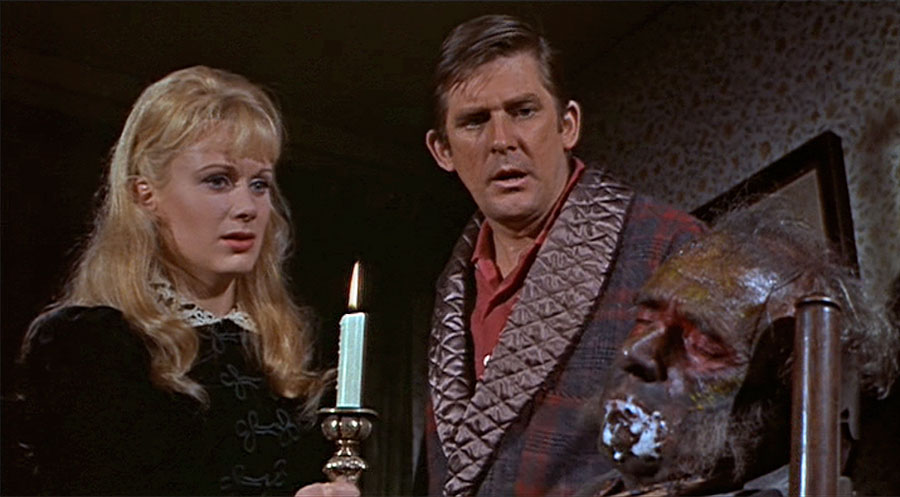
The Reptile (1966)

Hammer Studios was the king of horror film studios in the 1960s and they offered something deliciously frightful for all appetites. 

If blood-sucking vampires, ferocious werewolves, or linen-wrapped dead people aren't your cup of tea, then The Reptile, a scrumptious bit of gothic horror from the year 1966, may wet your lips. 

In this tale, Captain Harry Spalding (Ray Barrett) and his wife Valerie (Jennifer Daniel) come to England from India due to the sudden death of Harry's brother Charles.  They want to live in the cottage that Charles left behind, but the village folk warn them against it. In fact, most of the villagers are downright hostile to the couple, except for local pub owner Tom Bailey (Michael Ripper). 

Neighboring the cottage is the mansion of Dr. Franklin (Noel Willman) and his daughter Anna (Jacqueline Pierce), a young woman who is frightened of her father. Shortly after the Spaldings' arrival, a villager dies mysteriously with bite marks on the back of his neck and foam pouring from his mouth. Harry believes his brother may have died the same way and thinks Dr. Franklin is hiding the truth about his death. 

The Reptile is one of Hammer Studio's more tamer productions and, like The Gorgon (1964), most of the film builds up to the creature-revealing climax, which in this case is a - surprise! - reptile. This climax would have been much more exciting if the title of the film, and the poster, did not give away the ending. 

In spite of its tameness, The Reptile is engrossing and well worth a watch, if only to soak in all that wonderful gothic atmosphere that Hammer productions were so good at creating. 

The cast were all capable actors (both Noel Willman and Jennifer Daniel may look familiar from Kiss of the Vampire), the music is fittingly eerie, and the color palette is marvelous. The cottage that the Spaldings stay in, as well as Dr. Franklyn's manor across the lawn, reminded me of Cherry Cottage and Cavor's home in First Men in the Moon but these were different filming locations. The Reptile was filmed in and around Windsor in Berkshire next door to Bray Studios, where the picture was made. 

The Reptile is currently available on DVD as well as on Blu-Ray. 

Sunday, March 31, 2024

Alive and Kicking (1958)

Every once in a while, you might come across a wonderful film and wonder why it is not more well-known than it is. At least, I do that.... and, unfortunately, it is quite rare to find hidden gems; but Alive and Kicking is one such movie. I saw it for the first time a few weeks ago and loved it instantly. Granted, its plot would not appeal to a large audience so I can understand why it is as obscure as it is. 

Sybil Thorndike, Estelle Winwood, and Kathleen Harrison star as three elderly women who escape from a nursing home when they learn that they will be relocated to other nursing homes and separated. They take what little belongings they have and hike out on foot. After an escapade at sea, they arrive on a small island off the coast of Ireland and discover an abandoned stone cottage. However, the cottage isn't empty for long. Shortly after they claim it, a gentleman (Stanley Holloway) arrives and tells them that he just purchased the cottage and plans to move in. Darn the luck! 

They hope to discuss renting one of the rooms of the cottage from him, but lo! he disappears from the cliffside where they left him. All they can find is his hat floating on the ocean waves below. Since no one in the village met the man yet, the three crafty dames decide to pretend that he is living in the house and that they are his nieces (!). Much of the film after this point deals with how these women settle into the village and make a new life for themselves in Ireland. 

Alive and Kicking was probably banned from being shown in nursing homes because of its uplifting message of independence for the elderly. These three women have only a few pounds in their purse but somehow manage to procure a house, furniture, and plenty of food (thanks to one of them being a good shot). Most impressive however, is the positive effect they have on the villagers, even going so far as to start a new industry for the sheep farmers and their wives. 

Among these villagers are some familiar faces including Marjorie Rhodes (who was excellent as the mother in The Family Way), a young Richard Harris, Paul Farrell, Liam Redmond and Colin Gordon as a bird watcher who decides to perch on their property.

The comedy has a definite "Irish air" to it...but shush, don't tell the Irish...the movie was actually filmed on Easdale, one of the Slate Islands of Scotland. Life on a small island in the 1950s centered around agriculture and the village people and, with a village of that size, the arrival of three strange women would not go unnoticed for long so our heroines must be given credit for coming up with so many delicate lies to fool the villagers as long as they did. 

Sybil Thorndike is the ringleader of the group and she boasts the most brains as well. It is her idea to start a sweater-making industry to earn money for themselves and for the village. Estelle Winwood is clever too, while Kathleen Harrison plays her usual kindly cockney character. All of the principal players went on to live long lives after this film with both Winwood and Harrison "alive and kicking" past the age of 100. 

Director Cyril Frankel does a wonderful job of keeping the movie entertaining from start to finish and composer Philip Green penned a delightful score with an especially lovely folksy tune "One I Truly Love" performed by Olive McFarland. 

Tuesday, February 6, 2024

Night Ferry (1976) - A CFF Film

An ancient Egyptian mummy is stolen from The British Museum and young Jeff (Graham Fletcher) witnesses the criminals carrying the mummy case to their hiding place at the railyards. He wants to go to the police but is afraid to since it would mean confessing that he trespassed on railway property while searching for his model plane. This dangerous act caused a railway worker to be injured. Instead, he recruits his two friends, Nick (Engin Eshref) and Carol (Jayne Tottman) to keep an eye on the master criminal known as Pyramid (Bernard Cribbins) and see if they can track down the mummy themselves.

Night Ferry was one of many Children's Film Foundations distributions released in the United Kingdom during the 1970s. This one is a cut above the rest since the criminals are not the usual bungling sort, although it still is very much juvenile fare. The location scenes around London's Victoria and Clapham stations are nice and the film clips along at a good pace. It actually builds up a fair amount of tension towards the climax when the criminals discover that the children are on their trail. 

Night Ferry was directed by David Eady and written by Michael Barnes who also teamed up to produce the film. This is one of several films that they made together for the Children's Film Foundation. The child actors do an adequate job, although young Jeff was a bit wooden. Bernard Cribbins (The Railway Children, Jackanory) stars as the criminal Pyramid, a master-of-disguise who arranges crimes to order. In this case, a private collector in France wants the mummy for his own collection so they are delivering him via the night ferry across the channel. 

Also in the cast is Aubrey Morris, Jeremy Bulloch and Carole Rousseau...whom some may recognize as the host of the BBC French instructional video course A Vous La France (1984).

Since Night Ferry is only one-hour long, it was later aired on television as one episode of the children's anthology series called Once Upon a Classic, hosted by Bill Bixby. It is currently available on DVD as one of three films on the BFI's Children's Film Foundation Collection "London Tales".

Tuesday, October 31, 2023

The Hour of 13 (1952)

Metro-Goldwyn-Mayer Studios always had a flair for making period films, especially those with a Victorian setting.....and they made quite a number of them, too. Being quite a savvy production company, they also discovered that a good script is worth repeating. Hence, many of the Victorian-era thrillers that the studio made in the 1930s and 1940s were later remade. One such film was The Mystery of Mr. X (1935) which they remade in 1952 under the title The Hour of 13

Robert Montgomery starred in the original film as dapper gentleman thief Nicholas Revel. A killer known as "Mr. X" is on the loose in London targeting police constables. By a strange coincidence, his latest killing occurred the same night and in the same location as one of Revel's latest robberies. In order to clear his name, Revel decides to play an amateur detective and track down the fiend himself, all the while dodging the suspicious eye of Police Commissioner Sir Herbert Frensham (Henry Stephenson). 

The Mystery of Mr. X was based on the novel "X vs Rex", written by Philip MacDonald (The List of Adrian Messenger). Howard Emmett Rogers worked it into a quick and thrilling script and MGM had another winning Robert Montgomery picture in the theaters. 

What works once can work again, hence, seventeen years later, producer Hayes Goetz blew the dust off the script and hired screenwriter Leon Gordon to rework it into a vehicle for MGM's young star, Peter Lawford. What resulted was a charming gaslit London mystery that holds up quite well for its age. 

This time, Nicholas Revel is tracking down the killer known as The Terror. The police - primarily Inspector Connor (Roland Culver), believe that if they find the thief who stole Lady Elmbridge's emerald, they find the Terror. Since Revel stole the emerald, he wants the real Terror caught before they fence him in for a series of murders he did not commit. 

The Hour of 13 was made at the MGM-British Studios in Borehamwood, England and, while there are not many location scenes, the film sets are excellent and perfectly evoke that Jack-the-Ripper setting of old London. 

Peter Lawford is not my idea of a gentleman thief (Stewart Granger would have been excellent in this part) but he is surprisingly good. In fact, it would have been nice to see him in a series of Nicholas Revel mysteries. Playing his leading lady is English actress Dawn Addams who had a long career with MGM and an even longer career working in television. Also in the cast is Michael Hordern as Sir Henry Frensham, Derek Bond, Leslie Dwyer, and Colin Gordon. 

The Hour of 13 is available on DVD via Warner Archives.

Thursday, October 26, 2023

Hammer Horror - The Golden Era (1956-1967)

Each year along with the approach of Halloween comes the bombardment of Hammer Horror films on television. Blood, gore, and buxom babes are splattered onscreen in brilliant Eastmancolor, while sanguinary counts and grimly ghoulish characters lurk stealthily in dark corners of seedy districts intent on carrying out nefarious deeds on their unsuspecting prey.

And we…sweet, kind, gentle, innocent viewers…sit by with pizza in hand, eyes-a-goggled and heart-a-pounding as we stare transfixed at our screens while these deliciously diabolical scenes are being carried out.

Prior to the British Hammer film, there really was no such thing as a “gory” film. There were lords of tiny European hamlets suffering from lycanthropy, mad scientists making pastiches out of gently worn body parts, secluded islands inhabited by horrific animal creatures, misguided poor souls continually making themselves disappear, and of course the all-too-common haunted house filled with frustrated spirits (and the occasional runaway gorilla)……but alas, no gore. Hammer Studios had found a niche and filled it capitally.

Just what would Halloween be without Christopher Lee and Peter Cushing entertaining us?  

Hammer Productions was formed in 1934 by William Hinds, a comedian and businessman who once went by the name of Will Hammer on stage. His films were low-budget and simply made but, even with his own distribution company, he wasn’t able to find a market for them and filed for bankruptcy in 1937.

A year later, his son, along with producer James Carreras, resurrected the production company and began work on a series of BBC radio adaptions such as Dick Barton Special Agent, and The Adventures of PC 49. Many films were made during the 1940s and early 50s but nothing of noteworthy attention, until, that is…1955. This was the year Hammer Studios released The Quatermass Xperiment, a wonderfully chilling adaption of the popular BBC television series of the same name. 

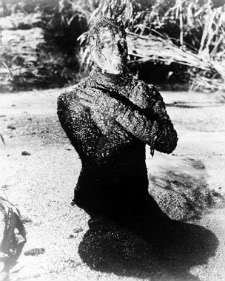
Quatermass, also known as The Creeping Unknown, was about a missile sent into space with three astronauts on board. Only one of the men return to Earth and with him, brings an alien infestation which turns him into an ‘orrible blood-sucking monster. Professor Bernard Quatermass (played by American actor Brian Donlevy) becomes the first of many, many scholarly extraterrestrial/mythical/vampyr hunters to be featured in Hammer film….Van Helsing being the most famous of these.

The film became the first to ever receive an X rating certificate from the British Film Board and was so successful that similarly themed pictures were quickly put into production and released.

X- The Unknown (1956) 

Radiation tests done by the British Army in a remote Scottish village unearth an unknown radioactive “blob” that leaves only the bodies of its burnt victims behind. Dr. Royston sets out to stop the beast before it grows bigger and bigger and feeds off of them all! Dean Jagger, Leo McKern, Edward Chapman, Anthony Newley.

Quatermass II: Enemy from Space (1957) 

Professor Quatermass explores a deadly gas that is originating from a hidden factory in rural England. Unusual creatures just may be planning something deadly for planet Earth and, once again, Quatermass is the man to stop them. Brian Donlevy, John Longden, Sidney James, Brian Forbes.

But it was when The Curse of Frankenstein came out in 1957 that the studio earned its infamous title as a House of Horror. This was, officially, the start of Hammer Horror.

The Curse of Frankenstein (1957) Using the hands of a pianist and the brains of a renowned scholar, Doctor Frankenstein sticks together a "human" from leftover bodies and finds that it didn’t quite turn out to be the success he had planned. Peter Cushing, Christopher Lee, Hazel Court.

Peter Cushing and Christopher Lee, heretofore relatively unknown company players, quickly earned worldwide recognition for their roles as Dr. Frankenstein and his Monster and for the next ten years basked in the sunshine – or rather moonlight – of success.

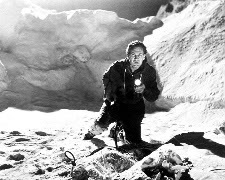
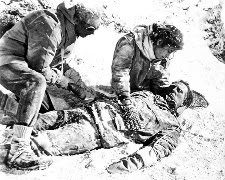
The Abominable Snowman (1958) High in the snow-covered Himalayan mountains, an English botanist and a burly American scientist lead an expedition to discover the legendary Yeti creature. Peter Cushing, Forrest Tucker, Maureen Connell.

Universal Studios was the American distributor of the Hammer horror series and since they earned such great returns off of them, they let them have access to their stock house of scripts. Numerous retellings of their horror classics were plotted out, and the studio focused all its efforts and funds on the making of these colorful adaptions.

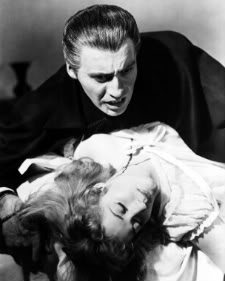
The Horror of Dracula (1958) After a man attacks Dracula in his castle (yes, bold man he be!), Dracula travels to a nearby village to seek revenge on his family and his fiancée. They turn to Professor Van Helsing, a fellow student of vampires, for help in destroying him. Peter Cushing, Christopher Lee, Michael Gough, Melissa Stribling.

The Hound of the Baskervilles (1959) Sir Arthur Conan Doyle’s famous Sherlock Holmes novel gets a colorful retelling here, as the ace detective and his doctor friend come to the aid of a nobleman who is being threatened by supernatural hounds on the moors of his estate. Peter Cushing, Andre Morell, Christopher Lee, Marla Landi

The Hound of the Baskervilles was one of the less successful films in the series though Peter Cushing made an admirable Holmes, as did Andre Morell as Dr. Watson. During 1951 – 1967, Hammer Studios' home was in Bray, near Windsor, Buckinghamshire. A house (Down Place), a large backlot, and several smaller studios were on this property. The house was included in many of the films (it added a lot to that “Hammer atmosphere”) and the backlot was turned into a European village which was used again and again in different films. First in The Brides of Dracula, then as a Spanish village in The Curse of the Werewolf, as London in The Phantom of the Opera, and then as a Russian palace in Rasputin, the Mad Monk.

From 1960 on, Hammer consigned themselves to raising their monsters from their graves in sequels or rehashings of their previous successes…with the exception of The Phantom of the Opera, Curse of the Werewolf (another misfire), and The Gorgon…which were new characters to the series.

The Brides of Dracula (1960) A schoolteacher unknowingly sets free a young man ( of the undead variety ) in Transylvania, and worse yet, finds that he’s after her students at her school for girls. Peter Cushing, Martita Hunt, Yvonne Monlaur, David Peel

The Curse of the Werewolf (1961) A young Spanish boy on a hunting trip gets bitten by a wolf, and years later moonlights as a first-class howler in this retelling of the classic Universal The Wolf Man. Clifford Evans, Oliver Reed, Yvonne Romain

The Phantom of the Opera (1962) In Victorian London, a poor musical professor finds that his life work has been stolen by a corrupt lord and, with his fire-burnt disfigured face, he hides out in an Opera house as a “phantom” waiting for his moment of revenge. Herbert Lom, Edward de Souza, Michael Gough, Heather Sears

Kiss of the Vampire (1963) A young honeymooning couple gets stranded in a southern European village and are “helped” by an aristocratic family…who have a taste for newlywed blood. Clifford Evans, Edward de Souza.

Evil of Frankenstein (1964) – Penniless Baron Frankenstein, returns to his family castle to renew his work on his beloved Monster, only to find that an evil aid, Zoltan has been using his monster for his dirty work. Peter Cushing, Peter Woodthorpe, Duncan LaMont

The Curse of the Mummy’s Tomb (1964) An Egyptian mummy is delivered to London, where it begins a rampage while under the control of a man with murderous intentions. Terence Morgan, Ronald Howard, Fred Clark

The Gorgon (1964)  In pre-WWII Germany, a small village is being plagued by a snake-haired gorgon who turns those who bear their eyes upon her to stone…only during full moons though. Professor Meister and Dr.Namaroff come to the aid of the townsfolk. Peter Cushing, Christopher Lee, Richard Pasco, Michael Goodliffe, Barbara Shelley

All of these Hammer Horror pictures really weren’t that scary (especially compared to today’s standards) but, in 1965, gore, as in bottles of oozy gooey goopy red ketchup, entered the picture. EEeeek!!

This was the year that the content of the Hammer films became more….ahem, mature…with the eyes of our blood-sucking fiendish friends glaring more fiercely, the bodices of their voluptuous prey creeping lower and lower, and pools of blood squirting to and fro, making Van Helsing’s appearance – along with his cross of Christ – all the more anticipated so we can see our anemic villains writhe in terror at their impending doom.

Dracula, Prince of Darkness (1966) Four unwary tourists take refuge in Count Dracula’s castle for the night (!). Within a few hours one of them is drained of his blood and his wife ( Shelley ) gets transformed into a vampire so the gruesome twosome can pursue the remaining two “guests”. Some hospitality. Christopher Lee, Barbara Shelley, Charles Tingwell

Island of Terror (1966) A group of doctors head to a remote island off the coast of Ireland to investigate a series of medical mysteries and discover a deadly lifeform unleashed. Peter Cushing, Edward Judd, Carole Gray, Keith Bell. 

Rasputin, The Mad Monk (1966) The story of the mad Russian “monk” Rasputin (aid to the Czars) is exploited in all its gory glory. Christopher Lee, Richard Pasco, Barbara Shelley, Suzan Farmer

Quatermass and the Pit (1967) While digging a subway in London, a construction crew discovers a skeleton and what seems to be a German missile….but in truth it is an alien spaceship. James Donald, Andrew Keir, Barbara Shelley

The Reptile (1966) While investigating his brother's death, a man and his wife move into his former cottage in a small village in England and become embroiled in a reptilian curse. Ray Barrett, Noel William, John Laurie, Jennifer Daniel. 

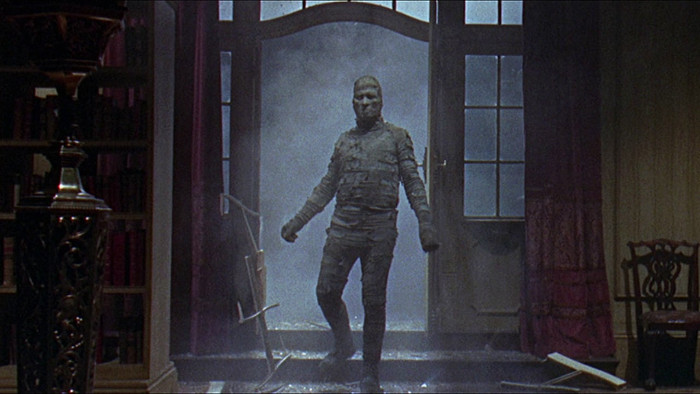
The Mummy's Shroud (1967) An archeological team discovers the remains of a mummy while on a dig in Egypt in 1920. Returning home to England with their find, the members are killed one by one. Andre Morrell, David Buck, Elizabeth Sellars, Maggie Kimberley.


There were also a number of "Scream Queens" that became associated with Hammer Horror (Hazel Court, Barbara Steele, and, later, Ingrid Pitt) but of them all, no one can top Barbara Shelley, that lovely English lady who somehow got caught in the vortex known as “the horror genre”. In total, she made seven pictures with the studio, sometimes as the victim, but not infrequently as a vampire herself.

Many believe that the golden age of Hammer Horror ended with Dracula: Prince of Darkness and that does indeed have some credibility to it, for the films made after this tend to be repetitious and rather malodorous.

All in all though, Hammer Studios had a long line of successes and it is during this bewitching month that we fans appreciate them the most. We get to sit back, have some popcorn, and enjoy Peter Cushing and those legendary ghouls give us goosebumps….what more fun could you have than that? 

Saturday, May 6, 2023

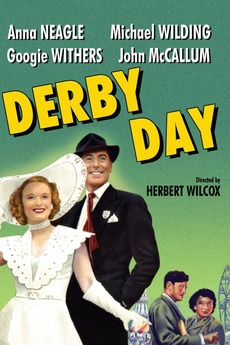
Derby Day ( 1952 )

May is known in the sporting world as Derby season and taking place this evening is one of the most popular derby races in America, the 149th Kentucky Derby. If you are like most classic film fans, you will probably be enjoying a good horse-racing film tonight to tie in with the Derby. It may be The Story of Seabiscuit, Riding High or National Velvet ( check out our post Horse Racing Films of the 1940s and 1950s for other titles )....but if you want a treat that is slightly different than your usual Hollywood fare, look no further, for we have a title for you: Derby Day ( 1952 ).

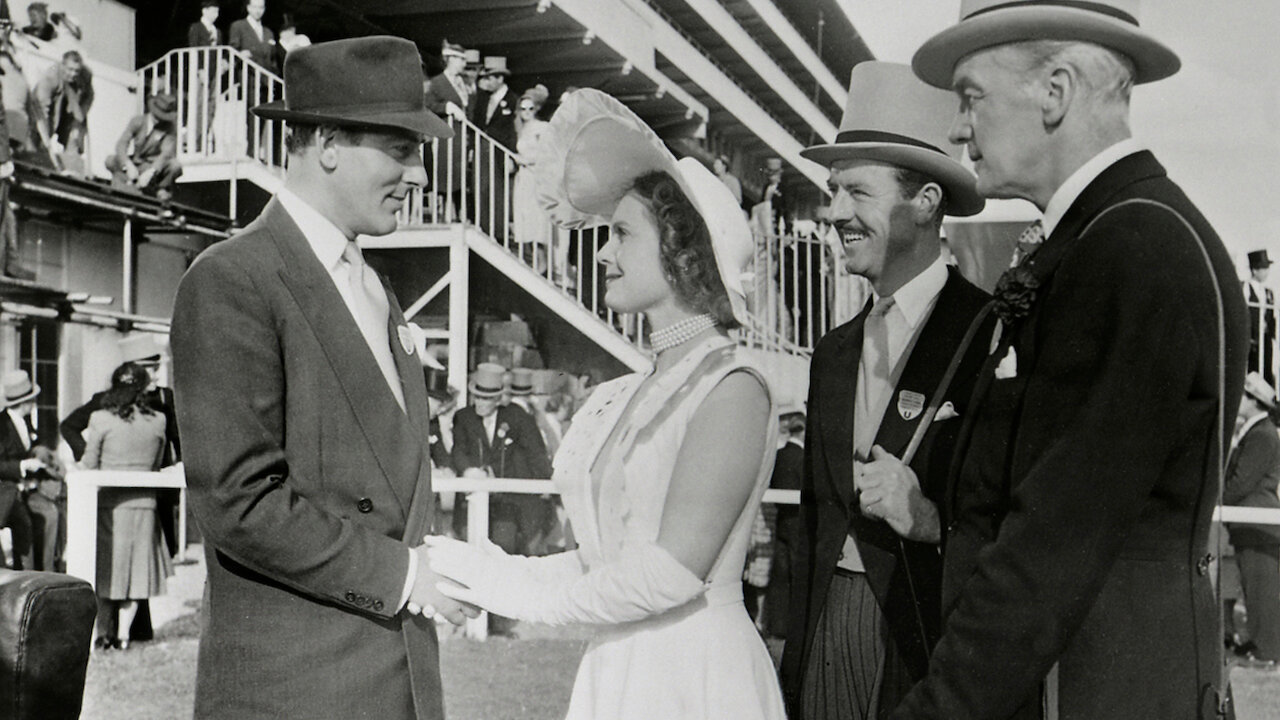
Derby Day is a marvelous British ensemble drama starring Anna Neagle and Michael Wilding and a host of popular British actors from the era. The story focuses on four different groups of people, all of whom are attending the famous Derby Day race at Epson Downs. Unlike some ensemble pieces that keep all of the stories separate, Derby Day has the different groups interact with one another at the race, which is rather nice to see. 

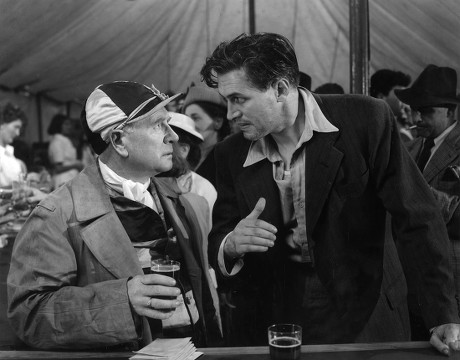
First, there is Google Withers who is in a right good pickle. She was carrying on an affair with her lodger ( John McCallum ) when her husband returned from work early and caught them together. McCallum gives him a kick and the poor bloke takes a nasty tumble backwards down the stairs. They quickly hide his body and then McCallum heads to Epsom Downs to contact a man whom he knows can "fix it" so that he can escape from England before the police catch him. 

Michael Wilding is attending the race to make some sketches for a newspaper, but he really has another reason for wanting to go. The taxi he is traveling in happens to break down on the road there and he is kindly offered a lift by Lady Forbes and her brother-in-law ( Anna Neagle and Edwin Styles ). They eventually find that their lives are intertwined more than they had realized. 

Peter Graves plays Gerald Berkeley, a hammy film star, who is attending the race because he was "won" in raffle. The old woman who won a Day-with-a-Film-Star sprained her ankle and so her young and pretty French maid, Suzanne Cloutier, is taking her place....much to the delight of Mr. Berkeley. 

Lastly, Gordon Harker and Gladys Henson play a taxi-cab driver and his wife who have talked about attending Derby Day in person for the past 40 years but never had an opportunity until today. 

Each of these characters is well-developed and their happenings at the race are highly entertaining. It could have been written in such a way that Anna Neagle and Michael Wilding's characters took center stage and the other stories were not as enjoyable, but instead, they are equally engrossing. Every three or four minutes the focus changes between the characters so you never tire of any of the couple's dramas.

Derby Day was the last of six films that Neagle and Wilding were paired in, a pair that critic Godfrey Winn deemed "the greatest in British films". All of their pictures were produced and directed by Neagle's husband Herbert Wilcox, who also had his own highly successful Herbert Wilcox Productions company. 

Most horse-racing films give you a look at the jockeys, horses, and all of the drama behind the scenes, but Derby Day doesn't cover any of that. It is unique because it is all about the people, the atmosphere of the Derby Day race at Epsom, and the general feeling of excitement of attending a race like that in person. 

So if you are not attending the 149th Kentucky Derby this evening and want to savor the excitement of a day at the races ( even one spent looking at the tele ), then give Derby Day a try. It is available via streaming online or on DVD from Network Distributing. 

Note: In the U.S., Derby Day was released under the title Four Against Fate.