Showing posts with label RKO. Show all posts

Saturday, September 20, 2025

Make A Wish (1937)

In 1936, Bobby Breen hit the big screen in his first starring role in the film Let's Sing Again. The curly-mopped youngster was a male edition of Shirley Temple with a similar twinkle in his eyes and a decidedly better singing voice. 

Little Bobby Breen (no relation to the film censor Joseph Breen) was indeed a talented youngster and, while he remained young, RKO Studios milked his image for all its worth featuring him in eight films within three years. 

Unfortunately, little boys do not remain little boys forever and as Bobby's bones grew, his audience diminished. The studio didn't quite know what to do with a teenage singing sensation, especially when his soprano voice was beginning to take on tenor tones. The moment his voice broke, Bobby broke with Hollywood and decided to concentrate on his school education before entering the US Army during World War II.

While he was on top, he made some entertaining films, the best of which was Make a Wish co-starring Basil Rathbone and opera star Marion Claire. 

In this film, Rathbone played Johnny Selden, a composer of operettas, who likes to vacation in a cottage across the lake from a boy's summer camp. One day while fishing, he meets "Chip" Winters (Bobby Breen), a friendly lad with a beautiful singing voice who is staying at the camp. Chip's mother is a musical stage star. Chip shares with Mr. Selden one of the letters his mother wrote to him, and this triggers Mr. Selden's creative juices to bubble over, so much so that he bases his new operetta around Chip's mother who inspired it. When Mrs. Winters (Marion Claire) arrives at camp, Mr. Selden finds her ideal and asks her to star in his latest production in New York. She likes the idea but her fiancĂ©, the stuffy Mr. Mays (Ralph Forbes), is set against it. This provides the drama of the film. Donald Meek provides the comedy in the form of a butler who wants to compose music himself. He teams up Henry Armetta and Leon Errol to unintentionally destroy Mr. Selden's final act. 

Make a Wish is a light-hearted musical aimed at children but entertaining enough for adults to enjoy as well. It leaves you with a feel-good feeling which makes it timeless. Like the Shirley Temple films, the script has some implausibilities in it, like Mr. Selden's theatrical producer deciding to go ahead with staging an opera while the third act remains incomplete (!) It also seems unthinkable that Mr. Selden would not be aware that his show was being made until opening night - Where was he, on an African safari with no phone or newspaper access?

The music in Make a Wish is delightful. Oscar Strauss (The Chocolate Soldier) wrote the score while Paul Francis Webster and Louis Alter penned the lyrics. Three songs stand out: the titular "Make a Wish", "Music in My Heart", and "Campfire Dreams" which oddly enough was not written by Strauss. It was composed by Louis Alter. 

Bobby Breen's movies have not yet been given a proper DVD release but they can all be found on Youtube in varying conditions. This one is a worth see if only to enjoy Bobby's fine singing voice. 

Friday, November 10, 2023

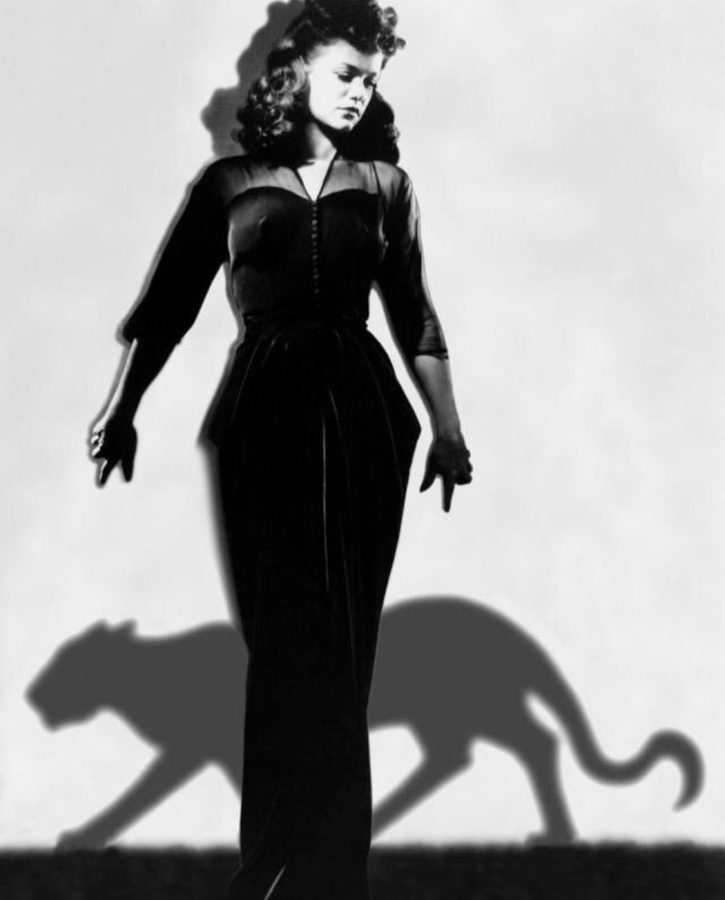
Irene Dubrovna in "Cat People" (1942)

The Classic Movie Blog Association is hosting the Blogathon and the Beast blog event this week. This theme gives us bloggers a chance to write about a film character who has a beast within themselves. 

All of us have a sleeping beast within who, hopefully, never awakens in our lifetime. As the old saying goes, "Let sleeping dogs lie." I always had the notion that my sleeping dog was the Beast of Jealousy which, thankfully, has never had cause to open its eyes. 

Irena Dubrovna (Simone Simon) in Cat People (1942) was not so fortunate. She had what I believe was the Beast of Jealousy within her and, one afternoon, an unexpected encounter at the zoo began a chain of events that caused this sleeping dog (or rather, cat) to wake. 

Irena was a sketch artist for a fashion design company. She had an apartment that was a short walk away from the New York City Zoo, and she enjoyed spending her afternoons there sketching the animals...namely, the resident panther. 

One day at the zoo, she meets Oliver (Kent Smith), a marine engineer, and within a few hours, they become romantic friends. 

Unlike most of us who are unaware of our inner beasts, Irena knows very well what hidden danger may be inside her. She tells Oliver a story about a certain group of evil people from the village in Serbia where she came from. They were known as "cat people" and were, supposedly, pushed back from her village by King John quite a long time ago. However, Irena always feared she may have been an ancestor of these people, and her suspicion is later confirmed when, on her and Oliver's wedding night, a mysterious woman greets her as one of the "cat people".

The cat people destroy the ones they love. Like real felines, they are averse to strong displays of affection, especially if it creates an unwanted bond of dependency. Irena believes that if she were to kiss Oliver, she would have to kill him, and so months pass with their marriage unconsummated. Meanwhile, Oliver grows more and more apart from Irena and her obsession with this belief in "old folklore". He turns to Alice, a longtime friend and coworker, for advice and, later, for comfort. 

This arouses Irena's feelings of her "inner cat" even more and one evening she follows Alice home. She begins by walking a good distance behind Alice but shortly she takes on the physical appearance of a cat - a panther - and actually stalks Alice like prey. 

"There is, in some cases, a psychic need to loose evil upon the world. And we all of us carry within us a desire for death. You fear the panther; yet you are drawn to him again and again. Could you not turn to him as an instrument of death?"

Larry Talbot in The Wolf Man (1941) went into a mental fog when he transformed into the wolf and he was afraid he would harm someone unknowingly while he was a wolf. Irena's transformation is quite different. She seems to be well aware of whom she is stalking and attacking as a panther. 

Irena is quite a shy and gentle woman by nature and dreads having a duel-personality, especially one that is an animal. She willingly agrees to undergo psychiatric treatment to be cured of this belief, but at the same time seems to take pleasure in her predicament and clings to it. Typical feline complexity. 


In one eerie scene, she follows Alice to the indoor pool of her apartment complex at night and prowls and growls in the shadows around the pool. After Alice screams and others come into the pool room, Irena transforms back into her human self and innocently remarks "
I'm sorry I disturbed you, Alice. I missed you and Oliver. I thought you might know where he is." Clearly, she was enjoying herself. 

Irena's cat personality may not have been entirely a beast of jealousy but this emotion was a strong trigger for it to come forth into the physical realm. Thank goodness the evil nature we sometimes suppress, be it ever so small, does not take the physical form of an animal. Although... dating back to ancient times, people's inner personalities were referenced in relation to animals. In Western and Chinese astrology, human character traits are linked with animal counterparts. And all of us, at some time or another, refer to others as animals.... "He's like a timid mouse"... "She's like a frightened rabbit". But how strange it would be to see these animal natures take form! 

Irena had no control over her unusual situation. Whether she wanted to be a cat or not, she became one. She was just an innocent victim of presumably an ancient gypsy curse in her village. Sadly, her husband Oliver thought her fear of being transformed into a cat was only a problem of her mind...an issue he later got bored with when it made him unhappy. At one point, Irena was willing to cast aside her fears and superstitions and concentrate on being a good wife to Oliver, but by that time it was too late. Oliver now loved Alice and Irene was then more than willing to unleash her inner beast....knowing very well it meant her death. 

Wednesday, May 30, 2018

From the Archives: Bowery to Broadway ( 1944 )


Handsome Turhan Bey and pretty Susanna Foster are performing at the piano in this scene from RKO's 1944 production Bowery to Broadway. Ms. Foster was born Suzanne Larson but took the name Susanna after the song "Oh, Susanna" and Foster from the song's writer, Stephen Foster.

From the Archives is a series of posts where we share photos from the Silverbanks Pictures collection. Some of these may have been sold in the past, and others may still be available for purchase at our eBay store : http://stores.ebay.com/Silverbanks-Pictures

Monday, January 8, 2018

From the Archives : George and his Gal in Bullet Code ( 1940 )


George O'Brien and Virginia Vale make a handsome rootin'-tootin' couple in this still from the 1940 RKO western Bullet Code. 

From the Archives is our latest series of posts where we share photos from the Silverbanks Pictures collection. Some of these may have been sold in the past, and others may still be available for purchase at our eBay store: http://stores.ebay.com/Silverbanks-Pictures

Monday, November 28, 2016

George O'Brien - A Heroic Man

"Gorgeous George" and "The Torso" were just a few of the many nicknames of hunky actor George O'Brien throughout the 1920s and 1930s. And very fitting titles these were. Not only was George a charismatic actor, but he boasted one of the finest physiques in Hollywood. Clothing looked unnatural on him since his muscles always seemed like they were about to bust his shirts apart. Here was a truly rugged man. O'Brien's leading ladies never feared danger when he was by their side. 

George had all the attributes of a natural born cowboy. Hence, saddles and spurs suited him well. Between 1929-1940, O'Brien starred in over 35 westerns, most of them for RKO studios. This association with westerns began as far back as 1922, when he first came to Hollywood from San Francisco. His father was Frisco's chief of police. George not only inherited his father's physical prowess, but strove to emulate his values in being honorable and serving others. In high school, he played football, baseball, track and field, and swimming, and when World War I broke out, he joined the Navy, serving first on a submarine chaser and then as a stretcher bearer where he earned five decorations for bravery under fire. 
George also learned how to box in the Navy. In fact, he was so good in the ring that he won the light-heavyweight Pacific fleet boxing title. When he returned to college, he found visits to the RKO studios more absorbing then his studies and decided to enter pictures. Stunt work in westerns led to a few supporting roles in silents, which caught the eye of John Ford who was looking for a leading man to play in his western epic The Iron Horse. O'Brien was ideal. This part not only earned plaudits for O'Brien and a ten-year RKO contract, but John Ford became a life-long friend. 

Noah's Ark 
Several silent films followed, including Fig Leaves and Three Bad Men, both of which starred O'Brien's sweetheart Olive Borden. And then, in 1927, he starred in F. W. Murnau's silent film classic Sunrise : A Song of Two Humans ( 1927 ). His performance of "The Man" who gets lured away from his wife and child by a city woman, is still O'Brien's most recognized work, and a fan favorite. Janet Gaynor may have been the film's Academy Award nominee, but it was George who gave the standout performance as the sensitive husband. He personally loved the part and was proud of his work in Sunrise. In 1979, at the end of a screening of Sunrise in New York City, he received a standing ovation for his performance and was moved to tears. 

George found westerns the most exciting films to work on, and since he loved to ride ( and audiences loved to see him sport a cowboy hat ) he was frequently cast in the genre. O'Brien quickly became a favorite B-western star for RKO appearing in such films as Lone Star Ranger, Riders of the Purple Sage, The Golden West, Frontier Marshal, and The Renegade Ranger ( 1938 ) which co-starred Tim Holt, who would become his successor as RKO's top western star. 

George's films tended to follow a formula, usually beginning with his character having a chance encounter with the leading lady who would express her dislike for such a rogue as he ( much like the Errol Flynn films of the late 1930s ). Then they would find themselves in danger and his winning smile would make her realize how she misjudged him; finally ending with them being involved in a dangerous situation and him demonstrating his fisticuffs technique on the villains in order to save them both. 

O'Brien as a miner in Hard Rock Harrigan ( 1935 )
George always liked to flash a grin in the face of danger. He usually found every situation amusing...never worrying about the outcome. Take, for example, Windjammer ( 1937 ). In this film O'Brien has the simple task of delivering a subpoena to a commodore aboard his yacht. In doing so, he finds himself on the vessel bound for Hawaii, working in the galley as a cook. He never grumbles about the task, but thoroughly enjoys it. Later, when gunrunners kidnap them, they are taken to China, and then the Commodore and his daughter find George to be a kindly ally, relying upon him to take them out of danger. 

Expecting this formula is what makes his films so entertaining, and since most of them were merely 60 minutes long, they were fast fun packed with plenty of action. 

Two happy Irishmen : O'Brien and Tracy
In 1933, George married Marguerite Churchill ( The Big Trail ) whom he met when making Riders of the Purple Sage that same year. They had three children, Brian, who died in infancy; Darcy, who became a popular true-crime novelist; and Orin O'Brien, who is considered to be one of the foremost double bassists in the history of the New York Philharmonic orchestra. 

Their marriage was a happy one....until World War II, when George re-joined the Navy and served in the Pacific for the length of the war. Like many veterans, he came back a changed man, and Marguerite filed for divorce shortly thereafter. George never re-married but stayed on friendly terms with Marguerite. 
George continued to appear in westerns upon his return to Hollywood, notably John Ford's Fort Apache and She Wore a Yellow Ribbon, but roles were few for an aging cowboy, and so George went back into active service, not only to help America settle the mess taking place in Korea, but in Vietnam as well. George was a highly decorated naval officer and was recommended for the rank of admiral four times. 

When his term of service had ended, he retired to a ranch in Broken Arrow, Oklahoma, living the life of a true American cowboy up until his death in 1985 at the age of 86. 

Wednesday, November 9, 2016

The Lost Hildegarde Withers Mysteries

Hildegarde Withers, a schoolmarm who enjoys cracking murder cases, was the creation of Stuart Palmer who penned sixteen novels featuring the wise-cracking old broad. She was enormously popular with mystery readers throughout the 1930s, and with film-goers from her very first appearance in The Penguin Pool Murder ( 1932 ) which starred Edna May Oliver as Withers. 
Oliver was the perfect embodiment of the snoopy schoolteacher with her horse-like face and her no-nonsense attitude. She sauntered around dangerous territories with her Queen Mary attire and her silver-handled umbrella poking her nose where it didn't belong and treating all suspects like they were naughty schoolchildren. With the aide of crusty know-it-all inspector Oscar Piper ( James Gleason ) she would try to sniff the criminal out before they snuffed her out. Gleason and Oliver's barbed repartee didn't fool audiences, who immediately recognized what a great crime-solving team they made. 

Louise Fazenda with Edna May Oliver
RKO featured the duo in two more mysteries - Murder on the Blackboard ( 1934 ) and Murder on a Honeymoon ( 1935 ) before Edna May Oliver decided to quit the series and move onto other roles. This was a sore disappointment for Withers fans but, since Gleason was game for continuing on, RKO decided to recast the part with Louise Fazenda. 

Fazenda had a long career in Hollywood dating back to 1913, and she was particularly adept at character parts. While she lacked Edna May Oliver's comical facial features, she did a grand job of stepping into Oliver's very large shoes and making the part of Miss Withers completely her own. Fazenda even brought out Miss Withers' more romantic nature, and a good dose of sugar was often mixed into her many tart remarks to Oscar Piper. 

The first Hildegarde Withers mystery to feature Louise Fazenda was the most entertaining of the entire series - Murder Abroad, released in 1938. This sprightly whodunnit takes place aboard a steamer bound for London. We all know schoolteachers love to travel, but Miss Withers has not had good luck with vacations. On her last trip, she found herself enmeshed in the investigation of a dead man on a small plane. In this outing, a young woman ( Dorothy Lovett ) goes missing. She is either in hiding or has fallen over the ship's rails. While the passengers begin a search for her onboard, body after body begins appearing. The young woman's beau ( Kent Taylor ) is particularly worried, as is Miss Withers who is determined to put a stop to this killer who threatens her holiday abroad! With so few clues to work with, she comes to depending on the testimony of a particularly mischievous silver Persian cat to aide in the investigation. Murder Abroad was based upon Palmer's "Puzzle of the Silver Persian". Also in the cast were Leon Errol as an amusing Brit who has the sweets for Miss Withers, and debonair Tom Conway. 
Next came Scene One, Murder ( 1940 ), an entertaining backstage Hollywood mystery that featured a number of great cameos from some of RKO's biggest stars. Once again, Withers was hoping for a grand European vacation after a particularly distressing school year, but Hitler has other plans. The invasion of Poland puts an end to her tour and so she books a ticket to Hollywood, trading the Louvre and the Vatican for the Brown Derby and La Brea tar pits. She has only been in Los Angeles three days when she is offered a job at Mammoth Studios as a technical advisor to a film version of the Lizzie Borden story. The job is perfect, for no one knows murder like Miss Withers. But on her first day at the studio, the screenwriter in the next office dies of an apparent broken neck, and Miss Withers soon discovers that a killer as vicious as Lizzie Borden herself is loose on the backlot! 

Withers' Hollywood debut is a bust!
Scene One, Murder features a number of great character actors such as Charlie Ruggles as Mammoth's key director ( and our number one suspect ), Clarence Muse as the security guard, and Miles Mander as the aggravated screenwriter who gets tied up. Allan Jones and Sally Eilers also star as the requisite lovebirds. Most entertaining of all is George O'Brien's cameo. From the moment Miss Withers booked her Hollywood vacation she was hoping to catch a glimpse of "Gorgeous George", her idol of the silver screen, and she - literally! - catches him in her lap at the commissary....much to the chagrin of Inspector Piper. 

Despite steady box-office returns for these final entries in the Withers-Piper series, RKO wrapped up the films, focusing more attention on film noirs and westerns throughout the 1940s. It was not until 1957 that Hildegarde Withers returned to the screen for one final appearance, this time with Agnes Moorehead taking on the part. Moorehead was ideally cast. She had made a television pilot in 1955 for a proposed sitcom based on the Palmer novels, but the series was never picked up*. 

This feature film - Crossing Death - changed the character slightly, and added some new touches while retaining the spunk of the originals. The setting has been updated to the 1950s, and Miss Withers is no longer a city schoolteacher but teaches in a rural school outside of New York City. One wintry night, while driving to Miss Withers' country house for dinner, her good friend Inspector Piper ( Paul Kelly ) witnesses a roadster slam into a tree at a crossroad. The car is empty, its driver thrown a half block back. He is stone dead but his cigarette is still burning, and he has a noose tied tight around his neck. Can dead men drive? Oscar and Hildegarde certainly don't think so, and together they assemble clues that lead them to a barn theatre and its company of seven actors ( among them Hugh Marlowe, Barry Sullivan, Herbert Marshall, Elsa Lanchester and Martha Hyer ). 

Wither or not you are a mystery fan, you will find each of these three films immensely entertaining and perfect for a Friday night viewing. Unfortunately, none of these titles have received an official DVD release yet and finding a copy of them may prove to be the most difficult mystery of all!

* This TV pilot was actually made, but is now considered lost. 

This post is Connie's entry in The Great Imaginary Film Blogathon being hosted by yours truly, Silver Scenes. This event features reviews of "imaginary" films....in other words, what you just read was a fictional review ( accept for the * note ). We hope you enjoyed it! To read more reviews of imaginary films, simply click on this link. 

Sunday, May 11, 2014

The Little Minister ( 1934 )

Margaret Perry is hosting The Great Katharine Hepburn Blogathon which kicked off on May 9th and we at Silver Scenes could not resist joining in on celebrating one of the greatest actresses to ever grace the silver screen. Our contribution to the event - The Little Minister - came out of the 1930s, one of Hepburn's busiest decades as an actress. 

The Little Minister is a charming film about a recently ordained minister (John Beal) of a small Scottish village who gets rebuffed by his congregation when he falls in love with a wild gypsy girl (Katharine Hepburn). At first, he wins the respect of the townsfolk when he stands up against the town bully Rob Dow (Alan Hale). Dow is the leader of the village weavers who are planning a rebellion against their employer, Lord Rintoul (Frank Convoy), who has cut their salary. But, when the minister brazenly associates with the sprightly gypsy of the woods, Babbie, and announces his plans to marry her, he is practically tarred and feathered before it is found out that she is really the illustrious Lady Babbie, ward to Lord Rintoul, in disguise. 

Sir James M.Barrie's whimsical tale "The Little Minister" was beloved by the masses since its first publication as a novel in 1891. The famous American stage star Maude Adams made the play a huge success both in England and America. In 1921, both Paramount and Vitagraph released film versions of The Little Minister starring Betty Compson and Alice Calhoun, respectively. 

Katharine Hepburn had always adored Maude Adams and when she heard that RKO was planning to make The Little Minister a major production with Ginger Rogers in the lead role, she was anxious to secure the part of Lady Babbie herself. Pandro S. Berman, the head of RKO, was more than happy to cast her in the role, hoping to restore her to her star status after the dismal failure of her previous film, Spitfire

The husband and wife team of Victor Heerman and Sarah Y. Mason were brought in to weave a screenplay that would parallel their Oscar-winning script of 1933 - Little Women. In fact, most of the production team of Little Women were reunited for The Little Minister, which RKO lavishly bestowed with a $648,000 budget. It was the studio's most expensive production of the year and was released as their Christmas gift to the nation. Berman was secretly hoping for a major success but alack and alas, the film did not regain its expenses. Even though it brought in respectable business, it lost $9000. 

Katharine Hepburn considered her portrayal of Babbie as a "rather fancy performance" years later, looking back on the film. The role of Babbie called for a girl with an almost other-worldly elfin quality and "I think I'm probably just too down-to-earth for that" Hepburn admitted. 

George Cukor, one of Hepburn's favorite directors, was busy making David Copperfield over at Metro-Goldwyn-Mayer, and could not be called upon to take the helm of The Little Minister. In his place, Richard Wallace (The Shopworn Angel, Sinbad the Sailor) did a marvelous job. 

The film itself is an enchanting fantasy and from its opening scenes lures the audience into the picturesque village of Thrums. Max Steiner's lovely score, which incorporates old and familiar Scottish tunes, carries our hearts into the highland while RKO's resident wizard of design, Van Nest Poglase and Carroll Clark, lend the film a total sense of authenticity by way of their meticulous set designs. No expense was spared in making The Little Minister the high-class production that it was. In addition to the leading actors, Donald Crisp, Lumsden Hare, Andy Clyde, Dorothy Stickney, Reginald Denny, Eily Malyon, and Mary Gordon also starred.