Showing posts with label CMBA. Show all posts

Friday, November 10, 2023

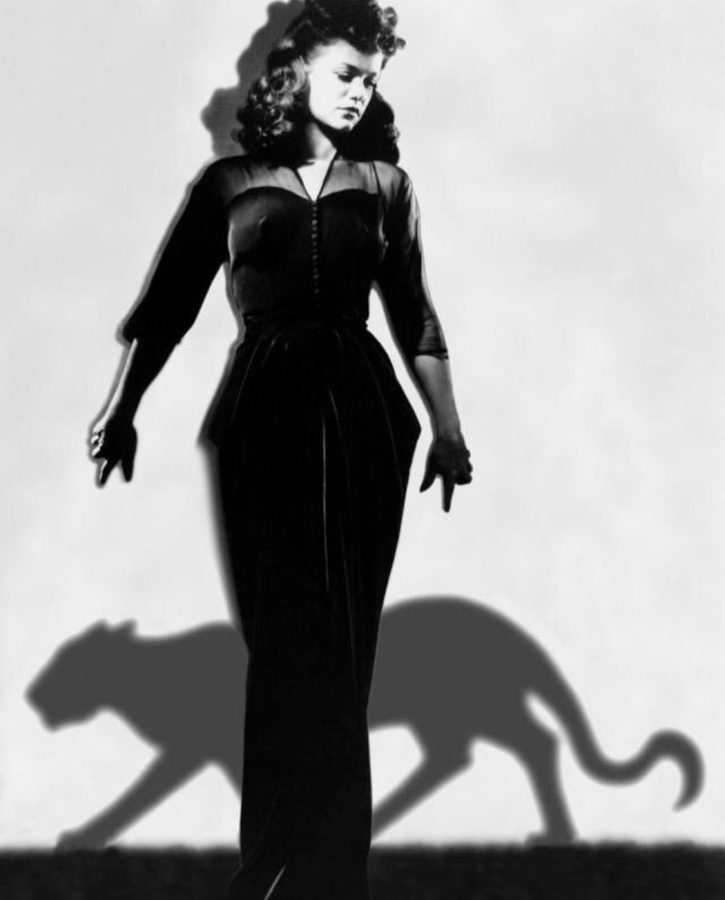
Irene Dubrovna in "Cat People" (1942)

The Classic Movie Blog Association is hosting the Blogathon and the Beast blog event this week. This theme gives us bloggers a chance to write about a film character who has a beast within themselves. 

All of us have a sleeping beast within who, hopefully, never awakens in our lifetime. As the old saying goes, "Let sleeping dogs lie." I always had the notion that my sleeping dog was the Beast of Jealousy which, thankfully, has never had cause to open its eyes. 

Irena Dubrovna (Simone Simon) in Cat People (1942) was not so fortunate. She had what I believe was the Beast of Jealousy within her and, one afternoon, an unexpected encounter at the zoo began a chain of events that caused this sleeping dog (or rather, cat) to wake. 

Irena was a sketch artist for a fashion design company. She had an apartment that was a short walk away from the New York City Zoo, and she enjoyed spending her afternoons there sketching the animals...namely, the resident panther. 

One day at the zoo, she meets Oliver (Kent Smith), a marine engineer, and within a few hours, they become romantic friends. 

Unlike most of us who are unaware of our inner beasts, Irena knows very well what hidden danger may be inside her. She tells Oliver a story about a certain group of evil people from the village in Serbia where she came from. They were known as "cat people" and were, supposedly, pushed back from her village by King John quite a long time ago. However, Irena always feared she may have been an ancestor of these people, and her suspicion is later confirmed when, on her and Oliver's wedding night, a mysterious woman greets her as one of the "cat people".

The cat people destroy the ones they love. Like real felines, they are averse to strong displays of affection, especially if it creates an unwanted bond of dependency. Irena believes that if she were to kiss Oliver, she would have to kill him, and so months pass with their marriage unconsummated. Meanwhile, Oliver grows more and more apart from Irena and her obsession with this belief in "old folklore". He turns to Alice, a longtime friend and coworker, for advice and, later, for comfort. 

This arouses Irena's feelings of her "inner cat" even more and one evening she follows Alice home. She begins by walking a good distance behind Alice but shortly she takes on the physical appearance of a cat - a panther - and actually stalks Alice like prey. 

"There is, in some cases, a psychic need to loose evil upon the world. And we all of us carry within us a desire for death. You fear the panther; yet you are drawn to him again and again. Could you not turn to him as an instrument of death?"

Larry Talbot in The Wolf Man (1941) went into a mental fog when he transformed into the wolf and he was afraid he would harm someone unknowingly while he was a wolf. Irena's transformation is quite different. She seems to be well aware of whom she is stalking and attacking as a panther. 

Irena is quite a shy and gentle woman by nature and dreads having a duel-personality, especially one that is an animal. She willingly agrees to undergo psychiatric treatment to be cured of this belief, but at the same time seems to take pleasure in her predicament and clings to it. Typical feline complexity. 


In one eerie scene, she follows Alice to the indoor pool of her apartment complex at night and prowls and growls in the shadows around the pool. After Alice screams and others come into the pool room, Irena transforms back into her human self and innocently remarks "
I'm sorry I disturbed you, Alice. I missed you and Oliver. I thought you might know where he is." Clearly, she was enjoying herself. 

Irena's cat personality may not have been entirely a beast of jealousy but this emotion was a strong trigger for it to come forth into the physical realm. Thank goodness the evil nature we sometimes suppress, be it ever so small, does not take the physical form of an animal. Although... dating back to ancient times, people's inner personalities were referenced in relation to animals. In Western and Chinese astrology, human character traits are linked with animal counterparts. And all of us, at some time or another, refer to others as animals.... "He's like a timid mouse"... "She's like a frightened rabbit". But how strange it would be to see these animal natures take form! 

Irena had no control over her unusual situation. Whether she wanted to be a cat or not, she became one. She was just an innocent victim of presumably an ancient gypsy curse in her village. Sadly, her husband Oliver thought her fear of being transformed into a cat was only a problem of her mind...an issue he later got bored with when it made him unhappy. At one point, Irena was willing to cast aside her fears and superstitions and concentrate on being a good wife to Oliver, but by that time it was too late. Oliver now loved Alice and Irene was then more than willing to unleash her inner beast....knowing very well it meant her death. 

Thursday, November 10, 2022

Murder at the Gallop ( 1963 )

"Yes, old Enderby was frightened to death!"

One afternoon, while collecting funds for charity, Miss Marple witnesses the death of Mr. Enderby, a death that the doctor claims was due to a heart attack. Miss Marple believes it was deliberate murder: a heart attack triggered by the sight of a cat. Mr. Enderby, a rich recluse, had "a weak heart and a pathological horror of cats. What easier than for some interested party to slip a cat into the house, a cat that the old man would come upon accidentally. Yes, old Enderby was frightened to death!"

She takes her suspicions to Inspector Craddock of the local police, whom she had worked with on a previous murder case. Craddock found her to be "of some small help" before but, upon hearing this new theory of hers, suggests she read fewer thrillers.

At the reading of the will, Mr. Enderby's family members are shocked to hear demure Aunt Cora also suggest that his death was deliberate. "He was murdered....wasn't he?" When Aunt Cora is dispatched with - by a hatpin of all weapons! - Miss Marple decides to don her Sherlock Holmes cap and solve the mystery herself. 

Murder at the Gallop was the second of four Miss Marple mysteries made in the 1960s starring the engaging English character actress Dame Margaret Rutherford. It was a follow-up to Murder, She Said ( 1961 ) and many of the elements used in Murder, She Said are repeated in this second outing, notably the family inheritance plot line, the eccentric male lead ( this time played by the perpetually baffled-faced Robert Morley ), the surly stablehand, and the multiple murders. Yes, when Miss Marple attempts to solve a case, murder is never a solitary occurrence. Even the finale of Miss Marple receiving a marriage proposal is repeated. 

The members of the Enderby family are not as interesting as the Ackenthorpes of Murder, She Said but they do make wonderful murder suspects. Each of them received a goodly inheritance from old Mr. Enderby, but one of them is obviously out for a larger share of the money. 

Hector Enderby ( Robert Morley ) leads the list of suspects as the head of the family and proprietor of the Gallop Hotel, where the Enderbys, Aunt Cora's companion Miss Milcrest, and Miss Marple are all staying. Hector loves to be in the saddle more than anything else and he sees "this whole murder business" and the police's presence as interference with running his business establishment. 

His niece Rosamund, portrayed by Katya Douglas, is a spoiled and demanding woman. She is not overly interested in the Enderby fortune because her mind is preoccupied with curiosity as to why her husband Michael ( James Villiers ) lied about what he was doing the afternoon Enderby died. Nephew George ( Robert Urquhart ) is certainly greedy enough to murder. He quickly becomes Miss Marple's prime suspect, but when he turns up dead, she - and the audience - are forced to re-examine the case. 

"Agatha Christie should be compulsory reading for the police force."

Murder at the Gallop is one of the best of MGM's Miss Marple mysteries. It was loosely based on Agatha Christie's 1953 Hercule Poirot novel "After the Funeral". Credit should be given to screenwriter James P. Cavanaugh ( a frequent writer of episodes of Alfred Hitchcock Presents ) for reworking the story into such an entertaining yet baffling mystery. Murder mysteries are often filmed as dramas or comedies but Murder at the Gallop straddles both of these genres. It is neither serious drama nor farce. It is simply an enjoyable - and highly amusing - tea and crumpet mystery. 

Ron Goodwin's sprightly harpsichord music greatly contributes to the entertainment and the overall production is top-notch. The cinematography by Arthur Ibbetson is properly atmospheric and the location filming around Buckinghamshire adds to the film's appeal. But make no doubt about it, the film's most charming asset is Dame Margaret Rutherford herself, the endearing star of these films.

Rutherford's characterization of the popular sleuthing spinster bears little resemblance to the Jane Marple you will find in Agatha Christie's novels. Plump and energetic, Rutherford completely transformed Miss Marple into a spunky, emancipated, lovable old gal with a taste for mystery and mayhem. With jowls jiggling and a tongue firmly jutted in her cheek, Jane swings her tweed cape about her, squares her shoulders, and is ready to face any danger that stands in the way of her amateur sleuthing. She has an indomitable spirit that will suffer no nonsense - not even from a murderer!

Often aiding Miss Marple in her detective work is her loyal friend, Mr. Stringer, custodian of the local library in Milchester. This character was newly created for the series to give Margaret Rutherford's husband, Stringer Davis, a co-starring role in the series. Mr. Stringer, or "dear Jim" as Miss Marple affectionately calls him, is an invaluable source of support and the perfect partner to Jane. In Murder at the Gallop, he does the "leg work" in town for Miss Marple while she remains at the Gallop Hotel keeping a close eye on the suspects. At the exciting climax, they also get to perform the twist together!

The remaining cast, which includes Finlay Currie, the talented Flora Robson, Charles Tingwell as the kindly Inspector Craddock, and Duncan Lamont, add to making this an overall delightfully entertaining mystery.....one that even a loyal Agatha Christie fan would enjoy. 

This post is our contribution to the Movies are Murder! Blogathon being hosted by the Classic Movie Blog Association. Click here to read more reviews of murder-themed classic films and click here to view the original trailer for Murder at the Gallop

Thursday, May 20, 2021

The Black Orchid ( 1958 )

The Classic Movie Blog Association is hosting the Hidden Classics Blogathon giving film bloggers a chance to share a little-known or underrated gem with other film buffs. As some of you already know, underrated classics are what I love to write about most. There are hundreds of little-known treasures that deserve to be shared, one of which is The Black Orchid

The Black Orchid stars Sophia Loren and Anthony Quinn as a middle-aged widow and widower who fall in love and want to get married. The first half of the film follows happy-go-lucky Frank ( Quinn ) as he attempts to woo "the Black Orchid" Mrs.Rose Bianco ( Loren ). Some people in their Brooklyn neighborhood label her "no good" because she drove her first husband into a life of crime, an activity that eventually led him to be fished out of a river dead. Her neighbor Mrs.Gallo ( Naomi Stevens ) knows this isn't true and she encourages Rose to pay more attention to Frank. 

When he finally wins her affection, they encounter two roadblocks to the alter: Rose's son Ralphie ( Jimmy Baird ) who is spending time at a state work farm/juvenile center and Frank's daughter Mary ( Ina Balin, making her film debut ). Mary is about to wed her sweetheart Noble ( Peter Richman ) and move away into a house of her own but when she discovers that her father plans to wed, jealousy and bitterness consume her. Ralphie likes the idea of Rose remarrying but when he hears the wedding plans may be canceled, he runs away. 

Like most Hollywood films, The Black Orchid has a happy ending and if tears flow easily for you, you will probably need a handkerchief or two to dab your eyes when you see the sweet reconciliation between everyone. 

The Black Orchid was released by Paramount Pictures in 1958 and over the years has gotten some poor reviews for a very simple reason - the film is often misclassified as a comedy when it isn't. It is a drama. It has some humorous moments but it is far from being comedic. If you know you are about to watch a drama rich with emotion then The Black Orchid won't disappoint. 

The film was beautifully shot in black-and-white by Robert Burks ( Vertigo, North by Northwest ) who is best known as being Alfred Hitchcock's favorite cinematographer. It also features a good score by Alessando Cicognini and costumes by Edith Head, but what makes it stand out is its script. This was Joseph Stefano's first script. He would later become famous for penning the screenplay to Psycho ( 1960 ). Stefano created characters with depth and even though his dialogue is common-place, it is the natural-sounding tone of the lines that make this story seem so believable. Frank's first wife was mentally ill and so when Mary begins showing signs of bitterness, a dark underlayer begins showing through the story turning the romance into a psychological drama. 

Anthony Quinn and Sophia Loren give excellent portrayals of two tough Brooklyners from "the old country". Such a beautiful romance blossoms between them that it is painful to see how close their children came to breaking it up. Ina Balin gives an especially good performance as Mary, displaying her sweet gentle side in one moment and jealously and stubbornness in the next. 

Also in the cast is Virginia Vincent as Mary's friend Alma, Whit Bissell as the sympathetic director of the juvenile center, Joe Di Reda, and Frank Puglia. 

The Black Orchid is available on DVD and through streaming via Youtube and Amazon Prime. 

Click on the link here to read more reviews of little-known gems from the Hidden Classics Blogathon. 


Wednesday, May 17, 2017

A Majority of One ( 1961 )

“Any man more right than his neighbors constitutes a majority of one”

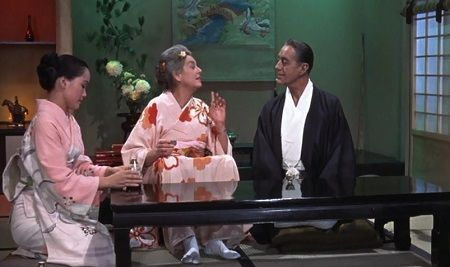
Leonard Spigelgass’ poignant story of racial prejudice, A Majority of One, focuses on emphasizing the truth of the above quotation as well as teaching a gentle and humorous lesson on the folly of judging others by their ethnicity and not by their hearts. It is a story of a cross-cultural romance between two widows – Mrs. Jacoby, a Jewish Brooklynite (superbly played by Rosiland Russell) and Mr. Asano (Alec Guinness), a Japanese industrialist.  

Mrs. Jacoby spent most of her life in Flatbush and loves the neighborhood and her apartment dearly. Her daughter Alice (Madlyn Rhue) and diplomat son-in-law Jerry (Ray Danton) worry about “Mama” living on her own while they spend years at a time in foreign nations moving wherever Jerry’s position takes them. Mrs. Jacoby is not getting any younger and, as her neighbor Mrs. Ruben blatantly points out, the neighborhood is changing and “that element is moving in”....a statement which brings up a conversation that sets the tone for the film: 

“What element, Mrs. Ruben?” (Jerry)
“You know..colored, Puerto Ricans...”
“Really? I seem to remember in this very neighborhood not so long ago they didn’t allow Jews.”
“What does one have to do with the other?”
“Everything. The only way to stop prejudice is to stop it in yourself”.
When Jerry receives his new assignment, Alice pleads with Mama to come with them. “But you haven’t said where”...“Japan, Mama.” Japan! Mrs. Jacoby lost her only son in combat in Japan during WWII and the memory – the hatred – is still painfully fresh. However, for love of her children, she reluctantly agrees to follow, and so they’re off across the sea to the Land of the Rising Sun. En route on the voyage they meet Mr. Asano, a Japanese millionaire industrialist who will not only play a pivotal role in an upcoming international trade conference that Jerry will take part in, but will change Mrs. Jacoby’s feelings toward the Japanese in a remarkable way.
A Majority of One was penned by Spigelgass in 1958 and debuted on Broadway on February 16, 1959, starring Gertrude Berg and Sir Cedric Hardwicke. It played for 556 performances and was a critical and box-office success. It was nominated for four Tony awards (Berg won for Best Actress). 

Jack Warner at Warner Bros. purchased the film rights to the comedy in 1960 for the princely sum of $500,000 and approached Rosalind Russell for the starring role. Russell was aghast. “You’ve been drinking,” she told Warner according to her 1977 autobiography Life is a Banquet. “What would I be doing playing a Jewish lady from Brooklyn? I’m a little Irish girl from Waterbury, Connecticut. Use Gertrude Berg, it’s her part.” Warner insisted however, refusing to cast Berg since she made a disastrous film at Paramount years earlier. It was not until he suggested that Alec Guinness could be her co-star that Russell reconsidered. “Well, that’s another cup of chicken soup,” she told him. “I’ll think about that little item.”

When she approached Alec Guinness with the idea he said, “I want the dollars, so if you’ll do it, I’ll do it.” To which Russell replied,  “I want to work with you, so if you’ll do it, I’ll do it.”

So they did it. And they couldn’t have been a more delightful combination. Russell shines in her role as the Jewish widow, Bertha Jacoby. With just the right amount of mamish chochmeh she dispenses bits of neighborly advice – and Smith Brothers cough drops - to all she comes in contact with. She handles herself and her children with respect, but upon occasion, when they overstep their boundaries, she can be firm and immovable.
Guinness was touching and endearing and portrayed Mr. Asano with a graceful maturity befitting a Japanese gentleman of illustrious birth. However, in spite of the heavy makeup and authenticity he gave to his role (he spent ten days in Japan prior to filming taking a crash course in Japanese culture), many viewers felt a Japanese actor was called for. Perhaps because a Caucasian portrayed the role on Broadway (interracial romance was a scandalous subject at the time and was dealt with by using English actors in the roles of Asians), or because the studio wanted top drawing names, Japanese actors such as Sessue Hayakawa were overlooked. 

Marc Marno and Mae Questel were plucked from the Broadway production for supporting roles to round out a cast which also included Frank Wilcox, Francis De Sales and Alan Mowbray.
A Majority of One is a humorous blending of schmaltz and saki and went on to win three Golden Globes for Best Picture, Best Actress (Russell) and Best Film Promoting International Understanding. How did it win that last award? Because all cultures are different, the movie tells us, but those differences are just superficial. As they become acquainted, Mr. Asano and Mrs. Jacoby mention aspects of their respective cultures that, at first, seem different but after comparison are revealed to be relatively the same.  

For example, Japanese people worship in shrines; Jewish people worship by blessing Sabbath candles – ultimately, "God's house is God's house," as Mrs. Jacoby says after being invited to a Japanese shrine. Japanese people eat raw fish; Jewish people eat gefilte fish. Japanese people toast with "Kanpai" and Jews say "L'Chaim." 

Jews put up with a lot: "Whatever comes into your life, you take." So do Japanese: "You transcend. It's the philosophy of the Zen Buddhists." ..."You mean, if you have tsouris – trouble – you come out of it a better person for having lived through it." ...."Obviously you have studied Zen Buddhism, Mrs. Jacoby!”


In addition to emphasizing the importance of embracing other nationalities “whether they are white, black, pink or purple” the more subtle lessons of forgiveness and tolerance are taught, lessons which Mrs. Jacoby - and her children - needed to be taught. When he first makes her acquaintance, Mr. Asano approaches Mrs. Jacoby to inquire why she is so cold towards him. After telling him that her son was killed in action by the Japanese, he explains that he, personally, did not want war nor did anyone he knew, and that he lost both his son and daughter in Hiroshima. Mrs. Jacoby then realizes that he’s had a cupful in life too and hatred quickly dispels into kinsmanship. As the voyage progresses they find each other to be the most pleasant of companions, with Mr. Asano particularly drawn to Mrs. Jacoby’s warmth and friendship.

Later, as Mama considers the proposition of “crossing over the bridge” with Mr. Asano, she finds she must first deal with the prejudism right in her own family. In the first half of the drama we perceive Mrs. Jacoby to be old-fashioned and set in her customs while her children are shown to be adaptable and open to new viewpoints and new changes. However, the tables turn midway through and we find that it is Mrs. Jacoby’s daughter and husband who are narrow-minded. The words Jerry spoke in Brooklyn echo back to him when he faces the prospect of Mama and Mr. Asano’s impending courtship... “If you want to stop prejudice you must first stop it in yourself”. He must come to learn that being friendly and welcoming should not be a diplomatic “front of face” but stem from a sincere consideration for others.
A Majority of One is as relevant today as it was when it was first released in 1961. The film is a hidden gem, a truly entertaining foreign affair, completely unique and as lovely as cherry blossoms in spring; it is sure to bring shtick naches to those who take the time to watch the film.  

This post is our contribution to CMBA's Underseen and Underrated Blogathon being hosted by the Classic Movie Blog Association. To check out more reviews of unsung classics, simply click here

Friday, October 21, 2016

Young and Beautiful ( 1934 )

Hollywood in the early 1930s was a bustling vibrant work environment filled with aspiring screenwriters and directors, ambitious young actors, and seasoned professionals from various fields, all riding on a glorious wave of excitement over the fame and fortune to be found within the land of make-believe. It was young actresses in particular that were lured into the appeal of making it big in Hollywood as starlets. The sirens of Tinseltown whispered their song to these impressionable women, "Come to Hollywood and be a star!" but those that journeyed away from their home and family found the pathway to fame and riches strewn with hardship and disappointments. Little did they realize that a starlet was not born, or discovered, overnight....she was made, just as surely as a screenwriter creates his characters for his next script. 
This topic was the basis of films throughout the 1920s, 1930s, and even 1940s, but it did not stop these women from believing that they could venture to Hollywood and be discovered by a talent agent who would find in them a magical quality that no other actress possessed. 

"Girls and Giggles Galore!"

Those who were fortunate enough to land a screen test and make their screen debut, soon discovered that the public quickly forgot them unless they had working for them one of the true magic-makers of Hollywood - a publicity agent. 
These agents made sure that their clients' names were continually in the media. Whether these actresses were making radio appearances, attending a premiere, taking a vacation, suffering a cold, or buying a new dog, they made certain that the public knew it. 

In the 1934 Mascot film Young and Beautiful, Bob Conrad ( William Haines ) is one such publicity agent. He works for Superba Pictures, constantly creating gimmicks to keep his clients, predominately starlets, in the limelight. His latest client just happens to be his girlfriend June Dale ( Judith Allen ), one of the thirteen Wampas Baby Stars of 1934. 
Since he has a soft spot for this brunette beauty, he makes it his business to give her the greatest push up the ladder of success. And push he does! With her career riding high, Jane longs to enjoy fun times with Bob once again, but as he reminds her, "Every stunt I pull means more people pouring into the theaters to see you. If it wasn't for all this, you'd be still playing bits." Jane is tired of being one of Bob's publicity tools, especially when every outing they go on turns into a gimmick for flaunting her name. 

This small dilemma creates the motivating force of this 68 minute film, but audiences will naturally find our heroes making merry by its conclusion. 

Young and Beautiful is a snappy comical romp through the backlots of Hollywood. It skips along like a Ray Henderson tune, with wit and plenty of bounce. True, it lacks the polish of an RKO or Paramount production but William Haines' presence, and his exuberant personality, more than make up for it. 

"Mr. Preston is a publicity man. He never makes an understatement."

Haines, a box-office winner throughout the 1920s, had just been dismissed from MGM by papa-bear Louis B. Mayer for openly expressing his homosexuality when he was signed on by Mascot Pictures, a little-known film company. Haines made one more picture - The Marines are Coming - before quitting show business and focusing his attention on becoming a successful interior decorator. 

In this film, Haines gives his usual energetic performance, madly spreading publicity, kicking back his heels with his best gal, and verbally sparring with his boss ( the head of Superba Pictures ), all at the same time. Joseph Cawthorn, as his boss Herman Klein, gives a highly amusing characterization of Carl Laemmle, then head of Universal Pictures, complete with die Olt Worldt accent. He is an exasperated old man often wondering why he puts up with the headaches and heartburn of the movie business, all the while enjoying every moment of it. 
Young and Beautiful gives us glimpses into Hollywood off the lot as well, with quick scenes of film premieres, the glamorous Coconut Club, and the posh poolside of millionaire Gordon Douglas' ( John Miljan ) residence. It's a proper setting to showcase the Wampas Baby Stars who received top-billing on the credits. 

The Wampas Baby Stars, created in 1922, were a group of sparkling starlets chosen by the Western Association of Motion Picture Advertising for "having shown the most talent and promise for eventual stardom". Many of the former Wampas Babies did indeed make it big - including Colleen Moore, Janet Gaynor, Jean Arthur, Laura La Plante, Joan Blondell, Frances Dee, Clara Bow, and Ginger Rogers - but this particular crop of babies did not blossom. It was the final year that the Wampas babies would exist. Judith Allen, the leading lady, shows the most promise of becoming a big name star of the 1930s, but oddly enough, she was not a Wampas girl. 
One of the real highlights of Young and Beautiful is the "Hush Your Fuss" number, a peppy tune performed on the backlot of the Mack Sennet Studios with the Wampas Babies, Parker Gibbs and vaudevillians Shaw and Lee. Also in the cast is Vince Barrett, Katherine Williams, and Franklin Pangborn. 

This post is our contribution to the Hollywood on Hollywood Blogathon being hosted by the Classic Movie Blog Association. Be sure to check out this link to read more reviews of films showing the drama and the workings behind the film cameras. 

Saturday, October 24, 2015

Chitty Chitty Bang Bang ( 1968 ) - The Story of the Motorcar

The Classic Movie Blog Association is currently hosting the Planes, Trains and Automobiles blogathon from Oct. 19-24th and we decided to take a behind-the-scenes look at one of the most iconic movie cars ever built - Chitty. 

In 1967, Albert "Cubby" Broccoli assembled a stellar cast and crew to film Ian Fleming's children's story "Chitty Chitty Bang Bang" in a grand musical version that would rival any film Walt Disney Studios could make. The book was originally a three-volume series written by Fleming in 1964 for his son Caspar and told the story of an eccentric inventor, Caractacus Potts, who rebuilds an old racing car for his children. As the family drives the car around town they begin to find that it is a magical car, capable of flying and floating. 

Roald Dahl was hired by Broccoli to write the screenplay to the film and he weaved elements of Fleming's book into a marvelous fantasy story centering around Potts, the motor-car, and Baron Bomburst, a mad German who wants to steal the car for his own collection. 

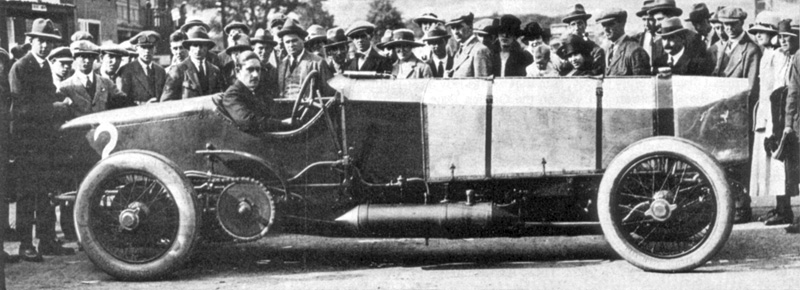
Count Zborowski's Chitty 1 in 1921
Chitty is undoubtably the star-attraction in the film, even though it boasted a splendid cast including Dick Van Dyke, Sally Ann Howes, Lionel Jeffries, Gert Frobe, James Robertson Justice, Benny Hill, Robert Helpmann, Anna Quayle and Adrian Hall and Heather Ripley as Potts two children. Fleming took his inspiration from a series of aero-engined racing cars built by Count Louis Zborowski in the early 1920s which was nicknamed Chitty Bang Bang . The name of the car was coined by the sound the airplane engine makes as it starts and runs. Zborowsi built four different Chittys in his lifetime but the Chitty 1 was his most famous model. Built with a 23-liter 6-cylinder Maybach aero-engine it nearly reached 120mph on one occasion. Eventually the car was purchased by Arthur Conan Doyle's sons. 


In the film, Jeremy and Jemima discover that their favorite "playcar" at Mr. Coggin's junk yard is going to be sent to the fiery furnace as scrap metal, and so they rush home to plead with their father to purchase the car instead. Mr. Potts is a poor inventor, but after Lord Scrumptious buys his invention of whistling treats for dogs, he gleefully returns home with Chitty in tow. And then for two days he hides himself in the garage rebuilding the motor car using scrap material found around the house. What results is a magnificent testament to what an eccentric inventor can create with a little bit of ingenuity and a heap of skill. 

Chitty Chitty Bang Bang's production designer Ken Adams ( Goldfinger, Dr. Strangelove ) worked with British cartoonist Frederick Rowland Emmett to create a new look for Chitty, a marvelous design that combined elements of a ship with a flying machine. 


Seven different Chittys were built for the film including one fully functional road-going model with UK registration GEN 11. Alan Mann Racing in Hertfordshire built this car and fitted it with a Ford 3000 V6 engine. Dick Van Dyke claimed that the motor car "was a little difficult to maneuver, with the turning radius of a battleship". Nevertheless it turned hundreds of heads in whichever village it traveled through. 

Pierre Picton with his GEN 11
After the movie was completed, Pierre Picton, Dick Van Dyke's stand-in driver for the film, purchased two Chittys, auctioning one in the 1970s and keeping another, which he drove to numerous charity races up until 2011, when he decided to have that one also auctioned. At one point, Michael Jackson desired to purchase the car, but Picton refused, wishing to have Chitty remain in Britain. Director Sir Peter Jackson purchased the car for $805,000 and currently plans to use it for charity drives. 

The remaining Chittys were constructed as props for the various scenes requiring transformations. One Chitty was built with wings, another with the hovercraft attachment; there is a smaller road-going version and an engine-less model for trailer use, as well as the "junk" model which the children initially discovered. 


Most of these were later equipped with engines and used to promote the film worldwide. Two of these Chittys are in Florida today. One resides at the Denzer Car Museum in North Miami, another is owned by a private collector. The National Motor Museum in Beauleiu, UK also houses one of these models. 

In addition, many fans of the Chitty Chitty Bang Bang built their own versions of the beloved motor car, many of them being exact replicas. So there are plenty of Chittys across the world!


To conclude our look at this fine four-fendered friend, here are a few specifications to give you a start so that too could construct your own Chitty: 

Length : 17' 7" 
Height : 6' 3" 
Width : 5' 9" 
Maximum Speed : 100 mph
Features : 

  • Ejector seat with parachute
  • Built-in Chittyfied GPS
  • Hovercraft capabilities
  • Flies for hours without supervision

Be sure to head on over to the Classic Movie Blog Association's website to read more reviews of your favorite films featuring planes, trains and automobiles. Thanks for stopping by!


Thursday, October 15, 2015

The Dawn Patrol ( 1938 )

They roared through the dawn...with death on their wings!

Yes indeedee, rip-roaring action abounds in The Dawn Patrol. Where Errol Flynn walks, how can adventure help but follow? 

It's 1915. In central France the 39th Aerial Squadron of the British Royal Flying Corps is losing men like flies to enemy fire. Major Brand's ( Basil Rathbone ) nerves are shattered as he receives orders each day to send mere boys to the skies to face their death.


Amateur aviators fresh out of school, all eager to soar into the heavens to shoot down a Gerry, come to the squadron regularly. Naive, and blindly brave, they boast of what they'd do if they receive their flying orders. But the "old hands" Captain Courtney and Lt. Scott ( Errol Flynn, David Niven ) know better. It's no easy game. With a well-trained enemy on your tail at every moment it's a face-off to the death. 

They eye Major Brand with hatred burning in their hearts, knowing any one of these boys might be sent next, and without sufficient aerial combat experience what chance had they of surviving? They blame him for sending them to the slaughterhouse of the skies. 

"You know what this place is? It's a slaughterhouse, and I'm the butcher!" 
                                                                                                                Major Brand 


Brand realizes this too, and hates himself even though he is simply doing his duty. However, when Brand gets promoted to wing commander, and Courtney gets selected as his replacement, Courtney finds what it feels like to be in the Major's boots : very dirty. And those who were once his friends, are now giving him the evil eye as well. 

The Dawn Patrol was released in 1938 to critical acclaim for it's strong focus on the men who fought the hawk-like battles in the air. John Monk Saunder's Oscar-winning original story was first put to film in 1930 by director Howard Hawks, featuring Richard Barthelmess and Douglas Fairbanks Jr. in the lead roles. Hawks captured some outstanding aerial footage of dogfight scenes and many of these shots were reused in the 1938 remake, interspersed with scenes of Flynn in the pilot seat. 


The aerial scenes were not entirely old footage - Warner Brothers Studios reconditioned nearly two dozen vintage Nieuport and Fokker bi-planes which were used for additional dogfight footage as well as close-up scenes at the headquarters. The famous stunt flier Douglas "Wrong Way" Corrigan was asked to fly some of these Nieuports but Corrigan wanted $100,000 to appear in the film. That was one stunt where he did indeed go the wrong way - the studio was not willing to pay such an amount and nixed him from the production. 

Basil Rathbone is excellent as Major Brand, and Errol Flynn is as powerful and charismatic as ever as Captain Courtney. Flynn thoroughly enjoyed working with friends and the comradery between him and David Niven seen on film was true to life - Niven was one of his best chums. Keep a sharp eye out for Rodion Rathbone, Basil's son, who was making his film debut as "Russell" one of the inexperienced fliers. 


The Dawn Patrol remains one of Flynn's most memorable pictures and it's message of the senseless brutality of war packs a punch over a half century later. Commanding officers of the armed forces today go through the same agony when they must carry out orders from "higher up" knowing the steep price it costs on human lives...lives they personally know. 

Film critic Llewellyn Miller made an accurate prediction in his 1938 review of The Dawn Patrol

"A few...a very few pictures are timeless in their appeal. A very few pictures may be revived year after year without seeming quaint or out-dated or downright silly. The Dawn Patrol is one of the very few films which will survive this year and next and as many years to come as there are people who remember wars. I wish it might be included in every course in American history in every school in the land. I hope that it is revived every year, so long as bullets are being cast and battleships are being made, because, like every great war film that the motion picture industry has produced, it says 'Where is the glory, where is the great adventure, where is there anything but criminal waste in such insanity?'" 

This post is our contribution to Classic Movie Blog Association's Planes, Trains, and Automobiles Blogathon running from Oct. 19 - Oct. 24th. Be sure to head on over to CMBA's blog to find links to all the great articles on your favorite modes of transportation.

Tuesday, October 28, 2014

Miriam Hopkins - A Daring Diva

Miriam Hopkins ranked among the top film actresses of the 1930s, especially among the critics. Like her peer, Bette Davis, her stellar career spanned from the 1920s through the 1960s and encompassed theatre, radio, television and film. From her first film in 1930 she displayed a verve that made her destined for stardom, but, unlike Davis, she did not have the fighting spunk to make a "comeback" in the 1950s to keep her name in the headlines. 

This minor detail, and the fact that the majority of her films have not been released for home viewing, have contributed to Hopkins becoming one of the most underrated and overlooked actresses of the silver screen.

Whereas stars like Rita Hayworth, Hedy Lamarr, Lana Turner, Constance Bennett are acknowledged and revered in books, blogs, and photo sites, Miriam Hopkins seems to have been buried in the sands of forgotten film greats. And unjustly so. Hopkins possessed more than just a pretty face. She was one heck of a great actress. Although she was capable of portraying any kind of role she was handed, she really excelling at playing provocative and tantalizing hussies. B****s to be precise. This was her forte and no one came close to displaying the talent she had at portraying these kind of women.


The Early Years


Ellen Miriam Hopkins was born into a wealthy Savannah family on October 18, 1902. As a young woman she attended some of the finest educational institutions such as Goddard Seminary and Syracuse University. After studying dance in New York she tried her hand at show business, beginning as a chorus girl and later appearing in local musicals before she attempted dramatic parts during the mid-1920s. While appearing in stock companies in the East Coast she receiving rave reviews for her performances and decided to head out west to California and fight her way to stardom. 

Paramount Studios was eager to sign her to a contract and her experience as a stage actress landed her a plum first part in the film Fast and Loose ( 1930 ). Within a year she was performing opposite Fredric March in Dr. Jekyll and Mr. Hyde and starring with Paramount's biggest actor, Maurice Chevalier, in Ernst Lubitsch's The Smiling Lieutenant. She went on to make two more films for Lubitsch ( Trouble in Paradise, Design for Living ) which she recalled in later years as being her personal favorites.

Hopkins was basking in the glory of stardom during the early 1930s. It was her most active decade and of the 35 films she made in her entire career, 22 were produced between 1930 and 1937. The majority of these films were huge successes, both financially and critically, notably The Story of Temple Drake, which became famous for clamping the lid on eroticism and sexuality on film and effectively launched the Catholic Legion of Decency into action, putting an end to the pre-production code era. 


Hopkins showed America a new kind of woman, unlike any other seen in Hollywood. She portrayed connivers and schemers and cold-hearted Hannahs with a brassy playfulness that made her irresistible. You knew she was bad, but man was she good at it! 

Some of her most popular films of the 1930s were Dancers in the Dark ( with George Raft ), Two Kinds of Women, Becky Sharp ( the very first three-strip Technicolor feature film ), and the bowdlerized version of Lillian Hellman's scandalous play The Children's Hour - These Three ( 1936 ).

"Hoppy"


Off-screen Miriam Hopkins had very few actor friends, instead surrounding herself with a company of intellectuals, hobnobbing with - and bedding - many men of the literary set. Some of her closet companions were Theodore Dreiser, William Faulkner, Ward Morehouse and Tennessee Williams. 

Hopkins was known for being very fussy when it came to selecting scripts and wanting final script approval. Although she was an actress highly in demand by many of the studios and a number of directors, her hen-picking of the scripts stirred up the studio heads to boiling point in frustration. In the four short years that she was with Paramount studios her contract was adjusted three times to suit her demands. RKO wanted her to sign with them after her contract expired, but she chose to go with Samuel Goldwyn instead. RKO needn't have fussed over her, for her temperament at Goldwyn led her to being loaned out many times and they managed to snag Hopkins for four films. While at Goldwyn she was also under contract to Warner Brothers ( for three films ) and Metro-Goldwyn-Mayer. It's no surprise that she earned the nickname "Hoppy".

Her flitting ways proved to be her downfall on many an occasion, especially when some of the film projects she was offered turned out to become hits for other actresses. The Song of Songs ( Marlene Dietrich, 1933 ), It Happened One Night ( Claudette Colbert, 1934 ), Twentieth Century ( Carole Lombard, 1934 ), Peter Ibbetson ( Ann Harding, 1935 ), and To Have and Have Not ( Lombard, 1942 ) were all parts that she had declined. 


In some situations Hopkins just got the short end of the stick. In 1938 the country was abuzz with rumors as to who would play Scarlett O'Hara in Margaret Mitchell's Gone With the Wind. Hopkins auditioned for the role, having an advantage over all the other applicants by being a native born Georgian, but eventually lost the part to Vivien Leigh. This was a sore disappointment to her and to many "Gone With the Wind" fans across America. Just as Clark Gable was America's choice for the part of Rhett Butler, Hopkins was the overwhelming choice in the popular polls for Scarlett. Even Margaret Mitchell herself declared, 

" Miriam Hopkins had been my choice from the beginning, but I [knew] what I had to say wouldn't matter so I said nothing ". 

While Miriam Hopkins was filming The Old Maid ( 1939 ) opposite Bette Davis, she was married to director Anatole Litvak, her third of four husbands. Litvak had directed Davis in The Sisters a year prior and Miriam had suspected that the two had had an affair. In the meantime, Warner Brothers had purchased the story rights to All This and Heaven Too as a vehicle for their leading lady, Ms. Bette Davis. For some reason, Bette turned the project down and so Warners offered it to Hopkins, who had signed a three picture deal with the studio. She was delighted to do the film, but first had to settle her divorce with Litvak ( she wouldn't stand for an adulterous husband of course! ). This meant six weeks in Reno. Alas, while the divorce papers were being finalized, Warners changed their mind about All This and Heaven Too, thinking that the European market would be very bad at the moment with Hitler invading. As a condolence they offered Hopkins Virginia City ( 1940 ) co-starring Errol Flynn and Randolph Scott and then threw her a looper, picking up the All This and Heaven Too project but giving the part this time to Bette Davis. 


Bouts with Bette 


These days Miriam Hopkins is best remembered for the films that she made with Bette Davis, her arch nemesis, and the "Hatfield and McCoy" feud that the two engaged in off-screen. The screen divas couldn't stand the sight of each other and Davis was said to have "thoroughly enjoyed" throttling Hopkins in Old Acquaintance

Miriam Hopkins truly did have enemies in Hollywood, especially among her co-stars, but being the southern belle that she was, never publicly dissed them. On the other hand, Davis, who was asked during an interview on a morning news program whom she had difficulty working with, bluntly sputtered "Miriam Hopkins was a bitch!"

Their feud most likely began in the late 1930s, when Warner Brothers cast Bette Davis in the lead role of Jezebel, a role which Miriam Hopkins had made famous on stage. Her ego was deeply damaged and she thrashed the library in her New York home when she heard on the radio that Davis had won the Academy Award for Best Actress for her part of Julie Marsden.


Audiences adored seeing these two temptresses lock horns and the box-office receipts for The Old Maid inspired Warner Brothers to team up Hopkins and Davis once again for Old Acquaintance, a particularly juicy piece of pulp fiction, ripe with catty scenes. 


The Later Years


During the 1940s, Hopkins focused her talents towards the stage - her true love - and appeared in the comedy The Skin of our Teeth, and the dramatic The Perfect Marriage and Message for Margaret ( 1947 ). She also kept active on radio, performing in The Campbell Playhouse, Lux Radio Theatre, Suspense and Inner Sanctum before she returned to the screen in a supporting role in William Wyler's The Heiress. 

Although the days of being a glamorous leading lady were past, Hopkins did not seem to mind at all, instead focusing her energies on giving stellar performances in character roles, some of which included that of the aging hooker in The Outcasts of Poker Flat ( 1952 ) and the deliciously diabolical role of Laurence Olivier's wife in Carrie that same year. Hopkins was also one of the first major actresses to embrace the fledgling medium of television, appearing in Pulitzer Prize Playhouse, Lux Video Theater, Studio One, and Climax. Television permitted her to perform a wide variety of characters which she had not tackled on stage or in film. One of these roles was that of Norma Desmond in the 1955 Lux Video broadcast of Sunset Boulevard

During the 1960s she performed in a handful of films, notably in the remake of The Children's Hour ( 1961 ) starring Audrey Hepburn and Shirley MacLaine. Ironically, one of her last television appearances was that of an aging forgotten film star in "Don't Open Till Doomsday", an especially memorable episode of The Outer Limits. 


Hopkins passed away on October 9, 1972, just nine days shy of her 70th birthday. She was a sophisticated and immensely talented actress who deserves to have a much more exalted position in the Pantheon of classic stars, if only to introduce her to new audiences. Among the appreciative she is not forgotten and never will be. Let's raise a glass in toast to Miriam Hopkins, her incomparable appeal, and all the glory she basked in during her prime.

This post is our contribution to the Forgotten Film Stars blogathon hosted by the Classic Movie Blog Association. Click here to read more about all of you favorite forgotten film stars...don't forget now!