Showing posts with label Basil Rathbone. Show all posts

Saturday, September 20, 2025

Make A Wish (1937)

In 1936, Bobby Breen hit the big screen in his first starring role in the film Let's Sing Again. The curly-mopped youngster was a male edition of Shirley Temple with a similar twinkle in his eyes and a decidedly better singing voice. 

Little Bobby Breen (no relation to the film censor Joseph Breen) was indeed a talented youngster and, while he remained young, RKO Studios milked his image for all its worth featuring him in eight films within three years. 

Unfortunately, little boys do not remain little boys forever and as Bobby's bones grew, his audience diminished. The studio didn't quite know what to do with a teenage singing sensation, especially when his soprano voice was beginning to take on tenor tones. The moment his voice broke, Bobby broke with Hollywood and decided to concentrate on his school education before entering the US Army during World War II.

While he was on top, he made some entertaining films, the best of which was Make a Wish co-starring Basil Rathbone and opera star Marion Claire. 

In this film, Rathbone played Johnny Selden, a composer of operettas, who likes to vacation in a cottage across the lake from a boy's summer camp. One day while fishing, he meets "Chip" Winters (Bobby Breen), a friendly lad with a beautiful singing voice who is staying at the camp. Chip's mother is a musical stage star. Chip shares with Mr. Selden one of the letters his mother wrote to him, and this triggers Mr. Selden's creative juices to bubble over, so much so that he bases his new operetta around Chip's mother who inspired it. When Mrs. Winters (Marion Claire) arrives at camp, Mr. Selden finds her ideal and asks her to star in his latest production in New York. She likes the idea but her fiancĂ©, the stuffy Mr. Mays (Ralph Forbes), is set against it. This provides the drama of the film. Donald Meek provides the comedy in the form of a butler who wants to compose music himself. He teams up Henry Armetta and Leon Errol to unintentionally destroy Mr. Selden's final act. 

Make a Wish is a light-hearted musical aimed at children but entertaining enough for adults to enjoy as well. It leaves you with a feel-good feeling which makes it timeless. Like the Shirley Temple films, the script has some implausibilities in it, like Mr. Selden's theatrical producer deciding to go ahead with staging an opera while the third act remains incomplete (!) It also seems unthinkable that Mr. Selden would not be aware that his show was being made until opening night - Where was he, on an African safari with no phone or newspaper access?

The music in Make a Wish is delightful. Oscar Strauss (The Chocolate Soldier) wrote the score while Paul Francis Webster and Louis Alter penned the lyrics. Three songs stand out: the titular "Make a Wish", "Music in My Heart", and "Campfire Dreams" which oddly enough was not written by Strauss. It was composed by Louis Alter. 

Bobby Breen's movies have not yet been given a proper DVD release but they can all be found on Youtube in varying conditions. This one is a worth see if only to enjoy Bobby's fine singing voice. 

Friday, March 26, 2021

The Bishop Murder Case ( 1930 )

Before Basil Rathbone donned the deerstalker to play Sherlock Holmes in 14 films, he portrayed the dapper sleuth Philo Vance in The Bishop Murder Case ( 1930 ), Metro-Goldwyn-Mayer's first film to feature S.S. Van Dine's famous detective hero. 

Paramount Pictures brought novelist Dine's character to the screen in two successful pictures starring William Powell ( The Canary Murder Case and The Greene Murder Case ) so Metro quickly purchased the rights to his latest novel "The Bishop Murder Case" to film their own version with Rathbone portraying the urbane amateur detective. 

In this story, a fiendish murderer is on the loose at Professor Dillard's estate and he is using Mother Goose nursery rhymes as his motif. Excerpts from the rhymes are being left as clues with the murderer cryptically signing his notes "The B.I.S.H.O.P".

Basil Rathbone did a fine portrayal of Philo Vance and the familiar air of superiority that he gave to Sherlock Holmes could be seen in Philo's character as well. Leila Hyams played the leading lady, the pretty young niece to Professor Dillard. Also in the cast was Roland Young, Delmer Daves, Carroll Nye, Alec B. Francis, and George F. Marion. Clarence Geldert played John Markham, the New York County District Attorney who, like Lestrade, often needed Vance's helping hand to solve the murder. 

While The Bishop Murder Case has a great plot, the production seems dated by comparision to other mystery films of the 1930s. It was released in 1930, just when many of the major studios were transitioning from silent to sound pictures, and the film was issued as both a silent picture and as an "All-Talking!" feature. It seems more like a silent film with long pauses on the character's faces as if the audience had to "read" the lines from their expressions. In many scenes, the microphone is not positioned near the actor speaking, so their voice sounds faded. The staging is also more reminiscent of silent films. It's amazing how much films advanced just within five years! Especially at Metro-Goldwyn-Mayer where they often utilized the latest technology. 

Nevertheless, if you want a good mystery and need your fill of Philo - or just want to see Basil playing detective - then The Bishop Murder Case is worth a look-see. 

Wednesday, October 31, 2018

Victorian Thrillers of the 1930s & 1940s

Victorian London, steeped in a dark and romantic aura, has always been the ideal setting for murders and mysteries in films of the 1930s and 40s. Lurking beneath the white facade of stately manors inhabited by fashionable ladies and gentlemen with high morals and social sensibilities lay seedy districts reeking with crime and misery....districts where foul deeds were not uncommon. Opium-addicts, prostitutes, music hall wenches, and rum-guzzling sailors were wildly cavorting with Destiny on a nightly basis.

It was this contrast between wealthy society and dredging poverty that gave birth to so many tantalizing stories of horror in the "Penny Dreadful”'s of the day; stories with characters like Sweeny Todd the Demon Barber of Fleet Street and Jack Sheppard. All of them were loosely based on news accounts these authors were reading about on a daily basis of the serial killer Jack-the-Ripper.

In these gentle times even whispers of innuendo were received by ladies with a good dose of smelling salts, nevertheless, these tales of true-life terror were repeated throughout the city and developed into short stories of legendary fame. They featured crimes that super-sleuths like Sherlock Holmes could solve on a weekly basis or settings that gentlemen thieves such as Raffles could prowl around in. Once motion pictures gained popularity, these stories were brought to life in visual splendor. One of the earliest films to depict this atmospheric era to perfection was Dr. Jekyll and Mr. Hyde (1931) starring Frederic March, Mariam Hopkins, and Rose Hobart. Director Rouben Mamoulian's pre-code horror classic transported audiences to a dark and dangerous London of the late 1800s, where they were able to witness first-hand the transformation of the reserved Dr. Jekyll into the hideous Mr. Hyde. 
Here are a few more well-known Victorian London thrillers brought to the silver screen :

The Mystery of Mr. X (1935) - This decisively Jack-the-Ripperish story features Robert Montgomery as our light-fingered gentleman hero who is being implicated as the killer of nine grisly London murders done by a murderer who always strikes in a different neighborhood and leaves his mark next to his victims…the signature of Mr. X! Peter Lawford starred in a remake of this tale in MGM’s The Hour of 13 (1952). 
The Adventures of Sherlock Holmes (1939) - A grisly midnight murder in a secluded city park, mysterious South American funeral dirges, suspiciously heavy footprints, missing crown jewels from the Tower of London and a puzzling drawing of an albatross add up to making this one of Sherlock Holmes’ most intriguing cases. Ida Lupino and Alan Marshall star with Basil Rathbone and Nigel Bruce in this second Sherlock Holmes feature from the 20th Century Fox studios. A visual Victorian feast for the eyes it be.

Dr. Jekyll and Mr. Hyde (1941) - MGM pulled out all the stops in this ultra-glossy gas-lit masterpiece based on Robert Louis Stevenson's classic tale of a man's double nature - the law-abiding Dr. Jekyll and the positively hairy sexual sadist Mr. Hyde, the creature within himself that he created whilst experimenting to scientifically suppress the evil nature residing within mankind. The all-star cast includes Spencer Tracy in the title role, Ingrid Bergman as buxom barmaid Ivy, Lana Turner, Donald Crisp, and Ian Hunter. Directed by Victor Fleming. 
The Lodger (1943) - Laird Crager, a great burly hulk of an actor, portrayed the very essence of a creepy social recluse in The Lodger where, as Slade - a quiet pathology student residing at the home of the Burtons (Sir Cedric Hardwicke and Sara Allgood) - he is suspected of being none other than Jack the Ripper. Gasp! The gorgeous moody photography of John Brahm transports us into the cobblestoned mire of Whitechapel through its heavy fog-encased settings, period detail, and its disturbing visual vignettes. George Sanders and Merle Oberon also star.

Gaslight (1944) – Charles Boyer, Ingrid Bergman and Joseph Cotton star in this intrepid MGM remake of the 1940 British classic Gaslight featuring Anton Walbrook and Diana Wynyard. Twenty years after a wealthy woman was murdered in her home in Thorton Square her niece moves into the London dwelling with her husband, a suave and sinister gentleman who plots to drive his wife mad because he has a dark secret to hide. MGM attempted to destroy all available prints of the English version of this psychological thriller but fortunately a few remained and today we can enjoy both editions on DVD. 
The Picture of Dorian Gray (1944) - Oscar Wilde's fantasy about the inner state of the soul of one Dorian Gray was given A-class treatment in director Albert Lewin's pet project The Picture of Dorian Gray, released through MGM. Silky smooth 26-year-old Hurd Hatfield played the title character (a role which made him very unpopular in Hollywood) along with an impressive cast including George Sanders, Donna Reed, Angela Lansbury, Peter Lawford and Sherlock Holmes veteran actor Miles Mander. Incidentally, Basil Rathbone wanted the role of Lord Henry but was overlooked because he was already being too closely identified with the legendary detective of Baker Street. Stunning cinematography, a strong narrative, and eye-popping Technicolor sequences make this a most memorable film.
Hangover Square (1945) - Laird Cregar returned to the screen as another downright suspicious madman, this time as a pianist who had to struggle with mental turmoil - and the compulsion to wreak destruction - whenever he hears the ping! of a certain note.John Brahm’s filming is atmospheric and eerie in its dreamlike sequences and the film has a great cast including George Sanders and Linda Darnell.

Thursday, October 15, 2015

The Dawn Patrol ( 1938 )

They roared through the dawn...with death on their wings!

Yes indeedee, rip-roaring action abounds in The Dawn Patrol. Where Errol Flynn walks, how can adventure help but follow? 

It's 1915. In central France the 39th Aerial Squadron of the British Royal Flying Corps is losing men like flies to enemy fire. Major Brand's ( Basil Rathbone ) nerves are shattered as he receives orders each day to send mere boys to the skies to face their death.


Amateur aviators fresh out of school, all eager to soar into the heavens to shoot down a Gerry, come to the squadron regularly. Naive, and blindly brave, they boast of what they'd do if they receive their flying orders. But the "old hands" Captain Courtney and Lt. Scott ( Errol Flynn, David Niven ) know better. It's no easy game. With a well-trained enemy on your tail at every moment it's a face-off to the death. 

They eye Major Brand with hatred burning in their hearts, knowing any one of these boys might be sent next, and without sufficient aerial combat experience what chance had they of surviving? They blame him for sending them to the slaughterhouse of the skies. 

"You know what this place is? It's a slaughterhouse, and I'm the butcher!" 
                                                                                                                Major Brand 


Brand realizes this too, and hates himself even though he is simply doing his duty. However, when Brand gets promoted to wing commander, and Courtney gets selected as his replacement, Courtney finds what it feels like to be in the Major's boots : very dirty. And those who were once his friends, are now giving him the evil eye as well. 

The Dawn Patrol was released in 1938 to critical acclaim for it's strong focus on the men who fought the hawk-like battles in the air. John Monk Saunder's Oscar-winning original story was first put to film in 1930 by director Howard Hawks, featuring Richard Barthelmess and Douglas Fairbanks Jr. in the lead roles. Hawks captured some outstanding aerial footage of dogfight scenes and many of these shots were reused in the 1938 remake, interspersed with scenes of Flynn in the pilot seat. 


The aerial scenes were not entirely old footage - Warner Brothers Studios reconditioned nearly two dozen vintage Nieuport and Fokker bi-planes which were used for additional dogfight footage as well as close-up scenes at the headquarters. The famous stunt flier Douglas "Wrong Way" Corrigan was asked to fly some of these Nieuports but Corrigan wanted $100,000 to appear in the film. That was one stunt where he did indeed go the wrong way - the studio was not willing to pay such an amount and nixed him from the production. 

Basil Rathbone is excellent as Major Brand, and Errol Flynn is as powerful and charismatic as ever as Captain Courtney. Flynn thoroughly enjoyed working with friends and the comradery between him and David Niven seen on film was true to life - Niven was one of his best chums. Keep a sharp eye out for Rodion Rathbone, Basil's son, who was making his film debut as "Russell" one of the inexperienced fliers. 


The Dawn Patrol remains one of Flynn's most memorable pictures and it's message of the senseless brutality of war packs a punch over a half century later. Commanding officers of the armed forces today go through the same agony when they must carry out orders from "higher up" knowing the steep price it costs on human lives...lives they personally know. 

Film critic Llewellyn Miller made an accurate prediction in his 1938 review of The Dawn Patrol

"A few...a very few pictures are timeless in their appeal. A very few pictures may be revived year after year without seeming quaint or out-dated or downright silly. The Dawn Patrol is one of the very few films which will survive this year and next and as many years to come as there are people who remember wars. I wish it might be included in every course in American history in every school in the land. I hope that it is revived every year, so long as bullets are being cast and battleships are being made, because, like every great war film that the motion picture industry has produced, it says 'Where is the glory, where is the great adventure, where is there anything but criminal waste in such insanity?'" 

This post is our contribution to Classic Movie Blog Association's Planes, Trains, and Automobiles Blogathon running from Oct. 19 - Oct. 24th. Be sure to head on over to CMBA's blog to find links to all the great articles on your favorite modes of transportation.

Tuesday, April 28, 2015

The Adventures of Robin Hood ( 1938 )

"I'll never rest until every Saxon in this shire can stand up free men and strike a blow for Richard and England!"

Never has there been a more joyous swashbuckler filmed than Warner Brothers' The Adventures of Robin Hood (1938). The centuries old legend of the bold outlaw who robbed from the rich to give to the poor comes to life in this glorious adaptation which brims over with thrilling swordplay, sweet romance, a stellar cast, a thousand resplendent costumes, and a rousing orchestral score by Erich Wolfgang Korngold. Verily, the film serves up a right merry feast of entertainment.

No archer ever lived that could speed a gray goose shaft with such skill and cunning as Robin, nor has any actor embodied a character as well as Errol Flynn does in his portrayal of this lusty rogue.

The legends of Robin Hood date back to the 14th-century when tales of the famous outlaw were spread across the shires through ballads. Innumerable authors have passed the stories down in various tellings throughout the ages, but it is undoubtedly Howard Pyle's inspired adaptation of the legends in his 1883 masterpiece "The Merry Adventures of Robin Hood" that set the tone for this film.


Like the book, The Adventures of Robin Hood transports its audience to an England of yor; a time of grand pageantry, when knights roamed errant through virgin countryside in search of adventures and the world was bathed in the glow of medieval romance. It was also a time of oppression for serfs who were under the rule of scoundrelly noblemen, such as Sir Guy of Gisbourne.

Storybook thrills abound in Norman Reilly Raine and Seton Miller's script, which weave elements of romance, comedy and adventure in its simple story of tyranny opposed and virtue triumphed. Robin Hood and his band of merry men, loyal to King Richard, set things right for England when the King's dastardly brother, the Norman Prince John, usurps the throne and wrenches tax money, yea, and the very blood, from the oppressed Saxons. The King's royal ward, Lady Marian, despises Robin Hood and his thieving ways until she sees the broken, destitute masses which he cares for in the forest. Then her heart goes out towards him and his noble cause and she becomes the outlaw's ally, eventually saving him from the gallows.

James Cagney was originally cast as the archer in green tights when Warner Brothers began development on Robin Hood in 1935. The studio was slowly expanding its output to include adventure films and prestigious historical dramas in an effort to compete with its rival Metro-Goldwyn-Mayer and reach a broader audience.


After the success of Warner's A Midsummer Night's Dream (1935), costume designer Dwight Franklin suggested that the same formula could be translated well to another period piece, that of the tales of Robin Hood. Executive producer Hal Wallis decided to reunite most of the principle cast for this project, including Anita Louise as Lady Marian, Frank McHugh and Allen Jenkins as some of the merry men, and Hugh Herbert as Friar Tuck.  Ho! but during the development stage James Cagney had one of his frequent rows with the studio and walked out on his contract, not returning for nearly two years.

Since much time and money had already been invested in the story, Wallis decided to cast the studio's rising star, Errol Flynn, in the lead. The part of the charismatic Saxon knight was a glove-fit for this devilishly handsome actor who had a roguish air and an athletic knack for leaping over parapets.

Fate dealt a fortuitous hand with Cagney's departure, for Flynn's arrival precipitated a complete overhaul of the project. What resulted was a film which could not be more impeccably cast. Claude Rains cloaked himself in red as the villainous Prince John, an urbane schemer who finds the feather-capped archer's exploits wryly amusing. Basil Rathbone had a long career portraying villains and did a stellar performance as the wicked pirate Levasseur in Captain Blood in 1935. For this film he donned the garb of the egotistical Sir Guy of Gisbourne.


Lady Marian could not be envisioned more lovely than Olivia de Havilland, who had just launched her film career three years prior with her appearance as Hermia in A Midsummer Night's Dream. Once Errol Flynn was cast as Robin Hood there was no doubt that de Havilland would portray his "bold Norman beauty", since the two were such an ideal couple in Captain Blood and The Charge of the Light Brigade. They would go on to make six more films together.


Robin's rakish derring-do would be for naught without the aid he received from his motley band of merry men: Alan Hale had portrayed the bearish Little John in the 1922 Douglas Fairbanks version of Robin Hood, so it was a natural choice that he reprise the role for this film. Hale and Flynn were a right jolly team and, over the course of their careers, were united for 13 films. Patric Knowles was Robin's lyre-strumming comrade-in-arms Will Scarlett (a role originally intended for David Niven) and Eugene Palette portrayed the portly Friar Tuck. 

Also in the cast was Herbert Mundin as cheerful Much, who casts a favorable eye on Bess, Marian's twittery lady-in-waiting, portrayed by Una O'Connor. Ian Hunter made a noble King Richard, and Melville Cooper played the oafish Sheriff of Nottingham.

Shafts of sunlight streaming down through the leafy canopy of Sherwood Forest were captured in the splendor of three-strip Technicolor by the perceptive eyes of cinematographers Tony Gaudio and Sol Polito, who were utilizing the newly developed Technicolor cameras. This was a cumbersome and costly process, but it lent the film an unsurpassed richness in color. This beloved Sherwood of Robin's just happened to be Bidwell Park located in Chico, California. Never had England seen so much sunlight in one summer.

Director Michael Curtiz took over the scepter of command from William Keighley midway through production and deserves much credit for the sprightly pace of The Adventures of Robin Hood. He captured the grand-flourishing manner of silent day swashbucklers with their crowd-pleasing heroics and bold swordplay. Some of the sequences were even filmed "undercranked" which sped up the action on screen in silent-era fashion. 


Errol Flynn was Douglas Fairbanks reincarnated with his broad-gestured displays of machismo. Stuntmen were used in some shots of the film, but many a daring-do was performed by Flynn himself who wanted it known that he did not shy away from physical feats.

The Adventures of Robin Hood was an enormous hit upon its initial release on May 14, 1938, with critics praising its sheer exuberance and audiences of all ages coming to take a pilgrimage to the land of medieval fancy. Robin's arrows soared through the air to land with a resounding ffffrupp! on the bullseye of entertainment. Warner Brothers gathered nearly $4 million into its purse and the film went on to win three of the four Oscars it was nominated for at the Academy Awards (losing the Best Picture award to You Can't Take it With You).


The Adventures of Robin Hood remains a favorite amongst cinephiles nearly eighty years since Robin made his heroic entrance into Sherwood Forest. It is still considered one of the best films of its type and possesses all of its initial zest and vitality, in no small part due to Errol Flynn's exuberant portrayal of Robin Hood. He shows us a character so supremely alive that to him all of life is a lark. What makes him so wonderful to behold is he lights the fire of life within the audience as well. Our cares disappear and we wonder why we take our petty problems with such seriousness when Robin could face death innumerable times without ever losing a feather in his cap.

Numerous remakes have been undertaken over the years but none have been able to capture the essence of Robin Hood without cynicism or postmodern mockery. This film was made with sublime innocence in a decade when righteousness and evil could be presented to the audience in simple black and white imagery without brushing virtues and sins together into murky grays. The cast and crew of Robin Hood set out to make the picture, not as a technical masterpiece, but purely for the aim of providing entertainment to the masses, and verily, this task was accomplished with thunderous success.


This post is our contribution to the Classic Movie Blog Association's annual spring blogathon The Fabulous Films of the 1930s. Be sure to head on over to CMBA's website to check out all the wonderful posts celebrating the grand films of the 1930s. 


Sunday, June 1, 2014

Above Suspicion ( 1943 )

"My love is like a red, red rose...." 

MGM journeys into the realm of espionage with Above Suspicion (1943), a witty jaunt into spy-laden pre-World War II Europe. 
Fred MacMurray plays Richard Myles, an Oxford college professor, who is happily ready to embark on a Continental honeymoon with his bride Frances (Joan Crawford). Before they depart however, a former colleague of his, now with the foreign office, asks the couple if they would do a favor to him, and jolly ol' England, by inquiring into the whereabouts of a scientist who has disappeared within the confines of the Fuhrer's Vaterland. He holds the secret plans to the Nazi's latest diabolical invention - underwater magnetic mines. As honeymooners they would be considered above suspicion and could look into the matter discreetly. Or so they are told. Ach du lieber!...before they can utter "uberraschung" they are caught up in a web of intrigue that leads them from Paris to the pine-laden Alpine forests of Innsbruck. 


Above Suspicion, based on the novel by Helen MacInnes, is an easy-to-follow and briskly paced thriller with some rattling good moments of excitement. Its purely escapist plot is given credibility through its deft handling by director Richard Thorpe (Night Must Fall, Ivanhoe) and its stellar cast. The film plays out along the lines of Desperate Journey with grand morale-boosting elements but very little plausibility.....but perhaps that's what makes both of these pictures so entertaining. Above Suspicion was released at the height of World War II, a time when so many American and British citizens were eager to make an active contribution to corking up the war for good. 

"Darling, the less you know, or appear to know, the better"

At one time or another we're all drawn in by the allure of being a spy; deciphering codes, staking out suspicious bookshop fronts, wearing disguises, hiding out in secluded chalets and, of course, capturing public enemies. Richard and Frances are no different, and Frances is especially thrilled to help the British secret service but, unlike his wife, Richard realizes the danger ahead. En route, our American heroes stumble upon cryptic clues, all the while being spied on with peering abnormality by dubious faces and sundry characters. Their only key to unmasking friends from foes lies within the lyrics to Robert Burns eighteenth century melody. 

In addition to our leading cast, Above Suspicion features some excellent character support from Basil Rathbone, Felix Bressart, Reginald Owen, Richard Ainley, Bruce Lester and Sara Haden. Conrad Veidt is especially appealing in his role as Herr Seidel, one of the Brit's loyal allies within Germany. Veidt was often pigeon-holed as villains and it is a pleasant change of face to see him play this underground hero. Veidt died of a massive stroke shortly after filming commenced and Hollywood lost one of its most talented actors because of his passing. His entertaining dance floor sequence is a highlight of the film. 


Fred MacMurray was making a departure from his recent Claudette Colbert comedy teamings to take a dramatic turn and this role suits him quite well. Incidentally, Colbert would have made an excellent Frances had Crawford declined the part. 


Joan Crawford had been loyal to Metro-Goldwyn-Mayer since they gave her her start in 1925. She made seventeen films with the studio but by the early 1940s her star-status was beginning to wane and fresh faces like Lana Turner, Hedy Lamarr, and Greer Garson were receiving all of the choice scripts. Eager to showcase her acting ability, Crawford accepted a lower salary and switched to the less prestigious Warner Brothers studio after the completion of Above Suspicion. Within one year she was up for the Academy Award for Best Actress for her portrayal in Mildred Pierce.

Within Above Suspicion are hidden elements of Hitchcock-like suspense, featuring a labyrinth of twists and turns, car chases, and an assassination attempt at an opera, a scene taken right out of The Man Who Knew Too Much (1934). Overall, the film is like a tasty strudel filled with chunks of drama, comedy and action, all enfolded within thin layers of plot to make up a taut 90-minute thriller.


This post is our contribution to the super-sneaky Snoopathon hosted by Movies Silently. Be sure to check out all the great posts about the nefarious spies, agents, and Mata Hari's that appeared in films from 1920-1965. 

Wednesday, October 2, 2013

The Top Ten Literary Film Adaptations Never Made

Here is our contribution to The Great Imaginary Film Blogathon, a celebration of all the wonderful classic films that us movie bloggers wish were made but never were. For today and tomorrow, classic movie fans will be writing fantasy reviews to movies that exist only in their imaginations. Be sure to check out all the great submissions here

Below you see some of our favorite "Why didn't they make that??" films. We would love to hear comments and suggestions on alternative castings/ideas on how these films could have been made. 

Enjoy!


The Adventures of King Arthur ( 1941 )


Plot : The life and times of Camelot's most famous king, from his humble beginnings, the pulling of the sword in the stone, to his meeting with Merlin the Wizard and his eventual downfall.
Studio: Warner Brothers Pictures
Director : Michael Curtiz
Cast : Errol Flynn ( Arthur Pendragon ), June Duprez ( Guinevere ), Gale Sondergaard ( Morgan Le Fey ), David Manners ( Mordred ), Patric Knowles ( Sir Tristam ), Evelyn Veneble ( Lady of the Lake ), Alan Hale, Burt Lahr.

"The Adventures of Robin Hood" was a box-office success upon its release and so Jack Warner decided to go ahead and follow it up with another great Howard Pyle adventure. This one was based on Pyle's four book saga on the rise and fall of the legendary King Arthur. The film focus on the exploits of Arthur himself and on the noble manhood of Lancelot but appropriately stays clear of indulging in too much romance surrounding Guinevere. Like Pyle's series, the film only hints at Lancelot's impending relationship with the queen in order to progress the story line towards the fall of Camelot. An excellent historical swashbuckler, with Warner Brother's usual stamp of high production values. 


               _______________________________________________________________________


Anne of Green Gables ( 1967 )


Plot:  The stories are about the young red-headed orphan Anne and her uninhibited thirst for enjoying the beautiful in life as well as her adventures in growing up and becoming a schoolteacher on Prince Edward Island.
Studio: Walt Disney Studios
Director: David Swift
Cast: Shani Wallis ( Anne Shirley ), Michael Anderson Jr. ( Gilbert Blyth ) Agnes Moorehead ( Marilla Cuthbert ), Shirley Jones ( Minister's Wife ) Walter Brennan ( Matthew Cuthbert ), Rosemary DeCamp ( Rachel Lynde ).

When L.M Montgomery wrote "Anne of Green Gables" in 1908, little did she know that the book would become as popular as it did, but not one to ignore success, she quickly followed it up with a sequel, "Anne of Avonlea". In 1934, Anne Shirley ( who took her screen name from the book character ) starred in the RKO film version of the novel, which became a surprise hit for the studio and one of their top-grossing films of the year. "Anne of Windy Poplars" In the 1950s several Canadian production companies produced television adapations of the books and in 1965 a musical was made for the Canadian stage. It has since become Canada's longest running musical. 

However, it was time it was brought to the screen in full-color and so in 1965 Walt Disney purchased the rights to the stories and to the musical score and production began in late 1966. Walt's premature death did not put production on hold and it was released the same year as the studio's animated classic, "The Jungle Book". Shani Wallis, who became famous a year later in the Lionel Bart musical version of Oliver! starred as the young Anne Shirley and Agnes Moorehead, who had become a TV sensation as Samantha Steven's mother Endora, was perfectly cast as Marilla Cuthbert. 

                 _______________________________________________________________________


Howard's End ( 1947 ) 


Plot : Margaret Schlegel does an act of kindness to the aging Mrs. Wilcox, who in turn leaves her her beloved Howards End cottage to her when she dies. Wilcox's businessman husband and greedy son refuse to give the cottage to Schlegel but events take a turn for the better.
Studio : Metro-Goldwyn-Mayer
Director : Clarence Brown
Cast : Greer Garson ( Margaret Schlegel ), Joan Fontaine ( Helen Schlegel ), Ronald Colman ( Henry Wilcox ), Peter Lawford ( Leonard Bast ) , Mary Astor ( Mrs. Wilcox ).

E.M Forester's novel "Howard's End" fit right into MGM's line of novel adaptations they had selected for their leading lady, Greer Garson..films such as "Pride and Prejudice", "Blossoms in the Dust", "Mrs. Miniver" and "Random Harvest". This film also included her Random Harvest costar Ronald Colman, but unlike Harvest he portrays a rather dismissive businessman. A welcome change from his usual roles however. Joan Fontaine and Peter Lawford are perfect as the young couple, but it is truly Ms. Garson who steals the picture. The lovely Greer Garson personifies the gentle Margaret Schlegel and we can't help delighting in her gift of Howard's End. 

              ______________________________________________________________________


Death on the Nile ( 1942 ) 


Plot : A passenger is murdered while on board a cruise through the Nile and Hercule Poirot must sift through the shipload of suspicious tourists to uncover the culprit.
Studio : 20th Century Fox
Director : George Waggner
Cast : Marcel Dalio ( Hercule Poirot ) Betty Field, Richard Denning, Reginald Gardiner, Lynn Bari, Douglass Montgomery, Mary Boland, Maria Ospenskaya, Martin Kosleck.

20th Century Fox's "Death on the Nile" brought Agatha Christie's thrilling Mediterranean set murder mystery to the screen with a dazzling cast of performers and it gave Paris-born character actor Marcel Dalio his first lead role as the inimitable detective Hercule Poirot.

             _______________________________________________________________________


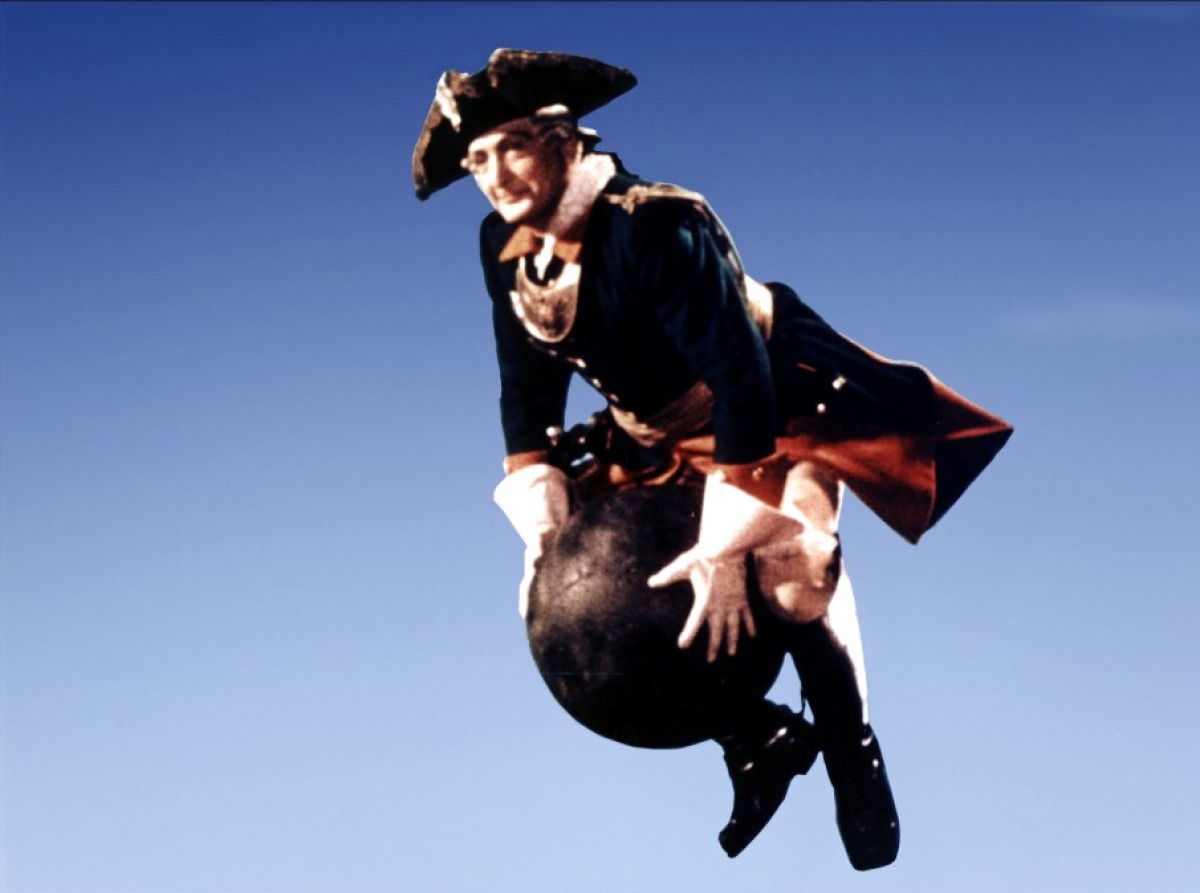
The Adventures of Baron Munchausen ( 1946 ) 


Plot : In a tavern in Bavaria, Baron Munchausen tells wild tales of his adventures around the world and during his days in the army. Hauptleute Boehmer calls Munchausen a fraud and sets out to prove his stories false...but surprisingly he finds many a strange tale to be true!
Studio : London Films
Director : Alexander Korda
Cast :  Ralph Richardson ( Hauptleute Boehmer ), Marius Goring ( Baron Munchausen ), Merle Oberon, Conrad Veidt, and Jean Simmons.

This is a wonderful and strangely amusing film from the fabulous Korda brothers. It evokes the bravado spirit of their previous successes, "The Four Feathers" and "The Thief of Bagdad" and yet has a childlike quality of humor about it that makes it very appealing. The scrumptious sets and vivid Technicolor filming add to its brilliance. In 1957, Danny Kaye added his signature comedic touch along with clever songs written by his wife, Slyvia Fine, to the Paramount remake of "The Adventures of Baron Munchausen". 

                ______________________________________________________________________


The Mutinous Wind ( 1939 ) 


Plot : A young woman learns powers of witchcraft from an old book found in a captured Spanish galleon on Massachusett's Cape Cod. She then hides on a remote island where she comes across pirates while waiting for her sailor lover. 
Studio : Columbia Pictures
Director : Charles Vidor
Cast : Miriam Hopkins ( Mistress Maria Hallett, the Sea Witch ), Douglas Fairbank's Jr. ( Black Sam Bellamy ), Ida Lupino, Dean Stockwell.

Elizabeth Reynard's moodily evocative tale of old Cape Cod folklore comes to vivid life in this glorious black and white Fox film adaptation. Dean Stockwell and Miriam Hopkins are excellent, but Douglas Fairbanks Jr. seemed a bit miscast in our opinion. We would have liked to have seen Louis Hayward, or even Errol Flynn in this role instead. 

              _______________________________________________________________________


The Legend of Sleepy Hollow ( 1942 ) 


Plot : A timid schoolteacher comes to the quiet village of Sleepy Hollow, falls in love with one of his students and wishes to marry her, but must first contend with the village prankster who also desires her hand in marriage and seems to be using a disguise as a headless horseman to scare him away...or is the phantom rider real?
Studio : Universal Studios
Director : Erle C. Kenton
Cast : Lon Chaney ( Ichabod Crane ), Evelyn Ankers ( Katrina Van Tassel ), Nigel Bruce ( Van Tassel's father ), Brom Van Brunt ( Victor MacLagen ), Claude Rains ( The Sheriff ).

"The Legend of Sleepy Hollow" is not one of Universal's most recognized works today and many people overlook this little gem but the studio pulled out all the stops for their rendition of the Washington Irving classic short story and brought it to vivid life. Great special effects, atmospheric sets, a snappy screenplay ( Leonard Lee's original screenplay bore little resemblance to the Irving story ) and a steady handling by "House of Frankenstein" director Erle C. Kenton ensured a box-office hit for the studio. 

            ______________________________________________________________________


The Golden Compass ( 1972 ) 


Plot : A young girl, living with her uncle at Jordan College, hears rumors of a magical dust that could unite whole universes. With the aid of a band of gyptians and armored polar bears she seeks to find this substance before her unknown enemy gets their hands on it.
Studio : MGM
Director : Ken Annakin
Cast :  Kim Richards ( Lyra Silvertongue ), Christopher Plummer ( Lord Asriel ), Anna Quayle ( Mrs. Coulter ), Anthony Newley ( King of the Gyptians ).

A beautiful scoring by the Sherman Brothers highlights this colorful film adaption of Philip Pullman's beloved children's story. After the success of "Chitty Chitty Bang Bang", producer Albert "Cubby" Broccoli decided to invest in another children's film and this was the result! Little Kim Richards, who stars as Lyra, gained popularity on television as the daughter of Professor Everett in "Nanny and the Professor" and later, with the Walt Disney Studios, in the Witch Mountain films. Although the animation sequences - especially of the polar bears - are not up to par with Disney's standards they still remain a beautiful addition to this adventurous film. 

                _______________________________________________________________________


The Riddle of the Sands ( 1938 )


Plot: While doing mapping studies onboard his yacht on the northern coast of Germany in 1908 a young man meets a rich German family and discovers a sinister plot against England! 
Studio: Archer Productions
Director: Michael Powell
Cast: John Mills, John Clements, Valerie Hobson, Anton Walbrook, Ludwig Stossel. 


Before Michael Powell and Emeric Pressburger made a name for themselves in the mid-1940s with their beautiful Technicolor productions, they were carving quite a niche writing and producing spy thrillers. Riddle of The Sands was one of their most popular and it starred some of their favorite studio players, including Anton Walbrook and Valerie Hobson. John Mills and John Clements would later make names for themselves in "Goodbye Mr. Chips" and "The Four Feathers", respectfully. Erskin Childer's novel, one of the first spy adventure stories ever written, was later remade in 1979 with Michael York and Simon McCorkindale.

               ______________________________________________________________________


The Life of Edward Bok ( 1936 ) 


Plot: An autobiographical account of Edward Bok, editor of the Ladies Home Journal, founder of Bok Sanctuary and an influential man in American history. 
Studio: MGM
Director : 
Cast: Robert Donat ( Edward Bok ), Charles Laughton ( publisher of the Ladies Home Journal ), Ida Lupino (Mary Curtis Bok ), Donald Crisp ( Frederick Law Olmsted ), and Spring Byington ( Bok's mother ). 


When Edward Bok wrote "The Americanization of Edward Bok" in 1920, he was amazed to find that it rose to the top of the bestselling book list. His humble account of coming to America and his subsequent rags-to-riches-rise to national fame through his editorials captured the imagination of readers everywhere. It was no surprise then that in 1935 Metro-Goldwyn-Mayer purchased the rights to Bok's autobiography and began rewriting his life for the silver screen. In all fairness though, Metro did a very good job on selecting the best parts of his life to highlight. The first half of the film focus on Bok's struggles and his desire to make a difference in America, and the second half covers the opportunities he had to do this as well as the building and designing of his beloved sanctuary, Bok Gardens. Donald Crisp has a wonderful, but all too brief, appearance as landscape architect, Frederick Law Olmsted.