Showing posts with label St.Patricks Day. Show all posts

Friday, March 20, 2026

The Daughter of Rosie O'Grady (1950)

In 1943, Betty Grable starred in the colorful Fox Technicolor musical Sweet Rosie O'Grady. Seven years later, her screen sister, June Haver, was featured in a sort of follow-up film, The Daughter of Rosie O'Grady, which was equally colorful and just as entertaining. 

In this film, "Junie Baby" (as Fred MacMurray would call her) played Patricia O'Grady, the daughter of Rosie O'Grady, a once-popular music hall entertainer. Along with her two sisters, Katie (Marcia Mae Jones) and Maureen (Debbie Reynolds), Patricia resides with her father, Dennis O'Grady (James Barton), a stern Irishman who works as a trolley conductor. He loves his daughters and wants to keep them by his side. He also wants them to go nowhere near the theater district for fear they will want to become performers themselves and, as Papa claims, "That's no life for anyone!" He and his dear departed Rosie spent years living out of a trunk and traveling from one town to the next. He wants his daughters to marry college-educated men and settle down.

Little does he know that his eldest daughter is already secretly married to a policeman and about to have a child, and that darlin' Patty has fallen in love with none other than Tony Pastor (Gordon MacRae), the owner of the local musical—and, saints preserve us!—wants to join his acting troupe!

You can guess that there is enough drama in the film to fill its 105-minute runtime. Nevertheless, squeezed in between the Irish fighting spirits are plenty of musical interludes, including a lovely rendition of the titular song. When Gordon MacRae isn't singing, Gene Nelson entertains the audience with his impressive dancing skills. June Haver was quite a dancer herself and does many a fancy step with Gene, while S.Z. Sakall adds some comic relief as Papa O'Grady's co-worker and family friend.

Overall, it's an entertaining entry from the Fox film factory, although not very memorable... Within a year of viewing, you'll probably get this title confused with Sweet Rosie O'Grady or When Irish Eyes are Smiling!

Sunday, March 17, 2024

Little Nellie Kelly (1940)

Mix together Judy Garland, George Murphy, a little romance, and some lovely Irish folk tunes and what have ye? Little Nellie Kelly, that's what. This MGM musical from 1940 features Judy Garland playing not one, but two parts. You may be sad to see her character Nellie Kelly die within the first 20 minutes of the film but shortly after she pops again, this time in the form of the daughter of Nellie Kelly. 

Nellie is the apple of her father's eye and when she elopes with Jerry Kelly (George Murphy) behind his back, he fills his heart with spite against the young man. Jerry takes his new bride and his father-in-law Michael (Charles Winniger) to America, gets a job as a policeman in New York, and faithfully supports both of them. When Nellie dies giving childbirth, Michael's stubborn anger towards Jerry increases but the two remain together to raise little Nellie.

Time goes by and Little Nellie (Garland again) eventually finds a beau of her own and then decides it is about time that her grandfather made peace with her father.

While Little Nellie Kelly is titled after its main character, most of the story revolves around Michael Noonan (Winniger) and his stubborn Irish ways. "If only he would work, then he wouldn't have so much time to complain," Jerry Kelly declares. And how right he is! I have an uncle just like Michael Noonan. He worked once when he was in his 20s and never again. So, without any hobby to fill his life, he spends all his time complaining... mainly about what his family is up to and how they should be supporting him. Mchael Noonan may seem like an improbable character, but he is quite common in many households, Irish or not!

Charles Winniger does a wonderful job at playing this curmudgeon, who's likeable in spite of his biting tongue, but some may find his stubbornness just too much to bear. Dear Jerry Kelly must have had the patience of St. Patrick himself to put up with him all those years! George Murphy gives a grand performance as the winsome lad whom Nellie first comes to love in Ireland and, later, he convincingly ages to become Little Nellie's father, a captain of a New York police force no less.

It is Judy Garland who is the star attraction, however. Little Nellie Kelly was based on the 1922 stage musical by George M. Cohan and it was rumored that Cohan sold the rights to MGM studios expressly on the condition that it be a vehicle for Judy Garland. She's a little sweetheart in this film. Had MGM decided to groom her as a rival for Deanna Durbin, she would have been wonderful in similar ingenue roles.

Several Irish songs that were supposed to be in the film were cut from the final release, including the famous "Danny Boy", but Judy does get to sing the lovely "A Pretty Girl Milking a Cow" as well as "It's a Grand Day for the Irish", which she sings with her Babes in Arms co-star Douglas McPhail. 

McPhail had a marvelous baritone voice and, in Little Nellie Kelly, he plays Nellie's sweetheart Dennis Fogarty, the son of Michael Noonan's friend Timothy Fogarty (Arthur Shields). Like Jerry Kelly, Dennis is patient enough to put up with Nellie's grandfather for her sake and eventually wins his approval. 

Little Nellie Kelly is one of those MGM classics that you watch once and soon find yourself re-watching it every year... on St. Patrick's Day, of course. While the film on a whole is entertaining, the first scenes set in Ireland are my favorite and I cannot help but wonder what a wonderful film this could have been had the entire picture been set there. 

Thursday, March 16, 2023

Classic St. Patrick's Day Films

It be St. Paddy's Day on the morrow and if ye be a classic film fan, ye'll be wanting to sit back and relax and watch a grand film set on the Emerald Isle. But what film would you be wanting to watch? Faith, man can watch The Quiet Man no more than twenty times before knowing the script word for word! This is where this wee list of classic films may be of service to ye. Not all of the films are about Irish lore and leprechauns but they have enough atmosphere to get you into the spirit of the "wearing of the green".

Aye, enough now with the babbling and on with the listing! 

1. Darby O'Gill and the Little People ( 1959 )

Can any film top Darby for St. Patrick's Day? This Walt Disney classic has everything - leprechauns, banshees, pots of gold, a pretty Irish girl....and even Sean Connery! Albert Sharpe gives an excellent performance as the wily old codger who manages to trick King Brian, the king of the leprechauns, into granting him three wishes. Charles Stinson of the Los Angeles Times sums up the film well: "Being a Disney product, it is as technically perfect a job as can be had; the Technicolor, the camera work, the special effects, the Irish music and all are a rich feast for anyone's eye and ear." The special effects are indeed wonderful and sixty years later are just as impressive as when the film was first released. 

2. The Luck of the Irish ( 1948 )

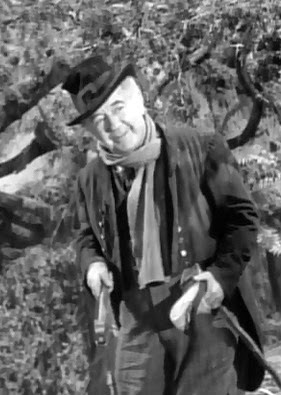
Honestly, this one nearly topped the list of great films to watch on St. Patrick's Day. It is a classic all-around...a wonderful cast, a whimsical story, and excellent direction by Henry Koster. Tyrone Power plays a freelance writer named Steven Fitzgerald who befriends a leprechaun ( Cecil Kellaway ) while he is stranded in a village in Ireland. He manages to capture him and demand his gold but, not wanting to take the old man's life savings, returns the pot to him. The leprechaun is so grateful he follows Fitzgerald back to New York City and helps him realize his heart's desire. 


3. The Quiet Man ( 1952 )

Who has not seen The Quiet Man? Nevertheless, if you happen to be one of those rare folk who avoids John Wayne films, then this is the film you should watch to change your opinion of The Duke. It has a wonderful script, gorgeous Technicolor footage of Ireland, and a cast of classic Irish actors. Wayne plays retired American boxer Sean Thorton, who returns to his hometown village in Ireland and begins a courtship with the spirited lass Mary Kate ( Maureen O'Hara ) through the aid of the local matchmaker Michaleen ( Barry Fitzgerald ). When her brother refuses to accept Sean as his brother-in-law, the entire village waits for Sean to assert himself and win Mary Kate as his bride. 

4. Little Nellie Kelly ( 1940 )

Mix together Judy Garland, George Murphy, a little romance, and some lovely Irish folk tunes and what have ye? A marvelous movie, that's what. If you are a Judy Garland fan, you may be sad to see her character die within the first 20 minutes of the film....but she pops again shortly after, this time in the form of the daughter of Nellie Kelly. Nellie is the apple of her father's eye and when she elopes with Jerry Kelly ( George Murphy ) behind his back, he fills his heart with spite against the young man. Jerry takes his new bride and his father-in-law ( Charles Winniger ) to America, gets a job as a policeman, and faithfully supports both his daughter Nellie and his father-in-law. When Little Nellie finds a beau of her own she decides it is about time that her grandfather and father made peace. 

5. Top O' the Morning ( 1949 )

This is another seldom-seen gem from the 1940s. Bing Crosby plays an insurance investigator sent to IReland to catch the criminal behind the recent theft of the Blarney Stone. The village constaple ( Barry Fitzgerald ) is not too pleased to have an American poking his nose into "official policing busyness" but his daughter ( Ann Blyth ) takes a shine to him. Top O' the Morning is one of those films that you may not think much of the first time you watch it but it grows on you with subsequent viewings. The sets are well-made and evoke an Irish air and the music is lovely. Ann Blyth sings "You're in Love with Someone" and Bing Crosby croons some newly-written but old-sounding Irish tunes. 


6. Brigadoon ( 1954 )

What has Brigadoon to do with St. Patrick's Day...or even Ireland? Absolutely nothing! Nevertheless, watching the fantasy realm of Brigadoon appear before my eyes from the Scottish midst, always puts me in an Irish mood. Perhaps it's the dancing...or perhaps it is the presence of Gene Kelly, that famous Irish-Canadian. Whatever it be, if you want to dance a jig, put Brigadoon on your tele. Gene Kelly and Van Johnson play two Americans who get lost in the Scottish highlands and discover the village of Brigadoon, where everyone is dressed in "funny clothing". They soon learn that the village is a mystical village and appears only once every 100 years. This certainly dampens the spirit of Tommy ( Kelly ) because he has fallen in love with a young woman ( Cyd Charisse ) from Brigadoon. 

7. The Secret of Boyne Castle ( 1969 )

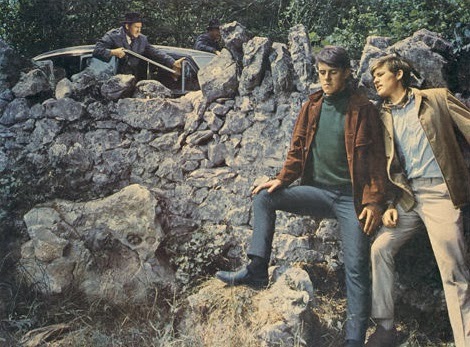
Now, this is a rarity indeed! In our house, we watch it every March just prior to St. Patrick's Day, but even a hardcore Disney fan may not be familiar with the title. Several years before Kurt Russell took on the role of Dexter Riley in a series of college-themed comedies for the Walt Disney studios, he played this Hardy Boys-type character named Rich Evans. Rich and his pal Sean ( Patrick Dawson ) are at a boarding school in Ireland when a fatally wounded man gives Rich a dying message...."Boyne Castle, the hand iron, tell Tom he will find the papers there.". Rich and Sean are quickly embroiled in a spy chase leading them throughout the Irish countryside to the final showdown at Boyne Castle itself. This made-for-television film is great fun to watch. It is filled with non-stop chasing and some lovely location footage of Ireland in the 1960s. 


8. The Fighting Prince of Donegal ( 1966 )

Yet another Irish-themed film from Walt Disney Studios, this time about the legendary Irish prince Hugh O'Donnell and his fight against the British troops in the 16th century. Peter McEnery stars as the swashbuckling youth with Susan Hampshire as his lady love. 

9. Yankee Doodle Dandy ( 1942 )

What more famous Irish-American be there but George M. Cohen? Warner Brothers certainly thought he merited a biopic and, after investing 1.5 million dollars in the production, released Yankee Doodle Dandy in 1942. James Cagney played the dandy who captured the hearts of thousands on Broadway throughout the early 1900s. In real life, Mr. Cohen wanted Fred Astaire to play him onscreen, but honestly, Astaire could never have delivered Cagney's Academy Award winning performance. 

10. The Irish in Us ( 1935 )

If you want to see a typical Irish family in action, then The Irish in Us is the film to watch. Mary Gordon plays Ms. O'Hara, the mother of three grown men, Danny ( James Cagney ), Pat ( Pat O'Brien ), and Michael ( Frank McHugh ). Pat is in love with his boss's daughter but is surprised when his brother Danny starts romancing his girl( Olivia de Havilland)! Prior to starting the film, one can easily guess that James Cagney will win the girl, but even so, it is fun to watch him spar with his brother in order to do so. 

11. My Wild Irish Rose ( 1947 )

If you enjoyed George M. Cohen's life story then why not take a gander at this biopic on Chauncey Olcott, the 19th-century singer-songwriter? Dennis Morgan gives a wonderful tune-filled performance of the popular Irishman and Arlene Dahl looks pretty in Technicolor ( incidently, this was her screen debut ). 

12. Finian's Rainbow ( 1968 )

Before Francis Ford Coppola filmed The Godfather, he made this whimsical Irish musical that starred Fred Astaire as Finian McLonergan, an Irishman who stole a pot of gold from the leprechaun Og ( Tommy Steele ). Og comes to Rainbow Valley, where Finian and his daughter ( Petula Clark ) reside, hoping to find his gold before he turns into a mortal man. Finian's Rainbow is not the best of films but it does indeed have some wonderful songs ( by Burton Lane ) and fancy dancing by Fred Astaire and Tommy Steele. 


Other films and television programs: 

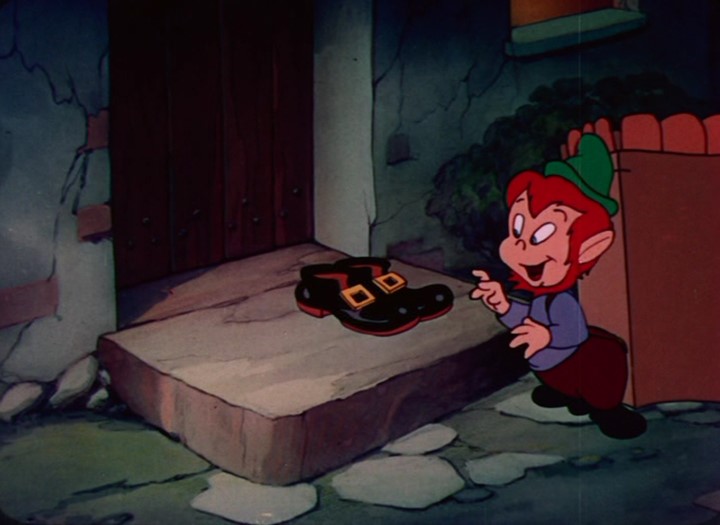
The Daughter of Rosie O'Grady ( 1950 ), a semi-sequel to Sweet Rosie O'Grady ( 1943 ) with June Haver in the title role; The Wee Men ( 1947 ), a delightful cartoon about the leprechauns from Noveltoons; The Leprechaun's Christmas Gold ( 1981 ), a little-known gem from Rankin-Bass; Irish Eyes are Smiling ( 1944 ), another biopic, this time on Ernest R. Ball. 

Wednesday, March 15, 2023

Film Albums: Maureen O'Hara Sings Her Favorite Irish Songs

Now is a wonderful time to enjoy some classic Irish songs, what with St. Patrick's Day peeking just around the corner....and if you want a gem of an album to enjoy, check out this classic from 1961: Maureen O'Hara Sings Her Favorite Irish Songs


Maureen O'Hara had a wonderful high soprano voice but only recorded two albums during her career, this one here and "Love Letters from Maureen O'Hara" released in 1958. Jasmine Records released both albums in one compact disc compliation. 

The liner notes on the back of the album are penned by Ms. O'Hara herself ( 'tis herself! ) who shares that the songs on the album are her favorite Irish songs, most of which she heard in her childhood sung by her parents, relatives and neighbors. Many of these tunes will be unfamiliar to Americans - even Irish-Americans (!) - except the popular Danny Boy and Come Back to Erin but there is a nice variety of songs on the album and, as Maureen says herself "There's something for every one of you - and I hope everything for some of you."

Track Listing:

Side One: 

A Kerry Cow

Give Him to Me

A Rich Man Died

Wee Hughie

Johnny I Hardly Knew Ye

There Was an Old Woman

Danny Boy

There Was an Old Man

Side Two:

He Moved Through the Fair

Which of Them Will I Marry

Do You Remember that Night, Love

It's True that the Women are Worse Than the Men

The Next Market Day

Nora Lee: I Once Loved a Boy

I'm Going to Be Married on Sunday

Come Back to Erin

Top Music Picks: Danny Boy, Which of Them Will I Marry, Johnny I Hardly Knew Ye

Click here to listen to Maureen O'Hara Sings Her Favorite Irish Songs on Youtube...and click here to see a lovely clip of Ms. O'Hara performing "Love is a Many Splendored Thing" on The Jimmy Dean Show

Saturday, March 5, 2022

From the Archives: Three Cheers for the Irish ( 1940 )


Priscilla Lane and Dennis Morgan are making eyes at each other while Thomas Mitchell looks on in this scene from "Three Cheers for the Irish" ( 1940 ). You can read our review of this American-Irish themed film here: https://silverscenesblog.blogspot.com/2019/03/three-cheers-for-irish-1940.html

From the Archives is our latest series of posts where we share photos from the Silverbanks Pictures collection. Some of these may have been sold in the past, and others may still be available for purchase at our eBay store : http://stores.ebay.com/Silverbanks-Pictures


Friday, March 15, 2019

Three Cheers for the Irish ( 1940 )

Peter Casey ( Thomas Mitchell ) is proud to have served 25 years with Chicago's police force. He loves his job so much he never gave retirement a thought, but his superiors did,  and, on the day of his 25th anniversary no less, they tell him to collect his pension. Retirement would be bearable for Casey if it were not for knowing that the new cop ( Dennis Morgan ) taking over his beat is a Scotchman! 

"Scotsman! Scotsman! There be no such thing as a Scotchman!"

To make matters worse, this fetching young rookie has his eyes on Casey's darling daughter Maureen "the apple of me eye". 

Warner Brother's Three Cheers for the Irish begins as a pleasant light-hearted variation of Four Daughters but midway through the film shifts its focus to the growing animosity Casey has for his would-be son-in-law and his political pursuit for the office of city alderman ( councilman ). It would have benefited from having the domestic comedy sequences extended and the other two sisters' parts ( played by Virginia Grey and Irene Hervey ) expanded upon, but the picture nevertheless entertains. 

Priscilla Lane is simply peachy as Maureen, and Irish-American Dennis Morgan does a marvelous job of rolling his Rrrrs in a Scottish brogue. He only sings one song in the film but audiences do get to see his winsome bonny smile in many a scene. Alan Hale has a great part as an over-exuberant practical joker and Frank Jenks, Henry Armetta, and that veteran of Irish-themed pictures J.M Kerrigan are also in the cast. But it is Thomas Mitchell's film entirely, and this excellent actor milks the role for all its worth. 
Like Charles Winniger's character in Little Nellie Kelly, Peter Casey is a stubborn Irishman, and it is particularly sad to see that these two fathers were willing to be separated from their daughters rather than bend their pride and admit that they were being pig-headed. 

Richard Macaulay helped write the screenplay along with Jerry Wald. These two men collaborated on over twenty scripts for Warner Brothers during the 1930s and 1940s including Ready, Willing, and Able, The Roaring Twenties, They Drive By Night, Torrid Zone, Million Dollar Baby, Brother Rat, and Flight Angels. 

Tuesday, March 17, 2015

The Luck of the Irish ( 1948 )

"You don't always wait for an invitation to follow the brave music of a distant drum"

It's not often when a man is clever enough and quick enough to capture a leprechaun. While travelling in Ireland, Steven Fitzgerald (Tyrone Power) does just that and then, having done so, lets the leprechaun free...without claiming his pot of gold! 

'Tis a rare man indeed who would do such a thing, and the leprechaun knows it. He feels a debt of gratitude to this American and, leaving the comfort of his homeland and his secluded waterfall, he follows him into the "cold, inhospitable city" of New York to serve him and to help him realize his heart's desire. 

"You are a proud, free man, and it is for that reason that I am proud to serve you"

Fitzgerald is a news reporter who believes in writing the truth to the public, but the lure of acquiring wealth by working for power-hungry publisher-turned-politician Augur (Lee J. Cobb) proves to be irresistible, even if it costs him his integrity as a free-thinking man. Egging him on in his decision to accept this position is Augur's daughter (Jayne Meadows), a woman who wants to be by Fitzgerald's side as he climbs the ladder of success, no matter what it takes. 


The Luck of the Irish is a dramatic fantasy filled with many whimsical moments. It does not have the sugary sweetness of a children's fable, making it all the more satisfying. Instead it has a lasting charm which makes it ideal for annual viewing on St. Patrick's Day, or any time of the year for that matter. 

The first half of the film parallels Michael Powell's I Know Where I'm Going (1945) in that we see a city dweller stranded in a small village, anxious to escape on the next boat available and frustrated with the local people's slow and inefficient ways. It is not until the opportunity to escape becomes available that these characters begin to have doubts on whether they truly want to leave. In both films, it is the romance they find in these villages which make the characters wish to remain, not the lure of the tranquil community. 


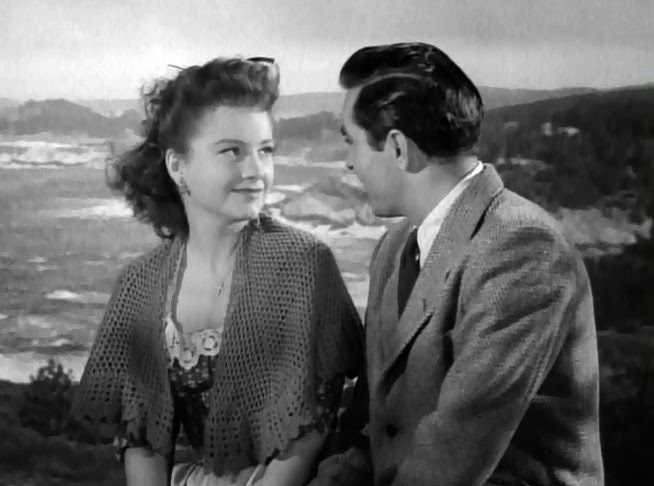
In The Luck of the Irish, Fitzgerald meets and falls in love with Nora (Anne Baxter), a quiet innkeeper's daughter, and upon his return to New York he sees her once again, by chance, on a subway. He has a notion that the leprechaun may have had a hand in bringing her to New York but he struggles to relinquish his dream of wealth in place of returning to Ireland with Nora.  

"You brought Nora here, didn't you?" 
"No, you brought her yourself...in your mind, long ago."


Steven Fitzgerald is an ageless character - working men are forever torn between following the dreams of their heart or selling out their ideals (and sometimes their morals) to other men for the sake of financial stability. He is a cynical man and does not easily get himself beguiled into believing in leprechauns or other folklore but, in this situation, his belief becomes his blessing. 


The Luck of the Irish is not your traditional fairy-tale story and the irascible leprechaun with his proverbial pot of gold is not portrayed as a cultural image but instead becomes the incarnation of Fitzgerald's conscious and a vehicle of divine influence in changing his circumstances. The moral of film is summed up in its tagline "Choosing good is the real pot of gold". 

"I offered you gold. 'Tis not my fault that you prefer a pebble"

The Luck of the Irish premiered on September 14, 1948, and for its original showing featured a wee bit o' something green - all of the Ireland sequences were tinted the color of the Irish landscape itself. Indeed, the opening sequences of Ireland are so pleasant that it is a shame when, midway through the film, its focus shifts to New York City. 


A roster of 20th Century Fox's regular talents gathered together to make this a stand-out picture: director Henry Koster, who was an old hand at filming humorous dramas; Lyle Wheeler, Fox's resident art director extraordinaire; Philip Dunne, who hammered out on his magical typewriter this whale of a grand adaptation (from the novel by Guy and Constance Jones); and producer Fred Kohler, who had footed the bill one year prior for that other excellent romantic-fantasy The Ghost and Mrs. Muir. The strains of traditional Irish and English melodies can be heard in the background thanks to the musical wizardry of Cyril Mockridge.


Cecil Kellaway steals the film with his performance of "Horace", the leprechaun turned manservant, and he nails the Irish accent and mannerisms of one of the little people. He was nominated for an Academy Award for Best Supporting Actor for his portrayal. James Todd also co-starred as Fitzgerald's wise-cracking pal Bill Clark, and J.M. Kerrigan and Phil Brown round out the stellar cast. 

Anne Baxter is particularly fetching and these years were certainly the peak of her career. The brightness of Tyrone Power's star had been waning a few years prior to The Luck of the Irish and he must have sensed that his days of being the studio's No. 1 glamour boy were nearly over, even though he was as handsome as ever. Jayne Meadows related a story about this in the special "Jayne Meadows Remembers" included on the DVD: 

"[in-between takes during the banquet scene] he said, 'You see that tall man over there, the one with the grey hair? He was a star once. A very big star. Sad...now he is an extra'. And I said 'Isn't it wonderful that he's still working' because, you know, the man looked like he needed something to hold him up. When I later found out that Ty started as an extra, I thought 'isn't it interesting that his first reaction was to the old man who was a star and is now an extra.' " 

Perhaps Tyrone Power felt that eventually this would be his fate as well.


This post is our contribution to The Luck of the Irish Blog o'thon, being hosted by yours truly. To check out all of the grand posts about Irish actors and films, click here

Sunday, March 15, 2015

The Luck of the Irish Blog O'Thon!

'Tis a grand day indeed for with that blessed of all saints days approaching fast around the bend, we be pleased to be announcing that on this very day no less, the Luck of the Irish Blog O'Thon be taking place. St. Patrick himself would be proud to hear of our wee gathering celebrating the talented folk of Emerald Isle. To be sure, Hollywood would no' be the same without the likes of the Fords, Nolans, Sheridans, O'Briens, Cagneys and Sullivans. 

We be wanting to thank all the fine folk who submitted, or will be submitting, posts for this event. Each one o' them is to the likes of a shimmering coin in this motley pot o'gold. And a hearty thank you to all you little people and doodeens who will be reading them. 

As the posts come tricklin' in, their respective links will be changing the color of the rainbow until the final day when they shall all be wearing the green! If you be wanting to see the posts by date, just scroll a wee bit further down. 

Ay, enough of the babbling....let the fiddlers play and we'll dance a jig and get on with the ceilildh! 


THE POT O' GOLD POSTS : 


Their Blood Runs Green


Maureen O'Hara - Pure Golden

George Brent : A Nolan by Birth - Caftan Woman

Buster Keaton - Movie Movie Blog Blog

Maureen O'Sullivan - Girls do Film

James Cagney and Pat O'Brien - Old Hollywood Films

Dennis Morgan - Phyllis Loves Classic Movies


The Luck of the Irish 


Darby O'Gill and the Little People ( 1959 ) - Classic Film and TV Cafe

The Luck of the Irish ( 1948 ) - Silver Scenes

Finian's Rainbow ( 1969 ) - The Stars are Ageless


In the Days of Yor 


The Lion in Winter ( 1968 ) - In the Good Old Days Of Classic Hollywood

Barry Lyndon ( 1975 ) - The Joy and Agony of Movies 


The Irish in America 


Paddy O'Day ( 1935 ) - Another Old Movie Blog 

The Irish in Us ( 1935 ) - Wolffian Classic Movies Digest

George M. Cohan in Yankee Doodle Dandy ( 1942 ) - Once Upon a Screen


The Fighting Irish 


Juno and the Paycock aka The Shame of Mary Boyle ( 1929 ) Movie FanFare

Odd Man Out ( 1947 ) - Critica Retro

Angels With Dirty Faces ( 1938  ) - The Stop Button 

The Molly McGuires ( 1970 ) - Ramblings of a Cinephile

________________________________________________________


March 15th 


Paddy O'Day ( 1935 ) - Another Old Movie Blog 

Buster Keaton - Movie Movie Blog Blog

Maureen O'Sullivan - Girls do Film

George Brent : A Nolan by BirthCaftan Woman


March 16th 


Finian's Rainbow ( 1969 )The Stars are Ageless

The Luck of the Irish ( 1948 ) Silver Scenes 

George M. Cohan in Yankee Doodle Dandy ( 1942 )Once Upon a Screen

The Irish in Us ( 1935 )Wolffian Classic Movies Digest

The Lion in Winter ( 1968 ) - In the Good Old Days Of Classic Hollywood

Angels With Dirty Faces ( 1938  ) The Stop Button 


March 17th 


Maureen O'HaraPure Golden

Darby O'Gill and the Little People ( 1959 ) Classic Film and TV Cafe

Juno and the Paycock aka The Shame of Mary Boyle ( 1929 ) Movie FanFare

James Cagney and Pat O'BrienOld Hollywood Films

Barry Lyndon ( 1975 )The Joy and Agony of Movies 

The Molly McGuires ( 1970 ) Ramblings of a Cinephile

Odd Man Out ( 1947 )Critica Retro


Enjoy! 

HAPPY ST. PATRICK'S DAY! 

Thursday, March 13, 2014

Irish Nuggets


The Luck of the Irish ( 1948 ) 18k


During a visit to Ireland, an American reporter finds and catches a leprechaun who sticks with him and helps him decide whether to remain or  return to New York to marry his fiancee and achieve success in politics. Tyrone Power, Anne Baxter, Cecil Kellaway, Jayne Meadows. 20th Century Fox. Directed by Henry Koster. 

The Luck of the Irish never achieved classic cult status on St. Patrick's Day like The Quiet Man or Darby O'Gill and yet it should have for it's a delightful film. Cecil Kellaway, adorable in any role he plays, is especially suited to the leprechaun part. The DVD release includes two versions, one entirely in black and white, and another in the original release format of black and white and green tint. 'Tis a pot of gold for sure!

                    __________________________________________________________


Top O' The Morning ( 1949 ) 14k


A singing insurance investigator comes to Ireland to recover the stolen Blarney Stone and romance the local policeman's daughter. Bing Crosby, Barry Fitzgerald, Ann Blyth, Hume Crownyn. Paramount Pictures. Directed by David Miller. 

Alright, we cheated a bit with including this film among the nuggets for we haven't seen it yet. It just sounds like such a good film we would really doubt if it turns out to be a dud. With such a great cast, how can it fail to be anything but bragha.

                    __________________________________________________________


The Quiet Man ( 1952 ) 24k


A former boxer comes to Ireland to purchase his mother's cottage and make a new life for himself, but first he must square himself with his wife, who believes him to be a coward for not putting up a fight for her dowry. John Wayne, Maureen O'Hara, Barry Fitzgerald, Victor MacLaglen, Mildred Natwick. Republi Pictures. Directed by John Ford.

This is one of those beautiful films where everything falls into place perfectly...the cast, the script, the music, the cinematography the locations. It just couldn't be any better than it is. It ranks as one of John Ford's greatest films ( if not his best ) and certainly one of the finest pictures to ever come out of Republic Pictures. You'll be spouting Quiet Man-isms forever after viewing this film. "And who taught you to be playing patty fingers in the Holy water?"


                    __________________________________________________________


Darby O'Gill and the Little People ( 1958 ) 18k


Darby O'Gill, caretaker to Lord Fitzpatrick, is unhappy when he is replaced by a new lad, but gladly decides to matchmake him with his daughter so that he may remain at his cottage. Later he beguiles King O'Brian, the king of the leprechauns to help him save his daughter when the banshee comes knocking on their door. Albert Sharpe, Sean Connery, Janet Munro, Jimmy O'Dea. Walt Disney Productions. Directed by Robert Stevenson.

"Sparkling with Leprechauns and Laughter" is right! Darby is one of those films that has great replay value. You can watch it every St. Patrick's Day and never tire of it. King Brian finally met his match when it came to old Darby. A special shout-out to Peter Ellenshaw for his magnificent matte paintings in this film. They surely do transport us to the beautiful land of the leprechauns. 

                    __________________________________________________________


The Secret of Boyne Castle ( 1969 ) 14k


A young student and his friend help deliver a secret message to Boyne Castle to aid an American spy and help an Eastern European agent defect. Retitled "Guns in the Heather" for its feature film release. Kurt Russell,  Glenn Corbett, Alfred Burke, Patrick Dawson. Walt Disney Productions. Directed by Robert Butler. 

Most of the television movies made for Walt Disney's Wonderful World of Color are tough to find on DVD, and bootleg versions that are available are often very blurry. Alas, that is the case with this film but from what we made out of the picture it sure was entertaining. The movie pairs Kurt Russell with a young Irish boy ( who, quite frankly, we thought was a villain ) and together they play like a Hardy Boys duo. Why Walt Disney never put Kurt Russell in a Hardy Boys series I certainly don't know, but at least this movie got all the great mysteries of one of them - a motorcycle chase, a secluded castle, a glider ride, and a really clever spy ( not like those bungling crooks Disney films always had in the 1990s ). 


Monday, March 10, 2014

Barry Fitzgerald - Frowning on Fame

While hunting down photographs of Barry Fitzgerald's home for the upcoming Hollywood Home Tour we stumbled upon this article from the New York Times, originally posted on January 14, 1945. It was so entertaining we couldn't help but share it. And it's so fitting for St. Patrick's Day too...which will be here before you can say Johnny O'Mara Fitzsimmons!
................................................................................................................................................           

Written by Fred Stanley 


In Hollywood these days everyone, it seems, is excited about Barry Fitzgerald - except Barry Fitzgerald. On the basis of his performance as the whimsical, petulant old parish priest in Paramount's ''Going My Way,'' the New York critics have just given him their award for the best film acting of the year.

Today Barry Fitzgerald is in greater demand by the studios than any character has ever been in the history of the film city. One conservative estimate, by people who figure such things out, has it that if the 56-year-old Irish actor accepted all of the parts that have been offered to him in the past four months he would be working in front of the cameras, night and day, for the next two years. Film producers calculate that Fitzgerald's name in the cast of one of their products now means increased returns at the box office. That fact explains an increase in his ''per picture'' pay to $75,000 more than three times his pre-''Going My Way'' rate.  

To all of which Barry Fitzgerald says: ''I am now just another Hollywood celebrity and that's downright boring.'' He doesn't understand why being a successful actor should mean that he can, per se, set the general public an example by smoking so and so's cigarettes or wearing this or that brand of underwear. 

Gone are the days, he will regretfully tell you, when he could walk down the street unrecognized and just watch people go by. Now the people watch Barry Fitzgerald go by. In Hollywood he is too easily recognized, pointed out, stared at and besieged by that curious American phenomenon, the autograph seeker. 


He finds it all rather bewildering. He resents the disruption of his previously inconspicuous private life. He can't even browse in Los Angeles book shops or join in a discussion with strangers at some out-of-the-way barroom or drug store without being tagged as Father Fitzgibbon. His old clothes and cloth cap, which once kept him inconspicuous, now make him a marked man. 

And along with fame have come obligations - obligations which are particularly distressing to Mr. Fitzgerald, who cheerfully admits to being a ''very lazy man.'' Fame has brought sacks full of fan mail to be answered. It has resulted in invitations to parties and social events - for he is now being recognized, even by some of the town's so-called ''greats.'' 

A bachelor, the actor lives in a seven-room rented house on a hillside street just a few blocks north of Hollywood Boulevard. As you approach his home of an evening you will probably hear the hesitant tones of a piano - the sound a young girl or boy would make drudging along after Paderewski. The address is right, so you ring the doorbell - with some misgivings. Immediately, the music stops and the door is opened by Barry Fitzgerald, who bids you a laconic, ''How do you do.'' And then adds, just as briefly, ''I was practicing.'' 

Mr. Fitzgerald didn't begin to take piano lessons until he was past 50. He still takes lessons twice a week, as he explains it, ''just for my own amusement.'' 

He is surprisingly casual and relaxed. He impresses one as an intensely modest man gifted with a curious, searching mind. There are numerous clues that he and his characterizations, as many interviewers have noted, are cut from the same cloth. His small, wiry body - he's 5 feet 3 - has the unmistakable set of a man good in close fighting. Beneath bristly brows, his eyes glint shrewdly. His chin juts forward aggressively. His voice fumbles drolly at the beginning of a sentence, then gets away with a rush, often changing key before he reaches the end of the sentence. 

He shares his home with Gus Tallon, an Iroquois Indian, who, besides fulfilling the usual duties of a stand-in - posing for the camera men while the set is being prepared and the lights and focus adjusted - acts as companion and general right-hand man. He also shares the task of preparing the morning breakfast - coffee, toast and eggs. Gus is the custodian of Mr. Fitzgerald's wardrobe - not much of a job, considering that the clothes closets hold only three suits, a sports coat or two, a few slacks and cloth caps galore. Mr. Fitzgerald will at once impress upon you that Gus is not an employee but a friend. 

Asked about his screen roles, he says that the part of Father Fitzgibbon has been the most satisfying and therefore the easiest. 

''No,'' he explains, ''it wasn't patterned after any particular priest I knew in Ireland. Call it a composite of several of my good friends of the cloth.'' 

He gets a good deal of amusement out of another misconception arising from his portrayal of Father Fitzgibbon. With a twinkle in his eye, he tells how on several occasions he has been recognized and stopped on the street by a son or daughter of the ''Ould Sod,'' who, after complimenting him on his performance in the role, adds: ''And, sure, no one but a good Catholic could have played a priest so well.'' 


It happens that Barry Fitzgerald is not a Catholic. His family were members of the Protestant faith and as a youth he attended a Protestant church in Dublin - and even sang in the choir.

Justifiably, he feels that these mistaken impressions are really tributes to his ability as an actor. Acting is one thing which he discusses without shyness or hesitation. In contemporary pictures, Mr. Fitzgerald feels, there is too much dialogue. The best acting, he says, is still pantomime - a look, a twist of the neck or the way a person walks can tell more than whole pages of dialogue. 

In ''Going My Way,'' for instance, the glance of disapproval he gave his curate, Bing Crosby, when he discovered Crosby wearing the sweater with ''St. Louis Browns'' spelled out on it, or his silent shame when he learns that the turkey he is feasting on his been stolen, tells more in less time than even the brightest dialogue could. 

Over at Paramount they tell you how he saved a scene in the forthcoming ''Two Years Before the Mast.'' Playing the ship's cook, Mr. Fitzgerald was called on to serve a plate of food to the bellicose captain and then answer him back in kind when the officer disapproved of the offering - using fitting sea language, of courses. The scene was taken several times but failed to justify Director John Farrow. Then, on the next ''take,'' Mr. Fitzgerald, instead of following the script, picked up the plate, sniffed significantly at the food, cast a comical pitying glance toward his irate skipper and shuffled out of the cabin - without saying a word.

That wasn't the way the scene had been written, but that's the way it will appear in the picture. In that one scene Mr. Fitzgerald indicated real understanding of the potentialities of motion pictures as a medium of art. With economy of motion and speech he revealed the underlying nuances of character. 

Mr. Fitzgerald has always been a comedian on the screen. And he runs true to form in envying the tragedian.


''I would rather be a villain on the screen and bop someone on the head occasionally than play the most noble of characters,'' he says. ''A villain doesn't have to be repressed - and audiences have a sneaking affection for him, especially if he is picturesque. And besides, it's easier to portray villainy.'' 


Barry Fitzgerald was born William Joseph Shields in Dublin on March 10, 1888. After finishing high school he entered a special school, where he was trained for a civil service post as bookkeeper with the Board of Trade. He explains that he became an actor because he is essentially a lazy person. His brother, Arthur Shields now also a film actor in Hollywood was formerly with the Abbey Theatre. Mr. Fitzgerald hung around the theatre because he was interested in the literary side of the Irish renaissance, and got to know some of the actors. He was urged to walk on, carry a spear, just for the fun of it. He did. And finally, because he didn't, as he says, have the energy to refuse, he graduated into bit parts. 

Uncertain whether his superiors in the Government service would approve of his stage activities, he had a talk with the man in charge of programs at the Abbey Theatre about assuming a stage name. That is how Barry Fitzgerald was born. 

His first speaking part came in the Abbey production of Richard Sheridan's ''The Critic.'' He had been assigned to a second sentry's role in that play. The first sentry said: ''all this shall to Lord Burley's ears.''

Fitzgerald was supposed to answer: ''It is meet that it should.'' 


He had rehearsed that line with more care than the entire production had received. he could literally give it in his sleep. Then came the big moment before the footlights. The first sentry spoke his line. A helpful pal, near Mr. Fitzgerald on the stage, whispered: '''Tis sheet it moud,'' and thus it was that the stunned Mr. Fitzgerald delivered the line. The audience roared with laughter and he was started on his career as a comedian. 

For seventeen years, until 1929, Barry Fitzgerald led a double life. From 9 to 5 he was a bookkeeper. At night he was a member of the Abbey Theatre. He learned his roles riding to and from work, at evening rehearsals or after bolting his lunch. In 1929, when he went to London to do Sean O'Casey's ''Silver Tassie,'' he left his post as a civil servant. 

His most famous role on the stage was as Captain Jack Boyle, the alcoholic, pompous braggart in O'Casey's ''Juno and the Paycock.'' It was one of the richest characterizations in the modern theatre. It was deep, with the stubbornness, the lawlessness, the moods and volatile beauty of the Irish heart. 


Another of his memorable roles was the rascally tippler, Fluther Good, in O'Casey's ''The Plough and the Stars.'' It was for this role that Director John Ford - now a commander in the United States Navy brought Mr. Fitzgerald to Hollywood in 1937, when he made a film of that play. From then on Barry Fitzgerald was busier than he had ever wanted to be. 

Fitzgerald is not the swimming-pool-in-the-back-yard type. He never goes to the lush Hollywood night clubs. His principal outdoor amusement, motorcycling, has been somewhat cramped by gasoline rationing. But he still rides his motor bike to and from the studio occasionally. 


Another of his outdoor pasttimes is golf, at which, he will candidly inform you, he is the worst player in the world. On good days he goes around the eighteen holes in 110 to 120. A few weeks ago he came in with a card of 104 and called in a number of his cronies to celebrate. Characteristically, none of the have names that a devoted movie-goer would recognize. 

Perhaps his most revealing hobby is cutting records of those radio advertising jingles which have made listening to the radio the dangerous business it is. He plays these home-made records over and over, chuckling with glee and the inanities of the music and rhymes. He is making a collection of such pieces to send to Ireland to be played on the phonograph in a certain pub so that some of his old pals may enjoy this new American art form. 

The two things he likes best about America, though, are our pie à la mode and the fact that the ''man in the street has the feeling that he's as good as the next one.'' And that's no idle compliment, for he has spent many a night and day wandering about the streets with a pipe in his mouth and his hands thrust deep in his pockets.