In 1954, Universal-Pictures brought to the screen Howard Pyle's classic story of adventure "Men of Iron" and hailed that it would capture "all the pageantry and excitement of knighthood's epic age". The newly titled The Black Shield of Falworth did not accomplish that task as well as Warner Brothers' The Adventures of Robin Hood ( 1938 ) or Metro-Goldwyn-Mayer's Ivanhoe ( 1952 ) but it certainly is entertaining.
Young Myles Falworth ( Tony Curtis ) and his sister Meg ( Barbara Rush ) are sent to the castle of the Earl of Mackworth ( Herbert Marshall ), a dear friend of Myles' deceased father whom he never met. Here, Myles learns to become a squire and, later a knight, all the while attempting to learn about his family's crest - the Black Shield of Falworth - and to discover who his father was.
While at the castle, he falls in love with the Earl's daughter, Lady Anne ( Janet Leigh ) and also becomes embroiled in a conspiracy plot led by the treacherous Earl of Alban ( David Farrar ) to overthrow King Henry IV ( Ian Keith ).
The Black Shield of Falworth is rich in plot, rich in Technicolor, it boasts a fabulous cast and features two great fight sequences, making it an entertaining - if not all that memorable - swashbuckler.
Universal-Pictures knew they had a star in the making when they signed Bernard Schwartz to a contract in 1948. They taught him riding and fencing and changed his name to Anthony Curtis and then introduced him to audiences in a few budget westerns before awarding him his first feature film The Prince Who Was a Thief ( 1951 ) opposite Piper Laurie. Here was a different kind of swashbuckling hero - an overly-anxious and often hot-headed young man with a very pleasant personality, jet-black hair and a winsome smile.
This Middle Eastern-themed adventure film was followed by the similarly-themed swashbuckler Son of Ali Baba in 1952 and then The Black Shield of Falworth, which was Universal's first picture to be made in Cinemascope.
Tony Curtis, who was 29-years-old at the time, is great in the part of Myles but the role really should have been given to a younger actor to play. The character of Myles is a mere teenager in the original novel and even in the film is often referred to as "the young lad" or "boy" which doesn't quite sound right since Tony was obviously a man at that time.
Janet Leigh is lovely as Lady Anne; Torin Thatcher is a glove-fit for the part of Sir James, Myles trainer for knighthood; and Herbert Marshall, who always gives a good performance, is well-suited as the Earl. Unfortunately, David Farrar's talents are wasted, and Barbara Rush is given a merely decorative part.
Also in the cast is the wonderful Dan O'Herlihy as Prince Hal, a young Patrick O'Neal, Rhys Williams, and Doris Lloyd.
Thursday, November 21, 2019
Saturday, November 16, 2019
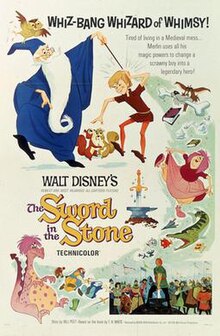
The Sword in the Stone ( 1963 )
Back in the days shortly after the death of Unther Pendragon, King of England, there appeared in London a magic sword protruding upright from the center of an anvil. It bears an inscription proclaiming that whosoever shall remove the sword from the stone would be crowned the new king of England.
Young Arthur (aka Wart) is an orphan who was raised in Sir Ector's castle. Sir Ector's son, Sir Kay, desires to venture to London to joust in the countrywide competition shortly before Christmas Day. Arthur aspires to be this knight's squire, but while on a hunting trip in the woods with Sir Kay, he falls into the hut of the wizard, Merlin. This kindly old man can see the future as well as the past and, knowing the young lad is fated to draw the sword from the stone, decides to take Arthur under his wing and "give him an education" prior to his crowning as the illustrious King Arthur. With the help of Archimedes the Owl, Merlin teaches Arthur to believe in himself and to use wits over brawn.
The Sword in the Stone is a delightful animated feature from Walt Disney Studios. It features an amnesiac "whiz-bang whizard of whimsy", an engaging young hero and, in place of the usual villain, there is Madam Mim, a rival to Merlin.
The story is based on the Arthurian novels of T.H White's known as "The Once and Future King" series. Walt Disney enjoyed the first book - "The Sword in the Stone" - and purchased the film rights to it the same year it was published: 1938. Unfortunately, the project was not picked up until 1949 when some preliminary storyboards were created. Then there was another long hiatus before story artist Bill Peet re-worked it into this film.
While this version of The Sword in the Stone is entertaining, it would have benefited greatly from having a stronger villain, some character in the vein of Maleficent ....preferably Morgan le Fay or Vivien, the enchantress who proved to be Merlin's downfall. Madam Mim is an unworthy opponent to both Merlin and Arthur while Sir Ector and his son Sir Kay are more comical than villainous.
Like 101 Dalmations released two years earlier, The Sword in the Stone implemented Disney's time-saving process of xeroxing the animation cels instead of retracing each cel. Because the Xerox copy machines were only capable of black lines, all of the lines around the figures were inked in black. Some critics feel this technique made the films look inferior to Disney's animated pictures of previous years but, personally, I liked the look.
Richard and Robert Sherman penned some linguistically clever - albeit forgetful - tunes to The Sword in the Stone, including the delightful "Higitus Figitus", sung by Merlin.
The Sword in the Stone was released in theaters on Christmas Day in 1963 and proved to be a box-office smash, reaping in nearly $20 million dollars in profit.
Monday, November 11, 2019
The Keys of the Kingdom ( 1944 )
Film studios always preferred a good novel adaptation over an original story idea. This was primarily because the producers knew they had an established audience who were waiting in anticipation for the release of the film. When a best-selling book became a box-office hit at the movie theatres, then the studios were anxious to secure the film rights to that author's next novel. Such was the case with A.J. Cronin, a Scottish physician and novelist. His 1937 best-selling novel about medical ethics "The Citadel" was adapted into an MGM film the following year starring Robert Donat and Rosalind Russell. It was a great success at the box-office and reaped four Oscar nominations at the Academy Awards.
This success excited producers who knew that the name of A.J. Cronin would then draw in audiences to other film adaptations of his work. So they quickly went about snatching up the rights to his previous works and adapting them to film. His 1935 novel "The Stars Look Down" was brought to the screen by Carol Reed in 1939; "Hatter's Castle", Cronin's first novel, was made into a 1940 film starring Robert Newton and Deborah Kerr; "Vigil in the Night", a 1939 Good Housekeeping serial novella, was turned into a Carole Lombard weepie; and, in 1944 "The Keys of the Kingdom" was made into a rich drama by Twentieth-Century Fox studios.
Cronin spent several years writing "The Keys of the Kingdom", an epic story about the trials and tribulations of a Catholic priest in China. He weaved elements of his own background ( Scottish upbringing, medical school, poor family, Catholic conversion ) into the novel which spans six decades in the life of one Father Francis Chisholm. The film, in spite of being 136-minutes long, condenses many aspects of the book and focuses instead on Father Francis' years in China and his work there as a missionary.
Father Francis is a young Scotsman fresh out of seminary school who is sent by his local bishop to establish a missionary in the Chekhow province of China. The area was destroyed by flooding and all of the true Christians retreated to the mountain regions. Those who remained were "rice Christians", locals who were being paid in rice to attend church. Father Francis refuses to pay the citizens to visit the mission and so his congregation quickly dwindles to none.....until a young pilgrim named Joseph comes to help Father Francis rebuild his church. Over the years it grows into a thriving missionary and remains strong even in the midst of a battle between republican and imperial troops.
The film rights to The Keys of the Kingdom were originally purchased by David O. Selznick but after a year of toying with the project, he sold it to Twentieth-Century Fox studios. Alfred Hitchcock had wanted to direct the production but chose instead to do Lifeboat that year. Nunnally Johnson and Joseph L. Mankiewicz ( who also produced the film ) took charge of re-working Cronin's novel into a compelling screenplay. It was an "A" production from the start and top-notch talent was used throughout the picture with John M. Stahl ( Leave Her to Heaven ) taking the reins as the director.
Thomas Mitchell, Vincent Price, Anne Revere, Edmund Gwenn, Roddy McDowall, Peggy Ann Garner, Cedric Hardwicke, James Gleason, Sara Allgood, Arthur Shields, Philip Ahn, Ethel Griffies, and Edith Barrett were all given supporting roles in the production and a young Gregory Peck was cast in the lead as Father Francis.
Peck had made only one film prior to being cast in this production and that was the lead role in Jacques Tourneur's war romance Days of Glory. He had distinguished himself so well in that part that multiple studios wanted him to sign long-term contracts with them. Instead, he chose to freelance and picked a non-exclusive contract with Fox studios enabling him to accept this part ( Spencer Tracy, Franchot Tone, and Gene Kelly were other actors considered for the role ).
Peck gives an excellent performance as the zealous missionary and he was, deservedly, nominated for a Best Actor Academy Award. Starring opposite him was Rose Stradner as Mother Maria-Veronica, a nun who works side by side with Father Francis at the mission. Ingrid Bergman was initially considered for this role but Joseph L. Mankiewicz wanted the part to go to his wife, Rose, instead. She was a beautiful and talented Austrian actress but Bergman probably could have given more depth to the role of the aristocratic nun.
Benson Fong gives a marvelous performance as Joseph, Father Francis' dear companion. His scenes also add a bit of humor to the film, which it sorely needed. The Green Years, another film based on an A.J. Cronin novel, also spanned many years but was rich with characters that the audience could attach to throughout the drama. Unlike that picture, The Keys of the Kingdom focuses primarily on the character of Father Francis and it never feels as though the audience gets a chance to know the other characters as well as Francis himself does. Mother Maria-Veronica is initially cold towards Father Francis when she first arrives and, even though she later explains the reason behind her behavior, it would have been better to witness her character's past unfold visually rather than verbally. One of the few characters who is given depth is Mr. Chia, portrayed admirably by Leonard Strong. His character develops from a superior nobleman to that of a true friend to Francis.
The Keys of the Kingdom was received favorably by film critics but just managed to recoup its cost at the box-office. However, the film had the prestige of being nominated for four Academy Awards ( Best Art Direction, Best Cinematography, Best Actor, Best Original Music Score ).
This success excited producers who knew that the name of A.J. Cronin would then draw in audiences to other film adaptations of his work. So they quickly went about snatching up the rights to his previous works and adapting them to film. His 1935 novel "The Stars Look Down" was brought to the screen by Carol Reed in 1939; "Hatter's Castle", Cronin's first novel, was made into a 1940 film starring Robert Newton and Deborah Kerr; "Vigil in the Night", a 1939 Good Housekeeping serial novella, was turned into a Carole Lombard weepie; and, in 1944 "The Keys of the Kingdom" was made into a rich drama by Twentieth-Century Fox studios.
Cronin spent several years writing "The Keys of the Kingdom", an epic story about the trials and tribulations of a Catholic priest in China. He weaved elements of his own background ( Scottish upbringing, medical school, poor family, Catholic conversion ) into the novel which spans six decades in the life of one Father Francis Chisholm. The film, in spite of being 136-minutes long, condenses many aspects of the book and focuses instead on Father Francis' years in China and his work there as a missionary.
Father Francis is a young Scotsman fresh out of seminary school who is sent by his local bishop to establish a missionary in the Chekhow province of China. The area was destroyed by flooding and all of the true Christians retreated to the mountain regions. Those who remained were "rice Christians", locals who were being paid in rice to attend church. Father Francis refuses to pay the citizens to visit the mission and so his congregation quickly dwindles to none.....until a young pilgrim named Joseph comes to help Father Francis rebuild his church. Over the years it grows into a thriving missionary and remains strong even in the midst of a battle between republican and imperial troops.
The film rights to The Keys of the Kingdom were originally purchased by David O. Selznick but after a year of toying with the project, he sold it to Twentieth-Century Fox studios. Alfred Hitchcock had wanted to direct the production but chose instead to do Lifeboat that year. Nunnally Johnson and Joseph L. Mankiewicz ( who also produced the film ) took charge of re-working Cronin's novel into a compelling screenplay. It was an "A" production from the start and top-notch talent was used throughout the picture with John M. Stahl ( Leave Her to Heaven ) taking the reins as the director. Thomas Mitchell, Vincent Price, Anne Revere, Edmund Gwenn, Roddy McDowall, Peggy Ann Garner, Cedric Hardwicke, James Gleason, Sara Allgood, Arthur Shields, Philip Ahn, Ethel Griffies, and Edith Barrett were all given supporting roles in the production and a young Gregory Peck was cast in the lead as Father Francis.
Peck had made only one film prior to being cast in this production and that was the lead role in Jacques Tourneur's war romance Days of Glory. He had distinguished himself so well in that part that multiple studios wanted him to sign long-term contracts with them. Instead, he chose to freelance and picked a non-exclusive contract with Fox studios enabling him to accept this part ( Spencer Tracy, Franchot Tone, and Gene Kelly were other actors considered for the role ).
Peck gives an excellent performance as the zealous missionary and he was, deservedly, nominated for a Best Actor Academy Award. Starring opposite him was Rose Stradner as Mother Maria-Veronica, a nun who works side by side with Father Francis at the mission. Ingrid Bergman was initially considered for this role but Joseph L. Mankiewicz wanted the part to go to his wife, Rose, instead. She was a beautiful and talented Austrian actress but Bergman probably could have given more depth to the role of the aristocratic nun.
Benson Fong gives a marvelous performance as Joseph, Father Francis' dear companion. His scenes also add a bit of humor to the film, which it sorely needed. The Green Years, another film based on an A.J. Cronin novel, also spanned many years but was rich with characters that the audience could attach to throughout the drama. Unlike that picture, The Keys of the Kingdom focuses primarily on the character of Father Francis and it never feels as though the audience gets a chance to know the other characters as well as Francis himself does. Mother Maria-Veronica is initially cold towards Father Francis when she first arrives and, even though she later explains the reason behind her behavior, it would have been better to witness her character's past unfold visually rather than verbally. One of the few characters who is given depth is Mr. Chia, portrayed admirably by Leonard Strong. His character develops from a superior nobleman to that of a true friend to Francis.
The Keys of the Kingdom was received favorably by film critics but just managed to recoup its cost at the box-office. However, the film had the prestige of being nominated for four Academy Awards ( Best Art Direction, Best Cinematography, Best Actor, Best Original Music Score ).
Friday, November 8, 2019
From the Archives: The New Perry Mason
Monte Markham starred as Perry Mason in The New Perry Mason ( 1973-1974 ), a short-lived CBS television revival of Raymond Burr's popular legal drama series. Sharon Acker also starred as Della Street and Harry Guardino played Mason's formidable opponent Hamilton Burger.
From the Archives is our latest series of posts where we share photos from the Silverbanks Pictures collection. Some of these may have been sold in the past, and others may still be available for purchase at our eBay store : http://stores.ebay.com/Silverbanks-Pictures
Thursday, October 31, 2019
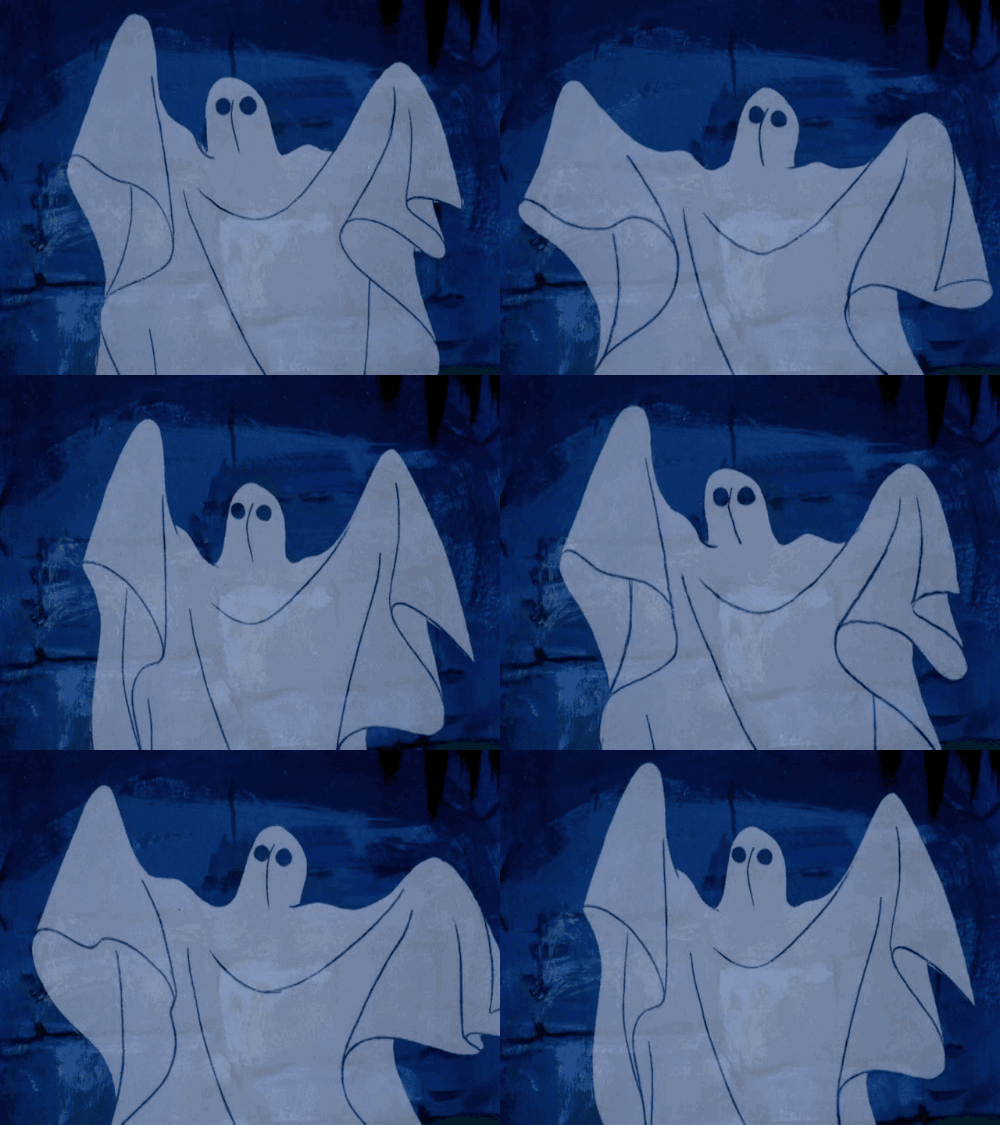
The Impossibly Difficult Name that Movie Game - Halloween Edition
![]() |
| Screenshot #1 |
It's Halloween and in honor of this bewitching day of the year we have a special edition of The Impossibly Difficult Name that Movie Game. There is not one, but FIVE screenshots that you can have the fun of identifying! Each one of these screenshots comes from an American or British made production from the 1920s-1970s. Name the film and you win a prize! Some are easier than usual and others may be a bit tricky, but to reward you for your keen eye we have some treats.....a few special Halloween themed posters and photos. First, try your hand at identifying these images:
![]() |
| Screenshot #2 |
![]() |
| Screenshot #3 |
![]() |
| Screenshot #4 |
![]() |
| Screenshot #5 |
THE PRIZES
Prizes are awarded on a first guess basis. The first person to identify any of the screenshots above gets their choice of one of these five prizes.
1. The Mummy ( 1932 ) - 12x18" reproduction poster
2. The Bride of Frankenstein ( 1935 ) - 8x10" Glossy Photo
3. The Munsters decal/sticker
4. House on Haunted Hill ( 1959 ) - 11x17" reproduction poster
5. Vincent Price and Kermit the Frog - 5x7" Glossy Photo
Happy Guessing and Happy Halloween!
Wednesday, October 30, 2019
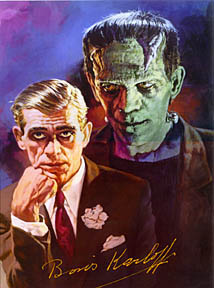
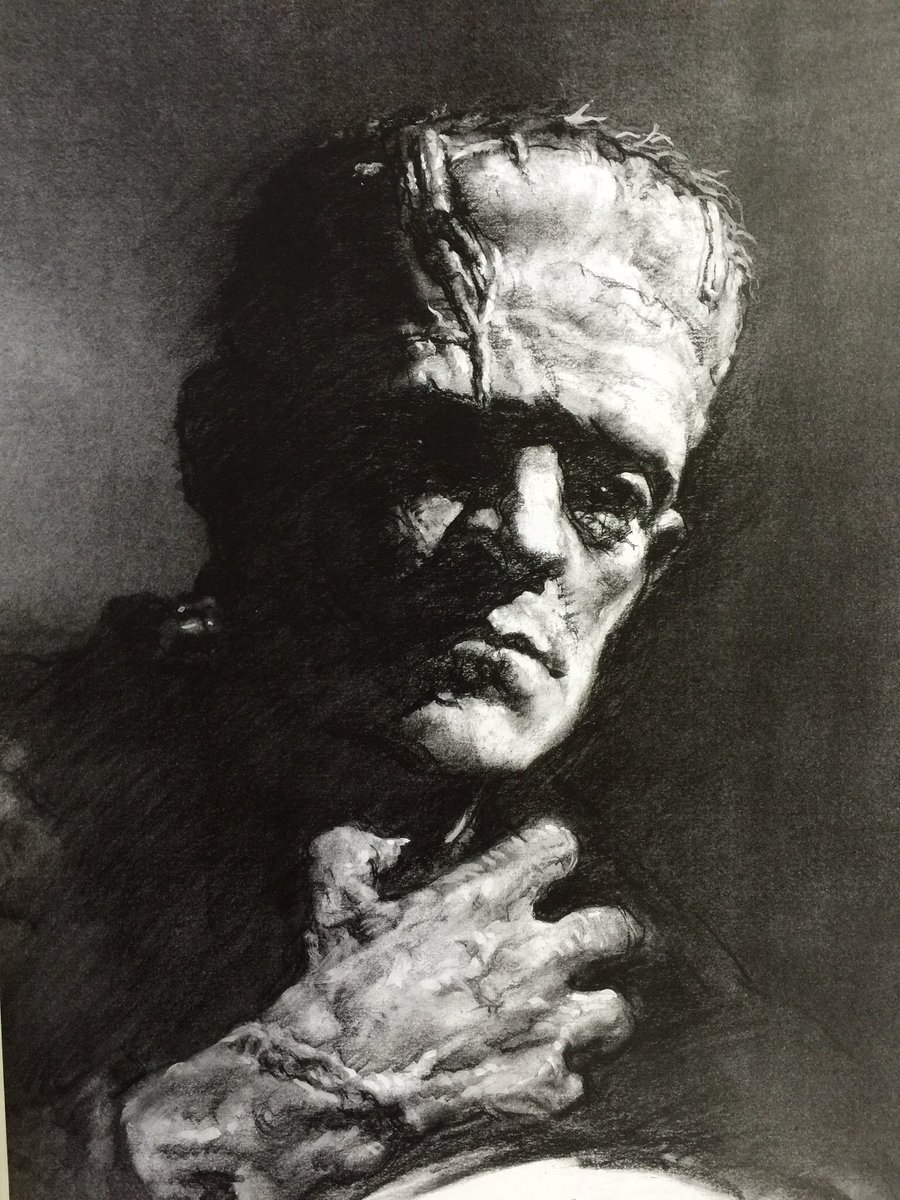
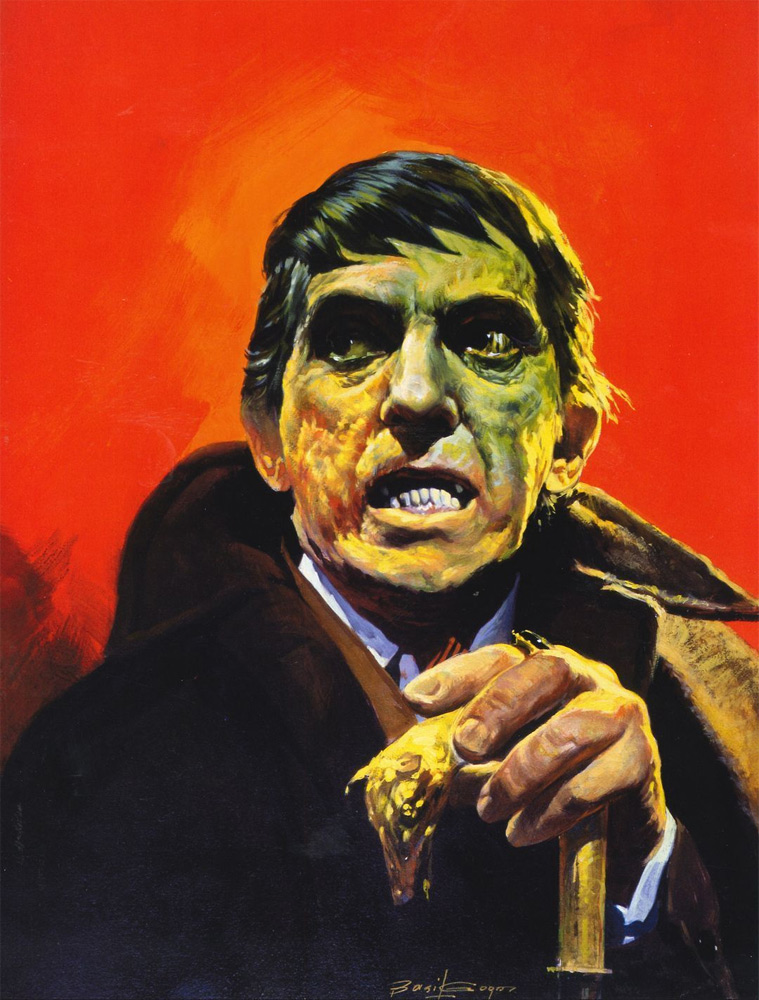
Basil Gogos and the Monster Art of Universal Horror Films
Basil Gogos was a fabulous illustrator who is best known for his movie monster portraits which graced the covers of Famous Monsters of Filmland magazines during the 1960s and 1970s. He combined his passion for art with his love of movie monsters to create these colorful and highly detailed oil portraits of such iconic creatures as Frankenstein's monster, Dracula, and the Wolf Man.
Gogos was a Greek who came to America at the age of 16 to study art. He worked with the noted illustrator Frank J. Reilly and began his professional career of painting book and magazine covers when he received his first assignment to paint the cover to the western novel "Pursuit" in 1959.
Throughout the 1960s, Gogos kept busy working as a commercial illustrator. The majority of his paintings were created for men's pulp adventure magazines and the monster magazines being issued by Warren Publishing ( Eerie, Creepy, Famous Monsters of Filmland ). During the 1970s, he took time off as a commercial illustrator to pursue his own personal fine art but still worked part-time at United Artists as a photo retouch artist in the ad department. His monster art found a new audience in the 1990s and Gogos returned to that genre to create more paintings that paid tribute to the great monsters of filmdom.
Today, his paintings can be found in museums across the world and in two fantastic coffee table books, Famous Monster Movie Art of Basil Gogos by Kerry Gammill and The Monster Art of Basil Gogos by Linda Touby.
Since Halloween is just around the corner, we thought we would share some images of Gogos' best works. Let's begin with Dr. Frankenstein's monster....
Gogos was a Greek who came to America at the age of 16 to study art. He worked with the noted illustrator Frank J. Reilly and began his professional career of painting book and magazine covers when he received his first assignment to paint the cover to the western novel "Pursuit" in 1959.
Throughout the 1960s, Gogos kept busy working as a commercial illustrator. The majority of his paintings were created for men's pulp adventure magazines and the monster magazines being issued by Warren Publishing ( Eerie, Creepy, Famous Monsters of Filmland ). During the 1970s, he took time off as a commercial illustrator to pursue his own personal fine art but still worked part-time at United Artists as a photo retouch artist in the ad department. His monster art found a new audience in the 1990s and Gogos returned to that genre to create more paintings that paid tribute to the great monsters of filmdom.
Today, his paintings can be found in museums across the world and in two fantastic coffee table books, Famous Monster Movie Art of Basil Gogos by Kerry Gammill and The Monster Art of Basil Gogos by Linda Touby.
Since Halloween is just around the corner, we thought we would share some images of Gogos' best works. Let's begin with Dr. Frankenstein's monster....
THE BRIDE OF FRANKENSTEIN
THE MUMMY
DRACULA
THE WOLFMAN
CREATURE FROM THE BLACK LAGOON
OTHER MONSTERS OF FILM AND TV
THE USPS STAMP SERIES
In the 1990s, Basil Gogos had submitted these designs to the USPS for a Universal Monster series of stamps, but unfortunately, they were not chosen. They would have made fantastic stamps!
Subscribe to:
Posts (Atom)