Showing posts with label Herbert Marshall. Show all posts

Friday, February 19, 2021

The Solitaire Man ( 1933 )

Herbert Marshall made his MGM debut in 1933 with a quickie called The Solitaire Man where he played the titular character, a jewel smuggler who decides to go straight. 

Oliver Lane aka "The Solitaire Man" wants to settle down and live the life of an honest nobleman. He just purchased a farm in England and proposed marriage to his long-time partner-in-crime Helen ( Elizabeth Allan ). Together with their thieving friends Mrs. Vail ( May Robson ) and Mr. Bascom ( Ralph Forbes ) they board a plane for London, but the flight is anything but smooth when they discover that a Scotland Yard investigator ( Lionel Atwill ) is on board ready to put the handcuffs on them all. 

The Solitaire Man, based on Samuel and Bella Spewack's play, is an entertaining mystery that packs in quite a bit of story in its 67-minute runtime. The first half is especially good; once the story moves into the airplane sequence it becomes more of a psychological drama. It would have been nice had it played out like Raffles and moved from its Monte Carlo setting to a country estate for more mystery and thievery. 

Herbert Marshall's star quality was apparant even in this minor production. He never had the striking appearance of a leading man but in every film he played he clearly took command. Another actor commanding attention was Mary Boland who played an outspoken American plane passenger. She, too, was making her debut at MGM and would go on to have a long career with the studio, notably garnering attention in The Women ( 1939 ). Also in the cast is Lucille Gleason ( James Gleason's wife ) and Robert McWade. 

The Solitaire Man is not yet available on DVD.  

Thursday, November 21, 2019

The Black Shield of Falworth ( 1954 )

In 1954, Universal-Pictures brought to the screen Howard Pyle's classic story of adventure "Men of Iron" and hailed that it would capture "all the pageantry and excitement of knighthood's epic age". The newly titled The Black Shield of Falworth did not accomplish that task as well as Warner Brothers' The Adventures of Robin Hood ( 1938 ) or Metro-Goldwyn-Mayer's Ivanhoe ( 1952 ) but it certainly is entertaining.

Young Myles Falworth ( Tony Curtis ) and his sister Meg ( Barbara Rush ) are sent to the castle of the Earl of Mackworth ( Herbert Marshall ), a dear friend of Myles' deceased father whom he never met. Here, Myles learns to become a squire and, later a knight, all the while attempting to learn about his family's crest - the Black Shield of Falworth - and to discover who his father was. 

While at the castle, he falls in love with the Earl's daughter, Lady Anne ( Janet Leigh ) and also becomes embroiled in a conspiracy plot led by the treacherous Earl of Alban ( David Farrar ) to overthrow King Henry IV ( Ian Keith ).

The Black Shield of Falworth is rich in plot, rich in Technicolor, it boasts a fabulous cast and features two great fight sequences, making it an entertaining - if not all that memorable - swashbuckler. 
Universal-Pictures knew they had a star in the making when they signed Bernard Schwartz to a contract in 1948. They taught him riding and fencing and changed his name to Anthony Curtis and then introduced him to audiences in a few budget westerns before awarding him his first feature film The Prince Who Was a Thief ( 1951 ) opposite Piper Laurie. Here was a different kind of swashbuckling hero - an overly-anxious and often hot-headed young man with a very pleasant personality, jet-black hair and a winsome smile.

This Middle Eastern-themed adventure film was followed by the similarly-themed swashbuckler Son of Ali Baba in 1952 and then The Black Shield of Falworth, which was Universal's first picture to be made in Cinemascope. 
Tony Curtis, who was 29-years-old at the time, is great in the part of Myles but the role really should have been given to a younger actor to play. The character of Myles is a mere teenager in the original novel and even in the film is often referred to as "the young lad" or "boy" which doesn't quite sound right since Tony was obviously a man at that time. 

Janet Leigh is lovely as Lady Anne; Torin Thatcher is a glove-fit for the part of Sir James, Myles trainer for knighthood; and Herbert Marshall, who always gives a good performance, is well-suited as the Earl. Unfortunately, David Farrar's talents are wasted, and Barbara Rush is given a merely decorative part. 

Also in the cast is the wonderful Dan O'Herlihy as Prince Hal, a young Patrick O'Neal, Rhys Williams, and Doris Lloyd. 

Sunday, May 7, 2017

TV/Movie Set - When Ladies Meet ( 1941 )

Back in the studio-system days of Hollywood, if a film turned out to be successful at the box-office, within a decade you can be sure that a remake would be filmed. Why chance a new script when you have a winner on hand? Metro-Goldwyn-Mayer loved digging out old scripts and re-working them for their current stars. One such production was When Ladies Meet ( 1941 ), a re-telling of the 1933 comedy starring Ann Harding. 

MGM gathered together a few of their biggest talents, surrounded them with a top-notch production crew, and updated the script a bit to add some modern pizzazz to the old war-horse. What resulted was good box-office. Hey, it's a formula! 

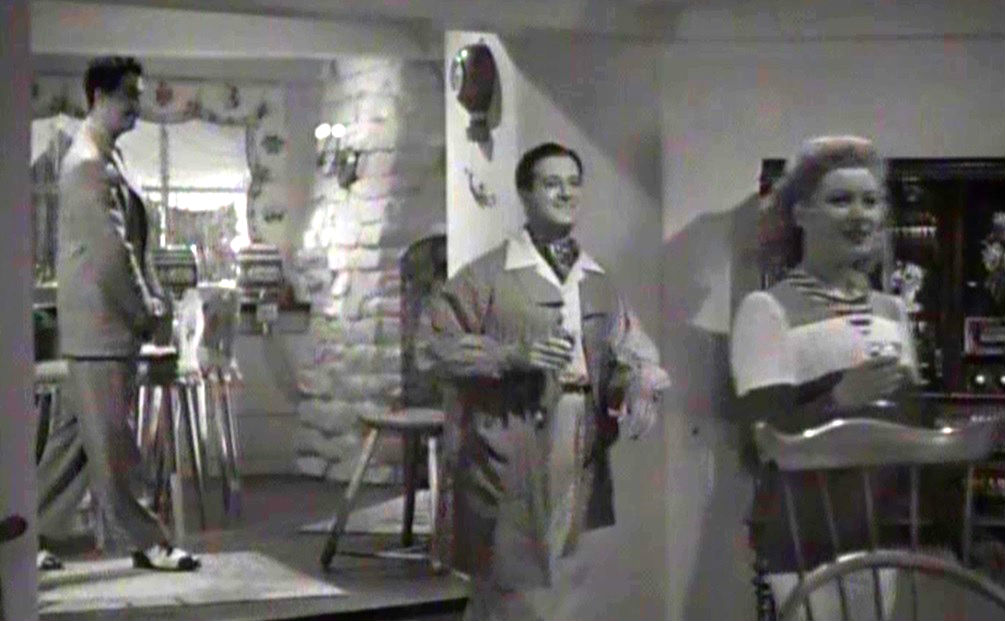
Having not seen the original I can only comment on this remake and say that it is quite an entertaining bit of fluff. But even more impressive then the wonderful cast ( Greer Garson, Joan Crawford, Robert Taylor, Herbert Marshall, and Spring Byington ) was the set design....particularly the house of Bridget Drake, portrayed by Byington. Like most of her roles, she plays a rather dizzy woman ( but obviously not dumb since she is living in such a beautiful home ). Her boyfriend Walter converted an old water-wheel into the extravagant country retreat and, on one afternoon, she finds herself saddled with some old friends staying for the night : author Mary Howard ( Crawford ) who hopes to have a rendezvous there with her publisher/lover Mr. Woodruff ( Herbert Marshall ); Jimmy ( Taylor ) who comes to follow Mary; and Mrs. Woodruff ( Garson ) who arrives not knowing that she will be meeting her husband's mistress. 

The things that go on in seemingly respectable country homes!.....Tsk, tsk, tsk. 

This lovely timber-framed Connecticut-style farmhouse boasted hardwood floors, beamed ceilings, thick white stone walls, and plenty of fireplaces to keep the guests cozy on rainy nights. It just so happened to be a rainy night when Robert Taylor and Greer Garson arrive unexpectedly. 

THE EXTERIOR

The Backyard - Or is it the front? Believe it or not that "pond" is the swimming pool, which Joan Crawford just splashed into from her perch atop a rustic swing. 
The Front Drive - The driveway skirts around the pool. We are never shown the garage but there certainly is one, and it is probably where the servants quarters are, too. 

THE INTERIOR

Dizzy Bridget was so proud of Walter's handiwork she gave the characters a tour of her house and, since she conducted it so well, we will just follow in her footsteps and make some remarks as we pass by these beautiful rooms. 
The Living Room - One of the best features of a traditional "Connecticut" style home is the sunken-living room. While it is open to the bar/kitchen and the staircases, the off-setting depth of the living space gives the room a warmer cozier feel and adds contrast.
The wrap-around sofa reminds me of the interior of a ski lodge. That's a model ship hanging on the wall. There are a number of them throughout the house. Walter must have shared a common interest in yachting with Claire Woodruff. 
When it's raining cats and dogs outside, sit beside the piano and sing a duet. At least, that is what Claire and Mary decide to do. After they find out they share a love for the same man, they no longer have much to sing about. 
Time for Drinks! - The merry foursome now head off towards the bar, which is actually the conversation room of the house, for this is where the inside of the "wheel" is kept. The water-wheel, that is. Look how thick the supporting beams are! This house is built to withstand a Blitz. 
The Bar - Another sloppy screenshot pastiche. If you want to see a larger image simply click on the photo...but be warned, the images only get blurrier the larger they are viewed. 
To the Dining Room! - After Walter's signature cocktails have been downed, he precedes to show them the dining room, tastefully furnished in Early American style. 
The Dining Room - Straight out of the 1941 Ethan Allen catalog. 

UPSTAIRS INTERIOR

The Upstairs Hall - Bridget now ushers her female guests to the upstairs guest rooms. There are four bedrooms in the main-room and supposedly two additional rooms above the barn. Bridget and Walter have separate bedrooms....she claims. 
Guest Bedroom #1 - Mrs. Woodruff is shown her cozy corners. Bridget plays the perfect hostess and even offers her a new toothbrush and nightgown ( why can't we be invited to Bridgie's place? )
Guest Bedroom #2 - Mary's chamber is much larger and there seems to be a flower theme going on here. 
Look how wide the doors are! Marvelous. 
The Barn Loft Guestroom - Finally, the barn loft, where Jimmy gets to bed for the night. He wonders why he can't stay in the main room, insisting that he has been "housebroken". 

THE TALENTS BEHIND THE SCREEN

The art direction of When Ladies Meet can be attributed to that artistic genius of MGM - Cedric Gibbons - whom you will find on the credits of over 1000 films. Almost all of his sets were decorated by Edwin Willis, who naturally did this film as well. When you have two talented individuals like these fellows working together you are bound to see some great house designs up on the silver screen, and, for me, Bridget's house in When Ladies Meet ranks as one of the best "country retreats" to be seen. 


This post is our contribution to The Favorite Film and TV Homes Blogathon being hosted by Phyllis Loves Classic Movies and Love Letters to Old Hollywood. Simply click on the links above to read more posts about fabulous house sets from the golden age of Hollywood. 

Monday, November 7, 2016

The Secret Garden ( 1949 )

"Aye, I know wha' tis said. He locked the gate and buried the key, and nary's been in there since."

A secret garden. It has been locked up for years and is now overgrowing with weeds and bramble for want of anyone to tend to it. When the young orphan Mary Lennox first discovers this enchanted place at the estate of her uncle, she views the garden as an amusing diversion from her loneliness and boredom, but she soon finds that the key that unlocked its door may hold the answer to unlocking the buried secret in her uncle's past. 

The Secret Garden was based upon a 1910 novel by the beloved children's book author Frances Hodgson Burnett. To this day it remains her most popular book, along with "Little Lord Fauntleroy" and "The Little Princess", all of which were adapted to film numerous times over the years. The enduring popularity of these stories can be attributed to Burnett's flair for writing about story elements that children find appealing such as mysterious passageways, orphans from exotic lands, strange characters, locked doors, and hidden gardens. Her stories also consistently featured children as the heroes.


Mary Lennox (portrayed by Margaret O'Brien) is a strange heroine, however, for a book or a film. She is bratty and spoiled having been accustomed to servants waiting on her hand and foot in India. After her parents die from cholera, she is shipped off to England to reside in an oppressive mansion with her uncle, Lord Archibald Craven (Herbert Marshall), a bitter brooding man. Each night Mary hears a screaming voice echoing through the myriad hallways. The servants attempt to quench her curiosity, explaining it simply as "the wind howling from the moors", but Mary finds that they are coming from the bedchamber of a small boy, Colin Craven (Dean Stockwell), her uncle's son. From constant coddling, Master Craven has become an invalid and, believing that he will grow into a hunchback one day, finds living futile. Mary finds her match in Colin because he, too, is spoiled and prone to screaming tantrums. It is only after Mary befriends Dickon, a neighbor boy, and discovers the secret garden, that she learns to find contentment in the simple pleasures of life. 
The Secret Garden is a Clarence Brown production and his visual style is evident throughout the film, but most of the credit for the quality of the film should be given to director Fred Wilcox who established a wonderful moody atmosphere through great use of light and shadow. As an added touch, a Technicolor sequence was utilized to give that extra emotional punch, while the beautiful Cedric Gibbons sets bring the story to life in a fashion that even location filming could not have equaled. 

Metro-Goldwyn-Mayer excelled at adapting novels to lush film productions and, like most of their output in the late 1940s, The Secret Garden featured some of the best talent to be found in Hollywood, both in front and behind the camera. Those tried-and-true child actors, Dean Stockwell and Margaret O'Brien, were excellent in their roles, as was newcomer Brian Roper in the part of Dickon (interestingly, he was 20 years old at the time). 

The adult roles are so well cast that one tends to forget that they are mostly caricatures: Dame Gladys Cooper as the stern housekeeper; Elsa Lanchester as the irrepressibly happy maid; dour Reginald Owen as the old nosy gardener. Even the small cameo performances sparkle with Metro's character talents: Billy Bevan as an overheated British soldier in India; Dennis Hoey as Marshall's stern valet; Aubrey Mather and George Zucco as young Stockwell's doctors; and Norma Varden as his wise nurse.

Friday, September 12, 2014

The Enchanted Cottage ( 1945 )

Beauty is in the eye of the beholder

The enchanted cottage...a harborage to a legend of eternal romance. A beautiful cottage left to live in contented independence of the centuries old structure it once belonged to; standing solid amidst the passages of time to cast its romantic spell on the strangers who pass through its portals. Ah! but not anyone can sense its enchantment...only chosen ones.

Our story begins on a cold wintry morning in a small New England town by the sea. Walking among the rustling leaves outside of this cottage is John Hillgrove ( Herbert Marshall )...a blind man. And yet, a man who can truly see, for he possesses the gift of inner sight; the ability to sense the true nature of a being, and to sense the magical aura an "enchanted" cottage, like the one before him, can cast. Being a composer, he seeks inspiration for his musical skill, and on this beautiful December morning Fate brings him to meet Miss Pennington ( Dorothy McGuire ), a young woman who will one day kindle his imagination with the musical strains of an emotion waiting to be set to music.

Miss Laura Pennington is our rather plain-looking heroine. A lost soul seeking a Home; a place of rest; a place where she can feel she belongs. She hopes to find it in her hometown. Returning after an absence of a few years she comes to the cottage to obtain the position of a maid.


Known locally as "The Witch", Mrs. Abigail Minnett ( Mildred Natwick ) runs the place, and having recently rented it to a soon-to-be-married couple, she's looking for a level-headed woman to help with the housework. Miss Pennington says she does not believe the rumor of the cottage being haunted and is readily given the job. It is not so much her superstitious disbelief that makes Mrs. Minnett hire her, but rather her confession to being lonely....a feeling Mrs. Minnett can sadly relate to.

That afternoon Mr.Oliver Bradford ( Robert Young ) and his fiancee ( Hillary Brooke ) arrive to look over the cottage. They are a young society couple and Oliver is obviously taken by the charm of the place and convinces his fiancee that it is the ideal location in which to spend their honeymoon. Within a week they plan on getting married, but that blissful day will never come, for War is declared soon after and being an Army pilot, Mr.Bradford is swiftly given his overseas departure orders.


Over a year later he returns to the cottage a changed man - a disfigured man. This time it is not a honeymoon oasis he is seeking but rather a place of retreat from his family, his fiancee and the society that brands him an outcast and tries to comfort him with pity. A broken man, he is searching for a new foothold on life. It is not only peace that he shall find at the enchanted cottage, but something even more wonderful.....lasting love.

Originally a stage play written by Sir Arthur Wing Pinero in 1923, The Enchanted Cottage was first brought to the screen in 1924 in a silent film production by First National starring Richard Barthelmess and May McAvoy. RKO released this film adaption in 1945, and Lux used the same cast in a radio play that year as well. Robert Young and Dorothy McGuire were a perfect team ( they had starred together two years earlier in another stage adaption, Claudia ) for this "enchanting" tale and each brings a unique quality to their roles - Dorothy, with her look of inner sadness and breathless timidness, and Robert with his kind and honest appearance that not even a facial scar can alter. Mildred Natwick is marvelous as usual, as the lonely widow with whom time has stood still. And best of all is the magnificent Herbert Marshall. This man is always a pleasure to behold. 

"Through the eyes of Love, one can see everlasting Beauty " is the theme of The Enchanted Cottage, and yet, lying just beneath the surface the film tells other tales. It's a story of kindness: a lonely woman welcoming a stranger into her home, befriending her, and sharing in her happiness and sorrow; a young woman reaching out to a man in need of compassion and sympathetic understanding. It's a story of acceptance: accepting your situation in life and wanting to see it in a brighter perspective; accepting others for who they are and loving them for it. Its a story of Time: the Past frozen on a calender for a widow to remember, the Present being days of war and personal hardship, the Future being the only bright star of hope and happiness. And most importantly, it's a story of truth: eyes that see the true, the real, in a blind world. John Hillgrove tells Oliver that his blindness has opened up new worlds for him allowing him to use senses that show things as they really are, making nature and human beings all the more beautiful to him.....


" Sometimes I feel that before I was blind, and only now I can see "

The Enchanted Cottage is an atmospheric romantic fantasy with lovely music by Roy Webb ( nominated for an Academy Award for Best Original Score ) and beautiful cinematography. It leaves a memorable impression on the viewer, and you will want to see it many times over.