Thursday, November 10, 2016

Tomb Raider: The Treasure of the Snake King

Riding high from her fame as the fiery Scarlett O'Hara in Gone with the Wind and as Myra in 1940's romantic tearjerker Waterloo Bridge, English rose Vivien Leigh enthralled audiences in the role of fearless siren Lara Croft in Tomb Raider: The Treasure of the Snake King. 

Released by 20th Century Fox in November 1942, screenwriter Philip Dunne crafted an exciting adventure story that inspired Toby Gard to create Tomb Raider, which has since become the world's best-selling video game franchise.

In the beginning of the film, a noted archaeologist is being pursued by thugs in a small waterfront outpost in Mexico's Yucatan Peninsula. He runs into a general store/post office and hastily puts a 4" terra cotta figurine into a cardboard box and addresses the box to his friend and colleague, English archaeologist and aristocrat Lady Lara Croft ( Leigh ). Shortly after he hands the parcel to the clerk and runs out of the general store, the thugs chase him into a dark alley whereupon he is beaten up and thrown into the sea.

After the credits have appeared on screen, Lady Croft is seen riding bareback on her fair steed over the rolling hills of her family's sprawling estate. At unexpected moments, a shooting target pops up from around tree limbs and in odd corners that allow Lara to whip out her trusty pistols and take aim. While Lady Croft is a proper young lady indeed, she knows a thing or two about the fine art of marksmanship and her daily practice sessions have trained her to become an expert shot.

When her practice has ended, her butler hands her a parcel and recognizing the importance of the artifact inside of it, she contacts her historian friend Dr. Henry Carlton ( Ian Hunter ) and requests his help. The pair discuss the possible origin of the intricately designed figurine and conclude that it is an ornament that may provide a link to the legendary lost Mayan empire of the Snake kingdom, who not only possessed a magnificent treasure of gold and jewels, but the power to control time as well, by means of a "golden cobra" statue.

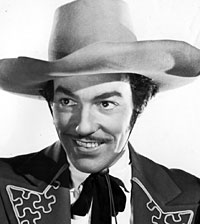
Henry and Lara take a transatlantic plane trip and meet danger when both of the pilots parachute out of the plane, leaving Henry and Lara to save the plane themselves from imminent disaster. Once they make it safely to Mexico, they hire Enrique Lopez ( Cesar Romero ) and his companion Jose ( J. Edward Bromberg ) to act as their guides into the remote jungle. 
Lara is visited by an attractive fortune teller named Carlita ( Maria Montez ) who seems to know a lot about the desires of the human heart, including Lara's determination to solve the mystery of her mother's disappearance. Carlita shows Lara another terra cotta figurine but, moments after Carlita leaves Lara's hotel room, she is attacked and Lara comes to her rescue. She fights the thugs and learns from one of them that they were sent by their "King" to stop Lara and Henry's jungle expedition.

As the team begins their journey in the deep jungle, David McMasters, a young explorer ( Richard Greene ) begs to join them in hopes that the discovery will provide him with a healthy paycheck to send his lady love Eloise ( Nan Grey ) back to England. 

They encounter monkeys, spiders, leopards, snakes, sickness, hidden passions and danger. Several members of their team run away, Henry nearly dies from a poisonous snake bite, and a fire almost consumes their entire camp! It becomes apparent that someone is going to great lengths to bring their expedition to an end. Eloise turns up unexpectedly and David, in a drunken fit, tells Eloise he is madly in love with Lara, which causes both women to get into a "cat fight", in which Lara wins.

The team finds a moss covered temple and the entrance to a dark tomb filled with gold, jade, and emeralds. A beautifully crafted frieze in the tomb provides definite evidence to the existence of the Snake kingdom, which was later taken over by the Mayan warriors. Lara solves a puzzle hidden in the frieze that says she must use a jade-encrusted mask as a guide to locate the underwater tomb which houses the glimmering golden cobra statue. 

Lara and the team face numerous obstacles in their quest to reach the golden cobra, including several lethal traps and a near cave-in! Lara hopes that the golden statue will allow her to go back in time just enough so that she can "see" what happened to her mother before she disappeared when Lara was a child. This natural desire does not come to pass, for it is when Henry takes hold of the ruby-eyed cobra, that his true nature comes to light. He is, in fact, the evil "King" behind the attacks and sabotage that have plagued the expedition from the start. He wants to possess the cobra's power to control time, so that he could go back in time and be like one of the kings when the Snakes were in power. This surprise turn of events shocks Lara and the others, but Lara knows she must stop Henry and his henchmen ( who are disguised as native guides ) at all costs. 

The overwhelming power of the golden cobra engulfs Henry and the earth beneath his feet gives way sucking him and his henchmen into a time warp never to be seen by modern man again. The intense eruption causes the submerged tomb to quake violently. Lara and David are badly hurt, but they and Eloise just manage to escape the underwater tomb before it collapses beneath the sea.

We learn that Henry's plan was to use Lara's superior knowledge of ancient history to help him find the location of the tomb of the golden cobra for his own wicked ambitions. He sabotaged the expedition merely to make the team believe that an outside force was against their mission, and not him. 

As the film concludes, Lara lets David take full credit for finding the artifacts the team found in the temple and they agree to give them to the museum in Merida with Enrique as the museum's new curator. David and Eloise make plans to return to England and Enrique and Carlita have formed a romantic attachment during the expedition. 

Vivien Leigh gave a wonderful performance of Lara Croft. She is smart, sassy, and courageous ( like Scarlett O'Hara ), but a bit of a tomboy. Richard Greene's David is brave and handsome and eager for adventure. Since the film appealed mostly to teenage boys and girls, Greene proved to be a role model for the boys in the audience while teenage girls found themselves swooning over this attractive Englishman. Considering the film's marquee names, Cesar Romero steals the show as Enrique with his trademark smile and carefree bravado. Ole!

Tomb Raider: The Treasure of the Snake King could have benefitted from better set design, instead settling for old stock footage and mediocre jungle sets created on the studio lot. It received moderate reviews from credits when it was released in theaters. The film was not a commercial success, but it allowed director Norman Foster ( who went on to make Journey into Fear and Rachel and the Stranger ), screenwriter Philip Dunne, and its cast to dabble in a project that was a bit ahead of its time. 

The character of Lara Croft and her incredible escapades would not gain popularity until young game designer Gard and his talented team debuted their highly-anticipated video game in 1996. New games were developed annually until 1999 along with several reincarnations with the release of Rise of the Tomb Raider in 2015. American actress Angelina Jolie brought Lara Croft to the screen in two thrilling films, Lara Croft: Tomb Raider ( 2001 ) and Lara Croft Tomb Raider: The Cradle of Life ( 2003 ), which featured location scenes shot in exotic foreign countries and the usage of modern computer special effects. 

Lara Croft remains a much-loved heroine in the gaming world and her next motion picture appearance is slated for March 2018 with actress Alicia Vikander in the coveted role of the one of the world's most talented and gutsy archaeologists, Lady Lara Croft. A role originally introduced by the lovely Vivien Leigh almost 75 years ago...

This fictional review is my ( Diana ) contribution to The Great Imaginary Film Blogathon, being hosted by yours truly, Silver Scenes. To read more articles about "imaginary" films, be sure to check out the Master List here! 

Wednesday, November 9, 2016

The Lost Hildegarde Withers Mysteries

Hildegarde Withers, a schoolmarm who enjoys cracking murder cases, was the creation of Stuart Palmer who penned sixteen novels featuring the wise-cracking old broad. She was enormously popular with mystery readers throughout the 1930s, and with film-goers from her very first appearance in The Penguin Pool Murder ( 1932 ) which starred Edna May Oliver as Withers. 
Oliver was the perfect embodiment of the snoopy schoolteacher with her horse-like face and her no-nonsense attitude. She sauntered around dangerous territories with her Queen Mary attire and her silver-handled umbrella poking her nose where it didn't belong and treating all suspects like they were naughty schoolchildren. With the aide of crusty know-it-all inspector Oscar Piper ( James Gleason ) she would try to sniff the criminal out before they snuffed her out. Gleason and Oliver's barbed repartee didn't fool audiences, who immediately recognized what a great crime-solving team they made. 

Louise Fazenda with Edna May Oliver
RKO featured the duo in two more mysteries - Murder on the Blackboard ( 1934 ) and Murder on a Honeymoon ( 1935 ) before Edna May Oliver decided to quit the series and move onto other roles. This was a sore disappointment for Withers fans but, since Gleason was game for continuing on, RKO decided to recast the part with Louise Fazenda. 

Fazenda had a long career in Hollywood dating back to 1913, and she was particularly adept at character parts. While she lacked Edna May Oliver's comical facial features, she did a grand job of stepping into Oliver's very large shoes and making the part of Miss Withers completely her own. Fazenda even brought out Miss Withers' more romantic nature, and a good dose of sugar was often mixed into her many tart remarks to Oscar Piper. 

The first Hildegarde Withers mystery to feature Louise Fazenda was the most entertaining of the entire series - Murder Abroad, released in 1938. This sprightly whodunnit takes place aboard a steamer bound for London. We all know schoolteachers love to travel, but Miss Withers has not had good luck with vacations. On her last trip, she found herself enmeshed in the investigation of a dead man on a small plane. In this outing, a young woman ( Dorothy Lovett ) goes missing. She is either in hiding or has fallen over the ship's rails. While the passengers begin a search for her onboard, body after body begins appearing. The young woman's beau ( Kent Taylor ) is particularly worried, as is Miss Withers who is determined to put a stop to this killer who threatens her holiday abroad! With so few clues to work with, she comes to depending on the testimony of a particularly mischievous silver Persian cat to aide in the investigation. Murder Abroad was based upon Palmer's "Puzzle of the Silver Persian". Also in the cast were Leon Errol as an amusing Brit who has the sweets for Miss Withers, and debonair Tom Conway. 
Next came Scene One, Murder ( 1940 ), an entertaining backstage Hollywood mystery that featured a number of great cameos from some of RKO's biggest stars. Once again, Withers was hoping for a grand European vacation after a particularly distressing school year, but Hitler has other plans. The invasion of Poland puts an end to her tour and so she books a ticket to Hollywood, trading the Louvre and the Vatican for the Brown Derby and La Brea tar pits. She has only been in Los Angeles three days when she is offered a job at Mammoth Studios as a technical advisor to a film version of the Lizzie Borden story. The job is perfect, for no one knows murder like Miss Withers. But on her first day at the studio, the screenwriter in the next office dies of an apparent broken neck, and Miss Withers soon discovers that a killer as vicious as Lizzie Borden herself is loose on the backlot! 

Withers' Hollywood debut is a bust!
Scene One, Murder features a number of great character actors such as Charlie Ruggles as Mammoth's key director ( and our number one suspect ), Clarence Muse as the security guard, and Miles Mander as the aggravated screenwriter who gets tied up. Allan Jones and Sally Eilers also star as the requisite lovebirds. Most entertaining of all is George O'Brien's cameo. From the moment Miss Withers booked her Hollywood vacation she was hoping to catch a glimpse of "Gorgeous George", her idol of the silver screen, and she - literally! - catches him in her lap at the commissary....much to the chagrin of Inspector Piper. 

Despite steady box-office returns for these final entries in the Withers-Piper series, RKO wrapped up the films, focusing more attention on film noirs and westerns throughout the 1940s. It was not until 1957 that Hildegarde Withers returned to the screen for one final appearance, this time with Agnes Moorehead taking on the part. Moorehead was ideally cast. She had made a television pilot in 1955 for a proposed sitcom based on the Palmer novels, but the series was never picked up*. 

This feature film - Crossing Death - changed the character slightly, and added some new touches while retaining the spunk of the originals. The setting has been updated to the 1950s, and Miss Withers is no longer a city schoolteacher but teaches in a rural school outside of New York City. One wintry night, while driving to Miss Withers' country house for dinner, her good friend Inspector Piper ( Paul Kelly ) witnesses a roadster slam into a tree at a crossroad. The car is empty, its driver thrown a half block back. He is stone dead but his cigarette is still burning, and he has a noose tied tight around his neck. Can dead men drive? Oscar and Hildegarde certainly don't think so, and together they assemble clues that lead them to a barn theatre and its company of seven actors ( among them Hugh Marlowe, Barry Sullivan, Herbert Marshall, Elsa Lanchester and Martha Hyer ). 

Wither or not you are a mystery fan, you will find each of these three films immensely entertaining and perfect for a Friday night viewing. Unfortunately, none of these titles have received an official DVD release yet and finding a copy of them may prove to be the most difficult mystery of all!

* This TV pilot was actually made, but is now considered lost. 

This post is Connie's entry in The Great Imaginary Film Blogathon being hosted by yours truly, Silver Scenes. This event features reviews of "imaginary" films....in other words, what you just read was a fictional review ( accept for the * note ). We hope you enjoyed it! To read more reviews of imaginary films, simply click on this link. 

Tuesday, November 8, 2016

Happy Harmonies 1936 Cartoon - To Spring

If you ever wondered where the splendid colors of Spring come from after a black-and-white Winter, wonder no more.... Metro-Goldwyn-Mayer's 1936 Happy Harmonies cartoon To Spring demonstrates the entire process in full detail. For those who took the time to research the science behind the Winter-to-Spring season change, then it is no secret at all that gnomes control the varying pastel tints that are apparent in the flowers, trees, and fields in April and May.
These little elves work furiously to pump vibrant colors through the veins under the earth into the roots of the trees and flowers, struggling to get the colors of Spring above ground and on schedule every year. Old Man Winter sometimes has other notions about their schedule, and before he is ousted out of the country he usually attempts to blow some cold air onto the budding flowers, but the gnomes always prevail in the end.

"It's time for Spring.....It's time for Spring, I say!"

This nine-minute classic from the "Harman-Ising" duo of Hugh Harman and Rudolf Ising brilliantly captures the excitement of the season change in that customary bouncing fashion of 1930s cartoons. It was the 24th of 38 cartoons that the team worked on together and one of their best. The animation is marvelous and beautiful color tones literally burst into view thanks to the Technicolor process it was filmed with. To Spring also marked the directorial debut of William Hanna, who later started his own studio with Joseph Barbara ( Hanna-Barbara...just in case you missed the connection ).
Many of the animation techniques seen in the segment featuring the gnomes hammering away with their pick axes hint at the style that would be seen in the "Heigh-Ho" sequence of Snow White and the Seven Dwarfs, which was released by Walt Disney just a year later. To Spring also has many clever character touches, such as the black-bearded little gnome scrambling to put his pants on so he can help pump the colors and finally giving up at the end, instead tripping along with one pant leg up and one down. If you listen carefully, you'll hear the voice of Mel Blanc as one of the gnomes. 

This cartoon was one of my favorites when I first saw it several years ago on a DVD collection of public domain cartoons, and after numerous viewings I have still not tired of it. Ultimately, whether a cartoon wins animation awards or receives plaudits for its creative techniques does not matter, it is the lasting entertainment value of a cartoon that makes it a true winner. 

Ready to watch To Spring? Simply click here! 

To read more articles about cartoons check out the One of My All-Time Favorite Cartoons Blogathon being hosted by MovieMovieBlogBlog. 

Monday, November 7, 2016

The Secret Garden ( 1949 )

"Aye, I know wha' tis said. He locked the gate and buried the key, and nary's been in there since."

A secret garden. It has been locked up for years and is now overgrowing with weeds and bramble for want of anyone to tend to it. When the young orphan Mary Lennox first discovers this enchanted place at the estate of her uncle, she views the garden as an amusing diversion from her loneliness and boredom, but she soon finds that the key that unlocked its door may hold the answer to unlocking the buried secret in her uncle's past. 

The Secret Garden was based upon a 1910 novel by the beloved children's book author Frances Hodgson Burnett. To this day it remains her most popular book, along with "Little Lord Fauntleroy" and "The Little Princess", all of which were adapted to film numerous times over the years. The enduring popularity of these stories can be attributed to Burnett's flair for writing about story elements that children find appealing such as mysterious passageways, orphans from exotic lands, strange characters, locked doors, and hidden gardens. Her stories also consistently featured children as the heroes.


Mary Lennox (portrayed by Margaret O'Brien) is a strange heroine, however, for a book or a film. She is bratty and spoiled having been accustomed to servants waiting on her hand and foot in India. After her parents die from cholera, she is shipped off to England to reside in an oppressive mansion with her uncle, Lord Archibald Craven (Herbert Marshall), a bitter brooding man. Each night Mary hears a screaming voice echoing through the myriad hallways. The servants attempt to quench her curiosity, explaining it simply as "the wind howling from the moors", but Mary finds that they are coming from the bedchamber of a small boy, Colin Craven (Dean Stockwell), her uncle's son. From constant coddling, Master Craven has become an invalid and, believing that he will grow into a hunchback one day, finds living futile. Mary finds her match in Colin because he, too, is spoiled and prone to screaming tantrums. It is only after Mary befriends Dickon, a neighbor boy, and discovers the secret garden, that she learns to find contentment in the simple pleasures of life. 
The Secret Garden is a Clarence Brown production and his visual style is evident throughout the film, but most of the credit for the quality of the film should be given to director Fred Wilcox who established a wonderful moody atmosphere through great use of light and shadow. As an added touch, a Technicolor sequence was utilized to give that extra emotional punch, while the beautiful Cedric Gibbons sets bring the story to life in a fashion that even location filming could not have equaled. 

Metro-Goldwyn-Mayer excelled at adapting novels to lush film productions and, like most of their output in the late 1940s, The Secret Garden featured some of the best talent to be found in Hollywood, both in front and behind the camera. Those tried-and-true child actors, Dean Stockwell and Margaret O'Brien, were excellent in their roles, as was newcomer Brian Roper in the part of Dickon (interestingly, he was 20 years old at the time). 

The adult roles are so well cast that one tends to forget that they are mostly caricatures: Dame Gladys Cooper as the stern housekeeper; Elsa Lanchester as the irrepressibly happy maid; dour Reginald Owen as the old nosy gardener. Even the small cameo performances sparkle with Metro's character talents: Billy Bevan as an overheated British soldier in India; Dennis Hoey as Marshall's stern valet; Aubrey Mather and George Zucco as young Stockwell's doctors; and Norma Varden as his wise nurse.

Sunday, November 6, 2016

Hollywood Home Tour - Norma Talmadge

"Everybody pile into the bus now! If we take any more lunch breaks like we have, we will still be on this bus in twenty years time. Once again, we'll be taking a slight detour to see an exceptionally beautiful home....the estate of that star of the silent era, Norma Talmadge. Fasten your seat belts and off we go!

649 West Adams Boulevard, Los Angeles
"On your right you will see the beautiful Spanish stucco St. Vincent de Paul church built in 1925. Just a few steps away is Norma's charming Tudor-style mansion, which is probably one of the most famous movie star homes in Los Angeles, not because Norma lived there, but because it passed hands between so many silent film stars of the 1920s. Originally it was built by Randolph Huntington Miner, a developer, and his wife, socialite Julita Miner, in 1904. Sumner Hunt was the architect who designed it. They lived here for about fifteen years and then sold it to that seductive vamp Theda Bara. Roscoe "Fatty" Arbuckle bought it in 1921 but moved on after that scandal with the young starlet left his career in ruins. He sold the house to director Raoul Walsh and his wife, Miriam Cooper. Alla Nazimova also resided here for a spell."

"How long did Norma Talmadge live here then?"

"Not long at all. One whole winter season to be precise. Miss Talmadge and her husband, producer Joseph M. Schenck, purchased this house in October 1924 and were gone by February 1925. They went on to own many estates, but this one has long been associated with the Schenk's because it was featured on the front of a postcard bearing their name and was the first home they owned. 

"Inside is as beautiful as the exterior. There is a well-stocked library with a reading alcove which Norma enjoyed, and a drawing room featuring heavy beamed ceilings, ruby red velvet furniture and an antique writing desk where Norma would stack her piles of fan mail to respond to. The dining room features carved teak-wood furniture imported from China with embroidered curtains and bronze ornaments from the Orient as well. There is also a sun parlor among its fifteen rooms." 

Up-to-Date Note: To see the Talmadge estate today ( now called the Randolph Huntington Miner house ), simply click here for a street-view. It is still looking great!

Friday, November 4, 2016

From the Archives : The World's Fastest Pasta Eater on Mike Douglas

Steve Weldon is pictured in this 1979 The Mike Douglas Show press photo doing what he does best...eating pasta. And mama mia! how he slurpped it up! It's no wonder he was addicted to TUMS.

From the Archives is our latest series of posts where we share photos from the Silverbanks Pictures collection. Some of these may have been sold in the past, and others may still be available for purchase at our eBay store : http://stores.ebay.com/Silverbanks-Pictures

Monday, October 31, 2016

The Witch's Tale ( 1931 - 1938 ) Radio Series

"Draw up to the fire and gaze into the embers as I tell you a hearty tale that will boil your blood..."

Old Nancy the witch knew how to tell a good ghost yarn. At over 107 years old ( and aging fast ) she certainly had plenty of years to practice her art of story-telling. Each week, for seven years, she gathered her listeners close to her via radio waves and cackled tales of mystery and horror to send chills running up their spine. 

The old "Witch of Salem", as she was affectionately called, played host of The Witch's Hour, one of New York's most beloved horror programs, between May 21, 1931 and June 13, 1938 on WOR, the Mutual Radio Network. The series was created by Alonzo Deen Cole who not only wrote and directed each episode but also provided the sounds of Old Nancy's cat Satan. His wife Marie O'Flynn also took part acting in many of the episodes as the female lead. 

Originally stage-actress Adelaine Fitz-Allen voiced old Nancy but after she passed on at the age of 79 she was replaced by 13-year old Miriam Wolfe....who did just as good a job!

What made The Witch's Hour so engrossing was the clever story lines and the quality of the programs. Each episode was well-acted and utilized convincing sound effects that gave the series its extra dose of creepiness. 

Unfortunately, only about 50 episodes of the program still exist today since many of the original recordings, which were performed live during broadcast, were destroyed by Cole in 1961. All of the surviving episodes could be heard at the Relic Radio website or through Old Time Radio. 

Since today is Halloween and tonight is the witching hour, be sure to tune into some of these programs, and for a sample, here for your listening pleasure are....


FIVE EERIE CLASSICS 


The Haunted Crossroads ( 1933 ) 

An invisible woman has stabbed a policeman in the back at an isolated crossroads. A stabbing like this has happened before, and will soon happen again.
 
Graveyard Mansion ( 1934 ) 

Two brothers inherit a suspicious old house in Louisiana and meet a beautiful woman who's been dead for one hundred years! Are there vampires within the mansion? A ghost perhaps?

The Wonderful Bottle ( 1934 ) 

A couple of young American lads in Argentina meet an old Spaniard who sells them a magic bottle that grants its owners every wish. That bottle was made by the devil and anyone who owns it must get rid of it before he dies or he will burn in hell’s fire forever!


The Devil Mask ( 1935 ) 

A wife is concerned about her husband's disrespect of African ways and so asks a witch doctor to boom on the drums a ceremonial chant to keep the devil away during the trip back to England.

The Priest of Sekhet ( 1936 ) 

A young British archaeologist becomes trapped in an ancient tomb, along with a dead priest from ancient Egypt. After his rescue, the archaeologist undergoes a strange change of character.