Showing posts with label Greer Garson. Show all posts

Saturday, July 11, 2020

Magic Couples of Metro-Goldwyn-Mayer

Movies have always reflected the hopes and dreams of the public, especially in terms of romance. Since almost every movie genre - from mysteries to swashbucklers, from war to love stories - features a leading man and a woman, it is not surprising that thousands of different screen couples exist on film. Only a relatively few couples created real magic, and of these, a surprising number worked for MGM.

At the studio with "more stars than there are in heaven," Louis B. Mayer and Irving Thalberg acted as divine matchmakers. If a couple proved successful in a film, it was likely they would be recast as a team, especially if they were both under contract to MGM. Thalberg, for example, noticed a chemistry between Joan Crawford and Clark Gable when they co-starred for the first time in Dance, Fools, Dance ( 1931 ). He set the story department to finding scripts that would suit the two actors. Subsequently, Crawford and Gable made eight films together, in most of which she played the working girl who rose to fame and glamour, and he was the rugged he-man who loved her. Judy Garland and Mickey Rooney, the perennial happy-go-lucky teenagers, co-starred in nine MGM movies. And Myrna Loy and William Powell, the quintessential happily married couple of the forties, made thirteen films together in as many years. 

What made a great screen couple? The answer is as difficult to determine as it is to explain what makes a relationship work in real life. Like all great lovers, screen couples exude mystery and wonder. "We're inevitable, " John Gilbert tells Greta Garbo in Queen Christina ( 1934 ), "Don't you feel it?" She does and so do we. Great lovers always seem inevitable, part kismet, and part coincidence. 

Casting two actors together creates a third entity, a single ideal. And no movie studio in the world paired couples together with as much frequency as MGM. In some cases, screen couples served to perpetuate a series, such as Johnny Weissmuller and Maureen O'Sullivan in the Tarzan films, or Lew Ayres and Laraine Day in a succession of Dr. Kildare episodes. But the great MGM screen couples came to symbolize a singular aspect of romance: Greta Garbo and John Gilbert ( Temptation ); Clark Gable and Jean Harlow ( Lust ); Joan Crawford and Clark Gable ( Glamour ); Myrna Loy and William Powell ( Sophistication ); Jeanette MacDonald and Nelson Eddy ( Sentimental Love ); Judy Garland and Mickey Rooney ( Good, Clean Fun ); Greer Garson and Walter Pidgeon ( Enduring Love ); Spencer Tracy and Katharine Hepburn ( Mutual Admiration ). 

Perhaps the popularity of these couples can be attributed to moviegoers' longing for the romantic ideals these costars projected on the screen. Certainly, their popularity also was a reflection of the times. Jeanette MacDonald and Nelson Eddy sang sentimental arias to each other, lavishly adorned in period costumes, while the world suffered through the Great Depression. Their love was always chaste and their relationship was as idealized as someone like Louis B. Mayer couple imagine. In Mrs. Miniver ( 1942 ), Greer Garson and Walter Pidgeon stoically endured the hardships of World War II. ( Winston Churchill said that the movie did more for the war effort than a fleet of destroyers ). But the common bond and the lasting appeal of the majority of screen couples from this era also had to do with equality of the sexes. 
We may think of the liberated woman as a phenomenon of the seventies, but just look at the female characters of the thirties and forties. They were women who stood up to their men; Women who could wisecrack, work, even fight, if necessary, for the things they wanted and for the men they loved. They were equal partners in solving a crime, running a business, singing duets, or dancing on Broadway. These women held their own with men in the bedroom, the boardroom, and even the barroom, when necessary. In a classic scene from The Thin Man ( 1934 ), Myrna Loy discovers that William Powell has consumed six martinis, and tells the waiter, "....bring me five more martinis, Leo, and line they right up here."

These women matched their men, drink for drink, or any other way, and the men loved them for it. 

The influence of MGM's screen couples continues today on late-night television and in video rental stores, where these movies of yesteryear are still popular, reinforcing the fantasies created by Hollywood's most powerful dream machine. Obviously, we still want to believe that, in real life, Loy and Powell or Garson and Pidgeon stay happily married for decades. "Ah! Sweet mystery of life, " as Jeanette MacDonald and Nelson Eddy would croon. And the mystery was this: Why can't real life work like the movies?

- Peter Hay

The above article was an excerpt from "MGM: When the Lion Roars", written by Peter Hay and published by Turner Publishing Inc ( 1991 ). 

Sunday, May 13, 2018

Famous Stars and Their Mothers

They are just mother's boys and girls grown tall! 

Believe it or not, Hollywood stars have a few things in common with regular folk like us.....for example, they have mothers, too! At least, that is what this photo-spread from the Mother's Day week issue of Movie-Radio Guide would have us believe. But honestly, if it weren't for the captions, the resemblance between some of these stars of the 1930s/1940s and their maters may have gone unnoticed ( not that one would expect Cesar Romero's mother to share his trademark moustache ). 

We'd like to thank the Old Time Radio Researcher's Group for making so many great movie and radio magazines available to the public....and we'd also like to wish a Happy Mother's Day to all of our readers! 

Eleanor Powell of the twinkling feet and mother Blanche ( above ) always spend the day together. 
Cesar Romero with his mother Maria ( right ) taking time to chat with another beloved mater of the screen, Lela Rogers, star Ginger's mom. 
Formal party is what the irrepressible Mickey Rooney stages for Mother Nell on the great day! Inset: Homey describes Mother's Day in the Darnell family. Linda is getting some fine points on baking from Mom.

Mary Livingston and daughter Joanie have much in common besides the matching red, white, and blue jumpers they are wearing. One of those common interests is story-book time at the Benny's.

Every day is Mother's Day for Titian-haired Greer Garson, for she and her mother, Mrs. Nina S. Garson, are inseparable pals. Instead of making the rounds with some dashing screen hero when on a recent New York trip, Greer's constant companion was her mom. They are seen here at the Stork Club.
Mother of Lucille Manners, soprano star of "Cities Service Concert" ( Fri. NBC ) is herself musically accomplished and was Lucille's first teacher. Kate Smith's grandmother ( pictured ) as well as her mother, is a good pal to the CBS singer. Mrs. Benjamin Hanby is modern, too, and travels by air.
Betty Winkler transferred her dramatic activity from Chicago to New York and took her mother along. Betty stars in "Abie's Irish Rose". 
First grown-up luncheon date for Shirley Temple, Mother's Day, 1941, at the Brown Derby with Mrs. Gertrude Temple. 
Radio star Gracie Allen is not only one of America's favorite entertainers, she's doubly that to a couple of young Americans named Ronnie and Sandra. The two children of Gracie Allen and George Burns like their mom and dad on the air, but they like even better Gracie's reading and George's antics at home. 

Sunday, May 7, 2017

TV/Movie Set - When Ladies Meet ( 1941 )

Back in the studio-system days of Hollywood, if a film turned out to be successful at the box-office, within a decade you can be sure that a remake would be filmed. Why chance a new script when you have a winner on hand? Metro-Goldwyn-Mayer loved digging out old scripts and re-working them for their current stars. One such production was When Ladies Meet ( 1941 ), a re-telling of the 1933 comedy starring Ann Harding. 

MGM gathered together a few of their biggest talents, surrounded them with a top-notch production crew, and updated the script a bit to add some modern pizzazz to the old war-horse. What resulted was good box-office. Hey, it's a formula! 

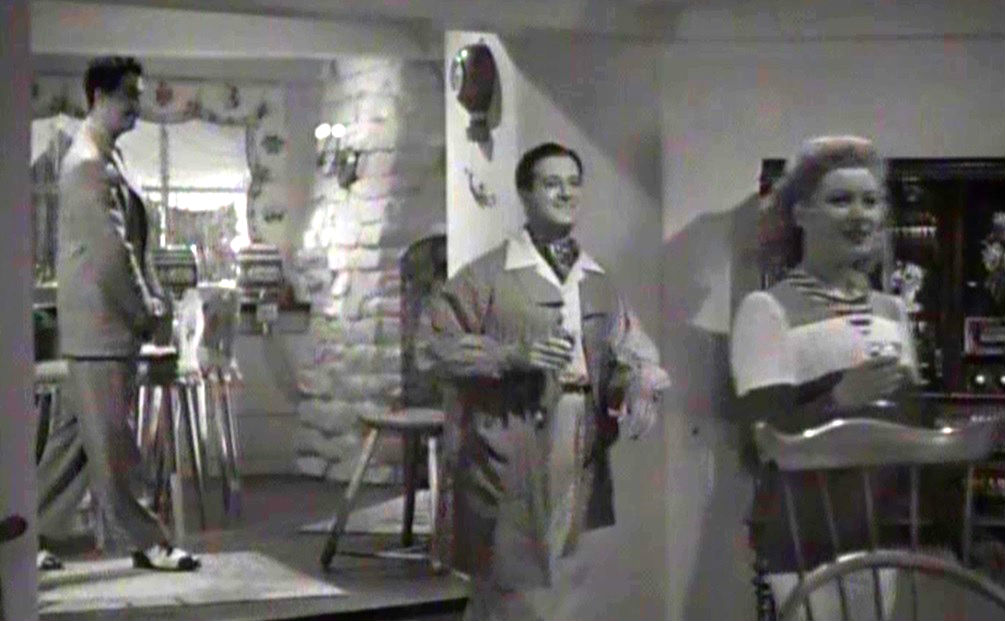
Having not seen the original I can only comment on this remake and say that it is quite an entertaining bit of fluff. But even more impressive then the wonderful cast ( Greer Garson, Joan Crawford, Robert Taylor, Herbert Marshall, and Spring Byington ) was the set design....particularly the house of Bridget Drake, portrayed by Byington. Like most of her roles, she plays a rather dizzy woman ( but obviously not dumb since she is living in such a beautiful home ). Her boyfriend Walter converted an old water-wheel into the extravagant country retreat and, on one afternoon, she finds herself saddled with some old friends staying for the night : author Mary Howard ( Crawford ) who hopes to have a rendezvous there with her publisher/lover Mr. Woodruff ( Herbert Marshall ); Jimmy ( Taylor ) who comes to follow Mary; and Mrs. Woodruff ( Garson ) who arrives not knowing that she will be meeting her husband's mistress. 

The things that go on in seemingly respectable country homes!.....Tsk, tsk, tsk. 

This lovely timber-framed Connecticut-style farmhouse boasted hardwood floors, beamed ceilings, thick white stone walls, and plenty of fireplaces to keep the guests cozy on rainy nights. It just so happened to be a rainy night when Robert Taylor and Greer Garson arrive unexpectedly. 

THE EXTERIOR

The Backyard - Or is it the front? Believe it or not that "pond" is the swimming pool, which Joan Crawford just splashed into from her perch atop a rustic swing. 
The Front Drive - The driveway skirts around the pool. We are never shown the garage but there certainly is one, and it is probably where the servants quarters are, too. 

THE INTERIOR

Dizzy Bridget was so proud of Walter's handiwork she gave the characters a tour of her house and, since she conducted it so well, we will just follow in her footsteps and make some remarks as we pass by these beautiful rooms. 
The Living Room - One of the best features of a traditional "Connecticut" style home is the sunken-living room. While it is open to the bar/kitchen and the staircases, the off-setting depth of the living space gives the room a warmer cozier feel and adds contrast.
The wrap-around sofa reminds me of the interior of a ski lodge. That's a model ship hanging on the wall. There are a number of them throughout the house. Walter must have shared a common interest in yachting with Claire Woodruff. 
When it's raining cats and dogs outside, sit beside the piano and sing a duet. At least, that is what Claire and Mary decide to do. After they find out they share a love for the same man, they no longer have much to sing about. 
Time for Drinks! - The merry foursome now head off towards the bar, which is actually the conversation room of the house, for this is where the inside of the "wheel" is kept. The water-wheel, that is. Look how thick the supporting beams are! This house is built to withstand a Blitz. 
The Bar - Another sloppy screenshot pastiche. If you want to see a larger image simply click on the photo...but be warned, the images only get blurrier the larger they are viewed. 
To the Dining Room! - After Walter's signature cocktails have been downed, he precedes to show them the dining room, tastefully furnished in Early American style. 
The Dining Room - Straight out of the 1941 Ethan Allen catalog. 

UPSTAIRS INTERIOR

The Upstairs Hall - Bridget now ushers her female guests to the upstairs guest rooms. There are four bedrooms in the main-room and supposedly two additional rooms above the barn. Bridget and Walter have separate bedrooms....she claims. 
Guest Bedroom #1 - Mrs. Woodruff is shown her cozy corners. Bridget plays the perfect hostess and even offers her a new toothbrush and nightgown ( why can't we be invited to Bridgie's place? )
Guest Bedroom #2 - Mary's chamber is much larger and there seems to be a flower theme going on here. 
Look how wide the doors are! Marvelous. 
The Barn Loft Guestroom - Finally, the barn loft, where Jimmy gets to bed for the night. He wonders why he can't stay in the main room, insisting that he has been "housebroken". 

THE TALENTS BEHIND THE SCREEN

The art direction of When Ladies Meet can be attributed to that artistic genius of MGM - Cedric Gibbons - whom you will find on the credits of over 1000 films. Almost all of his sets were decorated by Edwin Willis, who naturally did this film as well. When you have two talented individuals like these fellows working together you are bound to see some great house designs up on the silver screen, and, for me, Bridget's house in When Ladies Meet ranks as one of the best "country retreats" to be seen. 


This post is our contribution to The Favorite Film and TV Homes Blogathon being hosted by Phyllis Loves Classic Movies and Love Letters to Old Hollywood. Simply click on the links above to read more posts about fabulous house sets from the golden age of Hollywood. 

Saturday, June 21, 2014

The Happiest Millionaire ( 1967 )

After having completed Mary Poppins in 1965, Walt Disney's enthusiasm for musical films was at an all-time high, and with the recently purchased rights to Cordelia Drexel Biddle's book/play "The Happiest Millionaire" in his hands he couldn't resist turning the story into a musical in the vein of Poppins. And how fortunate that he did! With a 172 minute run-time - Disney's lengthiest feature film to date - it allowed for over 80 minutes of musical sequences ( 14 different songs ). Every principle player got to showcase their talent with a song and dance routine - many who never sang before. 

The film focuses on the family life of Anthony J. Drexel Biddle ( Fred MacMurray ), one of Philadelphia's most prominent citizens, albeit a bit eccentric... you see, he likes to keep alligators in the house ( the eldest, George, has a habit of escaping ) and he teaches boxing to students through his Biddle Bible Class. Within the walls of his ornate mansion resides a household of non-conformists; a beautiful family united in their belief that one should be true to oneself and not change to satisfy Society's expectations.

Before we meet the family, we are introduced to John Lawless ( Tommy Steele ), a newly arrived Irish immigrant, who obtains the not-so-coveted position of Biddle butler, and he becomes our on-and-off narrator throughout the movie. 

After a brief appearence from the two sons ( Paul Peterson and Eddie Hodges ) performing the 'Watch Your Footwork' number, they are sent off the school and we see them no more. But this is where our heroine Cordy comes in ( the lovely Lesley Ann Warren ). The Biddle's only daughter, she is at the age of doubting whether being independently-minded is worth the price of being labeled a social outcast, for she's beginning to realize that boys do not like girls who can throw a left-hook. So naturally Cordy is enthralled at the idea of attending the finishing school her strait-laced Aunt Mary (Gladys Cooper ) suggests she attend. While there she receives instruction in the art of 'bye-yum pum-pum', that oh-so mysterioso quality of making yourself alluring to men. But it seems that her first suitor Angie (John Davidson ) finds her attempt at this laughable. In fact, he likes her just the way she is - different! Now isn't that how it always works out?


Besides, she shows an interest in automobiles, his true passion in life. It is the year 1916, and with automobiles in their formulative stage, there is a world of innovation in the future. Angie wants to go to Detroit and be apart of this age of mechanical wonder, and Cordy stands by him in this belief... now if only his mother would consent. Angier Buchanen Duke just happens to be the heir to a great tobacco fortune and his mother, the socially prominent Mrs.Duke ( Geraldine Page ) expects him to follow in his father's footsteps.

And this is where we come to the basis of the film - to do or not to do. Hold on to your beliefs or follow what others tell you. Stick to your guns or bear the white flag. Yes, this is the underlying theme of the picture. If you are a Disney fan then the outcome is easy to guess.

BEHIND THE SCENES

The Happiest Millionaire opened at the Lyceum Theatre in New York on November 20th, 1956 starring Walter Pidgeon and Martin Ashe. Kyle Crichton and Cordelia Drexel Biddle's play was based on her novel, 'My Philadelphia Father' published in 1955.

Shortly after the premiere of Mary Poppins work began on The Happiest Millionaire and many of the Poppins production team were brought together again to work on this movie, including choreographers Marc Breaux and Dee Dee Wood, cinematographer Edward Colman, songwriters Richard and Robert Sherman, art director Carrol Clark and special effects maestro Peter Ellenshaw. Keep an eye out for the beautiful title card backdrops in the opening credits. These were painted by Alan Maley, who later became a famous artist of Victorian scenes.

Having a tremendous budget with which to work with, the team freely used it : over 3,000 complete outfits were made for the production, valued at $250,000, and an entire replica of Biddle's Philadelphia mansion was built, filled with more than $450,000 worth of furnishings and antiques.


When the The Happiest Millionaire was released in theatres, close to 30 minutes of footage was cut; much of which was the overture, entracte, and closing credits. But one notable scene that ended up on the cutting room floor was the ending - Mr. and Mrs. Biddle ( Greer Garson ) are feeling down in spirit, now that their children are either married or away at school, and they sing the beautiful song, "It Won't Be Long 'Til Christmas". This was a lovely scene so fortunately it ( and various other segments ) were reinstated in the DVD roadshow version released by Disney Studios.

The Happiest Millionaire did not fare well at the box-office upon its release and it is not really a surprise, for the script lacks a focus. Unlike Mary Poppins, The Happiest Millionaire features a story that would not appeal in the least to children and yet its production and the advertisements for the film have a bright look that seem to be geared towards youngsters. It's also much long for one sitting, so we'd recommend spreading it out over two nights, but overall it is a charming movie...colorful sets and costumes, lively tunes, bravado performances by talented actors, and an air of "fortuosity" hovers throughout it all. The movie also holds the significance of being the last live-action film Walt Disney saw completed before his death.


If you have the opportunity to see The Happiest Millionaire then by all means do so. Regardless of what some critics say about it, we thoroughly enjoy watching this film... over... and over... and over again... and "What's wrong with that?"

This post is our contribution to the highly entertaining 1967 in Film Blogathon hosted by Silver Screenings and The Rosebud Cinema. Be sure to check out all the other great posts on your favorite films of that pivotal year in Hollywood, 1967. 

Monday, June 16, 2014

On the Homefront : MGM and the War Effort

Sunlight streams through the shattered roof of a country church. There are empty places in the pews where, only a few weeks earlier, parishioners had sat - the local stationmaster, a choirboy, the young daughter-in-law of a much loved family. They are gone now, dead from the bullets or the bombs of an enemy they didn't know, in a war they hardly understood. 

Framed by the wreckage of his church, the vicar delivers a ringing sermon : "Why, in all conscience, should these be the ones to suffer? I shall tell you why! Because this is not only a war of soldiers in uniform. It is a war of the people - of all people - and it must be fought not only on the battlefield but in the cities and in the villages, in the factories and on the farms, in the home and in the heart of every man, woman, and child who loves freedom...This is a people's war! It is our war! We are the fighters! " 

The camera pans upward, through the sundered roof of the church.  "Onward Christian Soldiers" rises on the soundtrack as British fighter places - like a gathering flock of graceful birds - wing overhead, toward the enemy. 

So ends Mrs. Miniver, MGM's most popular and award-winning film of World War II. Moviegoers around the world thrilled to it, and with good cause. MGM was at its best during the war years, making movies to build the morale of fighting men and women, and the families awaiting their return. 


It was a time of pure patriotism, the fan club, the screen magazine, and the star system. MGM's male stars traded costumes for khaki and marched off to war. Clark Gable, James Stewart, Robert Taylor, Gene Kelly, Jackie Cooper, Stewart Granger, Van Heflin, Robert Montogomery, and Robert Sterling all served in the armed services. 

Other stars of both sexes went overseas to perform in USO shows; some washed dishes, served food, or danced with lonely GIs in the Hollywood Canteen. And still others traveled around the United States,  selling war by the thousands, sometimes quite creatively. MGM, for instance, conducted a "Tanks for Yanks" campaign that featured Johnny Sheffield, the "Boy" in the Tarzan series, touring the country and speaking, from the turret of a tank, about "A Boy's Place in America". 

In another promotion, MGM conducted a contest in several cities to pick seven girls who were "...doing the most to promote the war effort on the homefront". Their prizes were corsages and dinner with seven sailors, all paid for by MGM. 

Meanwhile, back at the studio, the sound stages busily produced war-related short subjects, such as National Defense, a documentary honoring all of the Rosie the Riveters and Max the Mechanics in the country. One of Pete Smith's lighthearted short subjects, Victory Vittles, advised home-front housewives to make do with leftovers, while an intriguing series on the medieval prophet Nostradamus revealed his provocative predictions for the advent and end of the war. Don't Talk and Mr. Blabbermouth warned home-front warriors about the consequences of rumor-mongering and spilling war secrets to unsuspected spies. 

For the young and the young-of-heart, the studio's cartoon department penned, among others, The Blitz Wolf, in which Adolf the cartoon wolf, who bore a "striking resemblance to Adolph the Phewrer" was ultimately defeated by the three little pigs of Pigmania - once they abandoned isolationism and fought together for the common good. 


Still, MGM's most effective weapons were its stirring home-front feature films. "Motion pictures are of the utmost importance to....build up mroale", said General Dwight Eisenhower in 1942, "...feature productions bring home their country vividly to the memories of soldiers. Let's have more motion pictures!" An MGM obliged, with multi-star musical extravaganzas such as Thousands Cheer ( 1943 ), Family musicals such as Meet Me in St. Louis ( 1944 ), comedies such as Swing Shift Maisie ( 1943 ), and, most movingly, tributes to the family values the Allied forces were fighting to defend. 

MGM's Mrs. Miniver gently dissolved class distinctions in England and celebrated the enduring power of the family - itself a miniature world at peace. Its American counterpart was The Human Comedy ( 1943 ), William Saroyan's semi-autobiographical story about the Macauley family of Ithaca, California. In his own, spun-glass way, Saroyan created a town and a family with whom practically every American could identify and sympathize. 

The Macauleys are poor in terms of money but affluent in the abundant, boundless love they have for each other. Since his father is dead and brother Marcus ( Van Johnson ) is in the army, young Homer Macauley ( Mickey Rooney ) works at a postal telegraph office to support the family. At the beginning of the film, Homer is a boy; by its end, the war has made him a man, as it has the American soldiers overseas. The telegraph office where he works receives and delivers wires from the War Department announcing the deaths of sons on the battlefield. Inevitably, it receives the news of the death of Homer's brother Marcus. As Homer tries desperately to cope with his terrible loss, the voices of Marcus and his father - like the vicar's words in Mrs. Miniver - comfort him, and the theater audience, too : "You are what we're fighting the war for. You are what we have left behind - to live the hopes we only dreamed ". 

This post is an excerpt from Peter Hay's excellent book on the history of Metro-Goldwyn-Mayer studios, "MGM: When the Lion Roars" published by Turner Publishing in 1991. For those who have not yet read it, it is the authoritative book on the studio and a truly delightful read, packed with over 700 photographs from the MGM's golden era. 

Wednesday, October 2, 2013

The Top Ten Literary Film Adaptations Never Made

Here is our contribution to The Great Imaginary Film Blogathon, a celebration of all the wonderful classic films that us movie bloggers wish were made but never were. For today and tomorrow, classic movie fans will be writing fantasy reviews to movies that exist only in their imaginations. Be sure to check out all the great submissions here

Below you see some of our favorite "Why didn't they make that??" films. We would love to hear comments and suggestions on alternative castings/ideas on how these films could have been made. 

Enjoy!


The Adventures of King Arthur ( 1941 )


Plot : The life and times of Camelot's most famous king, from his humble beginnings, the pulling of the sword in the stone, to his meeting with Merlin the Wizard and his eventual downfall.
Studio: Warner Brothers Pictures
Director : Michael Curtiz
Cast : Errol Flynn ( Arthur Pendragon ), June Duprez ( Guinevere ), Gale Sondergaard ( Morgan Le Fey ), David Manners ( Mordred ), Patric Knowles ( Sir Tristam ), Evelyn Veneble ( Lady of the Lake ), Alan Hale, Burt Lahr.

"The Adventures of Robin Hood" was a box-office success upon its release and so Jack Warner decided to go ahead and follow it up with another great Howard Pyle adventure. This one was based on Pyle's four book saga on the rise and fall of the legendary King Arthur. The film focus on the exploits of Arthur himself and on the noble manhood of Lancelot but appropriately stays clear of indulging in too much romance surrounding Guinevere. Like Pyle's series, the film only hints at Lancelot's impending relationship with the queen in order to progress the story line towards the fall of Camelot. An excellent historical swashbuckler, with Warner Brother's usual stamp of high production values. 


               _______________________________________________________________________


Anne of Green Gables ( 1967 )


Plot:  The stories are about the young red-headed orphan Anne and her uninhibited thirst for enjoying the beautiful in life as well as her adventures in growing up and becoming a schoolteacher on Prince Edward Island.
Studio: Walt Disney Studios
Director: David Swift
Cast: Shani Wallis ( Anne Shirley ), Michael Anderson Jr. ( Gilbert Blyth ) Agnes Moorehead ( Marilla Cuthbert ), Shirley Jones ( Minister's Wife ) Walter Brennan ( Matthew Cuthbert ), Rosemary DeCamp ( Rachel Lynde ).

When L.M Montgomery wrote "Anne of Green Gables" in 1908, little did she know that the book would become as popular as it did, but not one to ignore success, she quickly followed it up with a sequel, "Anne of Avonlea". In 1934, Anne Shirley ( who took her screen name from the book character ) starred in the RKO film version of the novel, which became a surprise hit for the studio and one of their top-grossing films of the year. "Anne of Windy Poplars" In the 1950s several Canadian production companies produced television adapations of the books and in 1965 a musical was made for the Canadian stage. It has since become Canada's longest running musical. 

However, it was time it was brought to the screen in full-color and so in 1965 Walt Disney purchased the rights to the stories and to the musical score and production began in late 1966. Walt's premature death did not put production on hold and it was released the same year as the studio's animated classic, "The Jungle Book". Shani Wallis, who became famous a year later in the Lionel Bart musical version of Oliver! starred as the young Anne Shirley and Agnes Moorehead, who had become a TV sensation as Samantha Steven's mother Endora, was perfectly cast as Marilla Cuthbert. 

                 _______________________________________________________________________


Howard's End ( 1947 ) 


Plot : Margaret Schlegel does an act of kindness to the aging Mrs. Wilcox, who in turn leaves her her beloved Howards End cottage to her when she dies. Wilcox's businessman husband and greedy son refuse to give the cottage to Schlegel but events take a turn for the better.
Studio : Metro-Goldwyn-Mayer
Director : Clarence Brown
Cast : Greer Garson ( Margaret Schlegel ), Joan Fontaine ( Helen Schlegel ), Ronald Colman ( Henry Wilcox ), Peter Lawford ( Leonard Bast ) , Mary Astor ( Mrs. Wilcox ).

E.M Forester's novel "Howard's End" fit right into MGM's line of novel adaptations they had selected for their leading lady, Greer Garson..films such as "Pride and Prejudice", "Blossoms in the Dust", "Mrs. Miniver" and "Random Harvest". This film also included her Random Harvest costar Ronald Colman, but unlike Harvest he portrays a rather dismissive businessman. A welcome change from his usual roles however. Joan Fontaine and Peter Lawford are perfect as the young couple, but it is truly Ms. Garson who steals the picture. The lovely Greer Garson personifies the gentle Margaret Schlegel and we can't help delighting in her gift of Howard's End. 

              ______________________________________________________________________


Death on the Nile ( 1942 ) 


Plot : A passenger is murdered while on board a cruise through the Nile and Hercule Poirot must sift through the shipload of suspicious tourists to uncover the culprit.
Studio : 20th Century Fox
Director : George Waggner
Cast : Marcel Dalio ( Hercule Poirot ) Betty Field, Richard Denning, Reginald Gardiner, Lynn Bari, Douglass Montgomery, Mary Boland, Maria Ospenskaya, Martin Kosleck.

20th Century Fox's "Death on the Nile" brought Agatha Christie's thrilling Mediterranean set murder mystery to the screen with a dazzling cast of performers and it gave Paris-born character actor Marcel Dalio his first lead role as the inimitable detective Hercule Poirot.

             _______________________________________________________________________


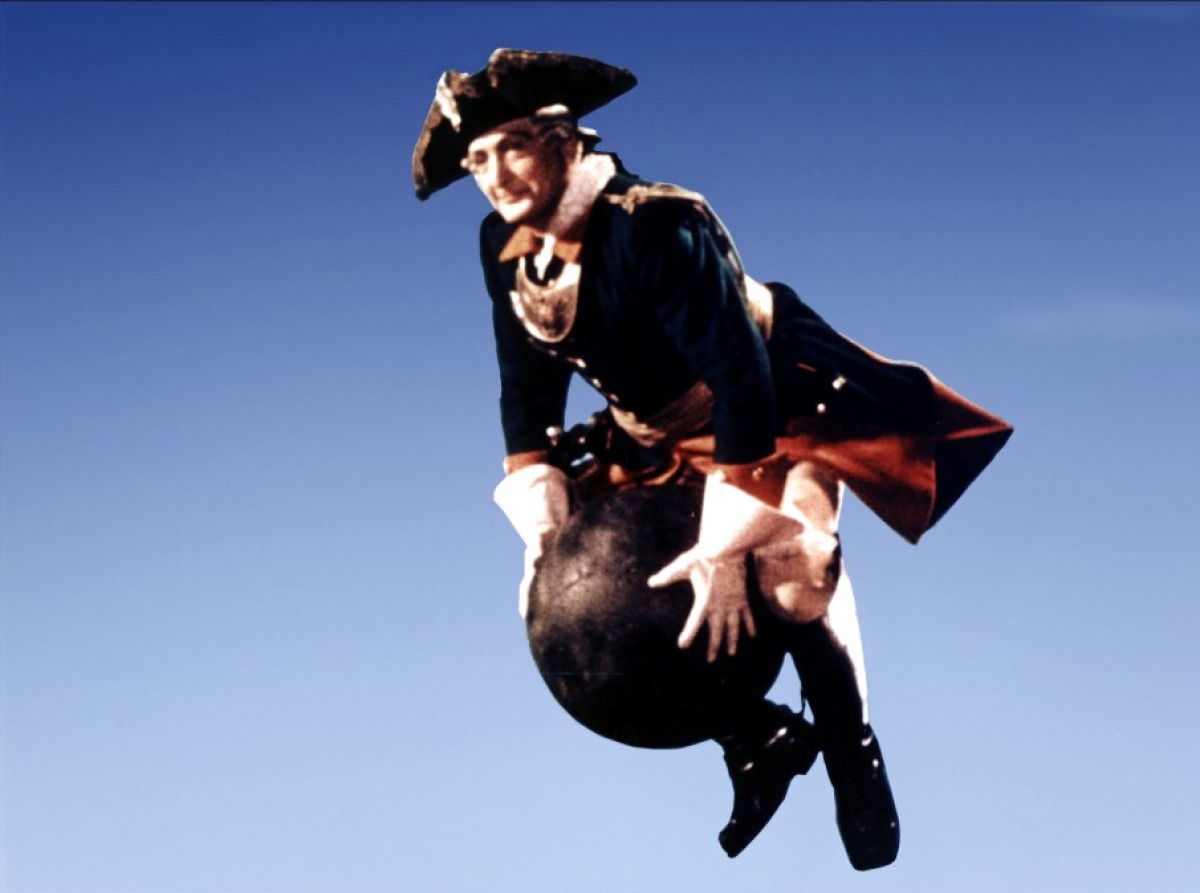
The Adventures of Baron Munchausen ( 1946 ) 


Plot : In a tavern in Bavaria, Baron Munchausen tells wild tales of his adventures around the world and during his days in the army. Hauptleute Boehmer calls Munchausen a fraud and sets out to prove his stories false...but surprisingly he finds many a strange tale to be true!
Studio : London Films
Director : Alexander Korda
Cast :  Ralph Richardson ( Hauptleute Boehmer ), Marius Goring ( Baron Munchausen ), Merle Oberon, Conrad Veidt, and Jean Simmons.

This is a wonderful and strangely amusing film from the fabulous Korda brothers. It evokes the bravado spirit of their previous successes, "The Four Feathers" and "The Thief of Bagdad" and yet has a childlike quality of humor about it that makes it very appealing. The scrumptious sets and vivid Technicolor filming add to its brilliance. In 1957, Danny Kaye added his signature comedic touch along with clever songs written by his wife, Slyvia Fine, to the Paramount remake of "The Adventures of Baron Munchausen". 

                ______________________________________________________________________


The Mutinous Wind ( 1939 ) 


Plot : A young woman learns powers of witchcraft from an old book found in a captured Spanish galleon on Massachusett's Cape Cod. She then hides on a remote island where she comes across pirates while waiting for her sailor lover. 
Studio : Columbia Pictures
Director : Charles Vidor
Cast : Miriam Hopkins ( Mistress Maria Hallett, the Sea Witch ), Douglas Fairbank's Jr. ( Black Sam Bellamy ), Ida Lupino, Dean Stockwell.

Elizabeth Reynard's moodily evocative tale of old Cape Cod folklore comes to vivid life in this glorious black and white Fox film adaptation. Dean Stockwell and Miriam Hopkins are excellent, but Douglas Fairbanks Jr. seemed a bit miscast in our opinion. We would have liked to have seen Louis Hayward, or even Errol Flynn in this role instead. 

              _______________________________________________________________________


The Legend of Sleepy Hollow ( 1942 ) 


Plot : A timid schoolteacher comes to the quiet village of Sleepy Hollow, falls in love with one of his students and wishes to marry her, but must first contend with the village prankster who also desires her hand in marriage and seems to be using a disguise as a headless horseman to scare him away...or is the phantom rider real?
Studio : Universal Studios
Director : Erle C. Kenton
Cast : Lon Chaney ( Ichabod Crane ), Evelyn Ankers ( Katrina Van Tassel ), Nigel Bruce ( Van Tassel's father ), Brom Van Brunt ( Victor MacLagen ), Claude Rains ( The Sheriff ).

"The Legend of Sleepy Hollow" is not one of Universal's most recognized works today and many people overlook this little gem but the studio pulled out all the stops for their rendition of the Washington Irving classic short story and brought it to vivid life. Great special effects, atmospheric sets, a snappy screenplay ( Leonard Lee's original screenplay bore little resemblance to the Irving story ) and a steady handling by "House of Frankenstein" director Erle C. Kenton ensured a box-office hit for the studio. 

            ______________________________________________________________________


The Golden Compass ( 1972 ) 


Plot : A young girl, living with her uncle at Jordan College, hears rumors of a magical dust that could unite whole universes. With the aid of a band of gyptians and armored polar bears she seeks to find this substance before her unknown enemy gets their hands on it.
Studio : MGM
Director : Ken Annakin
Cast :  Kim Richards ( Lyra Silvertongue ), Christopher Plummer ( Lord Asriel ), Anna Quayle ( Mrs. Coulter ), Anthony Newley ( King of the Gyptians ).

A beautiful scoring by the Sherman Brothers highlights this colorful film adaption of Philip Pullman's beloved children's story. After the success of "Chitty Chitty Bang Bang", producer Albert "Cubby" Broccoli decided to invest in another children's film and this was the result! Little Kim Richards, who stars as Lyra, gained popularity on television as the daughter of Professor Everett in "Nanny and the Professor" and later, with the Walt Disney Studios, in the Witch Mountain films. Although the animation sequences - especially of the polar bears - are not up to par with Disney's standards they still remain a beautiful addition to this adventurous film. 

                _______________________________________________________________________


The Riddle of the Sands ( 1938 )


Plot: While doing mapping studies onboard his yacht on the northern coast of Germany in 1908 a young man meets a rich German family and discovers a sinister plot against England! 
Studio: Archer Productions
Director: Michael Powell
Cast: John Mills, John Clements, Valerie Hobson, Anton Walbrook, Ludwig Stossel. 


Before Michael Powell and Emeric Pressburger made a name for themselves in the mid-1940s with their beautiful Technicolor productions, they were carving quite a niche writing and producing spy thrillers. Riddle of The Sands was one of their most popular and it starred some of their favorite studio players, including Anton Walbrook and Valerie Hobson. John Mills and John Clements would later make names for themselves in "Goodbye Mr. Chips" and "The Four Feathers", respectfully. Erskin Childer's novel, one of the first spy adventure stories ever written, was later remade in 1979 with Michael York and Simon McCorkindale.

               ______________________________________________________________________


The Life of Edward Bok ( 1936 ) 


Plot: An autobiographical account of Edward Bok, editor of the Ladies Home Journal, founder of Bok Sanctuary and an influential man in American history. 
Studio: MGM
Director : 
Cast: Robert Donat ( Edward Bok ), Charles Laughton ( publisher of the Ladies Home Journal ), Ida Lupino (Mary Curtis Bok ), Donald Crisp ( Frederick Law Olmsted ), and Spring Byington ( Bok's mother ). 


When Edward Bok wrote "The Americanization of Edward Bok" in 1920, he was amazed to find that it rose to the top of the bestselling book list. His humble account of coming to America and his subsequent rags-to-riches-rise to national fame through his editorials captured the imagination of readers everywhere. It was no surprise then that in 1935 Metro-Goldwyn-Mayer purchased the rights to Bok's autobiography and began rewriting his life for the silver screen. In all fairness though, Metro did a very good job on selecting the best parts of his life to highlight. The first half of the film focus on Bok's struggles and his desire to make a difference in America, and the second half covers the opportunities he had to do this as well as the building and designing of his beloved sanctuary, Bok Gardens. Donald Crisp has a wonderful, but all too brief, appearance as landscape architect, Frederick Law Olmsted. 

Friday, July 12, 2013

Walter Pidgeon and Greer Garson - A Dynamic Duo

The Classic Movie Hub and Once Upon a Screen are co-hosting The Dynamic Duo blogathon, a thrilling collection of posts from over 50 different blogs highlighting the most memorable teams ever to grace the silver screen - and the small tele. Our choice of pair is handsome Walter Pidgeon and the always graceful Greer Garson. 


Greer Garson and Walter Pidgeon were the epitome of enduring love. In the majority of their films together they played married couples, a husband and wife perfectly balanced : Garson's dignified but gentle and kind nature opposite Pidgeon's strong and stable nature. They were a match made in MGM Studio's heaven and were one of Hollywood's most durable box-office teams. Off screen they were life-long friends. ''I did eight pictures with that gal and we never had a bad word between us,'' Pidgeon once told an interviewer.

In 1937, during a trip to London, MGM's head Louis B. Mayer's noticed Greer Garson in a dramatic play called "Old Music", and being very much impressed with her demeanor he quickly signed her to a contract. MGM had recently scored successes with Boys Town and Men of Boys Town, two films dealing with child welfare, and so, in 1940, Louis B. Mayer decided that adapting Ralph Wheelwright's best selling novel "Blossoms in the Dust" would be a great follow-up film and an excellent vehicle to showcase his new lovely leading lady, Greer Garson, who had triumphed as Robert Donat's wife in Goodbye Mr. Chips ( 1939 ) and opposite Laurence Olivier in Pride and Prejudice ( 1940 ).
 

Garson would be teamed with Walter Pidgeon, one of MGM's most seasoned actors, having gone through the fire of refinery by starring in a string of successful B films as detective Nick Carter. The rugged Canadian had first met Ms.Garson in a screen test and had quipped, "I'll bet we're starring together and running this studio before you know it!". Prophetic words.

Blossoms in the Dust was a heartwarming drama about Edna Gladney, a welfare worker for children who was spurned on in her maternal efforts to help children find a good home through the premature death of her own dearly loved son. The film had an air of gentility and quiet gallantry which set the tone for Garson and Pidgeon's subsequent teamings, most notably Mrs. Miniver, their second film together and one of their most fondly remembered films today.

The Minivers were an average British couple who braved the Blitz heroically, remaining courageous and hopeful even when the deaths of those near and dear to them hit hard. Although war and its ravaging effects was spreading like wildfire across Europe and Great Britain, the Miniver's proved that bravery and stability still remained in England, if not in the land at whole but within each citizen's hearts. 


Independently the fight could be daunting, but together they became an indestructible rock. As a couple, they depended on each other and drew off of each other for strength and encouragement. This was to be one of their strongest assets as a team.

Mrs. Miniver was an enormous critical and box-office success. Movie-goers around the world thrilled to it and President Roosevelt was so impressed with the film - and its propaganda value - that he ordered millions of leaflets containing the vicar's speech near the end of the picture to be scattered over occupied Europe by Allied warplanes. 


Mrs. Miniver was followed by the equally successful Madame Curie ( 1943 ), an autobiographical account of the Curie's quest to discover radium. Walter Pidgeon claimed this was his favorite film to make, and in his opinion, one of his best performances. 

While they portrayed the ideal married couple on screen, off screen there was no romantic involvement between the actors. Walter Pidgeon was wed in 1931 to his second wife, Ruth Walker and they remained happily married until his death in 1984. Greer Garson's first marriage had ended during the honeymoon. The same year that Madame Curie was released, 
Garson wed Richard Ney, the young actor who had played her son in Mrs. Miniver. Despite the fourteen year age gap, they had fallen in love during the making of the film but due to pressure from MGM postponed their nuptials until after Miniver's release. The marriage would not last. Within four years they were divorced. It was not until she met E.E Fogelson during the making of Julia Misbehaves that she found lasting love. They were married until his death in 1987. 


Garson and Pidgeon's next project together was an adaption of Louis Bromfield's novel "Mrs. Parkington". Set in the late 1800s, it followed the life of an Irish girl in America, from her early days helping her mother run a hotel out west, to her marriage to the illustrious Major Parkington, and their rise to becoming one of the most powerful industrialists in the states. It also followed - in the years ahead - what became of their children and grandchildren. This allowed Greer Garson to be "aged" from a young woman to an elderly matriarch in her eighties. Pidgeon was excellent as the rambunctious Major, ready to face any challenge that may come to America, but unaware of the tempest brewing within his own home.  


Walter Pidgeon was busy in the mid 1940s making films such as Weekend at the Waldorf, The Secret Heart and If Winter Comes while Greer Garson made The Valley of Decision and the ill-fated Adventure. By 1948, the powers-that-be at MGM thought it was time to re-team the golden couple, but fearing the public's disinterest in noble portrayals, they decided to cast the duo in a comedy - Julia Misbehaves. This proved to be a mistake. Although the film had a great cast including Elizabeth Taylor and Peter Lawford, Garson was much too prim for the flippant role of a mother who abandons her children and home-life for the stage. Her new hairstyle was not nearly as flattering either!

And so, the following year they returned to the splendor of the Gilded Age in That Forsyte Woman, an adaptation of John Galsworthy's novel "A Man of Property", part one of his epic Forsyte Saga. Errol Flynn gave one of his best performances as Soames Forsyte, the wealthy heir who dearly loved Irene ( Garson ) but, once again, it was gentle Walter Pidgeon who won her hand at the end. 


Television was slowly creeping its way into America's living rooms and the big movie studios were seeing their cash-flow slipping away. With nostalgic fortitude, MGM turned to trying to recapture its past magic with re-releases of its former box-office successes as well as turning to sequels. The Miniver Story was one such try which also proved to be a failure. It's somber tone was not welcome when audiences were clambering back to the theatres to watch grand musicals in glorious Technicolor. 

Their last picture together would be in "Scandal at Scourie" made three years later. This color melodrama returned to the theme of their first film - orphans. This time, instead of aiding orphans, they were fighting for the opportunity to keep a little girl that caught their fancy. 


Walter Pidgeon and Greer Garson were both extremely talented actors and, unlike many other actors of the era, were very much in real life the characters they portrayed so often onscreen. This brought to their characters and the pictures themselves an honesty that kept them from becoming trite.  

Garson once defined in an interview what she considered a film ought to achieve,  " I think the mirror should be tilted slightly upward when it's reflecting life -- toward the cheerful, the tender, the compassionate, the brave, the funny, the encouraging, all those things -- and not tilted down to the gutter part of the time, into the troubled vistas of conflict."

As a couple onscreen, Walter Pidgeon and Greer Garson often showed us how to live life by looking on the brighter side, ever remaining hopeful despite what conditions you face, and always helping your fellow man knowing that he often faces similar struggles.


To read about more Dynamic Duos check out the complete list of participating blogs at Once Upon a Screen, or The Classic Movie Hub.