Showing posts with label Robert Taylor. Show all posts

Wednesday, April 8, 2020

From the Archives: Quo Vadis ( 1951 )


Robert Taylor and Deborah Kerr in the MGM epic Quo Vadis ( 1951 ). The film was based upon the 1895 Polish novel by Henryk Sienkiewicz and was a huge blockbuster hit for Metro-Goldwyn-Mayer.

From the Archives is our latest series of posts where we share photos from the Silverbanks Pictures collection. Some of these may have been sold in the past, and others may still be available for purchase at our eBay store : http://stores.ebay.com/Silverbanks-Pictures

Wednesday, September 18, 2019

From the Archives: The House of Seven Hawks ( 1959 )

"Just what does this paper mean?" Robert Taylor seems to be asking. It is obviously written in Dutch and he thinks the Frenchwoman Nicole Mauray would know Dutch....and he is correct, in "The House of Seven Hawks" ( 1959 ) she does! This film was one of Robert Taylor's lesser-known pictures, but it is a good mystery with some nice on-location filming in Holland. 

From the Archives is our latest series of posts where we share photos from the Silverbanks Pictures collection. Some of these may have been sold in the past, and others may still be available for purchase at our eBay store : http://stores.ebay.com/Silverbanks-Pictures

Tuesday, November 13, 2018

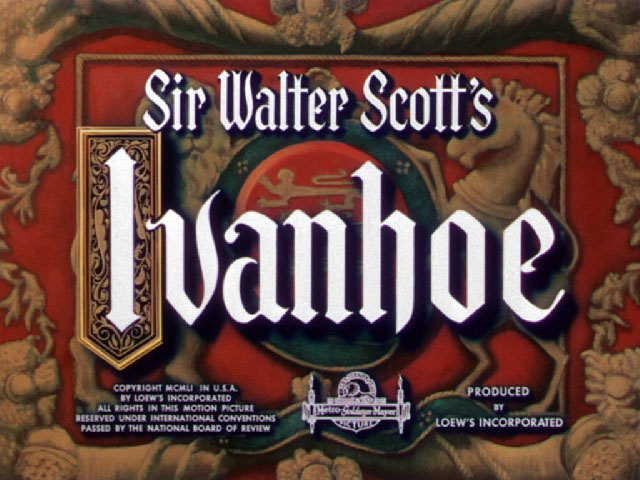
Ivanhoe ( 1952 )

Sir Walter Scott's 1819 epic medieval novel "Ivanhoe" was brought to the big screen in 1952 as a gorgeous Technicolor adaptation released through Metro-Goldwyn-Mayer Studios. Like many medieval films of the era, it combined romance, drama, and a good deal of swordplay into an adventure-packed 100-minute runtime. 

Ivanhoe was first brought to the screen in 1913, as a silent film starring King Baggot and Leah Baird. Surprisingly, it was not filmed again in the 1920s ( Ronald Colman missed out on a great opportunity here ), nor in the 1930s and 1940s. 

Finally, in 1952, when Pandro S. Berman undertook to produce it, he hired that old pro at MGM, Richard Thorpe, to direct the film. Thorpe whipped together a scrumptious feast of derring-do and the success of this film lead him to helm several other similarly themed pictures, including The Prisoner of Zenda ( 1952 ), Knights of the Round Table ( 1953 ), and The Adventures of Quentin Durward ( 1955 ), two of which starred Robert Taylor, the titular hero of Ivanhoe. 
Robert Taylor was "Taylor-made" for roles such as Sir William of Ivanhoe, convincing audiences that he was the embodiment of noble virtues such as bravery, honesty, gentleness, and honor. In this film, he is the famous chivalrous Anglo-Saxon knight who is on a mission to return the imprisoned king, Sir Richard the Lionheart, to his throne which has been usurped by his nefarious brother Prince John ( Guy Rolfe ). With the aid of Isaac ( Felix Aylmer ), the old leader of a Jewish community, he collects the necessary ransom amount to free the king but must first clash swords with the knight De Bois-Guilbert ( George Sanders ) before he sees Richard seated in his rightful place again. 

Unlike some studios, Metro-Goldwyn-Mayer never made films in a half-hearted fashion, and Ivanhoe was no exception. It had a budget of nearly $4,000,000 which permitted the cast to be sent to England for interior and exterior shooting at the MGM British Studios in Borehamwood and Ashby de-la Zouch, villages steeped in English history. Alfred Junge designed the interiors of all of the sets, with Roger Furse ( Henry V ) providing the scrumptious costumes for the knights and ladies, which included Joan Fontaine as Rowena and Elizabeth Taylor as Rebecca.

Elizabeth Taylor was only nineteen-years-old at the time, but so expressive in her acting and certainly the most beautiful actress to ever portray Rebecca. Also in the excellent cast was Emlyn Williams as Wamba, Robert Douglas, Finlay Currie, Basil Sydney, Megs Jenkins, Francis de Wolff, and Harold Warrender as Robin Hood. 

Some have claimed that Ivanhoe is not entirely faithful to the book, but surely some allowances had to be made for the sake of condensation. The thrill of seeing the story that unfolds onscreen inspires one to read the novel. This should be the aim of any great literary-to-film adaptation, and Ivanhoe accomplishes this. 
Upon its release, Ivanhoe was a huge earner at the box-office, both in the States and in England, grossing over $10,000,000 in sales. It also triggered the birth of a medieval genre of films that had not been popular since Errol Flynn starred in The Adventures of Robin Hood in 1938. 

Sunday, May 7, 2017

TV/Movie Set - When Ladies Meet ( 1941 )

Back in the studio-system days of Hollywood, if a film turned out to be successful at the box-office, within a decade you can be sure that a remake would be filmed. Why chance a new script when you have a winner on hand? Metro-Goldwyn-Mayer loved digging out old scripts and re-working them for their current stars. One such production was When Ladies Meet ( 1941 ), a re-telling of the 1933 comedy starring Ann Harding. 

MGM gathered together a few of their biggest talents, surrounded them with a top-notch production crew, and updated the script a bit to add some modern pizzazz to the old war-horse. What resulted was good box-office. Hey, it's a formula! 

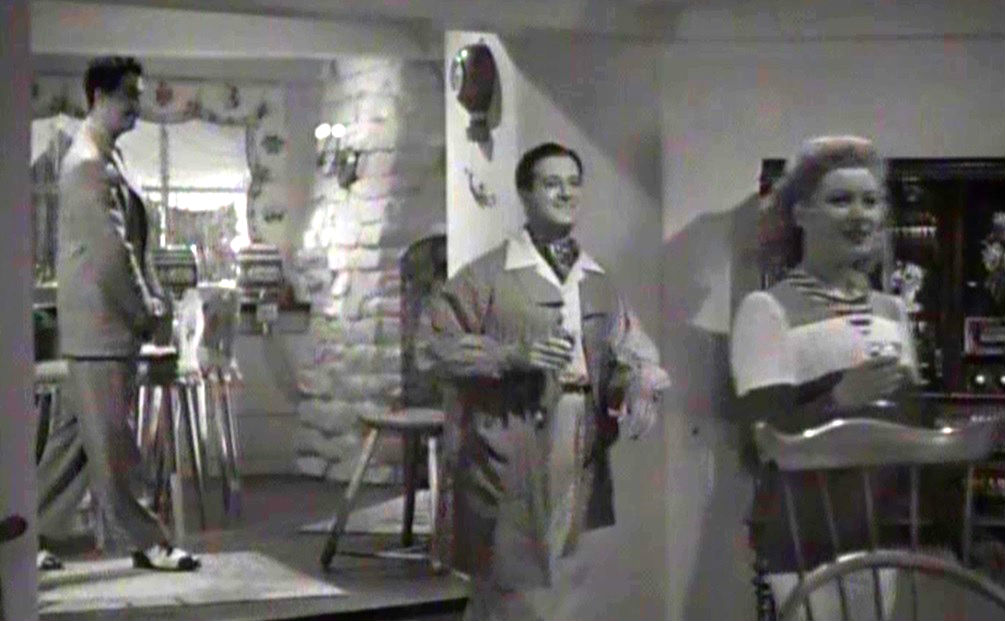
Having not seen the original I can only comment on this remake and say that it is quite an entertaining bit of fluff. But even more impressive then the wonderful cast ( Greer Garson, Joan Crawford, Robert Taylor, Herbert Marshall, and Spring Byington ) was the set design....particularly the house of Bridget Drake, portrayed by Byington. Like most of her roles, she plays a rather dizzy woman ( but obviously not dumb since she is living in such a beautiful home ). Her boyfriend Walter converted an old water-wheel into the extravagant country retreat and, on one afternoon, she finds herself saddled with some old friends staying for the night : author Mary Howard ( Crawford ) who hopes to have a rendezvous there with her publisher/lover Mr. Woodruff ( Herbert Marshall ); Jimmy ( Taylor ) who comes to follow Mary; and Mrs. Woodruff ( Garson ) who arrives not knowing that she will be meeting her husband's mistress. 

The things that go on in seemingly respectable country homes!.....Tsk, tsk, tsk. 

This lovely timber-framed Connecticut-style farmhouse boasted hardwood floors, beamed ceilings, thick white stone walls, and plenty of fireplaces to keep the guests cozy on rainy nights. It just so happened to be a rainy night when Robert Taylor and Greer Garson arrive unexpectedly. 

THE EXTERIOR

The Backyard - Or is it the front? Believe it or not that "pond" is the swimming pool, which Joan Crawford just splashed into from her perch atop a rustic swing. 
The Front Drive - The driveway skirts around the pool. We are never shown the garage but there certainly is one, and it is probably where the servants quarters are, too. 

THE INTERIOR

Dizzy Bridget was so proud of Walter's handiwork she gave the characters a tour of her house and, since she conducted it so well, we will just follow in her footsteps and make some remarks as we pass by these beautiful rooms. 
The Living Room - One of the best features of a traditional "Connecticut" style home is the sunken-living room. While it is open to the bar/kitchen and the staircases, the off-setting depth of the living space gives the room a warmer cozier feel and adds contrast.
The wrap-around sofa reminds me of the interior of a ski lodge. That's a model ship hanging on the wall. There are a number of them throughout the house. Walter must have shared a common interest in yachting with Claire Woodruff. 
When it's raining cats and dogs outside, sit beside the piano and sing a duet. At least, that is what Claire and Mary decide to do. After they find out they share a love for the same man, they no longer have much to sing about. 
Time for Drinks! - The merry foursome now head off towards the bar, which is actually the conversation room of the house, for this is where the inside of the "wheel" is kept. The water-wheel, that is. Look how thick the supporting beams are! This house is built to withstand a Blitz. 
The Bar - Another sloppy screenshot pastiche. If you want to see a larger image simply click on the photo...but be warned, the images only get blurrier the larger they are viewed. 
To the Dining Room! - After Walter's signature cocktails have been downed, he precedes to show them the dining room, tastefully furnished in Early American style. 
The Dining Room - Straight out of the 1941 Ethan Allen catalog. 

UPSTAIRS INTERIOR

The Upstairs Hall - Bridget now ushers her female guests to the upstairs guest rooms. There are four bedrooms in the main-room and supposedly two additional rooms above the barn. Bridget and Walter have separate bedrooms....she claims. 
Guest Bedroom #1 - Mrs. Woodruff is shown her cozy corners. Bridget plays the perfect hostess and even offers her a new toothbrush and nightgown ( why can't we be invited to Bridgie's place? )
Guest Bedroom #2 - Mary's chamber is much larger and there seems to be a flower theme going on here. 
Look how wide the doors are! Marvelous. 
The Barn Loft Guestroom - Finally, the barn loft, where Jimmy gets to bed for the night. He wonders why he can't stay in the main room, insisting that he has been "housebroken". 

THE TALENTS BEHIND THE SCREEN

The art direction of When Ladies Meet can be attributed to that artistic genius of MGM - Cedric Gibbons - whom you will find on the credits of over 1000 films. Almost all of his sets were decorated by Edwin Willis, who naturally did this film as well. When you have two talented individuals like these fellows working together you are bound to see some great house designs up on the silver screen, and, for me, Bridget's house in When Ladies Meet ranks as one of the best "country retreats" to be seen. 


This post is our contribution to The Favorite Film and TV Homes Blogathon being hosted by Phyllis Loves Classic Movies and Love Letters to Old Hollywood. Simply click on the links above to read more posts about fabulous house sets from the golden age of Hollywood. 

Wednesday, January 20, 2016

The Homes of Barbara Stanwyck

Some say that you could judge a man by the books he reads. Well, you could also say that one could judge a woman by the house she keeps. Her nesting instincts make a house one of the most important aspects of her life, and they reveal - by their architectural style and decor - the type of house that the woman finds most comfortable. A house, in many ways, suits the homeowner's personality... that is, if it is one's ideal home. Since Hollywood stars could afford just about any home that they wanted, and in any location, you can pretty much be assured that they only bought ( or built ) what they wanted.

As an example, let's take a look at Barbara Stanwyck, one of the most beloved actresses of the golden era, and the various houses that this lady called "home" :

Barbara arrived in Hollywood in 1929 with her husband Frank Fay, a vaudevillian. Roles in such films as Shopworn ( 1932 ), Baby Face ( 1933 ), Annie Oakley ( 1935 ) and Stella Dallas ( 1937 ) quickly made Stanwyck one of the most popular actresses in tinsel-town. During Barbara's rise up the ladder of success, she and Fay had been renting a house at 707 North Arden Drive in Beverly Hills. After her divorce to Fay in 1935 she moved to a small house with English gardens at 615 North Bedford Drive right across from Zeppo Marx, her close friend and manager, and his wife Marion. 

Barbara and Zeppo's homes as seen from an aerial view
In the mid-1930s, Stanwyck purchased an 11-acre ranch in Northridge, California ( the Van Nueys district ). At the time the US post office listed only 40 names as residents, the area was so sparse. There was no place to buy groceries either, so residents had to venture to San Fernando and Beverly Hills to shop. Zeppo Marx bought 87 acres adjoining her property and - since they shared a passion for horses and racing - combined their lands to create an 100-acre thoroughbred ranch called "Marwyck".


Robert Finkelhor, a young architect who had designed Harpo Marx's residence in 1936, was hired by Stanwyck and Zeppo Marx to design their homes. Finkelhor created a sprawling French and English Tudor inspired home with three bedrooms, a trophy room, seven bathrooms, two servant's rooms, and a three-car garage. The backyard included a large swimming pool, stables for the horses, and a tennis court. 


"If you happened to drop in at the ranch, you wouldn't feel comfortable unless you dressed to romp with the dogs, go riding in the hills, or walking through the alfalfa," reported a 1939 press release about Marwyck. 

Marwyck's stables were kept full as a horse-breeding and boarding ranch. Each year there were 15-20 horses that called Marwyck their home. In season, these horses would be out racing at Bay Meadow and other tracks across America. As for breeding...in one year alone, 72 mares were bred at the ranch. A six-furlong racing track allowed the yearlings that they bred to be trained at a young age. Stanwyck and Zeppo Marx were not directly involved with the racing or breeding, but let manager Harry S. Hart handle this aspect.


When Barbara Stanwyck ( or "Missy" as friends called her ) wed Robert Taylor in 1939, they lived on the ranch together and he helped run the farm and train the horses. Taylor was a great rider and enjoyed being on the ranch. 

Since they often were in Hollywood making pictures, they also purchased a house at 273 South Beverly Glen Boulevard in Westwood ( valued today at over $5 million ) This 5,900 square foot home featured cross-beam wood ceilings and arched doorways. It had six bedrooms and five bathrooms and was located just off of West Sunset Boulevard.


In 1950, they sold Marwyck to actor Jack Oakie, who named the ranch Northridge Farms. After Stanwyck and Taylor divorced in 1952, she spent most of her time at this house until she eventually moved to a French inspired home seen on the front of this picture postcard. We weren't able to determine the address for this residence but it is possibly 1017 North Beverly Drive in Los Angeles. 


Robert Taylor loved the ranch life that he was accustomed to and in 1950 built a fabulous seven bedroom estate on over 110 acres in Mandeville Canyon. Today, this property is one of the most expensive parcels of real estate in Hollywood. 

Barbara Stanwyck eventually downsized to a three-bedroom, 3000 square foot home, built in 1958 at 1055 Loma Vista Drive in Beverly Hills, were she remained until her death in 1990 at the age of 82. 

We hope you enjoyed this look at the homes of Barbara Stanwyck. This post is our contribution to the Remembering Barbara Stanwyck Blogathon being hosted by In The Good Old Days of Classic Hollywood. Be sure to head on over to this fab site to read all about Stanwyck's films and her private life.