Showing posts with label Kenneth More. Show all posts

Tuesday, April 21, 2026

Rewind Review: The Admirable Crichton (1957)

Lewis Gilbert's version of The Admirable Crichton is a handsome adaptation of one of J.M Barrie's most popular plays which, although often referred to as a "satire", was more than likely Barrie's way of disguising his gentle assault on the British class system. It's also a rather unabashed look at the utter helplessness the uppercrust have when they are thrust in a commonplace situation or, in this case, an un-commonplace situation. 


Lord Loam (Cecil Parker) is the father of three young women, each about to be betrothed. Loam is a just man - one of those easily swayed lords of the English realm. He fancies that he desires equality as much as the average working class gent... and he does, to a point. In fact, it is his embarrassing "servant's tea party" that leads him to embark on a yachting voyage to the South Seas, along with his daughters, their suitors and the ship's staff. 

When a spot of inclement weather frightens the crew into bailing, the passengers are left floating in a lifeboat in the mid-Pacific to fend for themselves. Thankfully, their unflappable manservant Crichton (Kenneth More) and a servant girl (Diane Cilento) are dunked overboard with them.... and it is Crichton who turns out to be their savior with his resourcefulness when they are marooned on a deserted island. As the toffs accustom themselves to island life they find a new social order emerging. The tables are reversed as Crichton becomes the lord of the land and they the servants; but when a passing ship comes to their rescue, Crichton must decide if they are to remain islanders or each return to their previous status. 


The Admirable Crichton, released as Paradise Lagoon stateside, was the first color adaptation of Barrie's beloved 1902 play, but not the first filming. There was G.B Samuelson's 1918 silent version, Cecil B.DeMille's lengthy 1919 retelling (Male and Female starring Gloria Swanson) and Paramount's Yankeefied take on the story, We're Not Dressing, released in 1934 and starring Bing Crosby and Miriam Hopkins. 

Lewis Gilbert displays a masterful hand at putting the shipwreck satire to film and Wilkie Cooper obviously delighted in photographing the island paradise, which the play could only suggest. His sumptuous Technicolor photography gave reason enough for Brits to leave their flats to see the film. 

The rich blue waters of Bermuda subbed for the unnamed South Seas island and a couple of well-placed artificial palms added to its appeal. The island sets are quite clever and were a precursor to the familiar bamboo sets of Gilligan's Island during the 1960s. 


It is really Britain's everyman, Kenneth More, however, who steals the show and makes this his own film. More isn't ones ideal image of a heartthrob that three gals would be pining over, but on a deserted island he takes on the appeal of a hero and his good points do indeed shine through. 

The always lovely Sally Ann Howes portrays the beautiful Mary, eldest daughter of the Loams, who finds she has lost her heart to her butler. Sally Ann Howes always seems to be running along a beach, but this time, alas, she is not singing "Truly Scrumptious". Cecil Parker is marvelous as Lord Loam; Diane Cilento (Mrs. Sean Connery at the time) plays the cockney Eliza, not unlike Eliza Dolittle; and Martita Hunt, Jack Watling, Peter Graves, Gerald Harper, Mercy Haystead, and Miranda Connell round out the cast. 

The Admirable Crichton is a very entertaining and underrated little gem that has been cast adrift by the critics. It is hard to imagine watching this story unfold within the confines of a stage. It certainly was a tale meant to be filmed in Technicolor. 


Although Barrie attempted to write a comical study of the folly of civilization's class system, he left The Admirable Crichton without a moral. What comes through in this film however, is that the poor class have as much, if not more snobbery, than the rich. It is Mary who desires to remain on the island married to Crichton and living the blissful life of a pair of castaways but Crichton is stubbornly proud of his "position" and fails to conceive how the daughter of his employer can love him for himself when the setting is changed. In short, he behaves like an utter ass. 

Saturday, August 3, 2019

20 Great Little-Known British Films of the 1940s-1960s

The great film studios of England ( Rank Pictures, London Films, Gainsborough Pictures, Ealing Studios, Janus Films ) made so many wonderful pictures that have fallen into obscurity over the years - not so much in England, but certainly here in the States. So to help remedy that situation and expose classic film lovers to some of these hidden gems, here is our selection of twenty great little-known British films of the 1940s-1960s. Most of these films are available on DVD or through streaming services such as Amazon Prime. 

Plot descriptions courtesy of imdb.com, Network DVD, and Renown Pictures. Our comments about the film then follow. 


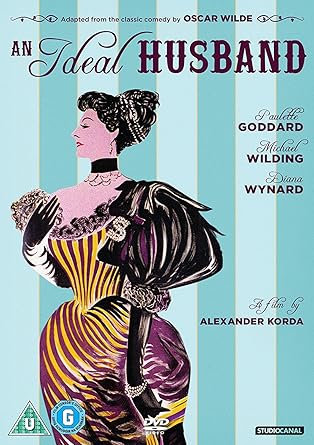
An Ideal Husband ( 1947 )

A prominent politician is preparing to expose a financial scandal. But then a woman who has invested heavily in the shady venture threatens to uncover a damaging secret in the politician's past if he exposes the speculation as a fraud. His problem is compounded by his wife's intolerance of the slightest character flaws.

"If we men married the women we deserved....we should have a very bad time of it."

Oscar Wilde's sparkling comedy comes alive in this delightful film adaption from Alexander Korda. Paulette Goddard is especially charming as the high-society snake-in-the-grass and the color photography is beautiful. 

While I Live ( 1947 ) 

A young composer and pianist Olwen Trevelyan, troubled and sleepless over her inability to finish the final notes of her composition, falls to her death from the cliffs of Cornwall. As the years pass, Olwen’s sister Julia obsessively keeps her memory alive. The young composer gains posthumous fame because of her tragic death and her haunting, unfinished composition, “The Dream of Olwen.” 25 years later, still mourning the death of her composer sister Julia believes she has returned, reincarnated, in an amnesiac woman who chances upon her house seeking help… Contains the haunting music “The Dream of Olwen” composed by Charles Williams.

This one is indeed haunting, primarily because of its beautiful theme song and its spiritual plot. Sonja Dresdel, who stars as Julia, was a very talented actress who had a great career in films, television, and in theatre in England. 

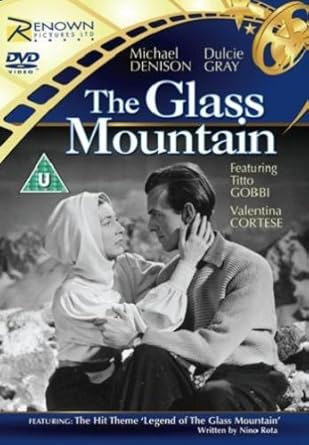
The Glass Mountain ( 1949 ) 

Featuring the peerless voice of legendary baritone Tito Gobbi, The Glass Mountain is a classic British film romance enriched with the sublime music of Italian opera.

Shot down and badly injured over the Italian alps during the second world war, RAF pilot Richard Wilder (Michael Dennison) is rescued and nursed back to health by Alida (Valentina Cortese), a beautiful young Italian girl. As she shares with him the local fables of the Glass Mountain, they begin to fall in love.


This is another film that benefits greatly from its musical score. This one is written by Nino Rota who is most famous today for his love theme for Romeo and Juliet ( 1968 ). Michael Dennison ( The Importance of Being Earnest ) plays an earnest lover here and the setting of the picture is ideal. 

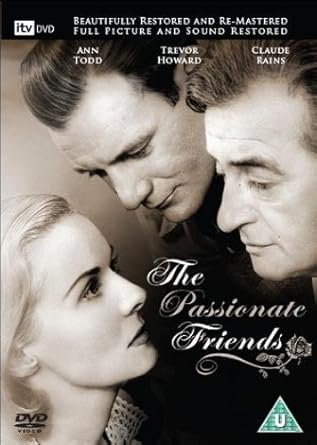
The Passionate Friends ( 1949 ) 

The Passionate Friends were in love when young but then separated. Mary Justin ( Ann Todd ) later married an older man. Then Mary meets Steven Stratton ( Trevor Howard ) again and they have one last fling together in the Alps.

This is your classic British melodrama weepie. It plays out a lot like Brief Encounter ( 1946 ) only with the added presence of Claude Rains as a jealous/suspicious husband. In this case, he has every right to be suspicious as Mary really is carrying on an affair with her old lover. 

Beautiful cinematography and location filming are an additional plus to this lesser-known classic. 


The Small Back Room ( 1949 ) 

The best bomb disposal officer during World War II was badly injured and is in frequent pain. He finds solace and relief from his pain in the whiskey bottle & the pills that are never far away. A new type of booby-trapped Nazi bomb pushes his nerves & resolution to the limit.

The directing/screenwriting team of Michael Powell and Emeric Pressburger are famous on both sides of the pond but this little gem seems to elude most critics. David Farrar and Kathleen Byron both give excellent performances. You can read our full review of this classic here

Ha'Penny Breeze ( 1950 ) 

At the end of the Second World War, David and his Australian friend Johnny return to David's Suffolk village to find the community spent and demoralized. Gradually, however, they gather support for David's scheme to enter a yachting race with a converted fishing smack. Winning it could prove to be a lifeline for the village...

Associated British Pathe made some excellent minor "B" films in the late 1940s-1950s and Ha'Penny Breeze is one of them. This was only the second film that Edwin Richfield had starred in at the time, but he would go on to become a popular character actor in British television appearing in numerous episodes of The Avengers, The Champions, and Doctor Who. 
Philip Green composed a lovely theme for this film which you can hear by clicking on this link.


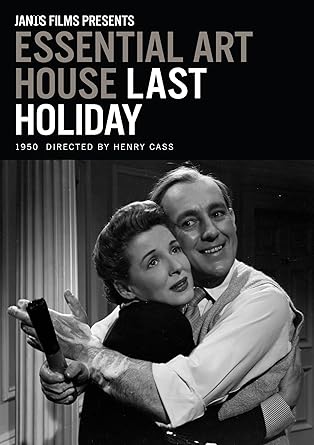
Last Holiday ( 1950 )

George Bird's rather lonely, anonymous existence as an underappreciated seller of farm machinery is jarred when his physician informs him that he is suffering from the rare malady Lampington's Disease, and only has a few weeks to live. Believing he has nothing to lose, Bird resigns his position and withdraws his modest life savings in order to spend his remaining time in a "posh" seaside resort. There he keeps his own counsel about his condition and meets people who live in a world he could never have imagined existed. Incredibly, he finds personal and professional opportunities now open to him that that he never dreamed would be his, but unfortunately, he is no position to take advantage of them, until fate lends a hand.

Last Holiday features one of Alec Guinness' best performances. It is such a touching story sprinkled with lessons about life, love, and the pursuit of happiness. 


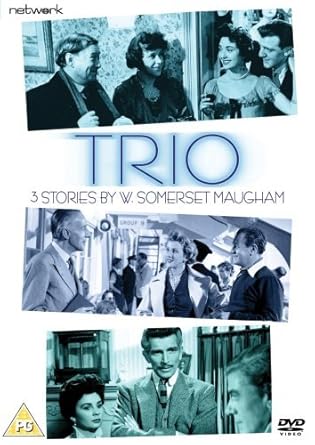
Trio ( 1950 ) 

Three short stories are introduced by author W. Somerset Maugham in the second of his anthology film trilogy. In "The Verger," a church verger of seventeen years is fired by his new straight-laced vicar when it's discovered that he cannot read or write. Forced to make life-altering decisions, the life-long bachelor proposes to his landlady and becomes an entrepreneur. In "Mr. Know-All" an obnoxiously pushy and irrepressibly boorish dealer in jewelry alienates all his fellow passengers on an ocean cruise despite his cheerful nature and generosity, but later is sensitive enough to realize that sacrificing his ego at a key moment is important to a woman's happiness. "The Sanatorium" revolves around the lives of tuberculosis patients at an exclusive Scottish sanatorium including a pair of doomed lovers who choose quality over quantity of life.

William Somerset Maugham's short stories were spotlighted in three entertaining films - Quartet ( 1948 ), this film, and Encore ( 1951 ). Each has their highlights, but we enjoy Trio the best because it features one of our favorite stories, "The Sanatorium", which you can read more about here. 

Street Corner ( 1953 ) 

A pseudo-documentary in style with an emphasis on the daily work and routine of women police built around three different storylines. The first involves 18-year-old Bridget Foster (Peggy Cummins) who is picked up for shoplifting but let off lightly. She has a small child, an often-absent husband and mother-in-law trouble. To compound that she takes up with a petty hoodlum who commits a jewel robbery. The second story tells of a young girl who deserts the Army to marry a boy who needs her and commits bigamy in the process, but it all works out. The third story is about a baby who is mistreated by its father and step-mother, but is reunited, through police work, with its real mother.

Police dramas are always interesting but this one is rare because it focuses on policewomen. Back in the 1950s, they were more popular in England than they were in the United States. Anne Crawford gives a very good performance....as usual. She was an excellent actress. 

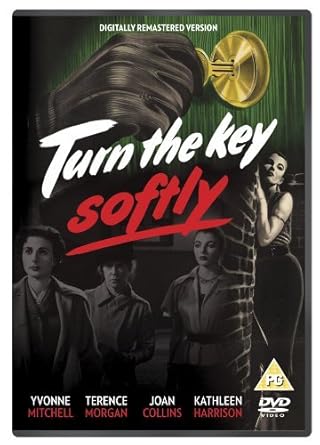
Turn the Key Softly ( 1953 ) 

Three women are released from Holloway prison on the same morning into the bustle of post-war London with its trolleybuses and rationing. They meet for a meal in the West End in the evening after a day trying to pick up their lives, and with at least two of them needing to decide whether it is time to start afresh.

From the good ones ( the policewomen of Street Corner ) we turn to the "baddies" - three women who have just been let out of prison. None of them are really bad and all of them have intriguing stories. British cinema featured a number of films with the "tableau" style story plot. You can read our full review of this gem by clicking here. 


The Divided Heart ( 1954 ) 

The Divided Heart engages in a different and movingly direct way with the aftermath of the war, tracing the struggle between two mothers for custody of a boy. Smuggled out of Yugoslavia for safety, and adopted by a German couple, he is reclaimed years later by his birth mother, a survivor of Auschwitz. The play of emotion is delicately handled so that it’s hard not to sympathize equally with the ‘good German’ adoptive parents and with the Yugoslav mother – and indeed with the trio of judges who have to decide. Both Michael Balcon and his wife had a special commitment to this project, and regretted its relative failure at the time, despite good reviews. Sixty years on, it is one of the Ealing films that comes up very fresh and prompts a reassessment of its director Charles Crichton, best known for comedy ( The Lavender Hill Mob, The Titfield Thunderbolt ) but here doing admirable work of a different kind. 

Lease of Life ( 1954 ) 

The parson of a small rural community knows he is dying and this makes him reconsider his life so far and what he can still do to help the community. 
Lease of Life is among the least dramatic of film titles, and the film itself is one of the most modest of Ealing productions; in his index to ‘British Sound Films’ David Quinlan calls it a ‘sincere, quiet, close-to-dull drama.’ But it is far from dull, if you give it a chance. 

Lease of Life is indeed a very engaging film to watch and Robert Donat gives an excellent performance as the rural parson. It also features a wonderful supporting cast with Kay Walsh and Adrienne Corri. 


The Admirable Crichton ( 1957 )

Lord Loam has modern ideas about his household; he believes in treating his servants as his equals - at least sometimes. His butler, Crichton, still believes that members of the serving class should know their place and be happy there. But when the Loam family are shipwrecked on a desert island with the self-reliant Crichton and between maid Tweeny, the class system is put to the test.

The story premise of a group of individuals stranded on a desert island is not a new one, but The Admirable Crichton is a fresh take on this old idea. It was based on a popular play by J.M Barrie, the author of "Peter Pan", and this film adaptation boasts a wonderful cast which includes Kenneth More as Crichton, Sally Anne Howes, Cecil Parker and Diane Cilento. You can read more about the film here. 

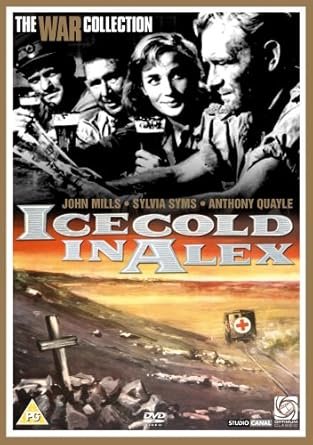
Ice Cold in Alex ( 1958 ) 

A group of Army personnel and nurses attempt a dangerous and arduous trek across the desert of North Africa during World War II. The leader of the team dreams of his ice-cold beer when he reaches Alexandria, but the problems just won't go away.

Ice Cold in Alex is the 1950s version of Humphrey Bogart's Sahara. Sylvia Syms and John Mills were probably two of the biggest box-office stars of the 1950s in England and it was great to see them teamed up in this adventure classic. Also in the cast is Anthony Quayle who not only made six films with Syms but starred with her in a number of television episodes as well ( including one from his own show The Strange Report ). 

Passionate Summer ( 1958 ) 

Set in Jamaica, an island paradise…where human emotions are laid bare under the tropical sun! Douglas Lockwood, (Bill Travers) is a gifted teacher at Leonard Pawley’s experimental school situated in Jamaica. During one summer, a private plane crashes into the mountains a short distance from the school. Lockwood helps rescue passenger Judy Waring (Virginia McKenna) and quickly develops a romantic interest in her while she convalesces at the school. Meanwhile, Leonard Pawley’s wife (Yvonne Mitchell) has her own romantic interest in Lockwood and a love triangle quickly develops. The love interest of the adults and the behavior of the school children see temperatures rise under the burning summer sun.

Passionate Summer certainly brims with passion! The hot locales make all of our leading characters drip in sweat and naturally, this oppressive heat causes their emotions to heat up as well. It is a soap opera alright, but a highly entertaining one. 


Conspiracy of Hearts ( 1960 ) 

In wartime Italy nuns in a convent regularly smuggle Jewish children out of a nearby internment camp. The Italian army officer in charge suspects what may be going on but deliberately turns a blind eye. When the Germans take over the camp security the nuns' activities become far more dangerous.

Betty Box is not a familiar name to American audiences but she - and her husband - were prolific producers and some of the best British films of the 1960s were Box productions. Conspiracy of Hearts is a difficult film to watch because it does not mask the prickly situation these nuns were in and show quite plainly what they had to contend with in getting the youngsters to safety. As you have probably guessed, Yvonne Mitchell is one of our favorite actresses, and she is in this film as well, but it is Lilli Palmer and Slyvia Syms who are the main attractions. Incidentally, this film reunited Mitchell and Syms who starred together in the box-office hit Woman in a Dressing Gown ( 1958 ). 


The Barber of Stamford Hill ( 1962 ) 

Mr. Figg, the barber, is fond of telling customers about his family, but he hasn't really got one - he's a bachelor quite alone in the world. He wants this status to change and soon makes up his mind that he will be a bachelor no longer. 

The Barber of Stamford Hill was originally a half-hour television play that became so popular that its screenwriter stretched it into this marvelous one-hour long film. There are only three principal players in the cast ( John Bennett, Megs Jenkins, Maxwell Shaw ) and each gives a tender performance in this very entertaining film all about character. 


The Fast Lady ( 1962 ) 

Murdoch Troon (Stanley Baxter), a naive Scotsman, puts away his bicycle and attempts to woe the daughter (Julie Christie) of wealthy businessman Charles Chingford (James Robertson Justice) by way of impressing her with a vintage Bentley - The Fast Lady of the title.

The Fast Lady is a fun comedy with a great cast. Stanley Baxter made a number of films but none so entertaining as this one ( although the follow-up, And Father Came Too is quite enjoyable ).

Want to read more? We reviewed this film several years ago and you can read about it here.


Young and Willing ( 1962 ) 

Harry Brown ( Ian McShane ) is a somewhat rough student (the wild) at Kilminster University, who has the ability to win friends, especially the underdogs like Phil ( Sir John Hurt in his introductory movie role ) who doesn't play "rugger", and can't sink a whole pint of beer, and African student Reggie ( Johnny Sekka ). He also has a way with the girls ( the willing ), one of whom is his professor's wife ( Virginia Maskell ), who likes the students, but also her comfortable life with her boring husband more. After Harry is rebuffed, he takes up the challenge to hang a banner from the dangerously crumbling University tower. The rather weak Phil insists on being part of this escapade.

Ian McShane makes an impressive film debut as the young Harry Brown. Young and Willing ( also released under the title The Wild and the Willing ) is not a cheerful picture of university life ( if you want to see a more light-hearted film take a peek at Bachelor of Hearts with Hardy Kruger ) but it is very engrossing. Virginia Maskell was a fine actress of the 1960s who died much too young. She gives an impressive understated performance here as the prof's wife. Also in the cast is a young Samantha Eggar. 

Nobody Runs Forever ( 1968 )

Scobie Malone ( Rod Taylor ), an Australian outback police detective is sent on a special assignment to the UK, to return an Australian citizen ( Christopher Plummer ) accused of murder. Only this is not an ordinary man, he is a UN high commissioner for peace talks taking place in London.

Nobody Runs Forever ( also released as The High Commissioner ) is one of many espionage/thrillers that were released in the wake of James Bond's popularity. Rod Taylor's tough-talking Australian character is quite endearing and this could have been a great start to a series of Scobie Malone pictures. Also in the cast is Franchot Tone in his last screen appearance. The wonderful opening theme was written by Georges Delerue. This is another great Betty Box production. 

To read more about the film, check out our review here

This post is our contribution to the 6th Annual Rule Britannia blogathon being hosted by A Shroud of Thoughts. Click on this link to read more posts about British actors and films from the 1920s-2000s. Be sure to search "Rule Britannia" to also read prior entries from this great blogathon. 

Friday, September 15, 2017

Raising a Riot! ( 1955 )

What does a man do when his wife asks him to mind their three youngsters when she must leave the country for a few weeks to care for her aging mother? 

If you think he would raise a riot, you're quite mistaken, for the man in this situation is played by Kenneth More....and any character that More portrays would never balk at caring for children. In fact, this chap - Tony, a naval officer - begs for the opportunity to spend some quality time with his children: Anne, Peter, and Fusty. He's been away at sea for so long he fears they may come to think of him as a stranger. And so, in one frantic afternoon, he packs the brood into his convertible and whisks them off to Seaview, a windmill house in the country where his father "Grampy" lives. 

The children adore the place. Father thinks it needs a heap of work. Over the next few weeks, he attempts to put some order in the place while the children enjoy a good romp in the countryside.
Raising a Riot was filmed in Technicolor in 1955 and received moderate box-office success upon its release. The film is clearly based on a book for it lacks a driving plot and instead is built up of a series of amusing incidents centering on household disasters at the old windmill. It delivers gentle humor at a leisurely pace. British comedies like this were quite common in the 1950s-1960s but, unfortunately, they are no longer being made. Studio execs probably don't want to waste time and money on a picture that has no chance of being the "comedy hit of the year". Such a shame, for they are such entertaining films. 

The youngsters ( played by Mandy Miller, Gary Billings, and Fusty Bentine ) are all well-suited to their roles, as is Grampy ( Ronald Squire ), and Jan Miller is especially adorable as a young American neighbor with a crush on the handsome officer. Parts like Tony were tailor-made for Kenneth More, who had such a winning personality. It's no wonder he attracts young women in addition to winning the hearts of his own children! 
Alfred Toombs, who penned the titular book in 1949, had a number of children of his own, and this account was autobiographical. Toombs had been away in the Navy for three years and, upon his return home, had to care for his kiddies when his wife left the country. Housework, cooking, and child-rearing were all new experiences for him and he wrote about them in such a humorous fashion that the resulting book sold quite a number of copies. In the film, Tony is frequently seen typing about his day-to-day mishaps with the little ones, but oddly enough the audience is never told what becomes of Tony's writings. Instead, at the end of the film, he finds himself called back into service again and blesses his wife with the words: "I wouldn't be a woman if the entire United Nations got down on their knees and begged me! Do you know what a woman has to be? She has to be a cross between a saint and a drayhorse, a diplomat and an automatic washing machine, and a psychologist and a bulldozer!" 

Sunday, November 16, 2014

North West Frontier ( 1959 )

Flame Over India ( released in Britain as North West Frontier ) is a suspenseful epic about smuggling a boy prince out of India's northwestern province to safety in Kalapur after his father, the Rajah, is killed in a massive Islamic uprising. 

English army officer Captain Scott ( the marvelous Kenneth More ) is given last-minute orders to this effect and is left to use his own resources to bring the boy out in safety. Being a loyal soldier, Scott is willing to lay his life on the line before letting any harm come to the young prince and gets a few chances to prove his loyalty to the crown. Most of the English population of the area fled prior to the uprising and only the Governor ( Wilfred Hyde-White ), his wife ( Ursula Jeans ), the prince's American governess ( Lauren Bacall ), a Dutch/Indian news reporter ( Herbert Lom ) and a French gun dealer ( I.S. Johar ) remain, all of whom ask for Captain Scott's assistance in their flight for safety. 

Leaving by horse cannot be considered because of the numerous snipers hiding in the hills, and most of the trains have already left days ago ( filled to the brim and flowing over with Indians ), so unfortunately the only means of train transportation left at his disposal is a decrepit old steam locomotive - Victoria, the Empress of India. Gupta, the engineer of the locomotive has great faith in "his fine lady", and assures the Captain that Victoria will be suitable for the mission.


 "Alright, Victoria is old, I confess that. But she has experience, sahib. And when she has experience, what can go wrong?!" 

What can go wrong indeed! Our cast of characters venture forth on a 300-mile journey through rebel-held territory in the rickety old engine and to add to the danger, they find that an enemy agent is among them - one who is bent on purposely endangering the prince!!

What appealed to me most about this film the first time I saw it was its fine cast ( who can pass up a good Kenneth More film? ), its imperialism era setting and the wonderful plot. When the picture was released in the UK, More received top billing for his performance as the Captain. However, for the US release, he got bumped down to second billing in place of Lauren Bacall. 

At first, Bacall appears to be out of place as the governess, but her performance grows on you as the film progresses. She is excellent as usual and perfectly suited as the head-strong American woman who likes to speak her mind, and who slowly falls in love with the storybook correct Captain Scott. 

North West Frontier is a highly under-rated adventure film and this may be due to it rarely being aired on television. If it had a broader audience it would surely become a favorite with many. Its duel titles does not help matters ( the alternately spelled Northwest Frontier becomes a third title in the mess ).


Filmed in Technicolor on location in India and Spain, the movie plunges into the fray of danger and excitement from the start and although the "enemy" is pretty obvious to discover, Northwest Frontier is filled with many other suspenseful moments throughout its 129 minute run time. 

For those with that inner spirit of adventure, come aboard the Empress of India on a daring ( and dangerous ) journey through the Northwest Frontier and you can be sure you'll not to be disappointed! It's a Boys Own adventure come to glorious life in film. 


This post is our contribution to The British Empire in Film Blogathon being hosted by Phantom Empires and The Stalking Moon. Be sure to check out their sites for a jolly good list of imperial posts! 

Thursday, July 31, 2014

The Admirable Crichton ( 1957 )

Lewis Gilbert's version of The Admirable Crichton is a handsome adaptation of one of J.M Barrie's most popular plays which, although often referred to as a "satire", was more than likely Barrie's way of disguising his gentle assault on the British class system. It's also a rather unabashed look at the utter helplessness the uppercrust have when they are thrust in a commonplace situation, or in this case, an un-commonplace situation. 


Lord Loam ( Cecil Parker ) is the father of three young women, each about to be betrothed. Loam is a just man - one of those easily swayed lords of the English realm. He fancies that he desires equality as much as the average working class gent...and he does, to a point. In fact, it is his embarrassing "servant's tea party" that leads him to embark on a yachting voyage to the South Seas, along with his daughters, their suitors and the ship's staff. 

When a spot of inclement weather frightens the crew into bailing, the passengers are left floating in a lifeboat in the mid-Pacific to fend for themselves. Thankfully, their unflappable manservant Crichton ( Kenneth More ) and a servant girl ( Diane Cilento ) are dunked overboard with them....and it is Crichton who turns out to be their savior with his resourcefulness when they are marooned on a deserted island. As the toffs accustom themselves to island life they find a new social order emerging. The tables are reversed as Crichton becomes the lord of the land and they the servants; but when a passing ship comes to their rescue, Crichton must decide if they are to remain islanders or each return to their previous status. 


The Admirable Crichton, released as Paradise Lagoon stateside, was the first color adaptation of Barrie's beloved 1902 play, but not the first filming. There was G.B Samuelson's 1918 silent version, Cecil B.DeMille's lengthy 1919 retelling ( Male and Female starring Gloria Swanson ) and Paramount's Yankeefied take on the story, We're Not Dressing, released in 1934 and starring Bing Crosby and Miriam Hopkins. 

Lewis Gilbert displays a masterful hand at putting the shipwreck satire to film and Wilkie Cooper obviously delighted in photographing the island paradise, which the play could only suggest. His sumptuous Technicolor photography gave reason enough for Brits to leave their flats to see the film. 

The rich blue waters of Bermuda subbed for the unnamed South Seas island and a couple of well-placed artificial palms added to its appeal. The island sets are quite clever and were a precursor to the familiar bamboo sets of Gilligan's Island during the 1960s. 


It is really Britain's everyman, Kenneth More, however, who steals the show and makes this his own film. More isn't ones ideal image of a heartthrob that three gals would be pining over, but on a deserted island he takes on the appeal of a hero and his good points do indeed shine through. 

The always lovely Sally Ann Howes portrays the beautiful Mary, eldest daughter of the Loams, who finds she has lost her heart to her butler. Sally Ann Howes always seems to be running along a beach, but this time, alas, she is not singing "Truly Scrumptious". Cecil Parker is marvelous as Lord Loam; Diane Cilento ( Mrs. Sean Connery at the time ) plays the cockney Eliza, not unlike Eliza Dolittle; and Martita Hunt, Jack Watling, Peter Graves, Gerald Harper, Mercy Haystead and Miranda Connell round out the cast. 

The Admirable Crichton is a very entertaining and underrated little gem that has been cast adrift by the critics. It is hard to imagine watching this story unfold within the confines of a stage. It certainly was a tale meant to be filmed in Technicolor. 


Although Barrie attempted to write a comical study of the folly of civilization's class system, he left The Admirable Crichton without a moral. What comes through in this film however, is that the poor class have as much, if not more snobbery, than the rich. It is Mary who desires to remain on the island married to Crichton and living the blissful life of a pair of castaways but Crichton is stubbornly proud of his "position" and fails to conceive how the daughter of his employer can love him for himself when the setting is changed. In short, he behaves like an utter ass. 

This review is our contribution to the British Invaders Blogathon, being held at A Shroud of Thoughts. Be sure to check out all the other loverly posts being shared for this capital event. Click here to mosey over there.

Wednesday, April 16, 2014

No Highway in the Sky ( 1951 )

When No Highway in the Sky was released in 1951, James Stewart had already established a reputation for playing everyday heroes and champions of social justice in such films as Mr. Smith Goes to Washington ( 1939 ) and The Mortal Storm ( 1940 ). 

In this British-made film, based on a novel by Nevil Shute ( author of the post-apocalyptic "On the Beach" ), Stewart plays a mild-mannered aeronautical engineer immersed in research conducting stress tests on the tail structures on the new Reindeer fleet of aircraft at the RAE. Mr. Theodore Honey's life consists of long hours spent at the laboratory and more hours spent at home - if he can find his home - working on calculations and raising his adolescent daughter Elspeth. 

Science is his life and mathematical truth is his goal. He has no time for people or a social life. 

"You don't understand...I'm a scientist. Science is very exacting, it requires the utmost concentration. I can't be concerned about people"


He finds, however, that science can not always be separated from the subjects it involves. Dennis Scott ( Jack Hawkins ), the new supervisor at the firm, takes an interest in Mr. Honey's research and his startling statement that the tail on every Reindeer will break off after 1440 hours of flight time. He orders Mr.Honey to go to Labrador, Canada to observe the wreckage of a former Reindeer flight that crashed. It is en route that Mr. Honey's life becomes changed and his principles re-examined when he discovers that he is on board a Reindeer plane that has reached the 1400 hour limit. He must convince the pilot to turn back before the point of no return or else see the lives of every passenger endangered.

Theodore Honey is a timid, introverted man; his shoulders are slightly stooped and his appearance is disheveled. He is a nondescript character whom one would not readily approach and yet, Miss Corder ( Glynis Johns ) and Monica Teasdale ( Marlene Dietrich ), an airline stewardess and a famous Hollywood actress whom he befriends on the flight, are drawn to him. They see a gentle, caring man who is willing to put their lives before his very own. Like Mr. Honey, the imminent disaster makes them see their life in a new perspective and each become so affected by his sincere concern for them that they both return to England to help him clear a charge of lunacy.

" If you believe in something, you believe in doing something about it, don't you? " 

No Highway in the Sky is a sharply written story, with moments of humor and suspense interwoven into a taught 98 minutes. Henry Koster ( Harvey ) does a splendid job of directing this film and never lets it lose its entertainment value for one moment. It clips along at a leisurely pace and tends to grow on you as it progresses and you come to know each of the characters in turn. 

Janette Scott, as Honey's daughter Elspeth, plays a pivotal role in drawing all these characters together. We see that it is her constant praise of her father's intellectual capabilities that convince Mr. Scott that Honey may not be the crackpot scientist he seems to be. He is fascinated with Mr. Honey and at the same time puzzled at the way he lives and let's his child live. When Miss Corder and Monica Teasdale come to stay with Elspeth they too are drawn to her in love - and pity - and she quickly brings out their maternal instincts. 


James Stewart enjoyed eccentric roles such as Mr. Honey and he really bit into this part and brought to the character of this boffin the convincing persona of a man who believes in his convictions and has the courage to fight for them. Stewart made him a much more lovable and admirable character than the Mr. Honey that Nevil Shute wrote of in his novel.

Marlene Dietrich's character is not quite necessary but an highly engrossing figure nonetheless, while the always lovely Glynis Johns provides an added romantic element to the story. Keep an eye out for Kenneth More, who is featured in a brief role as the airline pilot. Two years later, with his appearance in Genevieve, Kenneth More would launch himself as a star in British films. Other familiar character actors can be spotted throughout such as Wilfred Hyde-White, Ronald Squire, Felix Aylmer and Niall MacGinnis.


In addition to being an excellent film, No Highway in the Sky was an onscreen voice to the increasing safety concerns of the modern air travel and sadly, it had a prophetic undertone...on March 3, 1953 the de Havilland Comet was the first commercial jetliner to crash. Three fatal accidents occurred before the Comet was pulled from service and its design re-evaluated. Metal fatigue was found to be the cause.

This post is our contribution to The James Stewart Blogathon, a celebration of this All-American legend, being hosted by The Classic Film and TV Cafe. Be sure to check out all of the other splendid articles on his life and films.