Friday, November 20, 2015

Robinson Crusoe on Mars ( 1964 )

A lone astronaut pitted against all the odds beyond this earth. 

In the not too distant future, a two-manned spacecraft, the Mars Gravity Probe 1, nearly avoids a collision with an asteroid on its route to the red planet. The ship cannot hold altitude after altering its trajectory so the crew eject from the vessel, making a crash landing on Mars. 

Only Commander Kit Draper (Paul Mantee) and the ship's monkey Mona survive. His commanding officer Colonel McReady (Adam West) is killed in the collision. Draper leaves the wreckage behind and, with Mona in tow, proceeds to find shelter on Mars. He assesses his situation, takes stock of his supplies and begins to determine his needs. He finds the atmosphere thin and breathable for only short periods of time and so maintaining a continuous air supply becomes Draper's first priority. Later, he discovers sources of food and water. When alien spaceships come to Mars to recapture an escaped slave (Victor Lundin), Draper is relieved to find another person to converse with and helps the slave "Friday" hide from their watchful eye until they depart. 

Robinson Crusoe on Mars is unlike other science-fiction films of the era. While most pictures that were set in outer space pitted a crew of astronauts against a creature or creatures unknown, Robinson Crusoe on Mars focused on one man all alone in unfamiliar territory and his struggle to conquer loneliness, a beast more fearsome than any two-headed martian. 


Kit Draper strikes us as a modern intelligent human, not giving in to panic and capable of managing in extreme situations. He is a well-trained astronaut. Draper underwent months of vigorous pre-flight training and simulations of what he would encounter on Mars. He is prepared for any and all circumstances...or so he believes. What he is not prepared for is the chasm of loneliness he would feel in his new surroundings. He is grateful for the companionship of his monkey but longs for human conversation. Robinson Crusoe on Mars depicts interaction between people as a vital element to human survival, as necessary to man as oxygen or water and it is this facet of the film that makes it more realistic than other sci-fi films of the 1950s. 

Paul Mantee considered Draper a difficult character to portray since he had no one to interact with, but he handled the part beautifully. Unlike many films that portray solitary characters, Robinson Crusoe on Mars avoided giving audiences a mental voice-over from the main protagonist and instead we discover Draper's thoughts only through his discussions with Mona and his "diary", his recordings of his actions onto video and audio tape.

Victor Lundin had parts in television westerns and other series (primarily portraying Native Americans) before he was given his first starring feature film role as the intergalactic mining slave, Friday. Adam West had very little screen time and what little dialogue he had was uttered in his usual stilted manner but he more than made up for that by his surreal materialization in one truly spine-tingling hallucination sequence. Mona the monkey was portrayed by a talented newcomer named Barney who had to humble himself and endure wearing not only the miniature space-suit costume for the part but a fur-covered diaper as an undergarment.

The premise of Daniel Defoe's beloved 1719 novel "Robinson Crusoe" was transported into the space age by screenwriter Ib Melchoir who set out to create a realistic portrayal of an astronaut's experience on an unexplored planet. A heady task considering it would be five more years before mankind would even set foot on the moon. 


He retained all of the key elements of Defoe's novel - Crusoe's determination to survive, his methods of survival, and his struggle with loneliness - replacing only the cannibals with alien slavers to make the story more plausible. Ironically, it is Melchoir's faithfulness to the book that bogs down the final chapter of the film. Draper's solitary experience of survival and his encounter with the aliens would have made a fascinating picture in itself. The Egyptian-like slave sequence was unnecessary and tiresome.

Like the novel, Robinson Crusoe on Mars retains a strong religious subtext running through the film. At just the right moments, Draper's life is spared by the hand of God. Heat, shelter, food, companionship, all become available to him in his hour of need. While Draper may be all alone in the new world, he knows he always has God looking after him, giving him hope.


Crusoe's director, Byron Haskin, had a career stretching back as far as the silent era when he worked as a cinematographer to D.W. Griffith. During the 1930s and 40s, he headed up the visual effects department at Warner Brothers, working on such classics as The Sea Hawk, High Sierra, and Dive BomberHaskin had directed some iconic sci-fi films and television series (War of the Worlds, Conquest of Space, and several episodes of The Outer Limits) before taking the helm of Crusoe. 

His experience in visual effects is demonstrated in the marvelous long shots where we witness Draper exploring one vast territory of desolate landscape after another with only Albert Whitlock's matte paintings being utilized to create the backdrops of space. This skyline looks majestic and peaceful compared to the steaming hot surface of Mars or its cool polar icecaps. Location footage was shot in Death Valley where the clear skies were used as a natural "blue screen" and enabled the matte paintings to be implemented. 

Some of the other special effects in the film seem primitive and will look dated to modern viewers but Robinson Crusoe on Mars stands out for these dynamic visualizations of Mars. An entire harsh ecosystem is conveyed through its simple sets. Over fifty years later, it is impressive to see how accurately Mars was depicted in 1964. Wouldn't it be ironic if astronauts of the future land on Mars only to find the same landscape depicted in this film? 

This post is our contribution to the Criterion Blogathon being hosted by Criterion Blues, Speakeasy and Silver Screenings. To view the impressive line-up of film articles visit any one of these blogs for a complete list. 

Saturday, November 14, 2015

The Many Charms of Robert Coote

"You would come. I didn't want to show it to you, but, oh, no, no, you just had to see it!" 

Mr. Coombes, who uttered these words in the beloved 1947 classic The Ghost and Mrs. Muir, was just one of many characters portrayed by English actor Robert Coote. Like most character actors, Robert Coote's face is more familiar than his name and a quick search online would reveal that even that name is nearly forgotten. However, a forgotten name does not represent a forgettable player. 

Coote was born on February 4, 1909 in London and grew up in the atmosphere of the theatre with his mother being a dancer and his father, Bert Coote, a popular music hall comedian. The younger Coote loved the stage as a boy and at the age of 16 left school to join a touring repertory company where, in 1925, he made his stage debut as a manservant in The Private Secretary.

Coote dabbled in various productions throughout the 1920s and, in 1931, landed his first uncredited movie role in Sally in Our Alley as a waiter. After only a few small parts in other films, Coote portrayed a leading role as a flight lieutenant in Rangle River, a Zane Grey adventure flick. This part led to him landing the ducky role of Wavertree, a student who tries his darnest to get booted from Oxford, in A Yank at Oxford ( 1938 ), Metro-Goldwyn-Mayer's inaugural Anglo-American production. While Robert Taylor's character was garnering all the attention from the young ladies in the audience, Coote's character provided the comic relief in the story and kept things light and jolly. This was just one of Coote's many charms, he was such an amiable chap. 


In 1939 he was cast as Higgenbotham in Gunga Din with Cary Grant. He also played small parts in two nurse-themed pictures - Nurse Edith Cavell and Vigil in the Night

Coote could very well have had a steady career as a supporting player in British and Hollywood productions had it not been for the outbreak of World War II. Like most actors, he put his career on hold while he went off to serve his country. Oddly enough, he did not sign up with Britain's fighting legions but went on to join the Royal Canadian Air Force. Between 1940-1946, Coote served as a squadron leader taking time off to act only in the interest of the RCAF. He portrayed himself in the 1942 documentary Commandos Strike at Dawn and in 1943 helped organize a RCAF stageshow, Blackouts of 1943. He must have been a good squadron leader as well. 


After the war, one of the first roles Coote portrayed was that of an Air Force pilot in the Powell and Pressburger classic Stairway to Heaven. This was one of many films that he played in with his good friend Sir David Niven. They would also team up on television twenty years later for The Rogues ( 1964-1965 ), for which Coote was nominated for an Emmy Award. 

Another one of Coote's charms was his comradery and almost all of his career was spent portraying friends to the hero of the story. This was the case in A Yank at Oxford, Stairway to Heaven, The Prisoner of Zenda, and in The Three Musketeers, where he played one of the loyal sword-yielding comrades: Aramis. You could always find an ally in one of Coote's characters. 


The late 1940s were busy years for the Brit and he landed parts in nine different film productions, including The Ghost and Mrs. Muir, Forever Amber, and The Red Danube. The roles given to Robert Coote while he worked at Twentieth Century Fox were similar to those handed to Richard Haydn. These usually required a good dose of English pomposity or a touch of eccentricity and, like Haydn, he milked the most he could from these parts.

During the 1950s, Coote got to work alongside one of MGM's most popular leading men - Stewart Granger - in the swashbucklers Scaramouche and The Prisoner of Zenda. He also appeared for the first time on Broadway in The Love of Four Colonels and Dear Charles, receiving rave reviews for both comedic performances. 


Another charming feature of Coote's character was his aristocratic bearing. Upbringing means a lot to the British gentry and Robert had the bearing of a thoroughly well-bred Englishman. You would never find him portraying a beggar or a lowly sort of character. 

In 1956 he played his most famous role on Broadway, that of Colonel Pickering in the Lerner and Lowe production of My Fair Lady starring his friend Rex Harrison and Julie Andrews. This character embodied all of the charms that Robert Coote had become known for - affability, comradery, and gentility. Coote joined the cast on the national tour and appeared in the 1976 revival as well, but - like Andrews - did not reprise his role for the 1965 film adaption. Not surprisingly, he was nominated for a Tony Award for his performance as the Colonel.


Coote also originated the part of King Pellinore in the musical Camelot, appearing in 874 performances on Broadway in 1960 before trying his hand at a regular television series - The Rogues. Coote had welcomed with open arms the new medium of television during the early 1950s and, beginning with the Robert Montgomery Presents show, became a frequent player on televised dramatic plays and series ( including The Whitehall Worrier ) up until his last performance as a regular on the 1981 television series Nero Wolfe


Robert Coote died peacefully in his sleep at the age of 73. He had never married and lived the life of an ocean-hopper, splitting his time between his residence in London and at the New York Athletic Club. 

Although most film fans would agree that if this post was devoid of photos they would not even know how Coote looked like...trust us, after viewing his performances his many charms will become quite obvious. 

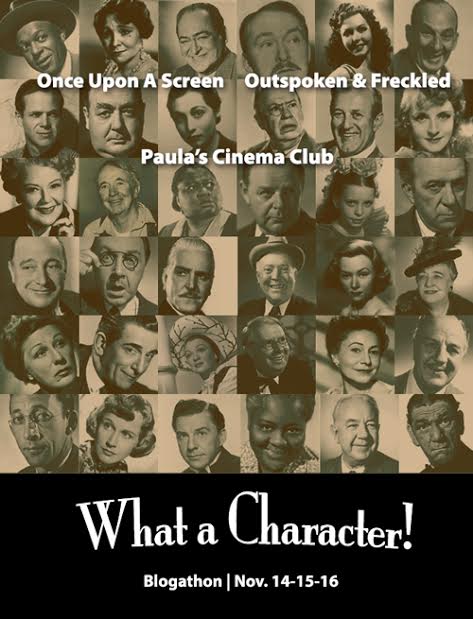
This post is our contribution to our favorite What a Character! Blogathon being hosted by Once Upon a Screen, Outspoken and Freckled, and Paula's Cinema Club. Head on over to any of these sites to check out the roster of writers covering their favorite character actors. 

Thursday, November 12, 2015

Grace Kelly in "To Catch a Thief" ( 1955 )

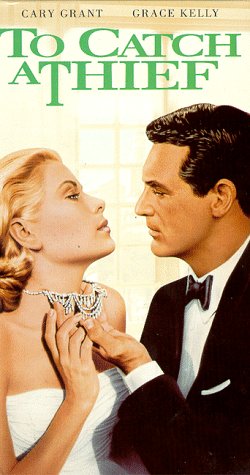
Alfred Hitchcock had just wrapped production on Rear Window when he plunged into his next film To Catch a Thief. This picture would unite Cary Grant, whom he coaxed away from retirement, and his favorite leading lady, Grace Kelly. Hitchcock had purchased the rights to David Dodge's Cannes caper in 1950 for the meager sum of $15,000 but it was not developed into a script until after he met John Michael Hayes ( Rear Window ), a screenwriter who had a great wit. Hitchcock wanted To Catch a Thief to have a comedic flair that was lighter than pastry.

The film begins with a series of daring night jewel thefts throughout the Riviera. John Robie "The Cat" has struck once again - or so the police are led to believe. The real John Robie, once a famous jewel thief, is blissfully enjoying his retirement at his cliff-side villa outside Monaco. He does not like this new cat burglar imitating his signature style nor having the police breath down his neck with their air of suspicion. And so he sets out to capture this "cat" himself, and what better way then to set a thief to catch a thief. 

With the aid of a Lloyds of London insurance broker ( John Williams ), Robie obtains a list of the most valuable pieces of jewelry insured in Monaco and the names of the fashionable tourists who own the baubles. First name on the list - Jessie and Francine Stevens ( Jessie Royce Landis, Grace Kelly ) a mother and daughter who have nearly $280,000 in jewels insured with the company. 

Robie finagles his way into meeting the American duo through a clever ploy of dropping a 10,000 franc piece down the bodice of a woman's dress while they are all gathered at the roulette table - the "whirling pickpocket" as Mrs. Stevens calls it. This gets her to laughing and leads him to introduce himself as Mr. Burns, a lumber tycoon from Oregon. 


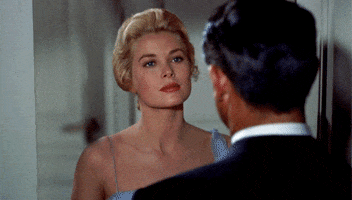
The first time we see "Francie" she is perceived as being a jewel herself, sparkling but cold as a diamond. She and her mother stemmed from the backwoods until oil was discovered on their land; extensive travelling polished her country manners and accent. After years spent away in finishing schools, she has the stance and demeanor of a young princess. Her mother is quite captivated by Mr. Burns charms ( "If I were Francie's age, you'd sound too good to be true!" she declares ) while Francie seems disinterested. She's young, beautiful, and wealthy so she has been chased quite a bit by fortune hunters and is wary of handsome men. Perhaps Robie is too good to be true. 

"I'm sorry I ever sent her to that finishing school, I think they finished her there."

Edith Head designed all of the costumes seen in To Catch a Thief and they rank as some of her finest creations. Alfred Hitchcock had a hand in this design process too and the clothing that Francie wears throughout the film reflect on her different moods. In this scene her gorgeous white and icy blue layered chiffon gown make her regal and quite unattainable. 

Later, when John Robie escorts her to her hotel room, she spontaneously kisses him - and then gently shuts the door in his face. This kiss proved that she was neither as innocent or as frigid as she appeared, merely bored. Francie literally lets her hair down the next day. She appears dressed in sunny yellow and is eager to spend the day with Mr. Robie. After a swim in the rich blue Mediterranean and some verbal sparring with him and a young French woman, she invites Robie on a very informal outing, a picnic, en route to the villa that Mr. Burns is supposedly going to look at to purchase ( "I may even retire here" he says ). It's not a European champagne and cheese affair, but a classic American picnic of fried chicken complete with cold beer. 


It is during their drive from the villa that we see a different side of Francie emerge. Parts of her down-home heritage peep through showing she was not "finished" completely as her mother believed. 

"We're just common people with a bank account" - Francie Stevens

She's a gal with spunk and quite a large dose of womanly wiles, in spite of her demure pink and white summer dress. Francie has her suspicions about Mr. Burns and quickly becomes the hunter. She is eager to pin her "cat" into a corner to see him confess his real identify, that of being John Robie. She excitedly declares how she played Sherlock Holmes to discover all the clues that led to this conclusion. The scenes leading up to this moment are some of the best in the film featuring an exciting and humorous car chase, breathtaking Moyen Corniche location scenery, and extremely witty dialogue filled with double-entendres ( including the famous quote "a leg or a breast?", referring to the chicken, of course ).


Hitchcock loved the duel meaning the title suggested and it is after this scene that we see it come into play, the audience is eager to see Francie catch her thief - John Robie - regardless of whether Robie discovers the real culprit behind the jewel thefts or not. After she falls in love with him- as we, the audience, knew would eventually happen, she aids him in setting a trap for the burglar, leading to the climax at the costume ball, where Francie once again sports a head-turning gown, this time completely decked in gold.  


To Catch a Thief marked the third film that Kelly had made with Alfred Hitchcock and it is undoubtedly her best performance for the master of suspense. Like Lisa Fremont of Rear Window, Kelly portrays Francie Stevens as an extremely elegant young woman with a hint of mischief in her eyes. She isn't a china doll meant for display purposes only. She wants to love and serve a man and be a part of his life, even if it means endangering her own to prove this to him. 

The world premiere of To Catch a Thief took place in Los Angeles on August 3rd, 1955. It was a critical and commercial success upon its release and boosted Cary Grant's career, which eventually led him to postpone his retirement till over a decade later. To Catch a Thief is notable for leading up to the events of Grace Kelly's wedding. During the filming of the car sequence Grace Kelly had gazed out at the coastal countryside and spied a walled-in garden below. "Whose garden is that?" she asked screenwriter John Michael Hayes. He replied, "Prince Grimaldi's". Kelly had desired to tour the garden with her then-boyfriend costume designer Oleg Cassini but between her shooting schedule and the Prince's commitments was unable to arrange a visit. It was not until May 1955, when Grace Kelly returned to Monaco for the Cannes Film Festival showing of The Country Girl, that she was invited to the palace for a photo session and a tour of the garden. This meeting eventually led to the Prince visiting with Kelly's family in Philadelphia for three days and a marriage proposal. On April 18, 1956, Grace Kelly and Prince Ranier were wed and she became Princess Grace of Monaco. 

On a sadder note, the winding road where John Robie and Francie Stevens park for their picnic lunch was the site where Princess Grace had her fatal car crash on September 13, 1982. She suffered a stroke behind the wheel and passed away a day later, at the age of 52, from a brain hemorrhage sustained from the accident. 

This post is our contribution to The Wonderful Grace Kelly Blogathon being hosted by The Wonderful World of Cinema. Click on the links to read more posts on Grace Kelly's career and her films!

Monday, November 9, 2015

The Prisoner of Zenda ( 1952 )

Movies Silently is currently hosting the great Swashathon celebrating sword-wielding heroes and the films that featured them dating from the 1920s through the 1960s. This post is our contribution to the event.

The 1937 Ronald Colman classic The Prisoner of Zenda is often considered the definitive film adaptation of Anthony Hope's novel of the same name and you won't hear any statement to the contrary from us, however the 1952 Metro-Goldwyn-Mayer remake packs quite a punch on its own and since it is highly underrated we have decided to spotlight this swashbuckler instead. 

Hope's 1894 novel tells the story of a commoner, Rudolf Rassendyll, who is thrust into the royal household when he is called upon to impersonate his look-a-like, King Rudolf of Ruritania, who was drugged by the king's half-brother, Michael, the night before his coronation. At first he is unwilling to cooperate, especially since his visit to the Balkan country was purely for recreation, but after he meets the lovely Princess Flavia, the King's bride to be, he decides to comply, feigning the role of the king during the coronation and aiding the king's supporters in preventing Michael's conspiracy from taking over the country.

Stewart Granger was quickly becoming one of Metro's most popular leading actors when producer Pandro S. Berman decided to cast him in the duel role of the Rudolfs for The Prisoner of Zenda. Granger had made his American film debut two years prior in King Solomon's Mines, which became a box-office hit. 


After the highly successful swashbuckler Scaramouche was released in the summer of 1952, MGM thrust their new leading man into this sword-clashing costume drama and wasted no time in its production either. The Prisoner of Zenda took a mere thirty days to film and was released in November, 1952. Considering the scale of the production this is an amazing feat in itself. 

Stewart Granger was just the kind of star MGM was hoping for....he had a noble appearance, an affable nature, and the charisma and agility of the famous swashbucklers of past generations ( Douglas Fairbanks, Errol Flynn ) making him ideally suited to historical adventure films. After Zenda, he would go on to make Salome, Young Bess, All the Brothers Were Valiant, and Beau Brummel for the studio. 


The lovely English rose, Deborah Kerr, was cast as Granger's leading lady, Princess Flavia. Kerr and Granger had met during a European stage tour of Gaslight during the mid-1940s and this was their third US film together. Rudolf and Princess Flavia share many a tender moment together. 

Robert Douglas is featured as the King's nemesis Michael, but it is James Mason who captures the crown of villainy as Rupert of Hentzau, one of Michael's Nazi-like henchmen. Louis Calhern, Robert Coote, and Jane Greer also have strong supporting roles and the great character actor Lewis Stone makes an appearance as his eminence, the Cardinal. Stone had portrayed the leading role in the silent version of The Prisoner of Zenda so it was a nice touch to have him return to Ruritania thirty years later. Unfortunately, the political situation in the country hadn't changed any since he left.


"The Prisoner of Zenda" is one of the all-time great swashbuckling stories and this marked the fifth time the tale was brought to the screen. Metro-Goldwyn-Mayer had purchased the rights to Hope's novel in addition to buying the rights to United Artists 1937 adaptation starring Ronald Colman. Exactly fifteen years had passed since audiences thrilled to Colman's performance as the commoner-turned-hero and it was high time that audiences were given a chance to relive that thrill - this time in Technicolor. MGM did not want to tamper with success and so Richard Thorpe was called upon to smother his directorial skills and create a carbon-copy version of the original, utilizing a moviola projector on the set to duplicate even the same camera angles.

The film is often underrated because of this lack of originality but in truth The Prisoner of Zenda is distinctive on its own merit. It possesses all of the elements of an iconic swashbuckler - a dashing hero, a beautiful damsel in distress ( Princess Flavia was trapped into what she thought would be a loveless marriage ), a nefarious power-seeker who happens to be an expert swordsman, an exotic Balkan setting, and resplendent costumes ( by Walter Plunkett ) and marvelous split-screen special effects. One of the highlights of the movie is the swordfight scene during the finale. Fencing master Jean Heremans ( The Three Musketeers, Scaramouche ) was called in to train Granger and Mason for this fight scene, and the actors clearly take passion in attempting to destroy each other utilizing every object in the room as weapons. Granger even underwent stitches after receiving a wound near his mouth. This sterling bit of swordplay becomes the epee apex of the picture.

'Tis true, if one were to compare the two filmings of The Prisoner of Zenda, Colman's version will emerge the victor, but these films were not meant to be seen back to back. This was a telling of the story for a different generation and MGM captured the thrills and passion of the original with an entirely new cast - and the bonus attraction of Technicolor. Now honestly, if you take off your comparison-glasses and sit back and make yourself comfortable, you have a darn good swashbuckler to enjoy. 

Head on over to the silent headquarters, Movies Silently, to check out all the great posts on more swashy films from the golden age of cinema. To get more of Zenda, check out Now Voyaging's review of the 1937 classic and Scribblings line-up of the Ruperts of Hentzaus throughout the ages. 

Saturday, November 7, 2015

The Reluctant Dragon ( 1941 )

After the immense critical and box-office success of Snow White and the Seven Dwarfs and Pinocchio, Walt Disney Studios was bombarded with requests from his fans to show how these cartoons were created. The brass at RKO Pictures were also keen to see how the cartoons that they were distributing were made, and so Walt Disney decided to create a film that combined a series of short cartoons ( in the same vein as Fantasia ) interspersed throughout a Technicolor live-action segment that featured a host giving a guided tour of the Disney Studios. This host was none other than the delightful satirist Robert Benchley. 


The idea was clever and, with the films relatively low budget ( $600,000 ) it was expected to bring in a substantial return, but once audiences saw the final production, many felt they were cheated. This was due in no small part to the film's misleading title - The Reluctant Dragon. Having enjoyed the richness of Disney's previous features, audiences were simply not expecting the casual documentary style film that followed. 

The Reluctant Dragon was in no way different than any of the behind-the-scenes segments which later appeared on television during The Mickey Mouse Club, and it gave us a most entertaining look at the process involved in the making of a Disney motion picture - even though it uses actors in the roles of animators, musicians, and cameramen ( with the exception of an appearance by one of the Nine Old Men, Ward Kimball ). Frank Faylen, Nana Bryant, Frances Gifford, and Alan Ladd are some of the actors playing Disney personnel. Keep your eyes peeled for a young John Dehner in his feature film debut too.


Three animated sequences act as interludes on Benchley's tour and these include Baby Weems, a Goofy short - How to Ride a Horse - and one of our all-time favorite cartoons - the titular Reluctant Dragon, which tells the tale of a dragon who prefers picnics to fighting. 

The cartoon begins with an intellectual young boy discovering that a real dragon was seen in his village. He ventures to take a peek at the fabled creature only to find himself greatly disappointed. He was imagining a fierce beast with fire flaming out its nostrils, instead he meets a silly blue creature that doesn't look at all monstrous ......worse yet, it's a tea-drinking poetry spouting coward! 


"Punk poet! Punk poet!"

An even greater disappointment to the boy comes when he visits the knight, Sir Giles, who does not look or act at all like the knights in the books he reads. In place of the strong hero is a Quixote-like old man with frightfully skinny legs. 

Sir Giles and the Dragon get on capitally during their first encounter for Sir Giles is also a great admirer of picnics and poetry. They begin to exchange verses they wrote ( Radish so Red, Ode to an Upside-Down Cake ) when the boy reminds them that they are supposed to fight. The town expects it of them. And so they agree to stage a battle that will have the knight declared victor. 


Critics of Walt Disney's animated cartoons often claim that The Reluctant Dragon was one of the weaker shorts, but we feel just the contrary. It holds up marvelously well after numerous viewings and features some preposterously cute animation. 

Radish so Red
by Sir Giles

"Radish so red, radish so red, 
plucked from the heart of your warm little bed, 
sprinkle with salt on top of your head, 
~ crunch! ~ delicious."

Sir Giles is the epitome of the veddy-British stereotypes with his curling mustache, skinny neck and ever-present monocle. He's an upper-crust gentleman, a true knight who wouldn't dare fight an unarmed dragon, while the dragon itself is just what one wouldn't expect a dragon to be - a sissy. 


The Reluctant Dragon was based upon a story by English author Kenneth Grahame, whose "The Wind in the Willows" Disney also cartoonized in 1949. Two British ex-pats Barnett Parker and Claude Allister voiced the part of the Dragon and Sir Giles ( Allister would later do the part of Rat in The Wind in the Willows ).

When The Reluctant Dragon was first released on VHS it was paired with another one of Disney's rarer animated classics - Morris the Moose ( 1950 ), which is worth taking a look at too. 

This post is our contribution to the One of Our All-Time Favorite Cartoons Blogathon, be sure to head on over to Movie Movie Blog Blog to check out all the other great posts on the cartoons of yor. 

Friday, November 6, 2015

The Impossibly Difficult Name that Movie Game

This installment of The Impossibly Difficult Name that Movie Game features one of the most beautiful screenshots we ever posted. For those who saw this film recently, it's fairly easy to recognize...


....but if you haven't seen the film in awhile, then it may be a challenge! As usual, if you are not familiar with the rules to the Impossibly Difficult Name that Movie game or the prize, click here.

Good luck guessing! 

GAME OVER. 

Congratulations to The Tactful Typist for correctly guessing The White Cliffs of Dover ( 1944 ). Alan Marshall and Irene Dunne are pictured enjoying a handsome cab tour of London in the wee hours of the morning after a wonderful night dancing at the Queen's ball. 

Wednesday, November 4, 2015

Walt Disney's Dr. Syn : The Scarecrow of Romney Marsh

"On the southern coast of England, there's a legend people tell of days long ago when the great Scarecrow would ride from the jaws of hell...and laugh with a fiendish yell" 

In 1964, Dr.Syn: The Scarecrow of Romney Marsh debuted on The Wonderful World of Color and kiddies all across America and Britain were glued to their television sets to watch the burlap masked avenger of justice ride through Romney Marsh in the dark of night cackling like a banshee. 

The haunting Scarecrow was a folk-hero to the villagers of the sleepy hamlet. They were being grossly overtaxed by King George III and the menfolk were being shanghaied into naval service by press-gangs until whoosh! out of the night rode a savior - a smuggler in fact - named Scarecrow. Robbing from caravans and merchant ships laden with gold en route to the King, the Scarecrow and his henchmen mercilessly pillared their booty to distribute to the poor folk of the parish of Romney Marsh. Only his closet associates Hellspite and The Curlew knew that Scarecrow was in fact Dr. Christopher Syn ( Patrick McGoohan ), the vicar of the local parish. 


Unlike Walt Disney's other television series which spanned across twenty or more 1/2 hour episodes, The Scarecrow of Romney Marsh was structured more like a mini-series and aired in three 1 hour parts. On December 1963, Dr. Syn, Alias the Scarecrow,  a 98 minute feature film version was released in theaters across the pond and here in the States in 1975 ( yes, there was a 12 year delay ). 

Doctor Syn was originally conceived by Russell Thorndike who wrote the novel on the renegade priest turned pirate in 1915 in a book titled "Dr. Syn: A Tale of Romney Marsh". His character is murdered at the end of this novel but he was resurrected from the dead in 1935 and made the dark hero of in another six books. It was the 1960 novel "Christopher Syn" written by American author William Buchanan that caught the eye of Walt Disney who instantly saw its story potential and cleaned it up a bit for his use on his Wonderful World of Color program. 


Sparing no expense he sent director James Neilson, a camera crew and a top-notch English cast including George Cole, Tony Britton, Kay Walsh, Michael Hordern and Geoffrey Keen to film on location at Romney Marsh, located in the southeast of England in the county of Kent. 


For years The Scarecrow of Romney Marsh has been a very difficult program to come by but recently Walt Disney Studios released a magnificently restored collector's edition to the public apart of the Walt Disney Treasures collection. Chock full of special extras such as a featurette about Dr. Syn's origins, an introduction by Leonard Maltin, and the making of the television series, it is a wonderful addition to any collection but alas.....at it's extortionate price it's a DVD not many can afford.

This post is our contribution to the Swashathon being hosted by Movies Silently. Be sure to check out all the other great posts on your favorite sword-clashing films.