Wednesday, August 19, 2026

The Impossibly Difficult Name that Movie Game

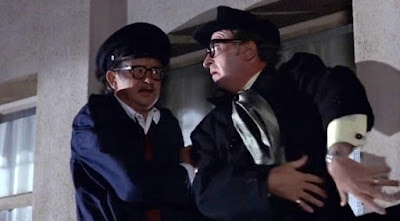
This man talked so fast, it was hard to get a non-blurry image of him - but here he is! Doesn't he look familiar? Possibly....possibly not, depending on if you saw this movie...

As always, if you are not familiar with the rules to the Impossibly Difficult Name that Movie game or the prize, click here.

Monday, August 10, 2026

Rewind Review: Voyage to the Bottom of the Sea (1961)

"Dive! Dive!"

Film producer/director Irwin Allen let audiences dive deep into the waters of adventure with Voyage of the Bottom of the Sea, his second of three feature films that he made at 20th Century Fox studios in the early 1960s. Prior to gaining a reputation as "The Master of Disaster" because of his disaster-themed films of the 1970s, Allen tried his hand at writing, producing and directing adventure pictures. His first production for Fox - Lost World (1960) - was co-written by Charles Bennett and its success at the box-office led to the two men collaborating on another Jules Vernes-like story. They took some inspiration from "20,000 Leagues Under the Sea" and created a clever story about a modern era atomic submarine 

Walter Pidgeon stars as the cigar-chomping Admiral Nelson, inventor and commander of the newly built atomic sub Seaview. The Seaview is on diving trials in the Arctic Ocean when they discover boulder-size pieces of ice crashing into the sea around them. They surface and find that temperatures are over 100 degrees and the sky is aflame. A meteor shower had pierced the Van Allen radiation belt and caused it to catch on fire. Admiral Nelson and his right-hand man, Commodore Emery (Peter Lorre) believe that the Earth can be saved from burn-up if a missile were to be shot into the Van Allen belt to create an explosion. According to their calculations, this missile can only be launched from the Mariana Islands, and so the Seaview races to the south to reach the islands before the entire world burns. 
Along for the ride is Dr. Susan Hiller (Joan Fontaine), a psychologist who is studying crews for their reaction to stress, Vice-Admiral B.J. Crawford (John Litel), and Congressman Parker (Howard McNear). The voyage progresses smoothly until doubts begin to arise in the mind of Captain Lee Crane (Robert Sterling) as to whether the admiral is making a sound and safe decision. Lt. Connors (Barbara Eden) has complete faith in the admiral but cannot explain the unusual happenings onboard the Seaview... acts of sabotage that appear to be of Admiral Nelson's doing. 
Voyage to the Bottom of the Sea is a fun adventure flick packed with action. The race-against-time element makes the story exciting enough, but Allen threw in a touch of mystery with the added story of the saboteur. There are also two octopus attacks and a great mine-field sequence. 

The Van Allen radiation belts had only recently been discovered when Irwin Allen began writing Voyage to the Bottom of the Sea, and so much about them was still unknown. The idea of the Van Allen belt catching on fire was later proven to be impossible, but at the time, it probably sent shivers down audiences thinking about it being an actual possibility. 

Even though most of the film takes place within the confines of the Seaview, the film never feels stagebound. The sets, created by Herman Blumenthal, were very imaginative (they were later reused for the television series). The Seaview itself is an especially good design. 
Irwin Allen plunged $1.5 million dollars into the making of Voyage to the Bottom of the Sea and it paid off handsomely. Critics gave the picture mixed reviews but audiences loved it and the movie raked in over $8 million dollars. 

Teen singing-sensation Frankie Avalon helped to lure in the young female audience. His part was not very dramatic and, surprisingly, he didn't sing in the film but you can hear his voice crooning the opening credits. 

Also in the cast was Michael Ansara (who fell in love with and married Eden after making the movie), Regis Toomey, Henry Daniell, Skip Ward and Mark Slade. 

Sunday, August 9, 2026

From the Archives: Three Guys Named Mike (1951)


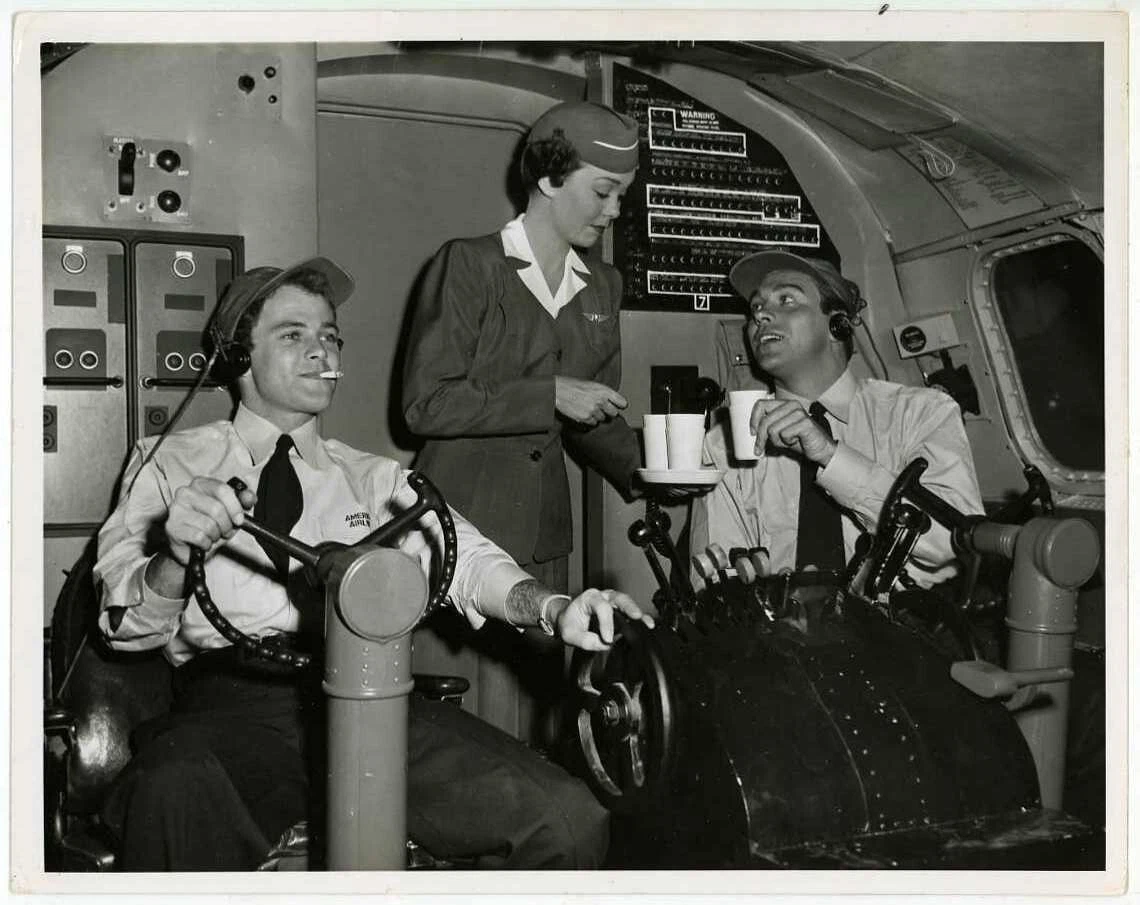
Watch that coffee, stewardess!! Evidently, Jane Wyman didn't watch Fate is the Hunter otherwise she would have known not to bring coffee into the cockpit! Oh wait, that movie wasn't released until thirteen years after this film, I guess she is excused.  Three Guys Named Mike is exactly what you would expect from such a title - one woman debating about the three men in her life all named Mike. One of them is played by the always dependable Howard Keel (right). 

From the Archives is our latest series of posts where we share photos from the Silverbanks Pictures collection. Some of these may have been sold in the past, and others may still be available for purchase at our eBay store: http://stores.ebay.com/Silverbanks-Pictures 

Friday, July 31, 2026

Surf Party (1964)

We all know Frankie Avalon and Fabian made beach movies, but who would have guessed that Bobby Vinton "The Polish Prince" made a beach movie? Believe it or not, he was a pretty good actor, too.... definitely a notch above Fabian. 

Surf Party follows the adventures of three young women who travel from Arizona to Malibu in a trailer with the sole purpose of hitting the beach and learning to surf. They picked a certain stretch of Malibu coastline because the older brother of Terry (Patricia Morrow), one of the girls, lives in Malibu and is a local "surf king." They meet Len (Vinton), who works at the local surf shop, and he gives them private surfing instructions... which naturally leads to Terry falling in love with him. Trouble ensues when they discover that Terry's brother isn't the hotshot others make him out to be and instead is a sponger and a bad influence of the surfers. When Len warns Terry about him, she walks away from him which makes Len "Mr. Lonely" with a capital L. 

Surf Party was released in 1964 and, judging from its title, was hoping to capitalize on the fame of Frankie Avalon and Annette Funicello's first sunshine success Beach Party. This movie should have been called Surf Tension instead because it doesn't have much of a party-feel to it and is more dramatic than most drive-in surf flicks. The acting from most of the youngsters is on the bland side but they were doing the best they could with the minimal script they were working with. Bobby Vinton's acting ability was surprisingly good. Too bad he wasn't given more film roles and better scripts. 

Most of Surf Party is made up of musical interludes from the record-charters of the day including The Astronauts, The Routers and Jackie DeShannon, who plays one of the three girls. Surf Party took only a month to film and a week to forget. It could definitely have benefited from color filming. You don't have to go out of your way to track this picture down unless you are a Bobby Vinton fan and, even then, you may be disappointed as he only sings one song in the film - If I Were an Artist.  

Tuesday, July 28, 2026

Film Album: Love Themes from Cleopatra (1963)


Most film albums feature a variety of themes from different films and title their album with the key theme, such as "Theme from the VIPS and other Film Hits".... but this album struck me as unique because Ferrante and Teicher decided to focus strictly on the music of Cleopatra (1963). Or so one would think with the title "Love Themes from Cleopatra" but if you read the back liner notes you will find that there are really just two songs from the 1963 Elizabeth Taylor epic ("Caesar and Cleopatra Theme" and "Anthony and Cleopatra Theme") with the remaining songs being "an assortment of romantic melodies steeped in an exotic orientation." What a lovely way to phrase this! 

The dueling pianists Ferrante and Teicher had a major hit with their version of the love theme "Anthony and Cleopatra," so it is no surprise that it headlined an album of its own. What is a surprise is that Ferrante and Teicher's names appear as composers on two songs in this album - "Sirocco" and "Sands of Time". Very interesting. 

Check out this album and, even if ancient orient themed music isn't your cup of tea, you may be surprised to find out how entertaining this album is! Listen to it in full on Youtube here. 

Track Listing

Side One:

Anthony and Cleopatra

Caravan

Moonlight on the Ganges

In a Persian Market

Sirocco

Sheherazade


Side Two: 

Caesar and Cleopatra

Samson and Delilah (not the film theme)

Devotion

Orientale

Sands of Time

Procession of Sardar

Top Picks: Sirocco, Caesar and Cleopatra, Orientale, Sands of Time

Saturday, July 25, 2026

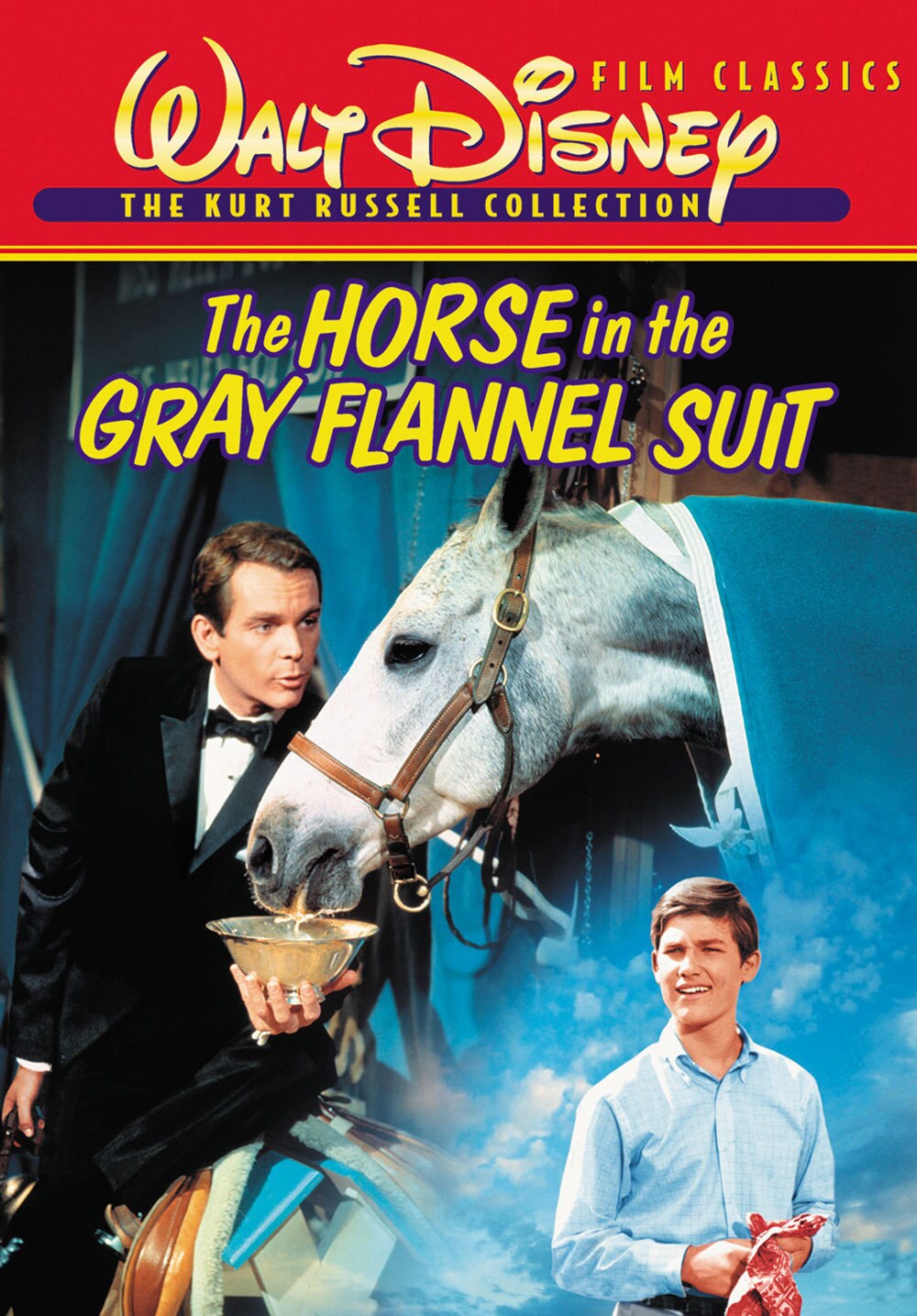
Rewind Review: The Horse in the Gray Flannel Suit (1968)

The Horse in the Gray Flannel Suit really has no bearing on horse racing but rather covers an event in the equestrian world that has seldom been depicted in the motion pictures - horse jumping.

Advertising executive Frederick Bolton (Dean Jones) finds he is up to his neck in bills and in stress. His daughter Helen (Ellen Janov) desperately wants a horse - which he cannot afford - and his boss wants him to dream up a winning advertising campaign for a prestigious pill company "Aspercel" by tomorrow - or else, lose his job. 

After hours scheming up campaign angles, a bolt of inspiration hits him and he finds it may just be a solution that will please both his boss and his daughter: enter a horse named Aspercel in horse jumping competitions across America. What better way to instill in the minds of the social elite the tongue-tripping name of Aspercel and receive headline coverage nationwide? 
The Horse in the Gray Flannel Suit was based on the novel "The Year of the Horse" by Eric Hatch, who was an author and screenwriter best known for My Man Godfrey and Topper. The film was originally planned to be released as The Year of the Horse, but instead, the publicity department decided to pun the popular 1956 Gregory Peck film The Man in the Gray Flannel Suit, which also dealt with the world of advertising. 
Dean Jones' comedic skill in the short-lived television series "Ensign Pulver"(1963), had caught the eye of Walt Disney and when the series was canceled he was cast as the handsome cat-chasing FBI agent in That Darn Cat (1965). Jones has come to be known for his family man roles of the 1970s, but in the 1960s he was usually cast as a bachelor or a childless husband. In this film, he portrays a widower, whom we imagine has not been on a date since his wife's passing. Like most of his roles, he plays Fred with a lot of harried gestures and frequent bursts of nervous laughter.
Ellen Janov was performing at a club in Palm Springs singing when she was spotted by a Disney exec and screen-tested for the role of Helen Bolton. She was fifteen years old at the time of filming and this was the only picture she ever made. Later, she recorded a few songs released through Capitol Records before becoming a primal therapist in Los Angeles. She died tragically at the age of 22 in a house fire. 

                               " For $2,000 I'd jump a few fences myself "
The lovely Diane Baker was making her first - and only - appearance in a Walt Disney production as Suzie "S.J" Clemens, Helen's riding instructor. Suzanne Pleshette could have easily played her role as well, but it is nice to see Baker in this part. The riding habit suits her.

Kurt Russell, who was soon to become one of Disney's biggest stars, had a supporting role as Helen's boyfriend Ronnie, while Morey Amsterdam provided comic relief as Fred's co-worker Charlie.  Lloyd Bochner, Fred Clark, Alan Hewitt and Lurene Tuttle rounded out the cast. 

The star of the film "Aspercel" was really Albarado, a dapple grey jumper who practically steals every scene he is in from the principal actors. In certain scenes, he was doubled by Sir Winston and Could Be, but don't ask us which scenes those were. 

The beautiful Bolton estate and other location scenes were filmed on Disney's 900 acre Golden Oak ranch near Newhall, California.

The Horse in the Gray Flannel Suit was the first film to be marketed with "Walt Disney Productions Presents" after Walt's death in 1966. It was released on December 20, 1968, along with the short, Winnie the Pooh and the Blustery Day, but alas, the film was not the big success it was hoped to be. It brought in only $3.3 million dollars (half of what The Ugly Dachshund fetched).

"Aspercel, Aspercel...take one pill it'll make you well. If you're dead....your dead."

The Horse in the Gray Flannel Suit doesn't have the belly-laugh comedy of some of the better Disney films and, in spite of its marketing, isn't really a comedy at all. Aside from some amusing scenes of Dean Jones riding Aspercel bareback, it is more of a warm domestic drama. Like The Happiest Millionaire, it seems as though the Disney studios were experimenting with trying to capture an older audience. The film gently delves into a variety of different sub-surface topics such as gender equalities and single-parent child-raising all the while keeping the audience entertained and amused with its central theme - horses. 
One of the more important dramatic aspects of the story plot, however, is the psychological trauma of children who support their family. Unbeknownst to Fred, his eagerness to make his publicity plan work puts a lot of untold pressure on the shoulders of his daughter. Helen feels that she is homely and that boys do not like her. Her equestrian skill is the only substance for her self-confidence, but she finds she doesn't enjoy riding as much when she discovers that it is her medals that will either keep or break her father's position. When Fred shamefully realizes this it dawns on him that he has been valuing his job more than his family and quickly makes amends to change that.
The Horse in the Gray Flannel Suit is a personal favorite of ours because of its "feel good" quality. Like most Disney films, it leaves you with a sense of satisfaction after watching it. The film is colorful, features talented performers, an entertaining plot and - most amazing of all -actually does focus on what you would expect to see in it based on its title: horse jumping. The twenty-five-minute finale will make any horse lovers heart thump, with actual footage from the Washington D.C International Horse Show spliced in between sequences. Overall it's a tally-ho-ho show! 

Thursday, July 23, 2026

The Impossibly Difficult Name that Movie Game

We have been posting some tricky screenshots the past few months, so here is an easy one for summer... a happy singing gypsy! 

As always, if you are not familiar with the rules to the Impossibly Difficult Name that Movie game or the prize, click here.

GAME OVER. 

Congratulations to Damsbo for identifying this screenshot from Maytime (1935) starring Jeanette MacDonald and Nelson Eddy. In this scene, the two lovers are enjoying a gypsy performance at the Maytime fair. Avid MacEddy fans might recognize the back of Eddy's head in this scene! 

Friday, July 17, 2026

Safe at Home! (1962)

There were a number of sweet family films made in the early 1960s and Safe at Home! is one of them. It was released by Columbia Pictures in 1962. The film was publicized as a light-hearted comedy but there really is very little comedy about it, it is just a simple story of a little boy who wants to see his heroes Mickey Mantle and Roger Maris so he can ask them to visit his little league baseball team. This little boy "Hutch" was admirably played by Bryan Russell (the Bye,Bye, Birdie boy) who was making his film debut. 

Hutch's father (Don Collier) runs a charter boat business in Florida and has very little time to watch his son play baseball. When another boy teases Hutch that his father knows nothing at all about baseball, Hutch tells a whopper of a lie: that his father knows everything about baseball and his best friends are Yankees players Mickey Mantle and Roger Maris. The entire little league and their coach hear about this and ask Hutch to bring the all-stars to see one of their games. Hutch could have easily told them that Mantle and Maris were too busy with spring training to come but then there wouldn't be much of a film. So instead, he runs away from home and hides out at the Yankee's training camp in Fort Lauderdale where he gets to meet his heroes and their coach Bill Turner (William Frawley in his last feature film role).

Hutch is a loveable youngster and he has a number of allies "in his corner" including Mike, his best friend (played by Scott Lane); Joanna, whom he hopes will become his mother (played by the lovely Patricia Barry); and a cute orange tabby cat. 

Safe at Home! meanders along at a gentle pace and never picks up speed but, nevertheless, it never gets tiresome. It plays like a good family soap opera and keeps its audience interested - especially if the viewer is a baseball fan. Mickey Mantle and Roger Maris were obviously no great actors, but they read their lines with conviction and had tremendous support from William Frawley who could put the most inexperienced actor at ease. 

If you want to enjoy an evening of baseball films, then check out the DVD release of Safe at Home! where it is double-featured with the William Bendix comedy Kill the Umpire!.

Tuesday, July 14, 2026

From the Archives: Move Over, Darling (1963)


"Gadzooks! My husband is going to re-marry?!" Doris Day looks stunned in this scene from the Universal comedy Move Over, Darling (1963) starring Day, James Garner, Chuck Connors, and Thelma Ritter. 

From the Archives is our latest series of posts where we share photos from the Silverbanks Pictures collection. Some of these may have been sold in the past, and others may still be available for purchase at our eBay store: http://stores.ebay.com/Silverbanks-Pictures 

Tuesday, June 30, 2026

A Laurel and Hardy Photobook on Kickstarter!

Every month I browse the crowdfunding website Kickstarter to see what goodies are in the making by creative individuals and this month I was pleased to see a series of Laurel & Hardy photobooks compiled by two Englishmen, Patrick and Russ. They appear to be avid fans of the silent comedy duo and these books "Laurel & Hardy Silents" mark the first two volumes in a series of six... along with a neat-looking Laurel and Hardy Magazine series as well. 

If you are not familiar with crowdfunding, it's a very easy process. You browse prospective projects ("campaigns") written by the project creators that explain what they are hoping to accomplish - in this case, getting these books into print - and then you buy the end product before it is made. A project needs to reach its funding goal before it is successful and goes into production. This project has already reached it, so the books are set to ship in December 2026. It's really just pre-ordering items...but if enough crowdfunders don't get together to pre-order, then the final product is never made. My sister and I have a number of Kickstarter campaigns under our belts, so we love the whole crowdfunding process and especially the community - a really swell bunch of people!

As the creators' state, "Our long-term aim is to create a complete six-book series covering the entire film career of Laurel and Hardy, published in three two-volume releases. This first set, covering the silent era, is the foundation on which that entire project will be built."

It looks like an impressive set of photobooks - they are packaged in a slipcase as well - and quite a collector's item. Only 1000 of each set will be made (although they mention that all orders will be fulfilled regardless). Unfortunately, shipping is quite expensive for U.S. backers, but it is what it is. 

Check it out! The campaign ends in 30 days. You can read all about it here: https://www.kickstarter.com/projects/laurelandhardybooks/laurel-and-hardy-silents

Friday, June 26, 2026

I Love Melvin (1953)

Melvin Hoover (Donald O'Connor), a photographer's apprentice for Look magazine, wants to impress Judy (Debbie Reynolds), a budding stage actress, and so he claims he is a photographer doing a spread for the magazine. After shooting hundreds of pictures of her, he is reluctant to admit that they won't appear in print. While Judy likes Melvin, she feels she must respond to her boyfriend Harry's (Richard Anderson) marriage proposal in order to please her parents. To stall the situation, Melvin makes a fake cover of Judy on the front of Look but then he doesn't have a chance to tell her it's not real! 

I Love Melvin was a typical musical outputted from the MGM factory. It doesn't stand out as anything extra special but it sure rates high in entertainment nonetheless, thanks to the appeal of its two lead stars. The Technicolor is beautiful and the costumes are nice but it is the songs that are especially lovely. Composer Josef Myrow (The Girl Next Door, The French Line) penned some unique melodies such as "A Lady Loves", "I Wanna Wander", and "We Have Never Met as Yet" and, if these weren't pleasant enough, their arrangements are really nice. Too bad Josef Myrow didn't get more music assignments with MGM then what he did. 

Debbie Reynolds looked cute as a button in the film (as did Noreen Corcoran as Judy's little sister), and she had clearly shed her baby fat as she rose to the ranks of leading lady. This was a great "coming out" film for Ms. Reynolds. She once wrote in her autobiography that she "worked her butt off" at MGM and I think this film in particular was what she was referring to. Debbie had a lot of dance numbers for such a short picture and, in addition to these, she had to be thrown around on stage as a football!

Robert Alton staged the dances for I Love Melvin and they are highly creative and great fun to watch. Donald O'Connor got the really exciting dance routines including one on roller skates. He has a fun Danny Kaye-style solo number, too, where he showcases not only his singing and dancing ability but his comedy style. 

As darling a couple as Melvin and Judy were, I doubt that their romance could have survived through marriage. Poor Melvin couldn't hold a job! 

Also in the cast was Allyn Joslyn, playing a role not unlike his character in Junior Miss (1945), Richard Anderson as the handsome but bland Harry, Jim Backus in a great part as Melvin's smart-aleck co-worker, and Les Tremayne as the manager of Look magazine. Keep your eye out for a brief view of the striking Look building in New York City. It was built in 1948, and since Look's management occupied the top floors, became known as the Look building. It is still standing at 488 Madison Avenue. 

A neat behind-the-scenes fact: Look Magazine actually released the cover design with the photo of Debbie Reynolds as Judy the same month I Love Melvin premiered as a tie-in. 

Monday, June 22, 2026

The Impossibly Difficult Name that Movie Game


Gadzooks! This screenshot could be from any film! Aside from the man looking like John Glenn, there are hardly any clues here to even help in identifying this scene - but if you have a crackerjack memory, perhaps you'll guess it anyway. Give it a try! 

As always, if you are not familiar with the rules to the Impossibly Difficult Name that Movie game or the prize, click here.

Saturday, June 13, 2026

Film Albums: Brazen Brass Goes Hollywood (1961)

I wonder how many people heard of Henry Jerome & His Orchestra? Very few, I'd imagine! And even fewer have ever heard of Geffen Records. So you lucky readers are in for a treat (and an education)!

Henry Jerome was a popular bandleader in the 1930s and 1940s who performed on ships, at ballrooms, restaurants, and naturally on the radio. He had a soft, mellow style (influenced by Hal Kemp) with brass-heavy arrangements. In the 1950s, ABC Radio Network aired "Dinner at the Green Room," a weekly radio program which featured Henry's orchestra playing live from the Green Room at the Hotel Edison in New York City. 

In the early 1960s, Hal Jerome had a popular series of "Brazen Brass" albums which featured - brazen brass, of course. This one, released by Geffen Records in 1961, spotlights Hollywood classics in unique arrangements, such as Around the World in 80 Days, Three Coins in a Fountain (as a cha-cha), a highly danceable version of High Noon, a scrumptious "Beyond the Sea"-style version of Love is a Many Splendored Thing, and The Third Man Theme without the zither! 

Jerome is probably best known for his work "behind the label" as an A&R director at Decca Records, Coral Records, MCA, and United Artists. You can read more about him here, but first check out this album here on Youtube

Track Listing

Side One:

Around the World in 80 Days

Moonglow (from Picnic)

Three Coins in the Fountain Cha-Cha

High Noon

Gigi

Main Title (The Man with the Golden Arm)


Side Two: 

The Third Man Theme

The Song from Moulin Rouge

Tammy Cha-Cha

Theme from A Summer Place

Love is a Many Splendored Thing

Colonel Bogey March (from The Bridge on the River Kwai)

Top Picks: Moonglow, Tammy Cha-Cha, A Summer Place, Love is a Many Splendored Thing

Friday, June 12, 2026

From the Archives: Come Fly With Me (1963)

"Is this yours, ma'am?" Oops! Someone got tricked into smuggling...and you don't need three guesses to see who's the victim. 

This mini lobby card is from the romantic-drama Come Fly With Me (1963) starring Dolores Hart, Hugh O'Brian, Carl Boehm, and Pamela Tiffin. If the Frank Sinatra song pops into your head whenever you read that title, you'd be surprised to discover that it is actually another crooner who sings that famous tune over the credits - Frankie Avalon. 

From the Archives is our latest series of posts where we share photos from the Silverbanks Pictures collection. Some of these may have been sold in the past, and others may still be available for purchase at our eBay store: http://stores.ebay.com/Silverbanks-Pictures 

Friday, May 29, 2026

Rewind Review: The Barefoot Executive (1971)

"He's gonna make it!"

Steven Post (Kurt Russell) is a young mailroom clerk with high ambitions and a lot of enthusiasm. He wants to see UBC, the faltering television studio that he works for, become the leading network but his boss Mr. Wilbanks (Joe Flynn) won't listen to any of his suggestions, one of which is making a series called Abraham Lincoln's Doctor's Dog

Steve's girlfriend Jen (Heather North) recently found herself caring for a chimp named Raffles who loves watching television. Steve thinks the shows that Raffles likes to watch are awful, but they seem to be what the public enjoys as well. After a few days of studying his primetime TV picks, Steve is convinced that the chimp knows the public's taste and can predict which pilot shows will become the next top-rated series. He is clever enough to know that he cannot go to his boss with this information, so Steve pretends that he himself has the knack for picking winners. This plan works well for a time, but Steve soon begins to feel undeserving of all of the praise that he is receiving for being the boy wonder of the studio. 

Kurt Russell began his film career with Walt Disney Studios as a child star and, when he got older, he played the leading man in a number of great comedies for the studio. The Barefoot Executive was released right in the midst of a series of college-themed comedies (beginning with The Computer Wore Tennis Shoes) that featured the recurring character Dexter Reilly (Kurt Russell). Instead of attending college, Steven Post goes to the Moonrise Night School, something that his rival Roger (John Ritter) finds laughable. 

Like most Disney films, the movie has a lot of humor, most of which is delivered by the straight-faced character actors. In The Barefoot Executive, it is Joe Flynn and Wally Cox who steal all the funny moments. These two comedians made a great team and are especially entertaining when they are walking on the ledge of a high-rise building attempting to steal Raffles the chimp. 

"Maybe I shouldn't say this, but you've been complaining ever since we've been up here. If you don't like the way I wheeze and hiccup, why don't you go find your own ledge to stand on?" - Wally Cox

Incidentally, Raffles was making his film debut in this movie and then took a hiatus from Hollywood before returning for one last film in 1975 - an X-rated sex comedy called Sodom and Gomorrah (he needed a better agent). Raffles has such a sweet and expressive face and looks especially cute in the plumber's outfit that Steve dresses him in. 

John Ritter's role is rather small and, as Roger, he does not have any of the charms of Jack Tripper. All of the charisma belongs to Kurt Russell who was a wonderful clean-cut role model for young teenagers. It's no wonder he had such a long career at Walt Disney Studios. Not just any actor can build a convincing rapport with a chimp co-star. 

Also worth mentioning is Heather North, who is adorable as his girlfriend Jen. This lovely girl is best known for voicing Daphne for the Scooby-Doo franchise. Harry Morgan, Alan Hewitt, Hayden Rorke, and Iris Adrian round out the cast on this fun family classic. 

Monday, May 25, 2026

Book Review - "Character People" by Ken D. Jones

Authors Ken D. Jones, Arthur F. McClure and Alfred E. Twomey assembled a nice selection of short bios of some of the lesser-known character actors from Hollywood and British films for "Character People", published by The Citadel Press in 1976. 

Each encyclopedia-style entry includes a photo of the actor followed by a brief biography and a listing of some of their memorable films. McClure and Twomey had previously published "The Versatiles" which covered more of the popular character actors such as Mary Wickes, Charles Coburn, Marjorie Main, etc., so "Character People" was published as a follow-up. 

It's a quick read and a fun book to flip through. You'll find yourself continually saying, "Oh, I know him!" or "So that's her name!" 

Remember this fellow? His name is James Westerfield. In addition to acting, he was also a director of stage productions. On film he usually played policeman. The authors neglected to mention that he was featured in numerous Disney films, again often as a policeman. 

Did you know that William Conrad starred in over five thousand radio shows? He should have been named Mr. Radio. 

Did you know that Henry Kulky became the judo champion of South America in the 1940s? These are just a few of the tidbits Jones, McClure, and Twomey share. Other actors featured in the book include Pert Kelton, Millard Mitchell, Bill Goodwin, Frank Cady, Hayden Rorke, Hope Summers and Bryant Washborne. 

Used copies of "Character People" are available on eBay and through Abebooks.com, but see if your library has it - it's worth a look see! 

Saturday, May 23, 2026

Film Albums: David Lloyd Orchestra - Film Hits (1966)

David Lloyd & His London Orchestra wasn't the most popular name in the instrumental field during the mid-century, but this album – Film Hits (1966) – has some great arrangements of popular film themes and it makes one wonder why he didn't become more popular than he was. Admittedly, he had twelve albums released in the decade including two more film theme albums and two spy-themed albums which we'll review later this year. 

This LP (from Polydor) includes popular themes from the mid-1960s including the ever-present "Lara's Theme" (from Doctor Schiwago as it is listed on the cover) and "The Shadow of Your Smile" from The Sandpiper (what, no "More" from Mondo Cane?) but they are arranged in such a unique way that they sound completely new. Lloyd uses a nice mixture of unusual instruments to lead some of these songs, including muted horns and an accordion for both "What's New, Pussycat?" and "Zorba the Greek". 

You can listen to the full album here on Youtube. 

Track Listing

Side One:

Lara's Theme from Doctor Zhivago

The Cincinnati Kid 

The Phoenix Love Theme (The Flight of the Pheonix)

The Shadow of Your Smile 

What's New, Pussycat? 

The Umbrellas of Cherbourg 

Zorba, The Greek

Side Two: 

Chim Chim Cheree (Mary Poppins)

Darling 

Girl Talk 

A Shot in the Dark 

Baby, The Rain Must Fall 

The Mechanical Pianos 

Juliet's Theme (From Juliet of the Spirits

Top Picks: The Cincinnati Kid, The Pheonix Love Theme, The Umbrellas of Cherbourg, Chim Chim Cheree

Friday, May 22, 2026

The Impossibly Difficult Name that Movie Game

Now here's a distinguished looking fellow... and he is obviously watching something or someone in the distance. We'll let you ponder what that something could be and who this handsome young man is. If you ponder long enough, you'll remember what film this screenshot is from - and then you'll leave a comment below so everyone will know that you know, or think you know what you know. 

As always, if you are not familiar with the rules to the Impossibly Difficult Name that Movie game or the prize, click here.

GAME OVER. 

Congratulations to Martin for correctly identifying this screenshot from "The Hound of the Baskervilles" (1939), one of 20th Century Fox's Sherlock Holmes installments starring Basil Rathbone and Nigel Bruce. In this scene, John Stapleton (Morton Lowry) spies on his sister across the moor. 

Saturday, May 16, 2026

It Happens Every Spring (1949)

Yes, it happens every spring - baseball fever. And it hits us sports fans hard. For Professor Vernon Simpson, he becomes a different person altogether when baseball season starts. As the dean of the college where he works says, "Every spring he seems to undergo a peculiar change, he becomes absent minded to a degree. It's like spring fever - only it lasts all summer."

20th-Century-Fox released a number of comedies in the late 1940s-early 1950s, many of which featured plots involving some kind of fantasy element. It Happens Every Spring (1949) is all about a chemistry experiment gone wrong. 

Vernon Simpson (Ray Milland), a college chemistry professor, is working on a formula that repels insects from wood when a baseball crashes through the window and knocks over his experiment. The ingredients to his formula get all messed up and eureka! a new discovery is made. The baseball sitting in the fluid acts like a magnetic repulsion to any object of wood that it gets in contact with - including wooden baseball bats! Being the clever professor he is, he requests a sudden leave of absence from the college, takes his invention to the big league, and offers himself as a pro pitcher who can strike out any hitter. He gives his name as Kelly and hopes to stay anonymous, but naturally that doesn't happen when "King" Kelly becomes a pitching sensation. 

Why is he attempting all of this? Well, back in the day, college professors were underpaid and Vernon wants to marry his girl Debby (Jean Peters).... one season of baseball would set them up for years. The only trouble is, Kelly's roommate Monk Lanigan (Paul Douglas) keeps using Kelly's "hair tonic" (his formula) and when their St. Louis team head to the World Series, Kelly finds he has no more of his magic potion left and attempts to pitch a clean game himself. 

It Happens Every Spring is one of those laid-back kind of comedies that is entertaining to watch no matter how many times you've seen it. Ray Milland does a great job in the role of Vernon, even though he seems a bit old for the part (the other characters refer to him as a "young man" and "kid"). Also in the cast is Ray Collins as Debby's father and the dean of the college; Jessie Royce Landis as her mother, and a young Alan Hale Jr. Oddly enough, the film would have worked equally well even if the entire cast was changed. One can imagine Charles Coburn taking the role of Ray Collins, William Bendix playing Paul Douglas' part, Jean Hagen in Jean Peters place, and Robert Cummings or Danny Kaye as King Kelly and it would still be fun. 

Vernon is actually a cheat for using the fluid to win the ballgames but, refreshingly, this isn't addressed in the film and even to the end, he calmly lets everyone think he was the greatest pitcher of the season. 

Lloyd Bacon, a veteran Hollywood director of dramas, did a great job filming this comedy. It Happens Every Spring premiered on May 26th in St. Louis and then opened in theaters across the country on Memorial Day weekend and reaped a comely profit for Fox studios. They followed it up with films like Father was a Fullback, Everybody Does It, and Monkey Business. Walt Disney Studios would later adapt experiments-gone-wrong plots similar to this in such classics as The Absent-Minded Professor and Now You See Him, Now You Don't

Saturday, May 9, 2026

From the Archives: Torch Song (1953)


Joan Crawford always looked elegant, particularly so in MGM's Torch Song (1953) where she plays Broadway star Jenny Stewart. Sitting next to her is another elegant actor - Gig Young. I always considered him a secondary actor until I realized just how many films he made from the 1940s-1960s, often in leading parts. He's always great to watch. 

From the Archives is our latest series of posts where we share photos from the Silverbanks Pictures collection. Some of these may have been sold in the past, and others may still be available for purchase at our eBay store: http://stores.ebay.com/Silverbanks-Pictures